
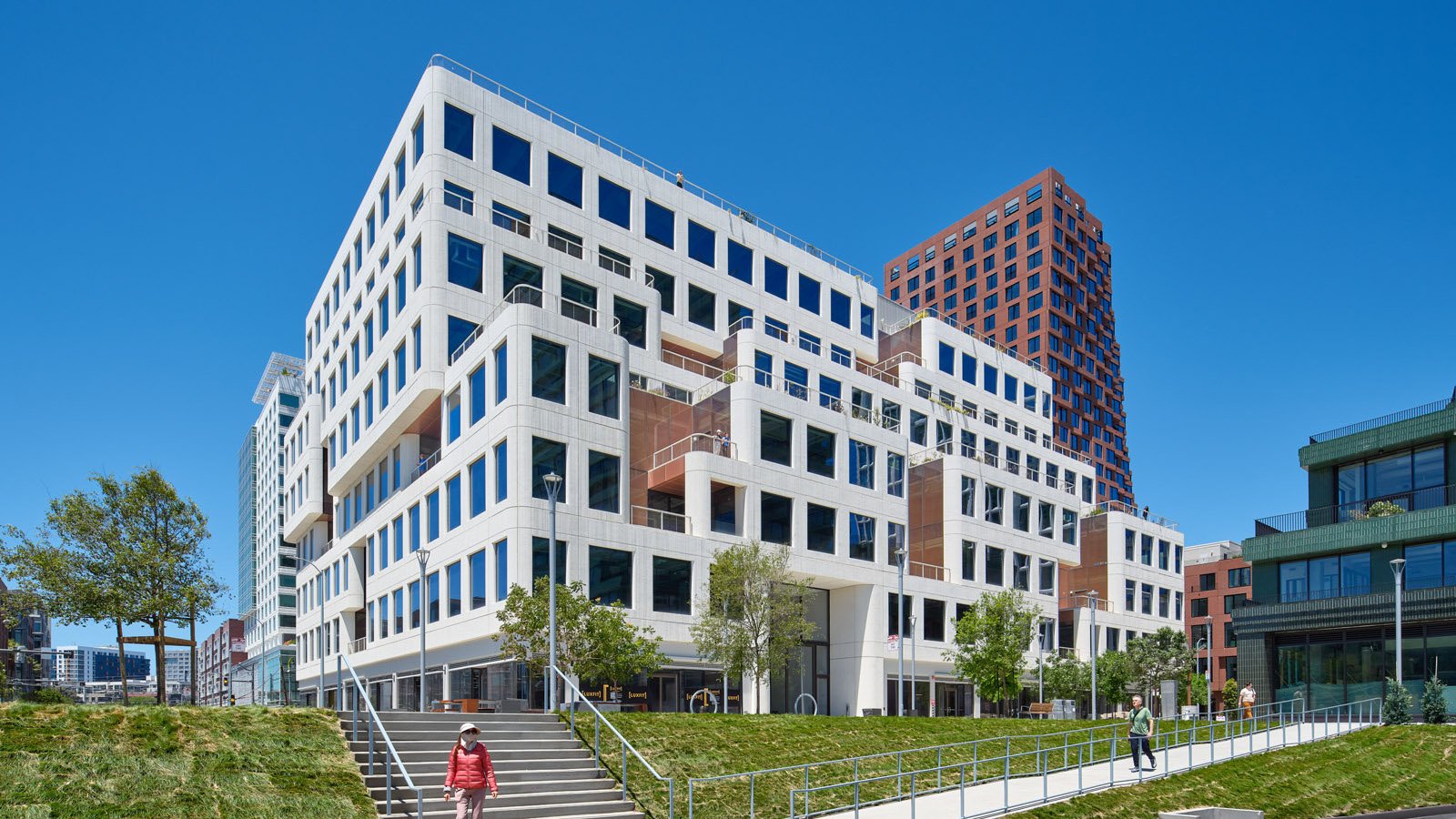
Big buildings have gotten shy. With the block-busting, top-down practice of the last century’s post-war era still looming large in the rearview mirror, contemporary urban design has migrated towards more varied facade expressions, which attempt to replicate the intimate rhythm and grain of cities before the automobile — even within very large buildings. It hasn’t fooled anyone.
From the 5-over-1s ubiquitous in the United States to more varied commercial and residential typologies, North America’s recent mid-rise architecture has been shaped by multiple articulations and material expressions — even architectural styles — in single buildings. And while “breaking up the massing” remains a favoured principle of design review committees across the continent, the outcomes tend toward bland experiences at street level and incoherent, architectural jumbles above. Leave it to a baseball team to break the mould.
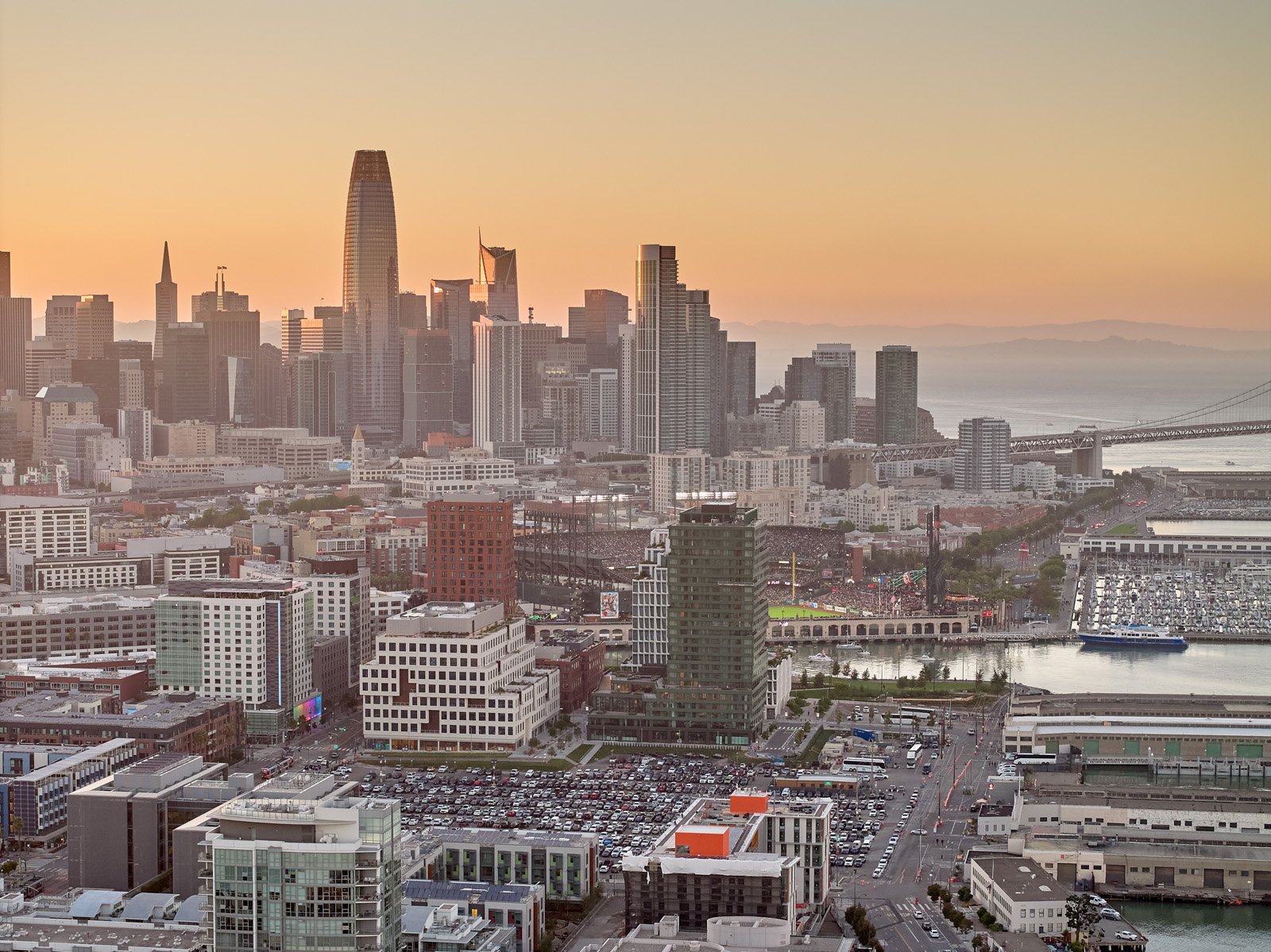
Just across the Mission Creek Channel from Oracle Park, the San Francisco Giants are helping re-make the 11-hectare Mission Rock neighbourhood into a contemporary urban showpiece. Led by the historic MLB powerhouse with developers Tishman Speyer and master-planned by Perkins&Will, a striking trio of mixed-use buildings by Henning Larsen, MVRDV and Studio Gang anchors the nascent local skyline. All three designs are confident in bearing and coherent in expression, combining aesthetic elan with eye-catching architectural flourishes. Yet, the most radical building of the bunch is the shorter mid-rise tucked behind them.
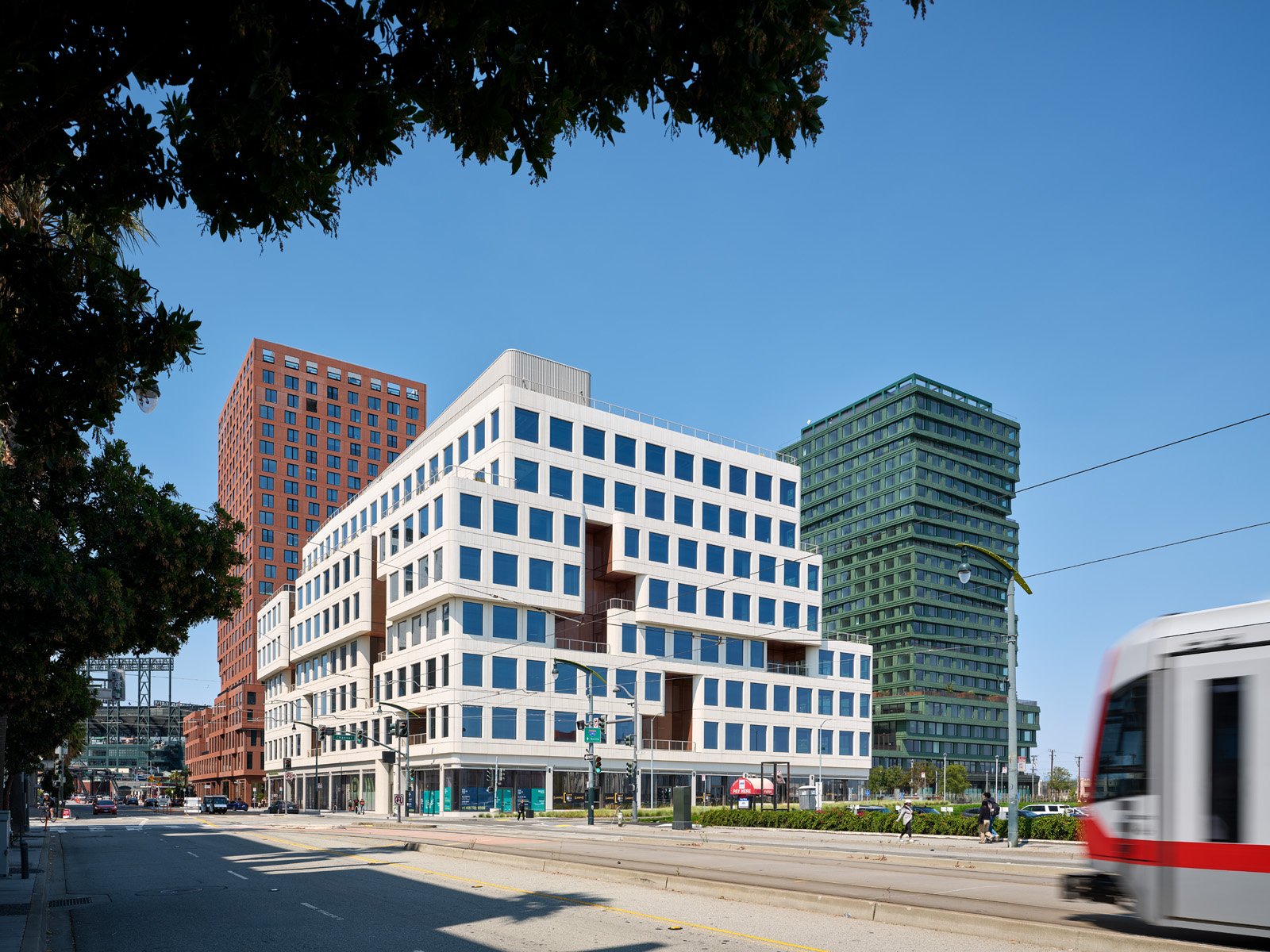
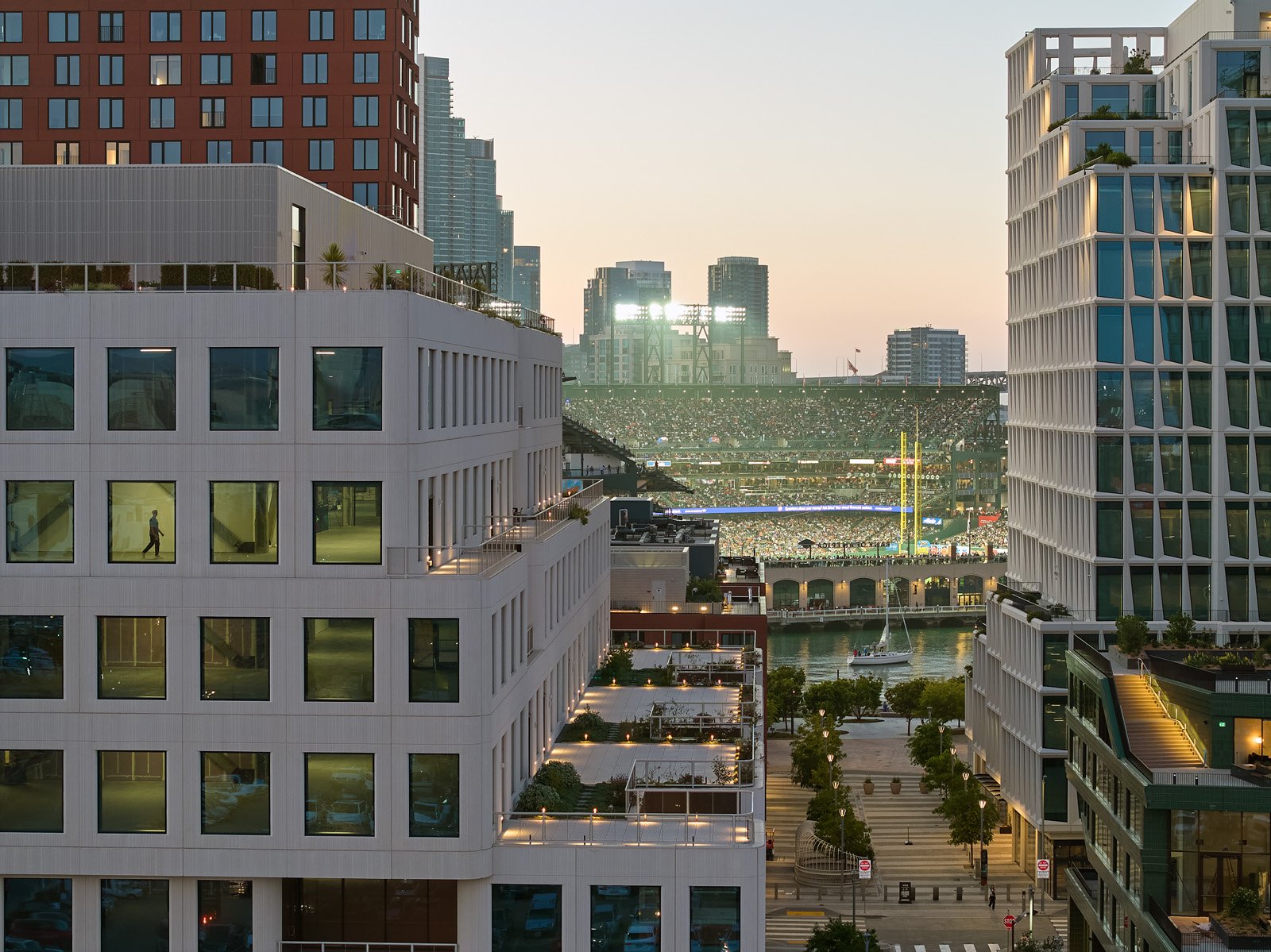
Designed by New York-based architects WORKac, “Mission Rock Building B” belies its prosaic moniker with an elegantly expressive design. Clad in striated white panels, the eight-story, 27,870-square-metre office complex reimagines both the workplace and the architecture that supports it. The light, pleasantly textured facade establishes a crisp visual palette that carries across the building’s broad body, fostering a pleasantly unified presence. There’s a sense of honesty in the bigness; this is a large, mostly rectilinear building that isn’t pretending to be anything different.
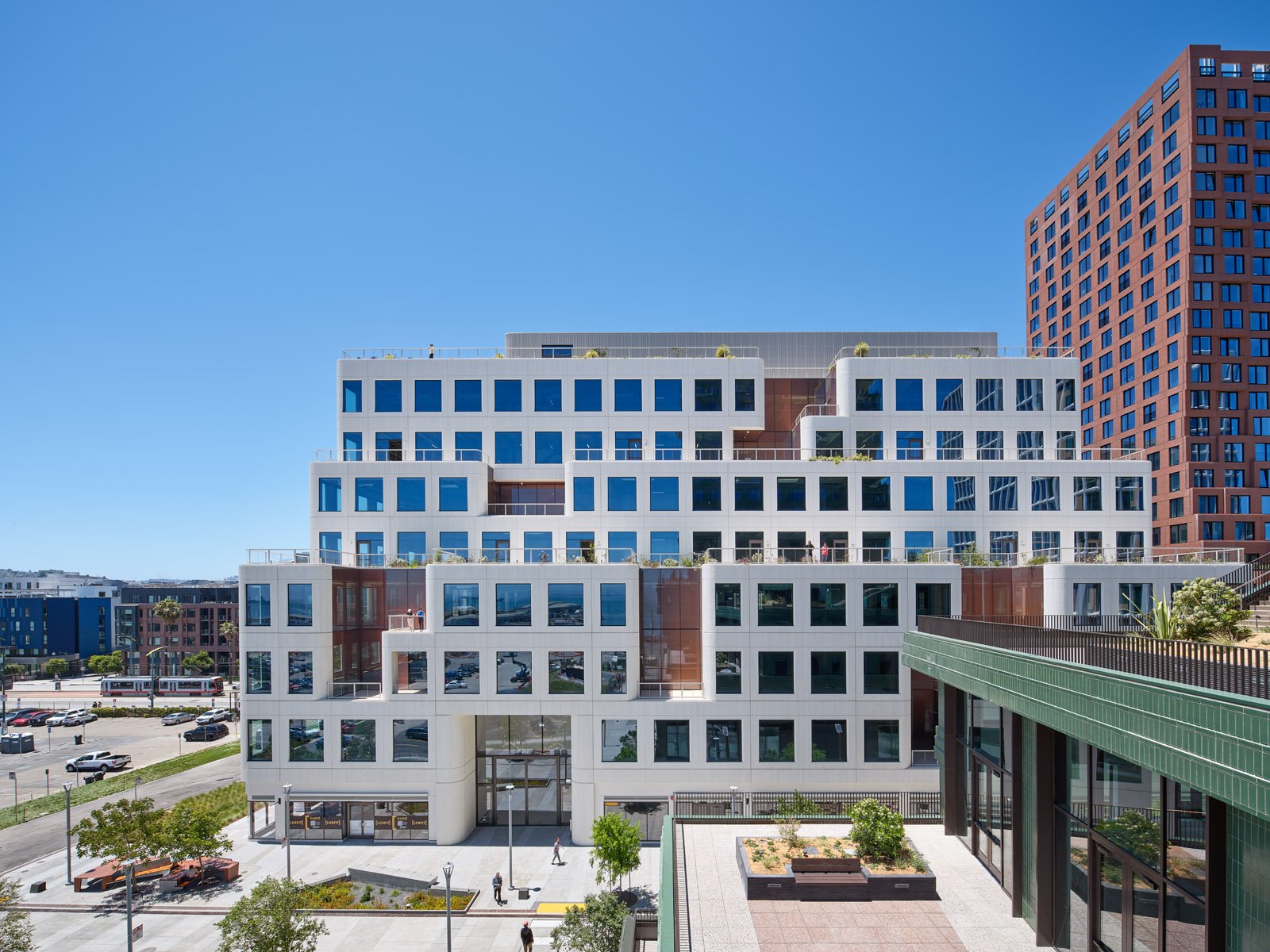
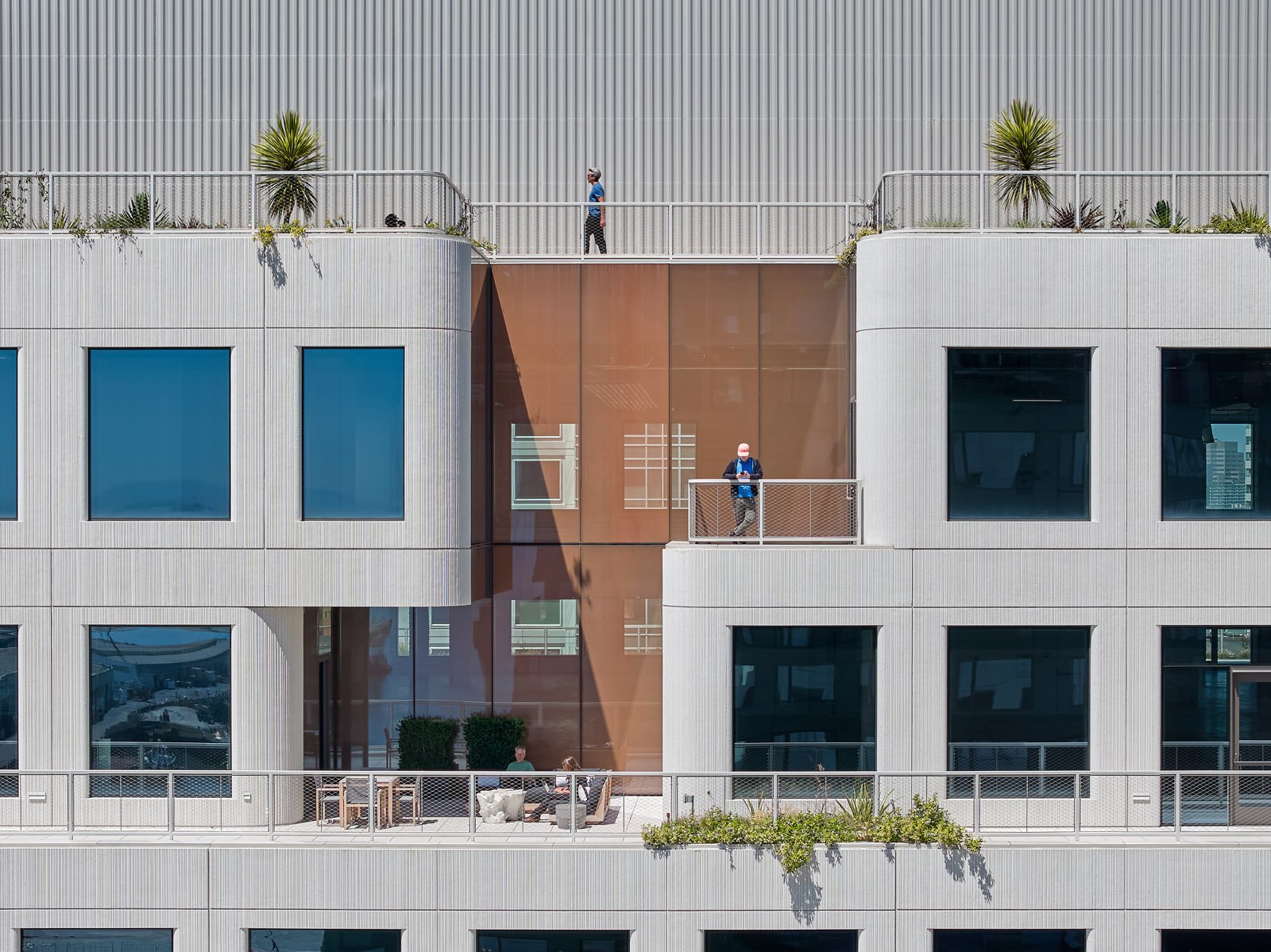
Yet, the end result is anything but boring or overbearing. The white cladding conveys an airy, Californian echo of béton brut, inviting the eye across its long body — and into the dramatic bronze canyons carved out of its mass. While this strategy introduces a series of smaller accents across the cladding, they remain in dialogue with a prevailing expression. Instead of attempting to make the whole appear smaller, they amplify the building’s presence, teasing out sophisticated contrasts between the sleek, glassy bronze insets and the more tactile white surfaces. Moreover, they serve a purpose beyond decoration, bringing the workday into the outdoors.
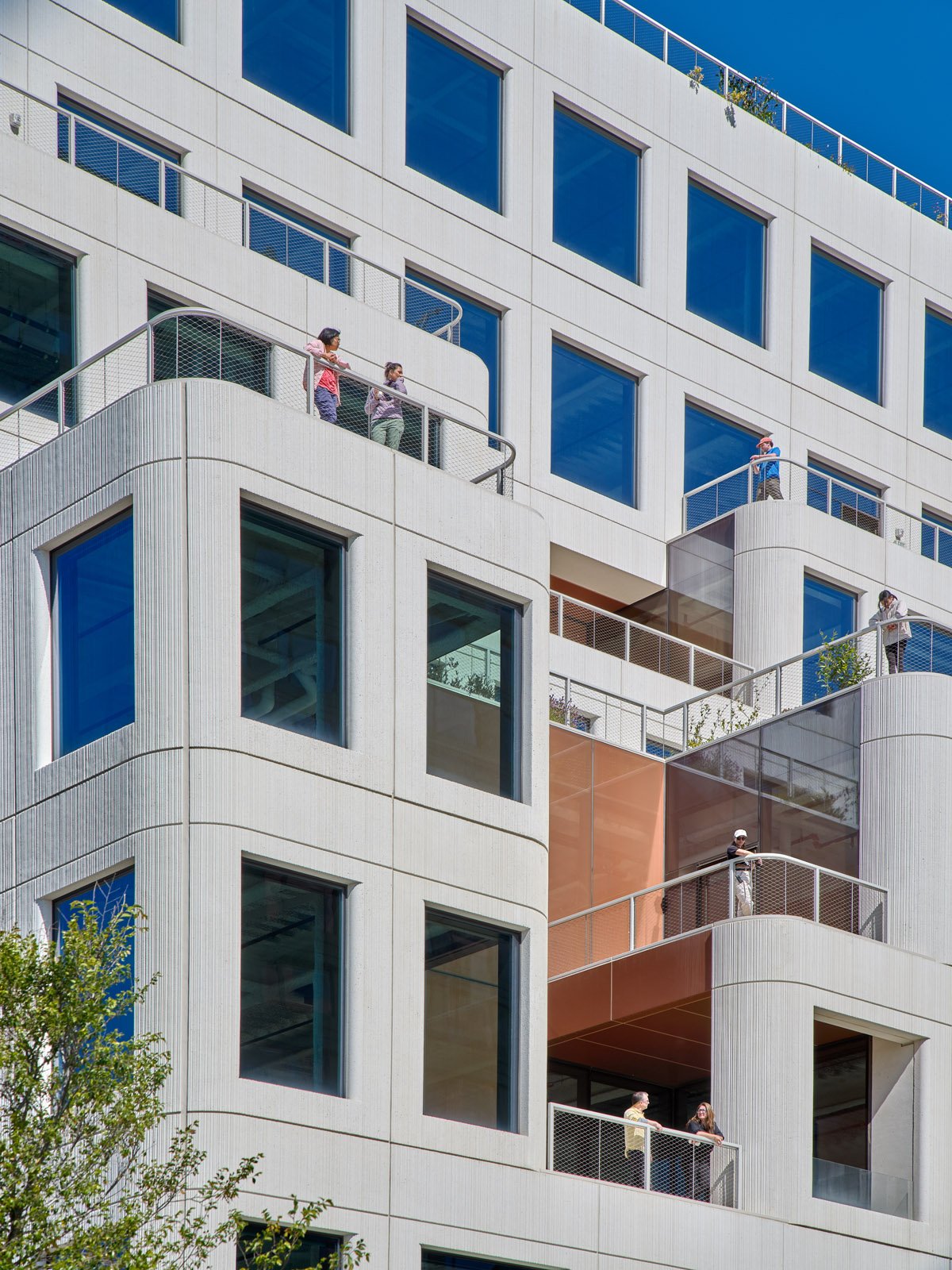
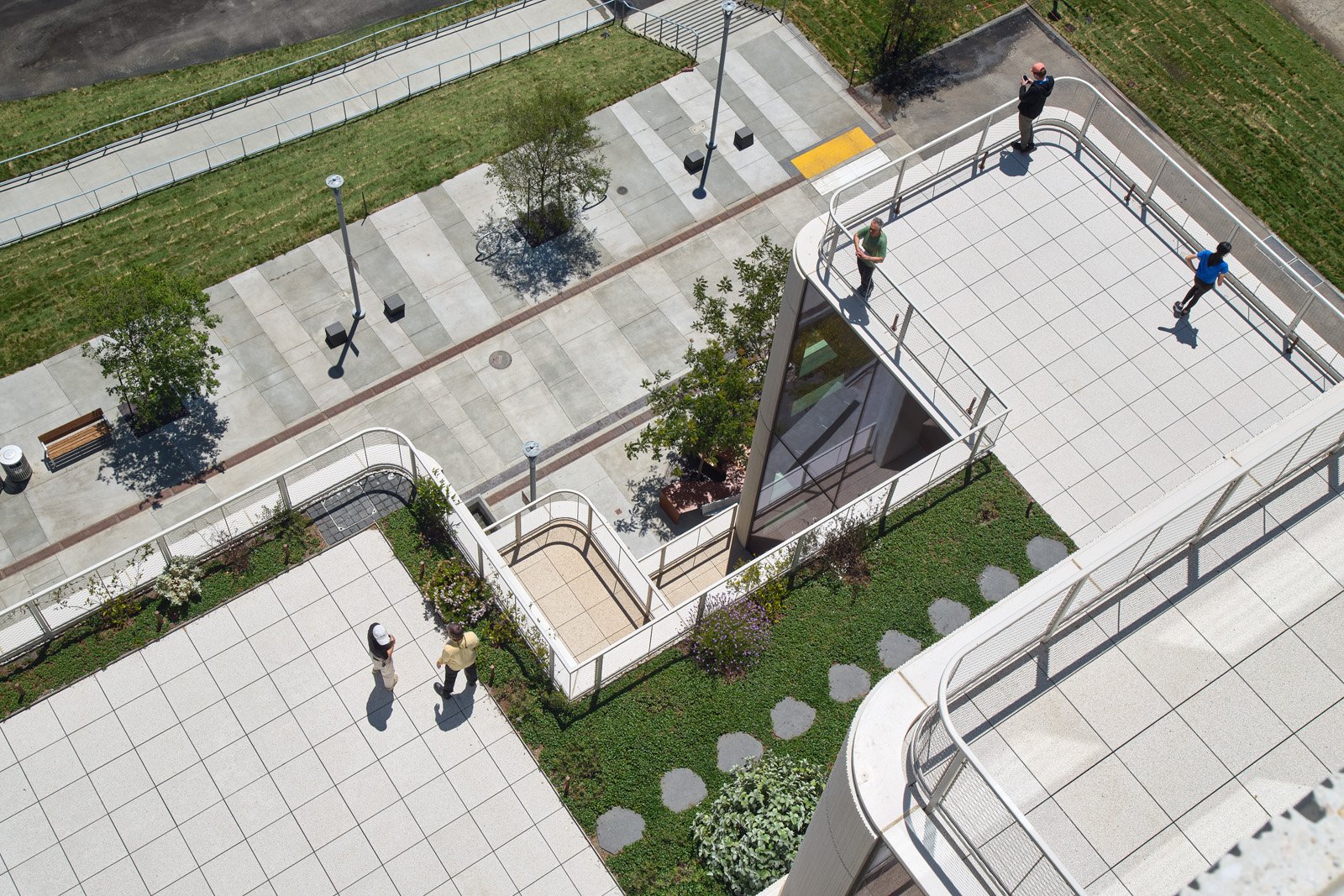
Varied in size and setting, the outdoor spaces range from quiet, intimate terraces to full-fledged outdoor rooms, welcoming private and collaborative work as well as breaks, meals and moments of respite. Along the east elevation, one such outdoor space spans the whole length of the building, creating a prominent elevated promenade. And while the balconies and greenscaped terraces — designed with GLS Landscape — invite workers outside, they simultaneously bring natural light deeper into the building, mediating one of the inherent challenges of a bulky, boxy form. “As the gardens and terraces increase in elevation, the landscaping responds, changing from leafy vegetation to hardy wind-resistant succulents,” notes WORKac.
Inside, the building is organized around two offset cores, allowing for flexibility and variability in floorplates to suit each tenant. Throughout the building, access to natural light and outdoor space is prioritized, while gender inclusive restrooms and ample bike parking promote health, comfort and inclusion. Mission Rock’s sustainable infrastructure also includes a blackwater recycling system that harnesses water from toilets, sinks and showers across the mixed-use community, conserving some 190,000 litres of water per day for non-potable uses, including irrigation and toilet flushing.
Not least of all, it sticks the landing. At street level, generous pedestrian spaces frame the building, extending Mission Rock’s pedestrian-oriented milieu. The building is designed with an ambitious 18 retail spaces, inviting a fine-grained urban experience — even as some are inevitably consolidated into larger units. Crucially, Mission Rock’s centralized block plan and shared infrastructures allow the building to maintain a relatively compact loading dock in lieu of the larger truck bays that dominate North American cities. To say the least, it all beats the surface parking lot that previously occupied the site.
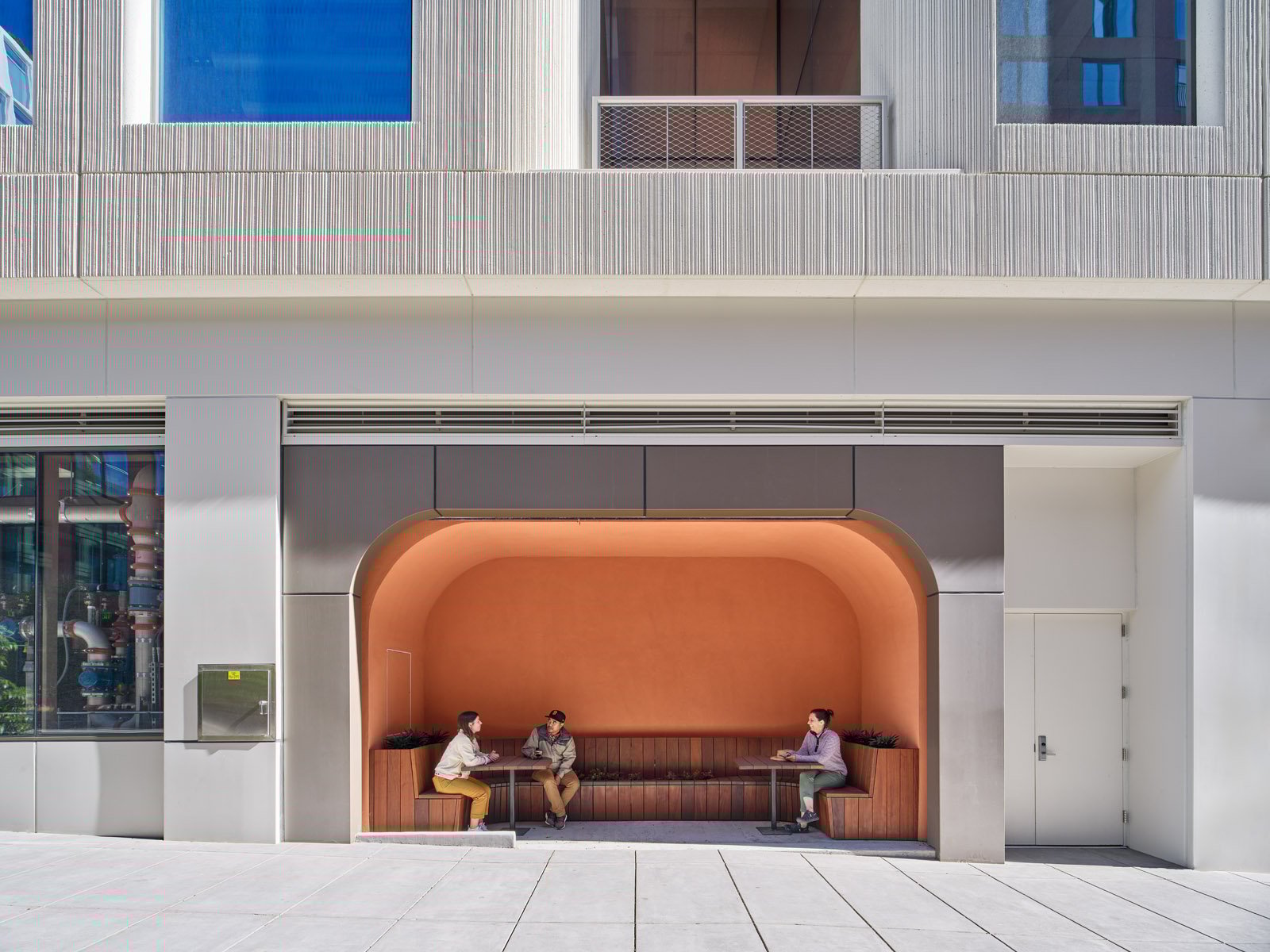
The surprising, playful rhythm of inset rooms continues at grade too. From the sidewalk, the public realm extends into the body of the building, opening up a sheltered banquette framed by an orange-coloured outdoor room. At the hands of lesser designers, such a gesture might come off as decorative kitsch. But WORKac have the nous to pull it off. This is somewhere you’ll actually want to sit.
WORKac co-founders Amale Andraos and Dan Wood will be presenting a keynote talk on Day 2 of Azure’s Human/Nature Conference on Thursday, October 30. Learn more here.
WORKac Brings Playful Intimacy to San Francisco’s Mission Rock
A study in urban topography, the eight-story office complex shows a better way to break the massing.