

Access. Connectivity. Indigeneity. These were the guiding principles behind the $15.5 million renovation of Toronto’s Gardiner Museum, according to chief curator Sequoia Miller. At the opening last week, it was clear that they had succeeded on all fronts. The 836-square-metre ground floor, reimagined by Montgomery Sisam Architects and Andrew Jones Design, in collaboration with Chris Cornelius of studio:indigenous, transforms a once-fragmented space into an open, sprawling celebration of ceramics.

The museum’s mandate to centre Indigenous voices is apparent as soon as one walks in the door. Here, a sculptural wooden bench sits underneath a major new commission by Nadia Myre, a contemporary visual artist from Montreal and an Algonquin member of Kitigan Zibi Anishinaabeg First Nation. A tapestry of handmade ceramic beads and clay pipe stems, the piece plays with scale, shape and texture in a palette that evokes the Canadian Shield.

Further inside, the new entrance hall welcomes visitors into a bright, open space with views right into the galleries beyond. Intended to reduce barriers to access, the lobby will feature rotating presentations of ceramics, including community projects, year-round. A curvaceous “ribbon wall” snakes along the right-hand side, framing the gift shop, a maker space and a community learning centre, which can host school groups and other events. It is along this wall that the museum’s community-oriented programming comes to the forefront.
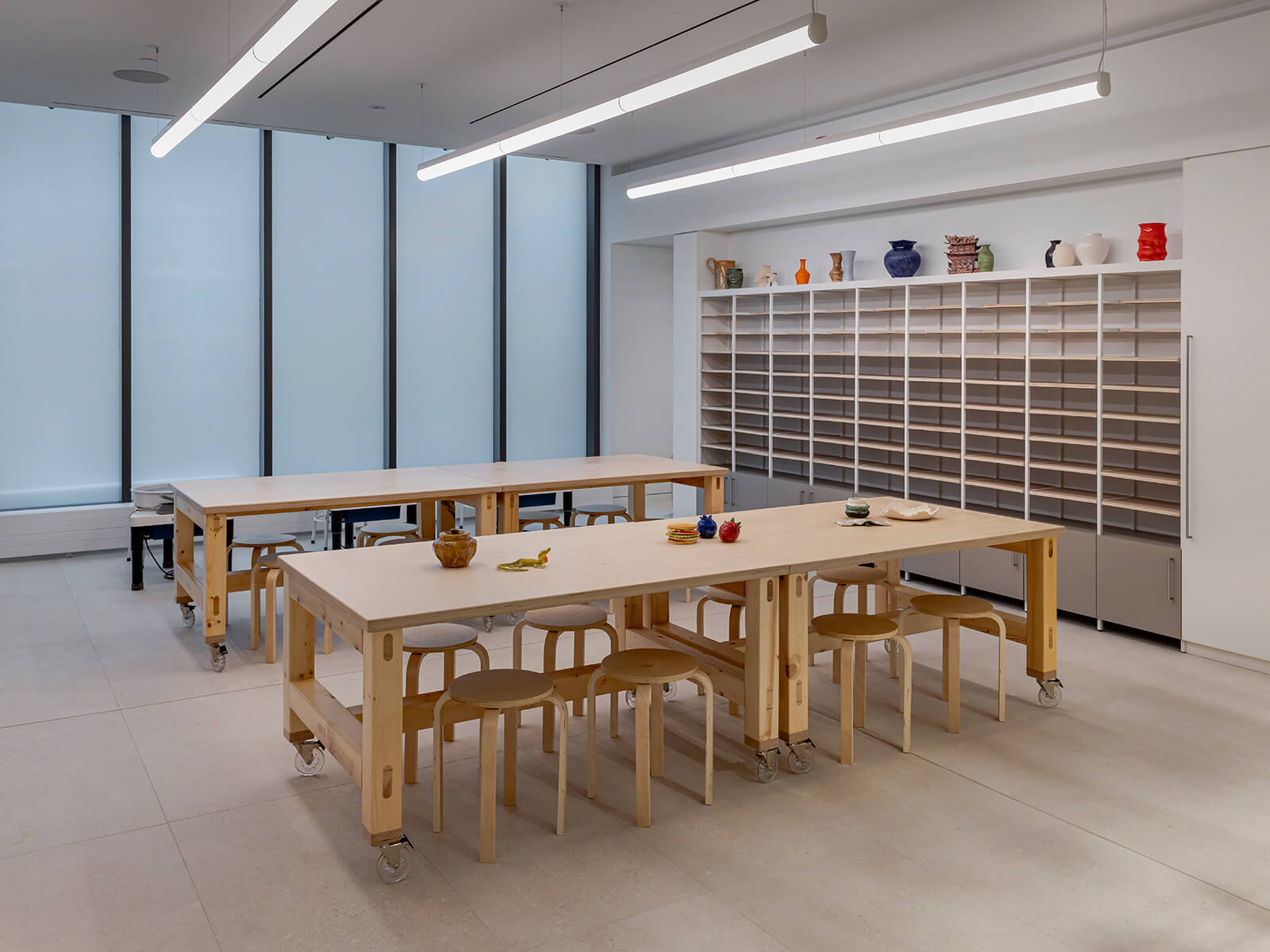
Conceived as the heart of the museum, the maker space offers pottery workshops for all ages where visitors can get messy and engage with the material firsthand. It is fronted by a glass display case showcasing playful objects that range from a rooster terrine to a head of lettuce rendered in ceramics — a move that grants open access to more of the museum’s collection.
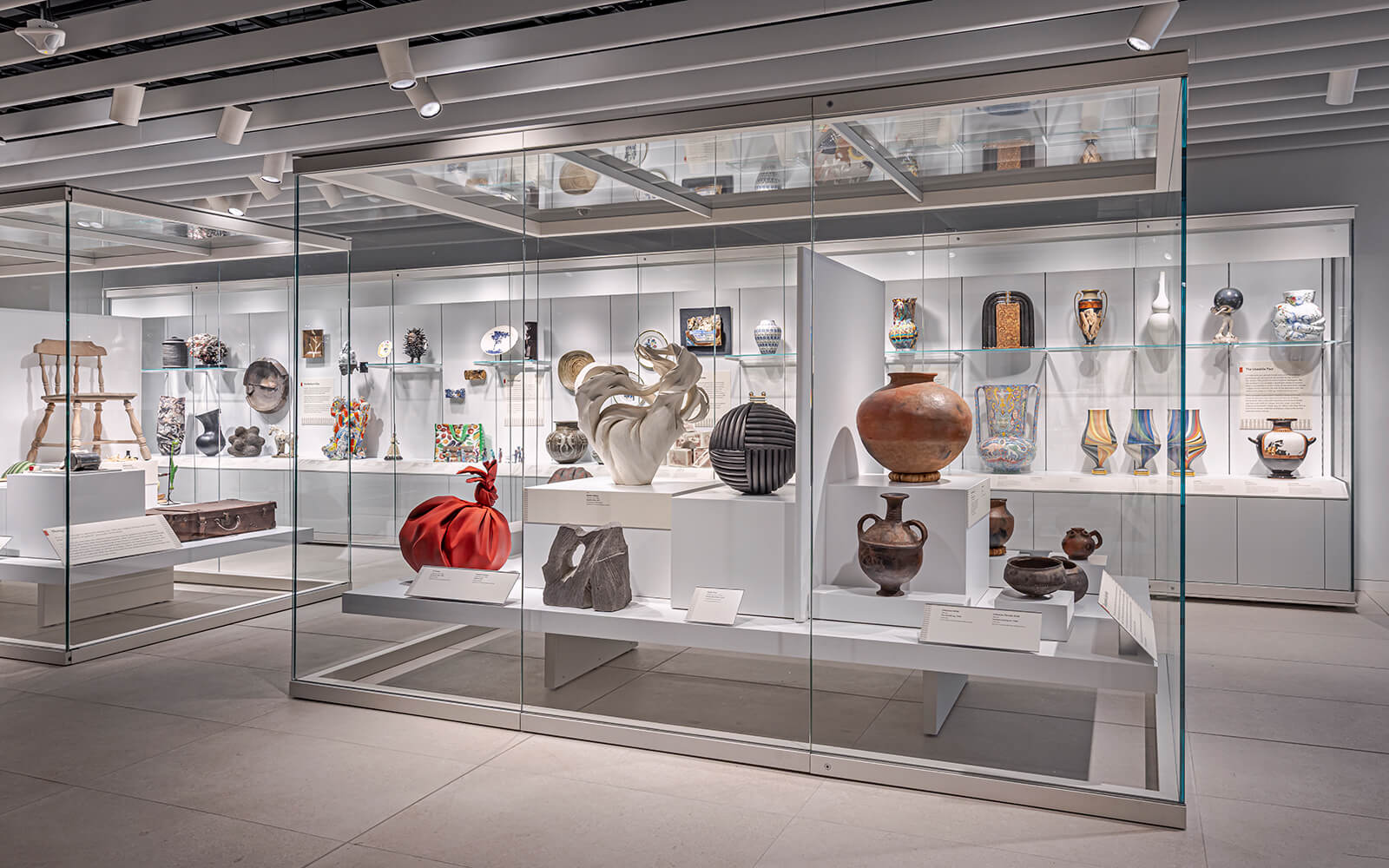
And the collection is extensive. In the new ground-floor gallery, works previously grouped in individual rooms are now arranged in one large space, organized by geography, culture, time period and technique. The new layout puts these pieces in dialogue with each other. In one section, you’ll encounter traditional Italian maiolica, while elsewhere, you may stumble upon objects that don’t appear to be ceramic at all — with trompe l’oeil pieces that masquerade as a wooden chair or a leather suitcase. A case of Indigenous works shows contemporary pieces by Kent Monkman alongside traditional works that also reference natural motifs common in Indigenous art.

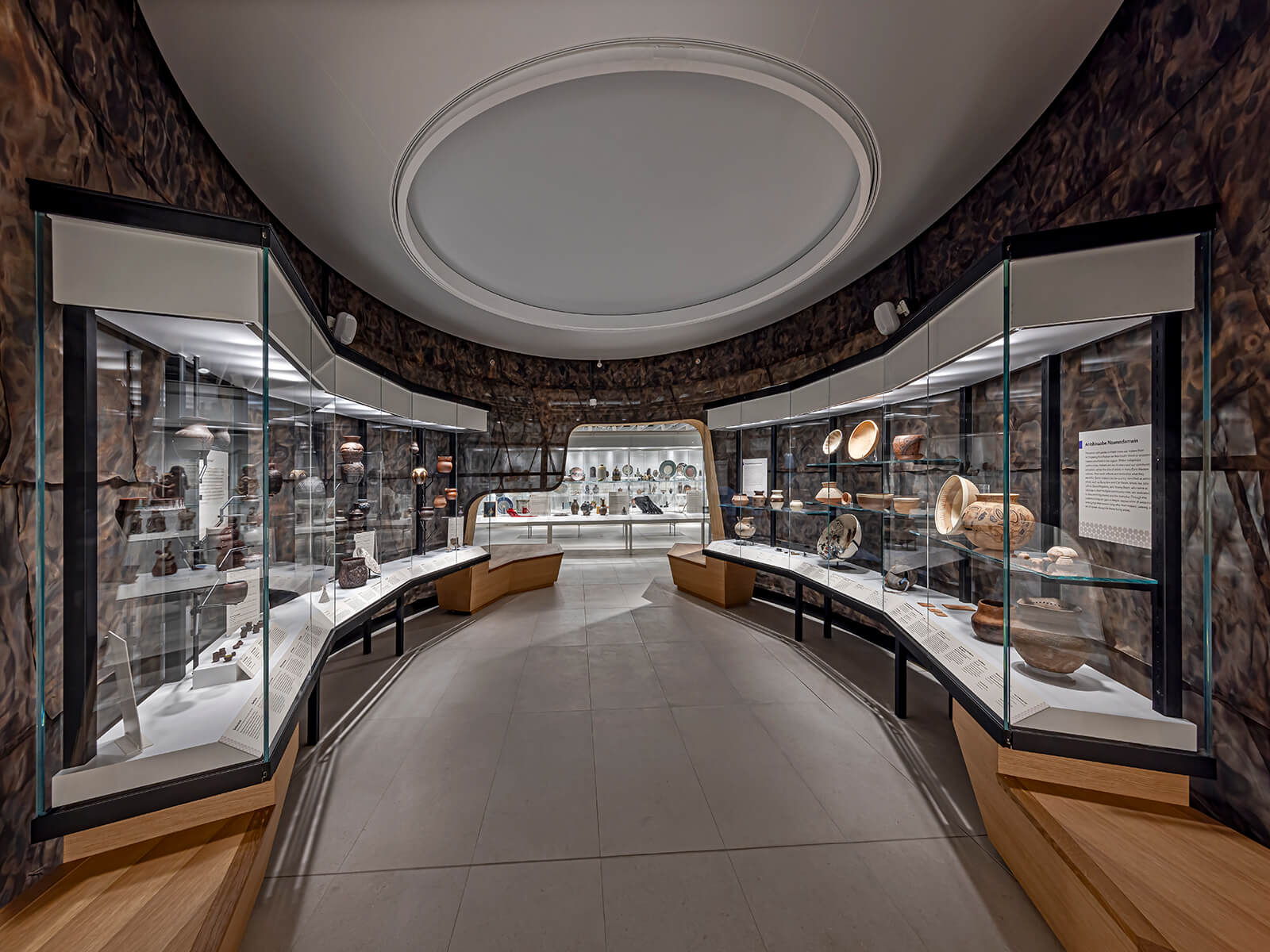
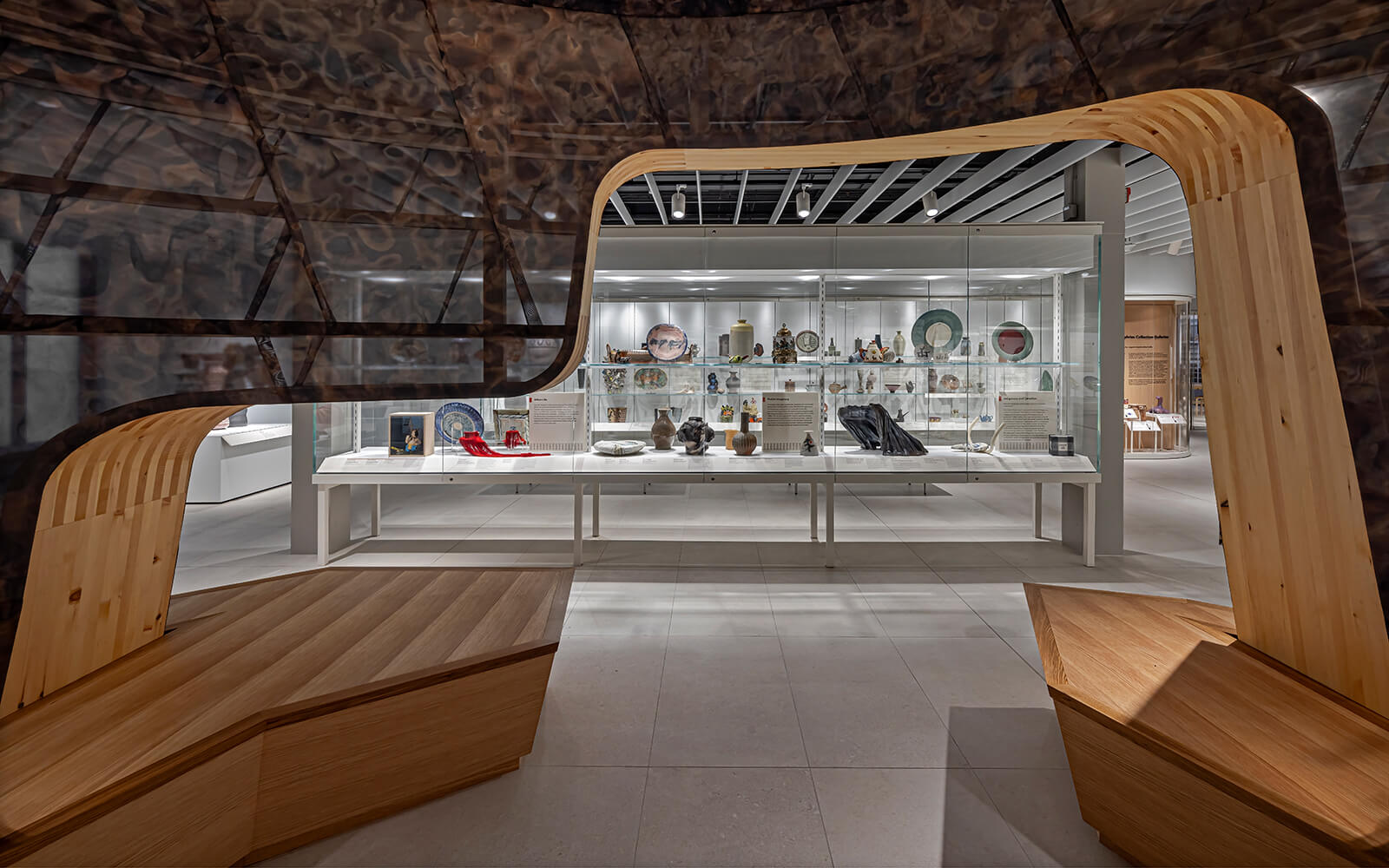
The space is anchored by a new Indigenous gallery, offering a clear statement about the prominence of Indigenous art in the museum. It was envisioned by Chris Cornelius, an architect and citizen of the Oneida Nation of Wisconsin, whose work Miller became familiar with after seeing his exhibition design for the Chipstone Foundation in Milwaukee.
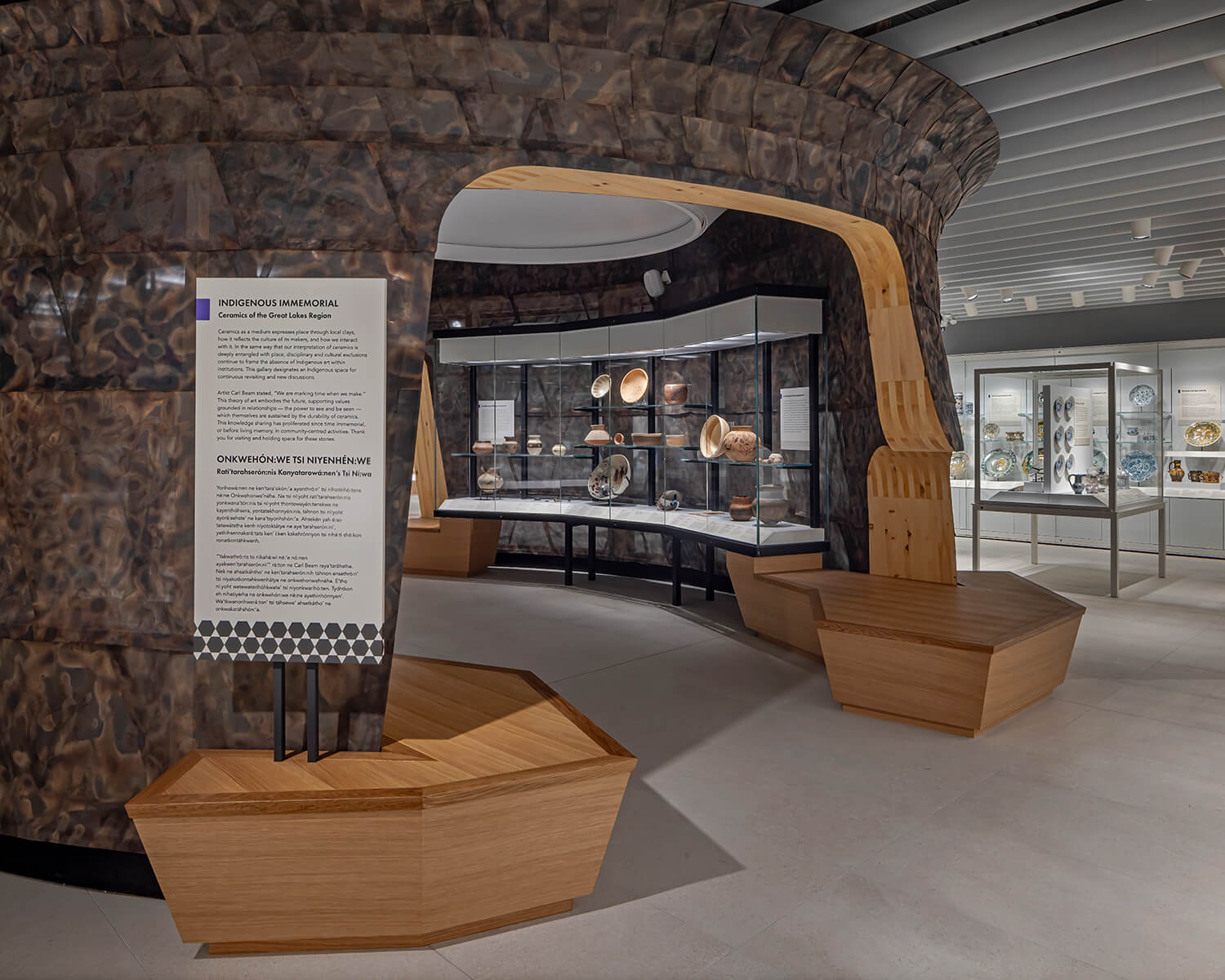
The design is entitled yelákhwaˀ, which translates to container, “one uses it to be in” — and from afar, the space resembles such a vessel. But up close, the solidity of the wood structure dissolves as the transparency of the copper mesh walls becomes apparent, revealing the treasures inside. Curated by Franchesca Hebert-Spence (Anishinaabe, Sagkeeng First Nation), the museum’s first Curator of Indigenous Ceramics, the exhibition, entitled Indigenous Immemorial, features work from the Great Lakes region, spotlighting Indigenous knowledge and cultural expression. Above, a projection of the sky compresses the 24 hours of a day into a 20-minute video, changing the experience each time a visitor enters.
The Gardiner Museum’s renovation is befitting of celebration, and the larger-than-life feature exhibition on its third floor strikes that tone perfectly. Titled Uncertain Ground, it is sculptor Linda Rotua Sormin’s largest project to date — a cornucopia of clay, hand-cut watercolour painting, video and sound. “For twenty years, I’ve fed found, broken bits of ceramic into sculptures and installations — my hand-pinched forms have a big appetite for porcelain figurines and other discarded objects,” says Sormin. “Five years ago, I learned that Batak shamans traditionally used pottery from China, Vietnam, and Thailand in their spiritual practices, carving Batak imagery into wooden stoppers that sealed these vessels. Realizing that my impulse to gather and remake is part of an old lineage shifted everything in my work — storytelling started to happen through video, painting, and the voices of my family.”
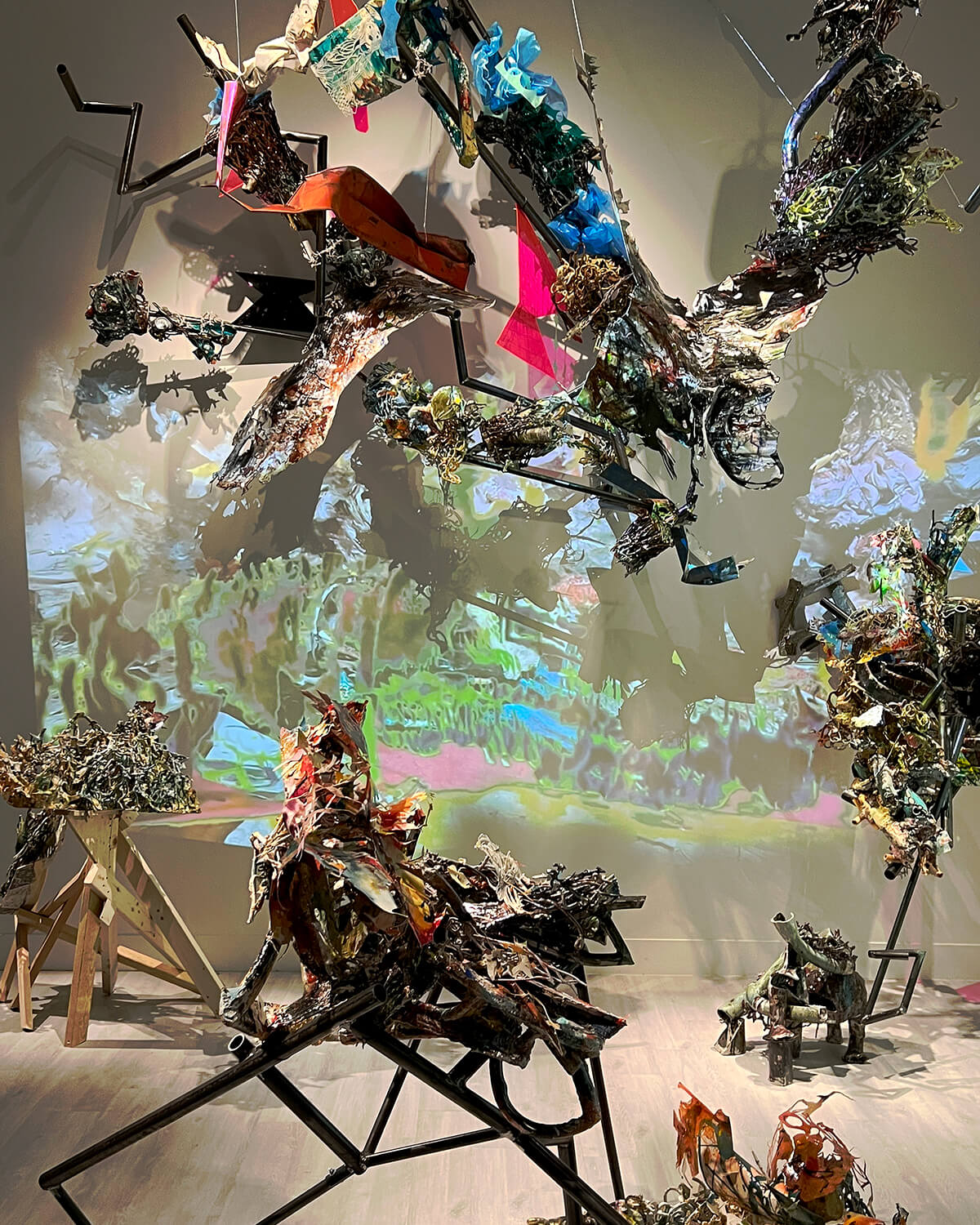
These videos play on a suspended projection screen above the installation — a tangle of ceramic sculptures and found objects — which visitors can watch from the raised platform that weaves through it, or on a series of oversized bean bags on the floor, upholstered in a textile whose pattern is derived from a blown-up image of clay. The museum itself becomes part of the installation: Sormin used broken tiles from the ground floor demolition along the perimeter, honouring these materials with an unconventional new life.
Toronto’s Gardiner Museum Unveils a Richly Layered Makeover
The institution tapped Montgomery Sisam Architects, Andrew Jones Design and studio:indigenous to make its ceramics collection more accessible — and spotlight Indigenous makers.