
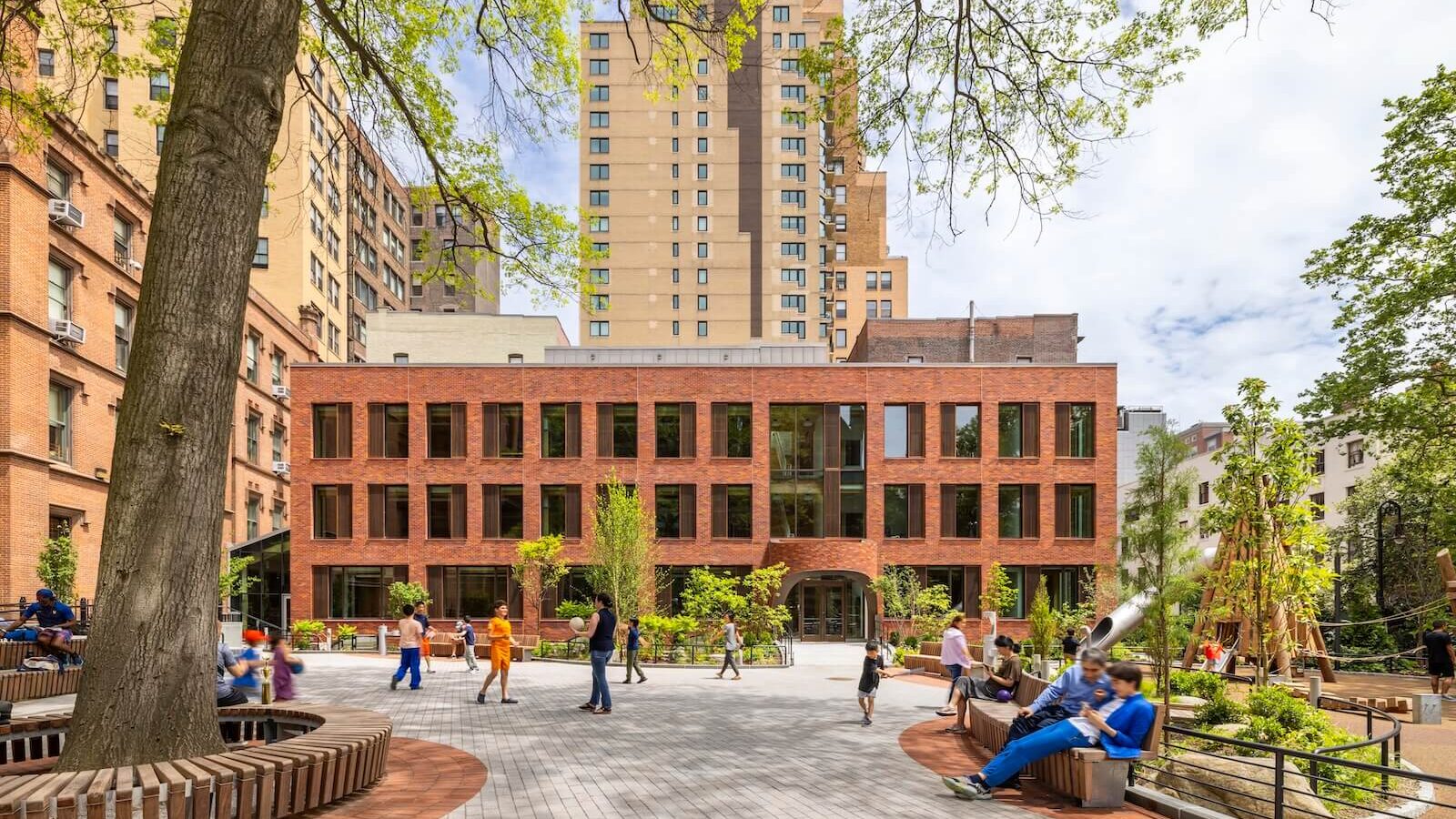
At the Garden House, warm, almost-golden surfaces crafted from spruce, pine and fir are in vibrant conversation with red-brick facades. The material juxtaposition signals a sensitive transformation whereby New York’s WXY architecture + urban design has expanded an 1869 Brooklyn Heights brownstone with a four-level, 1,600-square-metre modern hub for students in grades 1 through 4. (This lower school is part of the Packer Collegiate Institute, for pre-K to grade 12, which combines an array of acquired buildings, including the former St. Ann’s Church, into a patchwork campus.)
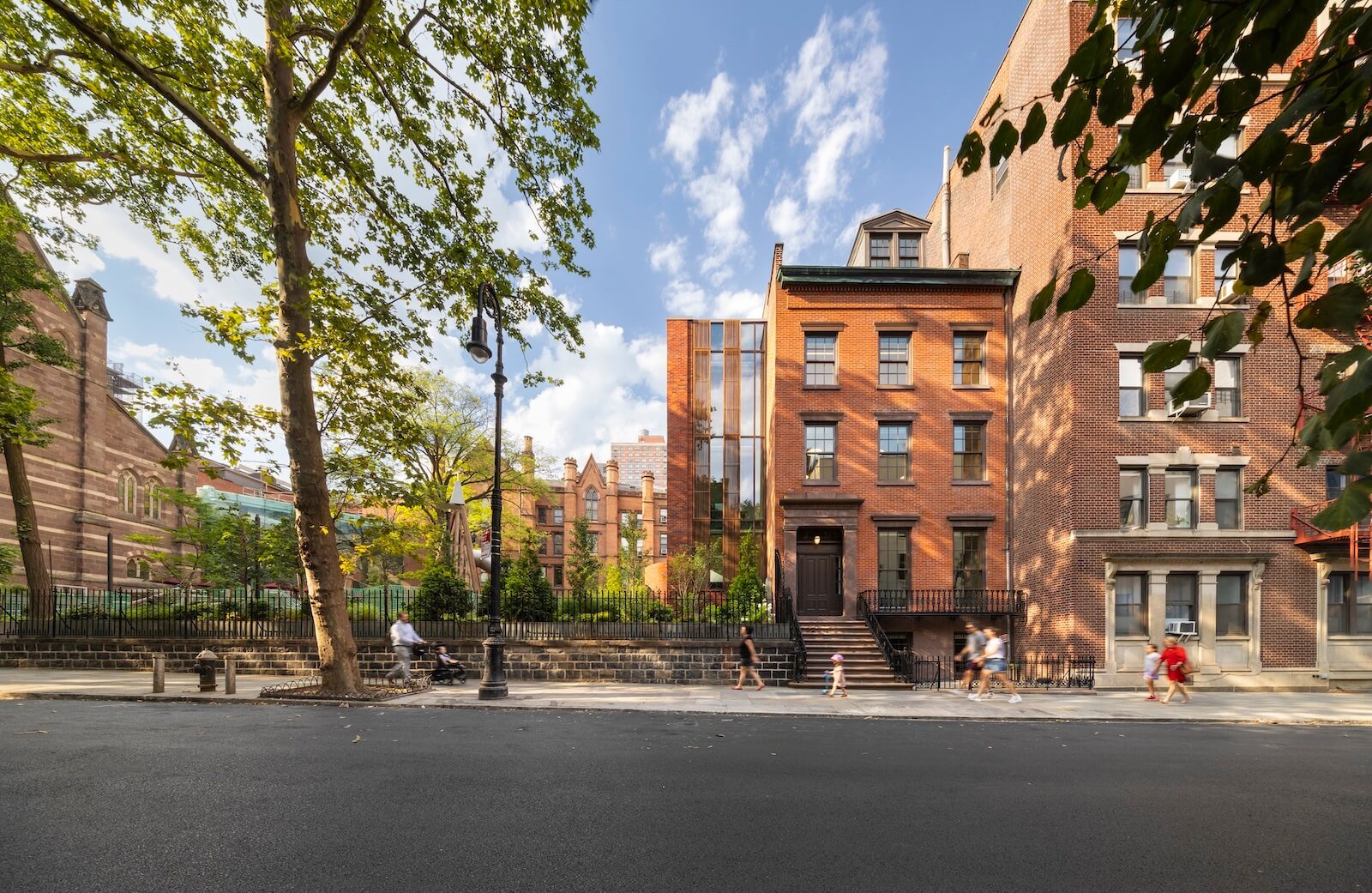
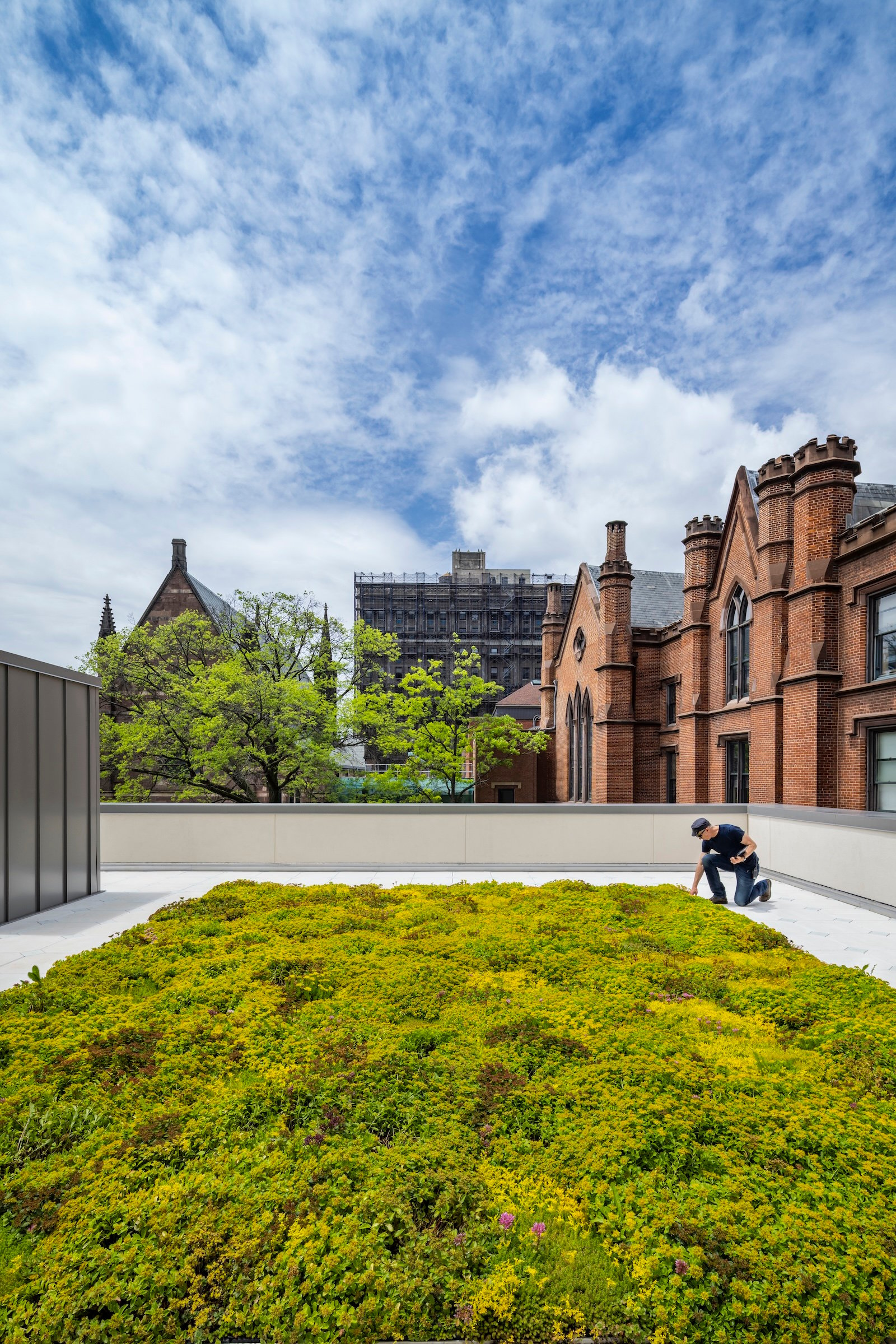
Most impressive in this deeply considered project, the Garden House mends and extends the fabric of the original — with a masonry facade that merges with the preserved brick shell of the 157-year-old brownstone — even though it is largely a feat of mass timber. The primary structural system is built of cross-laminated and glulam timber from sustainably sourced northern Ontario wood.
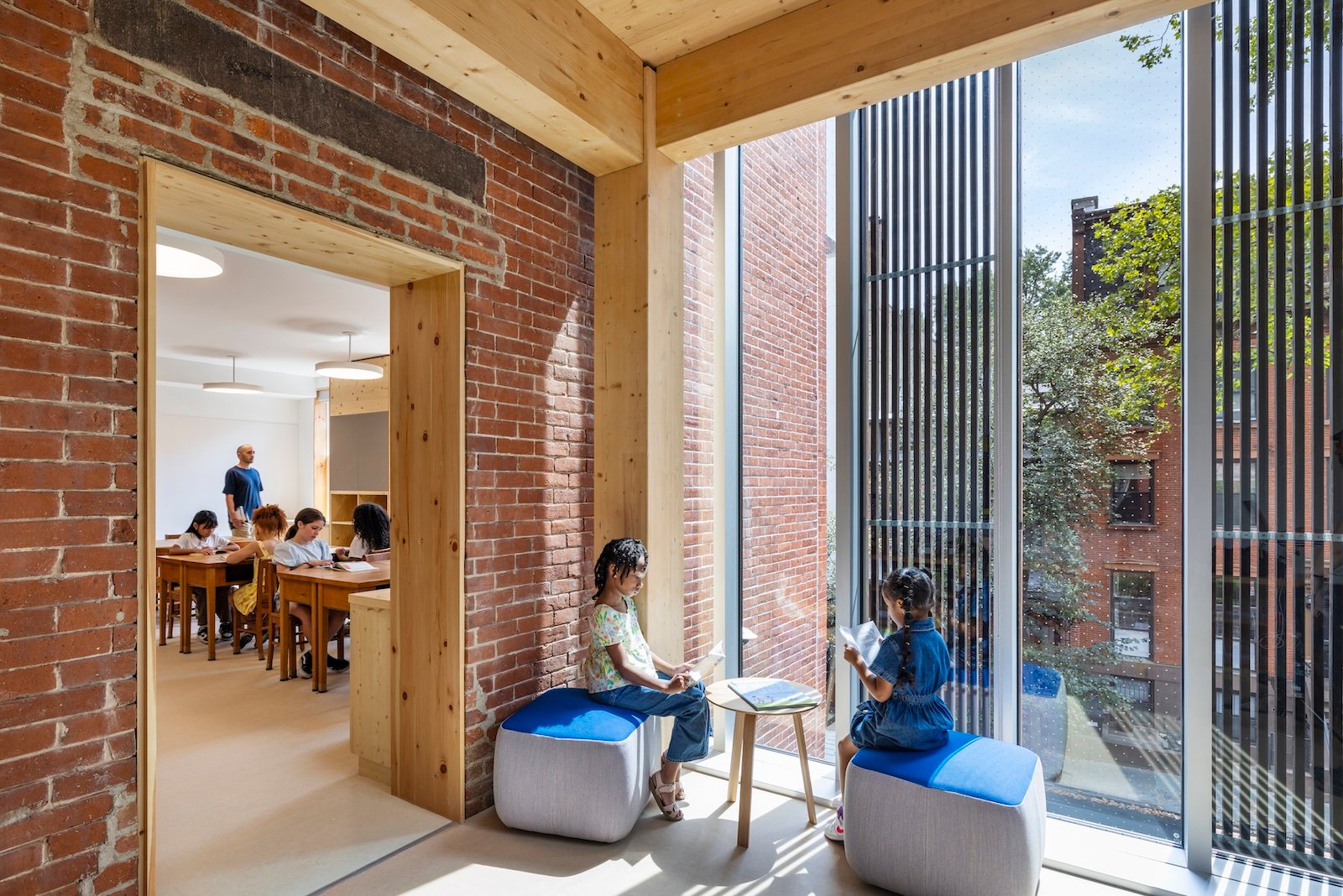
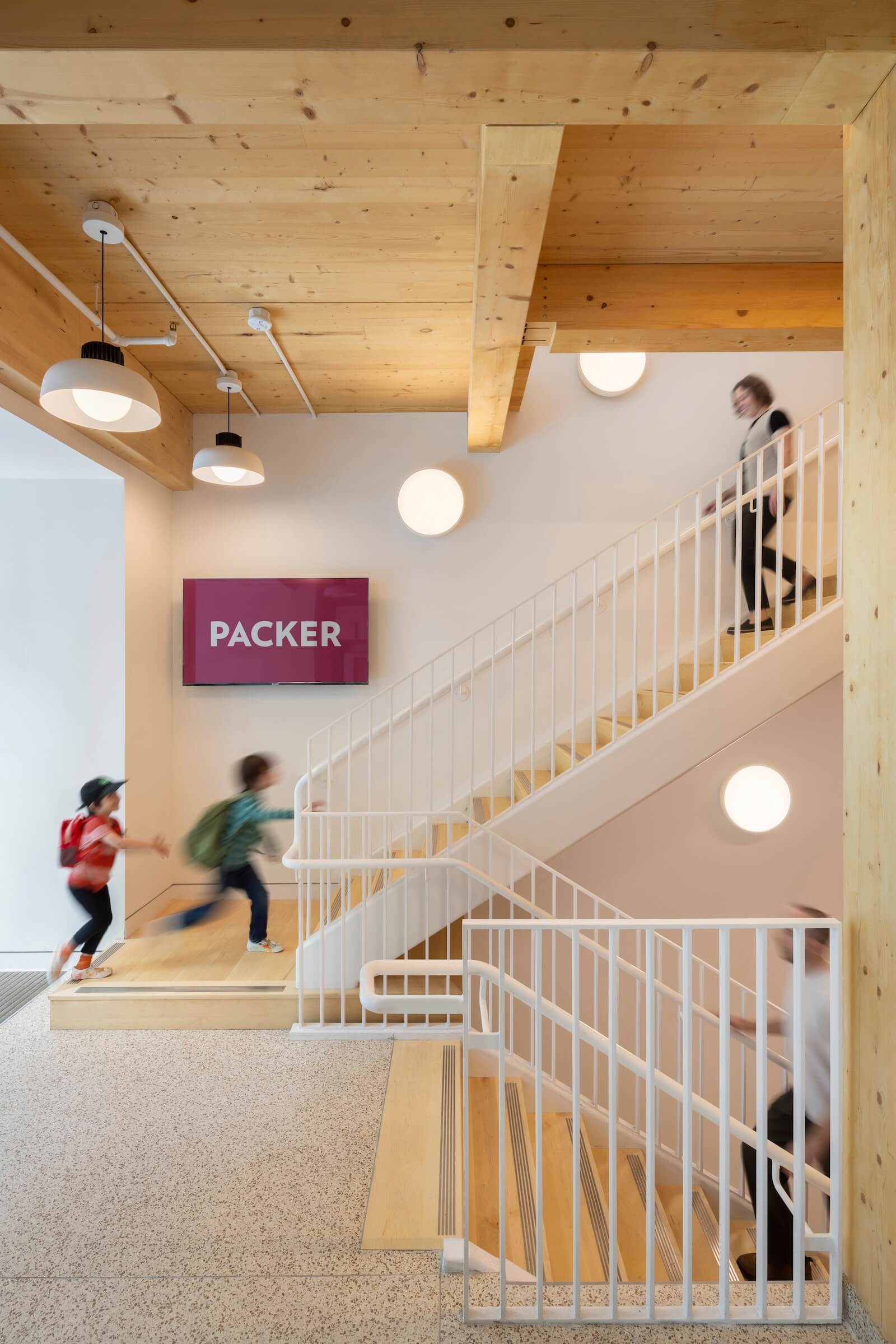
A sculpted archway beneath a soaring light well forms the entrance to the addition. Its four floors accommodate one grade each in classrooms, learning suites, breakout spaces and washrooms. Fostering glimpses between the levels, a central stair provides the main circulation and allows the classrooms to be organized along a single-loaded corridor, which maximizes daylighting and opens sight lines to the garden outside. Throughout the building, deep windowsills (some made even more welcoming with benches), terrazzo floors, crisp white arches and generous clerestories conjure a spirit of airiness, openness and vibrancy. Where the old building and the new addition interface, the aged brick is celebrated as another rich interior detail.

Certainly, the mass timber construction makes the biggest impression. The architects cite wood’s healthful effects as a primary reason for its use in the educational building. “The use of CLT reduces embodied carbon and offers physiological benefits to students, with studies showing that wood environments reduce cortisol levels, stabilize heart rates and promote focus in children, all aspects particularly important in educational settings,” the firm says.
The building material’s low embodied carbon also contributes to the project’s overall sustainability, which is boosted by its all-electric, highly efficient HVAC system and rainwater-harvesting green roof. Even the brick used on the extension’s facade is made from recycled clay content sourced from post-consumer and manufacturing waste; it’s made in a spectrum that picks up the subtle variation in tones across the existing buildings.
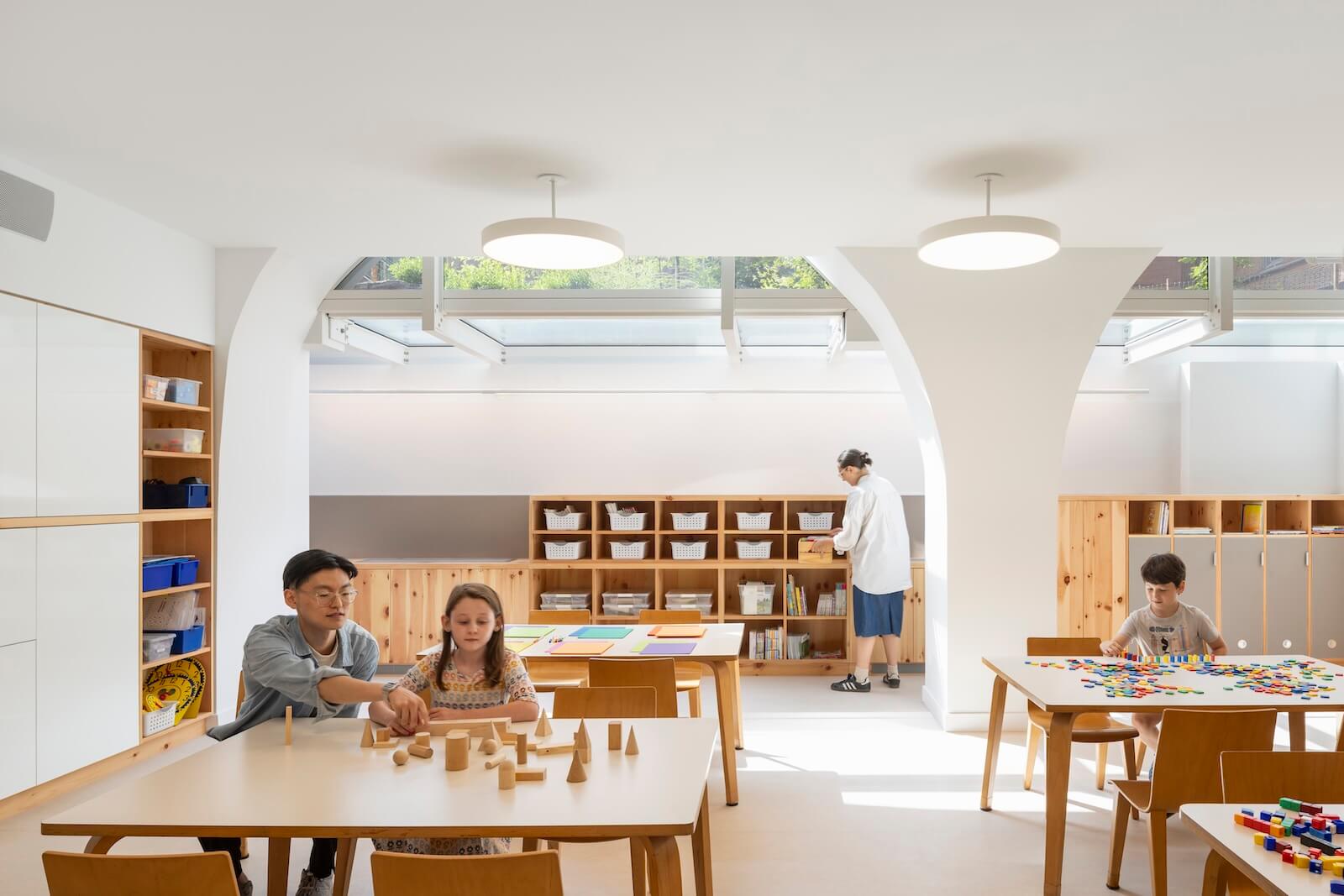
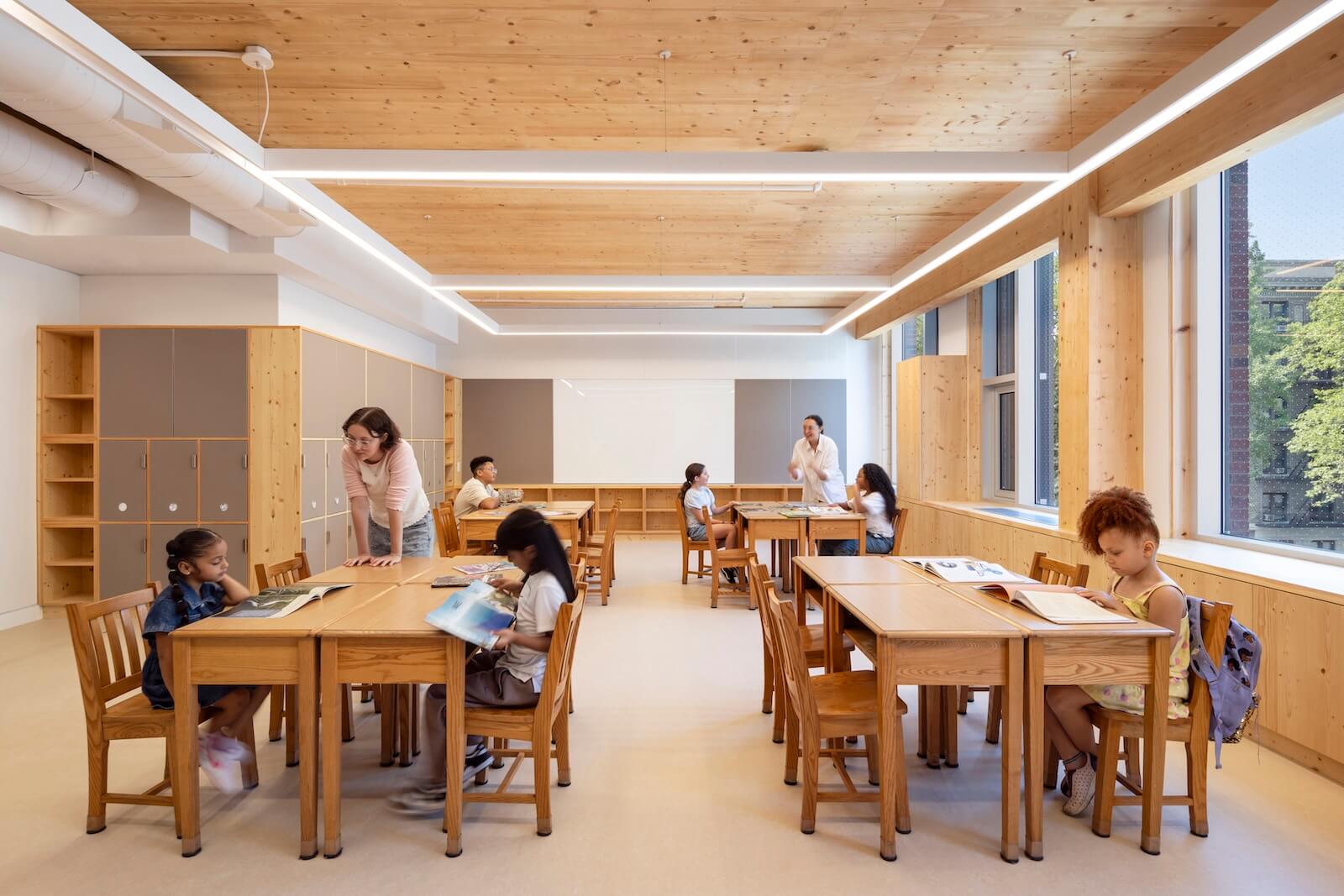
Together with Starr Whitehouse, WXY also revamped the school’s main garden, which expands the urban forest. “By using permeable surfaces for better water management, the landscape fosters biodiversity and resilience through native and climate-adaptive species,” the firm explains. These include new trees, shrubs, perennials and grasses, the majority of which are “regionally native or climate-resilient, complementing three existing mature trees.”
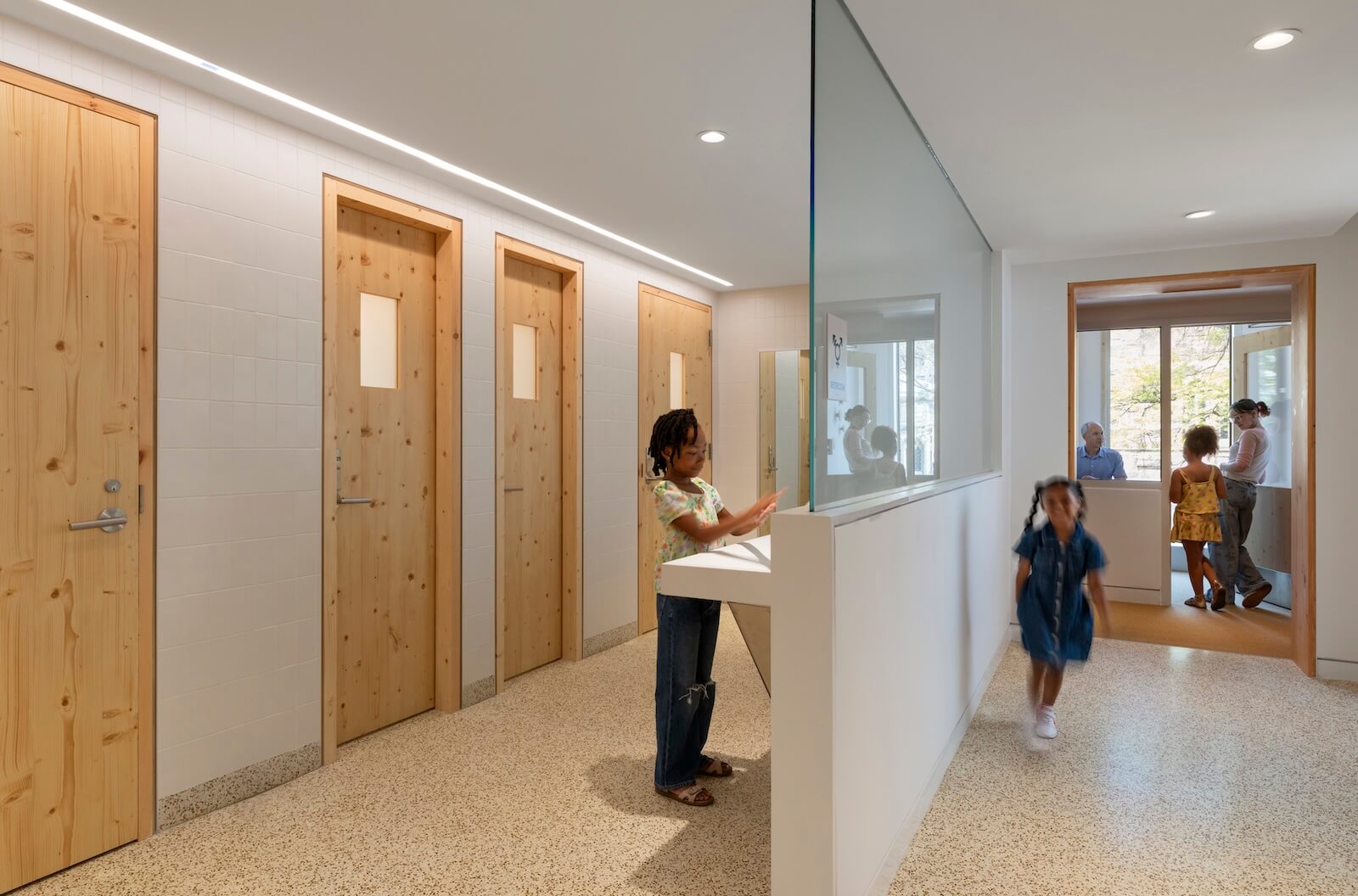
The complete undertaking is part of WXY’s Facilities Master Plan for Packer, which aims to cut its campus energy consumption by 30 per cent by 2040. The firm views it as a “pioneering national model for educational architecture.” Schools across the U.S. (and elsewhere) are stuck with aging infrastructure. “Mass-timber construction is a lower-carbon alternative that can streamline building timelines, minimize site disruption and reduce overall costs compared to conventional steel or concrete systems,” the firm states.
Back to School: WXY Designs a Mass-Timber Hub Within a Historic Brooklyn School Building
WXY stretches out a 1869 brownstone with a warm mass timber addition that accommodates kids in grades one to four.