
Boston’s South Station has long been a gateway to the city, a humming tangle of tracks and platforms, ranking among America’s largest rail hubs. Now, the 1899 terminal has a new upstairs neighbour: a 51‑storey tower by Pelli Clarke & Partners that animates the site, enhances rider service, and restores the civic presence the station once commanded.
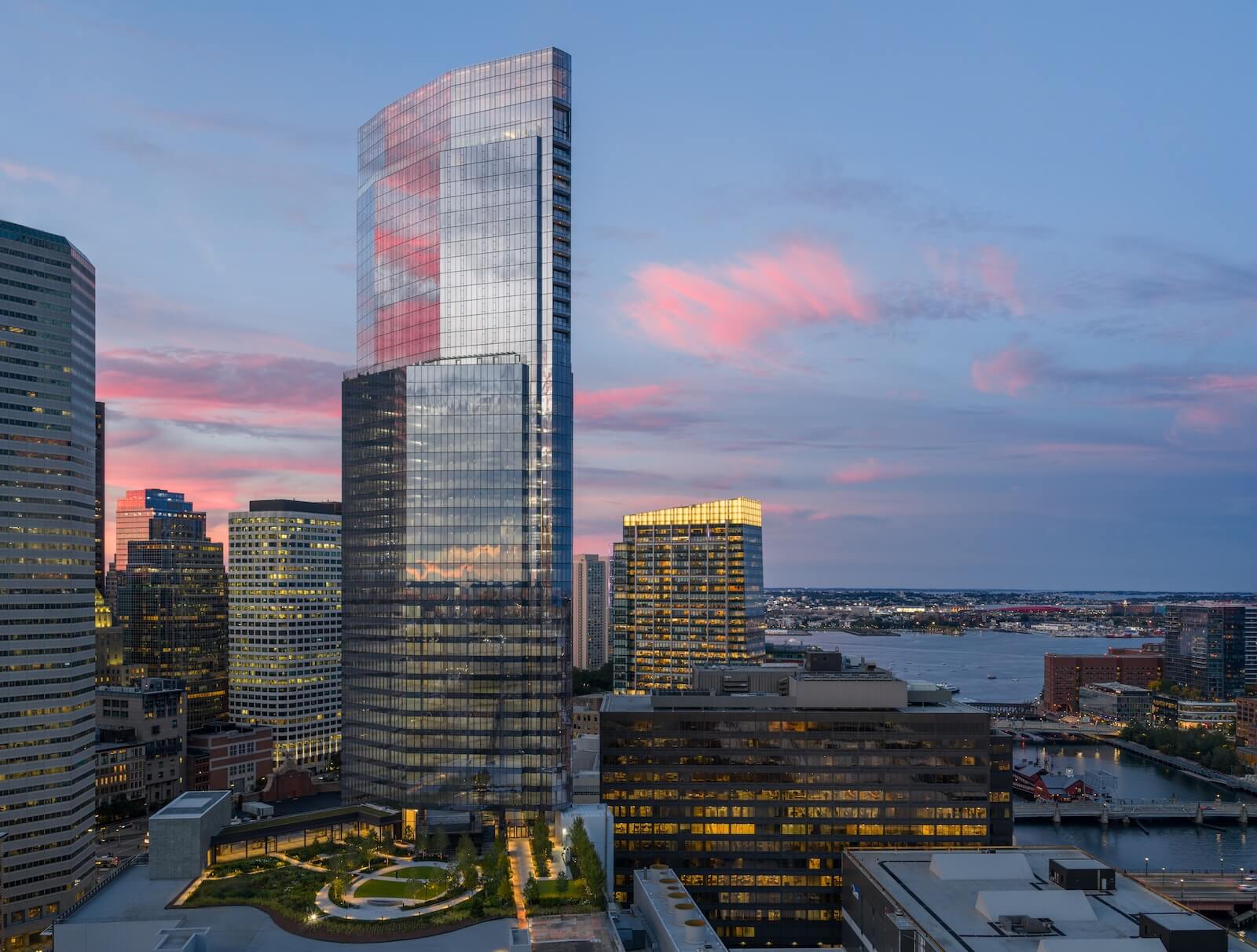
Developed and owned by Hines, the tower realizes an idea decades in the making: building above the tracks. The high-rise, wrapped in a crisp curtain wall, carries suites of offices and 166 condominium apartments above the pink granite Beaux-Arts headhouse, a city landmark for more than a century.
When South Station first opened in 1899, it united five rail lines under one roof. By the mid-20th century, as passenger rail declined, its prominence waned. The arrival of Interstate 93 and the decline of the commercial harbour each reduced the station’s traffic.
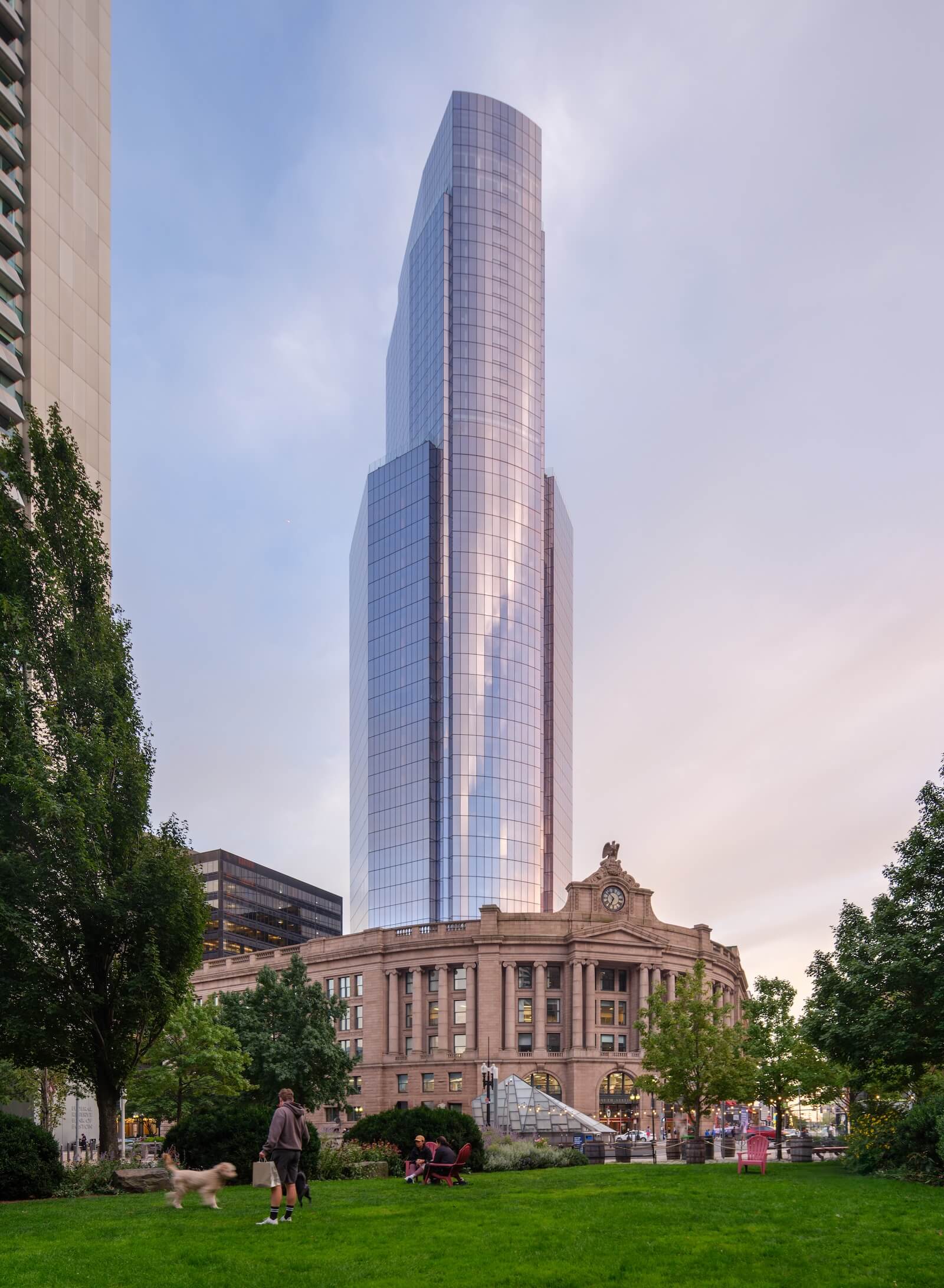
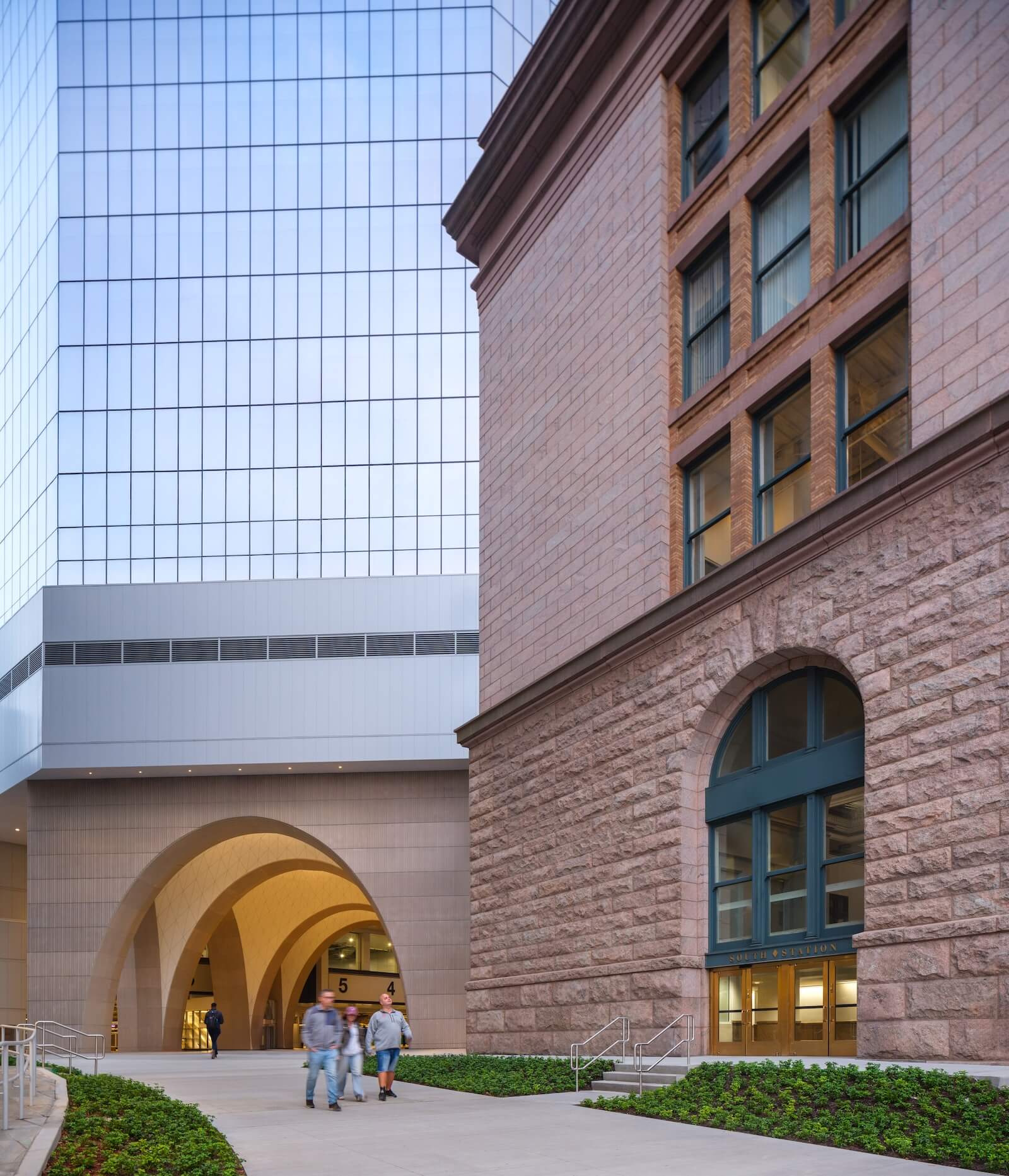
It survived, however, and the facades by Boston architects Shepley, Rutan & Coolidge – who came out of the office of H.H. Richardson – remained a presence in the city. The architects chose to respect it. “The last thing you want to do is compete with this old monument, which has been under threat many times,” explains Pelli Clarke & Partners partner emeritus Fred Clarke.
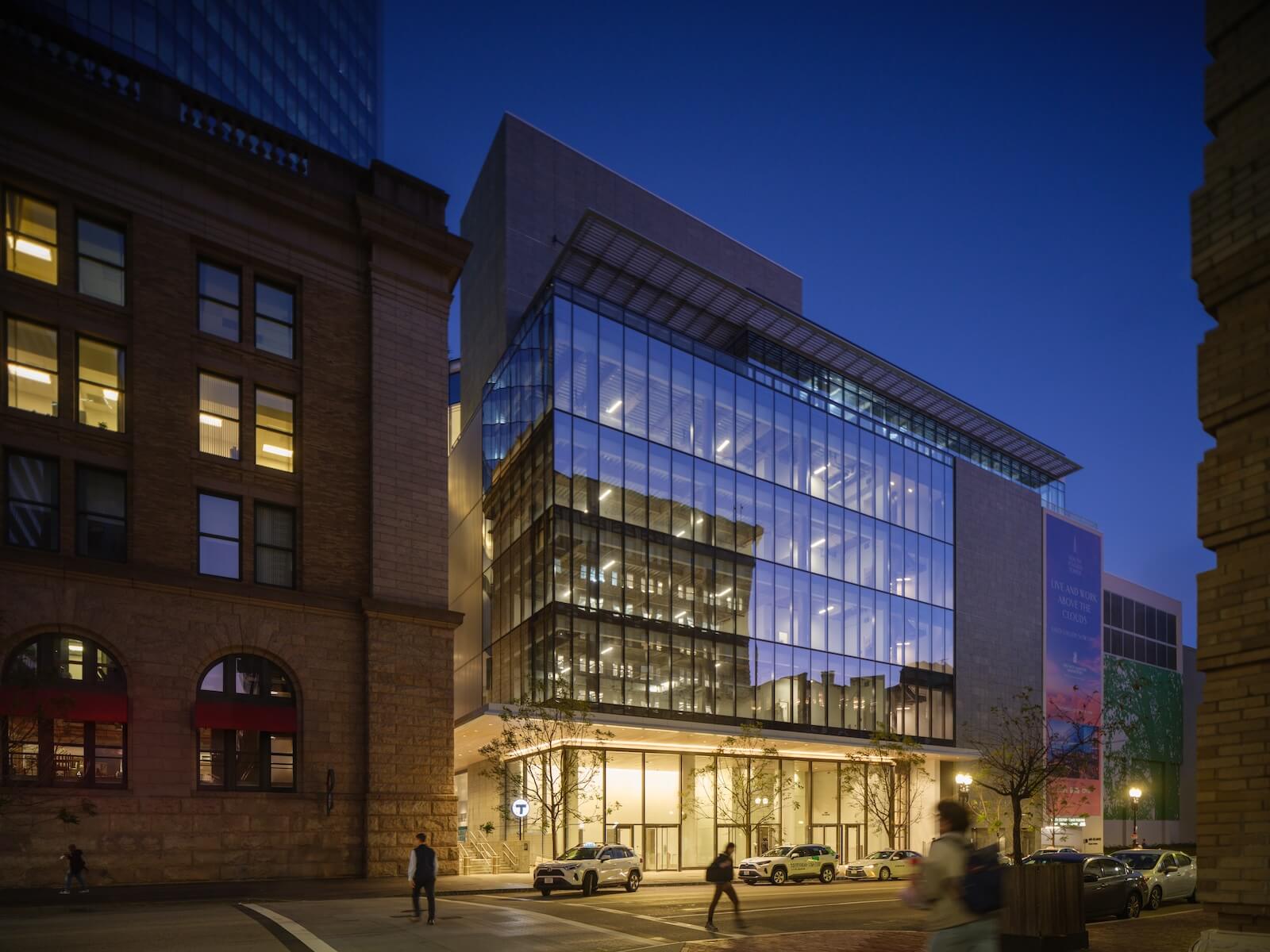
Accordingly the team reworked an existing brief to create a tower that respects the irregular footprint of headhouse. The historic stone facade remains the public face, while the tower’s triangular glass volume rises behind and above it.
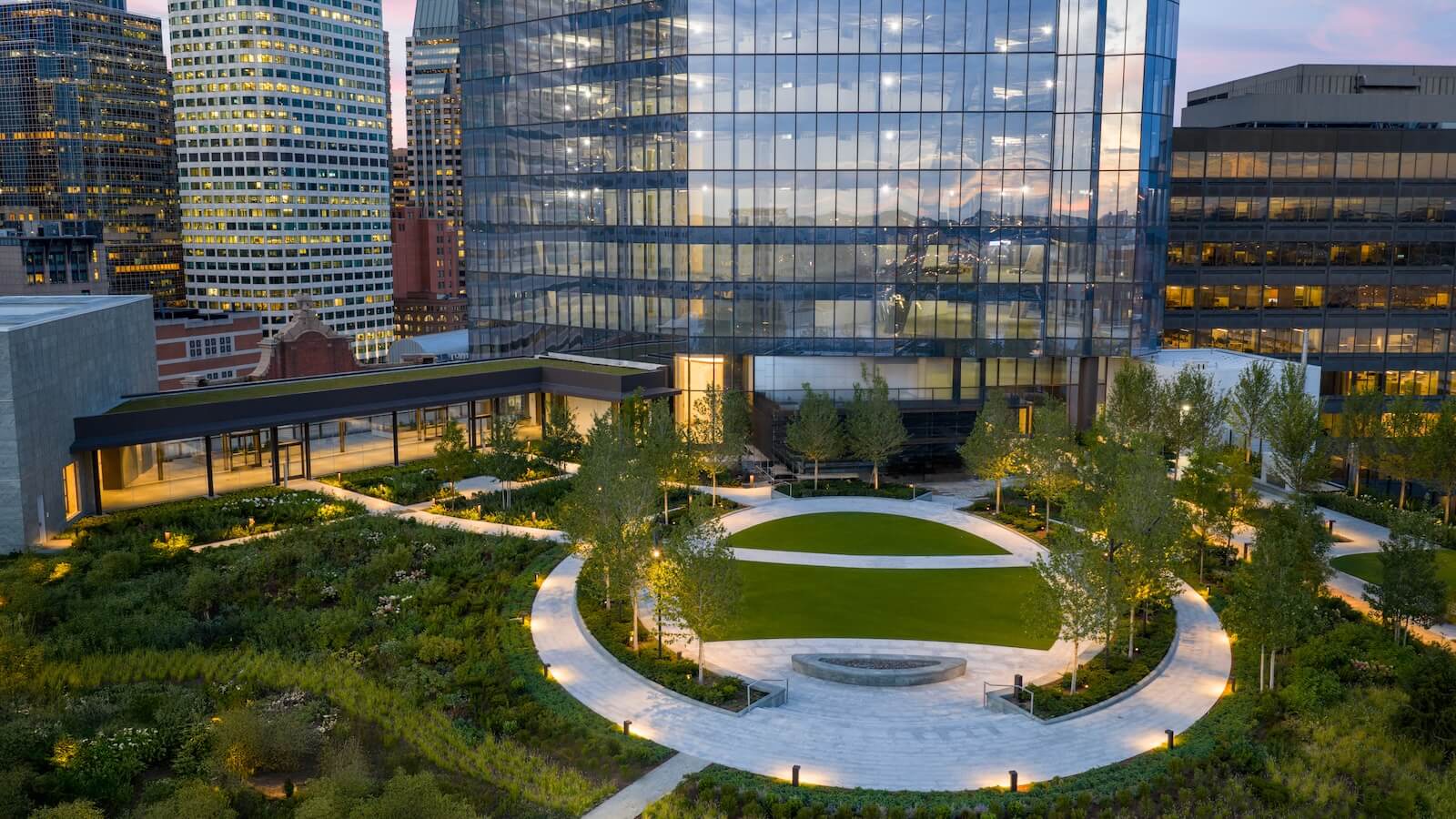
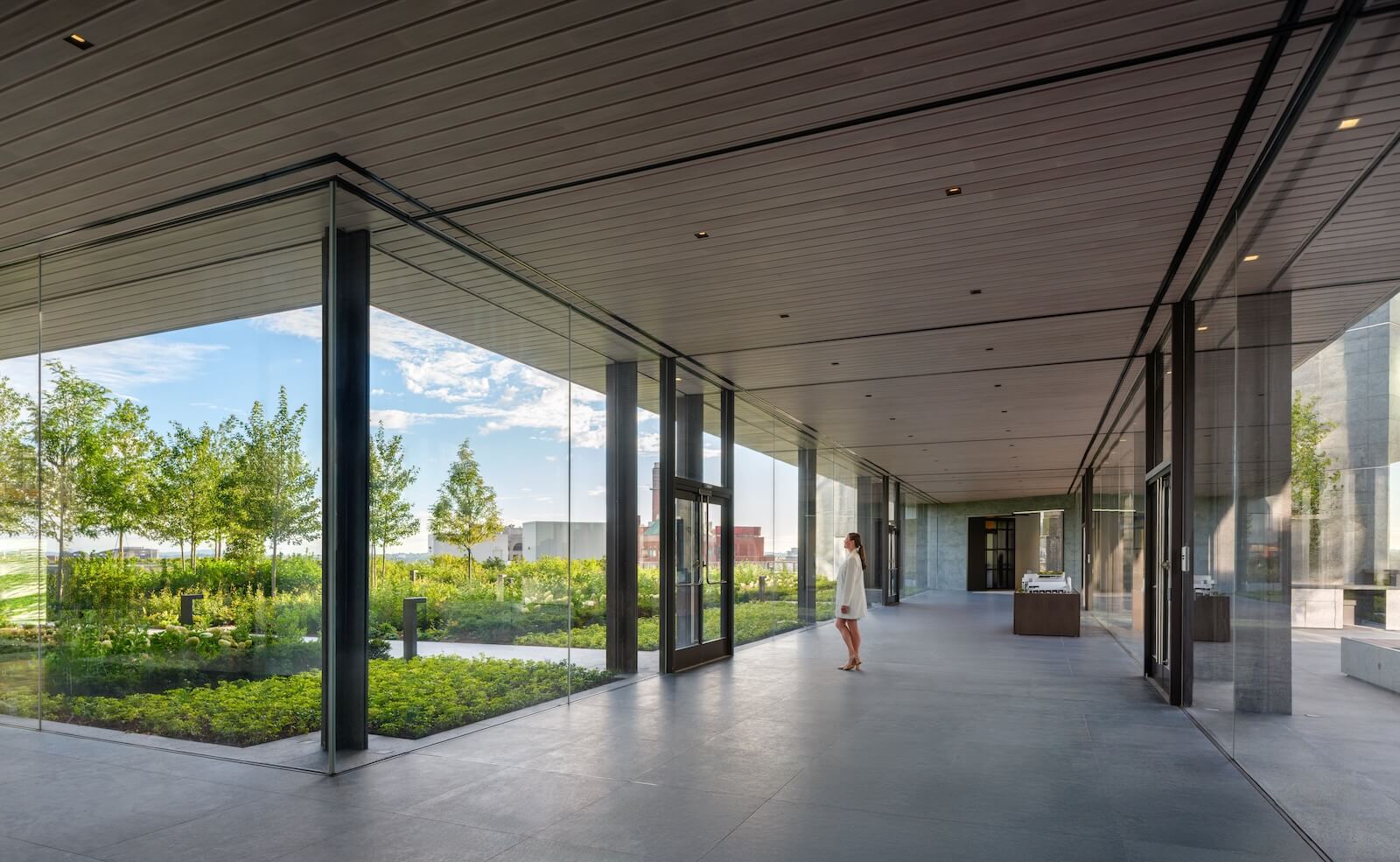
The tower’s faceted form narrows as it climbs, catching light from every angle. Its 680,000 square feet of office space sit above a podium with retail, dining, and a 166-unit Ritz-Carlton-branded residence. Visitors enter through a lobby at the side of the building, ascend to a ninth-floor sky lobby, and then continue their journeys upward. A formal, cobblestoned garden by OJB crowns the podium, offering an acre of landscaped gardens with views of downtown and Boston Harbour.
Structurally, the project demanded precise coordination. The tower rests on eight columns, which had to be threaded between 13 active rail lines and several subway connections. The result is a building that touches the ground in only a few places while unifying previously fragmented parts of Boston’s transit network.
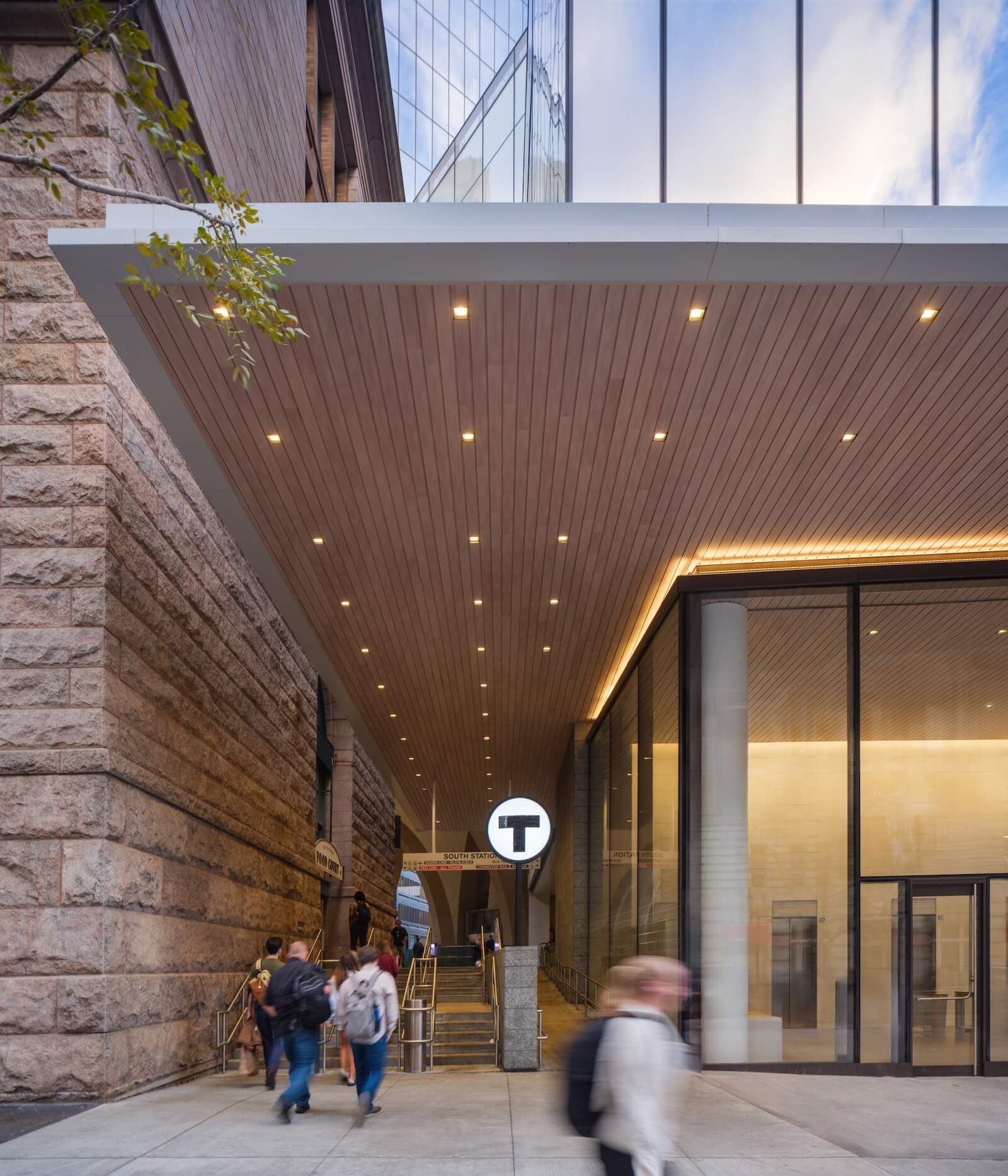
The project leaves the station’s indoor concourse, renovated in the 1980s, untouched, but reorganizes how people move through the campus. Bus operations, previously housed in a separate terminal, are now stacked above the rail lines.
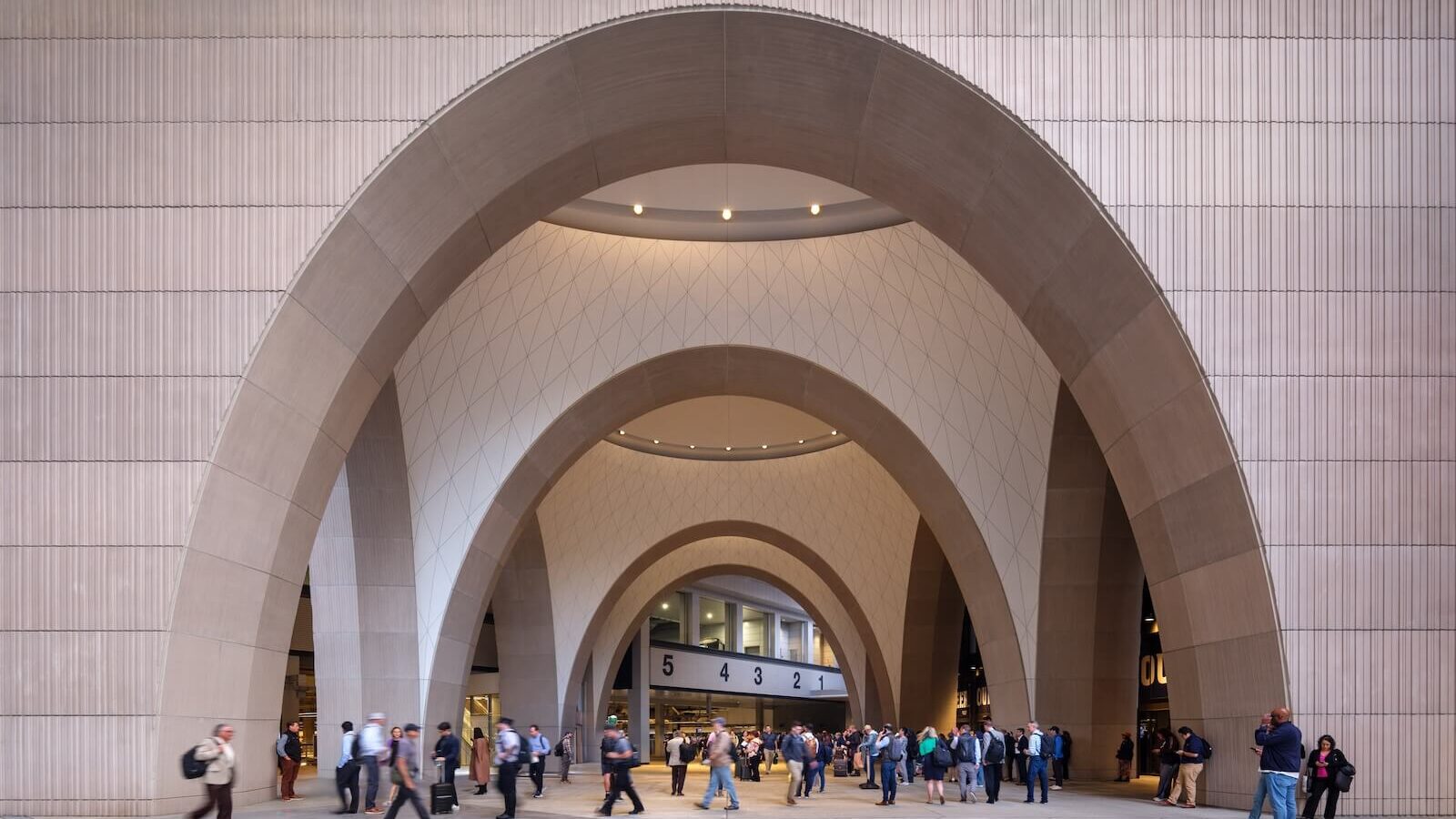
And the public realm gains a spectacular new space: A public passage that cuts diagonally through the site from Summer Street to Atlantic Avenue. The passage runs beneath three grand domes, each nearly six storeys high, that deliver a Romanesque grandeur, alluding to the strong local tradition of H.H. Richardson. Custom precast panels supplied by Quebec’s BPDL articulate a grid of diagonal lines, playing up the complex curved geometries of the arches. From this passageway, travellers can move easily into the train shed or ascend escalators to the bus terminal above, leaving the city via railroad or freeway.
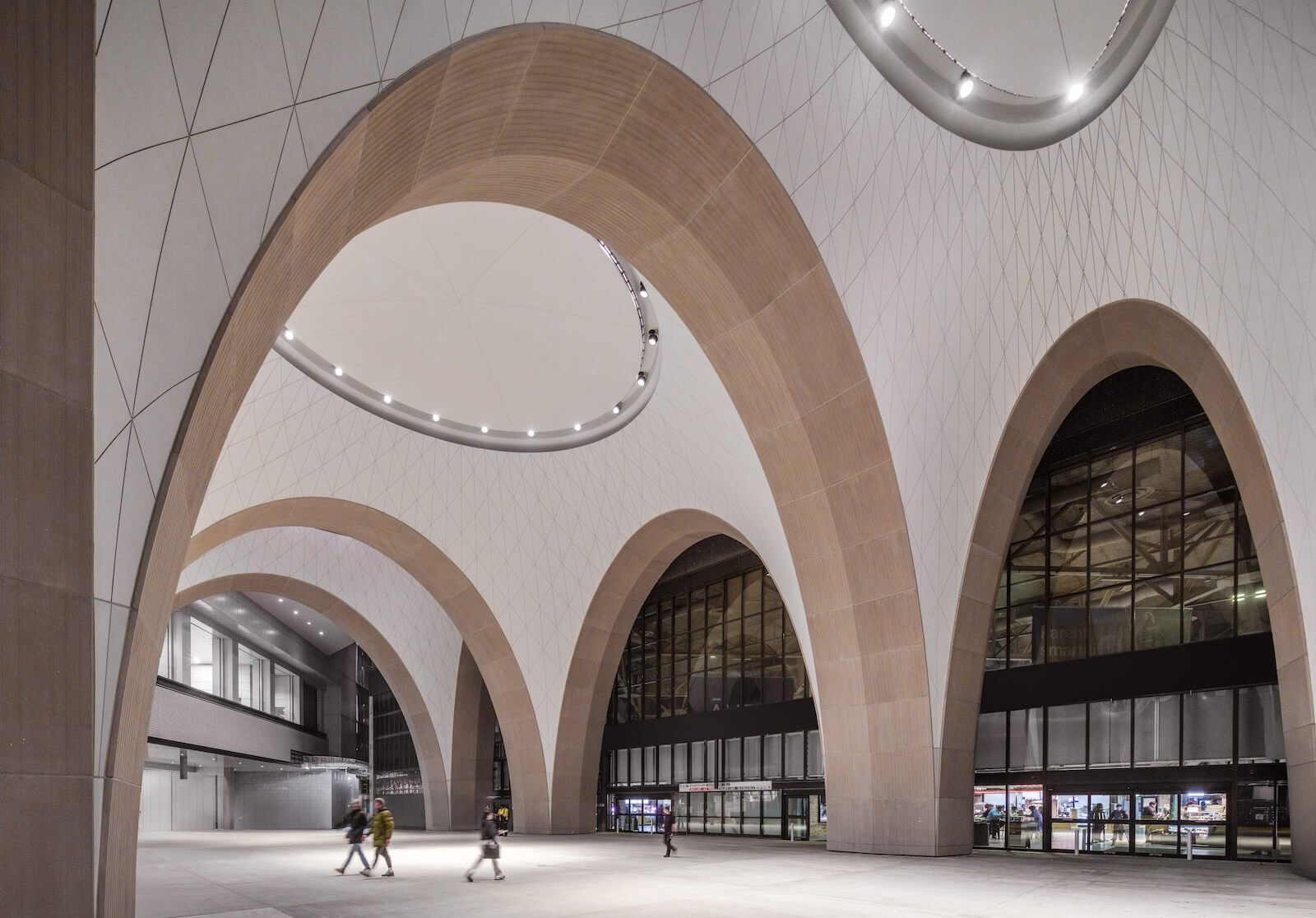
On street level, the project announces itself with uncommon confidence. What Clarke calls “a space that wasn’t on anyone’s radar” unfolds as a precise choreography of columns, arches, and domes — a conduit for the city’s currents of commuters, visitors, and office workers. Here, infrastructure becomes poetry: movement animates the architecture, turning daily transit into a quietly exhilarating civic experience.
Pelli Clarke & Partners Build Tall and Mighty Above Boston South Station
Boston South Station’s new 51-storey tower rises from the historic facade of the station with 166 condo units, and touches down with a Romanesque trio of domes that animate the passenger experience.