
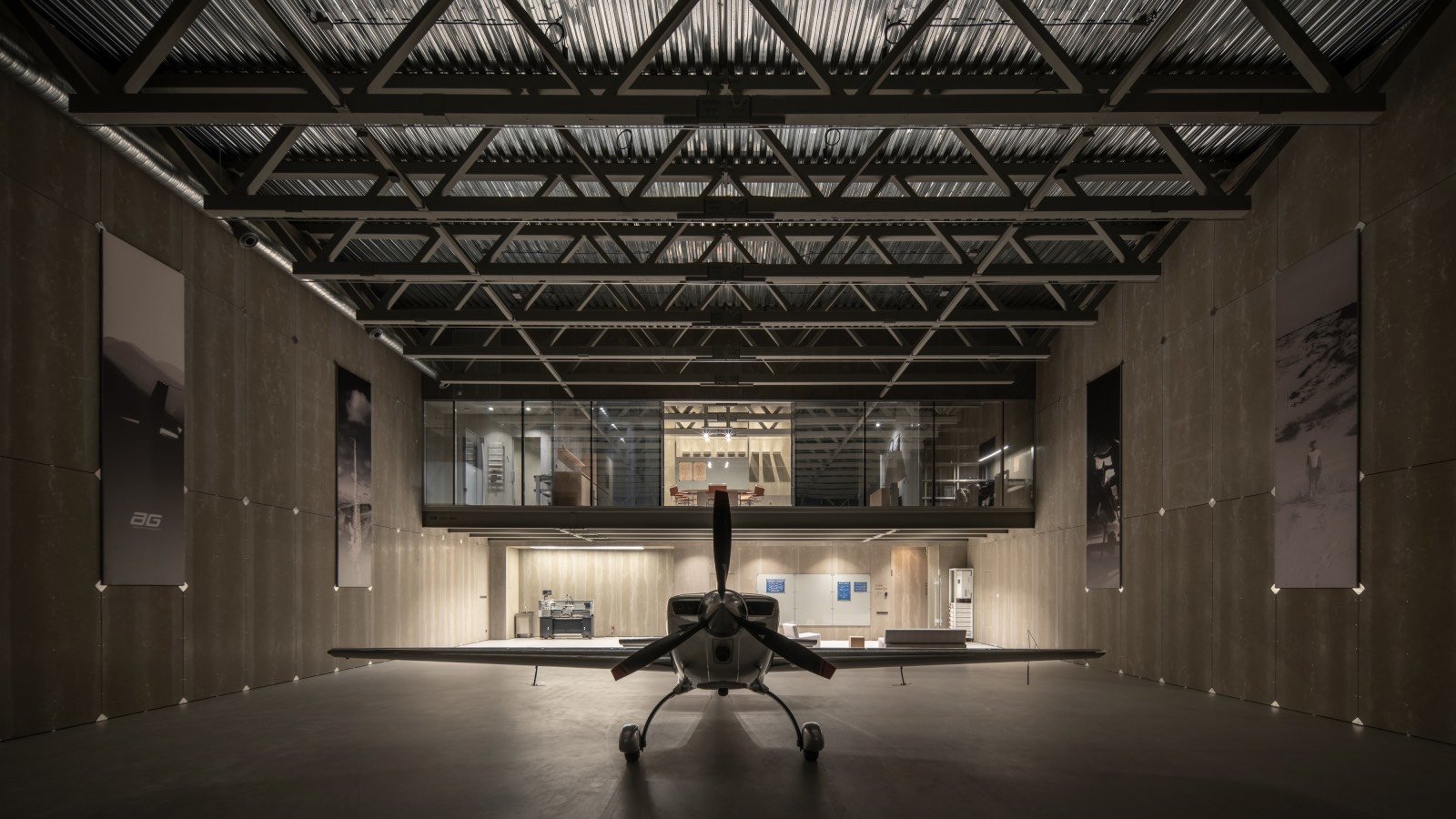
Situated in an undisclosed location, a recently completed single-volume structure is at once unassuming and thoroughly unique. The new homebase for an elite group of athletes that excel in aerobatics, freestyle motocross and skydiving, the AEORTIM hangar was designed by Kyiv-based +kouple, the studio known for its minimalist approach and innovative use of sustainable materials.
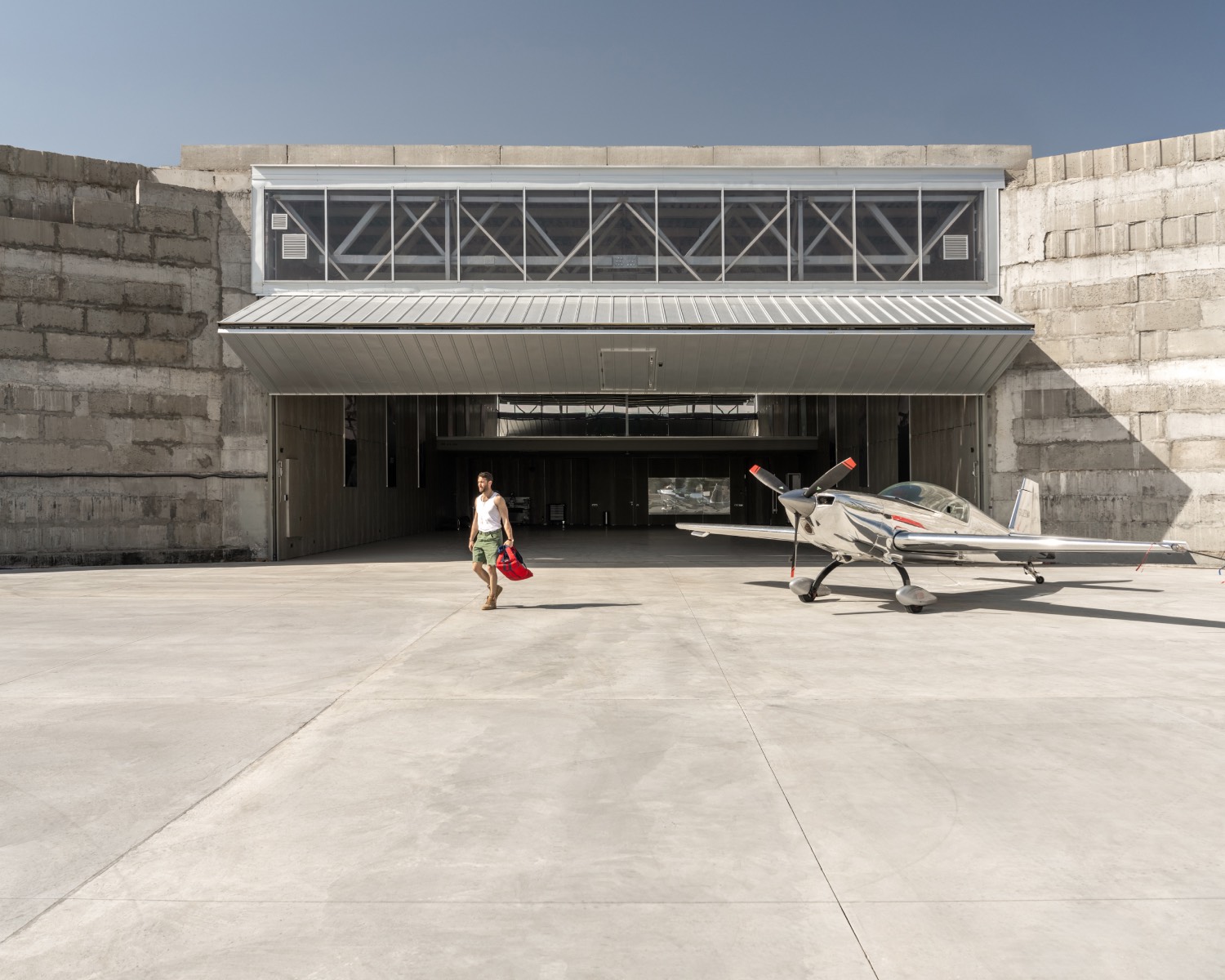
With the airport hangar, the Ukrainian team led by Dan Vakhrameyev applied a design language that is “deliberately restrained” to provide a multifunctional and multifaceted headquarters that “corresponds to the basis of the team spirit and aviation in general.” What this translated to is a streamlined aircraft hangar that is precise in logic and construction but also an inviting space for teammates to relax, collaborate and socialize.
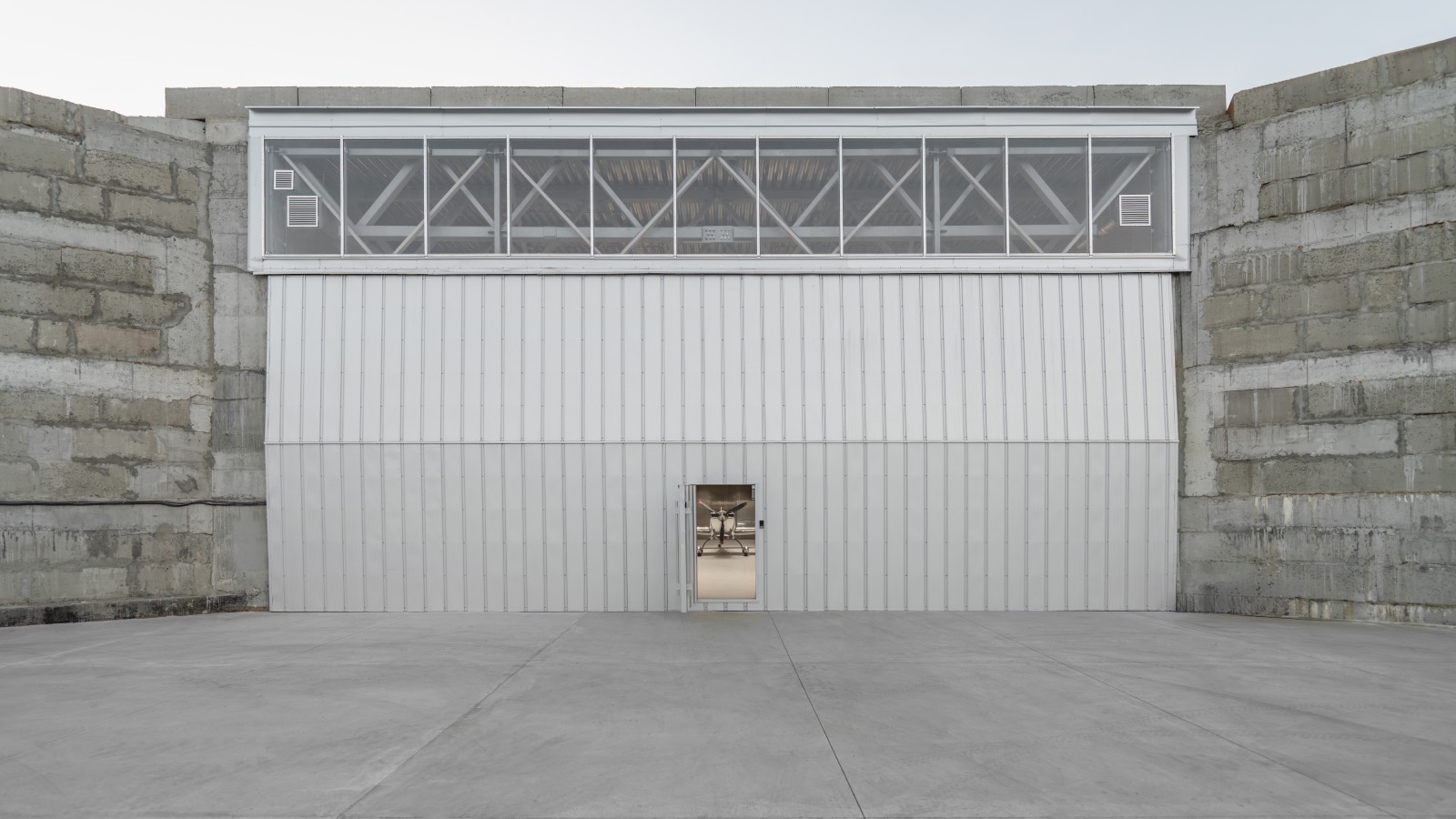
From the outside, the AEROTIM hangar by +kouple is decidedly utilitarian – two rugged cinder block wings frame a full-width vertical-lift gate made from raw zinc sheets. A polycarbonate fronton tops the entrance, allowing natural daylight to filter inside, where a more humanistic design prevails. “This is a space for relaxation before and after flights, task briefings and collective discussions,” says Vakhrameyev of the AEROTIM hangar interiors. “The design of the space should be not be obsessive.”
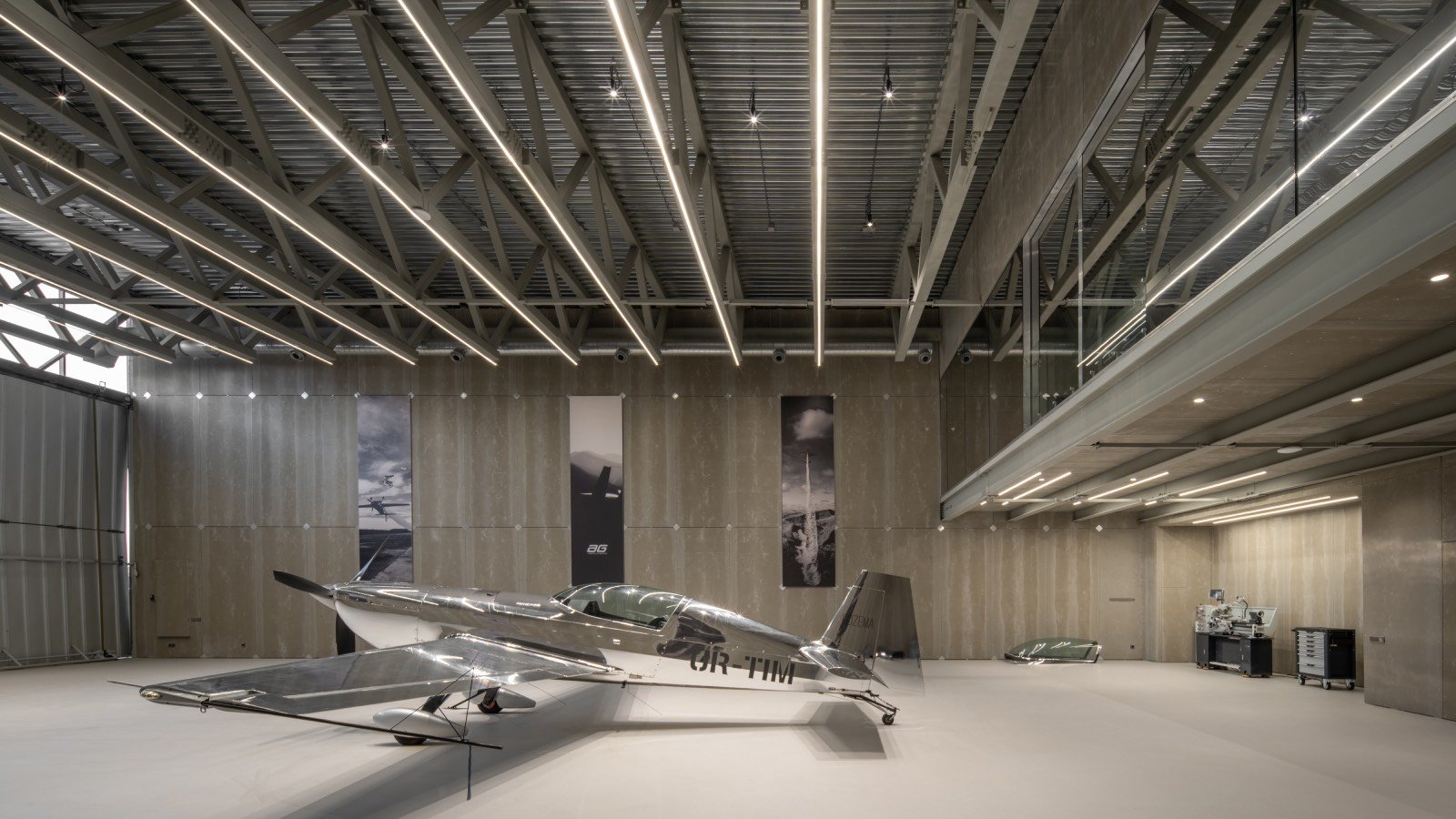
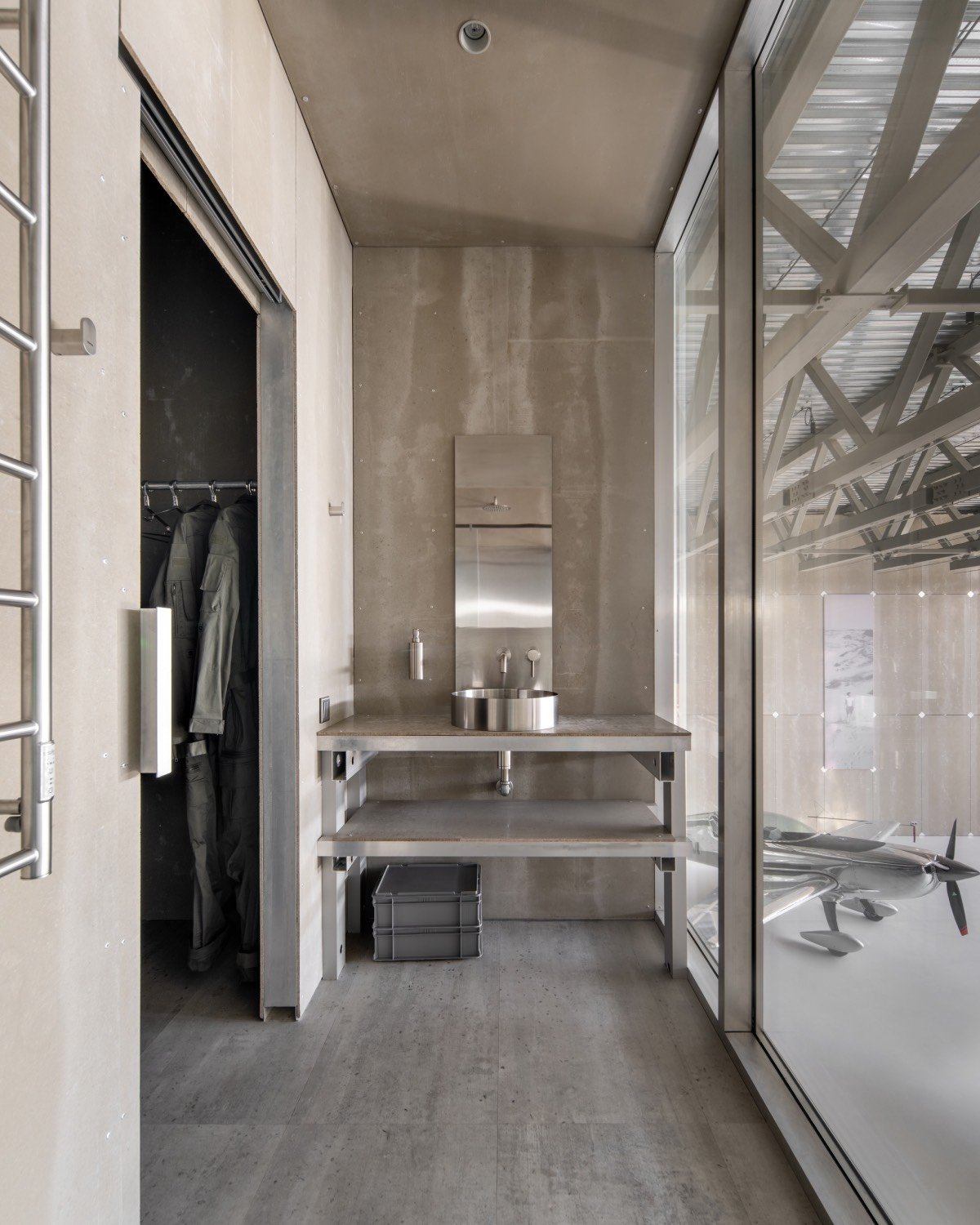
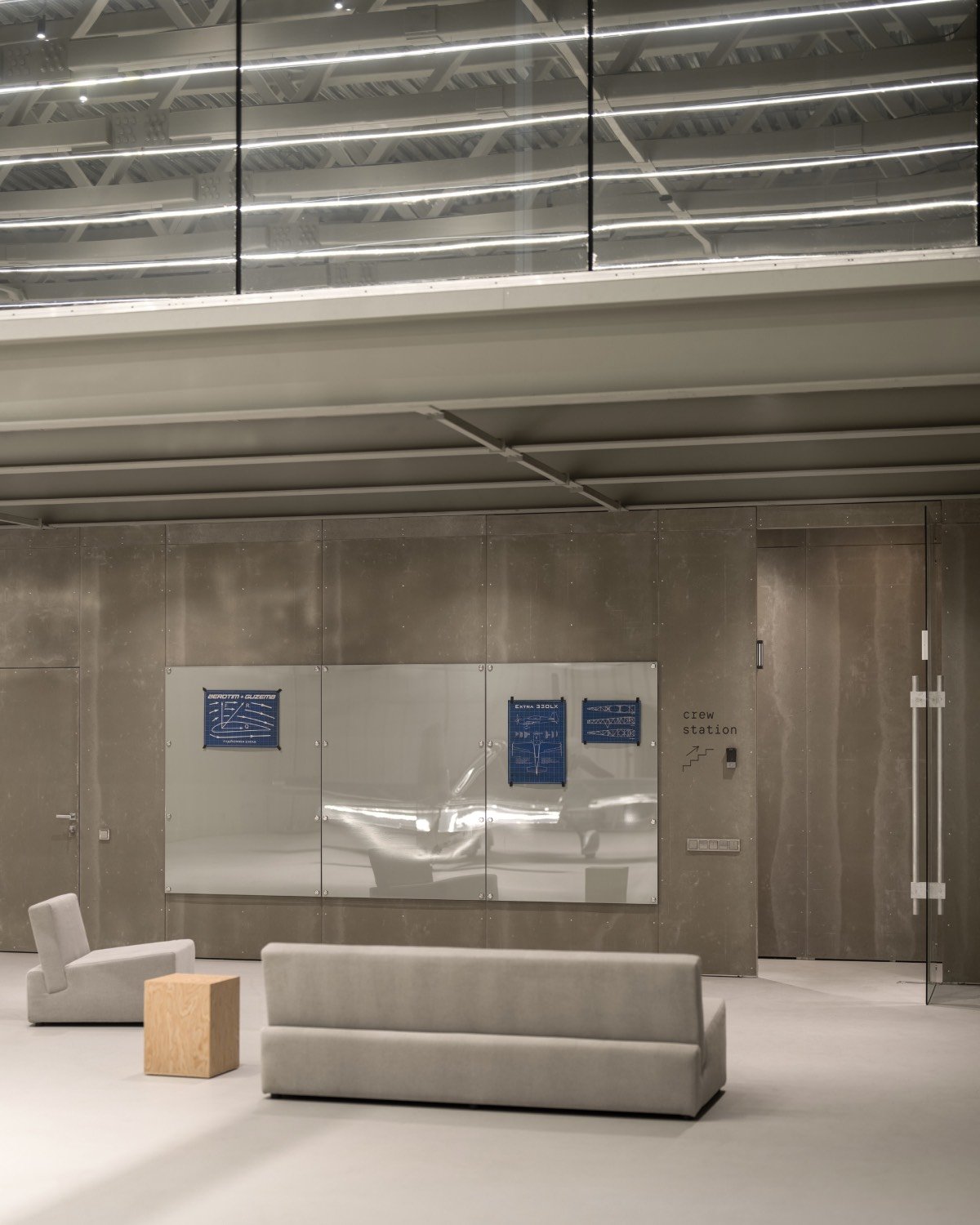
To that end, the 400-square-metre interior is pared back in a way that elevates its “aviation-driven character.” The largest portion of the AEROTIM hangar by +kouple is organized around a full-height atrium devoted to aircraft repair and maintenance. Exposed steel trusses, corrugated metal and visible air ducts and engineering systems create a sleek yet industrial backdrop for the athletes to work in. Large-format panels of Cement Bonded Particle Board (CBPB) augment the metal framework, with their texture and grey tones reflecting Vakhrameyev’s preference for raw materials; the panels are mounted with visible joints to both reference aircraft fuselage rivet fastening techniques and to allow for straightforward replacement when required. Grey-toned polymer flooring complements the cement panels while providing a surface resistant to wear and tear. Cut-outs in the panels are fitted with large-scale pictorial banners that celebrate aviation culture as well as the team’s accomplishments.
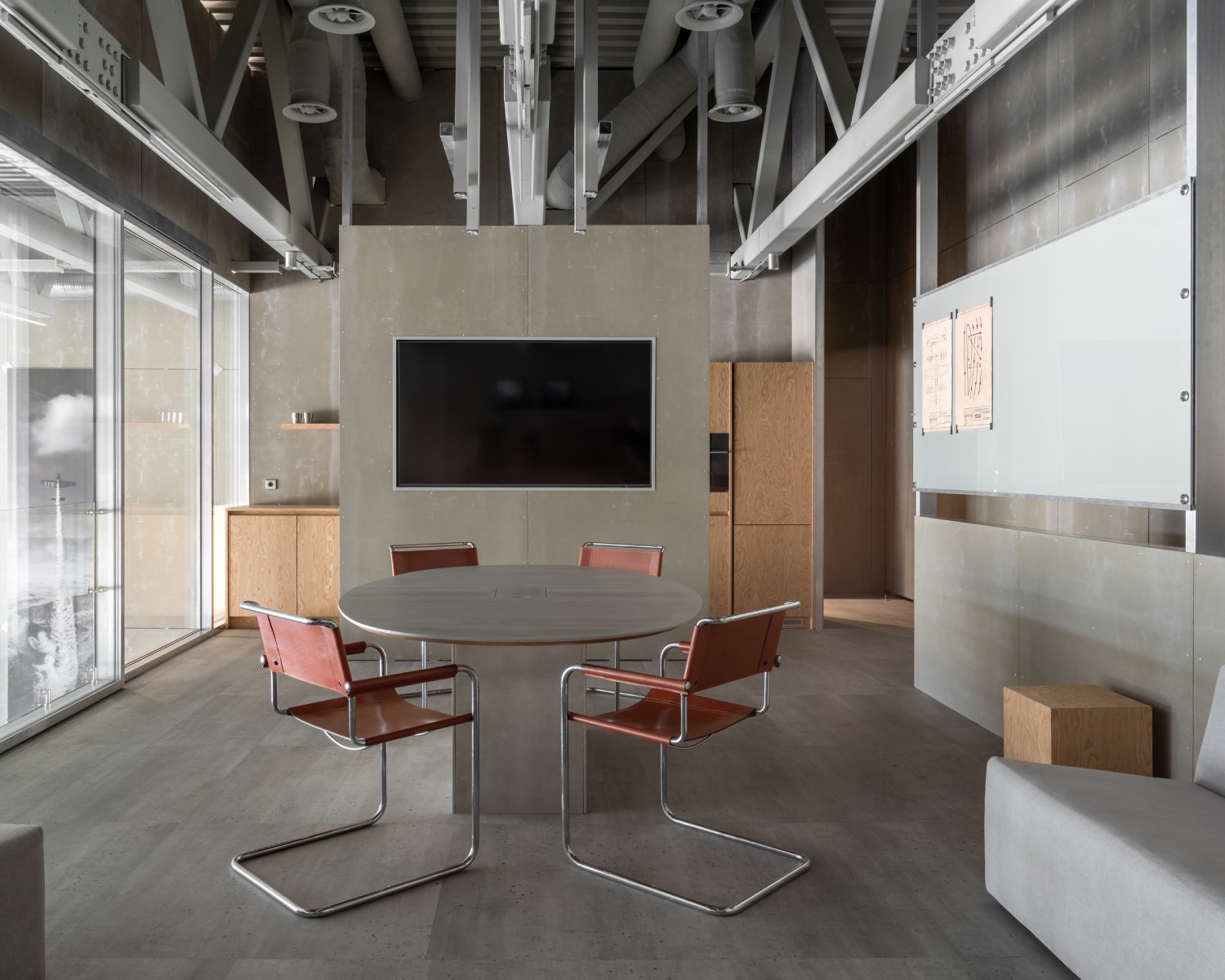
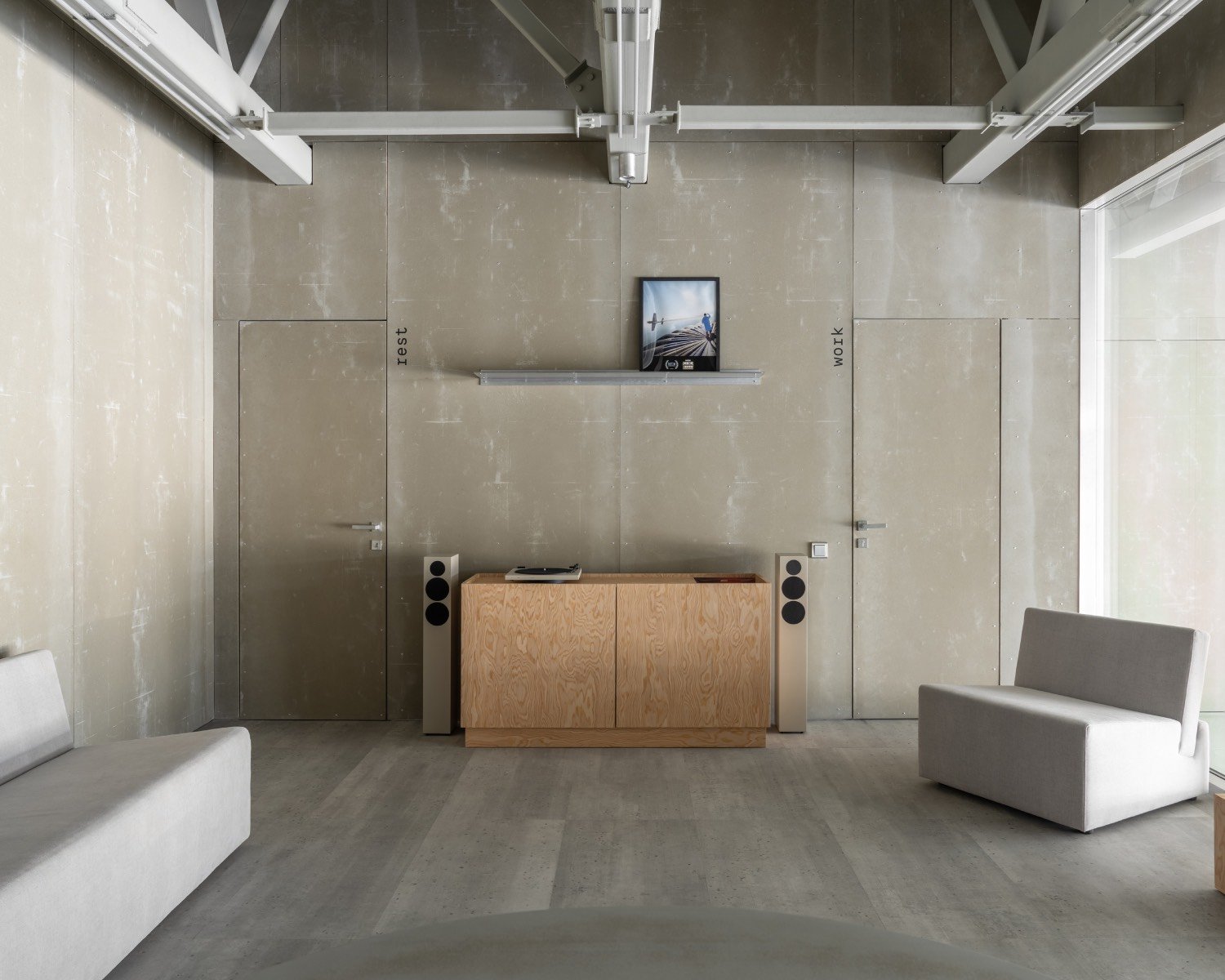
Overlooking this main work zone is the 94-square-metre Crew Station, an intimate hub where team members can gather. Fronted by a single, frameless glass facade, the loft-like space maintains a visual connection to the area below; a sliding section opens up to allow for unhindered communication between to the two separated spaces. Up here, the CBPB panels are repeated, cladding full- and half-height walls, partitions and doors as well as a large round table for flight task briefings and other meetings.
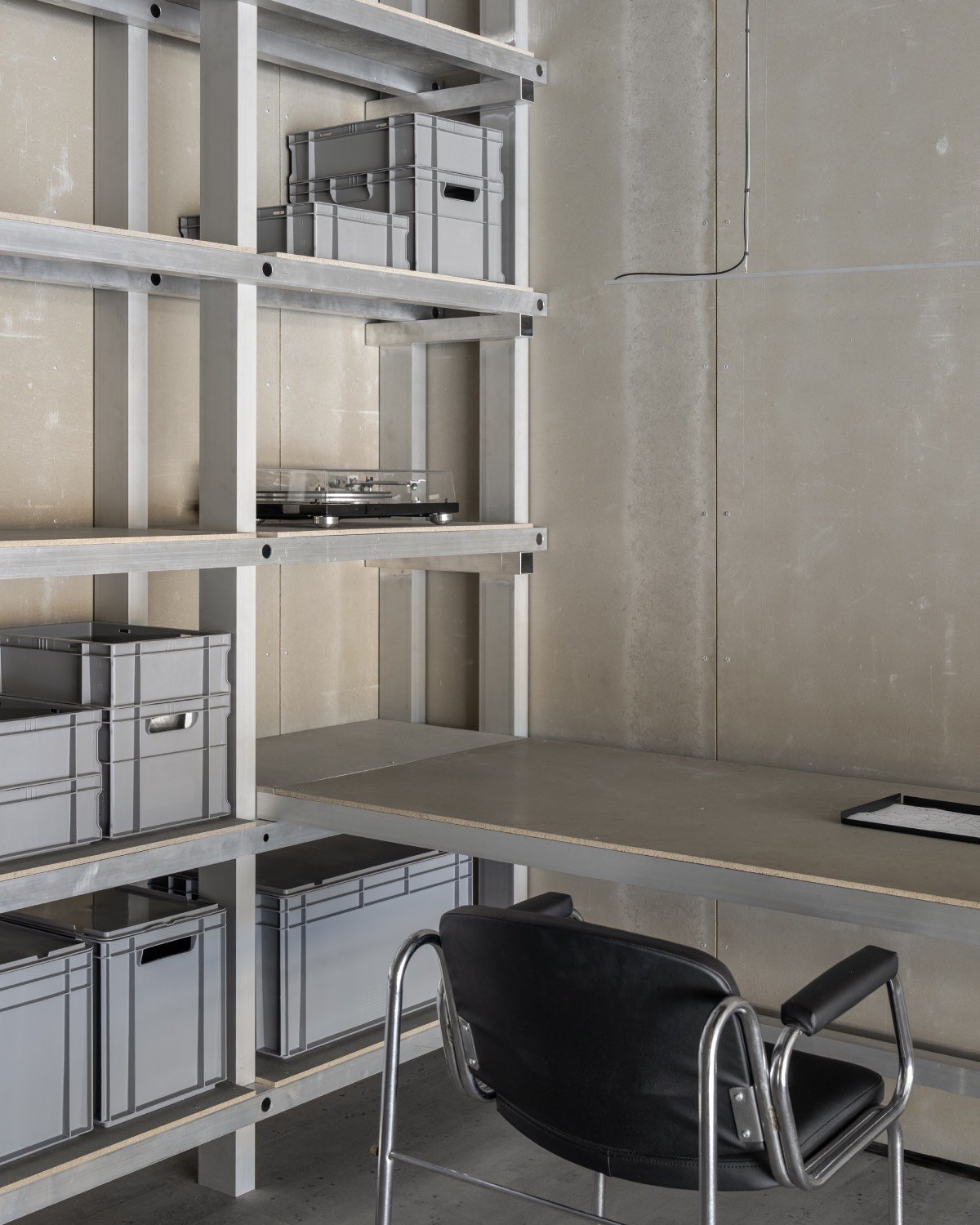
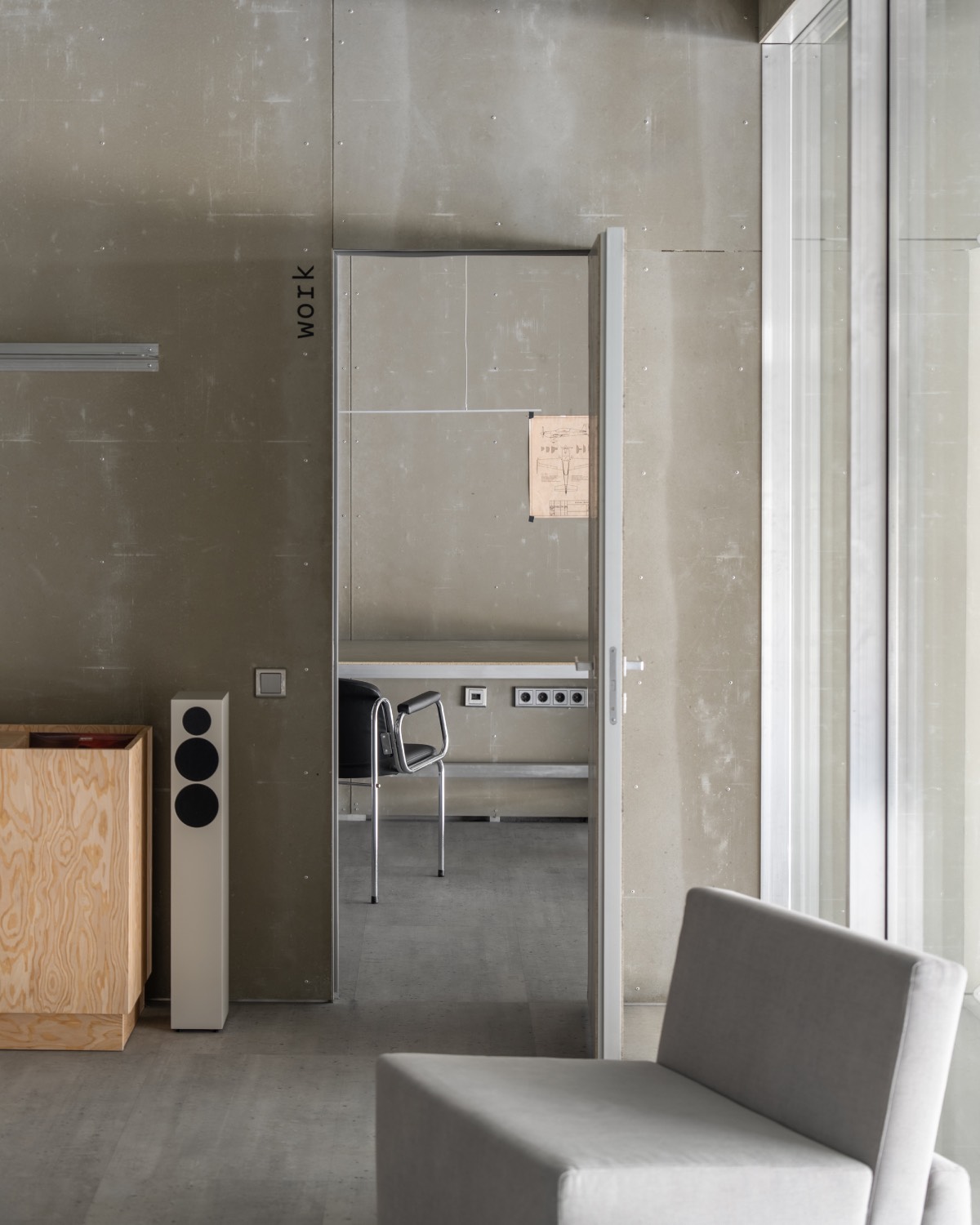
Surrounding the central briefing room are a small office, a lounge area, a four-person sleeping zone with upholstered bunk beds, a changing room with showers for eight to ten people and a kitchenette. Warmth is introduced through the veneered plywood cabinetry and shelving in the kitchen and the red-brown leather on vintage cantilevered chairs, while grey-upholstered modular sofas and lounge chairs from Propro (a Ukrainian furniture brand established by architecture and interior design firm Balbek Bureau) and the easy-to-clean vinyl flooring continue the monochromatic aesthetic.
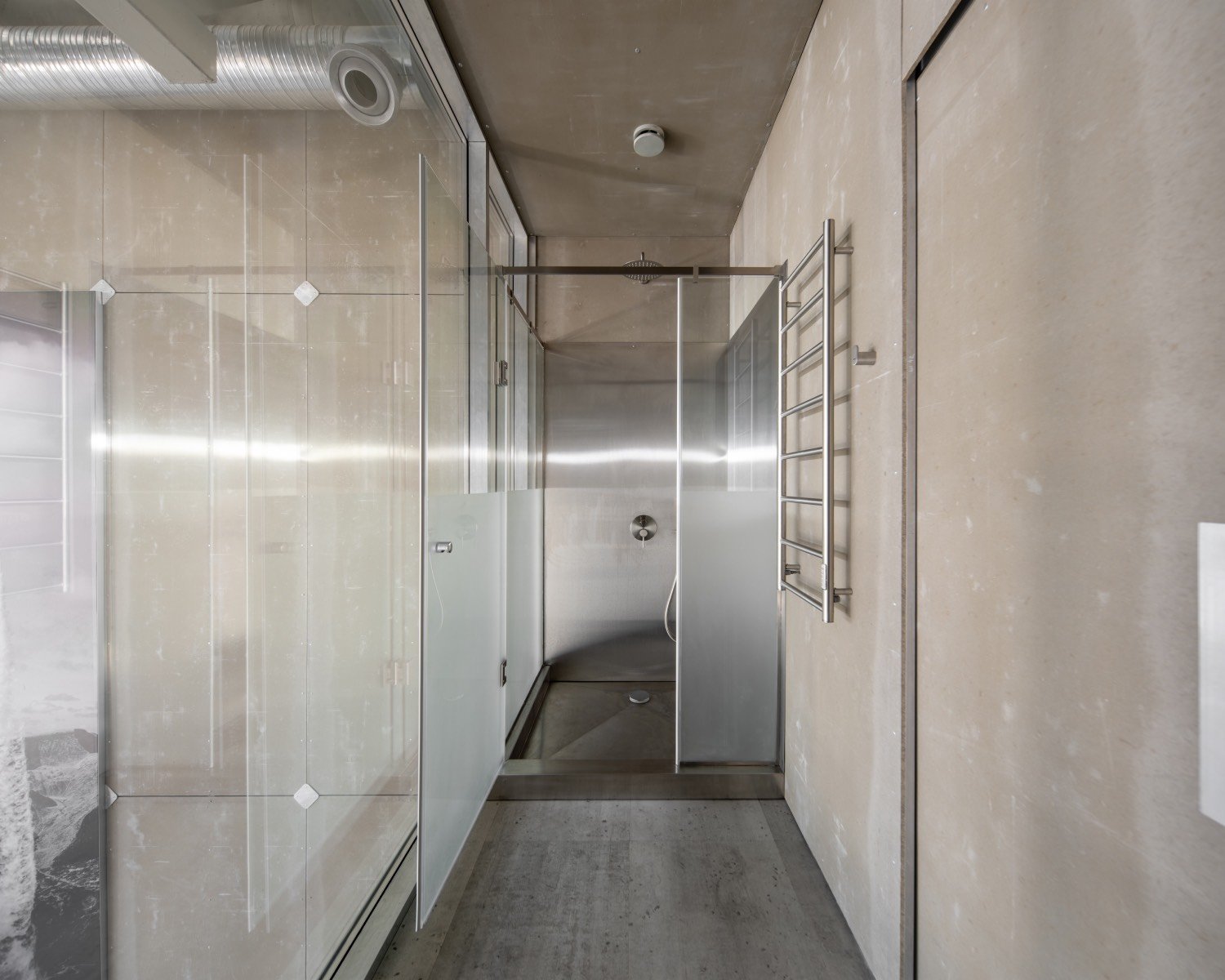
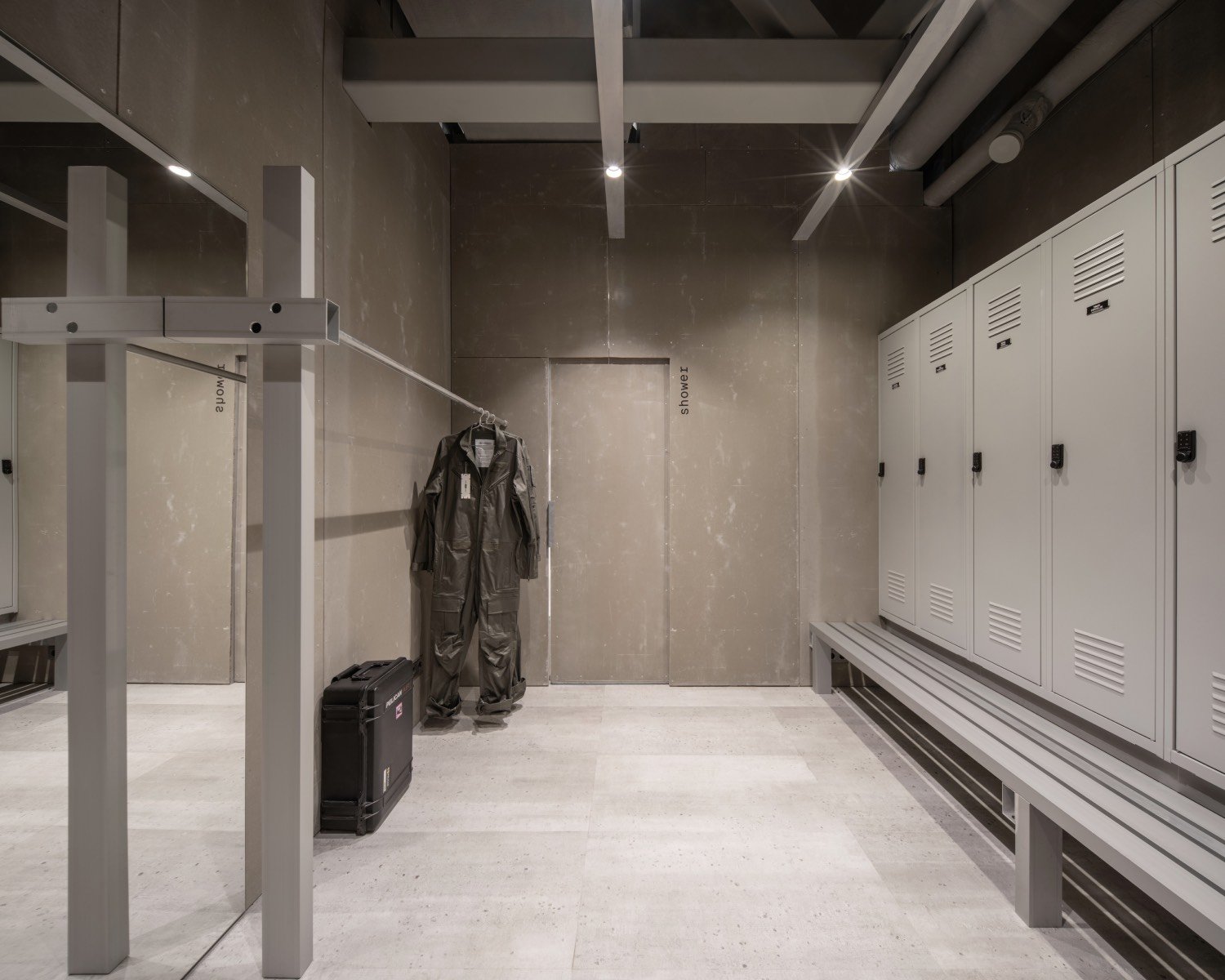
In the crew’s changing room, durable aluminum wall-profile offcuts were used to form benches and rails and stainless-steel elements accent the shower areas; in a bold move that highlights its transparency, the AEROTIM team opted for an expanse of frosted and clear glass to front the portion of the showers that looks onto the main hangar space, creating a strong visual link to the activity one storey down.
Throughout the space, a custom lighting program devloped by +kouple is integrated to “follow the logic of the hangar’s construction.” Linear LEDs are mounted to the steel framing to provide general illumination and showcase the rhythm of the exposed trusses while also dispensing shadow-controlled lighting across the main volume.
Elsewhere, strategically placed spot accents highlight the different functional zones and specific elements – parked aircrafts, stairways and the second-level work and leisure areas – to create a hyper-focused atmosphere.
Vakhrameyev and his team also devised luminaires on-site using more aluminum wall-profile offcuts to serve as task lighting, a move that not only amplifies the material continuity but also speaks to the firm’s adherence to both sustainability methods and budget constraints. “We wanted to create a calm, mono-material interior and also have a solution for residual materials in the construction process,” says Vakhrameyev of +kouple’s overall design approach for the AEROTIM hangar.
AEROTIM Hangar by +kouple Blends Deliberate Restraint with a Touch of Warmth
Ukrainian studio +kouple designs a sophisticated and welcoming new headquarters for a group of dynamic athletes.