
Sewage systems are arguably the most unsexy piece of civic infrastructure. It’s no wonder, then, that most are hidden below the surface, away from public view. But what if these systems could fulfill more than a purely utilitarian promise — and instead become an urban amenity? This question was the driving force behind the nearly £5 billion revitalization of London’s sewer network, which dates back to the 1860s. As is common in most older cities, the system carries both stormwater and sewage in the same pipes. This means that even during modest rainfall, sewage overflows directly into the Thames. Over time, however, the system could no longer keep pace with the city’s growth — now home to more than eight million people — or with the loss of permeable surfaces needed to absorb stormwater. By the 2000s, overflows were happening weekly, releasing tonnes of untreated waste into the river each year. To comply with EU wastewater standards, a large-scale intervention was needed.
Studies in the early 2000s explored alternatives, but the conclusion was that only a large tunnel could realistically handle the scale of overflow. Thus, the Thames Tideway Tunnel — a 25-kilometre-long tunnel, designed to intercept 34 of the most polluting overflow points — was born. Construction began in 2016, with the system becoming fully operational last year.
The tunnel required large construction shafts and permanent access points along the Thames for long-term maintenance, resulting in visible infrastructure at multiple central London sites. Rather than leaving these riverfront sites as eyesores, stakeholders saw an opportunity to transform this necessary infrastructure into public spaces that invite engagement with the waterfront.
“It was always the intention that the public realm and landscape would be very much part of what the project delivers to the public, whilst also dealing with the upgrade of the sewer network,” explains Marko Neskovic, Partner at Hawkins\Brown, which, alongside landscape architect Gillespie, led the design of the central segment of the line (with WW+P and AtkinsRéalis responsible for the eastern and western portions, respectively). “Over the last century, the city had turned its back on the Thames in many ways. And whilst, over the last 40 years, maybe that’s started to change — with the Tate Modern coming in, with the South Bank becoming livelier — we felt we could improve on that. Part of that thinking was, how do you make the river more visible? How do you bring people closer to it?”
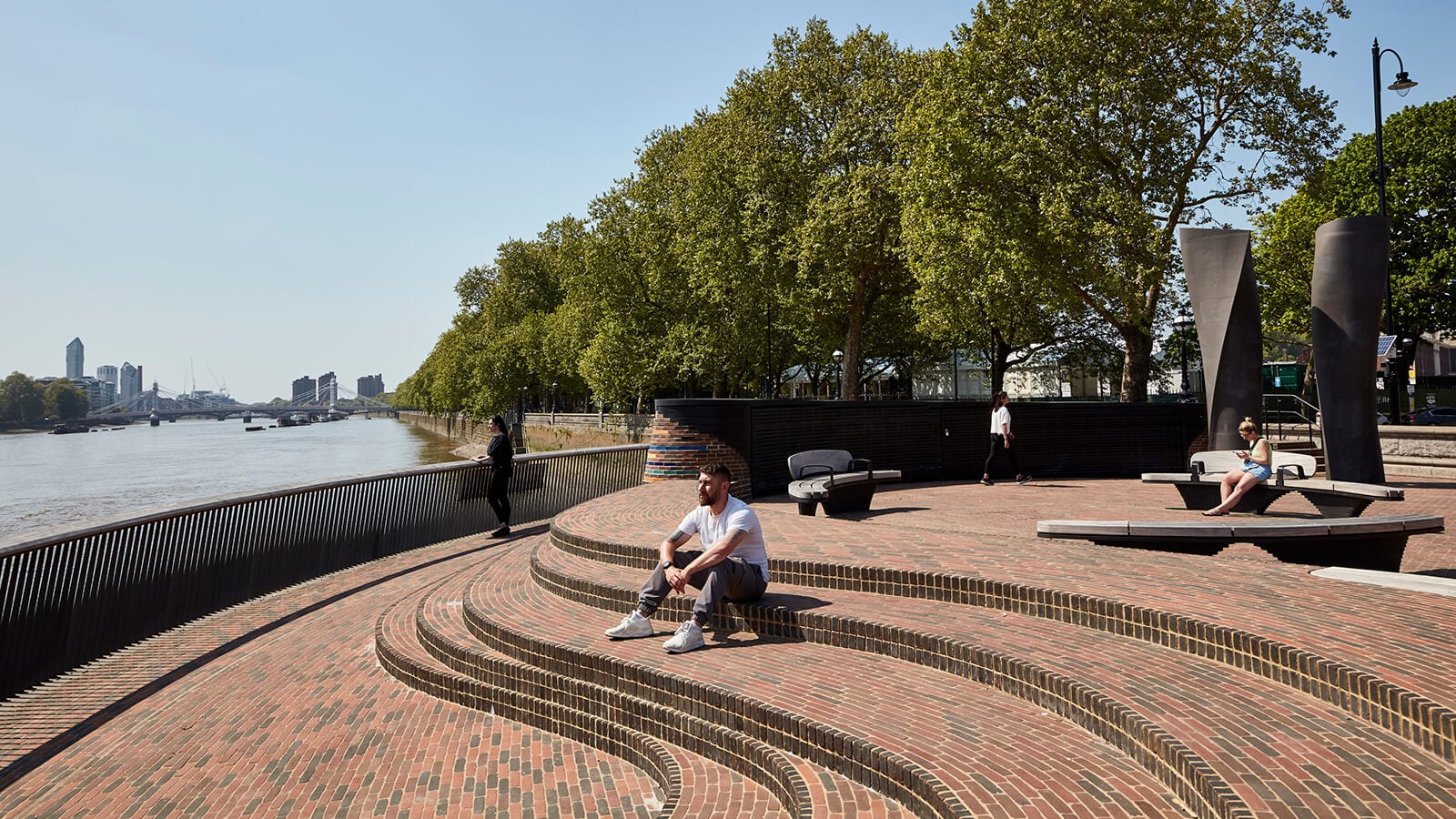
The heart of the project is the Bazalgette Embankment, which is named for Sir Joseph Bazalgette, the civil engineer who pioneered London’s sewer system. The 6,000-square-metre landscaped space — planted with thousands of shrubs, grasses and around 70 new trees — juts into the Thames, offering new views of the water and skyline.
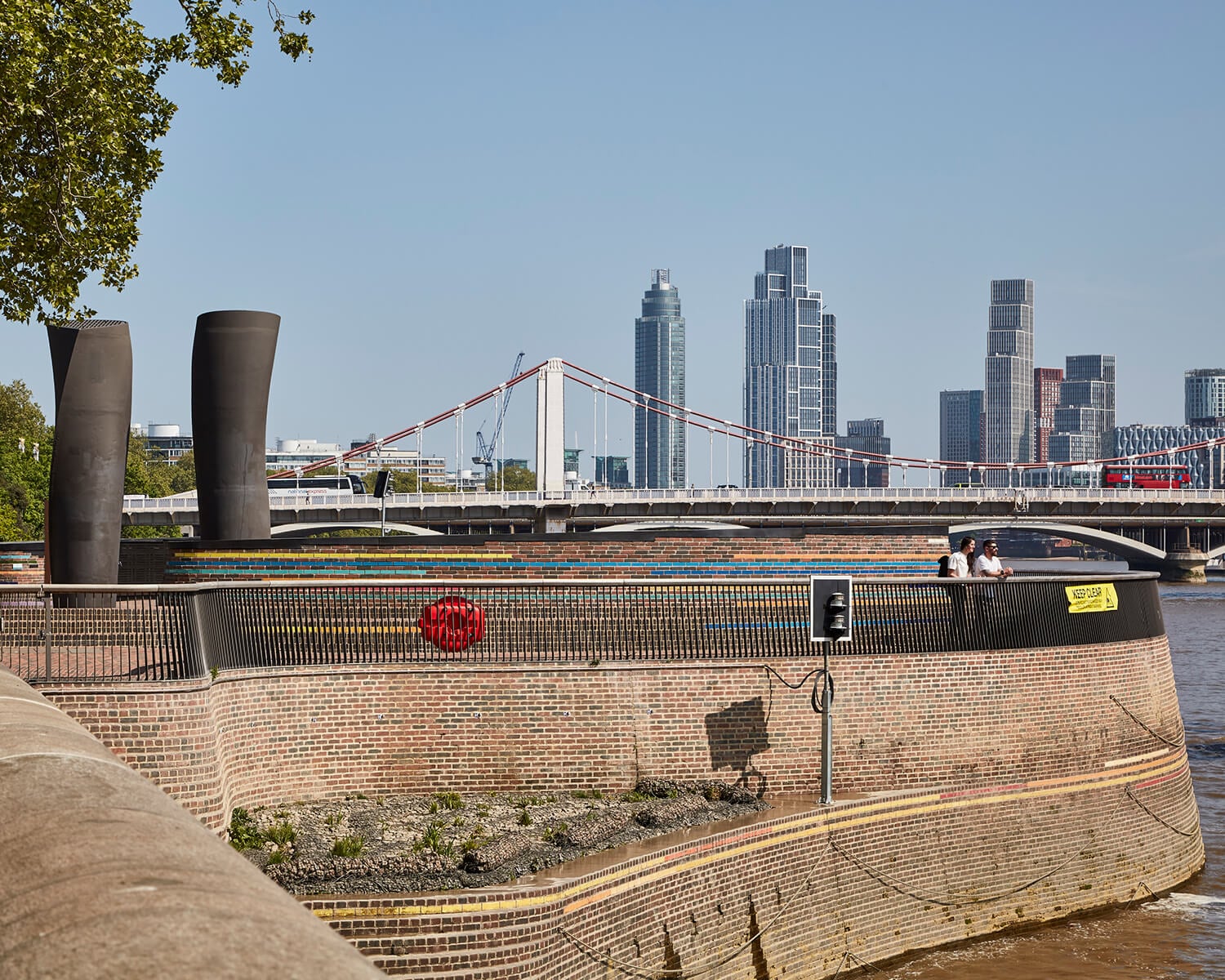
Though conceived as a single project, its success lies in how each site creates a distinct sense of place attuned to its context, which varies dramatically along the river. “Even the geology changes, going from rocks to chalks to sands and silts and clays,” explains Neskovic. At the Chelsea Quay, for instance, traditional clay bricks create an organic form that references Bazalgette’s original Victorian tunnels, while also nodding to the materiality of the embankment wall. Here, the lower walkway, complete with intertidal planting zones, allows visitors to approach the water’s edge.
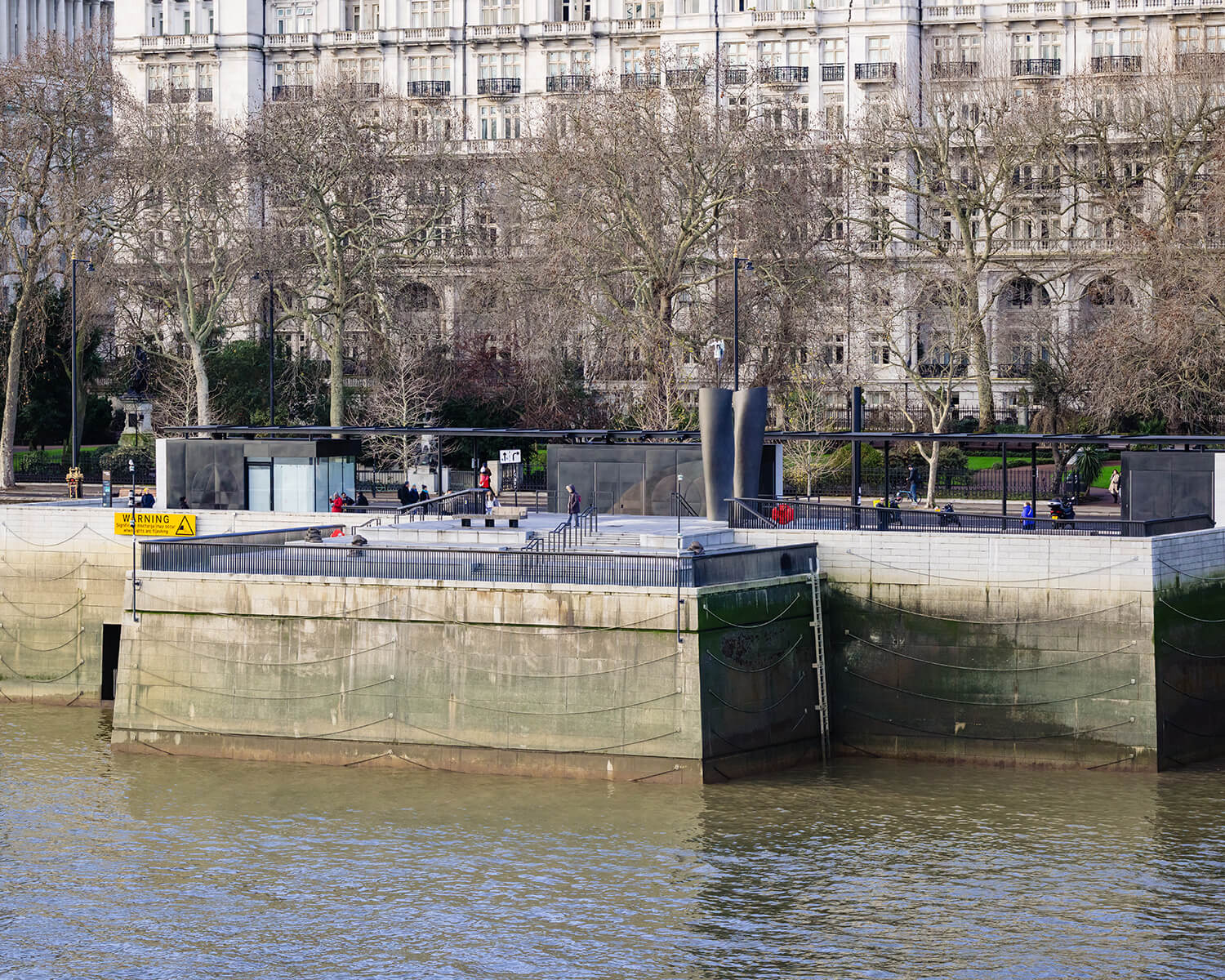
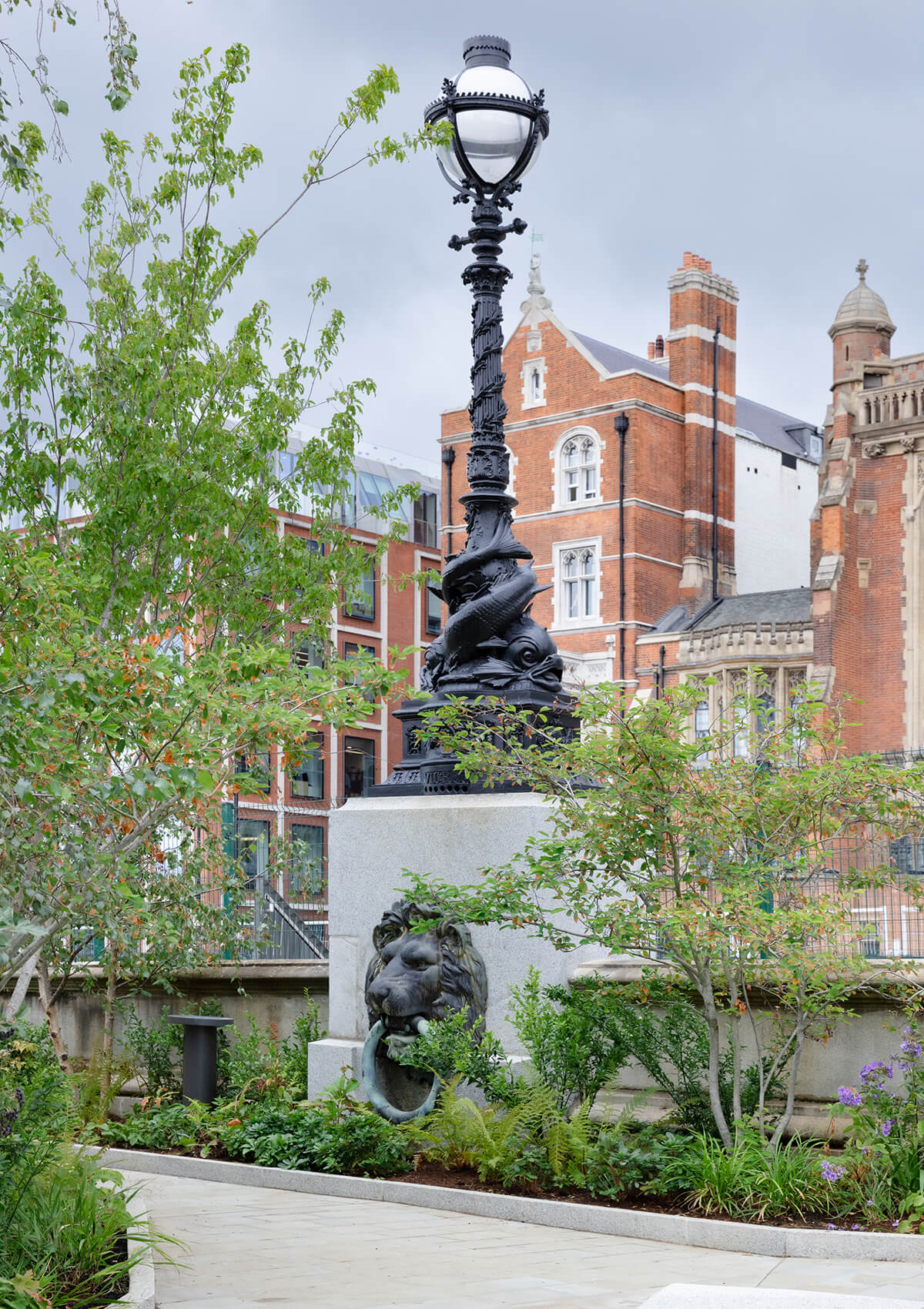
The design language of Tyburn Quay, meanwhile, draws from the plane trees, historic lamp standards and elegant stonework of the Victoria Embankment. A new riverside terrace brings visitors closer to the water than ever, with viewing platforms and lower foreshore zones. These moves, along with open balustrades that allow for clear views, are designed to encourage engagement with the river. “It was a deliberate move to allow the public to come down below what the flood defences are. If you had a perfect scenario of high tide and wind, and maybe a boat going past, you may actually get water lapping onto that level,” explains Neskovic. “All of the designs are conceived in such a way that they could increase the flood defence levels in the future, so it’s also building in resilience.”
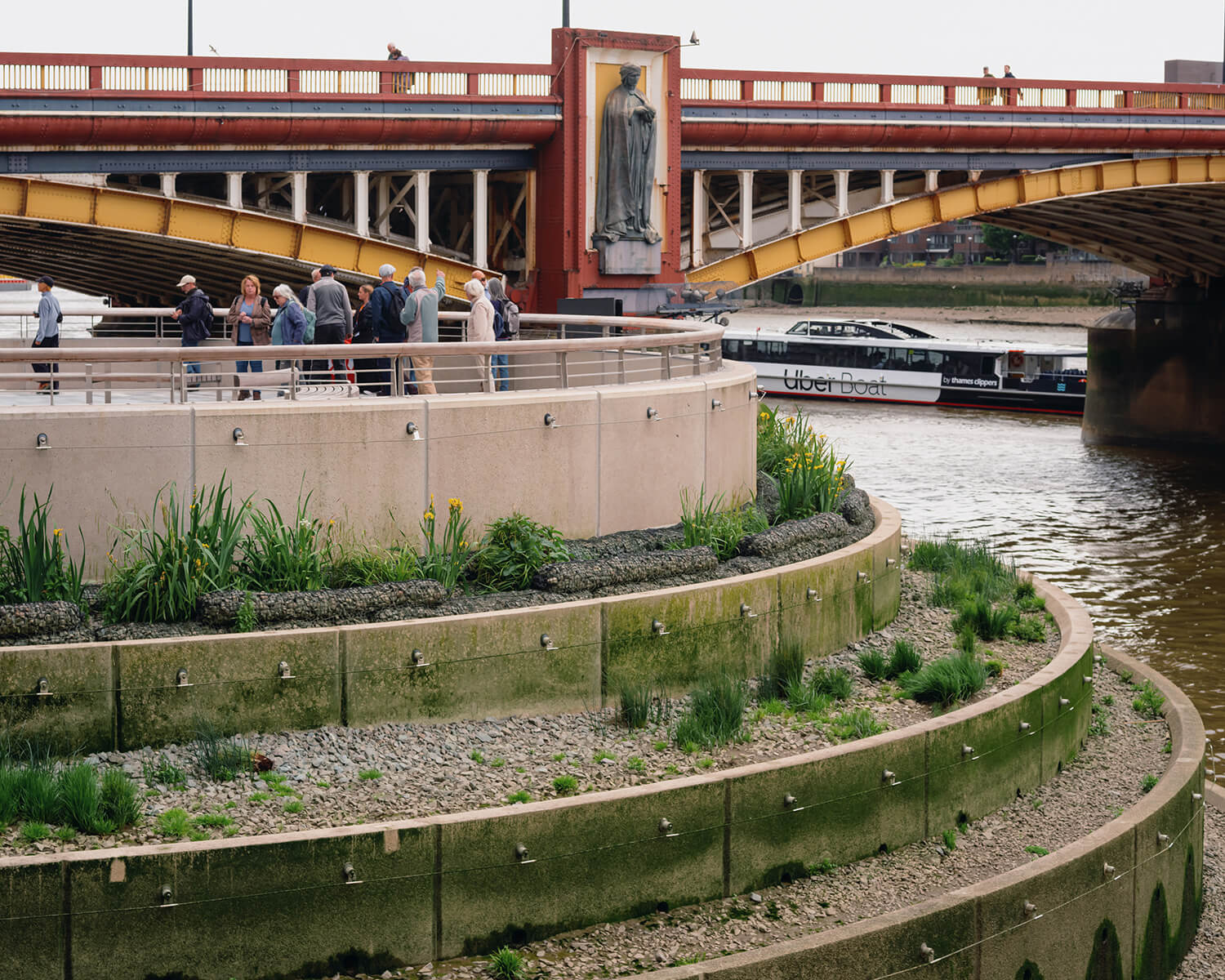
Lastly, Effra Quay, located on the southern banks of the Thames at Albert Embankment, creates two new public spaces: one, coined an “urban beach” that extends the riverside path, and the Isle of Effra, which features terraces of intertidal planting over the water.
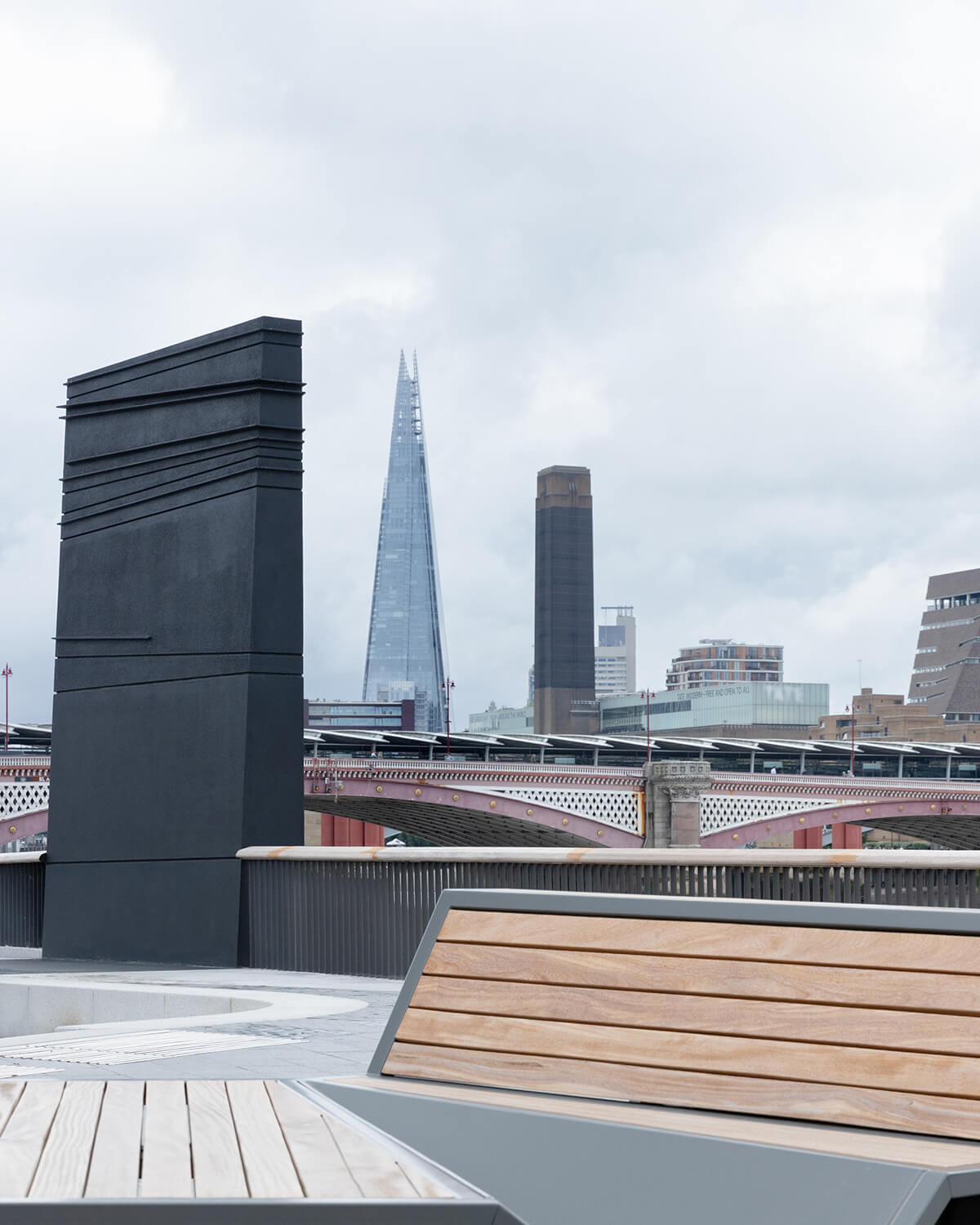
Early on, public art became a key component of the program through a consultant-led selection process. Artists proposed works that addressed both the Heritage Interpretation Strategy, which recounted the history of the Thames along its various sites, and the firm’s emerging designs. “It helped for us to be involved, because if the artwork is integrated, and the site is very much part of the place, it’s something that is there for perpetuity in a different way than a statue would be,” says Neskovic.
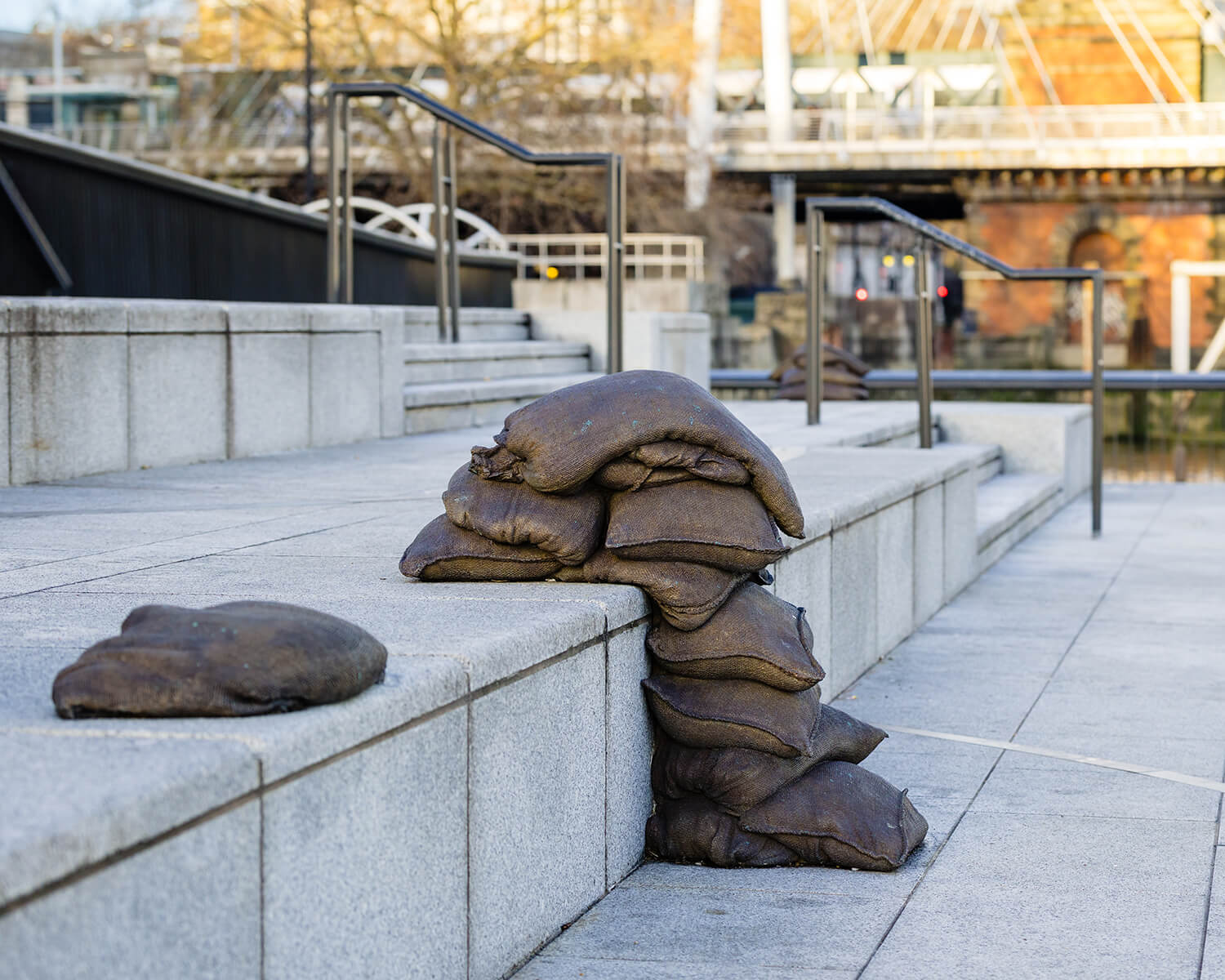
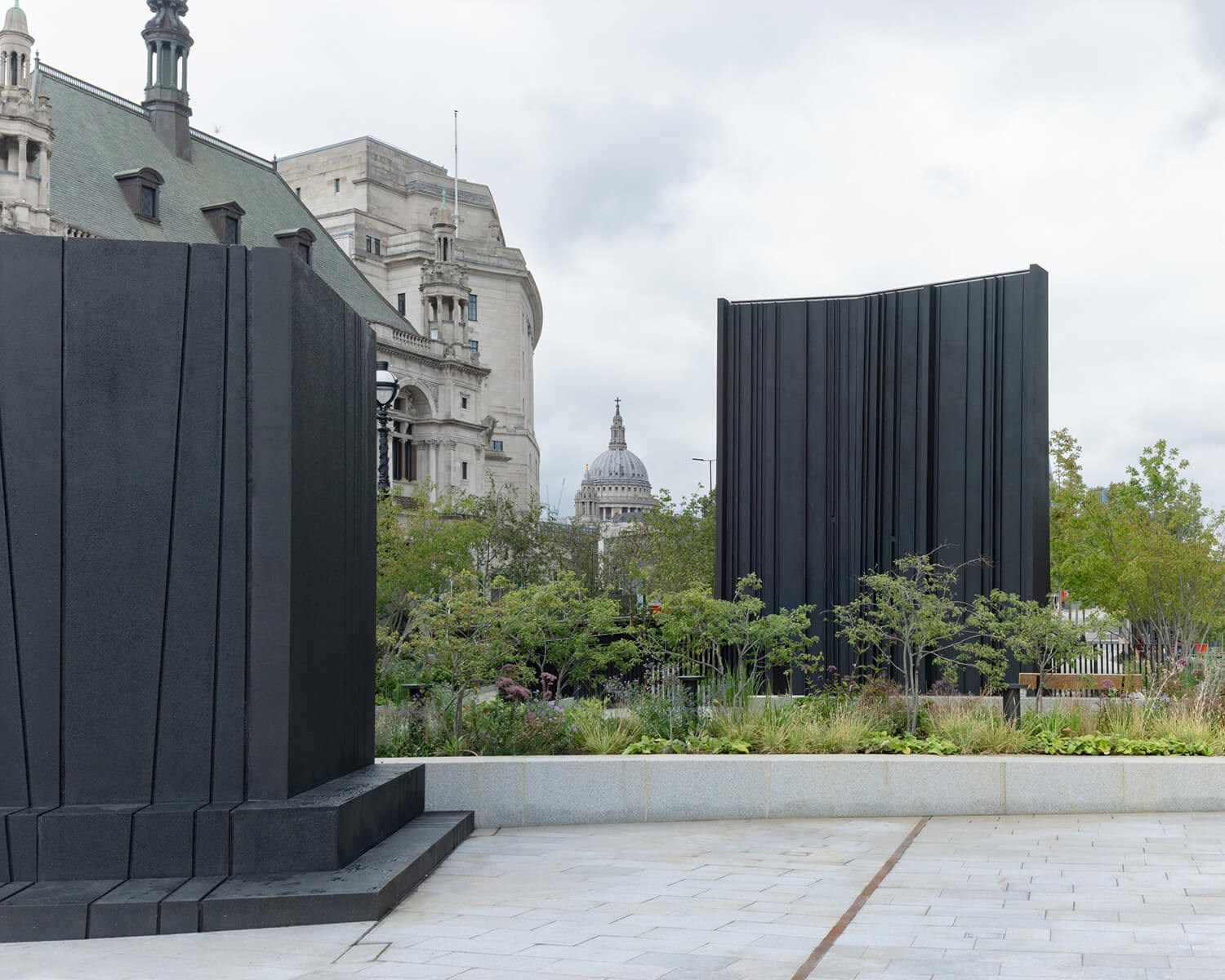
At Bazalgette, Nathan Coley’s “Stages” sculptures do triple duty — framing views, creating social spaces and forming part of the river’s flood defence; at Tyburn, Richard Wentworth’s bronze-cast “sandbags” cascade down the steps, nodding to the city’s long history of flood defence; and at Effra, playful bronze benches reference both the sewer and Royal Doulton, while lighting features shift in colour with the Thames tide to animate the quay. In some instances, Hawkins\Brown was tasked with situating the works in line with the artists’ intent; in others — as with Coley — the collaboration more directly shaped the design.
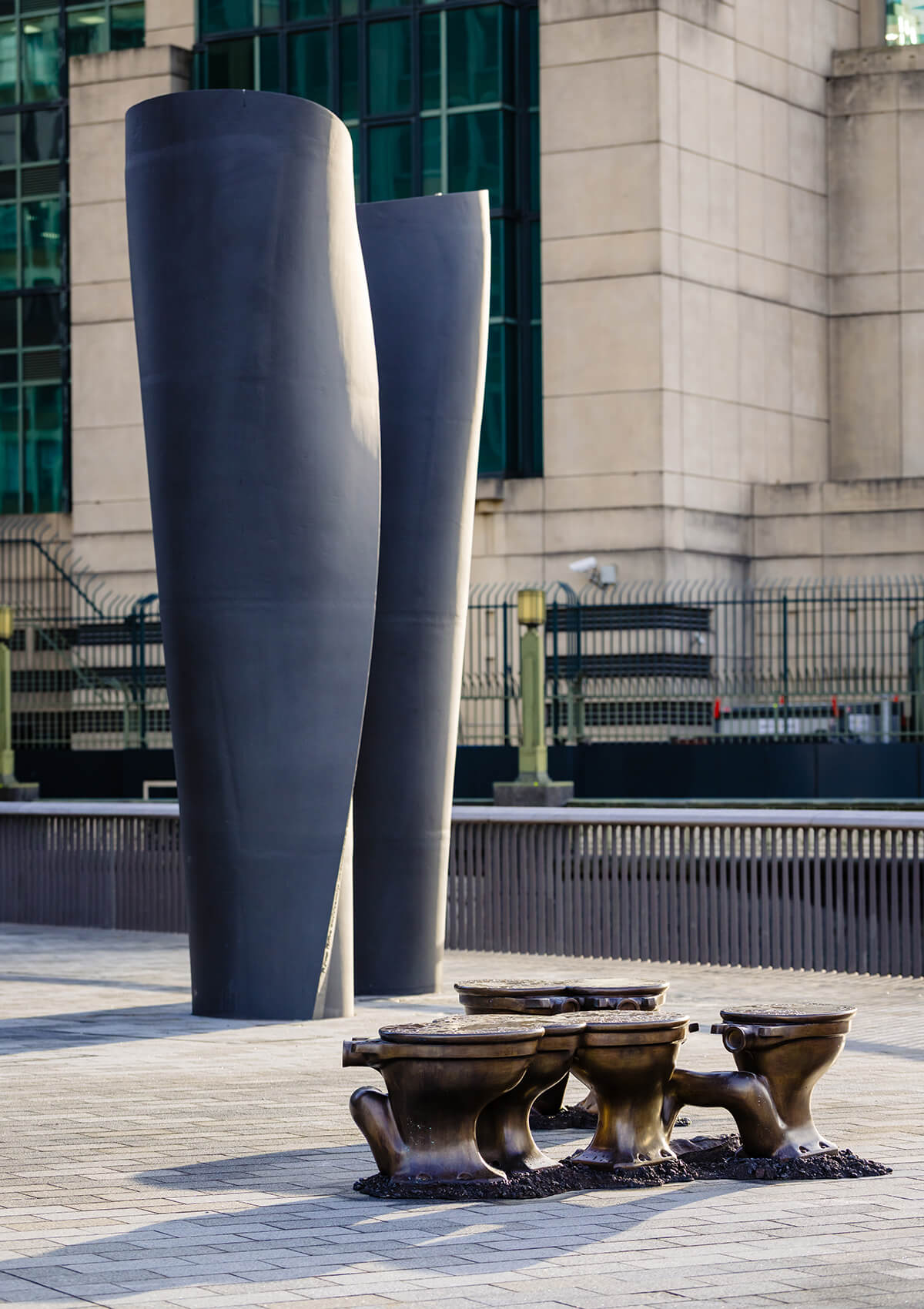
Of course, one of the biggest challenges was reconciling the below-ground engineering with the landscapes and public realm above. “The consent for the project was granted on the condition of taking as little river as possible,” she explains.” So, the sites are very constrained, and that is reflected in quite a limited amount of greening and landscape.” It was also critical to ensure that the operation and maintenance of the below-ground infrastructure was not disrupted at any point throughout the life cycle of the project. “That took a lot of coordination, and part of our job was to determine how to align these access points. How do we finish them? How do we cluster them? Can we remove some of them?” Neskovic adds. And where infrastructure could not be removed, it had to be thoughtfully designed. Every site, for instance, features ventilation columns to manage and reduce odour, their helical forms inspired by the vortexes that draw water down the sewer shaft.
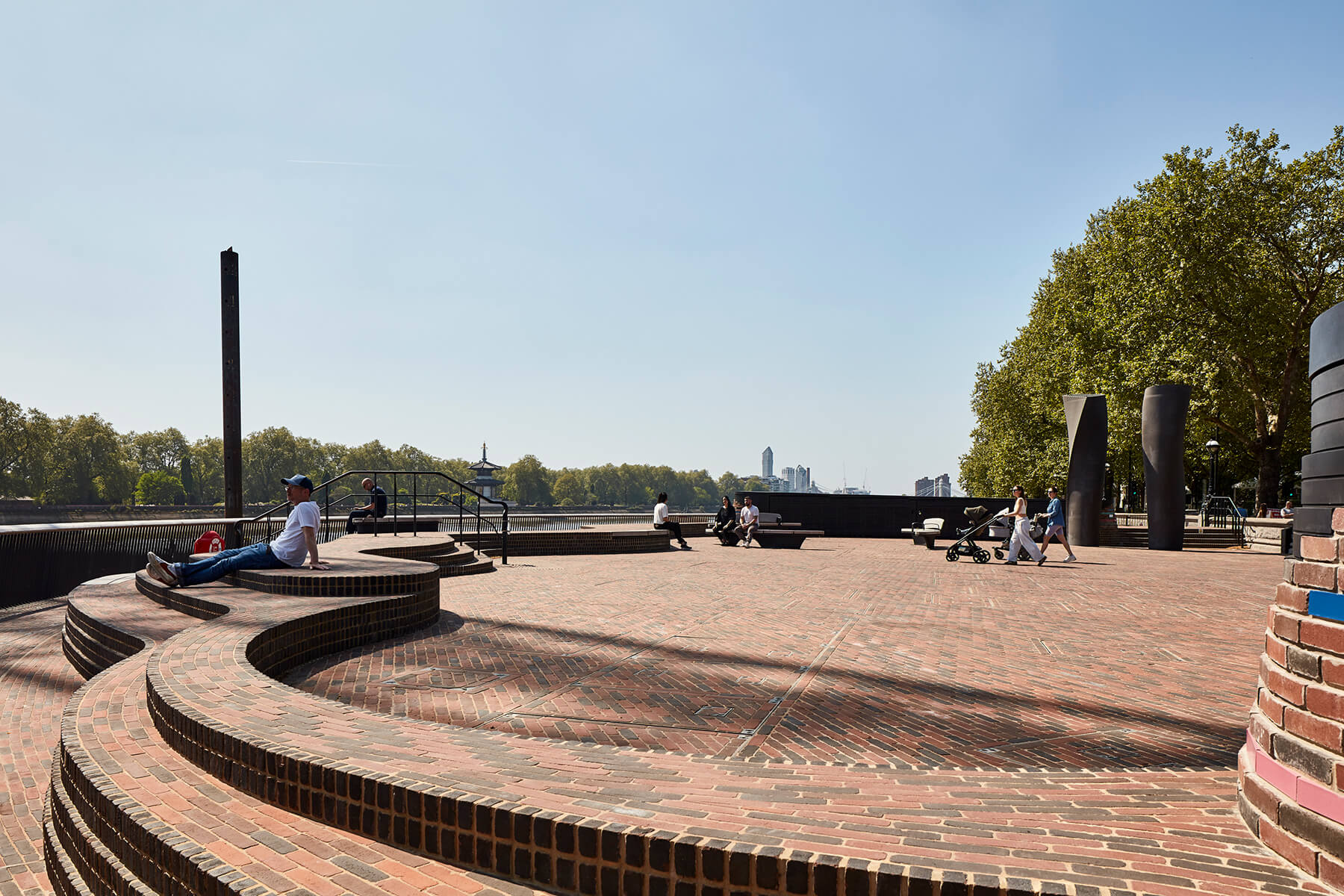
With projects of this scale, long-term disruption to civic life is nearly unavoidable. But Tideway, the organization leading the project, set up a temporary art strategy during construction, and even let the public name the boring machines for the tunnels so they felt included and invested in the outcome. Public response indicates the resulting spaces have been worth the wait.
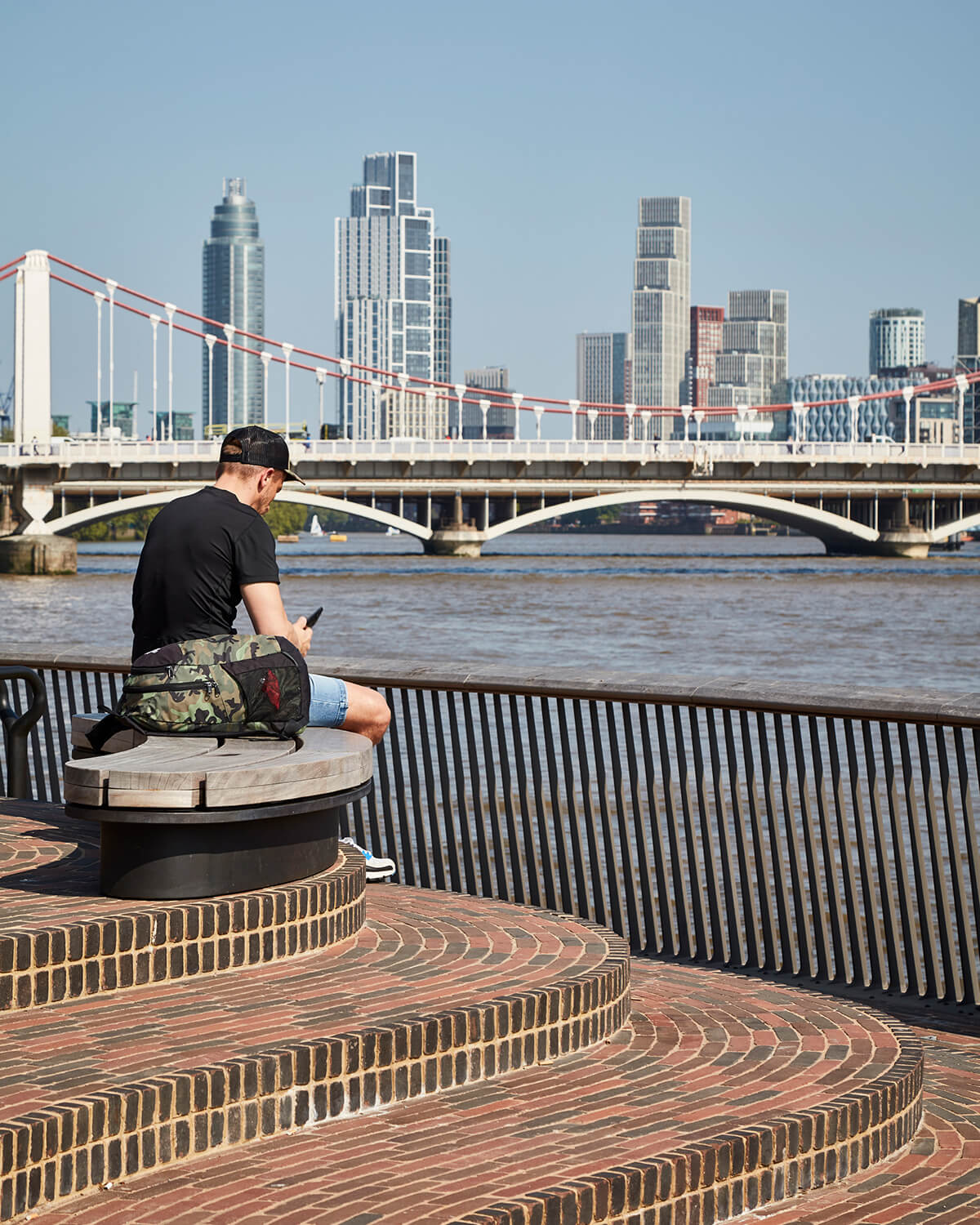
“The skateboarders love the Bazalgette Embankment — and when I was there the other day, there was an artist who basically set up a small painting studio,” says Stewart. “These are things that we never imagined, but these are urban spaces, and they are there for the people of London to take them on and decide what they end up being. And I think that’s been really exciting and positive.”
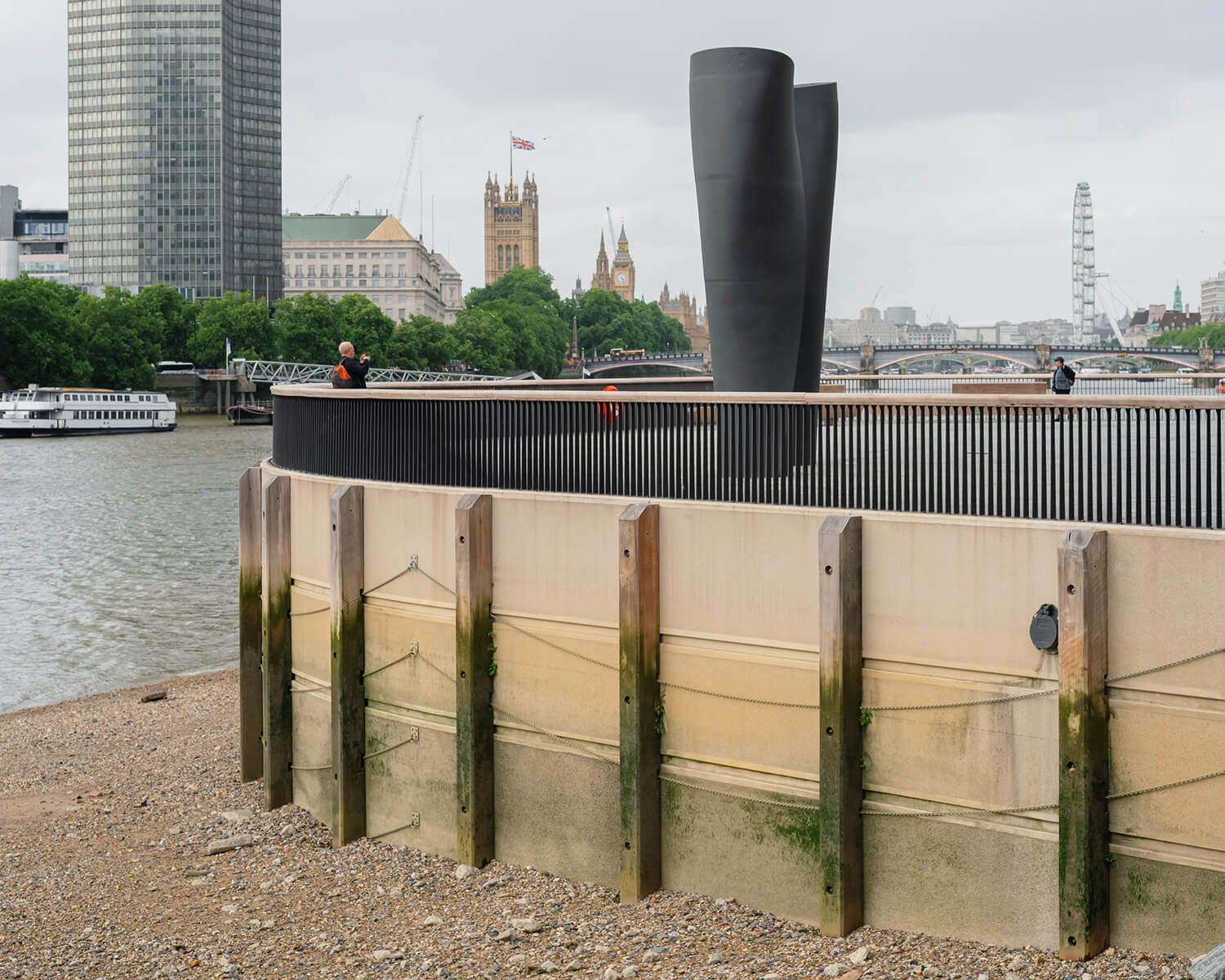
For the design team, these unanticipated uses signal both a continuation of London’s riverfront legacy and a precedent for future cities. “For cities that are comparable to London in terms of their density and their growth speed and pattern, this is a really good model, because these small interventions create public realm, but aren’t actually completely ripping up the fabric of the city,” says Neskovic.
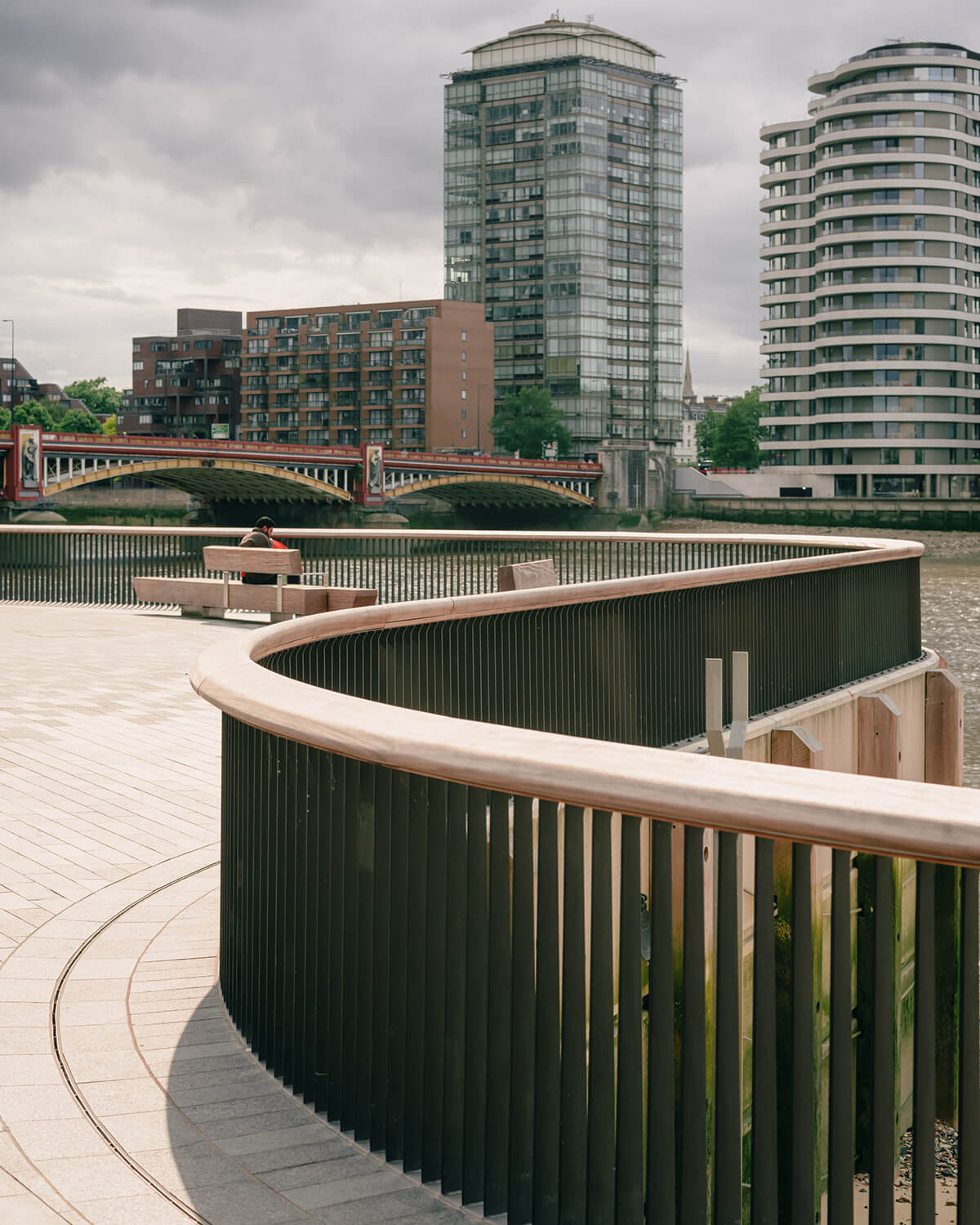
The project’s broader applicability, Stewart suggests, is grounded in a distinctly London lineage — one that reaches back to the city’s first infrastructural transformation of the Thames: “What Bazalgette did in the Victorian times with the embankment was give London this clean, refined river edge that people promenaded up and down — it became a real legacy. We’re hoping that the Tideway sites are the modern-day equivalent of that.”
Beyond its civic impact, the ultimate marker of success will be improved water quality — allowing the Thames to once again function as a thriving ecological corridor that encourages greater public interaction with the river. Soon, Stewart hopes, the water will be clean enough for swimming and kayaking.
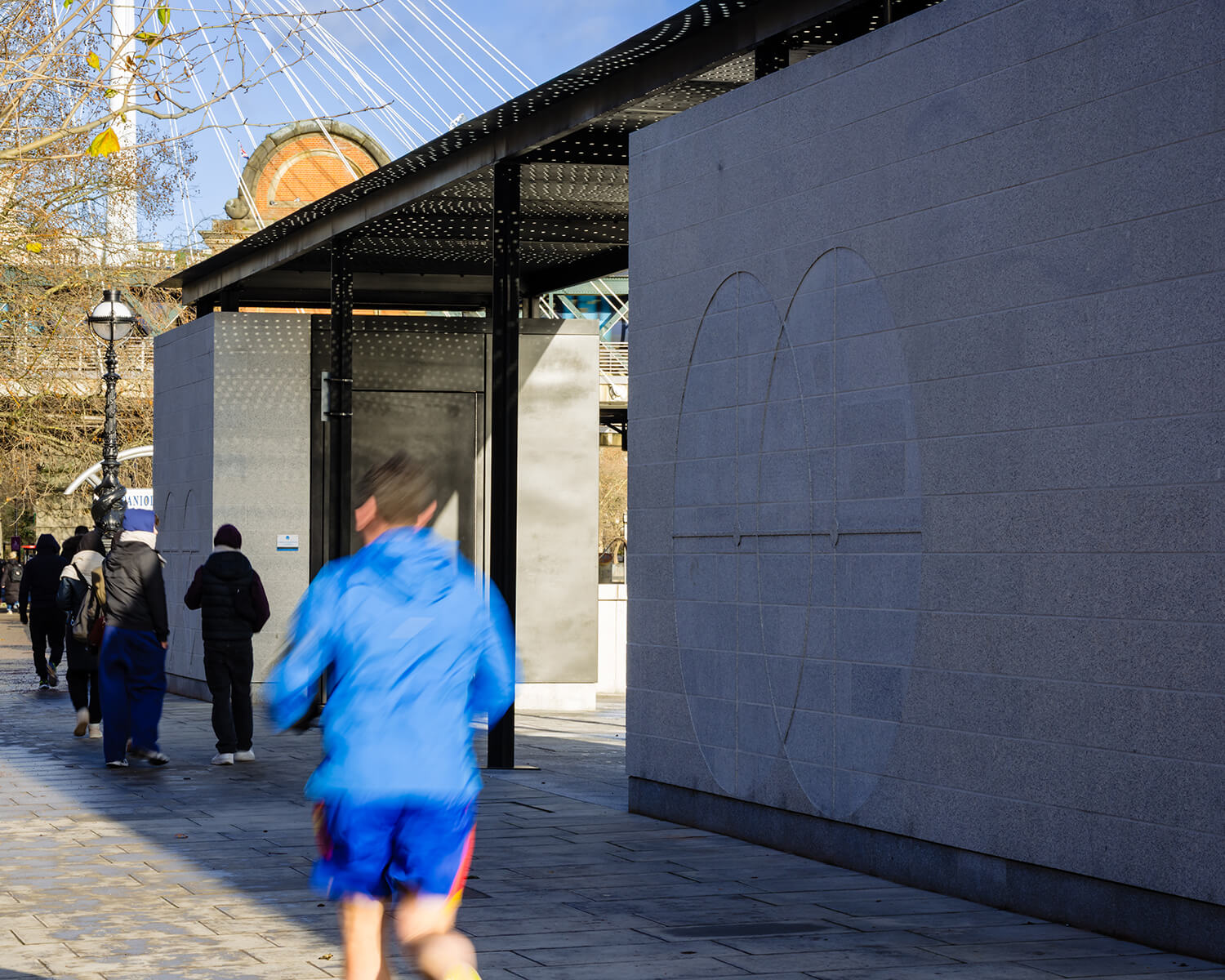
That level of access, however, is not a given but the result of deliberate advocacy. “Infrastructure companies would say that these should be gated compounds with no access and not for the public, but this project has proven that you can make a beautiful space that is accessible and still meets all the maintenance requirements,”says Stewart. “It’s not their preference. You have to push, you have to write briefs that support it. But I think it really shows that the default of these places not being accessible can be challenged.”
How London Turned a Sewer Infrastructure Project into a Civic Design Opportunity
Atop the Thames Tideway Tunnel, a series of contextual interventions creates new connections to the waterfront.