
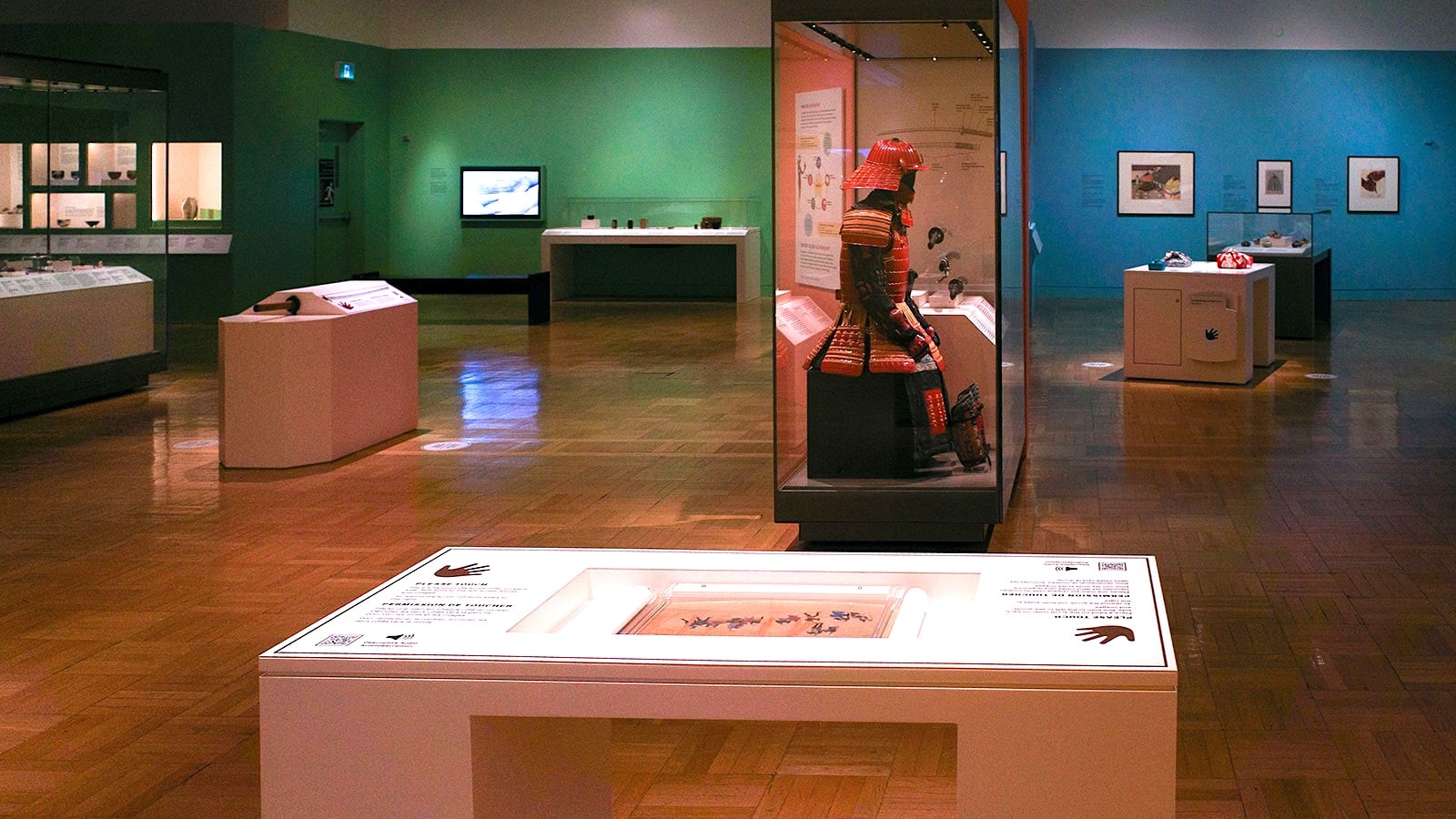
In our flattened, digital age, it is worth paying extra regard to the satisfying heft of physical objects. No wonder “hand feel,” a term that originated in the textile industry, is increasingly being used to describe the ergonomics of coffee mugs and cell phones. After all, our relationship to a design grows deeper and more personal as we handle it. Now, a poetic exhibition on view at the Royal Ontario Museum (ROM) from April 4 through September uses a Japanese concept — shokkan — to explore our sense of touch, encouraging reflection about some 80 Japanese objects and artworks in the process.
Granted, given the value and fragility of the works on display in “Shokkan: Material Encounters in Japanese Art,” museum goers can’t actually feel or hold most of them. That said, Akiko Takesue (the ROM’s associate curator of Japanese art and culture, who developed the exhibition) has introduced six stations that allow visitors to interact with replicas or approximations of several key artifacts, including a samurai sword handle and a painted hand scroll. Signs next to each of these displays encourage everyone to “please touch” — exciting instructions to find inside a museum.
But shokkan is as much about the idea of touch as it is about the actual sensation of it. The exhibition’s wall text defines the show’s core concept as referring to the “impression of touch created in the mind” — a “personal, psychological” experience that is composed of “various inputs from other senses, memories, and languages.” In other words, it is a show about those moments when we begin to feel a design on some deeper, more personal level — whether we are in direct physical contact with it or not. (It is worth noting that shokkan is distinct from shokkaku — both words refer to our sense of touch, but the latter refers to purely haptic, physical sensations. Needless to say, there is “no precise translation” of shokkan in English.)
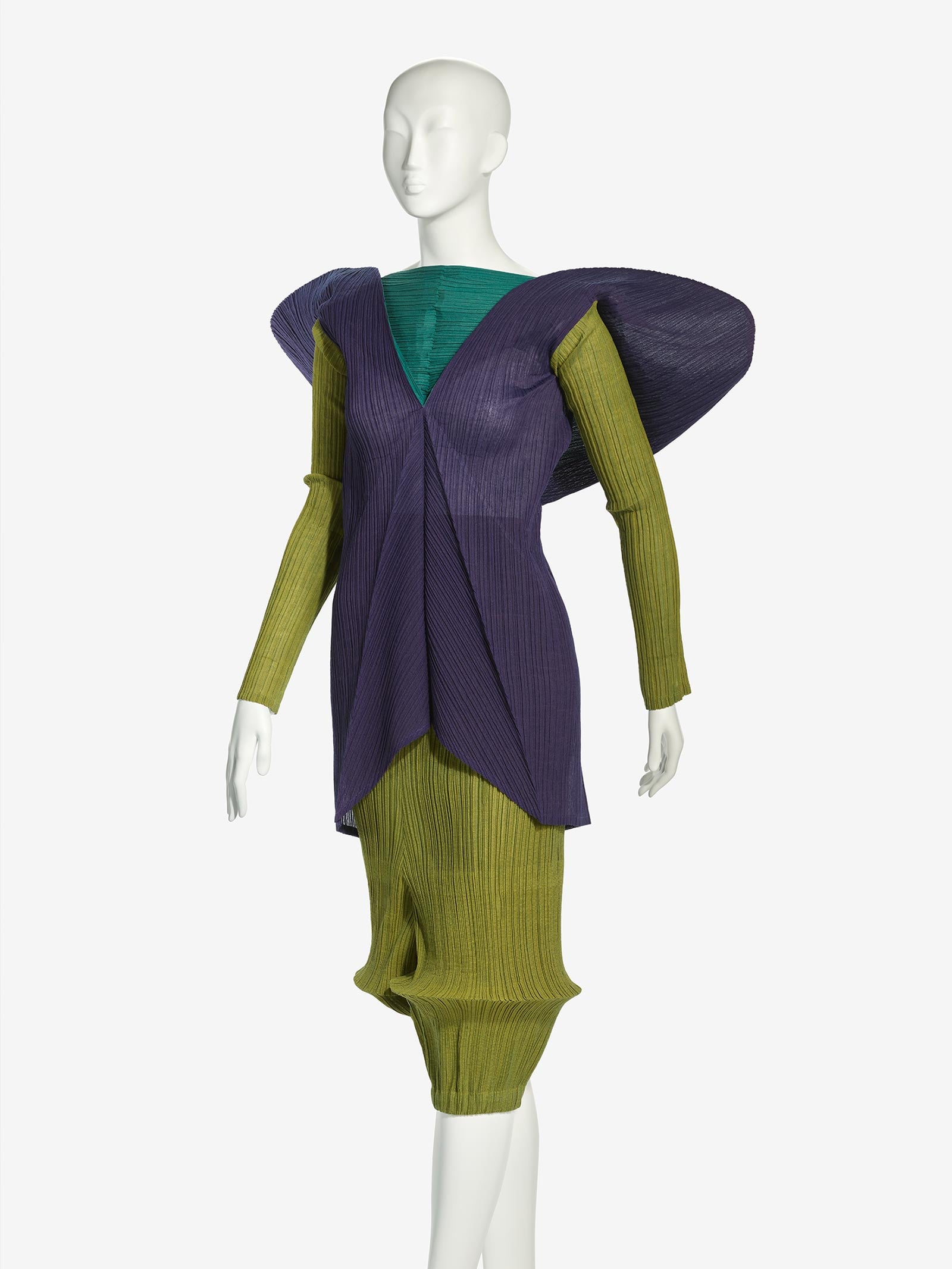
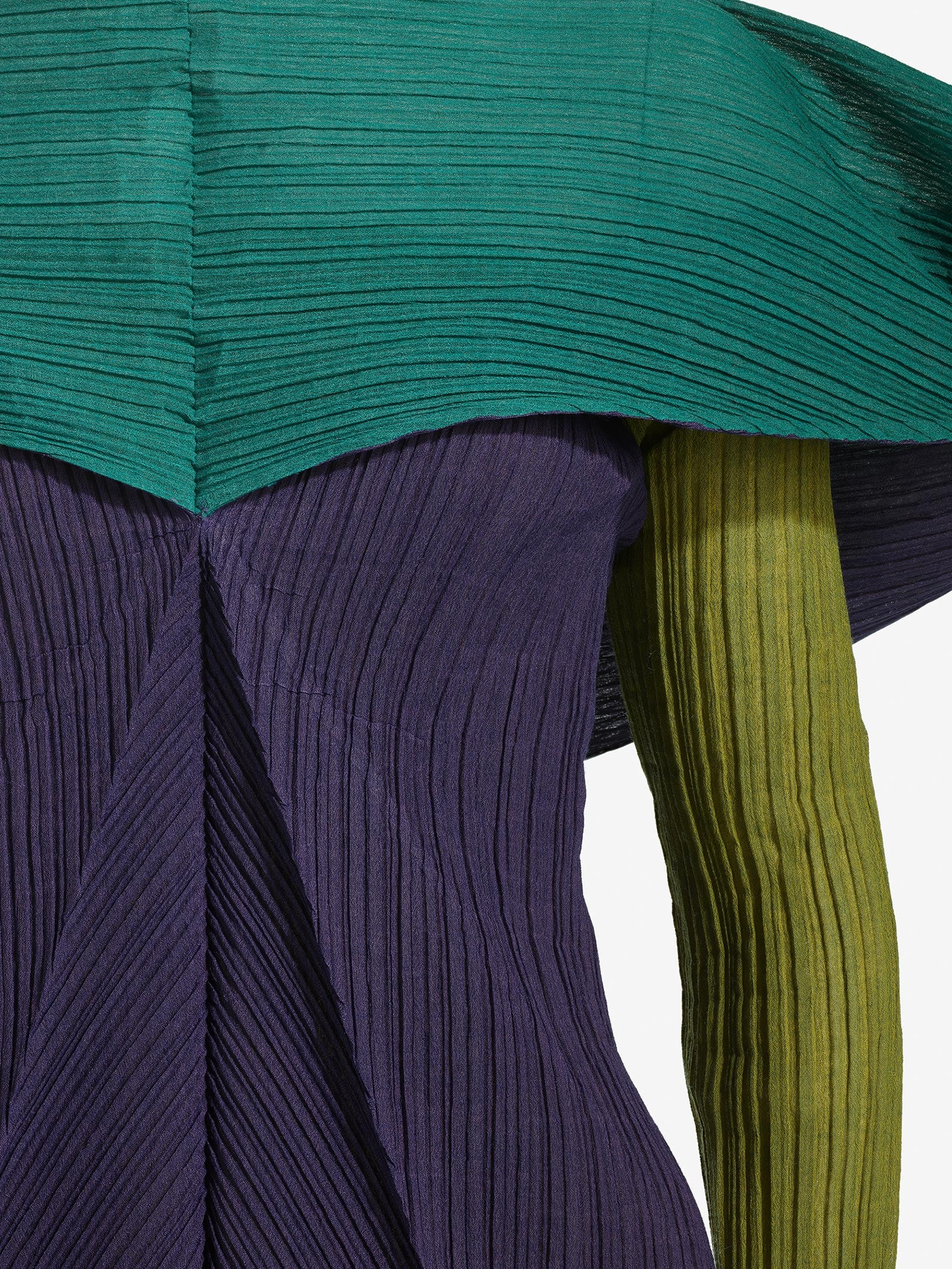
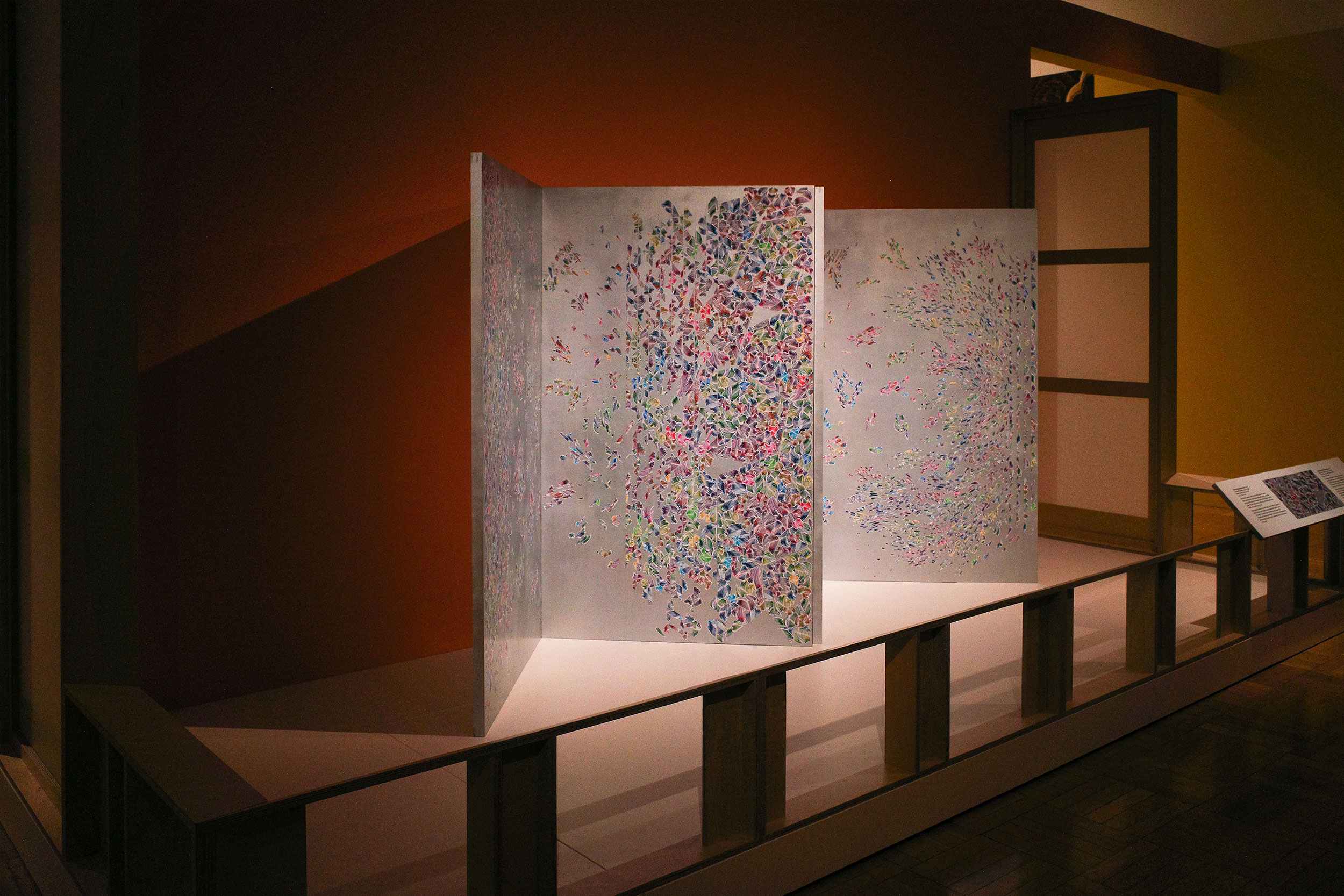
The show looks at this concept through the ages, demonstrating that it can be applied just as readily to works from several centuries ago as it can to present-day art and design. One initial area positions a 1640 room divider (decorated with a painting of Kyoto that must be unfolded by hand to be fully appreciated) across from a 2021 folding screen covered in embossed stickers by artist Kosuke Ikeda. Another early display pairs an embroidered 1929 kimono with a pleated dress by Issey Miyake — both garments that convey the beauty of texture, even to someone who is not wearing them.
Takesue has encountered other meaningful contemporary examples of shokkan while promoting the show. “I gave a lecture about this exhibition to the Japanese business community in Toronto, and one person there was from the camera company Canon,” she says. “It’s very interesting, because they are so specific about how their cameras are held, and the texture of the grip. Those things are part of what makes a camera from one company stand out from another.” A photographer who spends their career shooting with a Canon camera will come to see the feeling of holding one as not just a physical experience, but an emotional one.
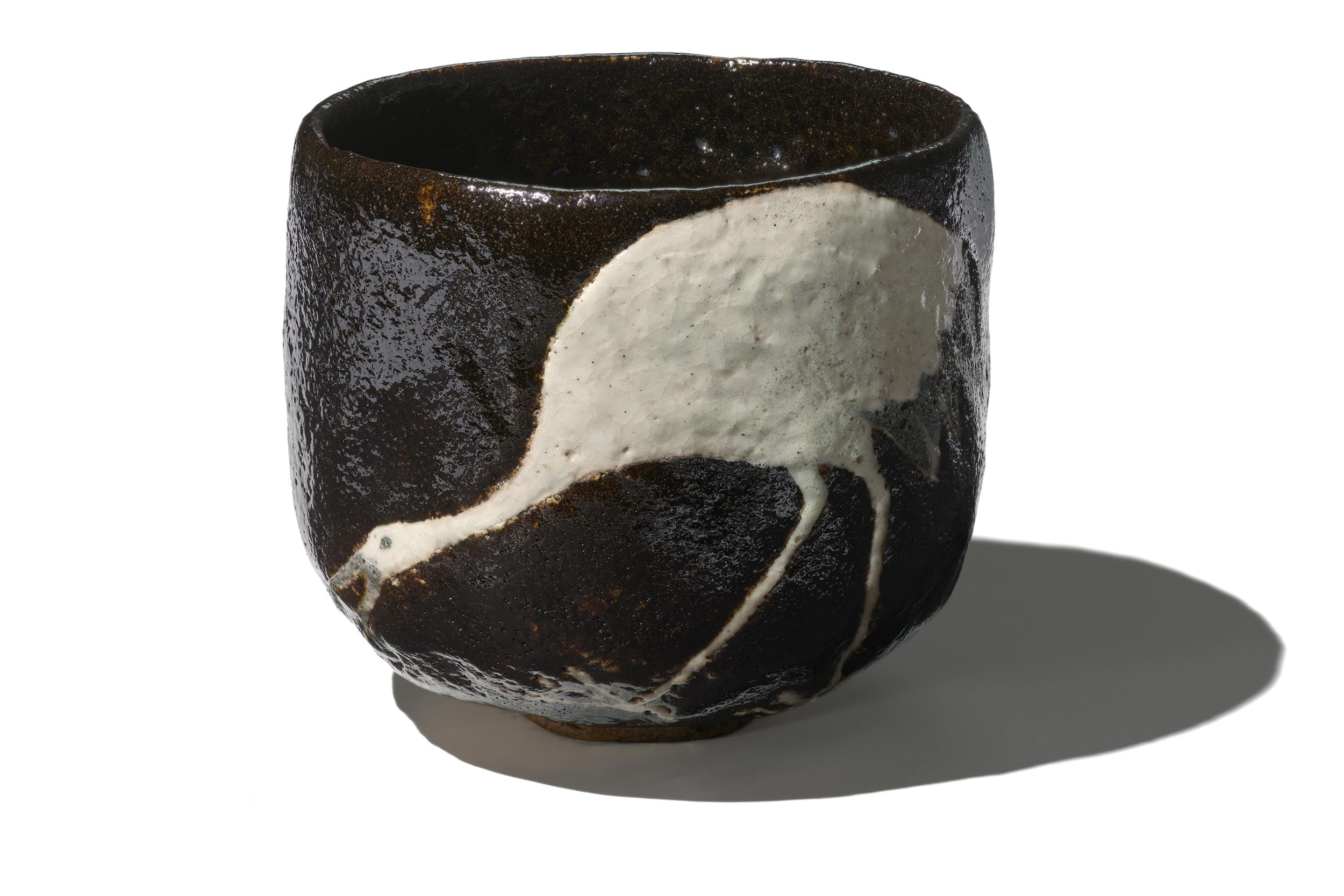
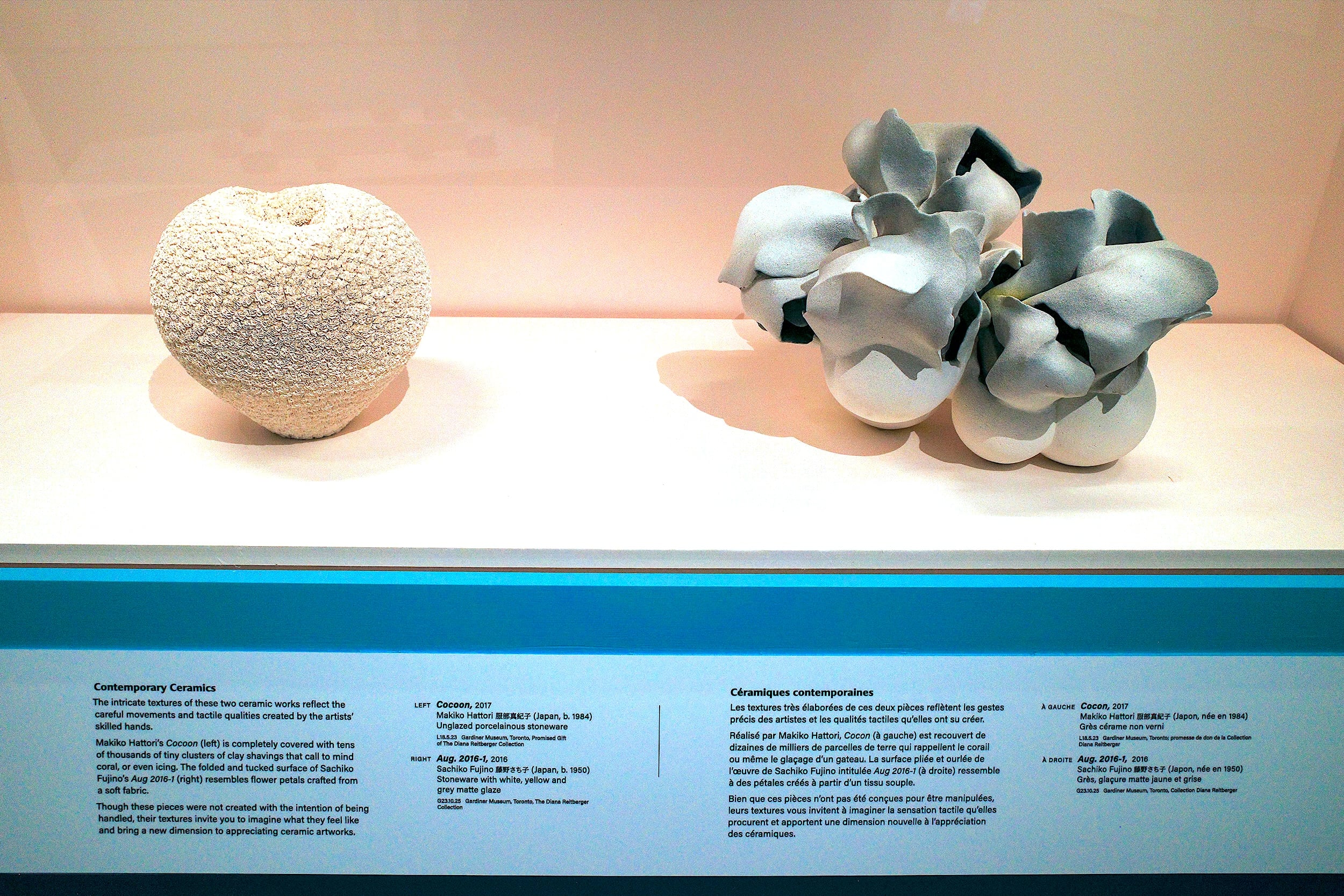
It was this same type of heartfelt, personal appreciation for an object’s tactility that initially gave Takesue the idea for her show. The ROM’s collection includes numerous works once owned by Sir William Cornelius Van Horne, who oversaw construction of the Canadian Pacific Railway back in the 1880s. While reviewing Van Horne’s notebooks, Takesue was struck by his detailed log of his interactions with each of the Japanese ceramics in his vast collection. “He kept them in his home office, rather than showing them off in a living room or reception room,” she says. “He would handle every single piece, writing about how it felt and sketching it in his notebooks. His way of engaging with the objects so closely made me start thinking about the role of touch in Japanese ceramics.”
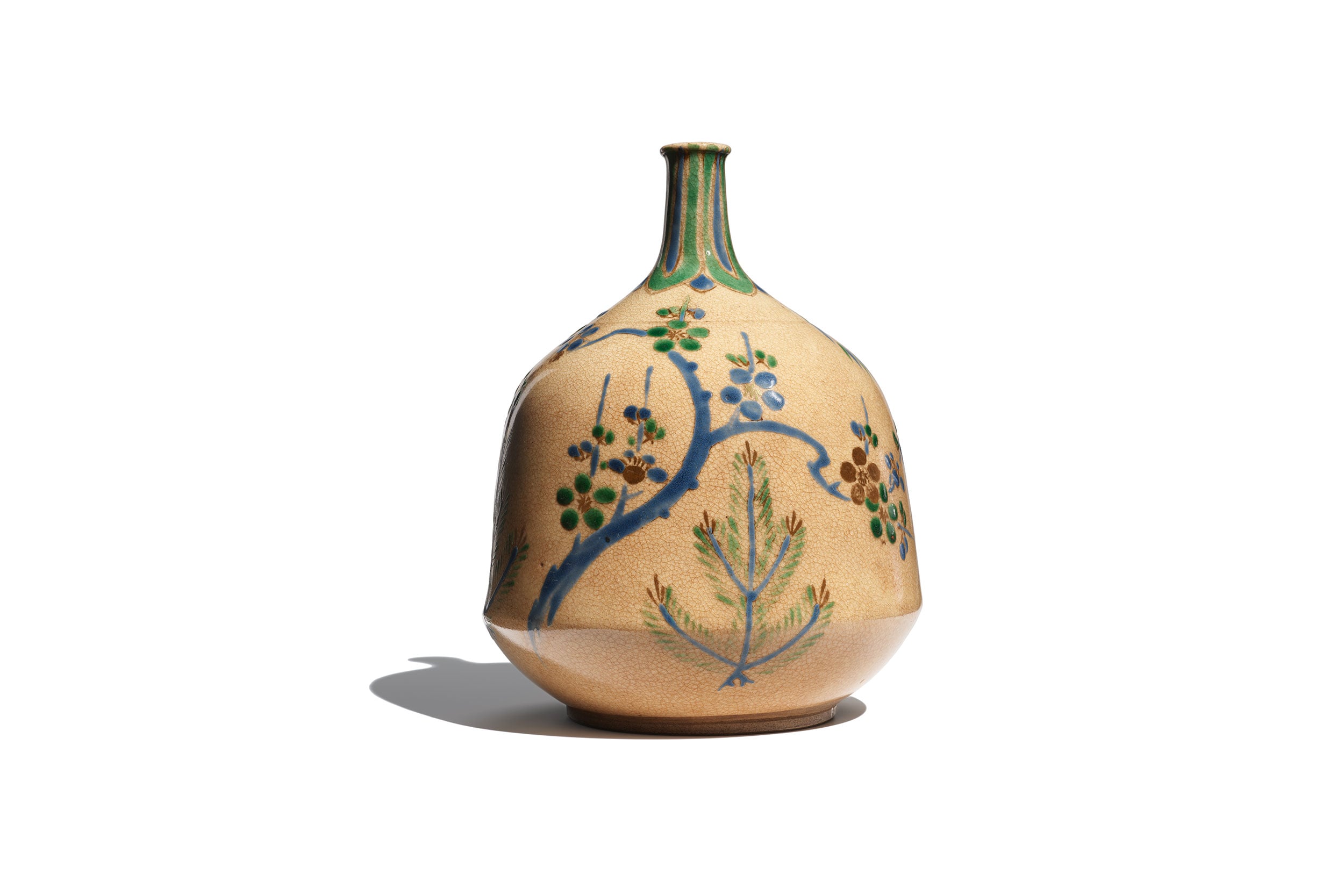
Sure enough, “Shokkan” includes many standout clay pieces, each its own testament to the strong, immediate attachment that we feel to something handcrafted. For instance, a stoneware bowl created in the mid-1800s by Japanese potter Takahashi Dōhachi III for use in a Japanese tea ceremony features a raised swan on its exterior and a turtle on the inside base. “This was made by hand, right from the clay, so it has the texture from the way the potter touched it,” says Takesue. “When you hold it, you feel his hands.” A video of ceramicist Satoshi Yoshikawa at work in his Toronto pottery shop, Mika, demonstrates how this type of soulful, handcrafted production continues today.
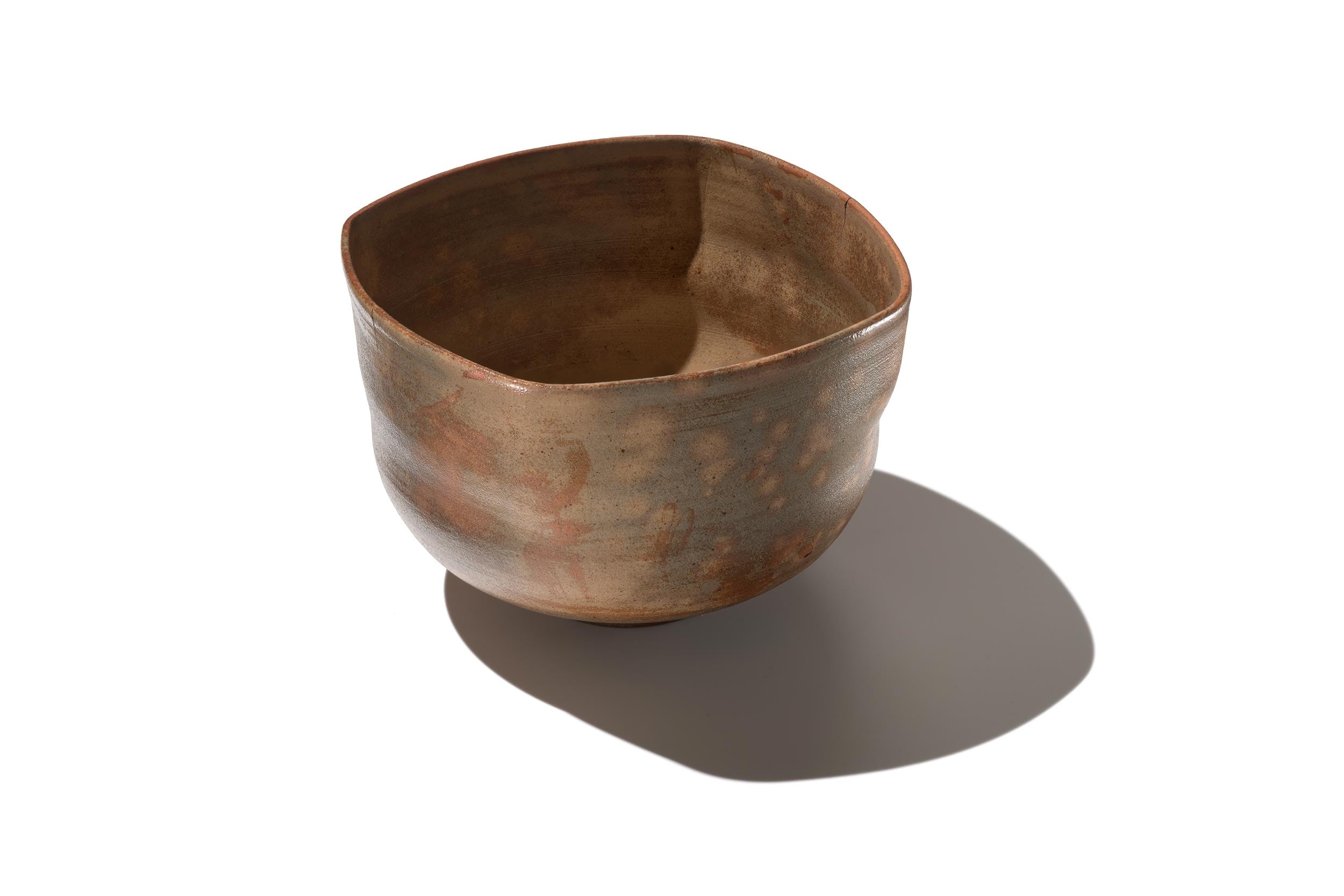
Over time, designs also gain additional texture that was not part of their original maker’s intent — and this, too, contributes to shokkan. Takesue points to the patina on another stoneware tea bowl, this one from the Edo period and created by potter Nonomura Ninsei. “The wear from using it is cherished — it is not a sign of damage, but a history of character,” she says. A nearby bowl repaired using kintsugi serves as further proof of the textural beauty that can come from wear, damage and repair.
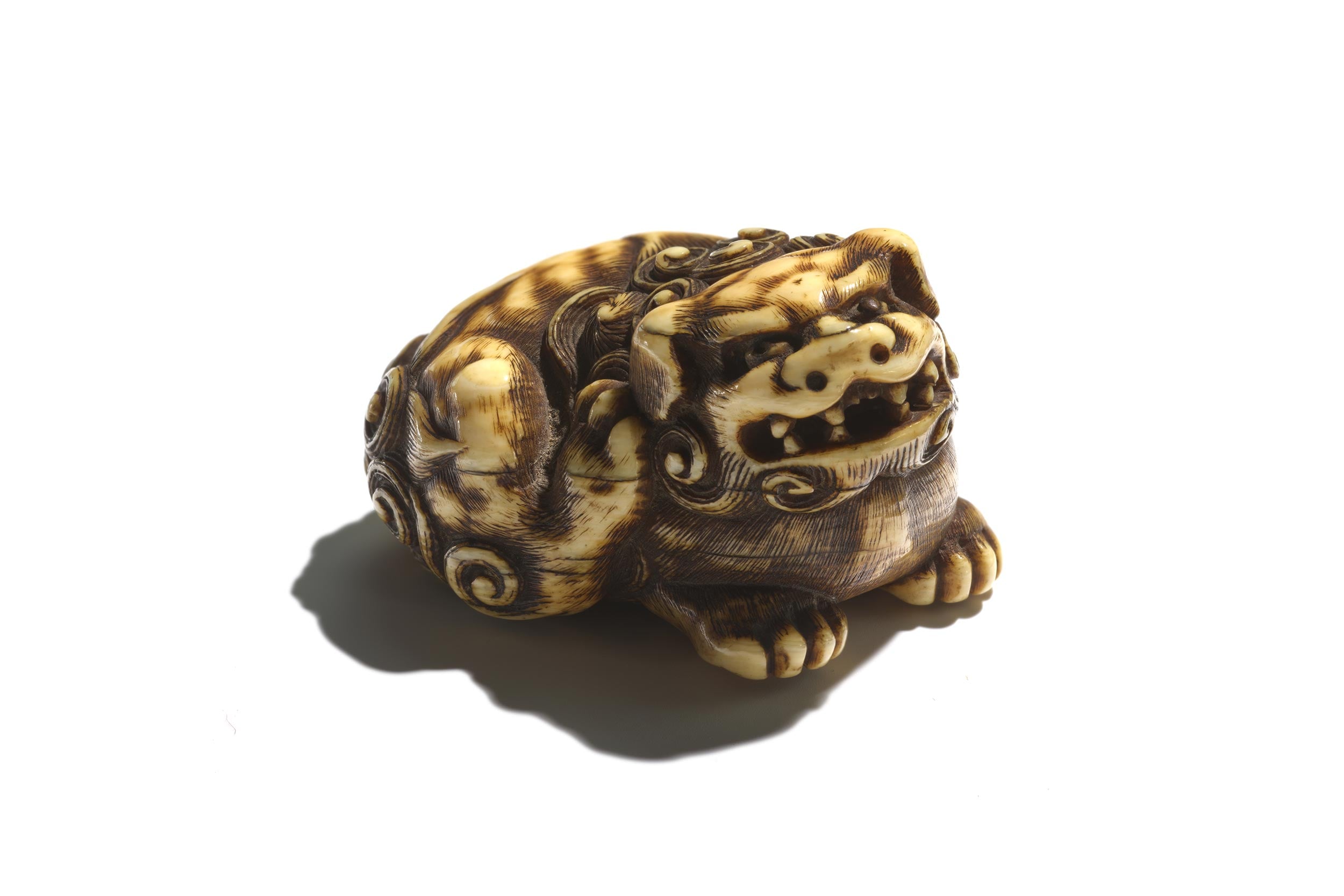
Meanwhile, it is easy to look at the show’s large collection of netsuke — carved miniature wood or ivory sculptures once used to secure tobacco pouches or coin purses to kimono sashes — and see a parallel to today’s bag charm craze. Takesue notes that netsuke animal designs were driven by both aesthetic and practical considerations. “They evolved into a statement,” she says. “But there was also a strict rule that one had to be really rounded, because it was worn so close to the kimono and you didn’t want anything to catch on the fabric. And it was meant to be touched, so you can see the sheen it gained where people handled it.” Again, the history of touch that a netsuke developed “became part of its value.”
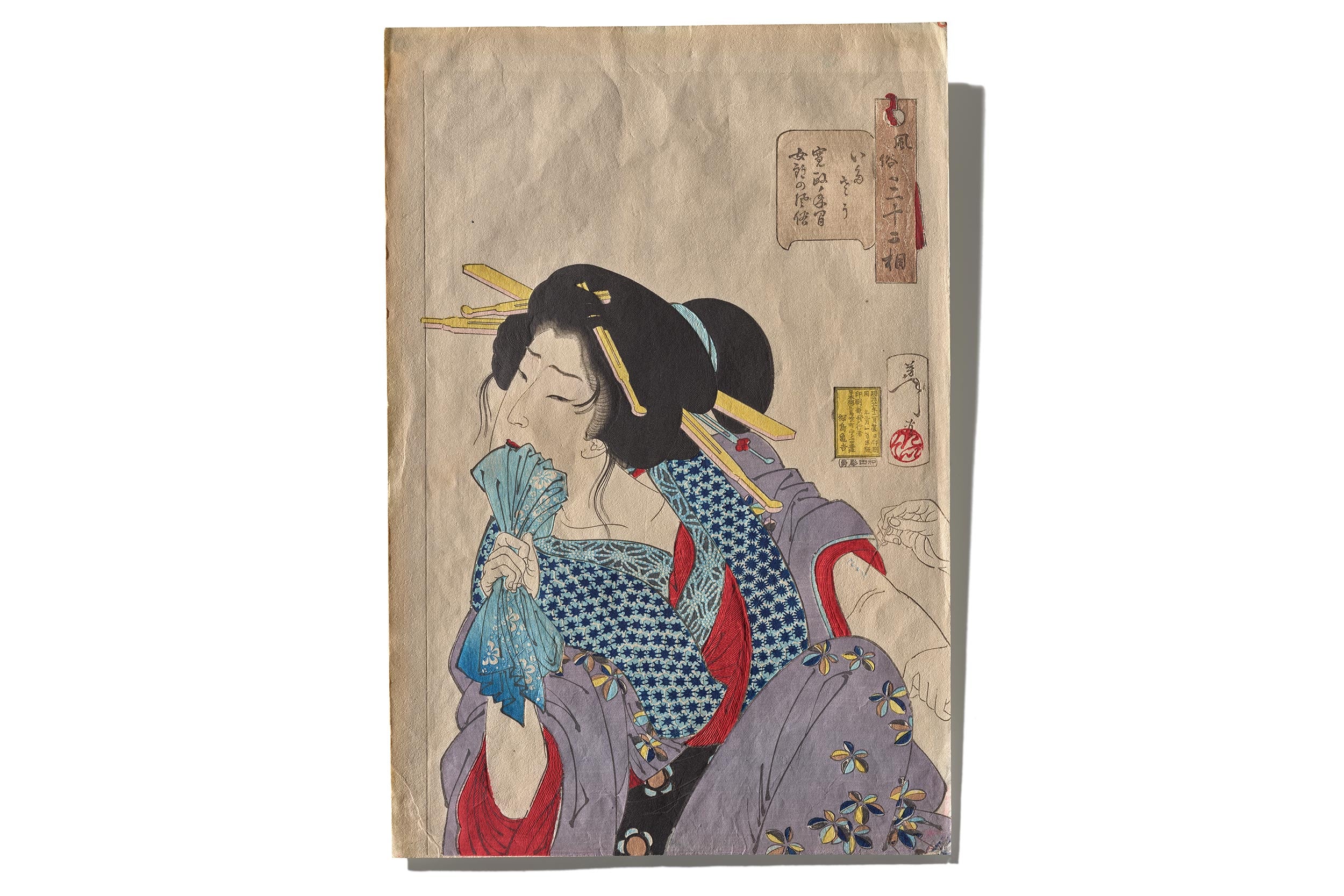
Even two-dimensional artworks can generate shokkan, as evidenced by the exhibition’s inclusion of Looking Painful, a visceral woodblock by Tsukioka Yoshitoshi that depicts a woman receiving a tattoo. Another woodblock, Two Lovers: A Wakashu and a Young Woman Kiss, provides an example of erotic shunga (“spring pictures”) by capturing a moment of intimacy. A 1851 hand scroll painting of cannon production — which must be continuously unrolled and observed in scenes that extend the width of a viewer’s arm span — serves as a further demonstration of the strong relationship between Japanese artwork and our sense of touch.
While Takesue credits mindful, hands-on rituals like tea ceremonies for giving the Japanese community an especially strong appreciation for tactile experiences, she says that shokkan can ultimately be experienced with objects from any culture. “This is a case study using this collection, but the idea continues in everyone’s life,” she says. As much as we may experience touch as a physical sensation, we can also experience it as a cerebral one — and now that “Shokkan” has provided an introduction to this concept, we’re eager to feel our way through more examples in the contemporary design industry.
An Exhibition at the ROM Gets a Feel for Tactility in Japanese Design
“Shokkan” looks at the role that our sense of touch plays in the way we connect with historic and contemporary Japanese objects.