
When office furniture maker Teknion put out a call for designers to share their vision for next-generation work environments, Dubbeldam Architecture + Design got down to business. After an extensive research process that saw the Toronto studio pore over everything from Jetsons reruns to pet owner psychology studies, the team proposed a trio of experimental designs that embrace cutting-edge technology, but also demonstrate strong regard for employee wellbeing. “Design is most impactful when it responds to people — their needs, their habits, and their desire for meaningful connection,” says firm founder and principal Heather Dubbeldam.
Equally impressed by each of the studio’s concepts, Teknion moved ahead to produce prototypes of all three: an under-desk kennel for office canines (PetPod), a modular workstation that drives itself back to a dedicated charging pad each night (RoamStation), and a dynamic ceiling scape with coiled elements that drop down to form focused work areas (Nimbus).
These forward-thinking ideas take centre stage in a special exhibition, “Advanced Concepts 2.0,” that debuted at Teknion’s New York showroom last fall and is now on view in the company’s Toronto showroom through May. Perched on the 20th floor of a Financial District skyscraper that overlooks the CN Tower and Lake Ontario, the space in its natural state is already the type of corporate haven that would win over even the most diehard of WFH holdouts — filled with inviting, ergonomic desk chairs, workstations calibrated for maximum productivity, and social zones that seem ready to spark lively employee gossip.
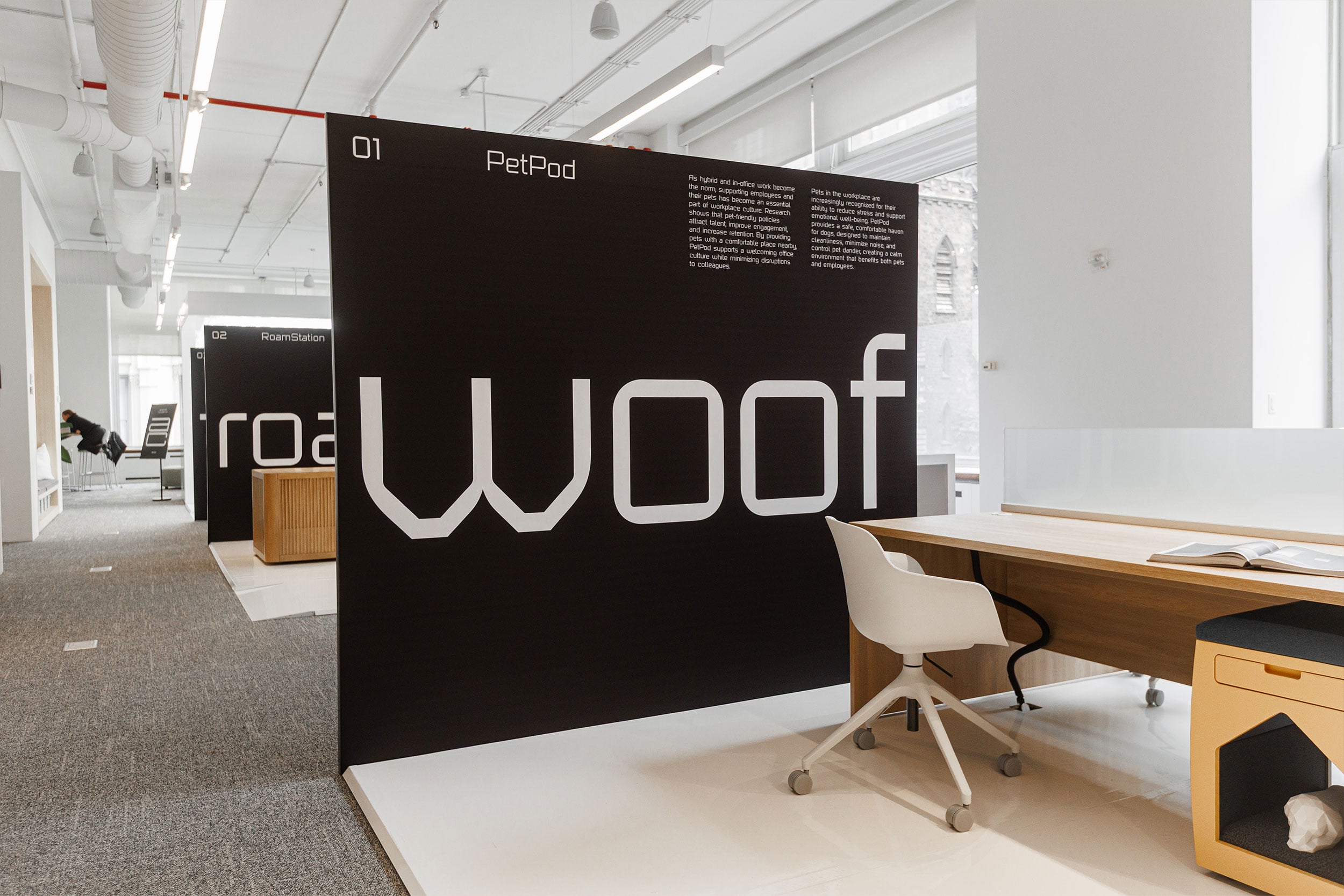
Even though they are arranged in their own dedicated area of the showroom, it is easy to picture Dubbeldam’s designs integrated into these existing setups. As radical as each of the studio’s concepts may initially seem, they are nevertheless still a natural evolution of the flexible modern office as we currently know it. The biggest shift, perhaps, is in the way that each of the designs promotes stronger personalization within the workspace. In some cases, that might mean making room for somebody’s dog to join them at their desk, while in others it might mean delivering more versatile workstations.
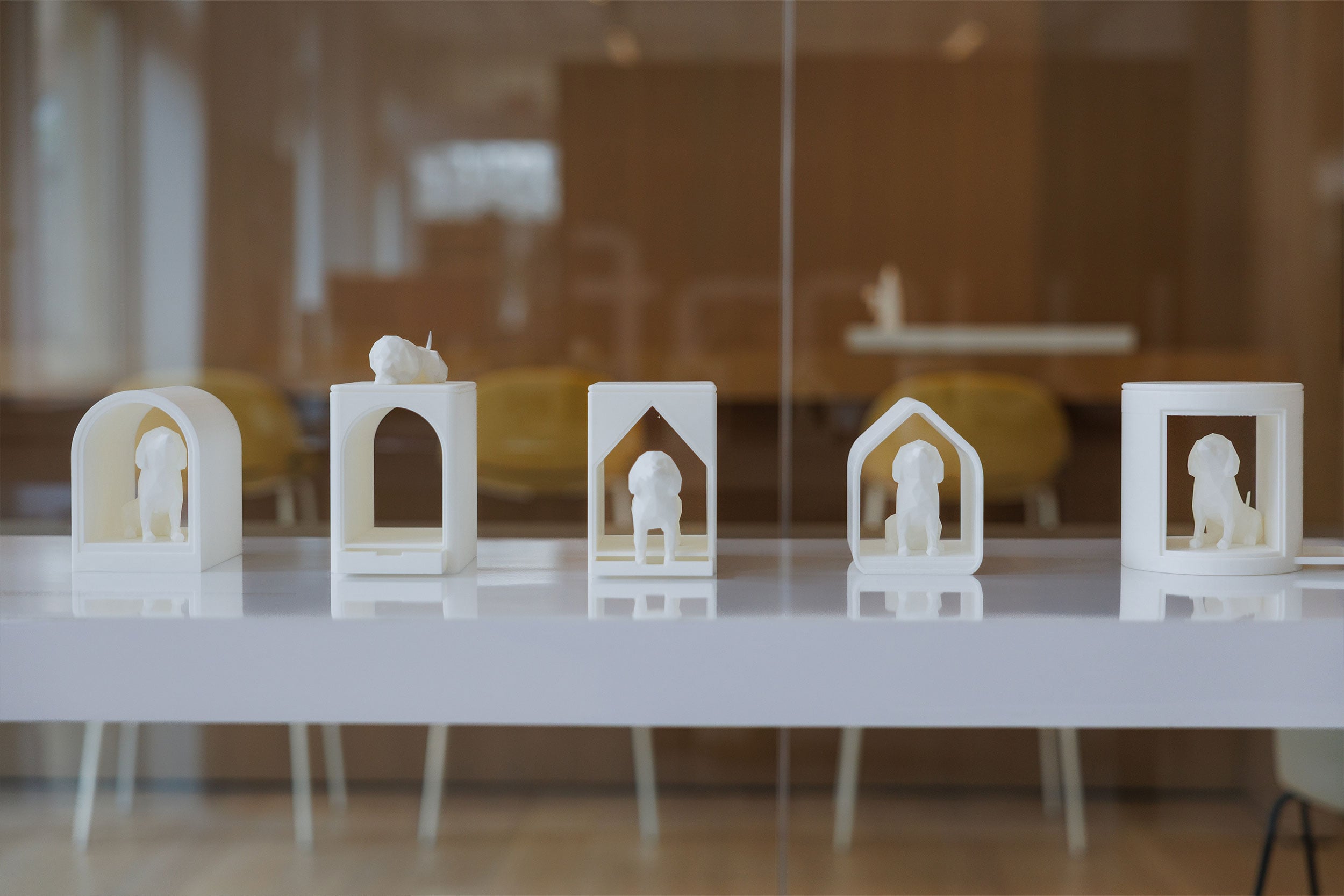
At this point, the designs are conceptual conversation pieces rather than future products. That said, a future office where people, dogs and robots exist in perfect harmony probably isn’t too far off. Here’s a look at all three of the designs presented in “Advanced Concepts 2.0”:
1
PetPod
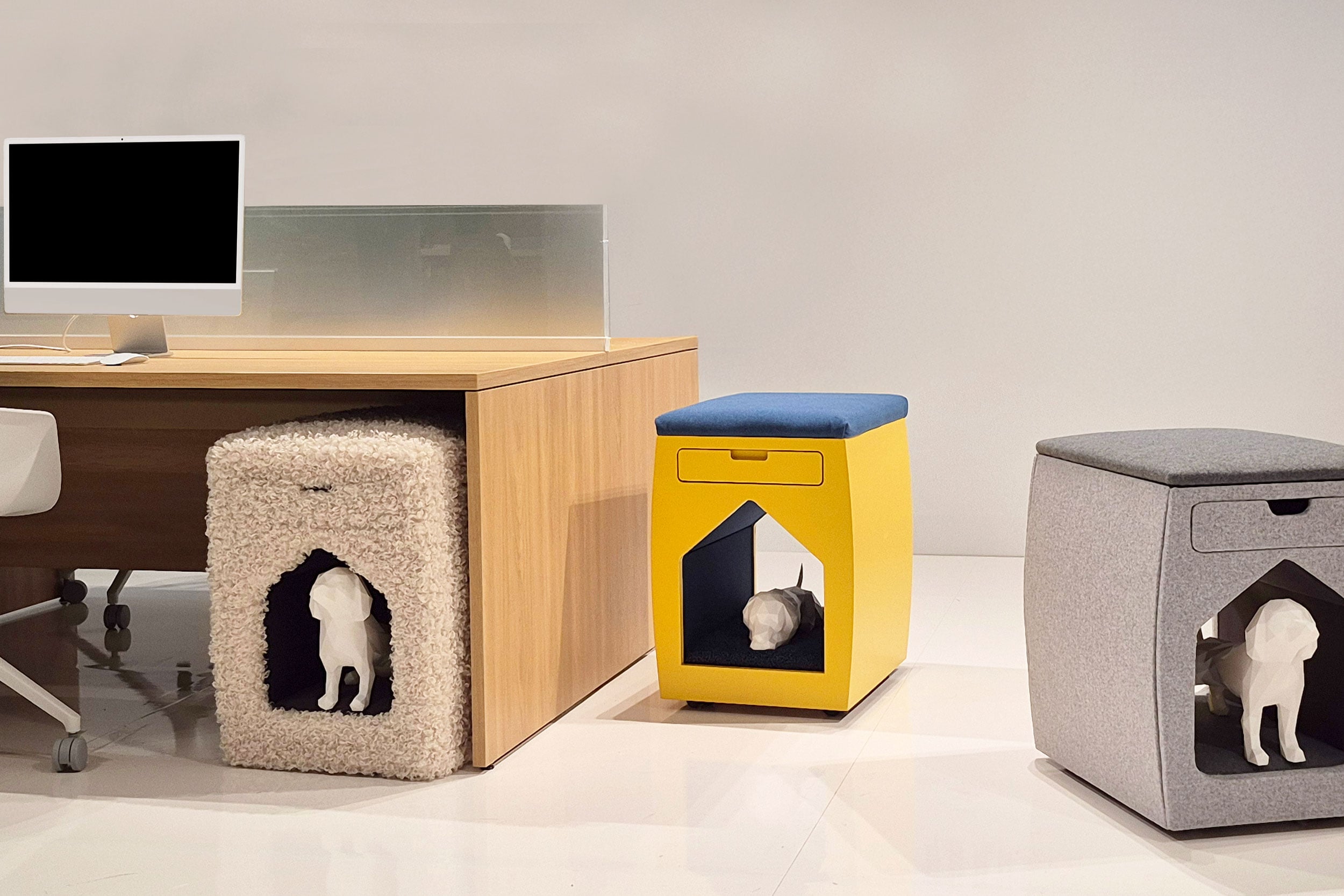
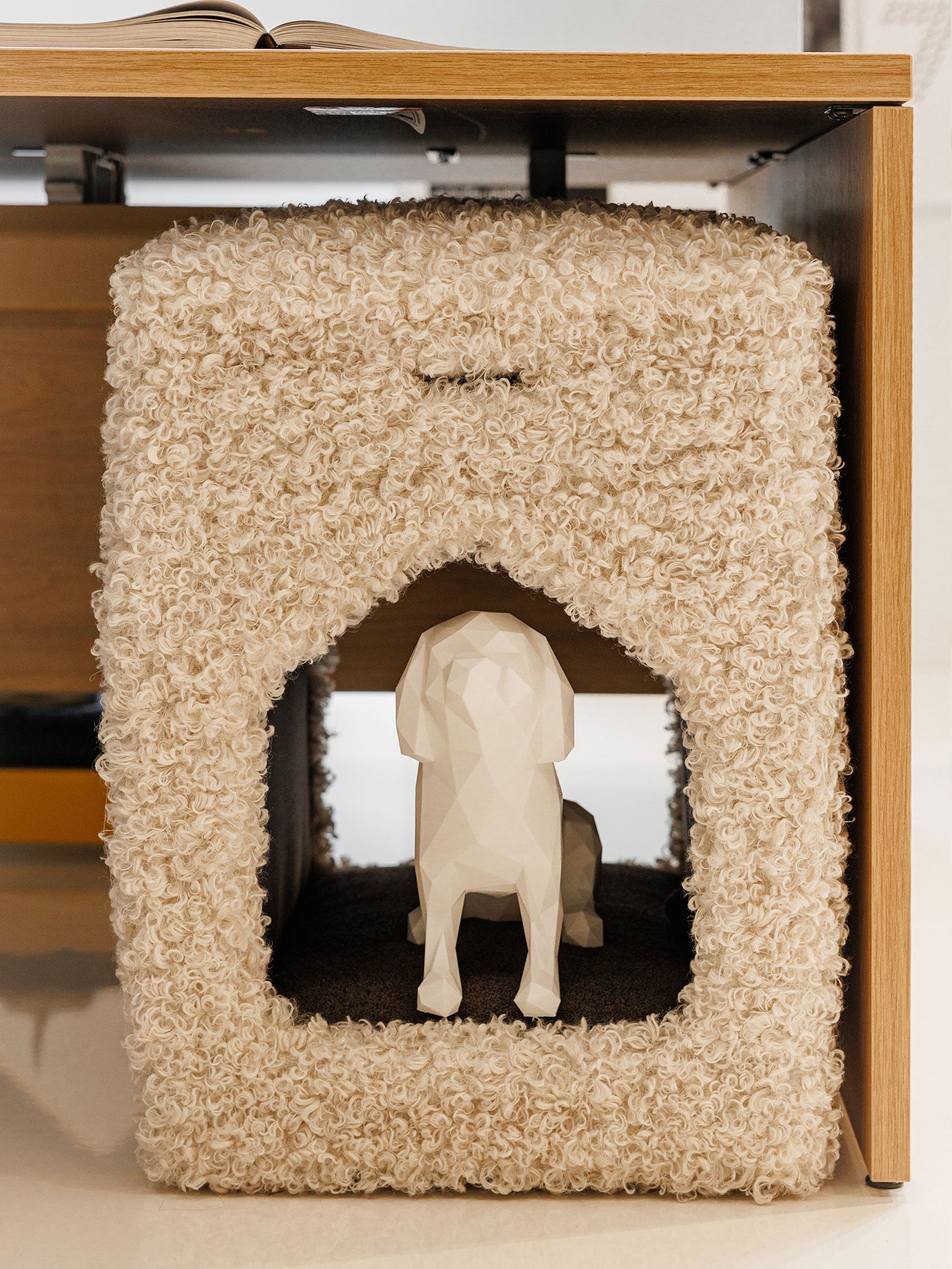
“Nearly 30 per cent of remote workers say they would prefer to return to the office if it accommodated their pets” reads a wall display introducing this under-desk kennel, which is about the size of a small filing cabinet. In this case, instead of being stuffed with hanging file folders, it features a comfy dog bed paired with an integrated HEPA filter for absorbing pet odours. (A dedicated treat drawer keeps performance bonuses close at hand, too.) Material options shown range from felt to curly upholstery, while colours include blue, yellow and grey — the three hues that define the canine vision colour spectrum.
2
RoamStation
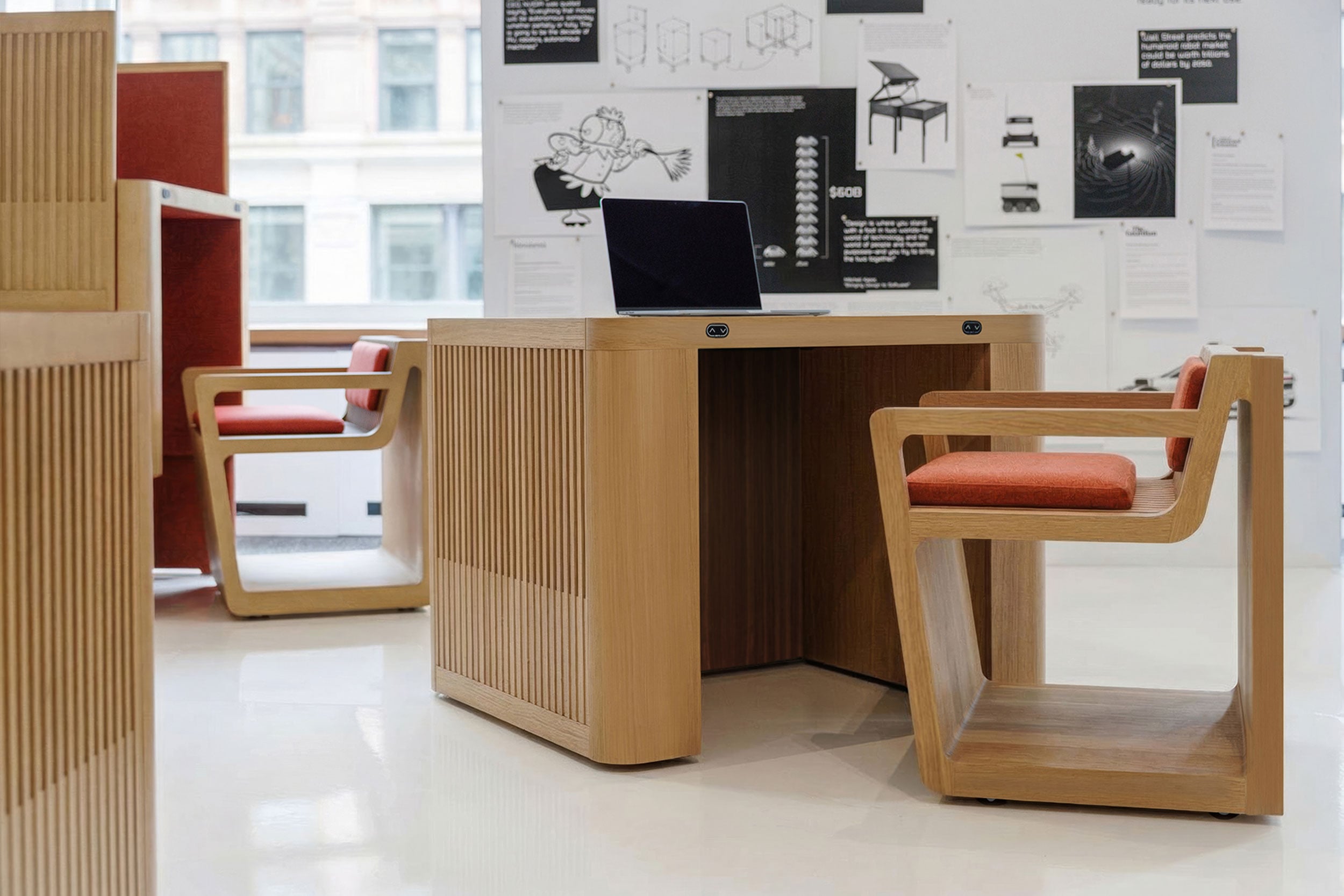
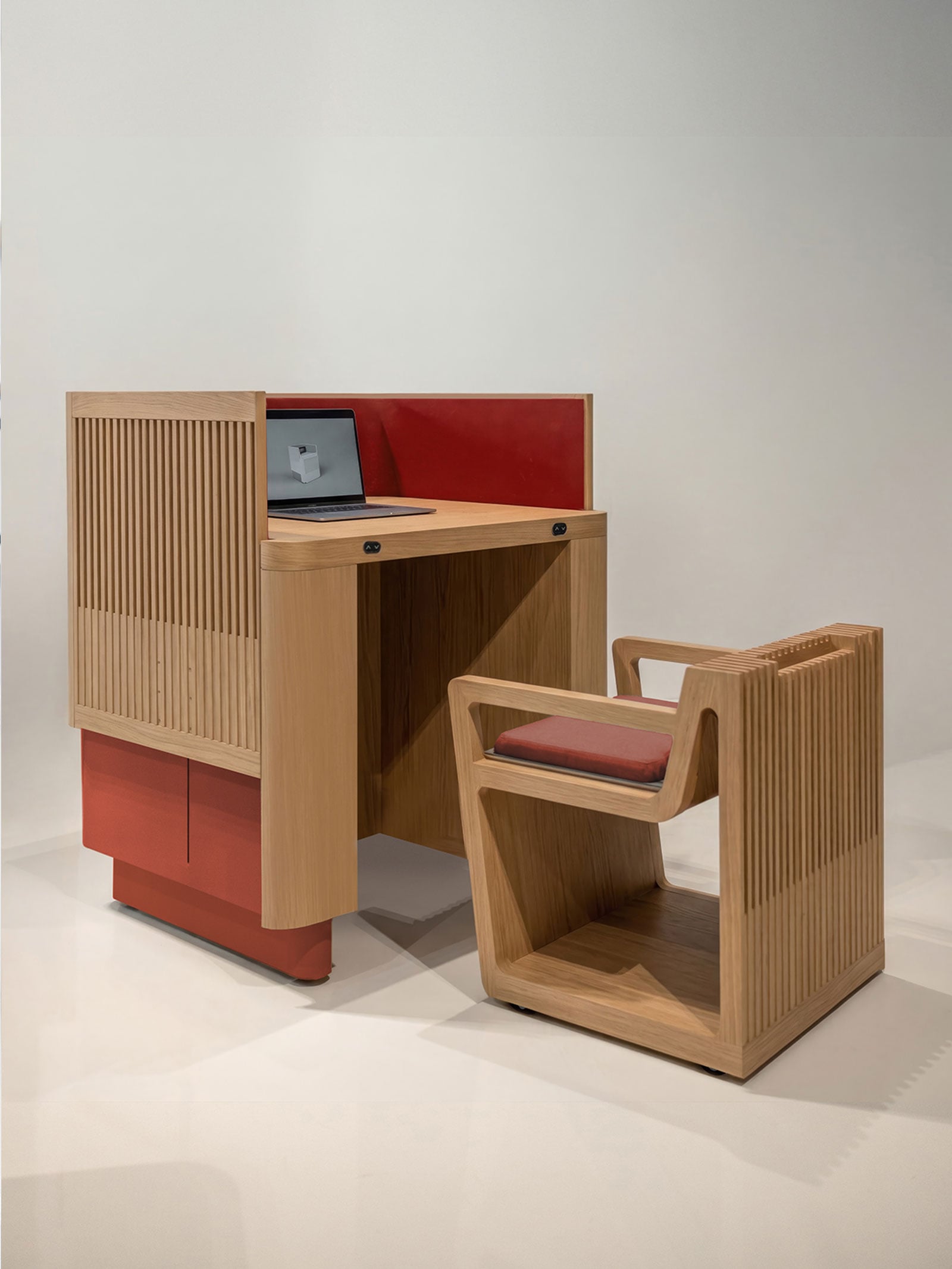
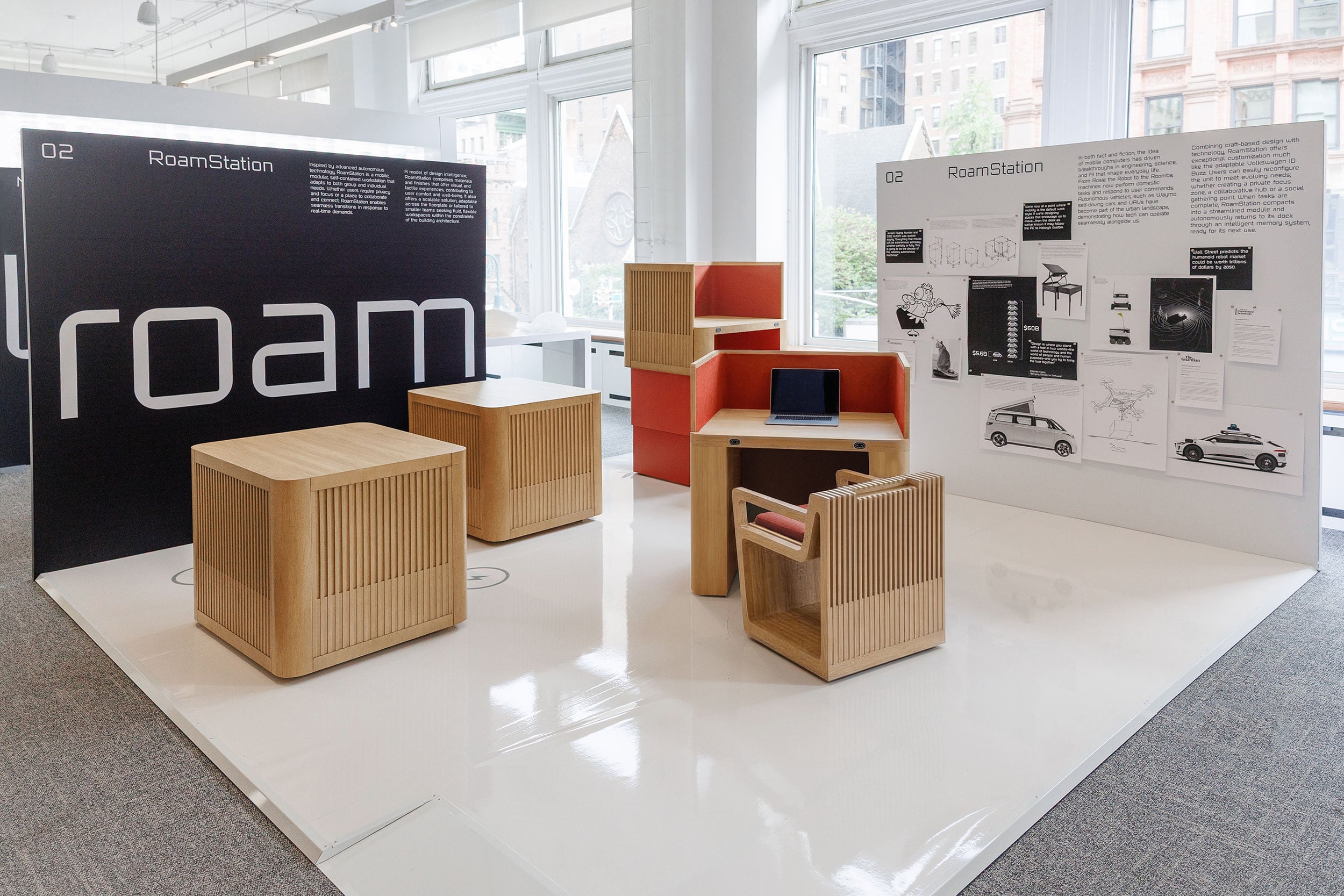
Rosey (the Jetsons’ robotic housekeeper), the Roomba vacuum and the shapeshifting Volkswagen ID Buzz electric minibus all serve as reference points shown on the board of process imagery documenting the development of this modular workstation. Yet thanks to its wooden shell, the outcome feels more like well-crafted furniture than a humanoid robot. Still, there are plenty of high-tech touches at play here: Along with a wireless charging pad, the worktop features controls that allow it to move from sitting to standing height, and extend or contract integrated acoustic panels for sound control and privacy.
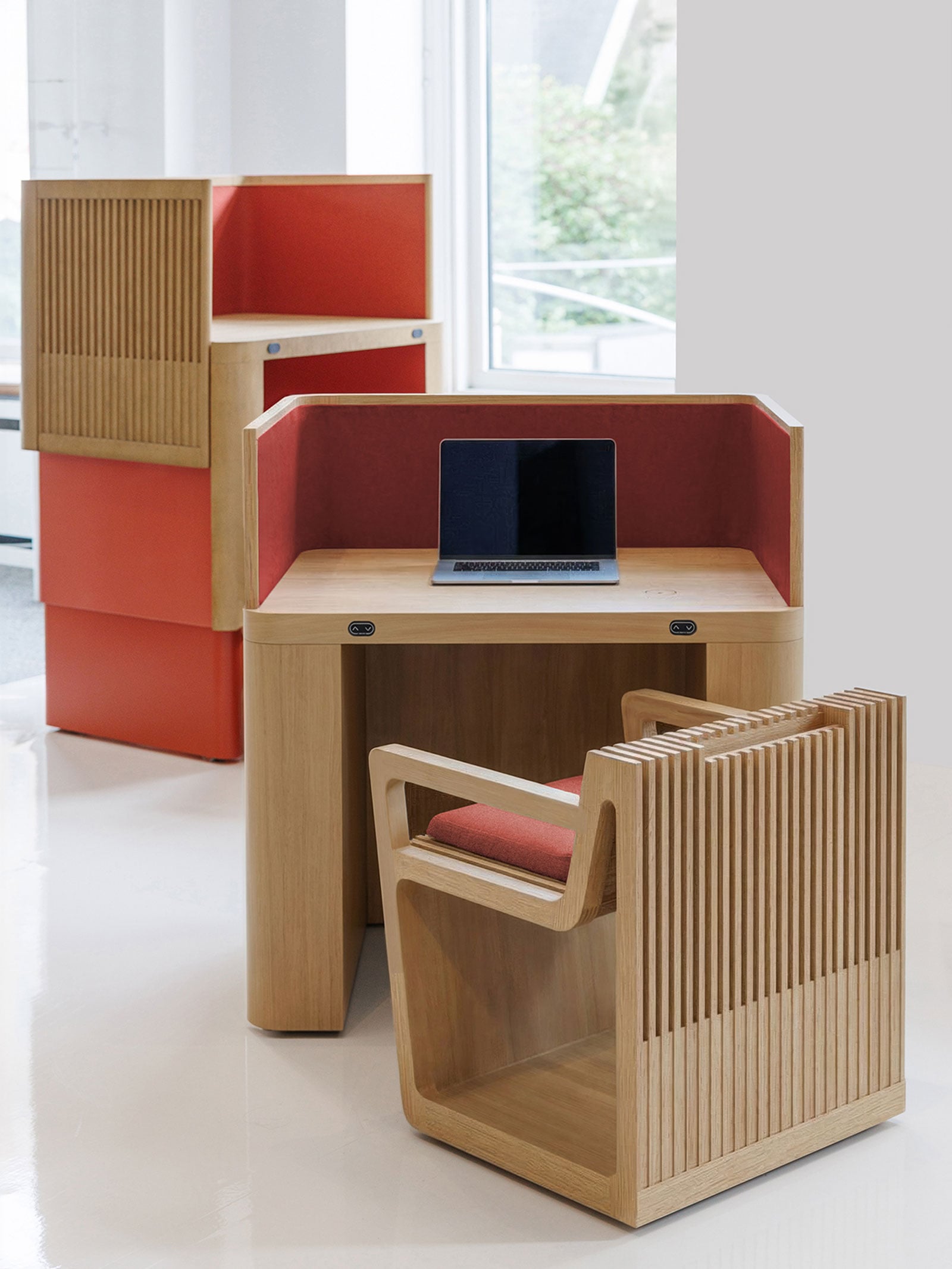
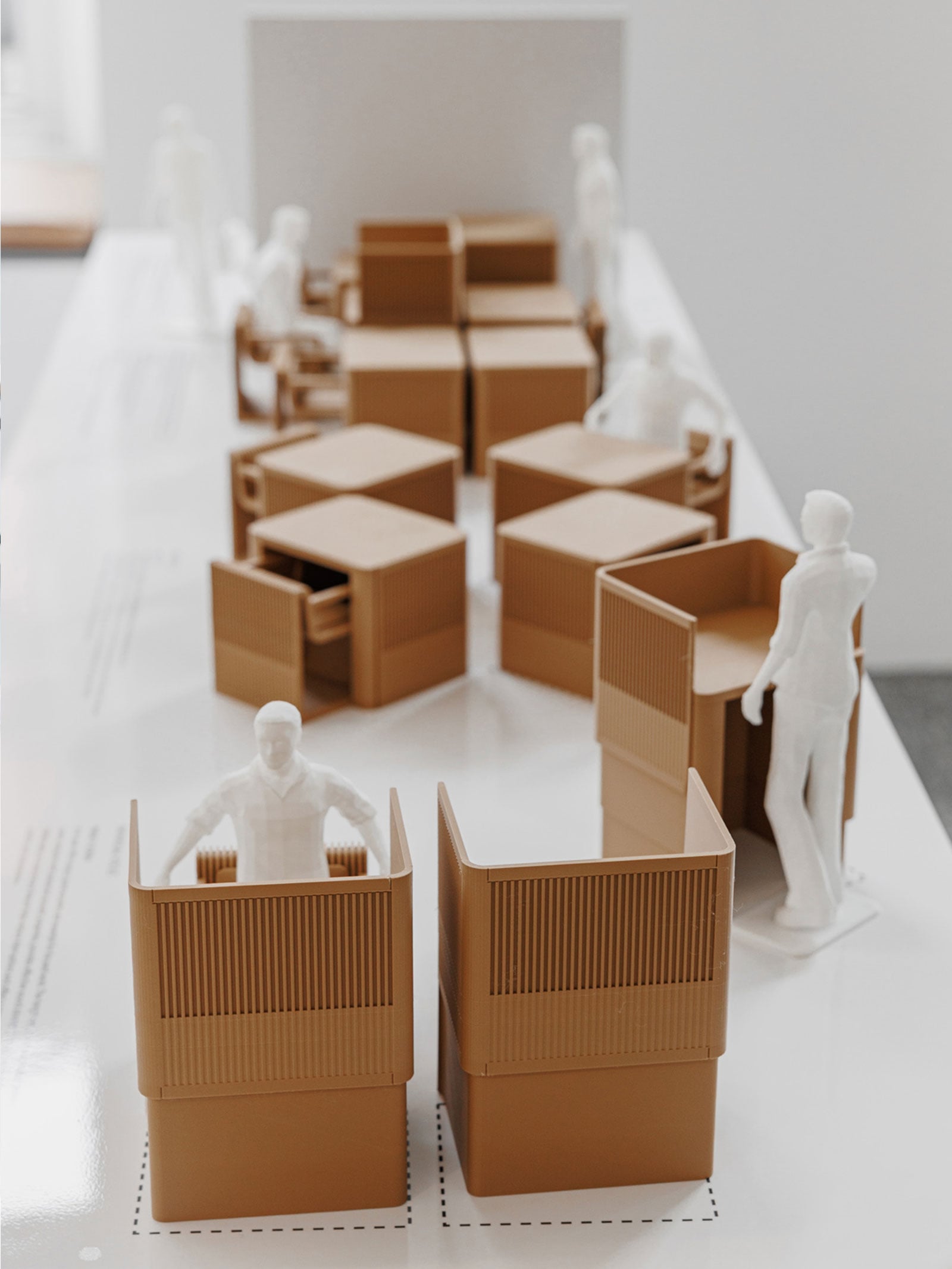
Meanwhile, the workstation itself is designed to drive itself back to a docking station each night to recharge its internal battery. (Dubbeldam says the concept engages “near-future tech” — meaning it makes use of existing technology that is nevertheless not readily available on the market yet.) Otherwise, its main strength is its versatility: Along with accommodating individual, focused work, the stations can also be grouped to create collaborative breakout zones. Another smart detail? The chair that slides out of the desk includes a built-in storage niche for stashing a bag to cut down on office clutter.
3
Nimbus
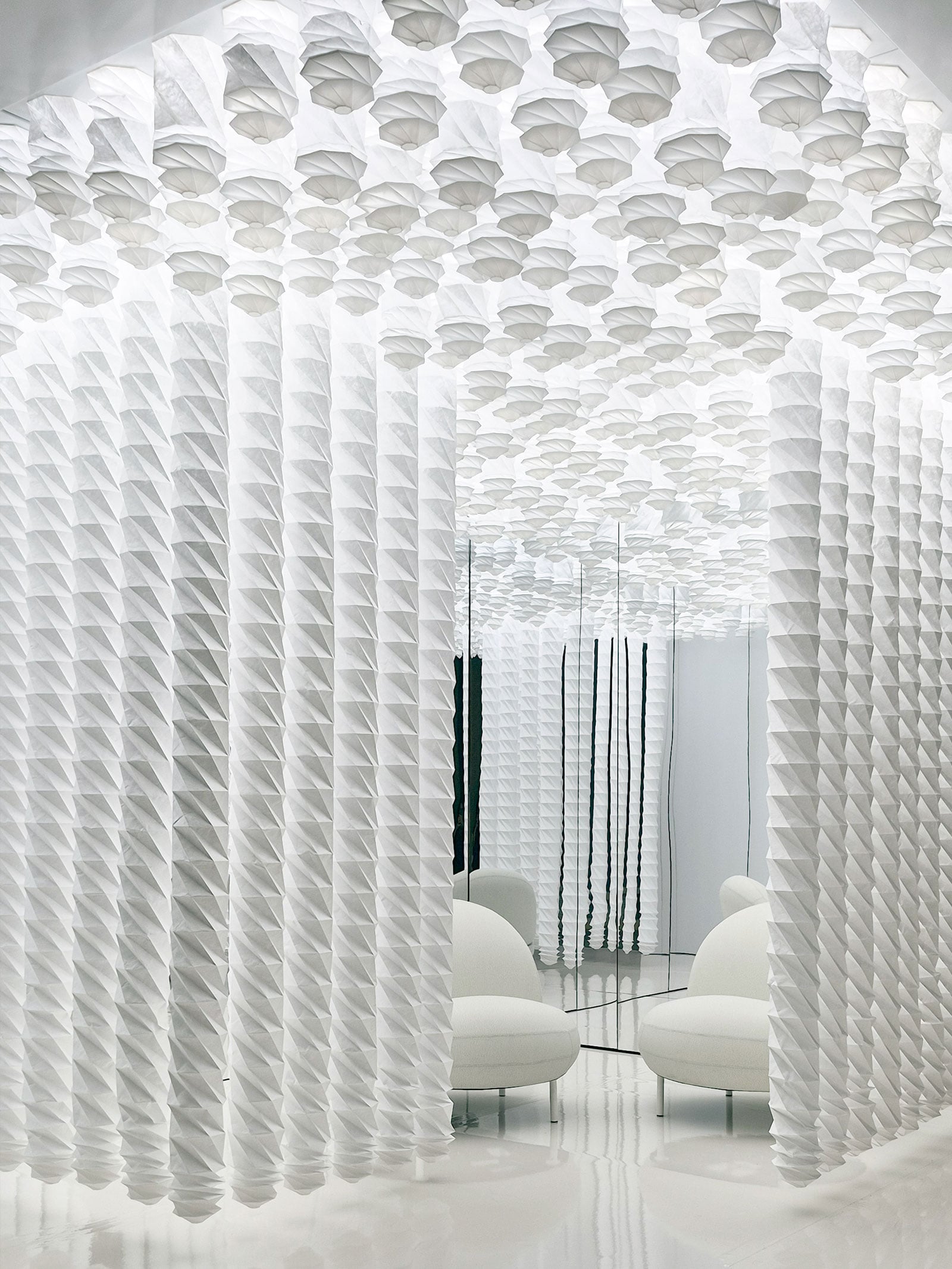
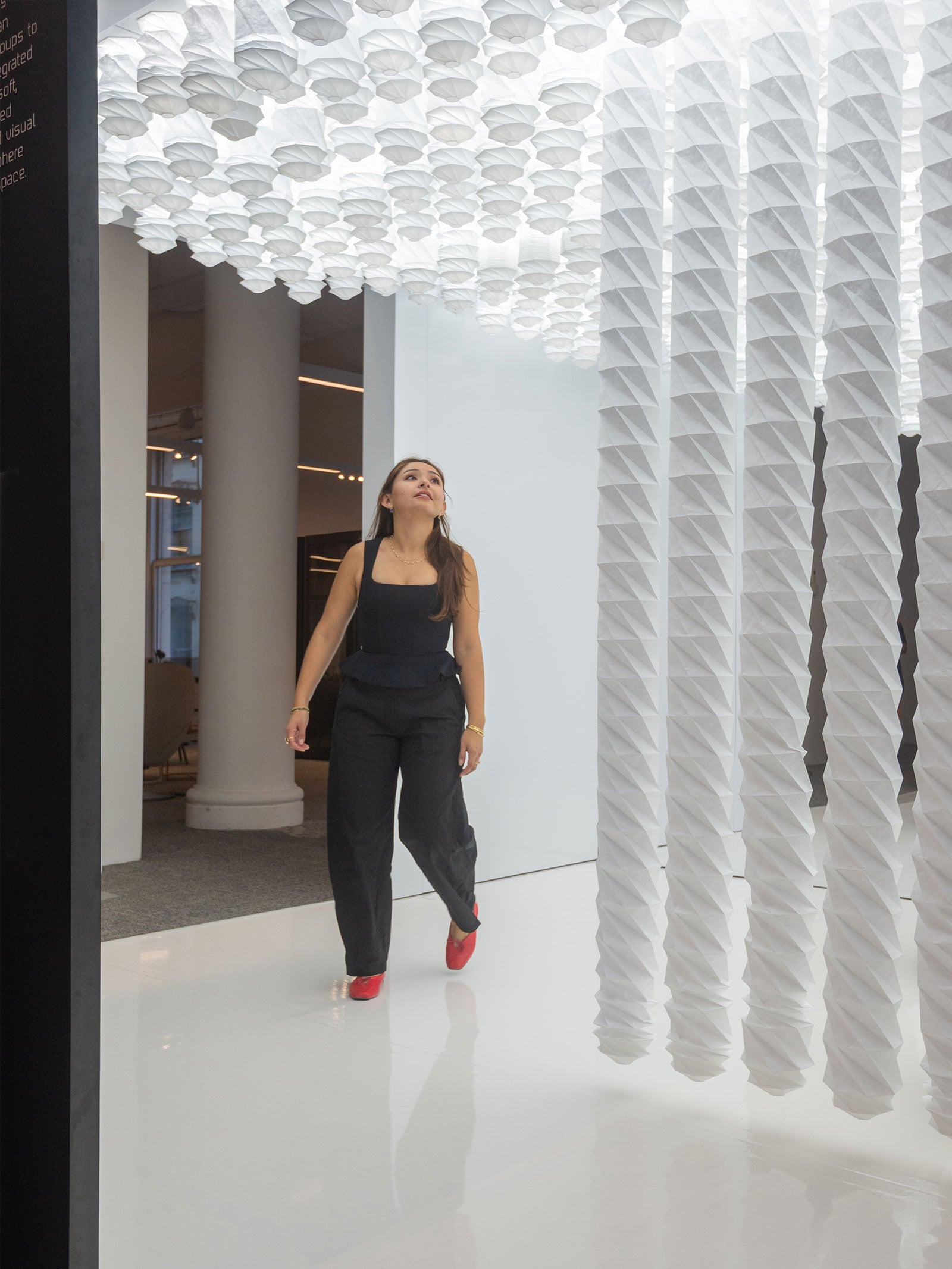
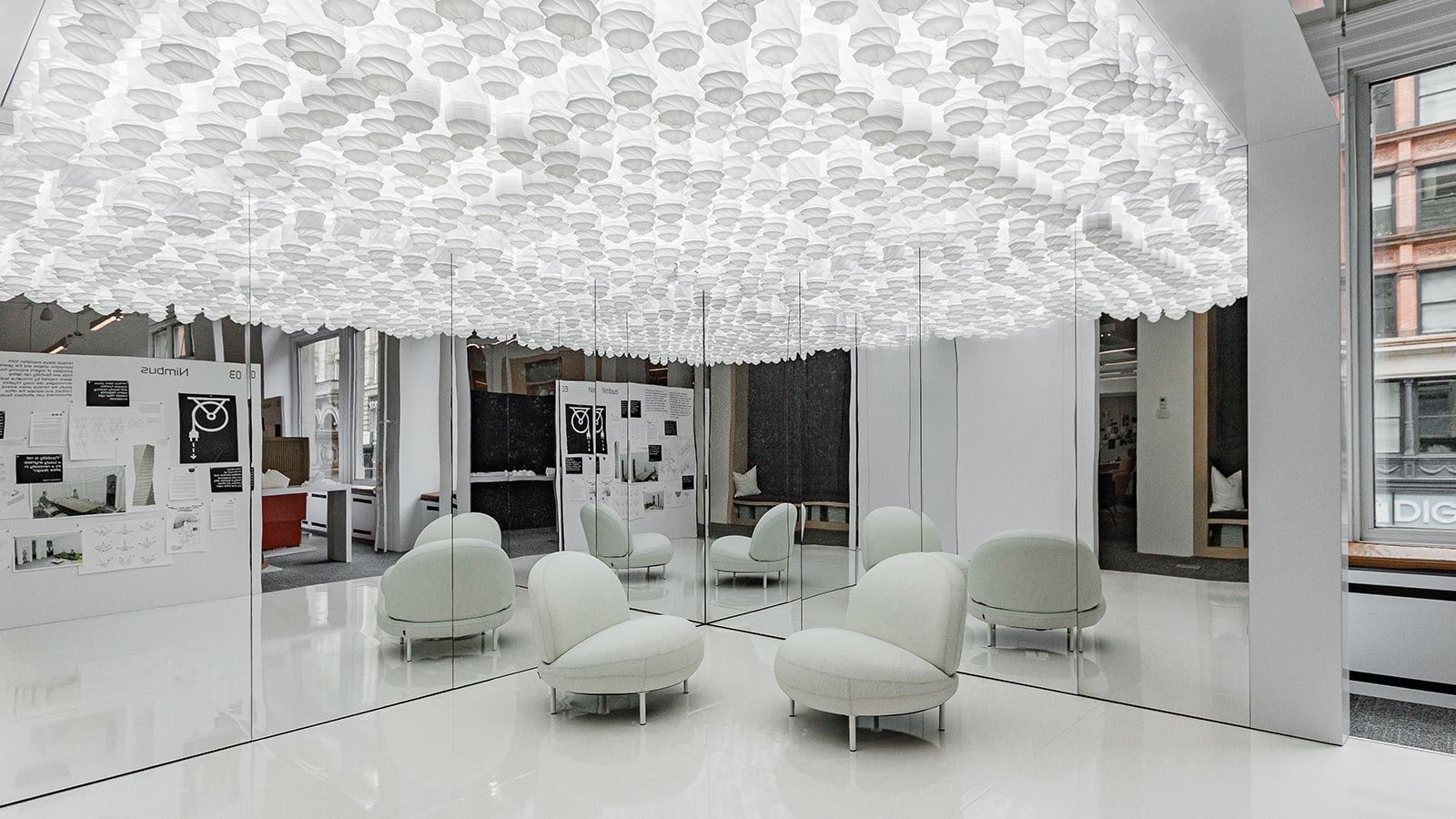
Displayed in a mirror-lined corner, this installation initially calls to mind one of artist Yayoi Kusama’s Infinity Rooms — and sure enough, the design proposes a way to divide a single open space into an infinite number of work environments. With a simple tap on an iPad, translucent, origami-like pillars extend down from the glowing ceilingscape to form entirely new zones, introducing an individual phone booth in one corner or a small breakout space in another. The acoustic properties of the high-density polyethylene fibres that wrap each pillar control sound to support focus, while the diffuse lighting gives the entire setup a calm, ethereal atmosphere. Even when the ceiling is fully retracted, it serves as a spectacular showpiece — perfect for offices that regularly need large, open spaces for hosting events, but also require more focused workzones during the day.
The Office of the Future Welcomes Robots, Dogs and Dynamic Ceilingscapes
Toronto studio Dubbeldam Architecture + Design reboots 9 to 5 work culture in Teknion’s experimental “Advanced Concepts 2.0” exhibition.