
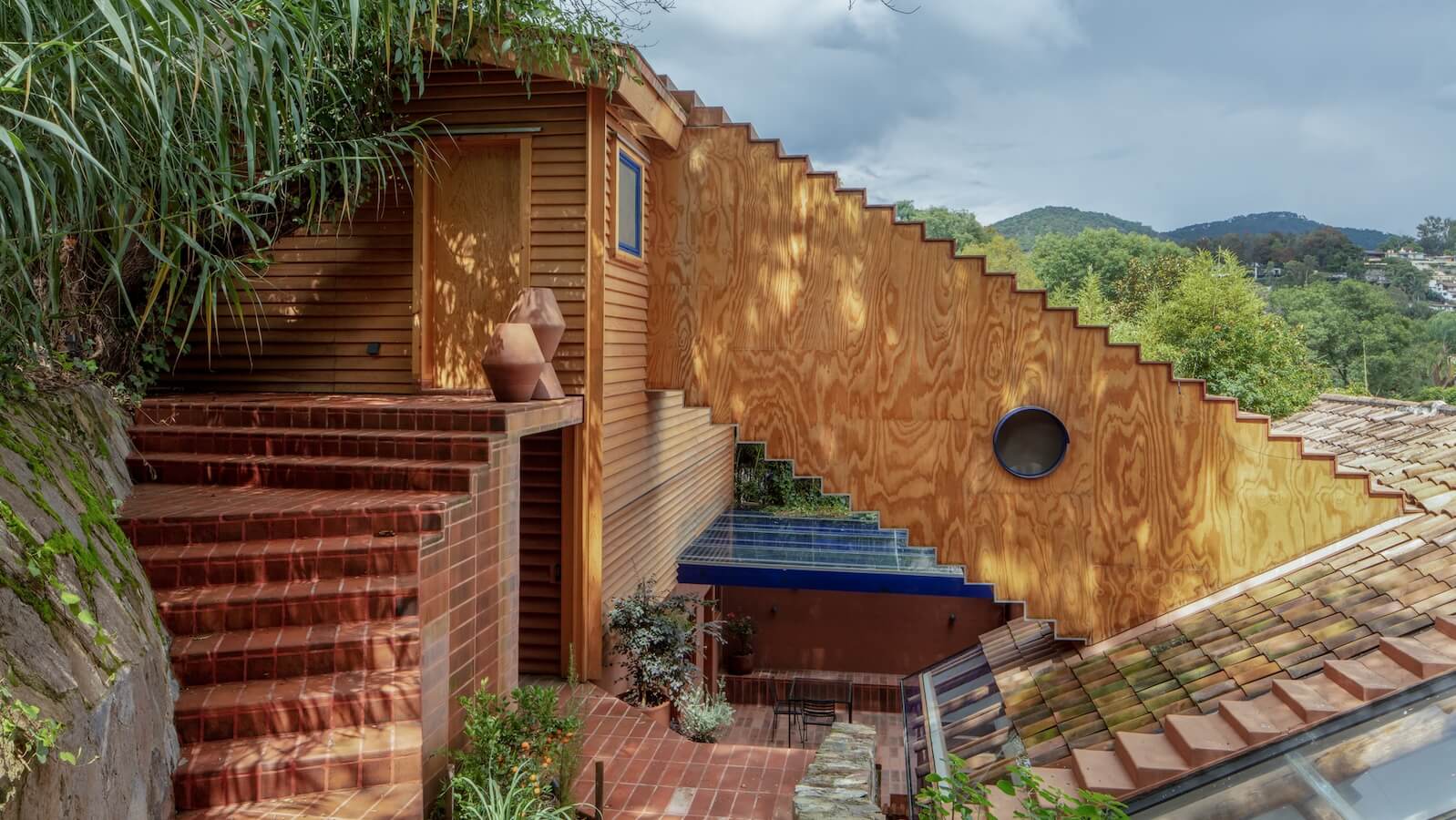
Near the edge of a lake in Valle de Bravo, Mexico, a house has been expanded in an expressive language that speaks of joyful adaptation. A serrated stair volume now connects the existing volume to an addition carved into the mountain just above it. “A staircase breaks through the roof, eager to extend upward,” the architects, Pedro&Juana, explain in their poetic project description. “The house turns around and discovers a previously overlooked backside, opening up to new outlooks on the lush surrounding nature. Suddenly, life celebrates life itself.”
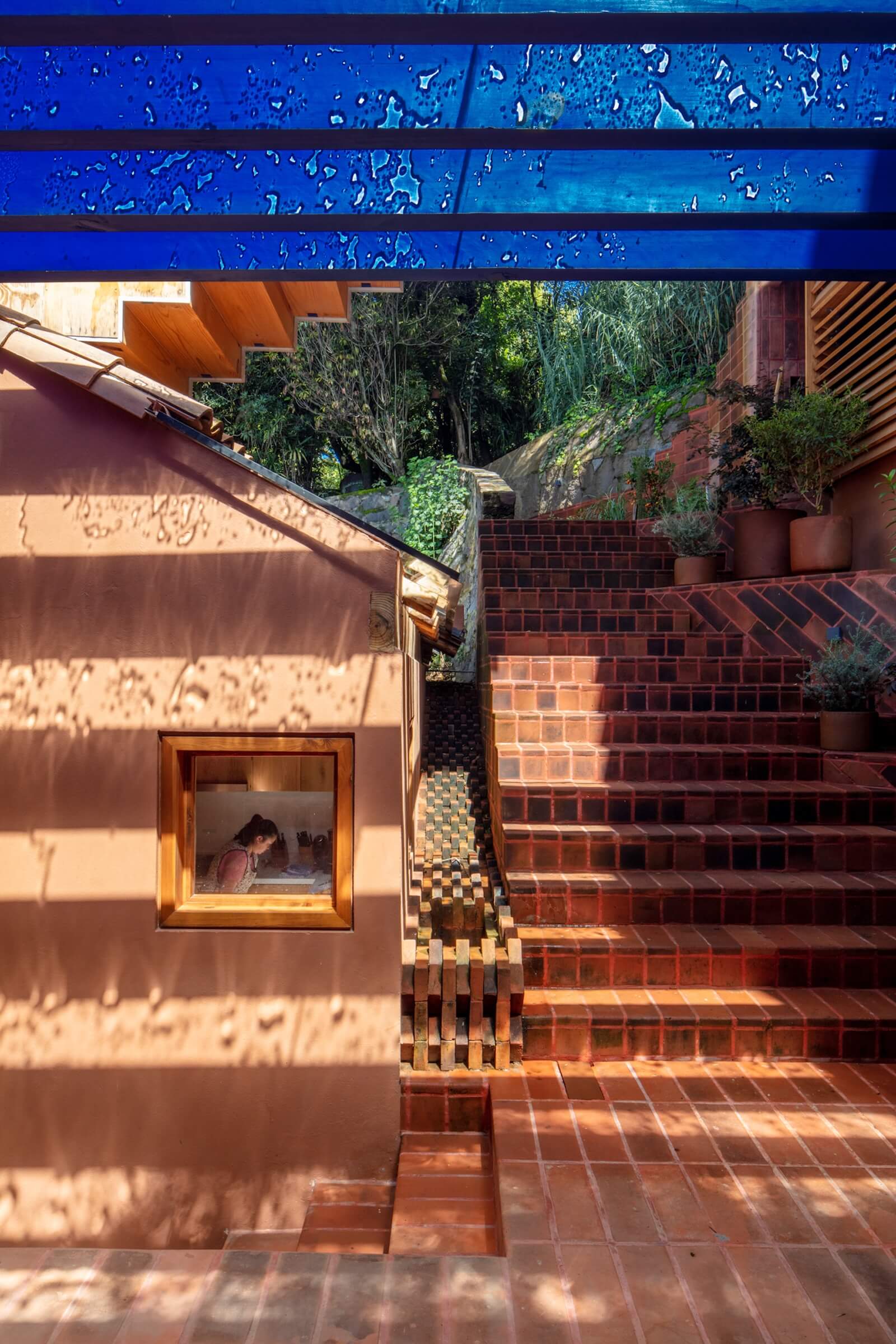
The two halves of the home are connected by more than that one stair volume, which links their interiors: Terracotta brick staircases also knit them together, indoors and out, as do shared patios. On the building’s exterior, a gap between the brick stair and the existing home is filled with a cascade of rotated blocks, a connective tissue that drives home the deft and considerate tapestry created by weaving together the various spaces as well as the materials that comprise them.
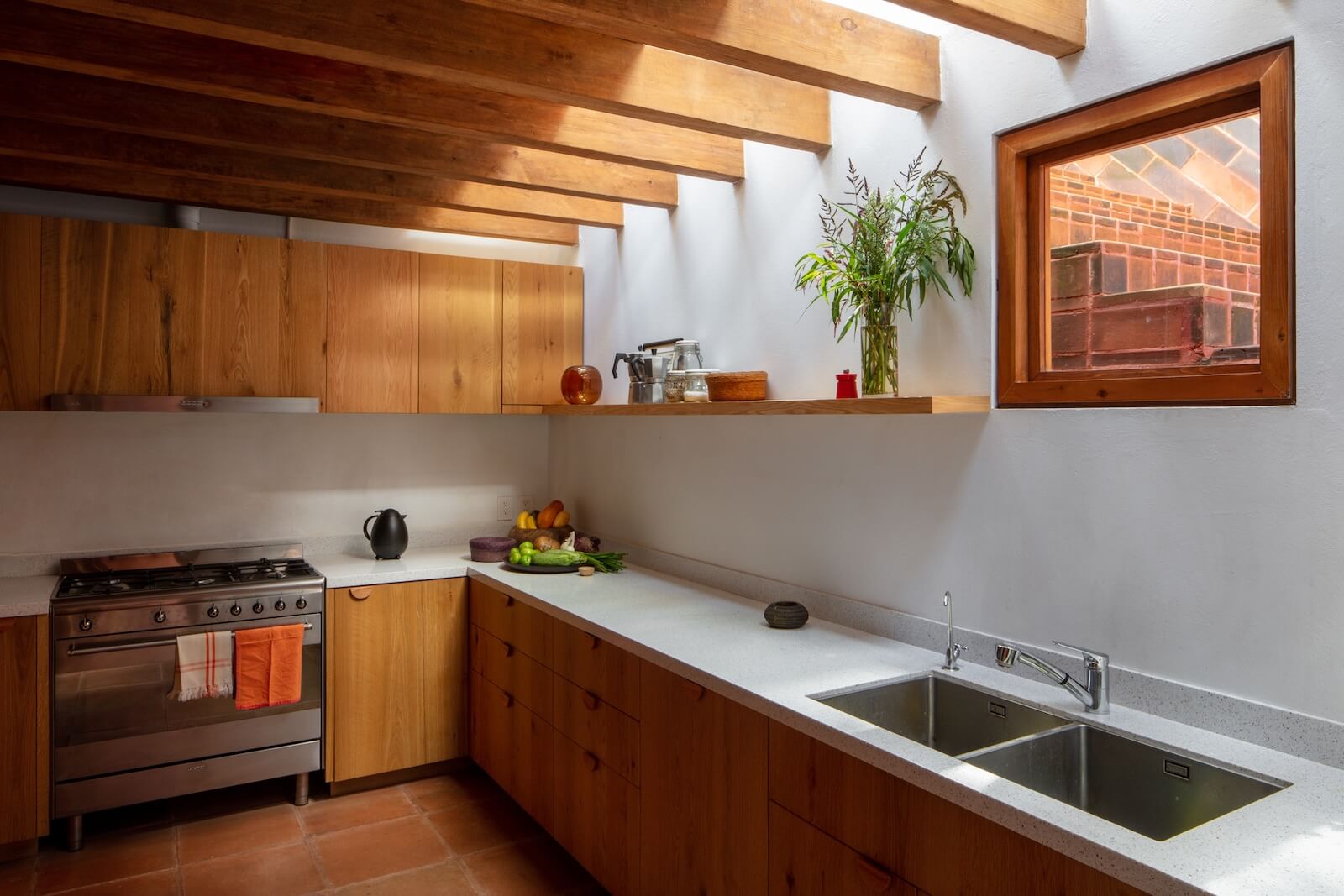
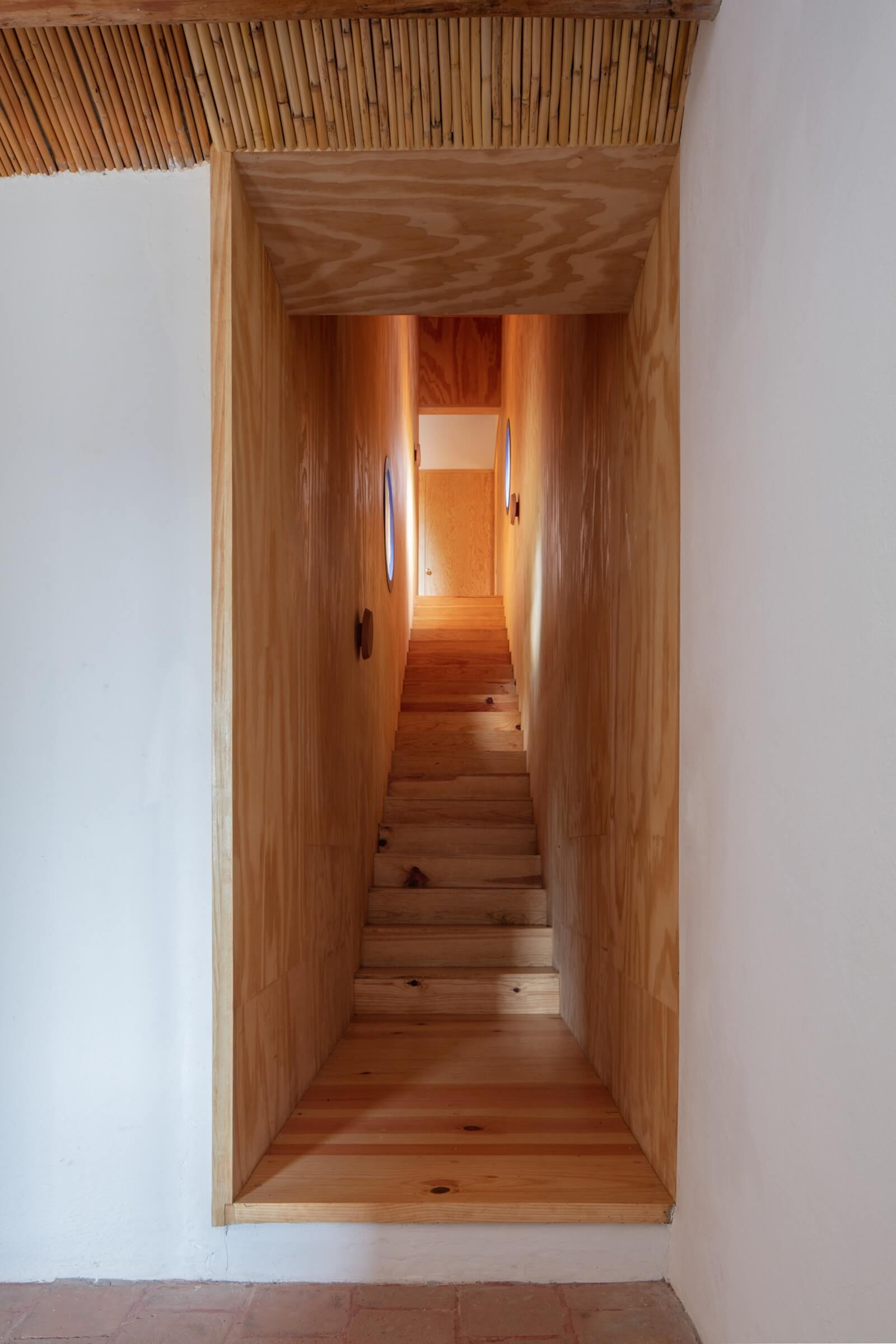
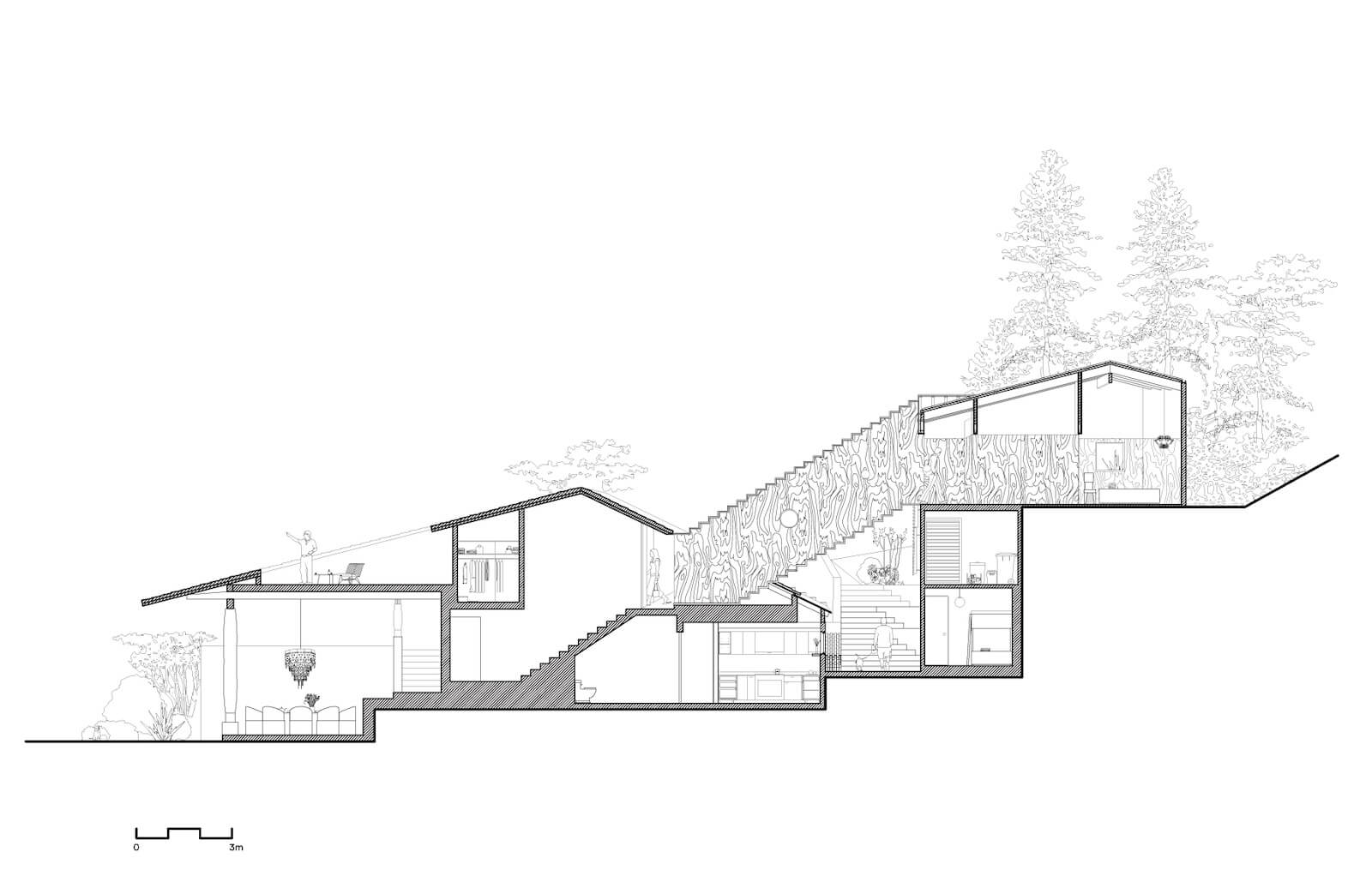
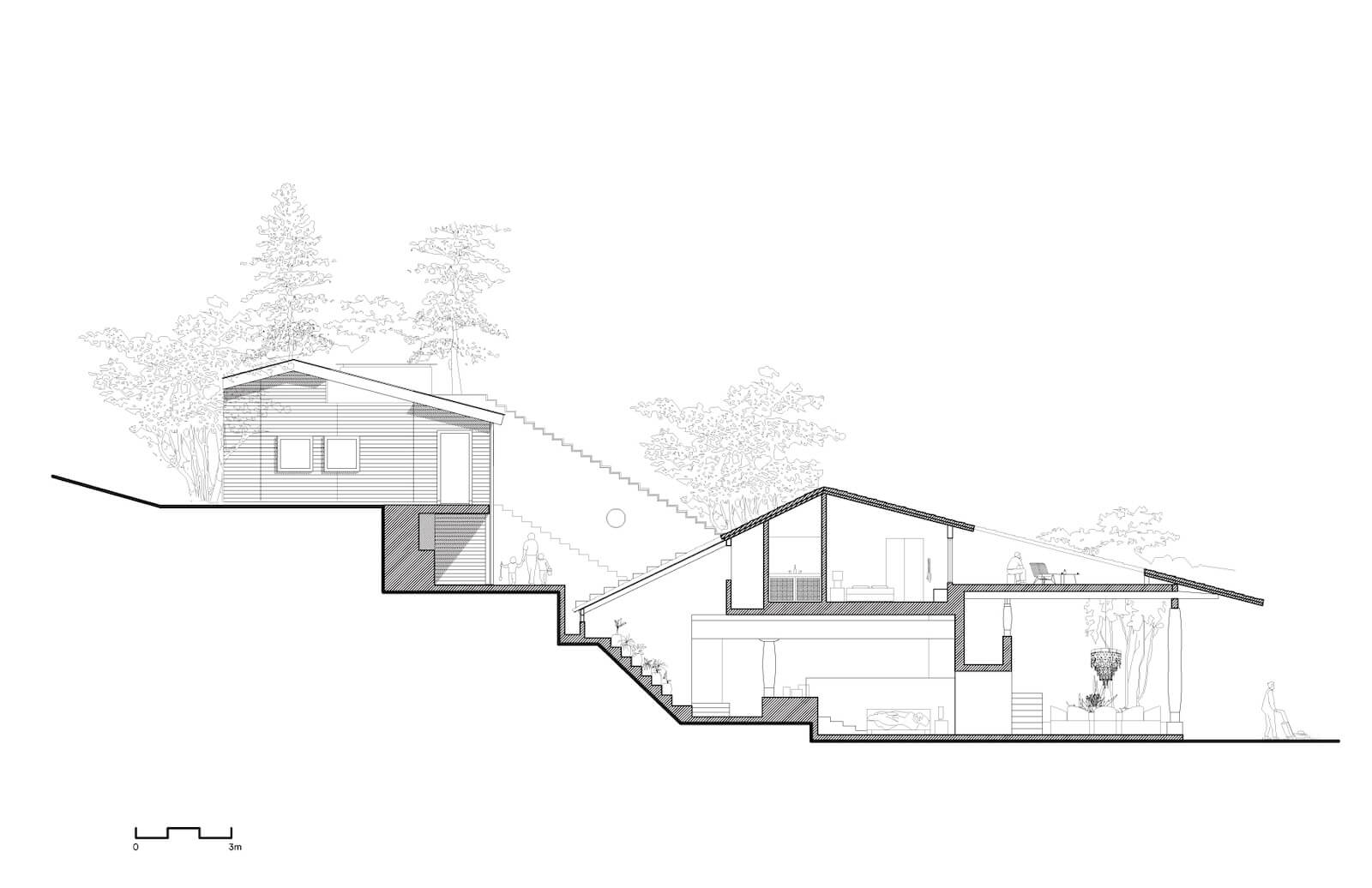
The original home, designed by José Iturbe, had to be opened up through the roof in order to accommodate the serrated-edge stair “tunnel.” This tunnel links up to the existing brick stairway, which continues the circulation route down to the first floor of the Iturbe-designed abode. Through that level’s kitchen window, you get a glimpse out to the wide brick exterior staircase, which steps up to the annex. (The ins and outs of the project might seem dizzying, so we’ve provided section diagrams at the end of this article.)
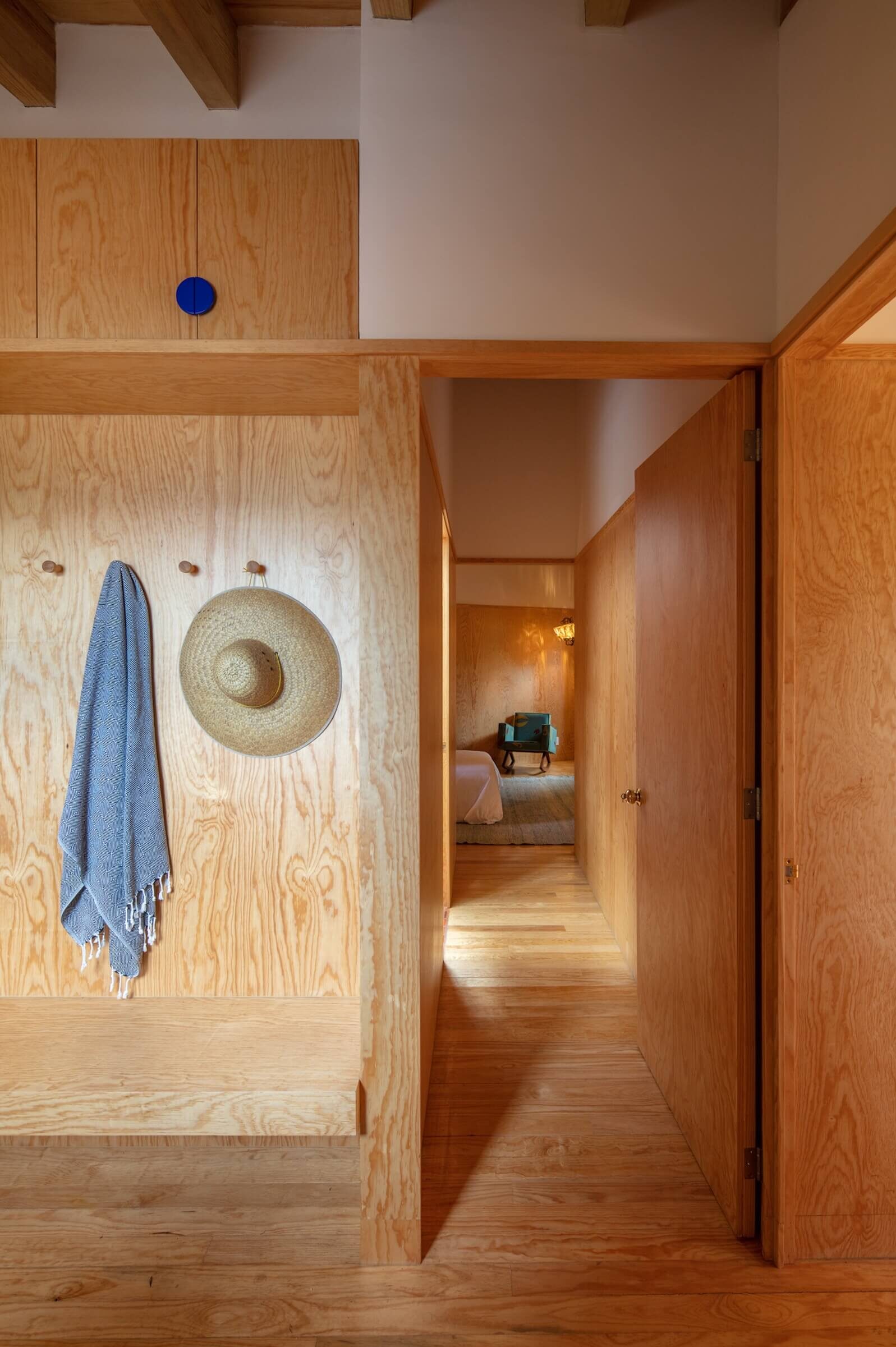
Perched at the top, the annex houses a bedroom and two bathrooms as well as a multitudinous space the architects call a “kitchen-slash-studio-slash-bedroom” that leads out to a patio.
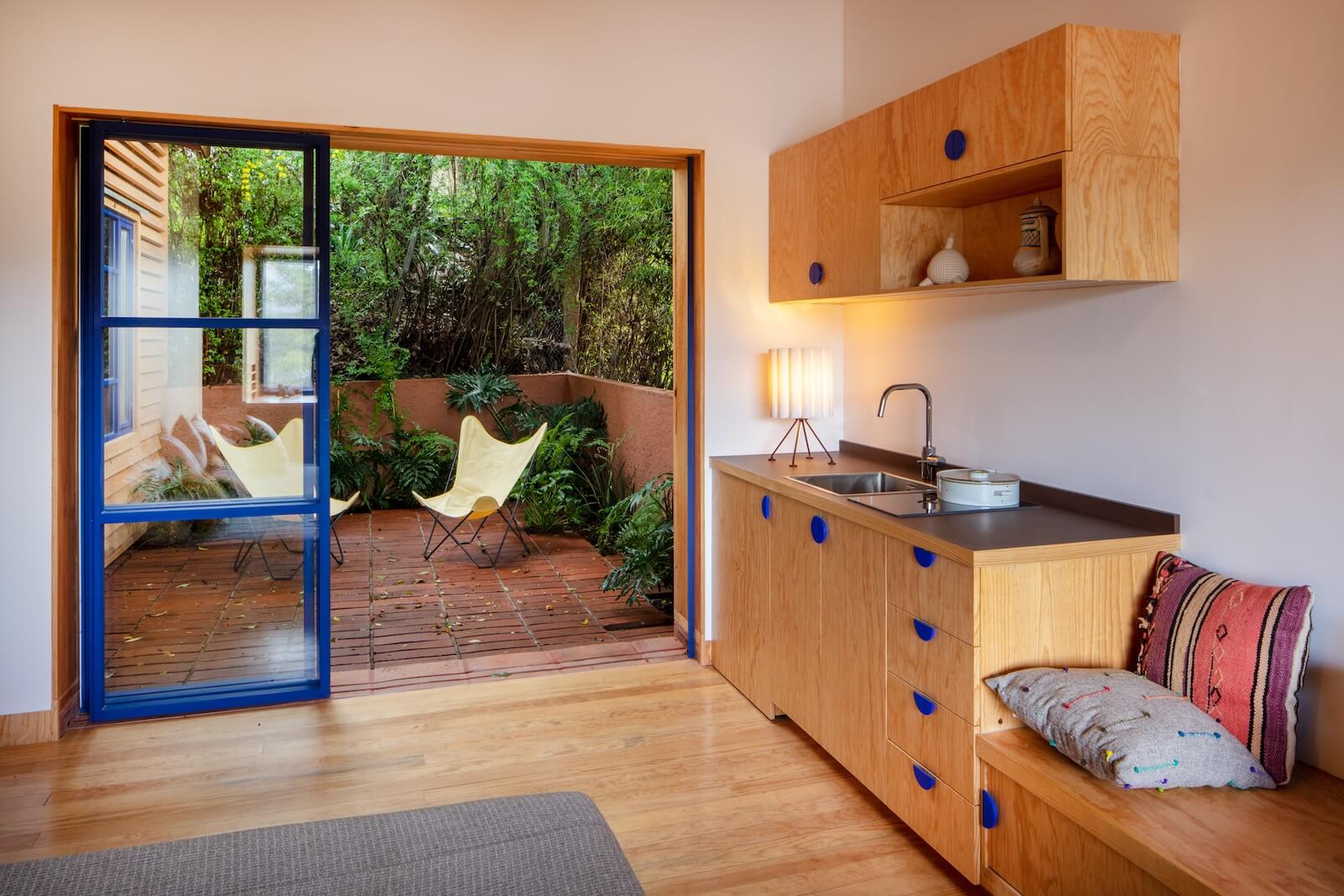
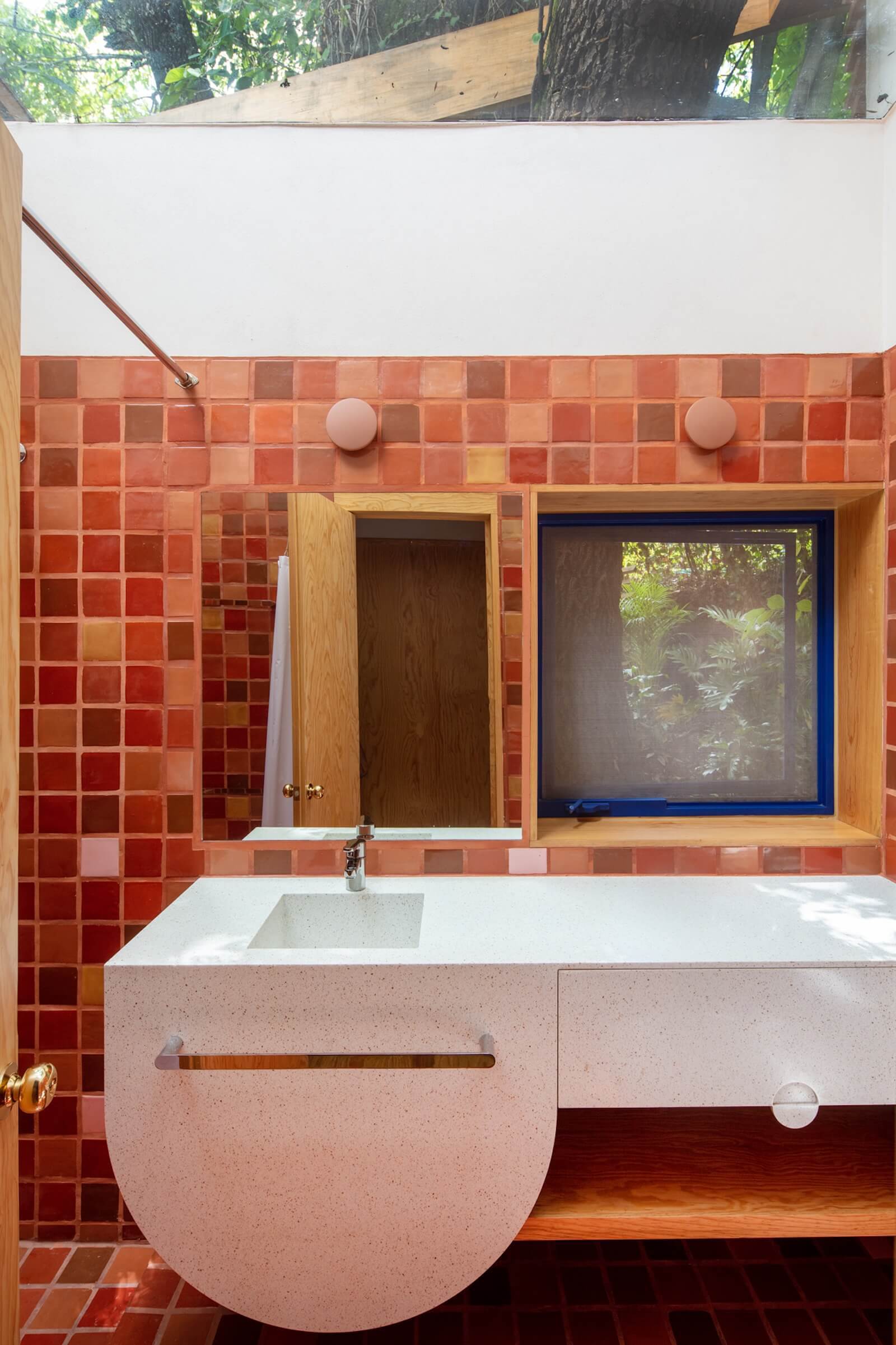
Throughout the home, a vibrant cobalt blue accent – in the door and window casings and in the kitchen and millwork handles – injects a contemporary energy. And the home’s whimsical play between traditional and modern sensibilities is balanced by its prevailing sense of comfort as a main consideration. Besides the recurring hue, the designers were also playful in the bathroom, where the terrazzo countertop bulges down on the sink side like a giant drop of water.
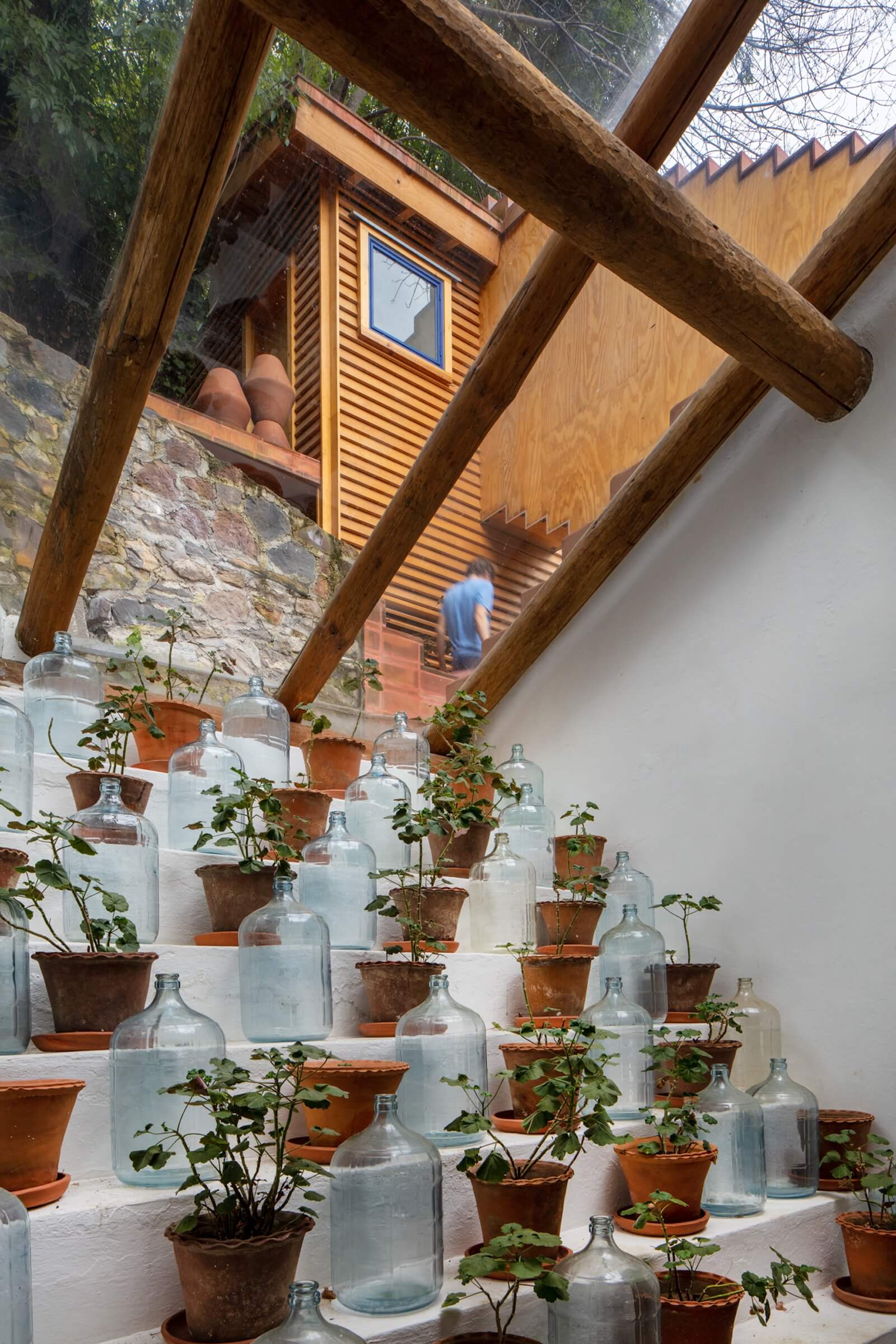
Architecturally, surprising moments are conjured in the liminal spaces. In one such in-between space, the architects created a set of stairs that aren’t for ascending – not by humans, anyway. They are lined with vessels and plant pots. The glass roof above them provides a view up to the entrance of the annex. A sense of discovery, of joyful coincidences, animates the ensemble.
For Pedro&Juana, the main thing, however, was the use of wood as a dominant construction material and interior finish. The duo are behind an initiative, “La Liga de la Madera,” that promotes “wood construction in Mexico as a circular and sustainable alternative to the predominant use of steel, concrete, brick, and mortar.”
“To complement this sensible approach,” they go on, “every detail — every nook, landscape, tile, and most of the furniture from the kitchen to the two-room wooden addition — was designed by Pedro&Juana. The result is a creative redesign that weaves stairs and patios, textures, plants, wood, and brick into a fantastic addition that enhances the beauty of the original house and its surroundings.”
A Mexican Home by Pedro&Juana Revels in the Connections Between Old and New
The serrated stair volume is a central feature of the Valle de Bravo home’s expansion, where it connects the existing home with a new annex.