
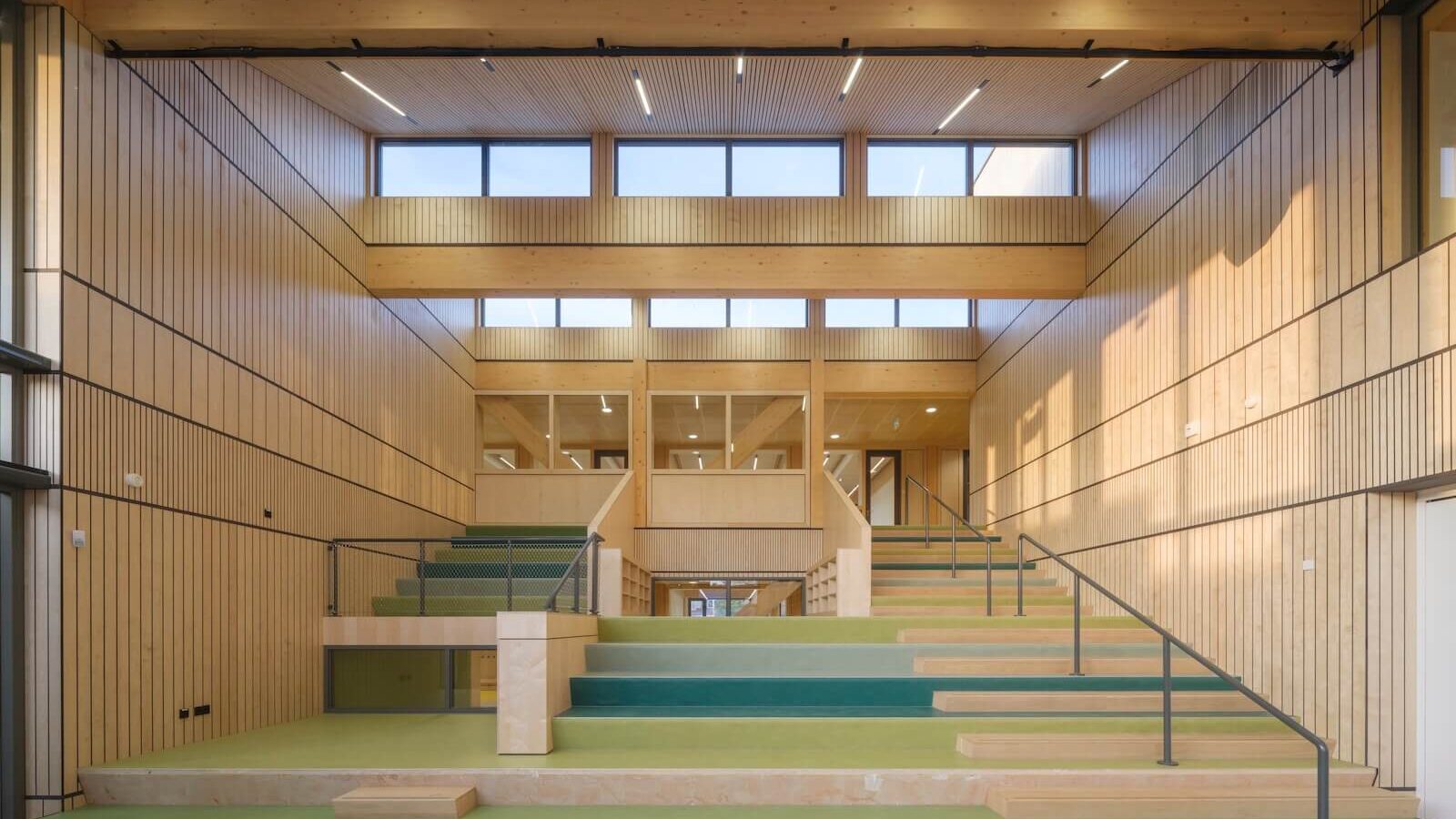
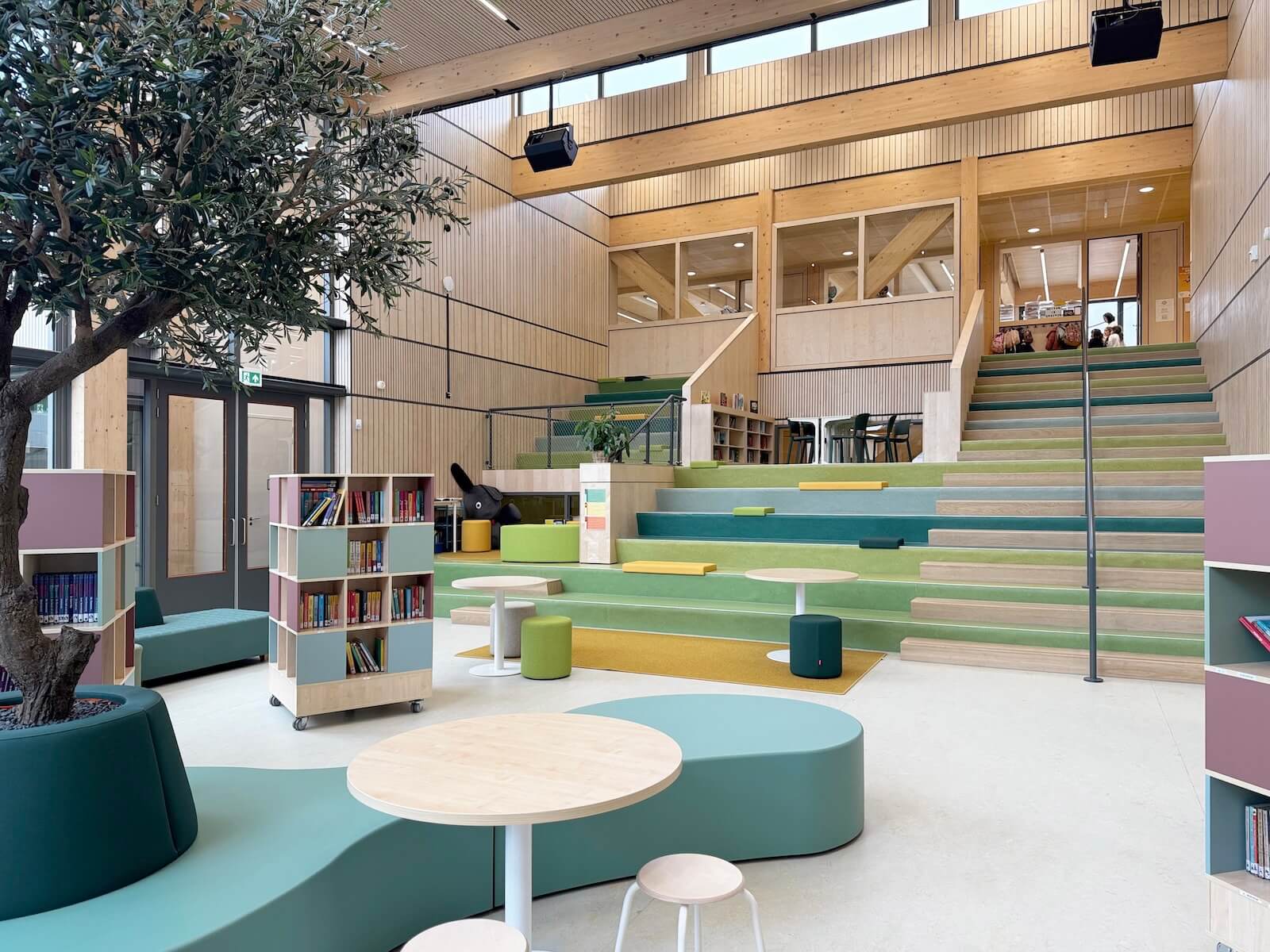
A newly completed school in Amsterdam immerses children in the resplendence of good, thoughtful, sustainable design. At Basisschool Wisperweide, the interiors are crafted with warm wood, natural light is abundant and classrooms open out onto courtyards. Flexibility is baked into the design, allowing staff to reposition partitions as needed, and assembly spaces are envisioned as vibrant hubs with a variety of ways to gather.
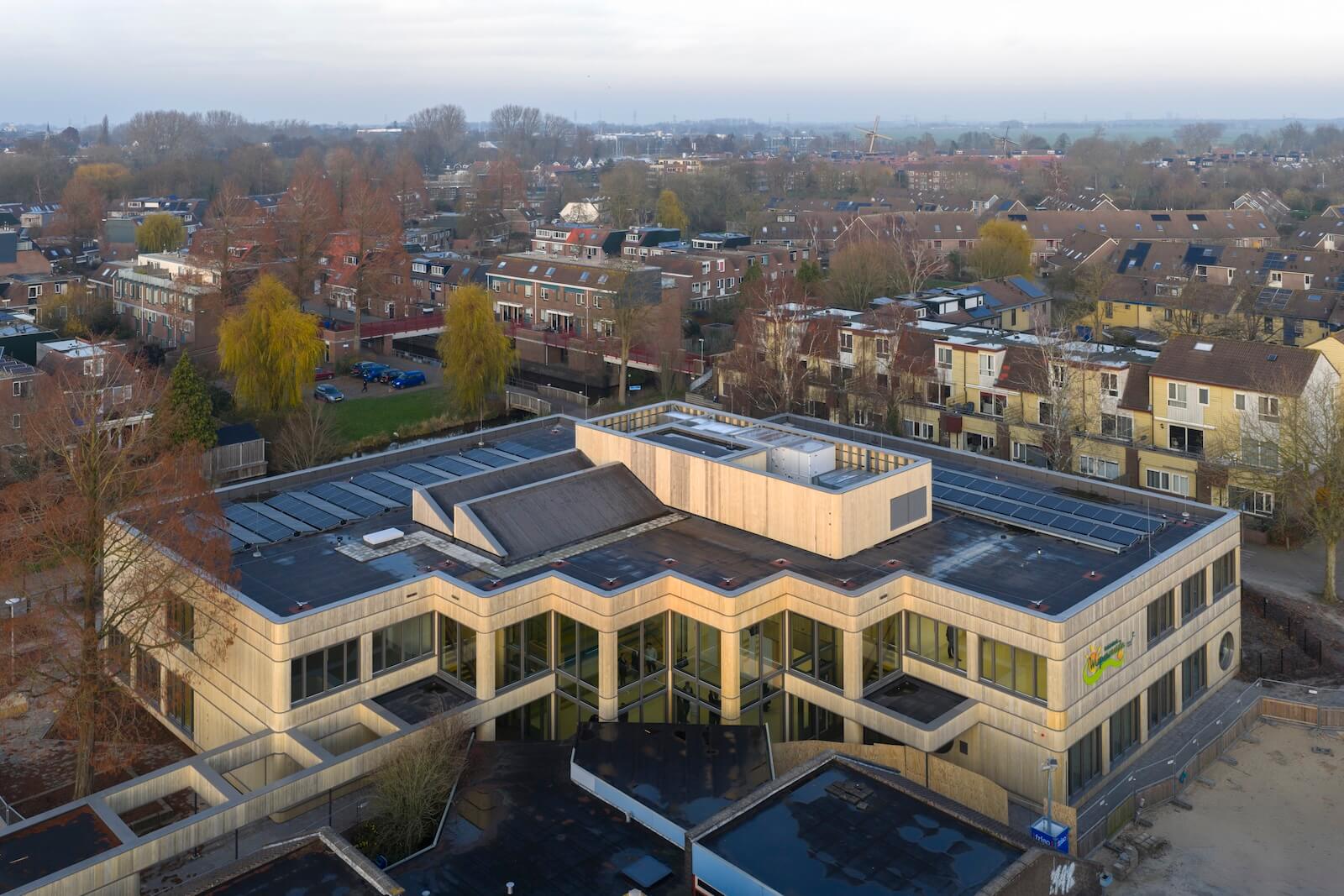
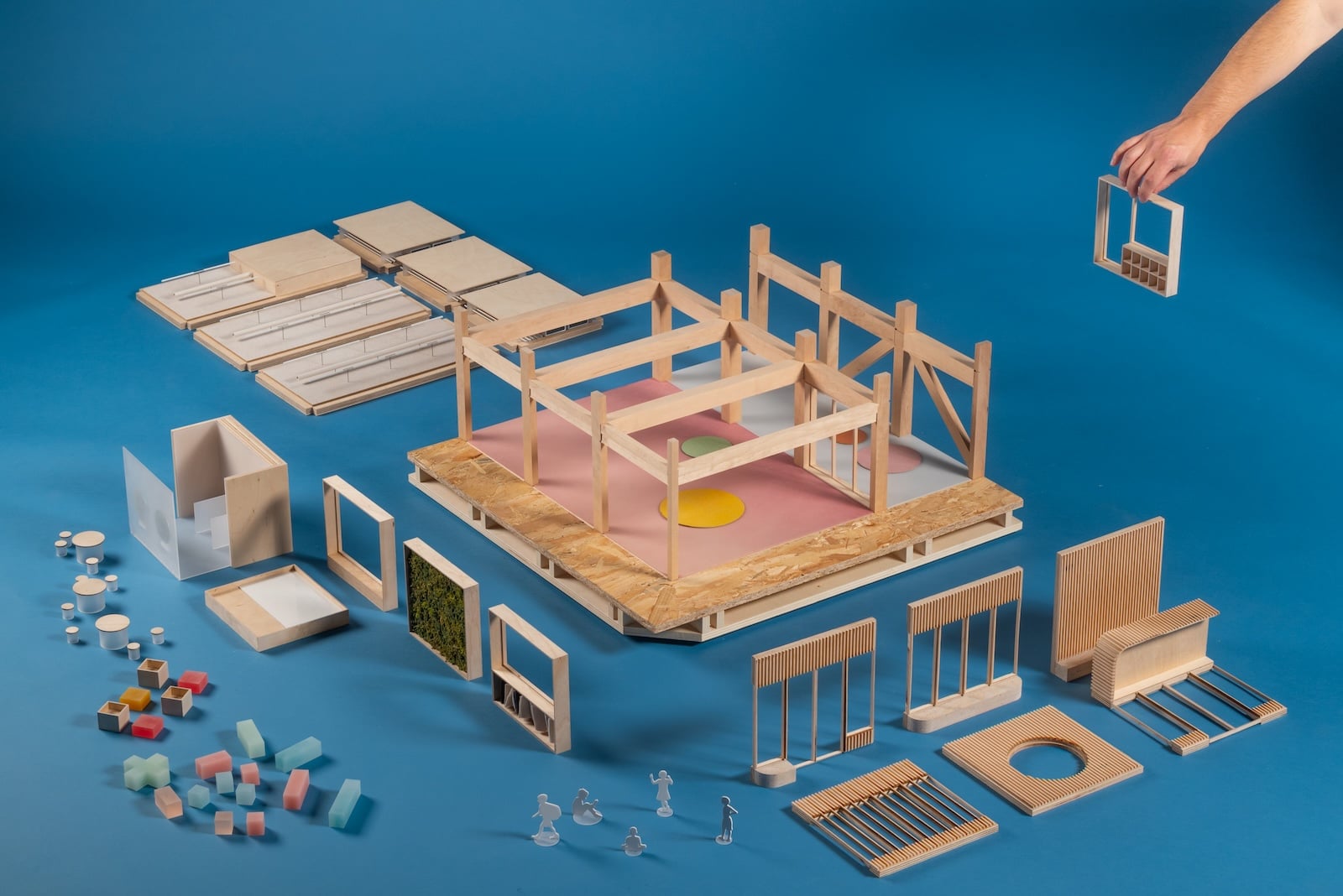
Designed by Jimmy van der Aa of Studio A Kwadraat in collaboration with OMA’s David Gianotten and Michael den Otter, Basisschool Wisperweide is the first project to be completed with the CircleWood standardized system. CircleWood is a “plug and play” design that is prefabricated, thus reducing nitrogen emissions by 80 per cent compared with standard onsite construction, according to OMA.
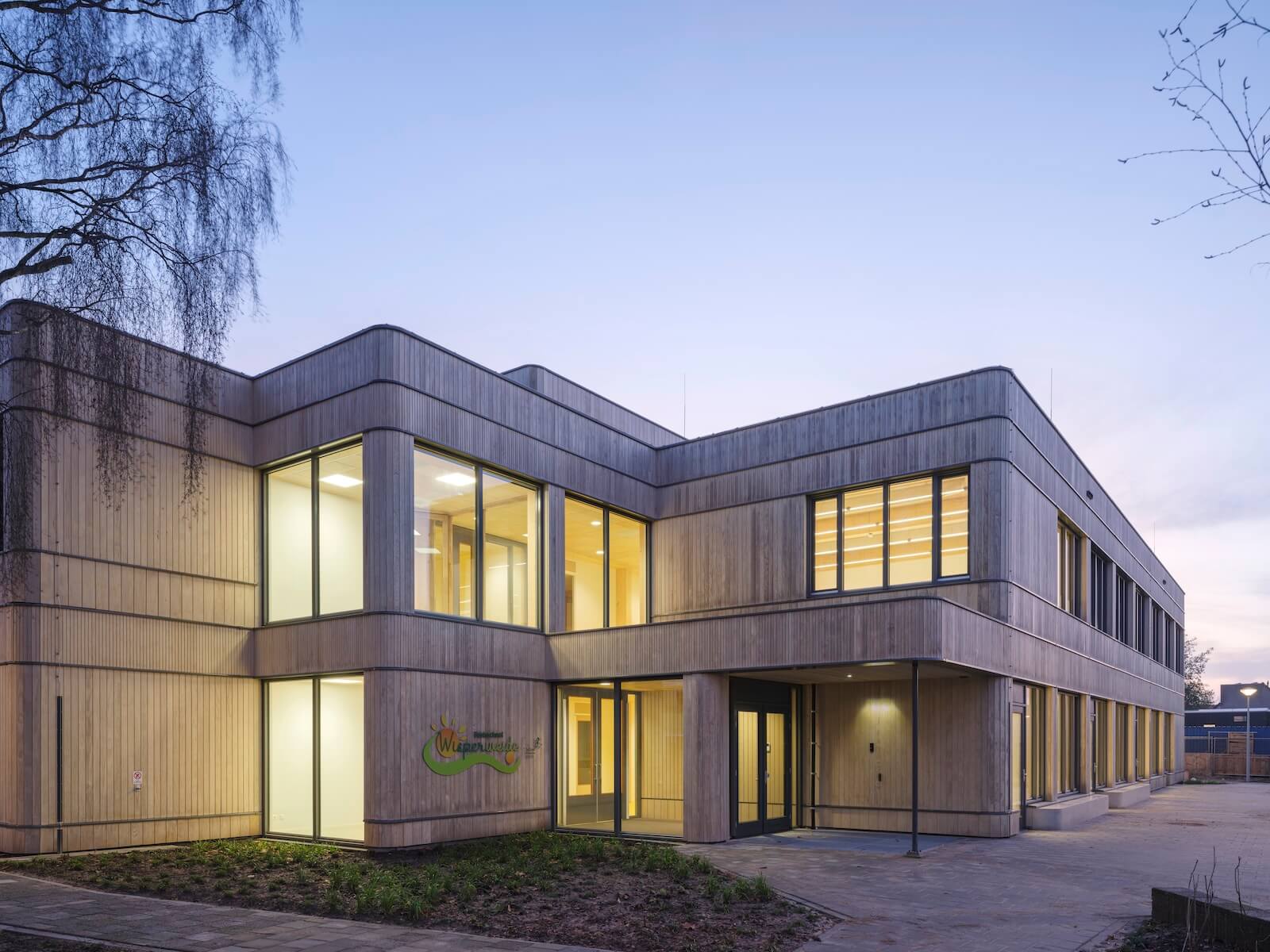
The main components – wooden columns, cross-laminated timber floors and recycled steel joints – are arranged into structural frameworks measuring 3.6 metres wide, 7.2 metres long, and up to three-storeys high. Added to these frameworks are non-load-bearing partition walls, made with “carbon-absorbing raw materials,” that can be deployed as spatial delineation devices or even be designed for activities like indoor climbing and vertical farming.
OMA launched CircleWood as part of Oosterhoff, a consortium of 14 companies in design, construction and MEP engineering, as a response to an ambitious goal set forth by the municipality: In 2023, Amsterdam unveiled the Innovation Partnership School Buildings program to deliver between nine and 30 “high-quality, flexible and sustainable schools” by 2050. The city’s broader aim is to become fully circular by that year and to halve its use of primary raw materials by 2030.
Why not begin with learning institutions? Through the IPSB program, the city can strive towards its carbon-cutting goals while also impressing upon future generations both the impact and the beauty of green architecture.
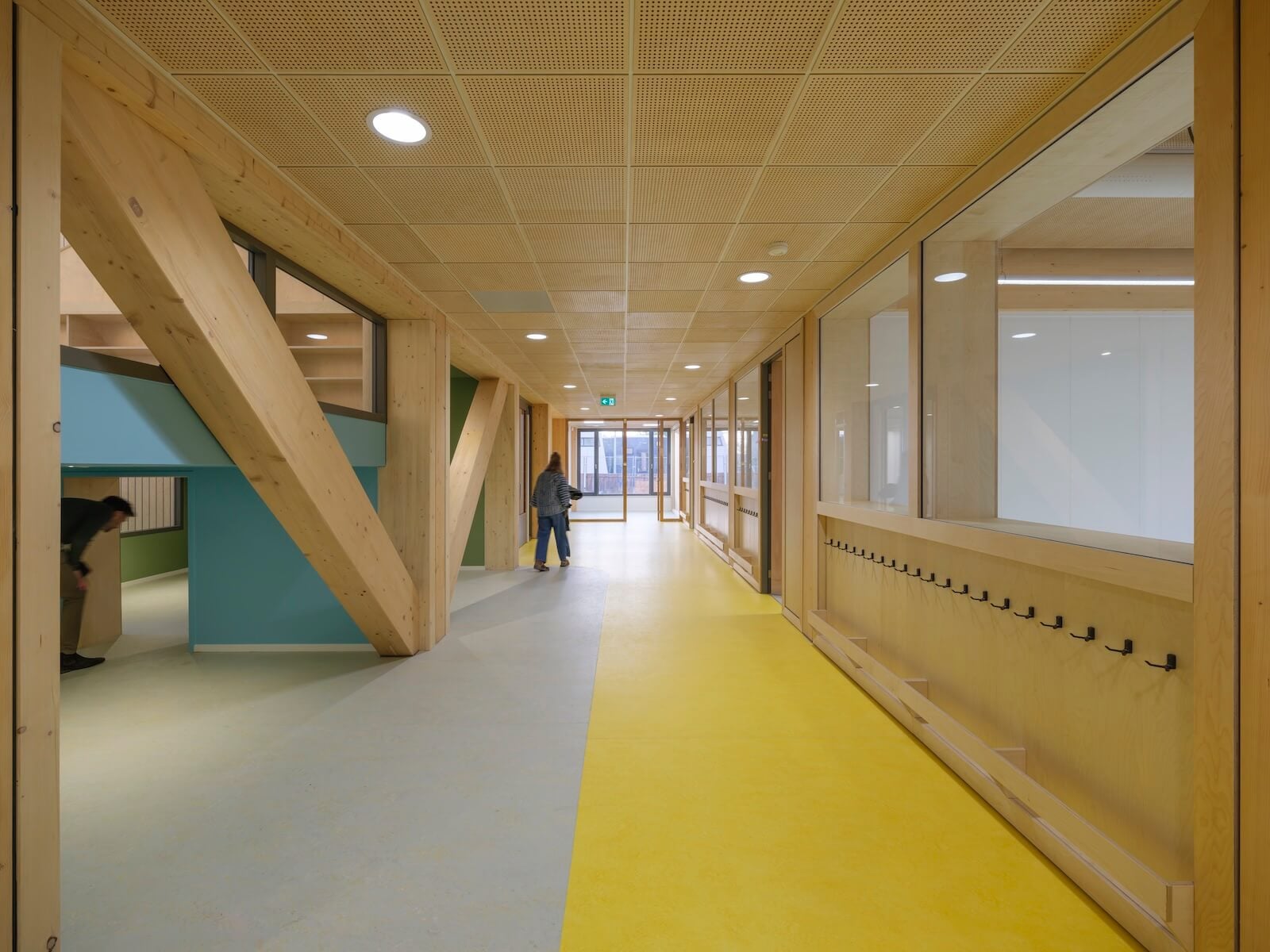
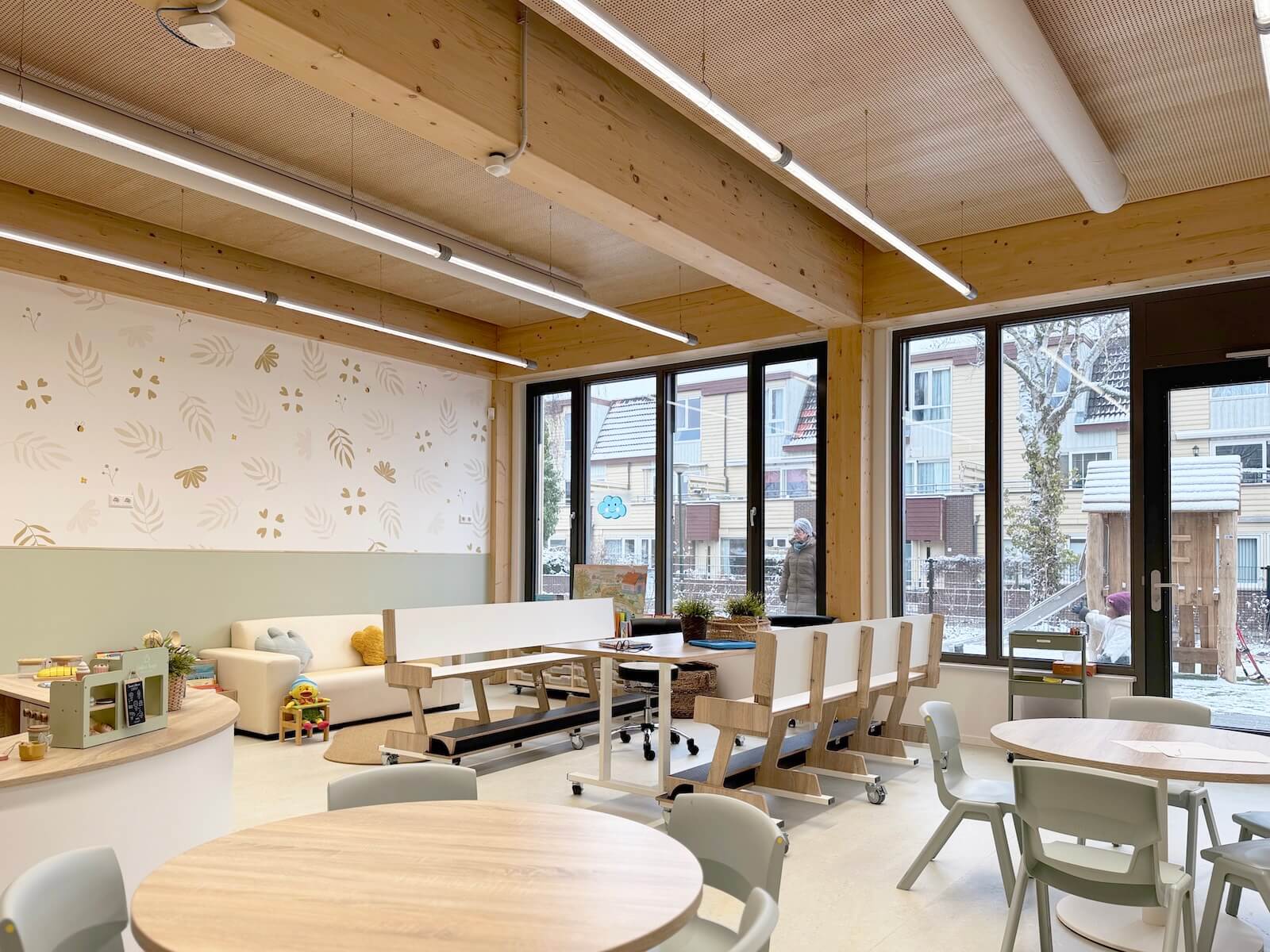
At Wisperweide, the design team organized the building around a central auditorium surrounded by learning clusters arranged in two distinct zones (one for toddlers, one for older children) each with its own entrance and playground access (through French doors, no less). Transparent walls and partitions throughout the interiors bring the natural light from those outdoor spaces deep inside, where it washes the three-metre-wide corridors, spacious enough to double as additional learning and working spaces.
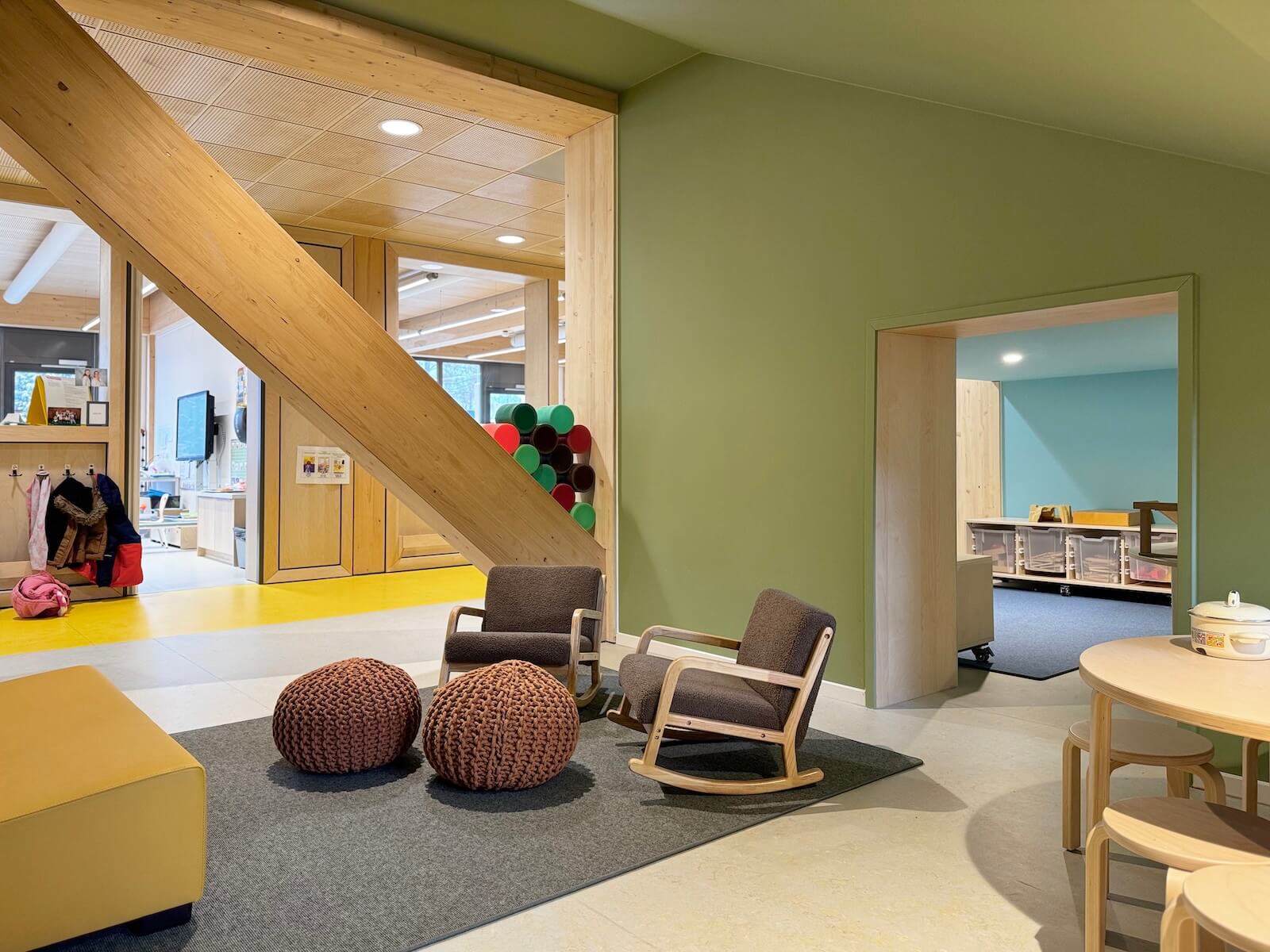
Not only is modularity at the heart of the bio-based partitions, which are loaded with functions like lockers, coat racks and storage and reconfigurable to adapt to groups of different sizes, but the building itself is designed to grow: “By removing the existing northern façade and expanding the modular structural framework, classrooms can be added to the north,” the architects say.
Basisschool Wisperweide is just the first CircleWood school to be completed. The ingenuity of the prefab model is bound to result in many more forward-looking buildings. It will be fascinating to see how CircleWood can allow for even more creative exploration of school design.
An Amsterdam School Provides a Lesson on the Future of Sustainable Building
Designed by Studio A Kwadraat in collaboration with OMA, Basisschool Wisperweide employs the new CircleWood system for flexible, eco-friendly building construction.