

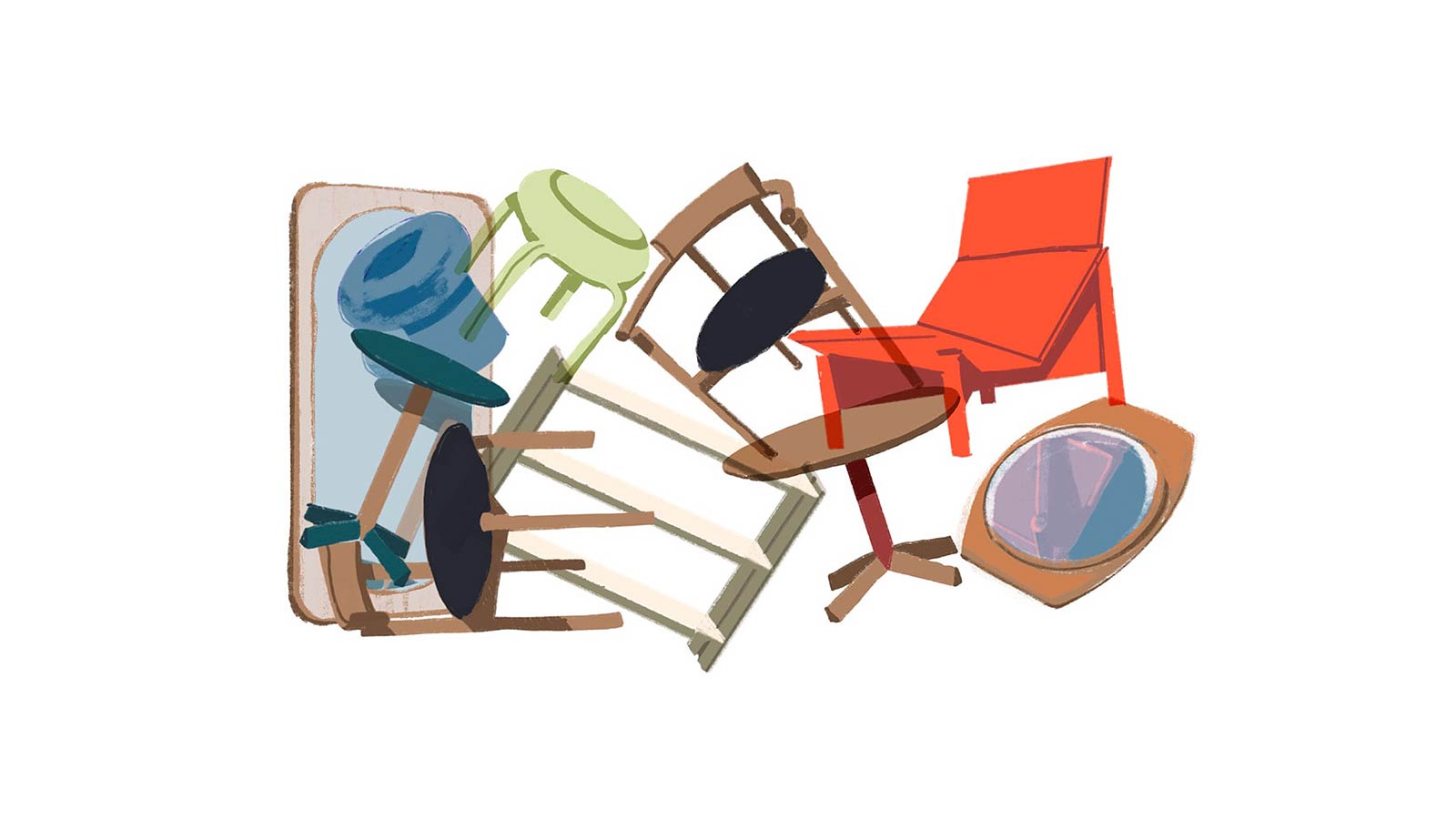
If you’re wondering what’s new in Finnish furniture, head to New York. If you’re eager to meet France’s next big chair designer, make your way to Milan. That might sound counterintuitive, but the biggest furniture fairs and design weeks regularly play host to exhibitions and events organized by out-of-town government agencies or trade groups dedicated to raising their particular nation’s creative profile on the world stage.
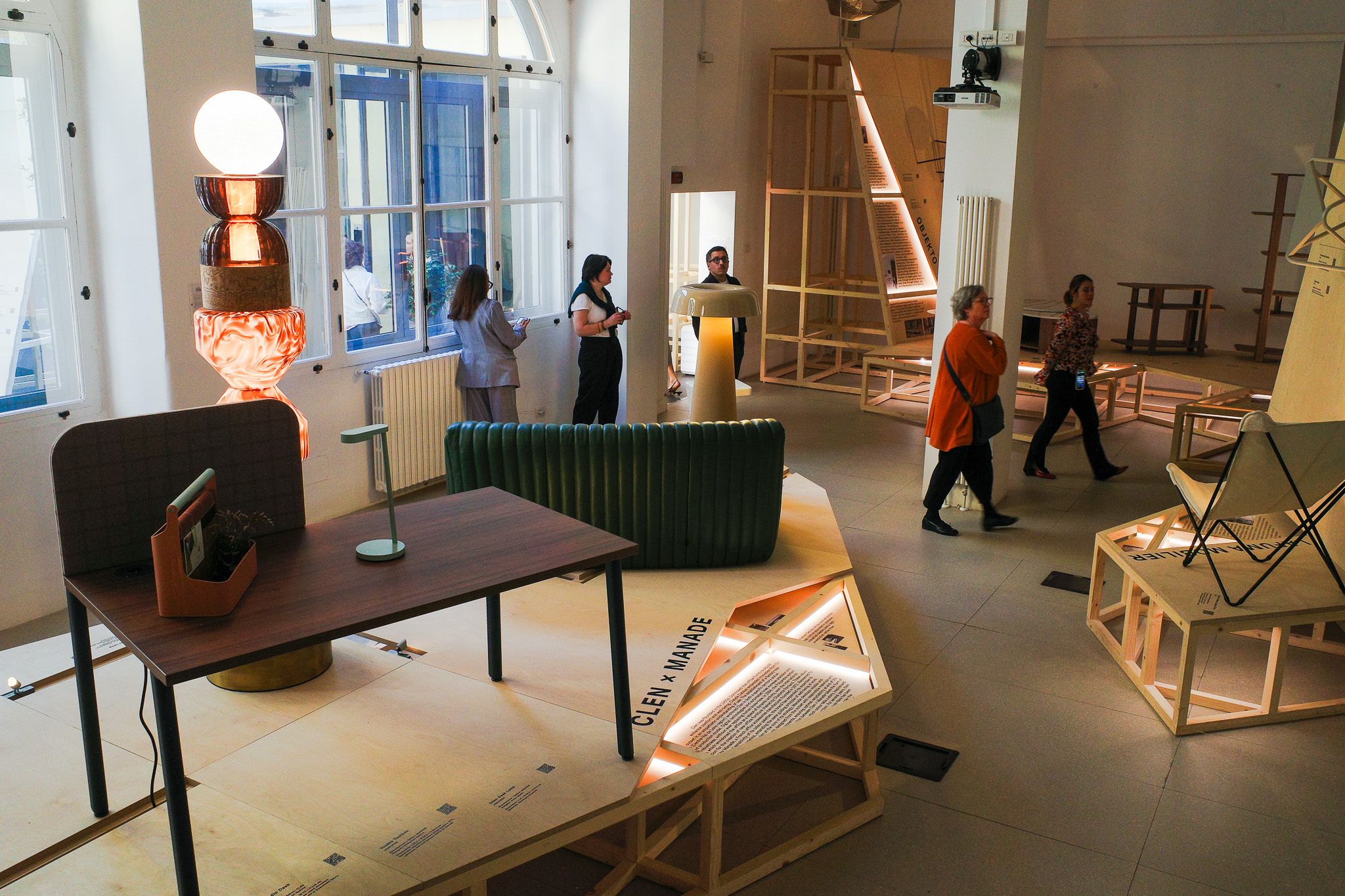
In Milan this spring, an organization tied to a French business development committee mounted a special exhibition, Le Design Défilé, spotlighting 28 French furniture brands and small-batch designer-makers. During festivals like NYCxDesign and Tokyo Design Week, the collaborative Scandinavian Design Embassy initiative organizes regular exhibitions that highlight standout Nordic talent. Over the past year at trade shows like IDS Toronto, ICFF and Maison&Objet, I have encountered similar showcases led by official Portuguese, Brazilian, and Chinese agencies, respectively. In 2018, an organization supported by Poland’s Ministry of Culture and National Heritage invited a group of international journalists — including Azure editor-in-chief Elizabeth Pagliacolo — to Poland to better publicize the country’s role as the fourth-largest furniture manufacturer in the world. And of course, the Italian Trade Agency pulls out all the stops to promote its country’s rich design culture.

These programs are possible because these governments recognize the importance of proudly promoting their furniture industries — and more broadly, because they understand that design has cultural rather than purely commercial value. By comparison, while many talented Canadian designers and brands exhibit during major international festivals like Milan Design Week or 3DaysofDesign, it’s not easy to find a government body working to actively support these efforts. I do remember an Ontario Wood-sponsored display of furniture at ICFF in 2016, but I haven’t encountered anything like that in more recent years. This is all part of a broader neglect: In August, Montreal designer Thom Fougere wrote about Canada’s under-supported design industry in Dezeen in response to the structure of the government’s design-and-build competition to renovate 24 Sussex Drive.


Earlier this fall, Ourse co-founder Jason Henderson mentioned to me that his young brand — which launched its first collection of made-in-Canada furniture this January at IDS Toronto — had been invited to participate in an exhibition during next February’s edition of Stockholm Design Week. “It will be a super global mix in the show — people from the UK, the Czech Republic, Portugal — and we were asked to represent Canada,” explains Jake Oliveira, Ourse’s other co-founder (who also designed our AZ Awards 2026 trophy). The only thing giving Henderson and Oliveira pause is that Ourse is currently channelling a lot of investment into the launch of its second collection at IDS Toronto next January. The tight timing between that trade show, which takes place at the end of January, and Stockholm Design Week, which will happen at the beginning of February, represents a challenge — to show at both fairs, Ourse would need to produce two booths and double the number of floor models, as shipment from Toronto to Sweden can’t be done fast enough to show the same furniture in both locations. For a brand that launched a year ago, that’s a big spend.


Encouraged by the way I’d seen other countries rally to promote their design talent, I prompted Ourse to see if a Canadian trade commission or cultural grant might exist to assist. From a business perspective, the exhibition would be a great opportunity for Ourse to earn more exposure in Scandinavia, a market that has traditionally proven very receptive to talent from our country. A little over a decade ago, Tom Chung and MSDS Studio both exhibited their portfolios during the February event and went on to earn commissions from brands like Muuto and Normann Copenhagen. This is encouraging to Ourse, since Canada’s relatively small furniture market means it needs to look beyond the country’s borders to achieve the volume of sales needed to scale up. While Henderson and Oliveira had initially planned to focus their energy on America, Europe has emerged as a more natural expansion plan amidst tariff uncertainties and Canada pursuing associate membership status within the EU. “We also see a natural cultural synergy between our country and the EU broadly,” says Oliveira. “The type of storytelling that our brand is built around resonates really well in Europe.”

To that point, apart from securing sales, there is a strong case to be made for exporting Ourse to Scandinavia as an ambassador of Canadian culture. “At our core, we’re a commercial practice,” says Oliveira. “But the artistry behind our concepts has always been part of that practice. Ourse is about connecting with people in different provinces to try to define what Canadian design actually is.” All the brand’s pieces reflect a distinctly Canadian point of view, thanks to a roster of designers that includes Toronto’s MSDS and Jake Oliveira Studio (led by Oliveira himself), Montreal’s Thom Fougere and Smallmediumlarge, and Winnipeg’s Nicole Marion. By manufacturing its furniture in Canada, Ourse also spotlights the raw materials that define our country’s industries — namely, wood and steel — and our current production capabilities.


In turn, one can gain a stronger appreciation for Canada from an Ourse design in the same way that they have, recently, through episodes of Heated Rivalry. If you’re a Canadian movie or television producer — or a musician, an author, a painter or poet — you can apply for a variety of arts grants to support your endeavour. (Sure enough, Heated Rivalry received $3.1 million through the Canada Media Fund.) In Canada’s latest budget, the Carney government dedicated $600 million for CanCon media productions. Whether this art generates significant revenue or not, the government recognizes that it is an expression of national identity that is valuable in promoting our culture and, in turn, protecting our sovereignty. That’s true of furniture as well. And more governmental support would be especially impactful for emerging brands, like Ourse, that are looking to grow their profile — and by extension, that of the Canadian design industry writ large.

“We assumed that, given the recent rise in national pride, reflected in the ‘Elbows Up’ movement, and our government’s desire to strengthen ties with the EU, our request would be an easy one to support,” says Henderson. “After all, we champion the entire Canadian ecosystem, from industrial design to the skilled craftspeople who bring our furniture to life.” Yet email by email and phone call by phone call, Oliveira and Henderson gradually realized that this type of financial support does not exist — or if it does, they couldn’t find it.
In total, Ourse chased down grants offered by the Canada Council for the Arts, the CanExport SMEs program, Creative Export Canada, the Ontario Arts Council, and Ontario Creates. The reasons cited for Ourse’s ineligibility varied by program. In some instances, the company was deemed too corporate — Ourse is a for-profit business, and its incorporated status means it can’t qualify as an artistic collective. Moreover, the exhibition it is seeking to join in Stockholm is a commercial rather than purely artistic affair. On the other hand, other grant programs deemed Ourse to be not corporate enough. In other words, it exists in a clear gap between art and industry.

Oliveira notes that while collectible design and functional craft are eligible for some of the programs he investigated, furniture design is a different beast. “Things need to stay contained as just these wonderful artistic expressions, but then where does your revenue stream come from?” he asks. “It creates a scenario where the only viable path for someone in the industrial design, furniture and lighting space is to live solely off of grants for singular site-specific experiments, or increasingly rare museum acquisitions.” He compares Ourse to a record label or publishing house — other entities that support and distribute the work of independent creators. “For the Canadian Council of the Arts, record labels and literary publishers are allowed to be for-profit and receive funding,” he notes. “We’re essentially a furniture editor, but we’re immediately disqualified.” Many people in various creative industries will be all too familiar with the often vexing eligibility rules that accompany arts grants. Proposal writing is an art in and of itself, and there are occasionally ways to pitch a project that can overcome the limitations of bureaucratic red tape. But it would be even better if grants evolved to embrace small, expressive upstart Canadian furniture brands wholeheartedly.

The most promising finding from Oliveira’s quest came from speaking with the country’s trade commissioners about possible funding available through its export associations. “The hurdle there is that someone needs to be an incorporated, non-profit, national industry association to get funding — so a brand can’t,” he explains. “From speaking to the trade commissioners, there isn’t currently an association like that around furniture and industrial design. But if there were, they could say, ‘This is the brand we’re going to present to the world this year.’ And the benefit there is that there would need to be some board of directors providing oversight and debating, ‘What is relevant about this brand?’” One sign of hope: A design summit taking place during the upcoming edition of IDS Toronto (organized with the Canadian Creators Collective) plans to unite representatives from various professional design organizations and bodies to form a single, unified front that can better advocate for design’s contribution to Canadian culture and the economy. We have also heard early rumblings about a Canada Pavilion for Design being organized by Montreal’s Pestacle Studio for Milan Design Week. Hopefully, there will be more to come on that front soon.


In the meantime, Henderson and Oliveira are hard at work putting the finishing touches on their second furniture collection, which will launch at IDS Toronto. Oliveira says the exposure that came from last year’s event has been critical to Ourse’s initial success. “The biggest signifier we had that the launch last January at IDS went well was that, multiple times, people visited the booth and said, ‘I’m so sorry, I can’t believe I hadn’t heard of you guys before.’ And I would say, ‘That’s ok — we’re brand new!’” (The apologetic energy on both sides of this exchange is, it must be said, incredibly Canadian.) “It meant that people recognized that the package and the creative direction were at a certain level. And then the press we got all grew from that.” (Beyond Azure and the Globe and Mail, Ourse also earned features in Dezeen and AN Interior.)

Now, it’s time to export this early momentum farther afield. “Our whole brand is built around Canada — it’s about Canadian production and Canadian designers,” says Oliveira. “But it’s also designed to resonate broadly outside of the country.” As Canada plans to take its seat at the EU table, it’s time to do more to celebrate the country’s many talented chair makers abroad.
Where are the Canadian Grants to Promote Furniture Design on the World Stage?
Canadian brand Ourse sought government support to debut its furniture in Scandinavia. That support doesn’t exist — and that’s a uniquely Canadian problem.