
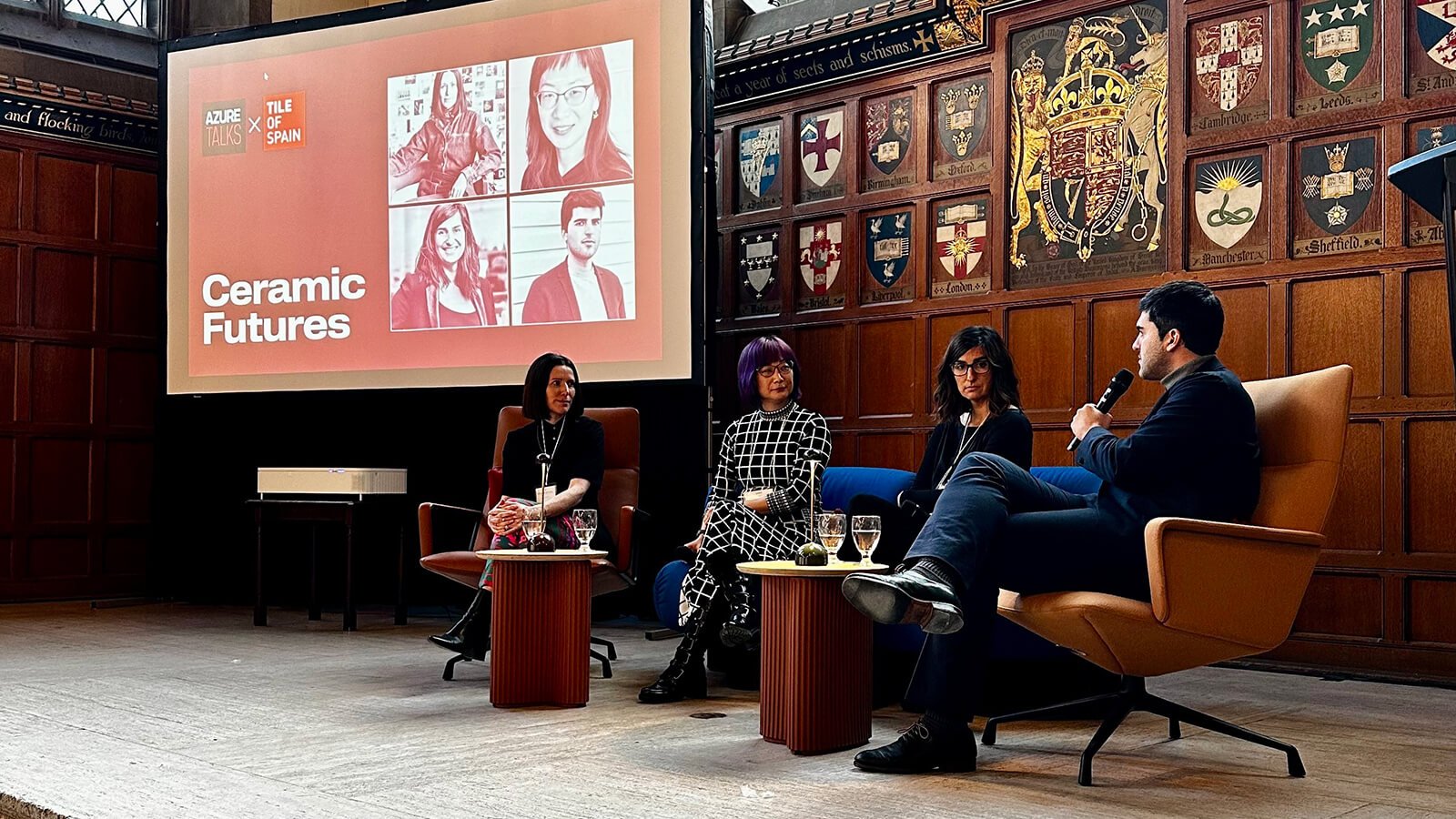
On November 27, AZURE and Tile of Spain convened a conversation that framed tile not just as a material grounded in heritage, but as a contemporary catalyst. Ceramics, one of humanity’s oldest technologies, continue to evolve in both craft and application, creating fresh aesthetic and technical possibilities within design practice. Against the historic backdrop of the University of Toronto’s Hart House, this convergence of old and new was palpable. A trio of leading Canadian designers, moderated by Stefan Novakovic, explored ceramics’ dual legacy of tradition and innovation, offering perspectives on how tile can speak across scales and cultures — from the streets of Spain to local restaurants and retail — and how its use is expanding in response to current design, sustainability and cultural conversations (and the talk is now available online!).

Joining us from Hariri Pontarini Architects, Spanish architect Miren Etxezarreta-Aranburu grounded her presentation in the idea that ceramics are not merely finishes but civic fingerprints, inseparable from lived experience and urban identity. “If you grew up in Spain, you learn architecture first with your feet,” she explained, referring to the pervasive pavements of hexagonal tiles in places like San Sebastián and Barcelona. She traced the history of ceramics from Roman standardization through Andalusian geometry and Gaudí’s radical trencadís, illustrating how broken pieces became expressive form: “A material with ancient roots becomes radical and modern again in Gaudí’s hands.” Reflecting on her move from Spain to Toronto, she noted the absence of tile in the civic realm as a cultural shock, underscoring how ceramics communicate identity and shape behaviour.
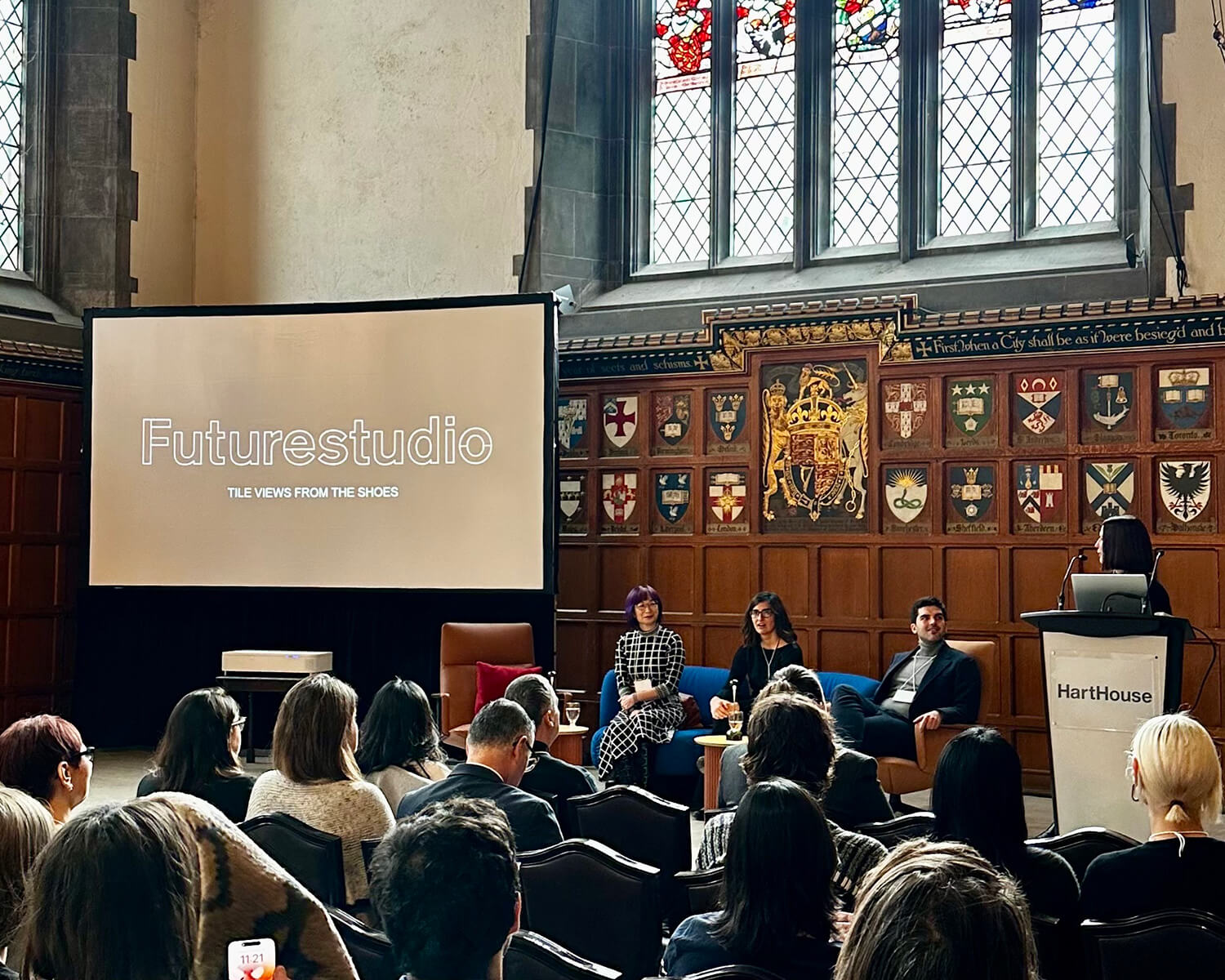
But while tiles are rarely used in an exterior context in Toronto, in part due to the highly variable climate, Ali McQuaid Mitchell demonstrated that the material is alive and well — in the hospitality sector, at least. Taking us on a journey through her camera roll, from Palma to Marrakech to Copenhagen, McQuaid Mitchell shared how travel inspires her design practice at Futurestudio. From there, projects from her extensive portfolio showcased the near-endless aesthetic possibilities of tile: the Bauhaus-inspired mosaics at Dear Grain bakery, the terrazzo flooring at Nella Cucuina, and the river-stone tiles that have become a trademark of Othership’s many spa locations. “Tile can be pictorial, three-dimensional, informational — the creativity of the application is endless,” she said.
Anna Kao, meanwhile, explored ceramics through the lens of luxury, explaining that “luxury is shaped not only by material richness, rarity or cost, but by time and process, touch and the evidence of human craft.” Using Loewe as a case study, Kao showed how the Spanish fashion house uses tile across scales, from the benches at their 2025 runway show to the brand’s shimmering flagship in Shanghai, clad in 35,536 tiles that create reflective and dynamic ripples across the facade. For Anna, tile’s resonance lies in its ability to blend architecture, art, fashion and craft, making it uniquely powerful in shaping experiential luxury.
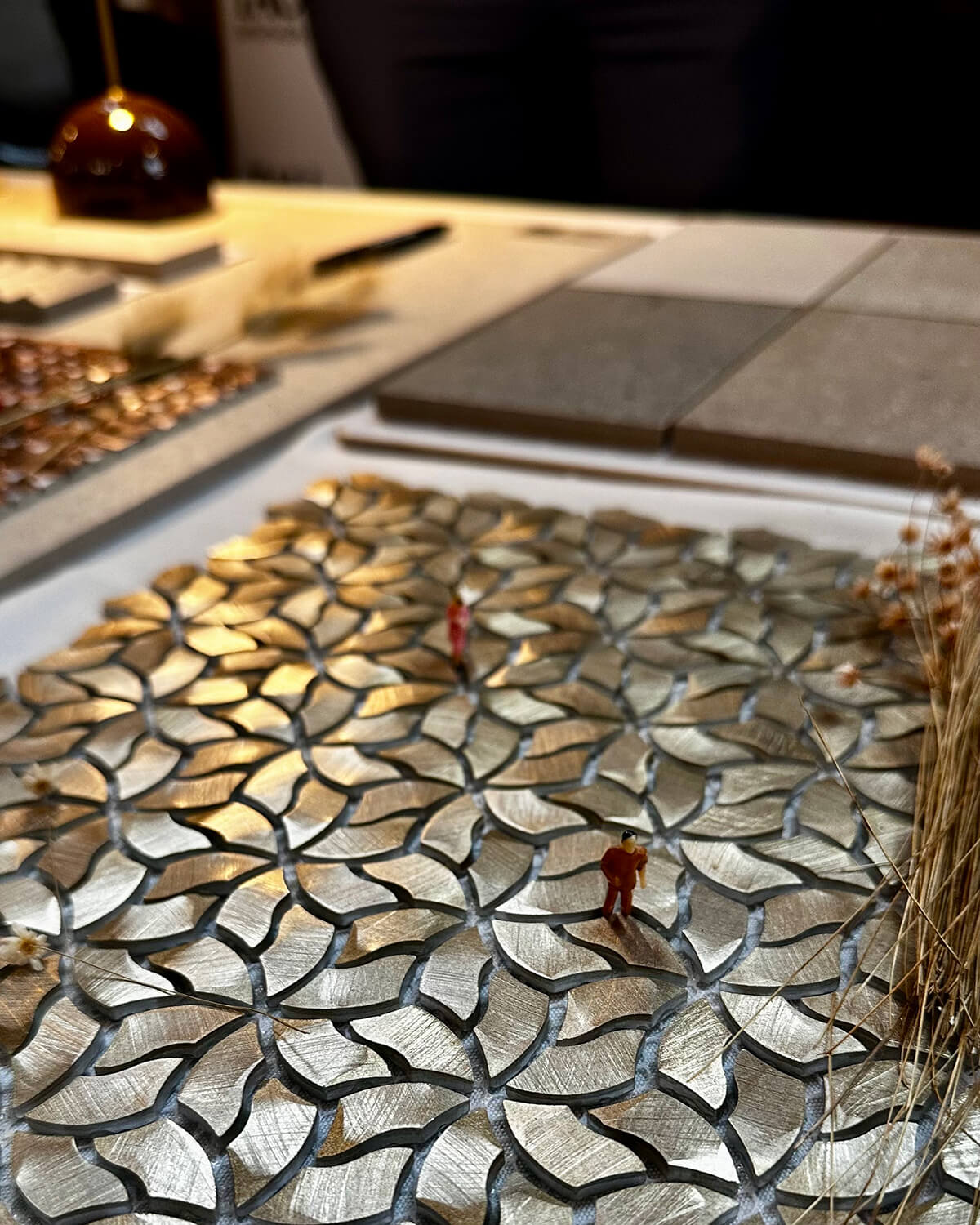
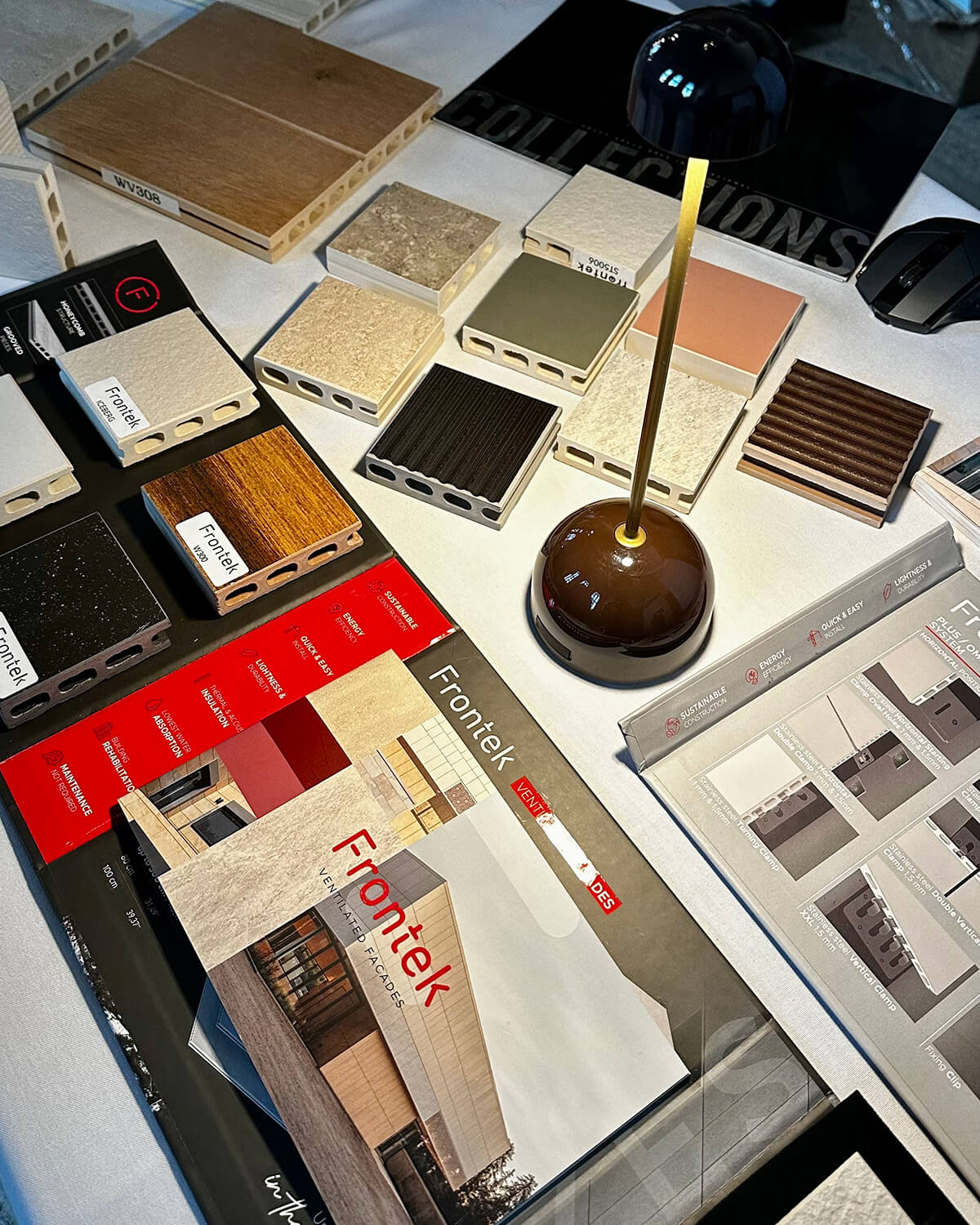
Together, the panel traced how ceramics move from collective memory into contemporary practice. Rather than being treated as a secondary surface or a substitute for other materials, tile is increasingly operating as a primary design driver — one that carries cultural meaning, shapes experience and signals value through craft. Advances in manufacturing have expanded ceramics’ technical viability, but the panel made clear that the material’s relevance lies not just in performance or sustainability, but in how it can contribute to the character of spaces of all scales and typologies.
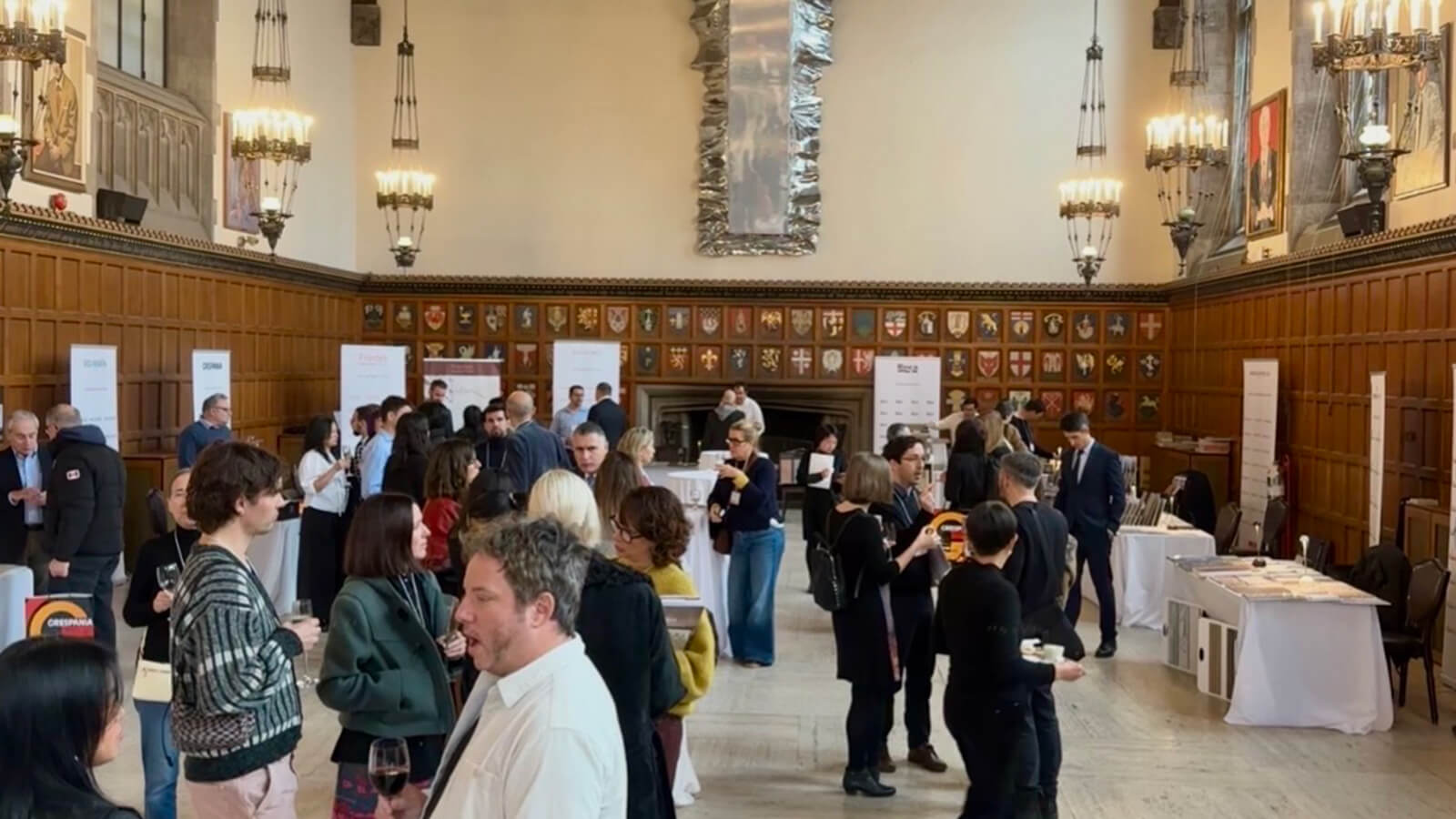
The seminar was paired with an exhibition featuring 13 Tile of Spain companies: Alcalagres, Cevica, El Barco, Gres Aragon, Grespania, Greco Gres, Gayafores, Monopole, Peronda, Realonda, Roca USA, Tau and Vives. The event was organized in partnership with the Economic and Commercial Office of Spain in Toronto, who remain available to distributors and specifiers interested in finding channels of distribution for Spanish ceramic tiles into the Canadian market. The office can be reached at: Toronto@comercio.mineco.es
This content was published by Azure on behalf of Tile of Spain.
Ceramic Futures Explored Tile as Memory, Mood and Material Luxury
Watch AZURE’s recent talk featuring Miren Etxezarreta-Aranburu, Ali McQuaid Mitchell and Anna Kao — now available online.