

Whether you’re shopping for a design devotee or simply looking to elevate your own living room, a thoughtfully chosen coffee table book makes for a perfect holiday gift. This season, we’ve rounded up four visually stunning and conversation-starting tomes that will delight any aesthete. From explorations of natural stone and meditative Japanese craft, to a nostalgic journey through Space Age design and a celebration of Toronto’s vibrant interiors, these books promise to inspire, transport and spark creativity long after the holidays are over. And if none of these titles suit your fancy, an AZURE subscription makes for the ultimate gift and coffee table companion (and it’s currently on sale!).
1
Rocked
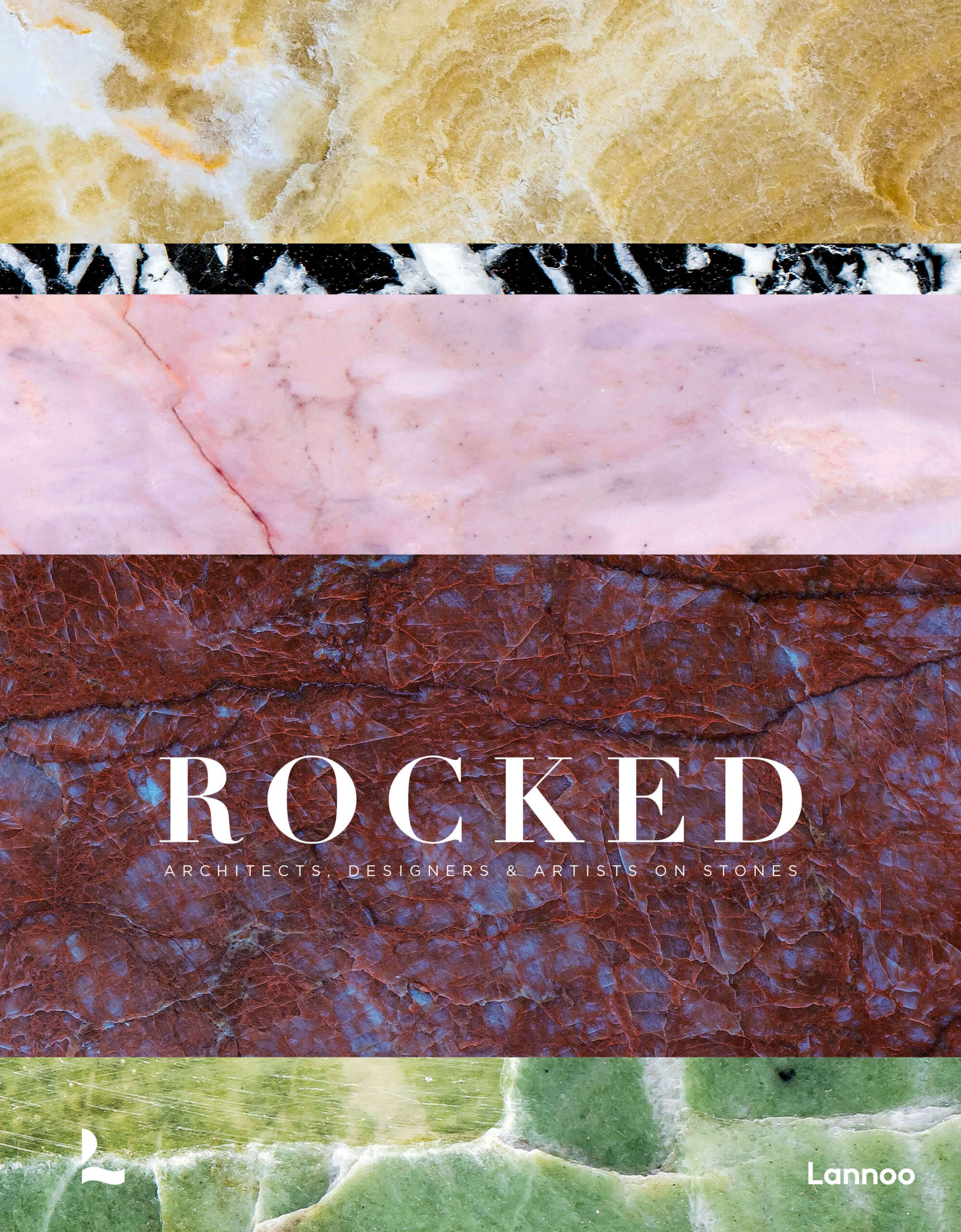
Inspiration takes an unlikely form in this coffee table book about, you guessed it, natural stone. Packed with stunning imagery, it showcases how designers have used the material in innovative ways — from an all-pink restaurant in Antwerp, with a sculptural custom terrazzo island, to Hannes Peer’s exploration of travertine at Milan Design Week 2024. And while much of the book is focused on the use of stone in interior design, it is also bookended with interviews that share insights from disciplines that span art to fashion. Dries van Noten, for instance, explains how nature has influenced his work, and how marble has shown up not just in the interiors of his luxury fashion stores and even his own homes, but also inspired the prints that appeared in his 2025 menswear collection.
2
Shosa
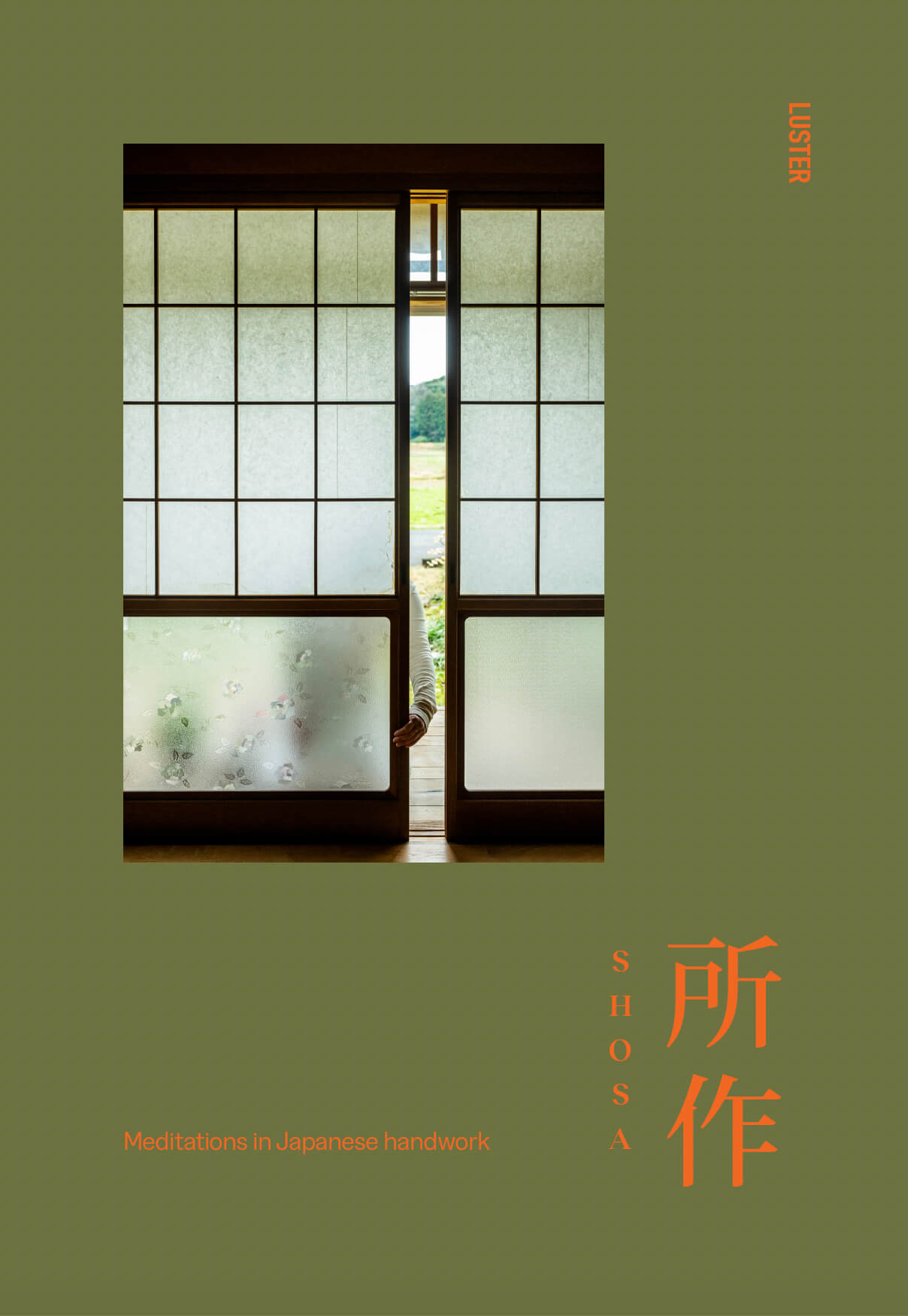
“Shosa is the easiest and, at the same time, the hardest of words to explain,” writes author Ringo Gomez-Jorge. “Essentially, it boils down to a respectful and harmonious attitude and way of moving.” In this book, the Japanese concept is used to describe the repetitive and almost meditative movements associated with crafts like weaving or pottery. Along with photographer Rob Walbers, Gomez-Jorge travelled across Japan to better understand these poetic rituals, interviewing 12 diverse makers about their practice. They include Tomohiro Kishida, an architect turned fashion designer who grows his own cotton, and Junpei Kawaguchi, a basket weaver who is inspired by the way shosa shows up in all facets of Japanese culture. “You know, people are inspired by the Japanese tea ceremony because it tells us to behave in a beautiful way, even while doing something as basic as drinking a cup of tea. We look up to people who behave calmly and nicely. This beautiful behaviour is what shosa means to me,” he explains.
3
Space Age Design
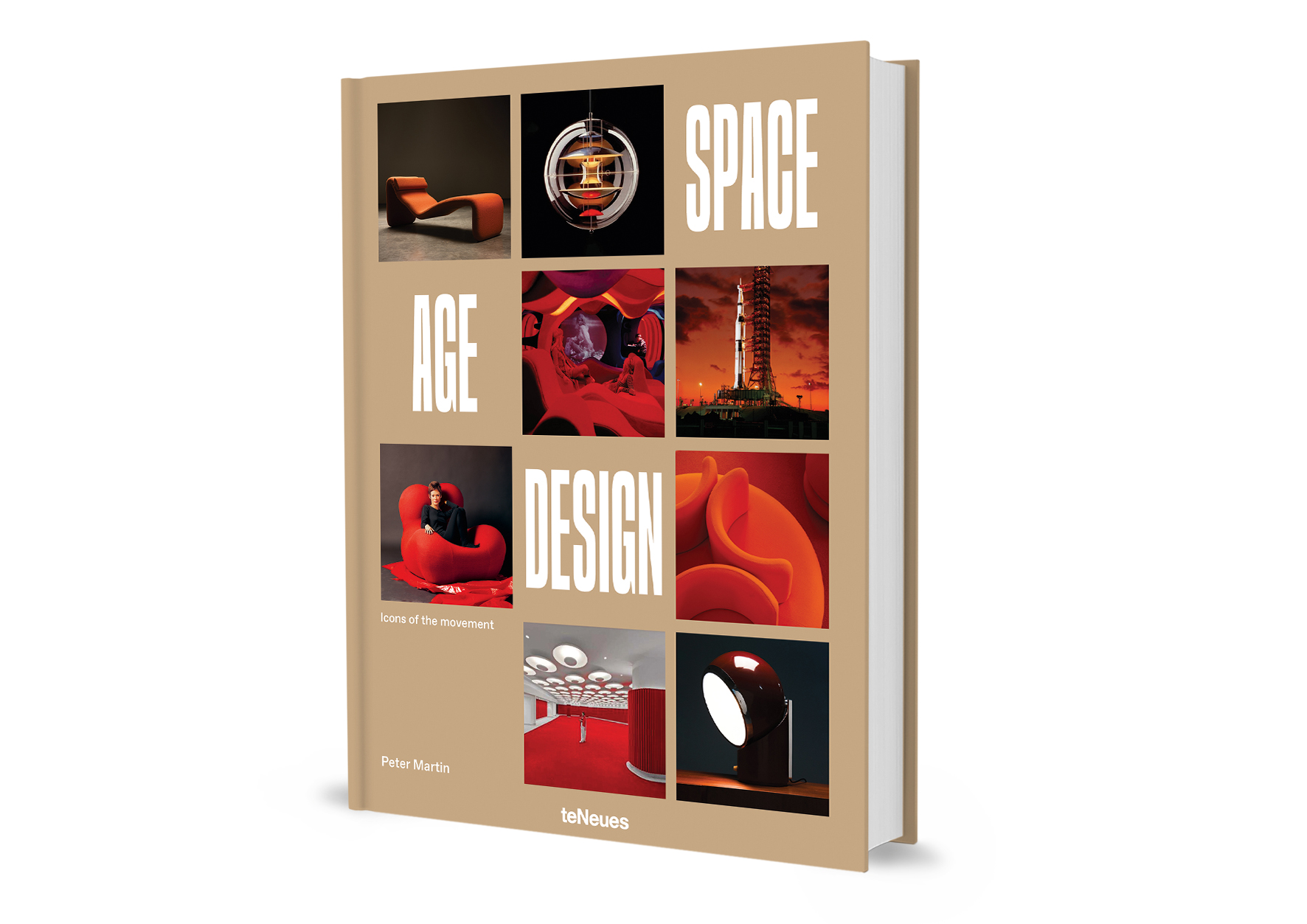
If there was ever a time that design was reflective of the zeitgeist, the late ’50s was it. As the era of space travel took hold, expanding the possibilities of science and technology, the design scene responded with futuristic expression in everything from architecture to furniture. “To many living now, the future looks unsettling. In the late 1950s, the future was a place of dreams,” explains author Peter Martin in his introduction. “Cars grew rocket-like tailfins, airports were modeled on spaceships. Futurism influenced furniture. It was an age of optimism — even utopianism — and it reverberated throughout Western culture, from fashion and music to design and art.” Featuring over 200 rare archival images, the book illustrates the space race’s wide-ranging cultural impact, from the swooping curves of Eero Saarinen’s TWA Flight Centre or Joe Colombo’s out-of-this-world furniture designs. Beyond visuals, each chapter also skillfully unpacks how design responded to a particular period of space age history.
4
Toronto Interiors
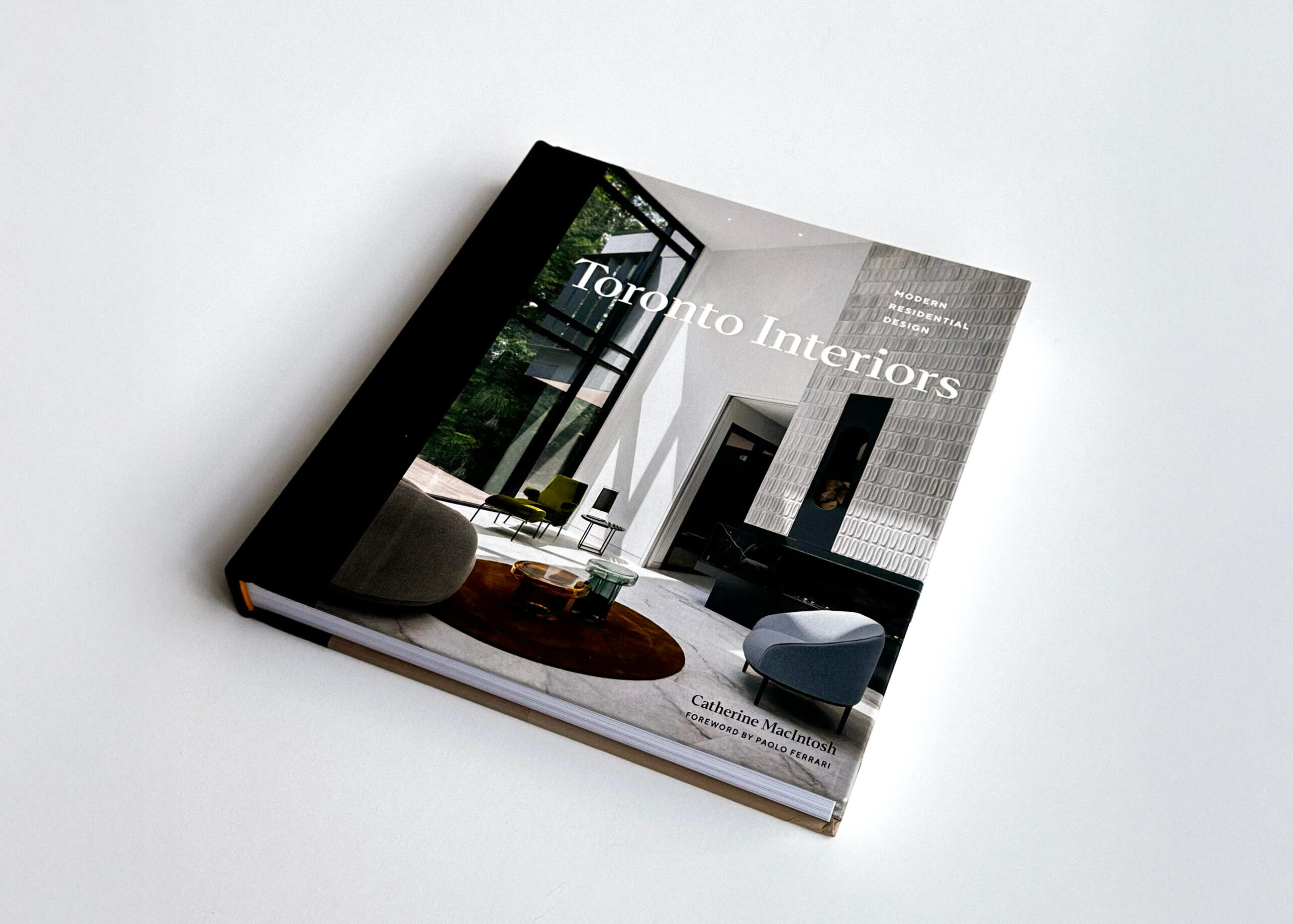
When it comes to winter escapism, nothing does it quite like good old-fashioned house porn. You’ll find that — and a whole lot more — in this book by Catherine MacIntosh (the former editor of our sister publication, Designlines). This survey of Toronto’s top interior firms (30 in total) abounds with design inspiration, from renovated Victorians to contemporary new builds by firms both new and established, including heavy hitters like Batay-Csorba, Barbora Vokac Taylor and Odami. Each chapter begins with a brief description of the featured studio’s design approach, followed by case studies of a few standout residential projects. The diversity of rich perspectives that have influenced the city’s design culture makes it hard to pin down a style that feels distinctly Torontonian — and this is exactly Toronto’s strength. The best homes, MacIntosh explains, don’t lean into trends but rather embrace a point of view all their own. “At once quintessentially Canadian and broadly global, the work you will find in Toronto Interiors is diverse in both philosophy and approach and moves effortlessly between what the city was and where it is going,” says designer Paolo Ferrari in his foreword.
4 Coffee Table Books for the Design Lover on Your Holiday List
A curated quartet of new releases offers fresh fuel for the design-inclined.