
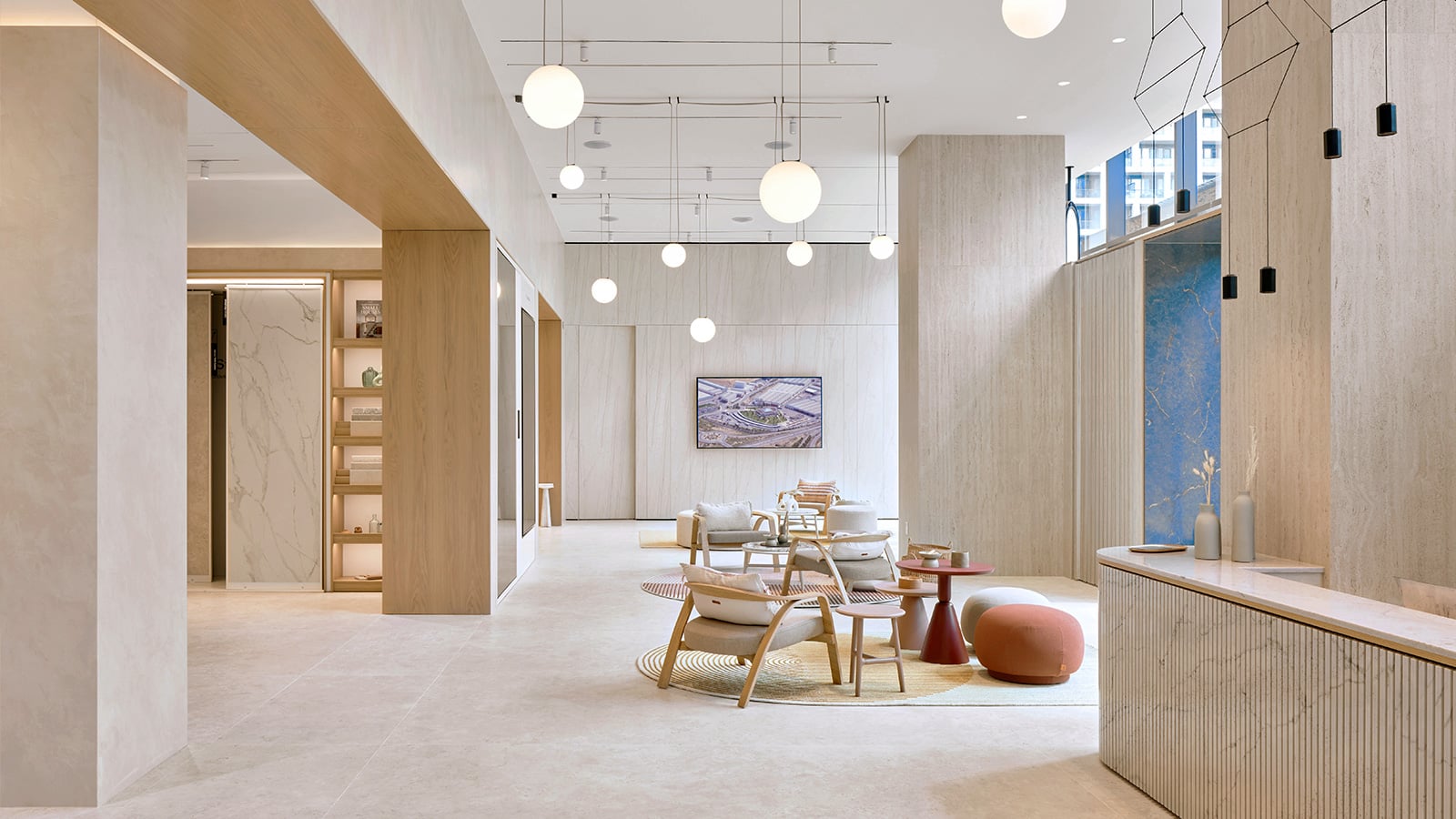
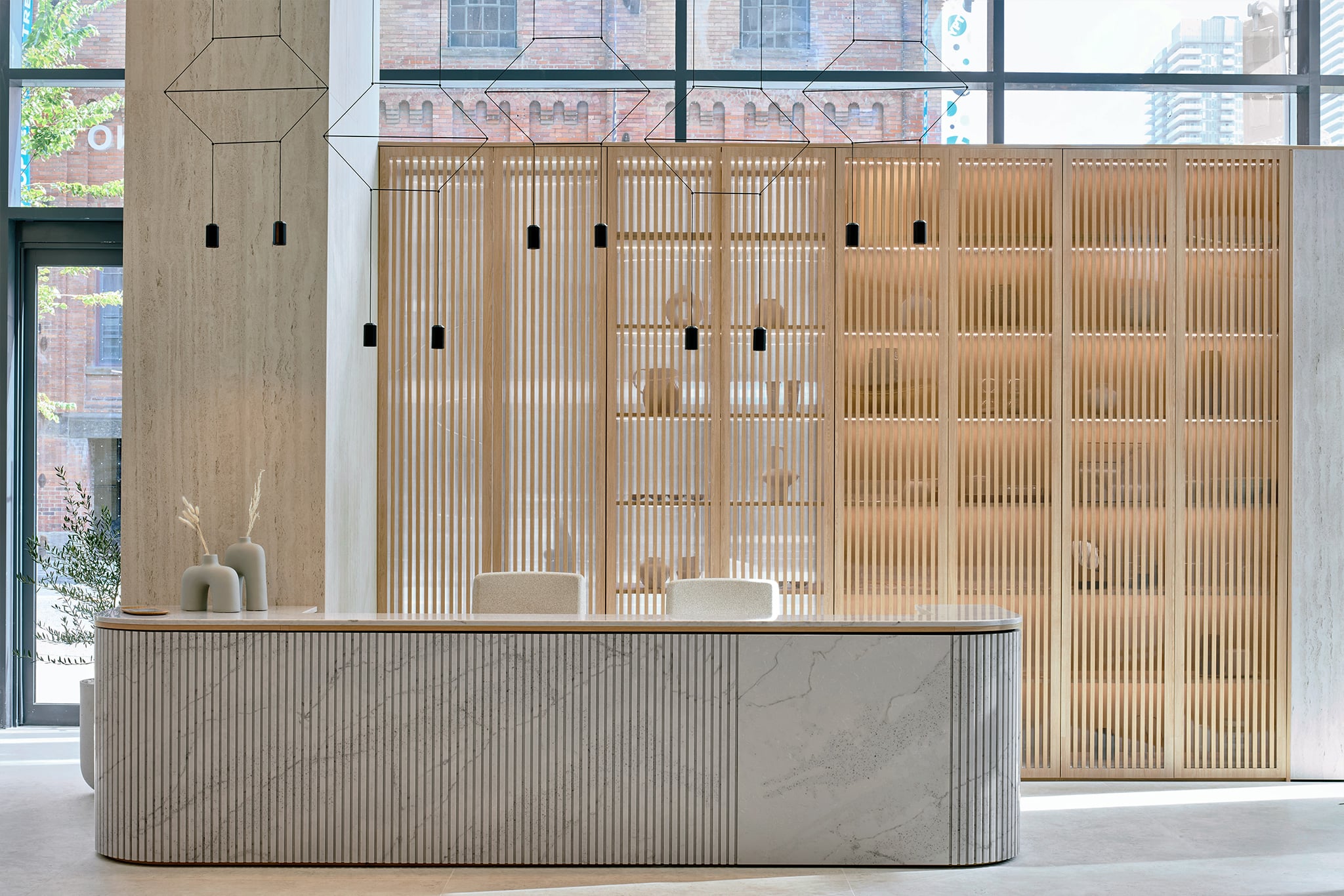
A typical surfacing showroom can feel a bit like a carnival funhouse — one in which floor-to-ceiling mirrors are swapped out for towering stone-patterned slabs. Cosentino’s new Toronto flagship in the King East Design District takes an altogether different approach. Yes, there is still plenty of surfacing, but rather than being arranged into a maze of giant rectangular blocks, most of it is displayed the way you might find it installed in an actual home or hospitality setting.
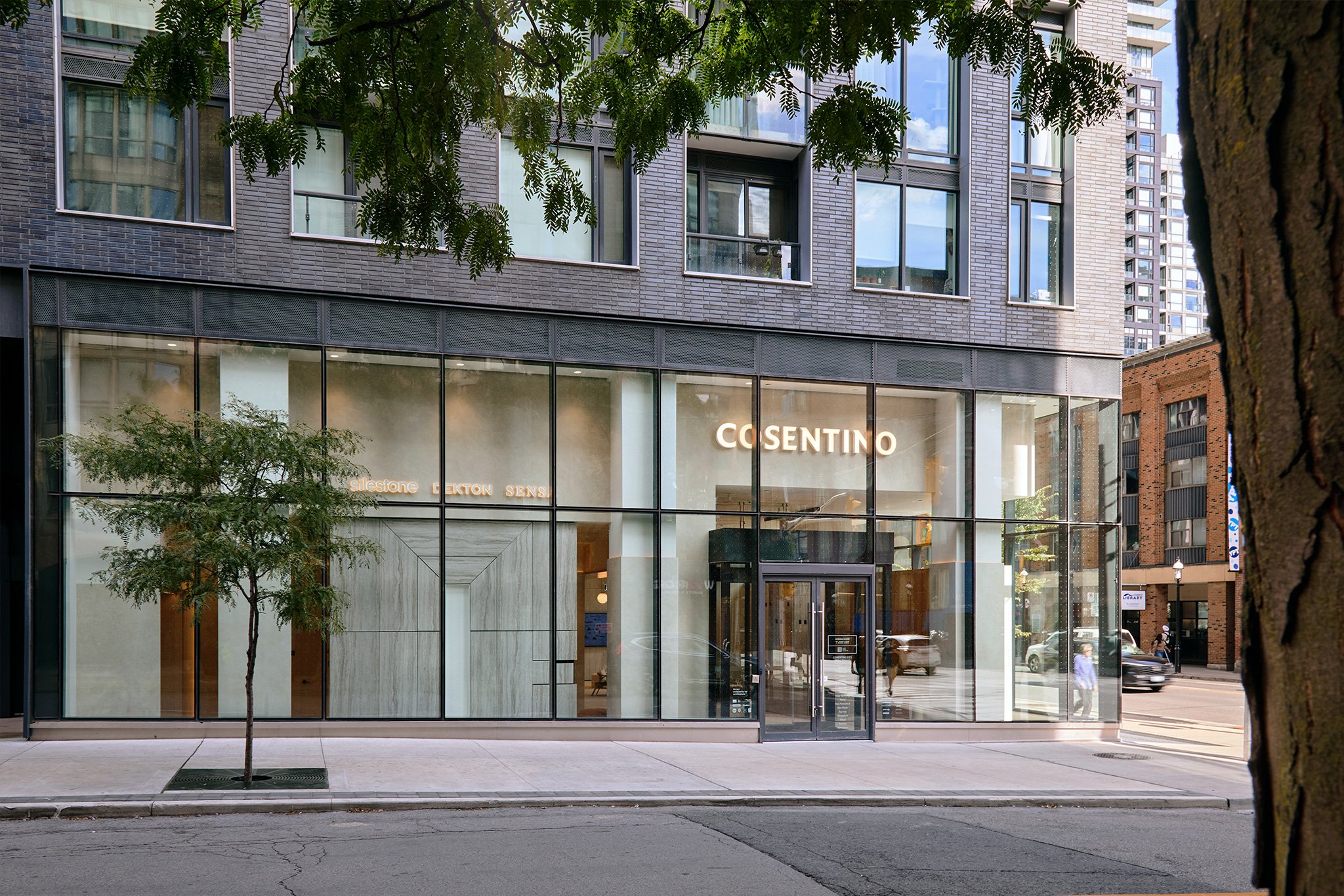
“The experience we’ve created here was built with the intention of serving as a resource for creativity,” explains Eduardo Cosentino, EVP Cosentino Group & CEO Cosentino Americas. In other words, instead of just exhibiting raw materials, Cosentino City Toronto places emphasis on the exciting designs made possible by these materials. At the heart of the space are lobby, kitchen, dining and bathroom vignettes that showcase Cosentino’s family of brands — which include Silestone, Dekton, Sensa, and now, zero crystalline silica Éclos (more on that one in a minute) — in action as reception desks, kitchen islands, furniture, fireplaces, sinks and shower trays, not to mention flooring and cladding.
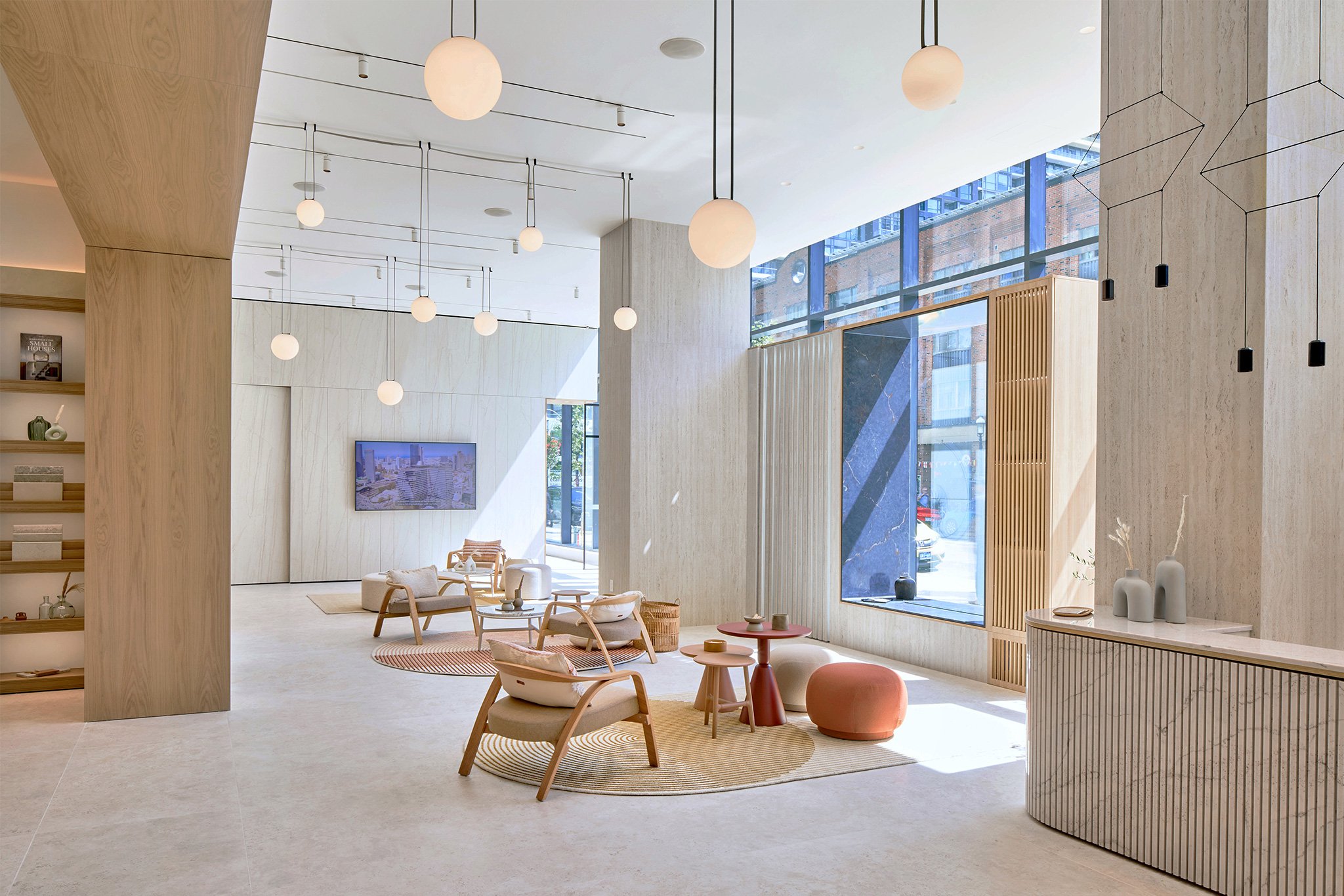
Architect Heather Dubbeldam (whose firm, Dubbeldam Architecture + Design, led the project) has a robust portfolio of residential projects, and her deep understanding of calm, comfortable homes proves especially valuable here. It’s easy to imagine a relaxed family meal playing out around the supersized island that anchors the showroom’s inviting kitchen vignette, or someone going about their morning routine in the bathroom area (complete with a Zoe Top integrated sink). And while surfacing can often be thought of as a cold material, Cosentino City Toronto’s wood accents help unlock the underlying warmth in Dekton collections like Pietra Kode, which takes its earthy inspiration from the Mediterranean, and Silestone ranges like Le Chic and Le Chic Bohème, which feature glam metallic accents.
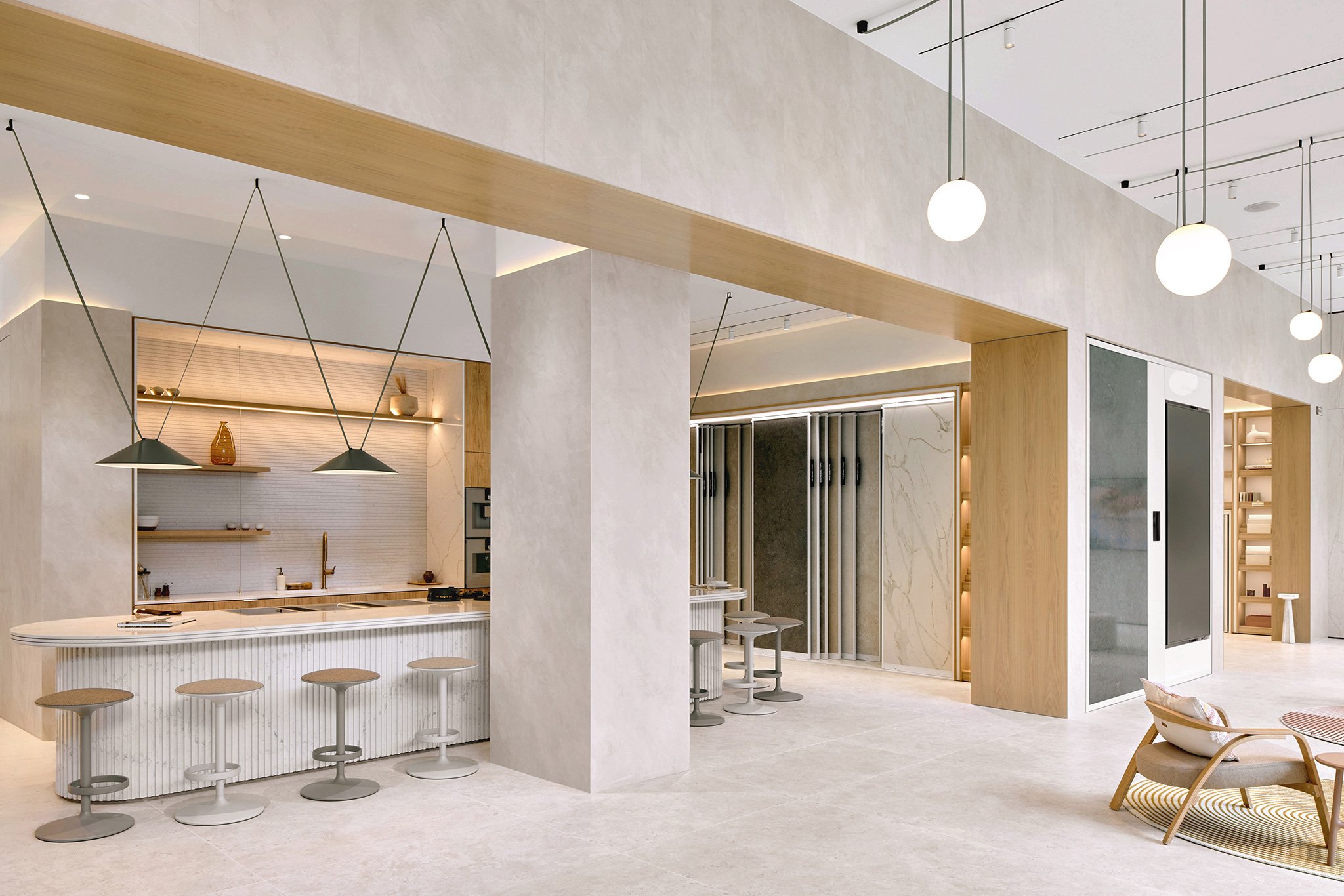
In keeping with this softer approach to surfacing, Dubbeldam also incorporates plenty of curves. In a feat of engineering, the showroom’s kitchen island layers together three 20-millimetre slabs, each separated by a 5-millimetre groove, to create a thick, rounded countertop defined by elegant shadow gaps. Below, a fluted base demonstrates that Cosentino’s product line is as much about tactile texture as it is about visual patterns.
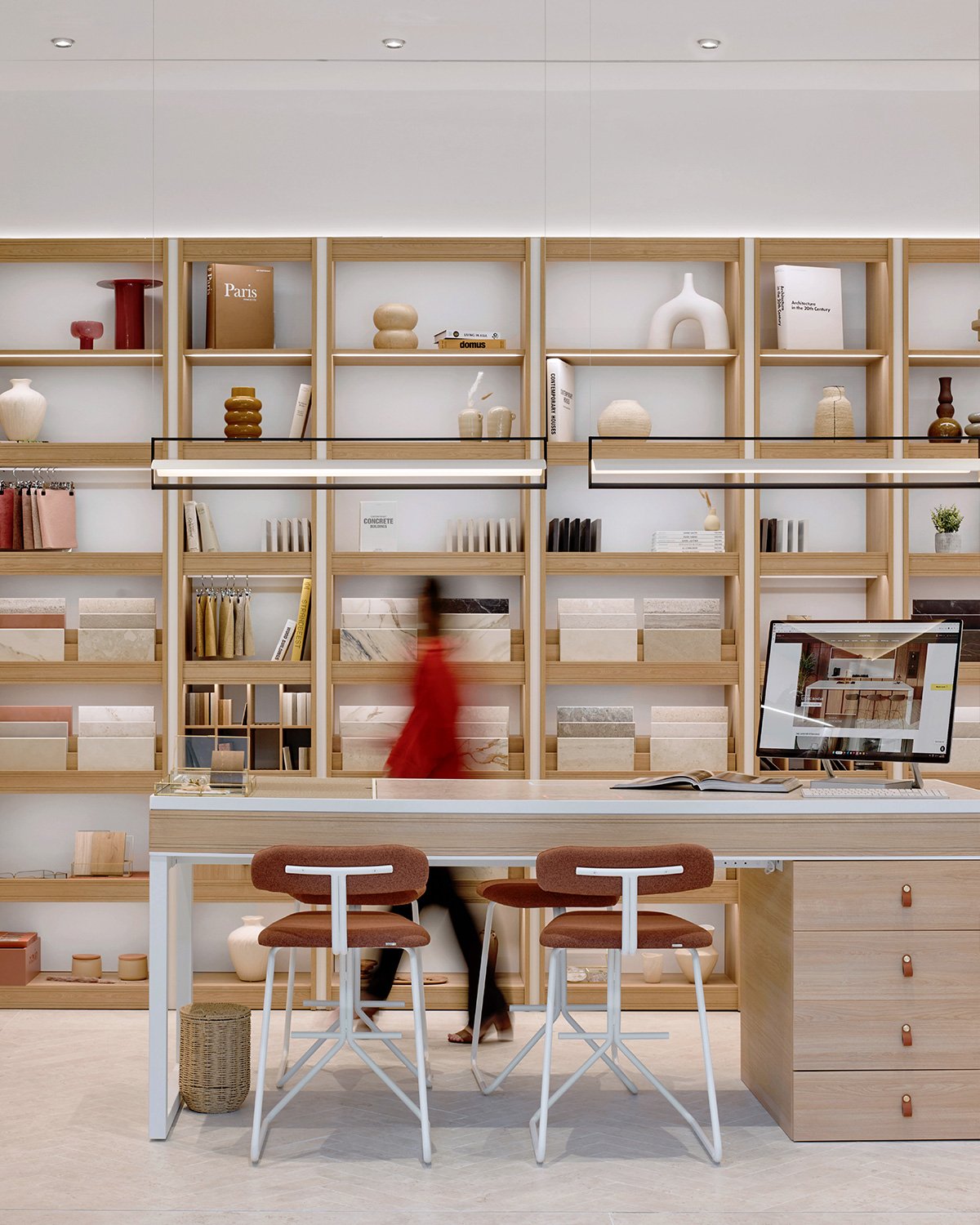
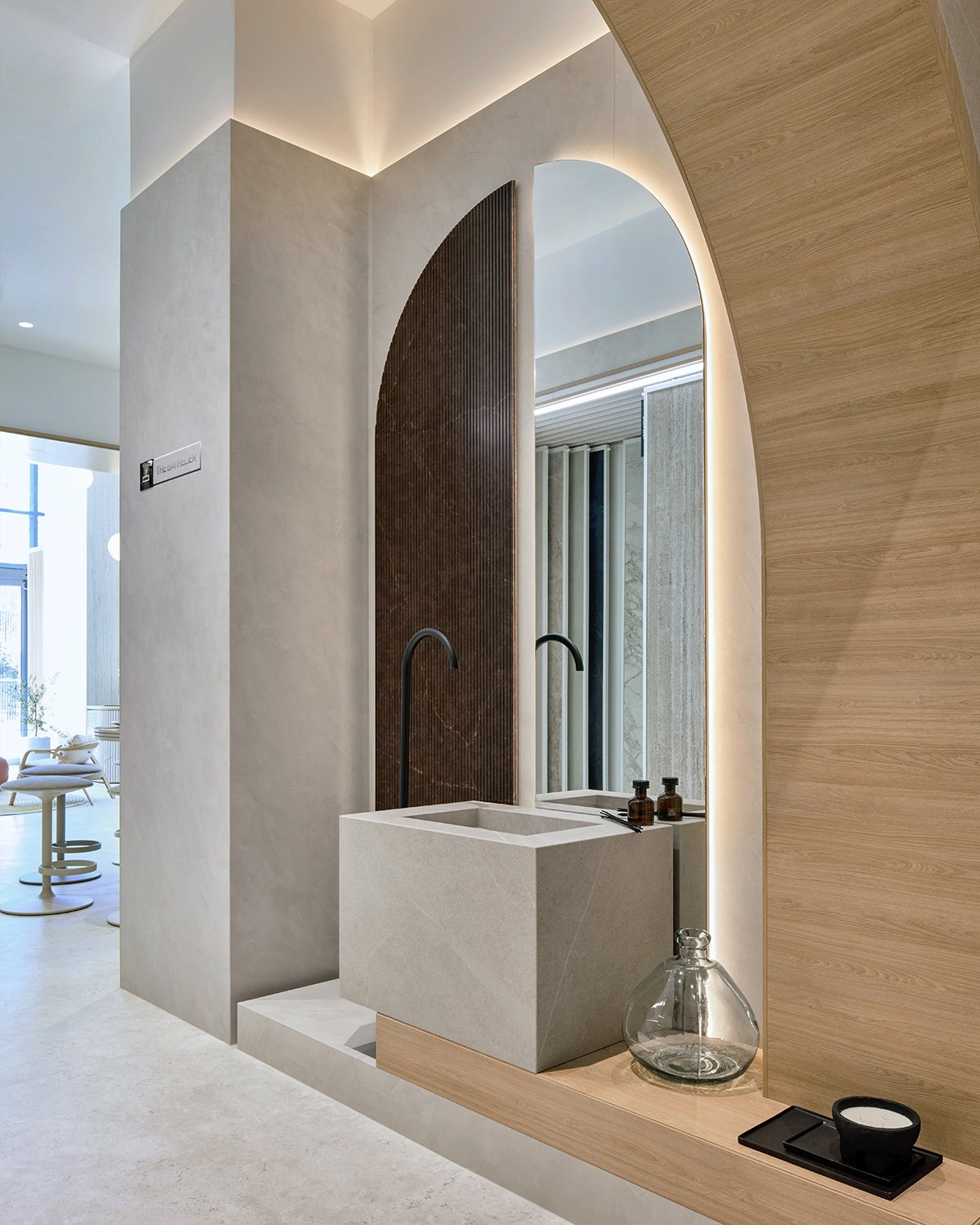
And while actual slabs may not be placed front and centre in the showroom, there are still plenty of them to admire. Rows of large panels showcasing Cosentino’s extended product range slide out from (or across) one of several walls in a series of discrete display areas, including the library-like Atelier dedicated to helping visitors plot out their own projects. “By blending practical resources with creative spaces, the showroom is both a working tool and a place to spark new ideas,” says architect Heather Dubbeldam.
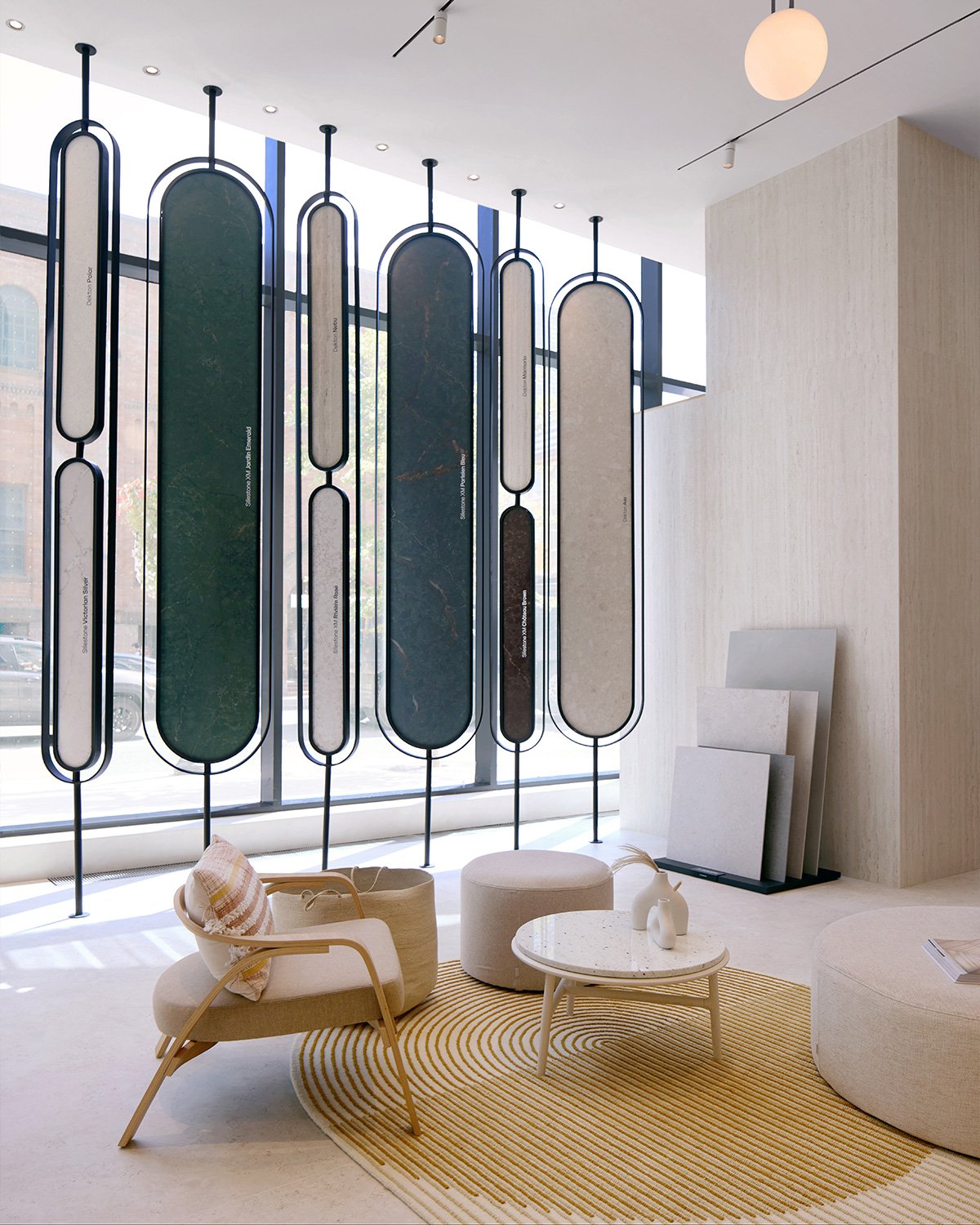
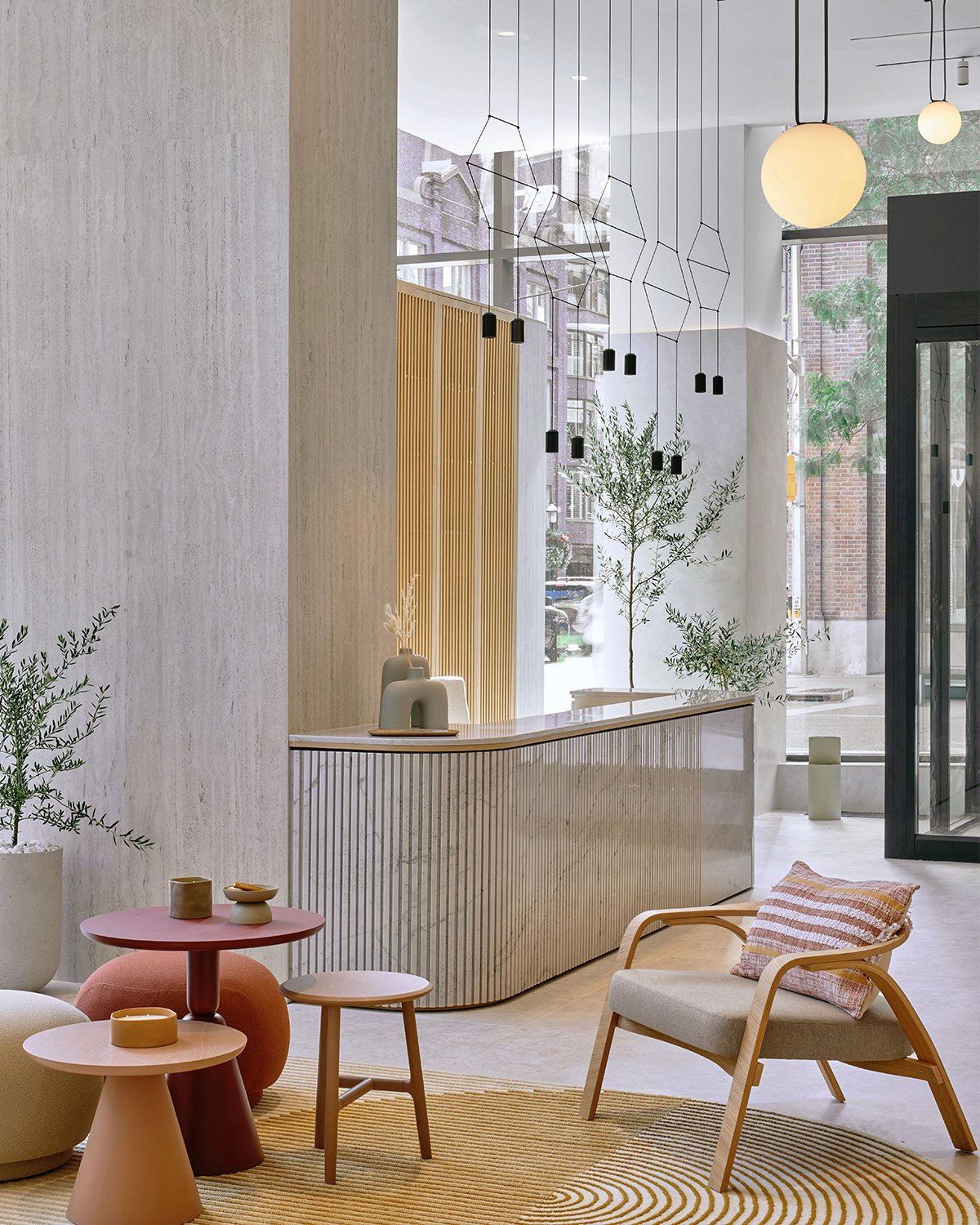
In another area, several of the manufacturer’s signature offerings are cut into pill-shaped displays installed inside of metal frames that allow for 360-degree rotation. Stationed in front of a wall of double-height windows, these work to modulate sunlight when needed while otherwise still allowing for views of the city outside.
To strengthen its connection to the surrounding design community, Cosentino City Toronto was also conceived as an events hub for the local industry. During this January’s DesignTO Festival, for instance, it will play host to “Design Hustle,” a panel discussion featuring Odami co-founder Arancha González Bernardo, gh3* founding principal Pat Hanson, and Mason Studio project designer Paul Lee. Focusing on “what masters and new voices teach each other,” the multi-generational group will discuss the design industry’s ongoing evolution.
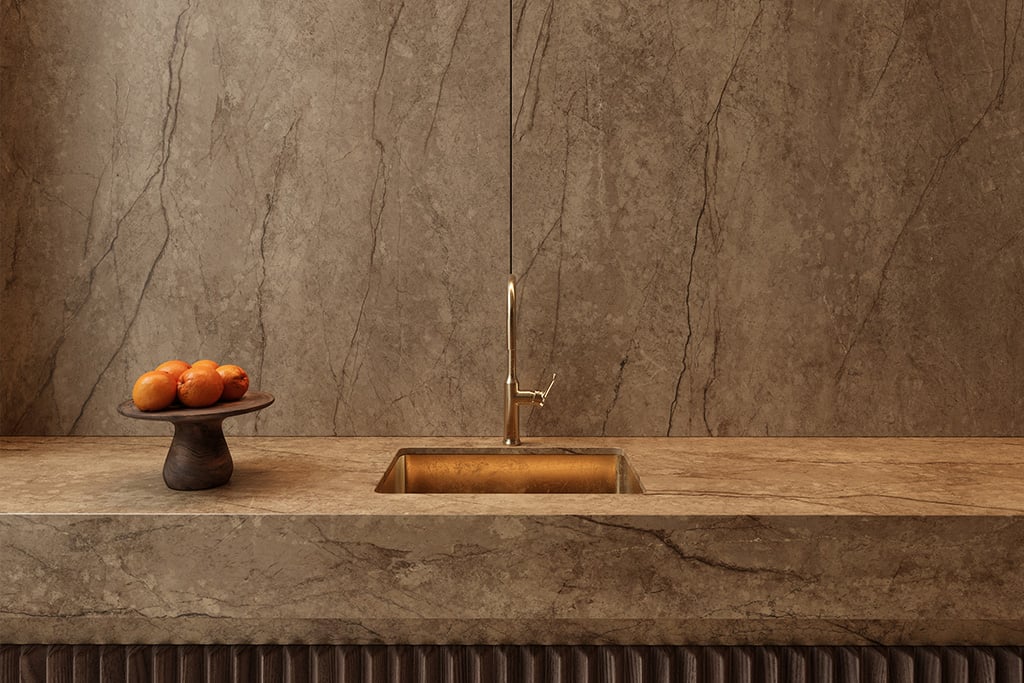
For its part, Cosentino continues to innovate, too: Its just-launched Éclos sub-brand is the outcome of nearly 30,000 hours of research and development. Designed for the kitchen and bathroom countertop market, Éclos mineral surfaces feature zero crystalline silica while incorporating more than 50 per cent recycled materials (with several colours produced using nearly 90 per cent recycled materials). Special manufacturing technology integrates veining into the edges to create realistic stone looks while still ensuring impressive strength and performance — including heat resistance up to 220 degrees Celsius. And if you need ideas about how to put it to use, inspiration abounds at Cosentino City Toronto.
Cosentino City Toronto Showcases Surfacing In Action
Dubbeldam Architecture + Design imbues the surfacing manufacturer’s inspirational downtown showroom with welcome warmth.