
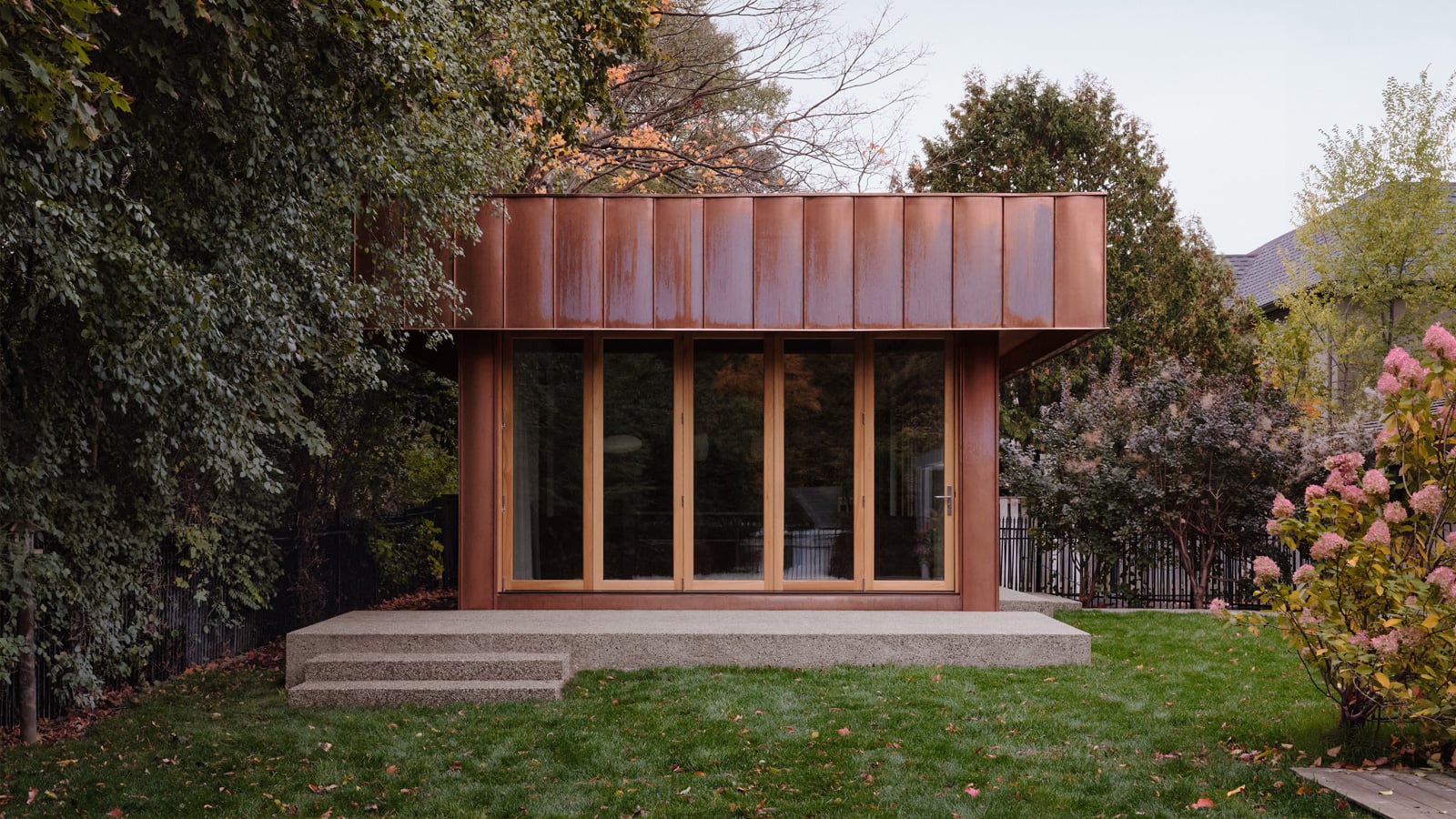
When François Abbott, who leads the Toronto architecture firm Fabrication Studio, met with a client looking to add a garden suite to the backyard of her home in the city’s tony Bridle Path neighbourhood, she had a pair of very specific starting points in mind. “Her first references were to Philip Johnson’s Glass House and Mies van Der Rohe’s Farnsworth House,” Abbott says. In other words, she wanted something modelled after two of modern architecture’s greatest residential masterpieces. No pressure.
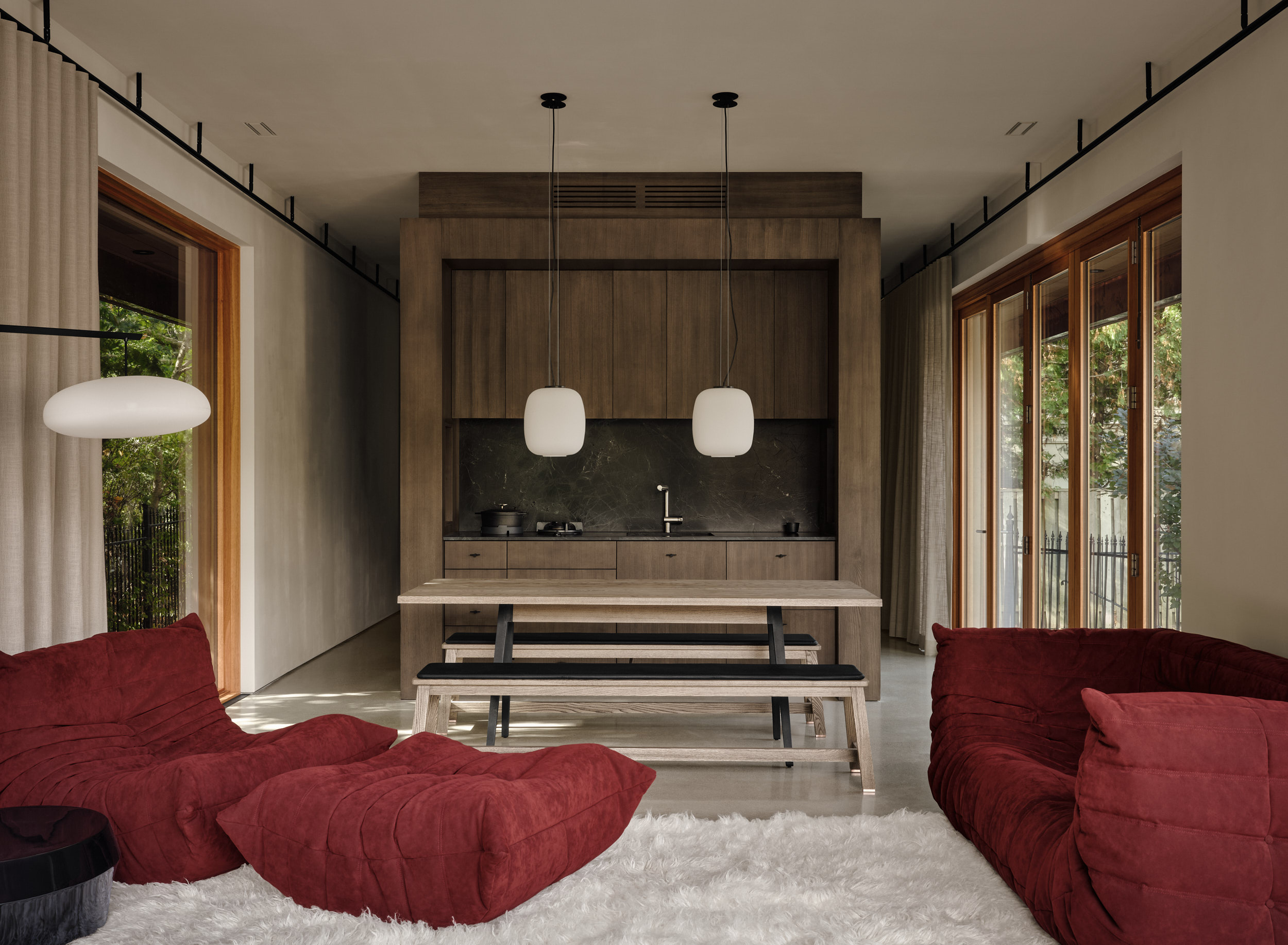
Undaunted, Abbott designed a 60-square-metre accessory dwelling unit that follows the same minimalist approach as those two landmarks, but emerges as its own distinct undertaking. In keeping with its precedents, the one-storey, open-plan building packs all key functionality into a central core, integrating a modest kitchen on one end, a headboard for a bed on the other, and a bathroom, storage and “the world’s smallest mechanical room” in between. “It was a game of Tetris,” says Abbott. Like the Farnsworth House, Copper House also floats above the ground, elevated on helical piles that kept construction from interfering with the root systems of nearby trees and allow water and air to flow underneath.
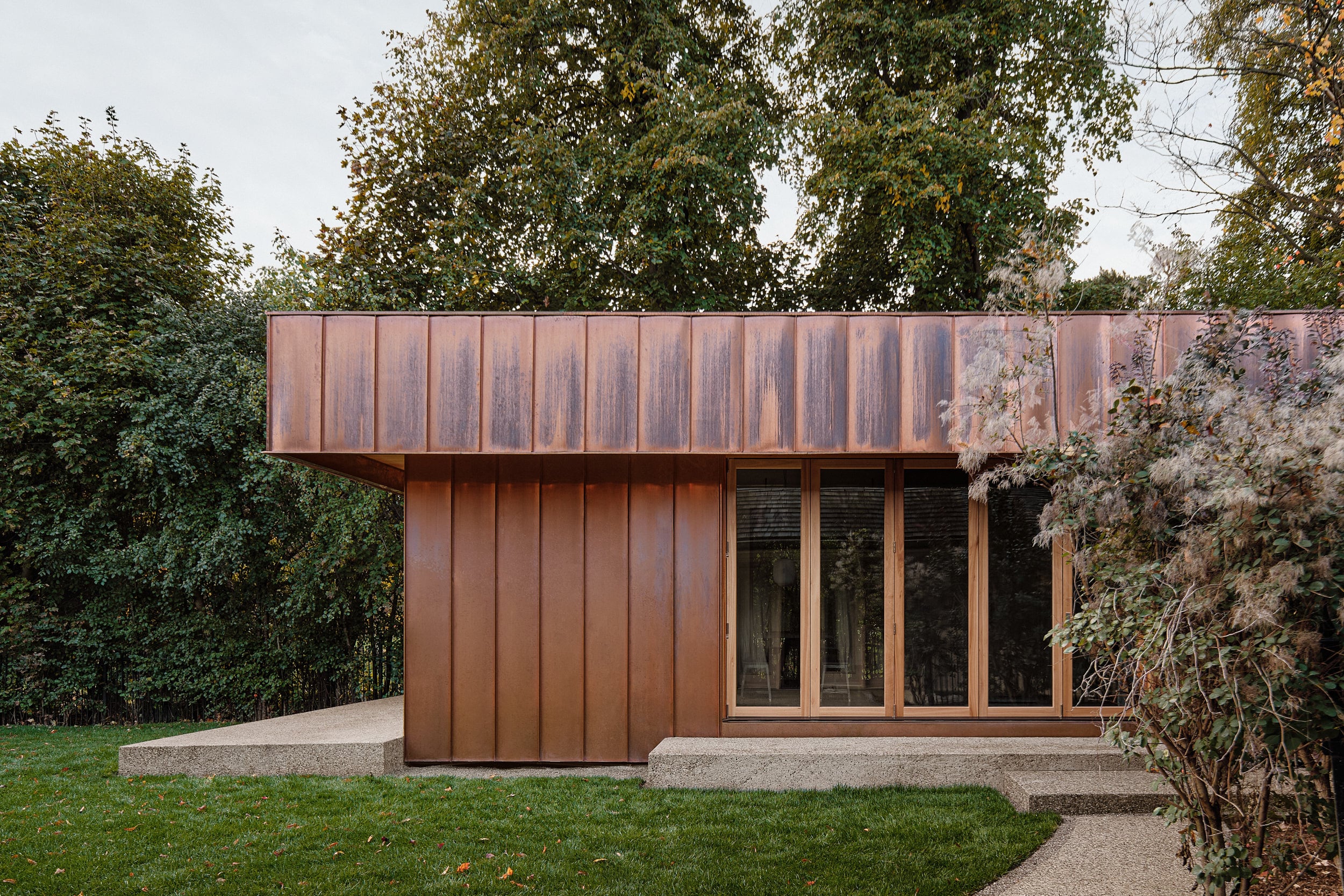
Yet for all these similarities, Copper House is comfortable in its own skin, too. As its name suggests, the building is clad in red-brown metal — a marked departure from the project’s initial reference points. Sure enough, while Abbott’s client had originally desired an all-glass building, that plan evolved as Abbott came to understand what the backyard retreat would be used for: Now that the owner’s kids have grown up and moved away, she wanted to provide them with their own place to stay when they visited with their partners.
Sensing that a completely transparent guest house might not deliver the appropriate privacy — especially given that one side of the house looks onto a park and can be fairly exposed come late fall and winter — Abbott instead suggested a copper shell. After all, even Dr. Edith Farnsworth (who commissioned the Farnsworth House) struggled to live on display all the time, writing in House Beautiful in 1953 that, “The truth is that in this house with its four walls of glass I feel like a prowling animal, always on the alert. I am always restless.”
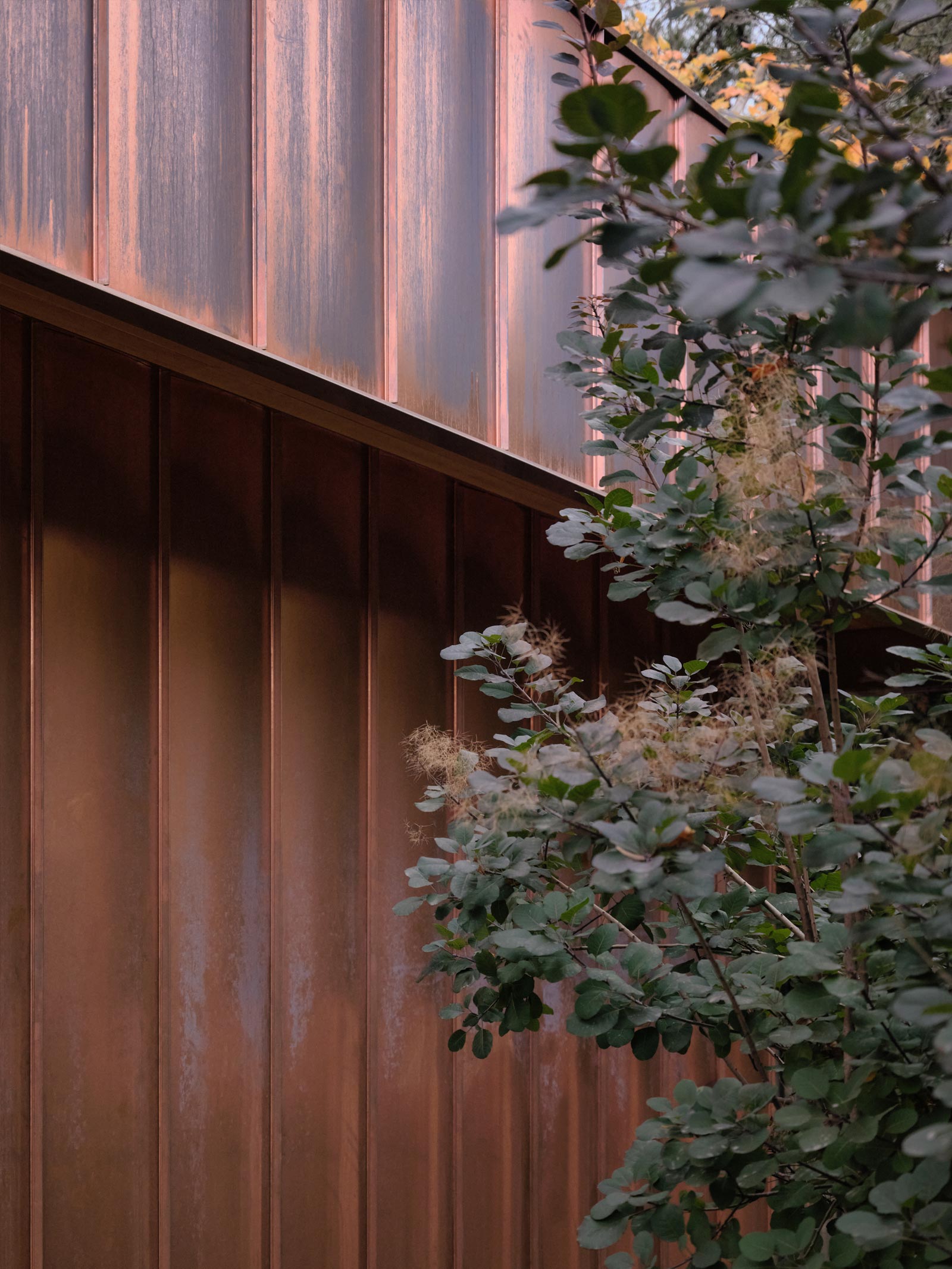
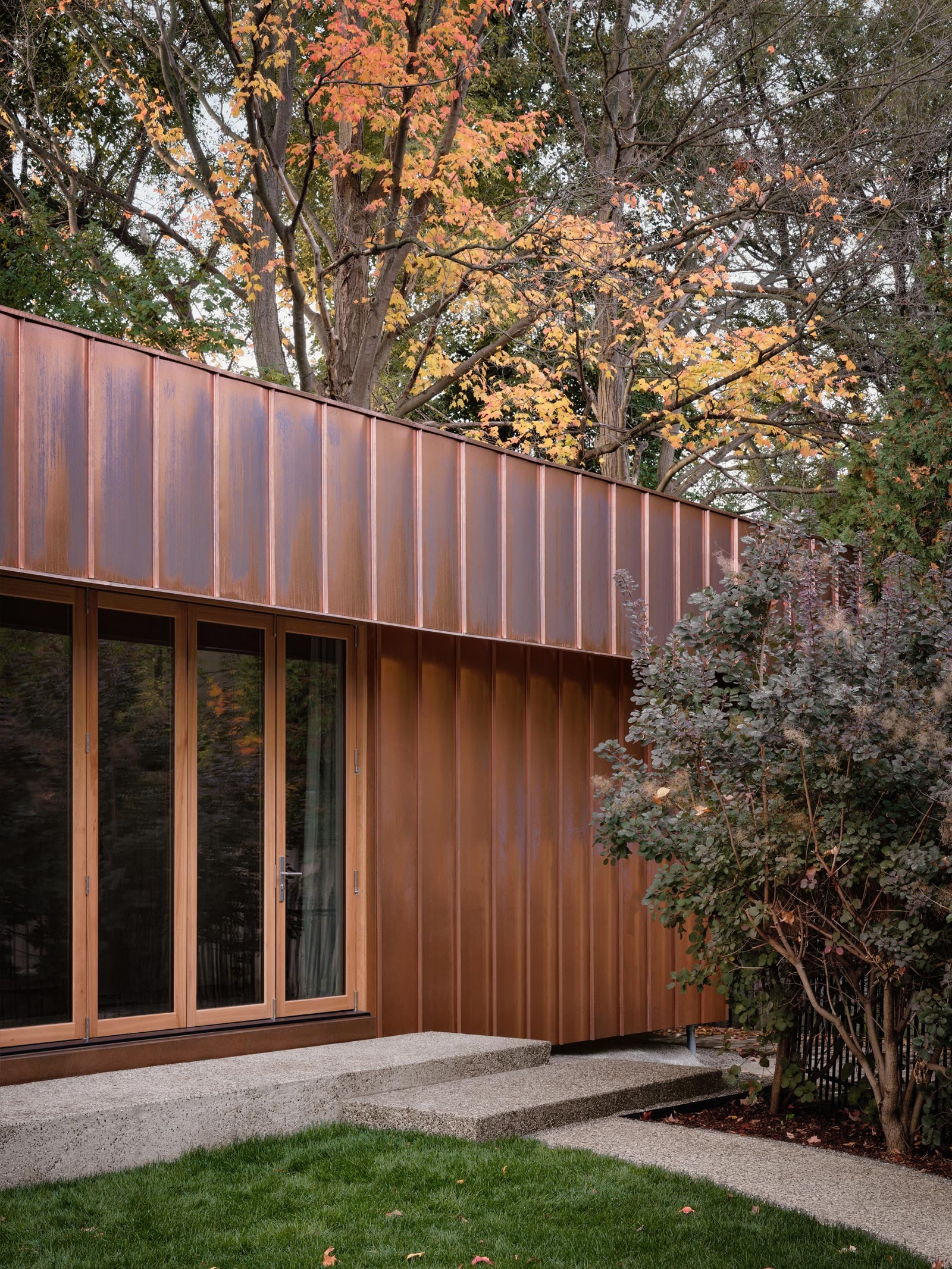
Abbott’s reasoning for copper was threefold. “As I was walking around the property, I noticed that a lot of the detailing on the existing house — the gutters and downspouts — was done in aged copper,” he says. He also wanted cladding that felt special enough to distinguish the building from other garden suite projects that skew more utilitarian. “This being a very high-end neighbourhood, we wanted to make something a bit more noble,” he says. Adding to that nobility is the fact that the material wears its age with pride — changing over time, much like the landscape that surrounds it. “The copper is like the trees — it’s going to move through browns and greens,” he says. Meanwhile, wood framing around the windows will develop a patina of its own.
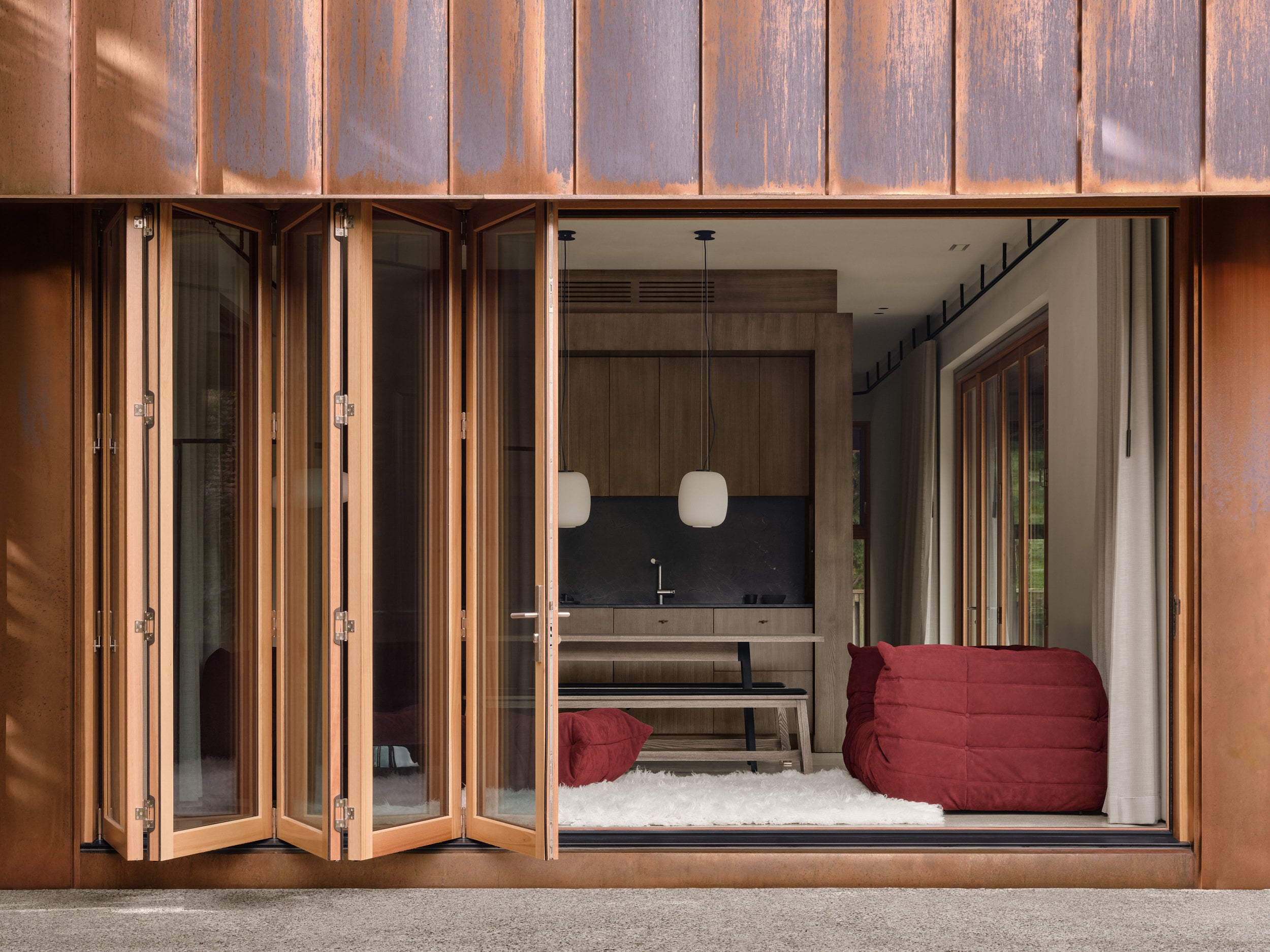
Beyond its material palette, the exterior is defined by precise geometry. An overhanging “forehead” runs along the top edge, divided into evenly sized panels that establish “this perfect optical rhythm,” explains Abbott. “We added a little bit of furring behind to hold tension in the material, which allowed us to go a bit wider with the copper than usual and also creates a bit of a scalloped feel.” Below, vertical copper panels continue in even proportions until an opening — one of the project’s deep window frames or bi-fold doors — introduces what Abbott calls an “interruption” to this rigid arrangement. Then again, the bi-fold doors are divided into their own equal segments, so logic still prevails. While the building is far more private than a glass house would be, these doors nevertheless introduce plenty of light — as well as a free-flowing connection to the outdoors when they are fully opened in summer.
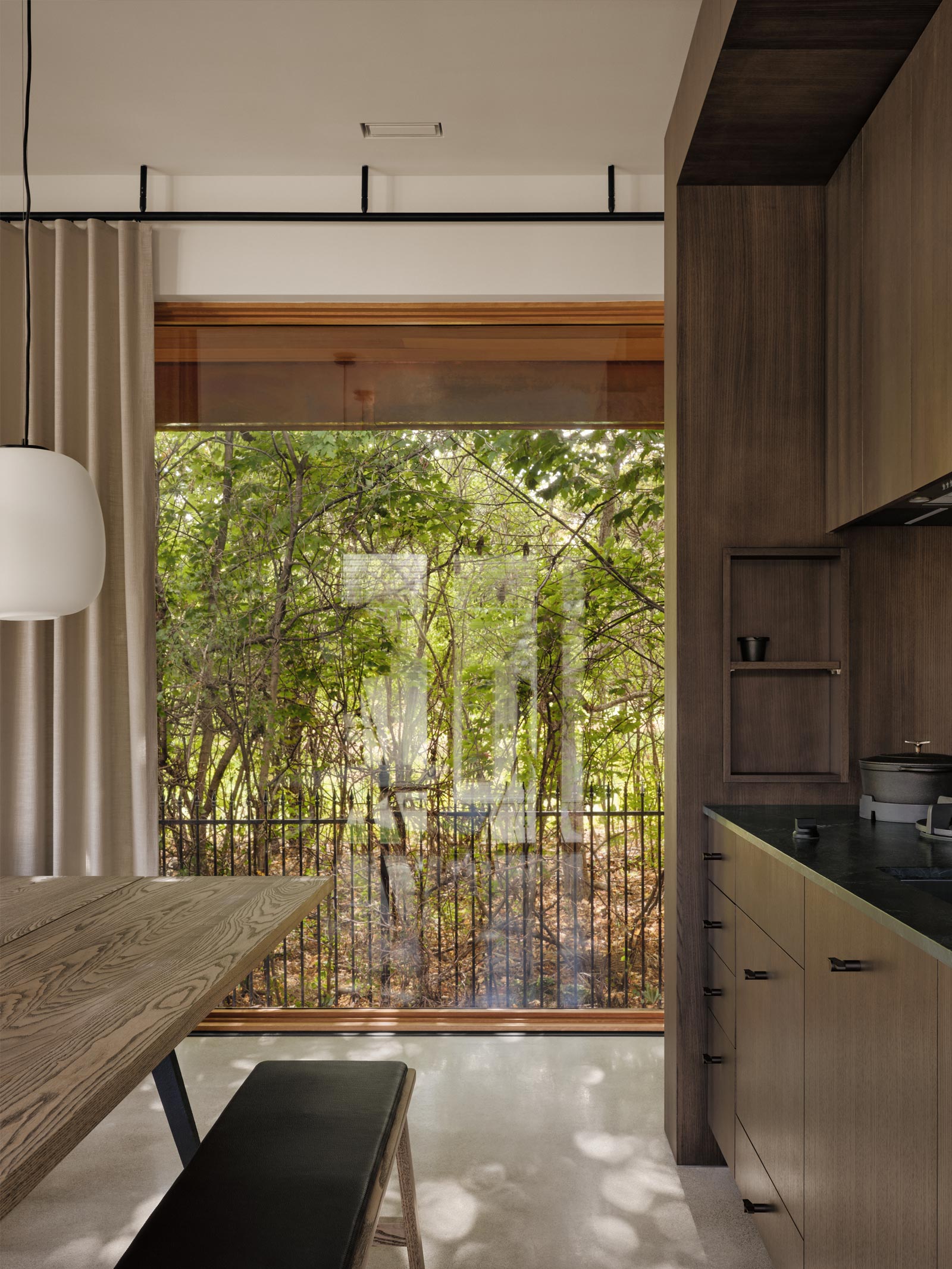
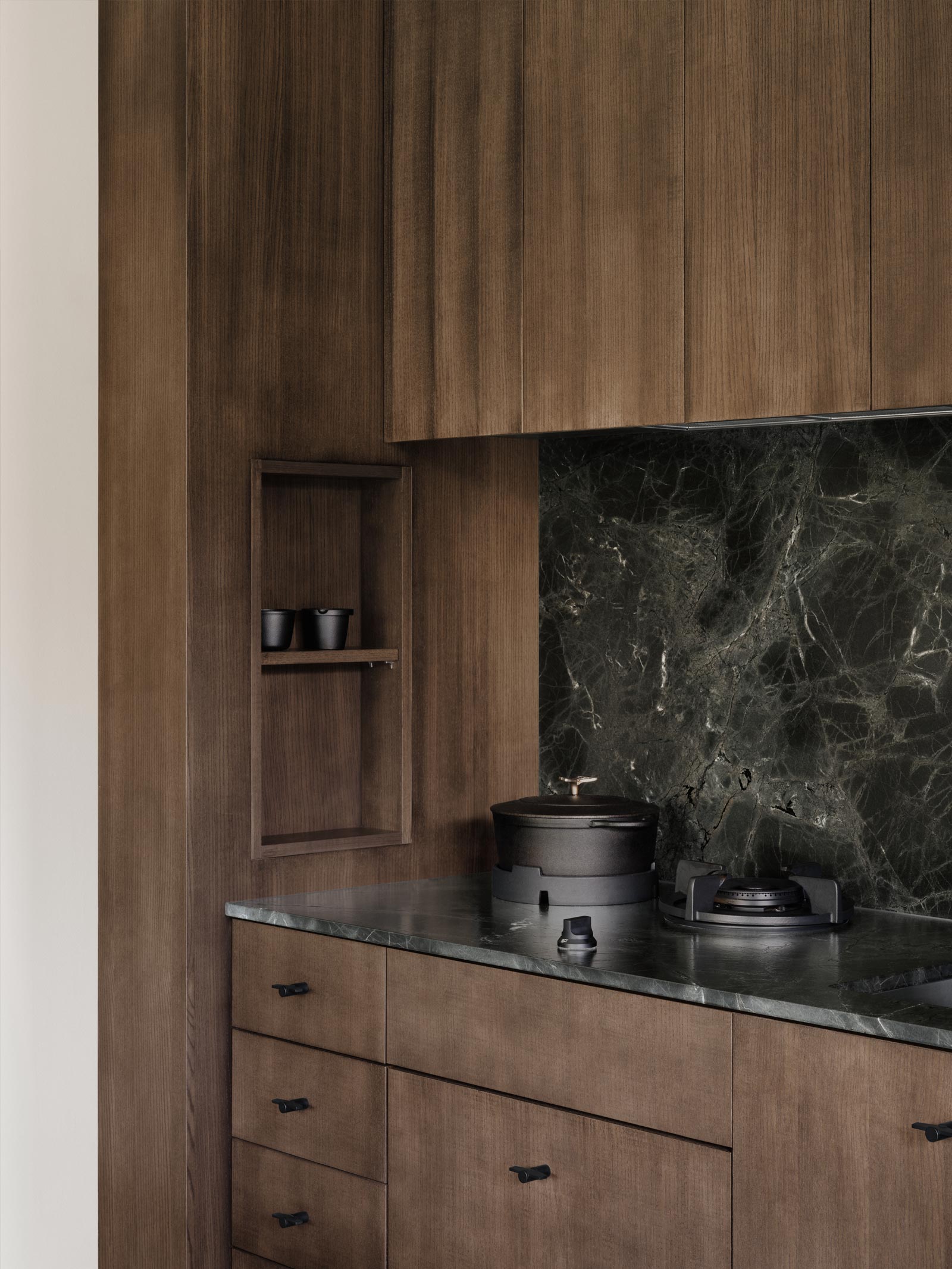
Inside, the garden suite’s central core acts as a buffer between the secluded bedroom and wide-open dining/living zone, introducing a hallway on either side. “Having two passages was important,” says Abbott. “In a small space, giving more options opens things up — there’s two ways out, so you can avoid bumping into someone.” The compressed dimensions of these corridors also shape the experience of moving through the building. “You’re passing through shadow to get to lightness,” he says. To accentuate that, he set out to make the core a “dark, anchoring mass.” An ash dining table sourced early in the design process went on to inspire the wood used for the central millwork, while the dark kitchen counters and backsplash adopt a complementary quartzite.
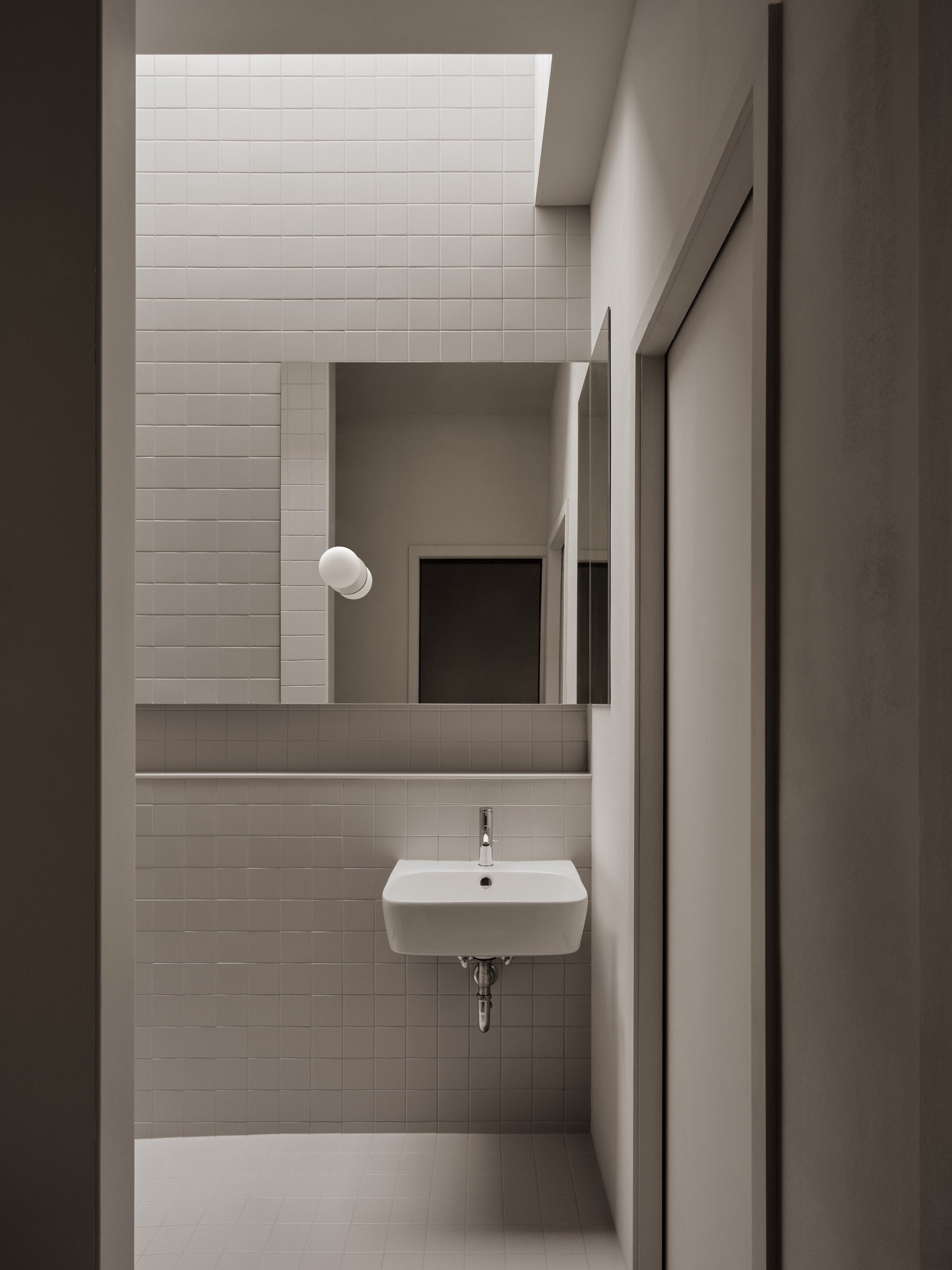
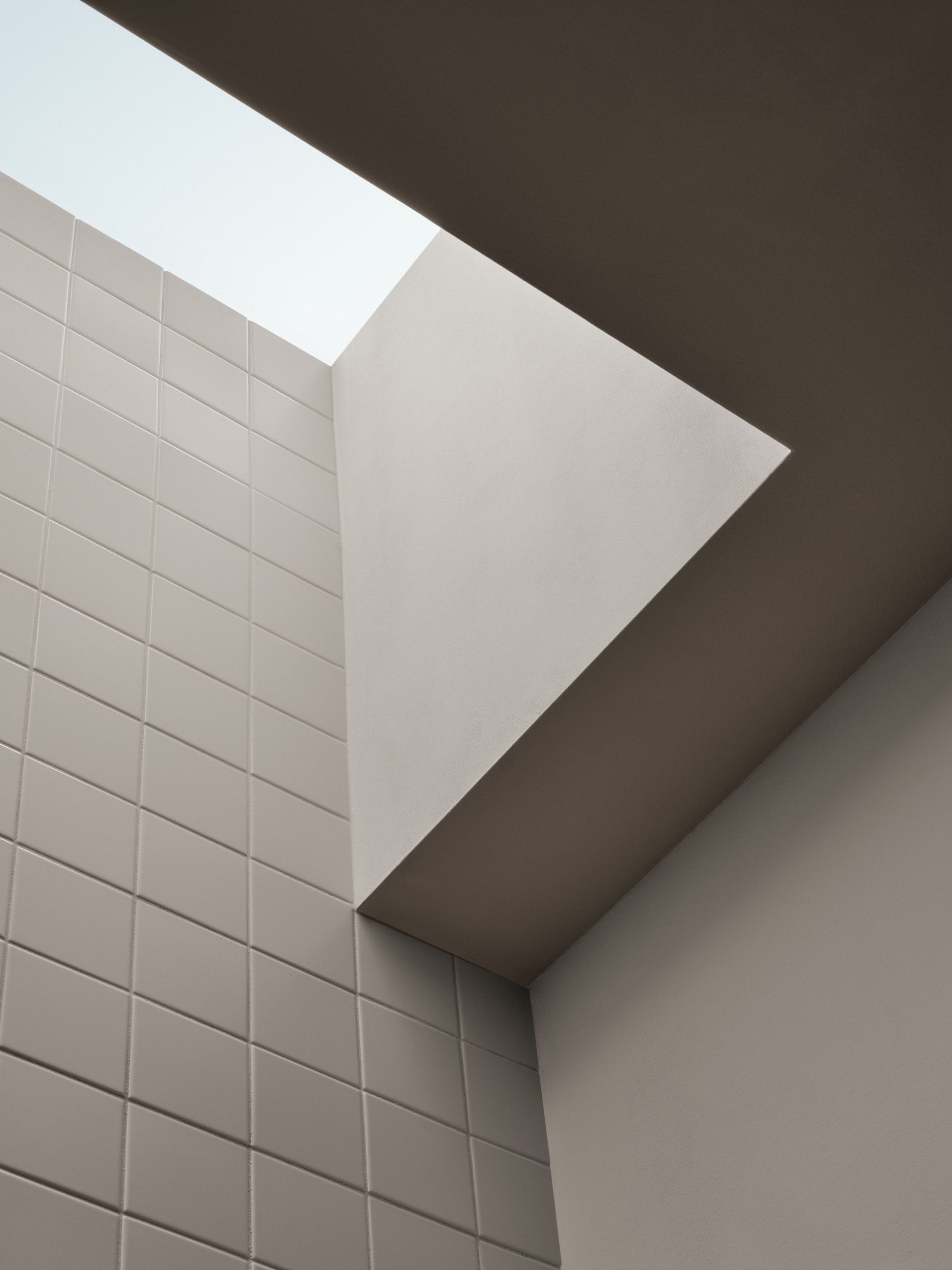
The bathroom, tucked inside the central core, skews much airier. “You open that pocket door on one side, and you’re exposed to a world that’s a little bit unexpected,” says Abbott. “It’s very light grey, with porcelain and chrome lit by this surprise skylight.” A shelf behind the sink extends along the wall to transition into a shower niche — just one of many ways the design makes the most of tight quarters. “There’s not a wasted inch in here,” Abbott reports.
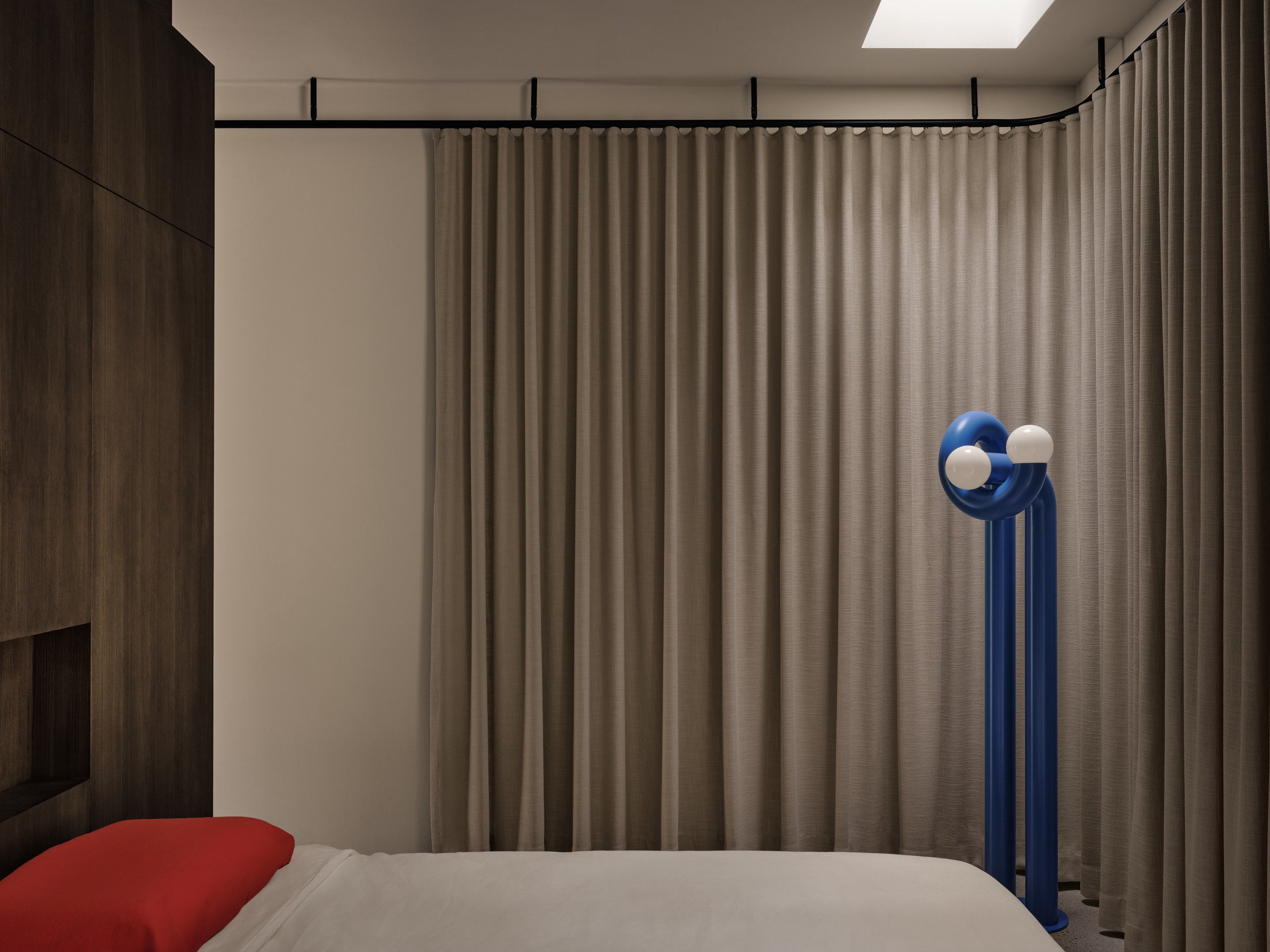
A continuous drop rail that runs along the entire edge of the building allows curtains to be shifted for privacy or shade, while also accenting the interior with a strong graphic border. Otherwise, detailing is kept clean and minimal: Vents are tucked into the top of the central core, while pipes, ducts and insulation are all integrated into parallel chord trusses in the ceiling. Flooring is polished aggregate concrete, matching a series of platforms that step down from the building outside.
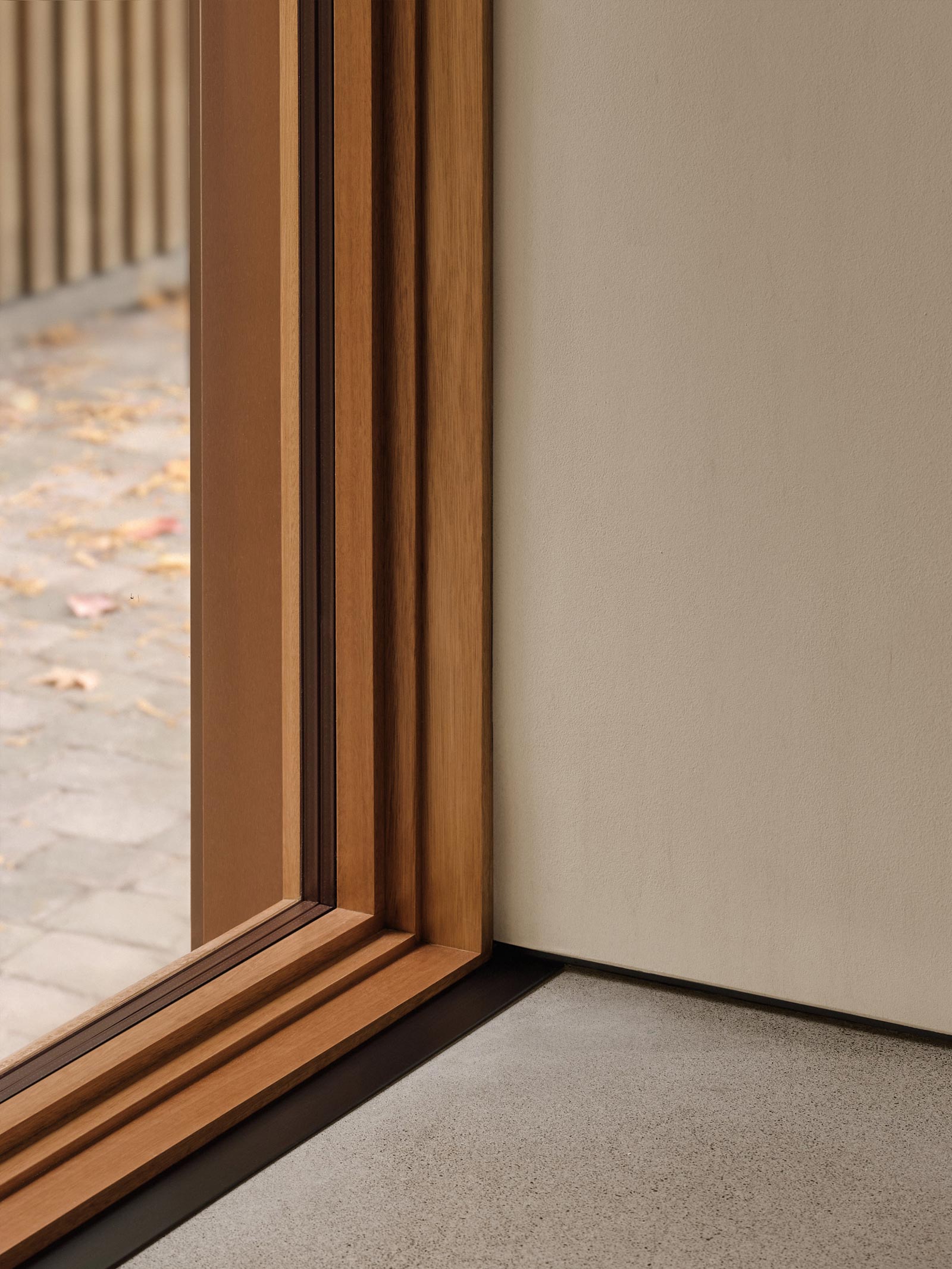
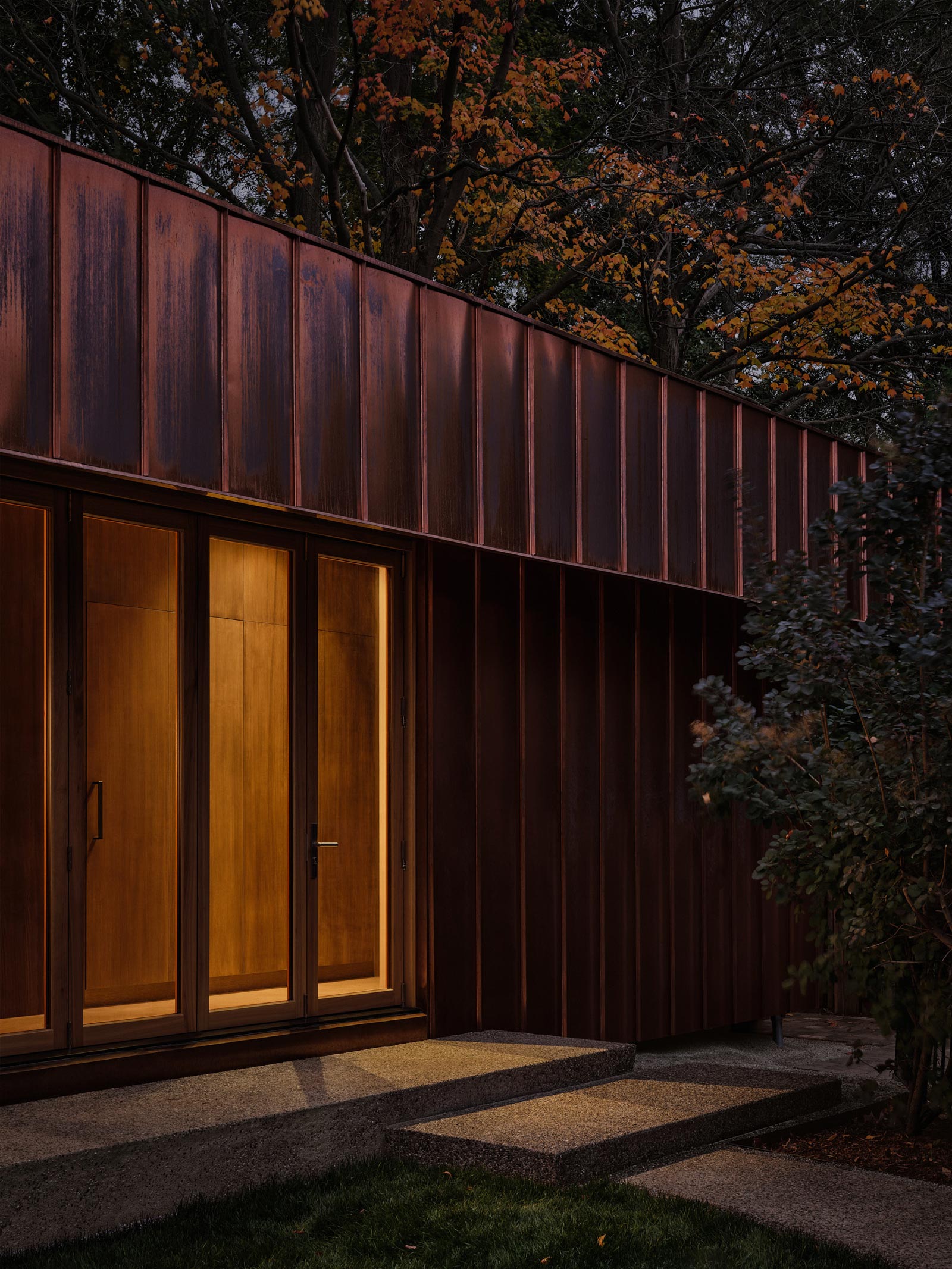
Abbott says the real magic of the house comes from the way that it interacts with light throughout the day. “You get a nice shadow line along the base of the copper that really makes the building feel like it’s floating, and that shadow line happens again below the upper ‘hat’ or ‘forehead’ element,” he says. “Things just recede into shadow.” On the other hand, for a project that could have easily been eclipsed by the famous homes that inspired it, Copper House instead stands with its own confident sheen.
A Copper-Clad Toronto Garden Suite With a Strong Central Core
A client’s love of modernism leads Fabrication Studio to design a backyard guest house with a Farnsworth-inspired floor plan.