

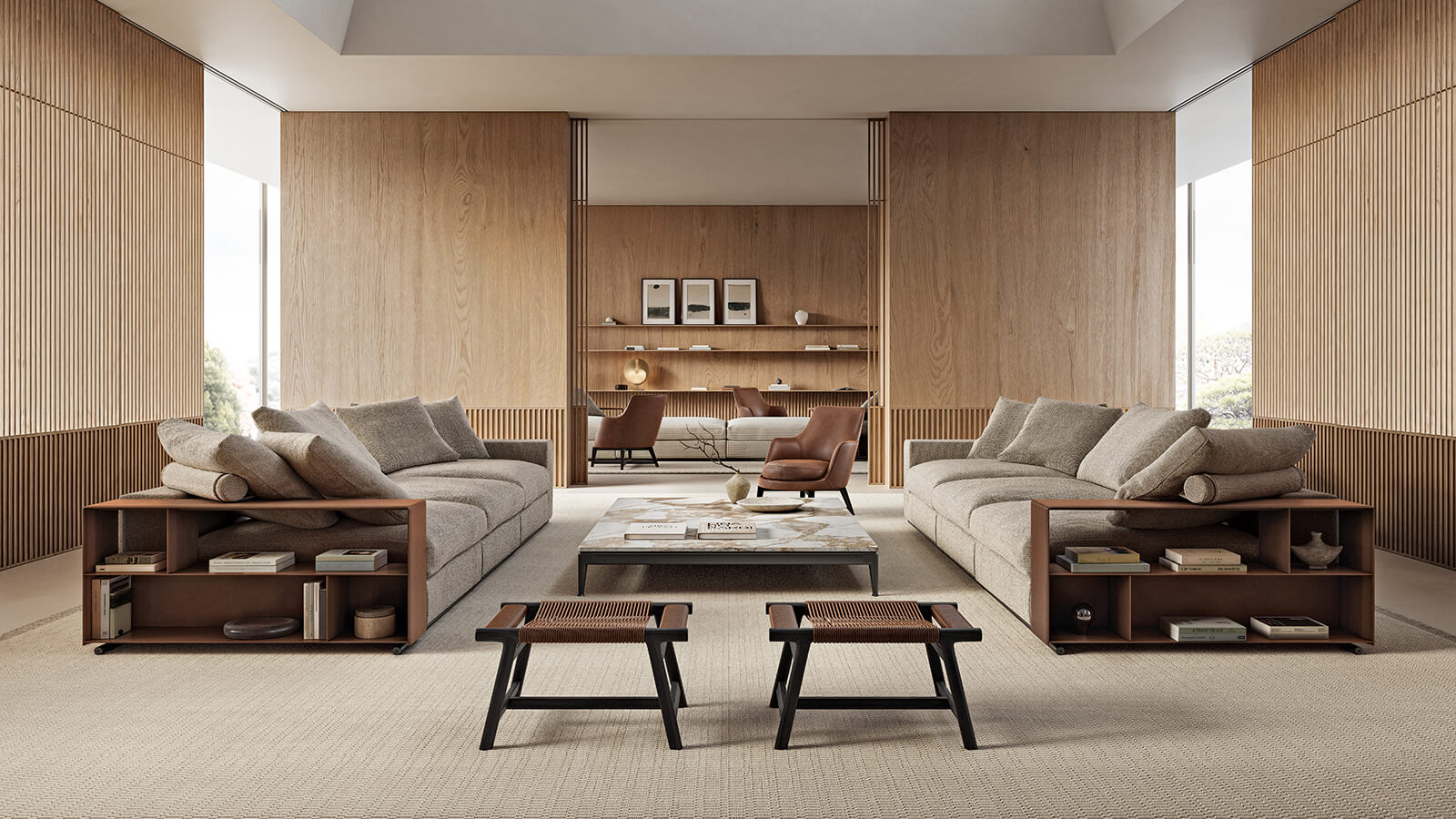
In a design culture increasingly driven by novelty and replacement, longevity has become its own kind of achievement. And it’s even more remarkable when that enduring quality results from anticipating — whether through designer’s intuition or simply by chance — shifts in how people live, how spaces are used and what we expect from the objects within them. In the case of Flexform’s Groundpiece sofa, its lasting appeal was something of a happy accident: “When we designed it, in 2001, it felt like an idea rich in substance but with little chance of success. Too simple, too direct, non-traditional,” recalls architect and designer Antonio Citterio. “It wasn’t even clear whether it was a sofa or not. And yet we found the experiment compelling — this encounter between art and a cushion — something extraordinary, almost paradoxical. So, we went ahead with it. A few months later — success.”

Twenty-five years on, the seating collection remains one of the Italian furniture brand’s top sellers. The minimalist sculptures of Donald Judd served as a starting point for Citterio, who was inspired by their horizontal, blocky forms. With a low and deep sit, and generous cushions — available with either premium goose down or Dacron fill — the resulting sofa’s proportions invite relaxation. Rendered in an equally understated material palette of natural fibres such as linen, cotton and cashmere, Groundpiece embodies a more relaxed, casual approach to seating, marrying sophisticated style with exceptional comfort.

“The leather allowed us to translate proportions and asymmetries — borrowed from art — into a domestic object,” explains Citterio. “That’s the essence of creativity: a chain of references, emotions, and perceptions filtered through our own sensibilities.”
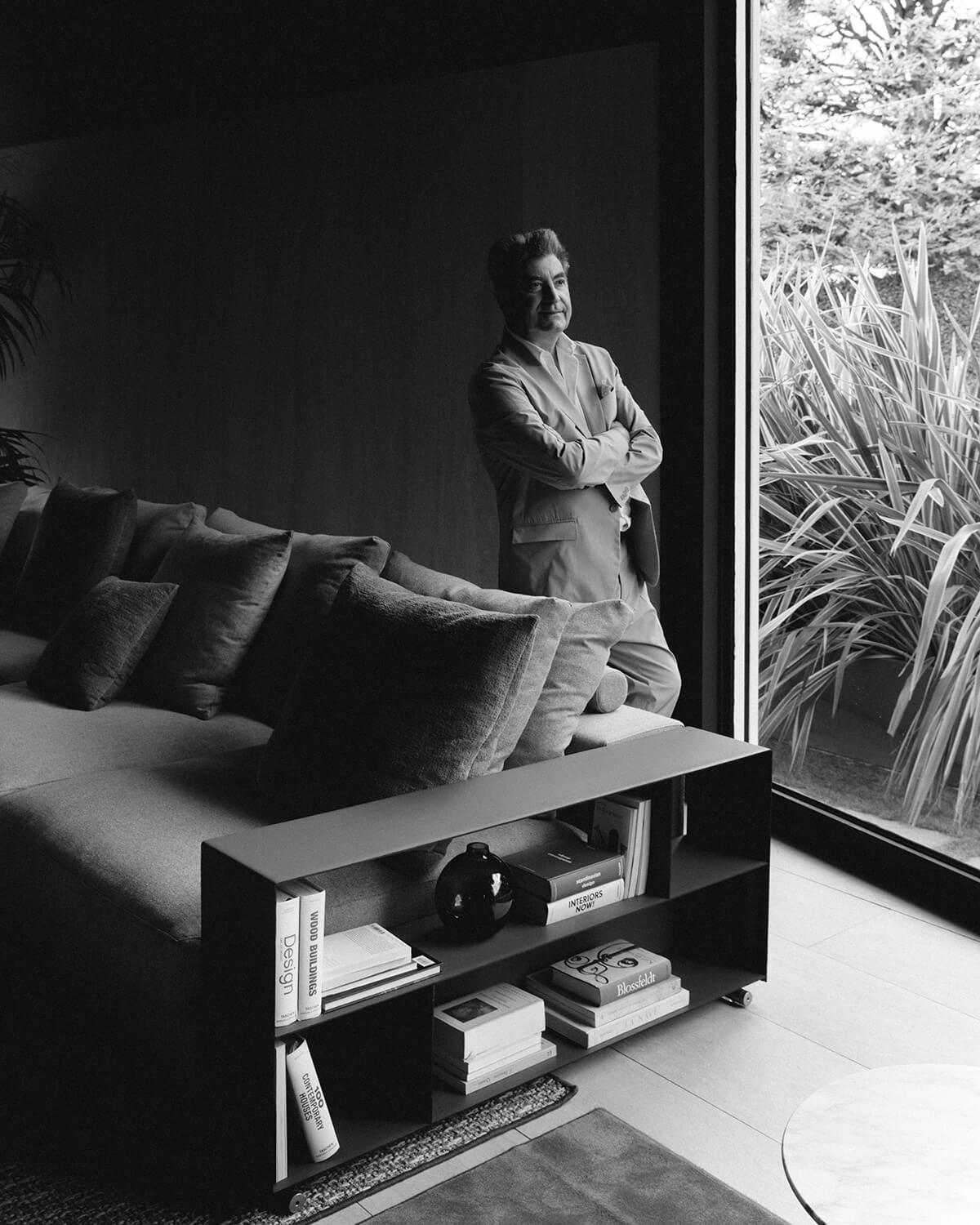

Over time, the collection has accrued a visual identity almost as distinctive as the design itself — one that has become an important part of its long-term success. Rather than relying on a single canonical image, the company commissioned photographers including Gabriele Basilico — who shot the sofa against the backdrop of Gio Ponti’s Pirelli Tower — Gianni Berengo Gardin, Maria Vittoria Backhaus and Pierpaolo Ferrari to reinterpret the collection through their own lens, ensuring its cultural relevance not only as a piece of furniture, but as an image in its own right.

While Groundpiece was originally designed to accommodate the lifestyle changes already underway in the early 2000s, the sofa feels like it could have easily been designed today. Its modularity, for one thing, has become almost a prerequisite for contemporary furnishings. This demand for flexibility has also meant individual pieces often need to do more than one job. To that end, metal shelving units upholstered or clad in cowhide do triple duty as arm and backrests — offering space to display books and other accessories — and can stand in as a side table, solidifying the sofa not just as a place to rest or watch TV, but to read, work, or even eat dinner.

In this way, Groundpiece becomes a room unto itself. Its universal design language allows it to sit comfortably within a wide range of interiors, embodying the clean lines, timeless quality and effortless luxury that have become the Flexform signature. Here’s to another 25 years — and then some.
This content was published by Azure on behalf of Flexform.
25 Years On, Flexform’s Groundpiece Sofa Is Relevant as Ever
When it was designed by Antonio Citterio back in 2001, the sofa-meets-storage system was ahead of its time — but it’s proven timeless.