
When the two buildings opened in 2014, the Ismaili Center and Aga Khan Museum introduced a global cultural hub into a seemingly mundane inner suburb of Toronto. Yet, the deeper beauty of Charles Correa and Fumihiko Maki’s designs lays in their quiet celebration of the eclectic, deeply cosmopolitan suburban life that has quietly shaped both the North York district and the broader urban region. 11 years later, architect Farshid Moussavi has accomplished a similar — and similarly contextually attuned — feat in Houston.
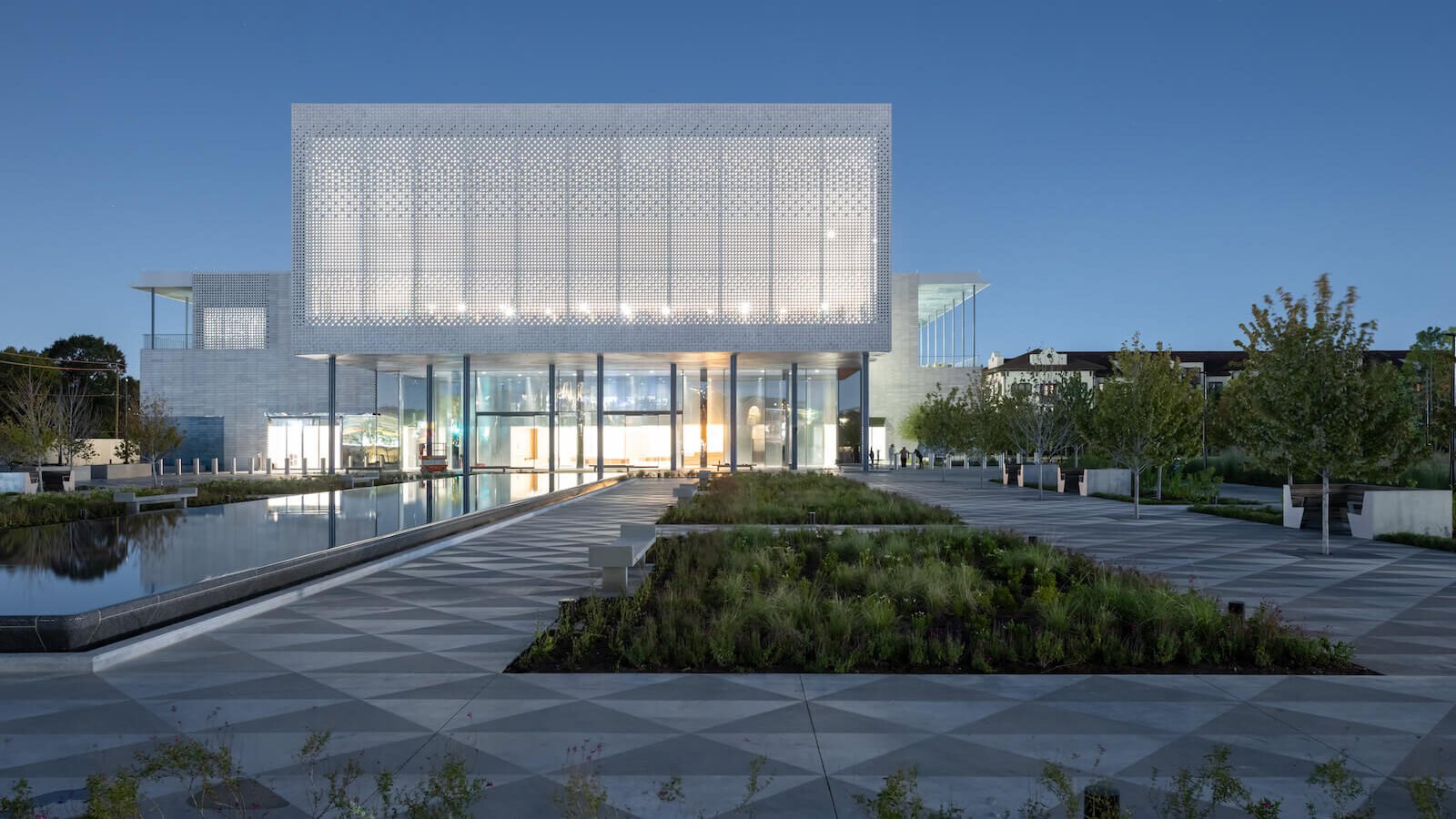
Overlooking the scenic Buffalo Bayou Park just outside the city’s downtown, the 4.5-hectare complex sits along Houston’s fast-developing Allen Parkway. Purchased under the purview of the late Aga Khan IV in 2006 and developed by his successor, His Highness Prince Rahim Aga Khan V, the site has been transformed into an intimate yet profoundly resonant cultural nexus. At the heart of the lot, Moussavi’s five-storey, almost 14,000-square-metre building conveys a graceful, lambent language of crisp geometries made intricately beautiful by the ethereal movement of light and shadow.
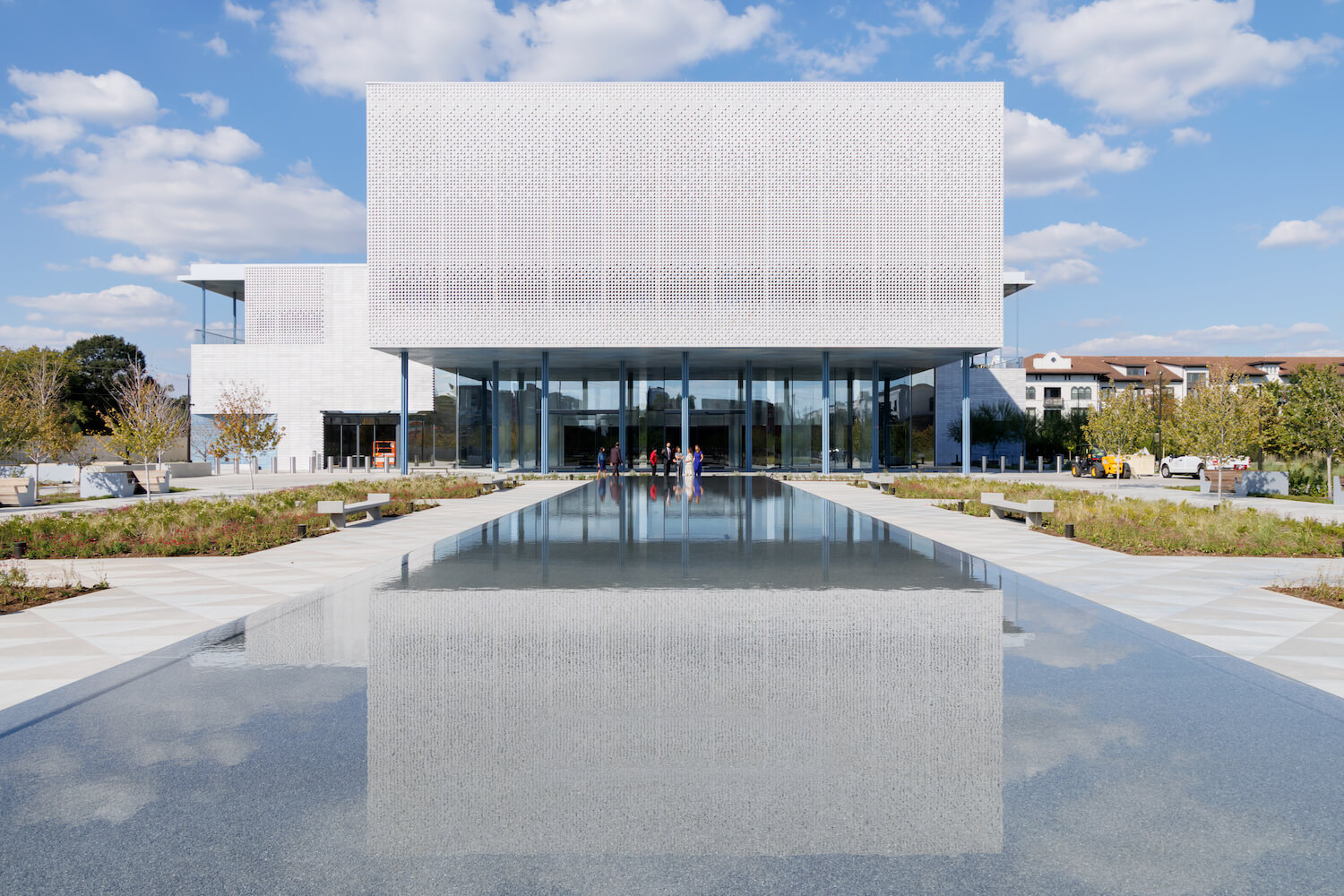
Designed in partnership with engineering firm AKT II and architect and engineer of record DLR Group (whose scope also included theatre design and sustainability oversight), the Ismaili Center Houston opened to the public in November. Emphasizing intuitive — and pleasantly shaded — gathering spaces, Houston’s Ismaili Center is designed to host a diverse program of art, music, performance and education. Rotating and permanent art galleries are paired with a black box theatre, as well as administrative offices. At the heart of the building, a traditional Ismaili Muslim Jamatkhana prayer hall (with capacity for up to 500 people) anchors the space.
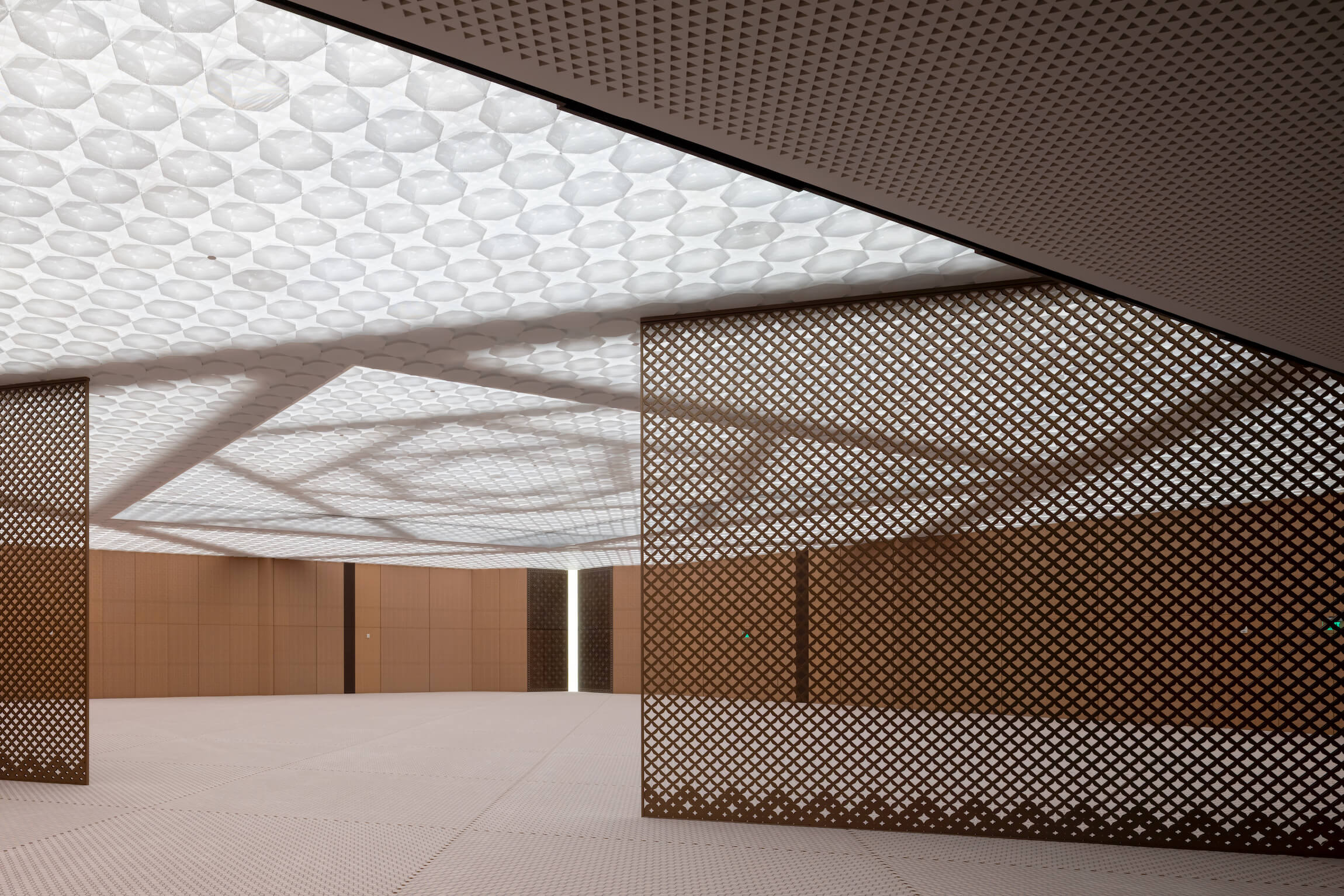
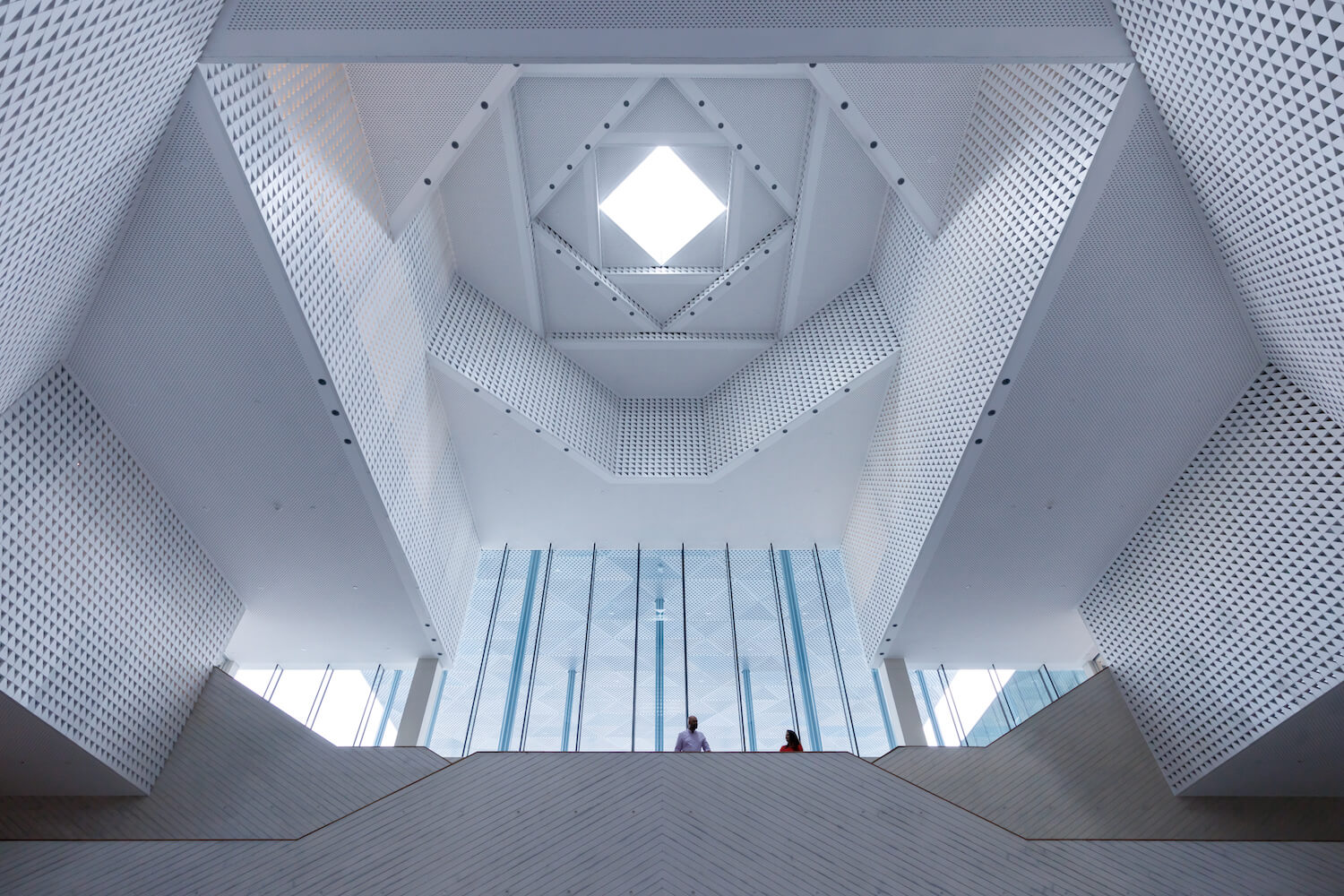
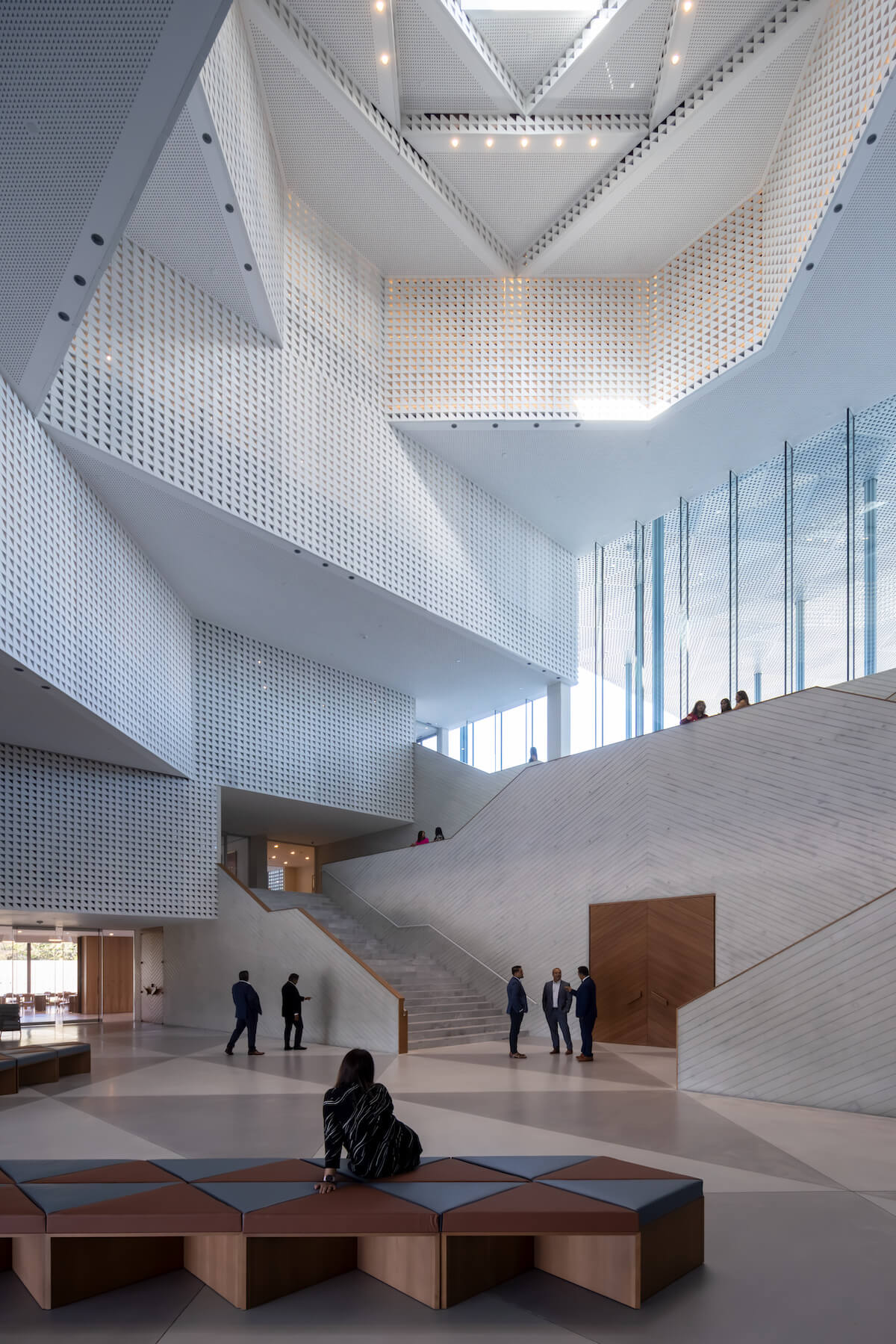
Here, a seemingly ethereal translucent ceiling draws the eye up to an exquisitely patterned fabric screen stretched over a constellation of LEDs. Meanwhile, an adjacent atrium creates a natural civic and social hub to complement the ceremonial function. Held up by heroically scaled composition of Vierendeel trusses, the atrium opens out to a dramatic oculus that floods the space with the light.
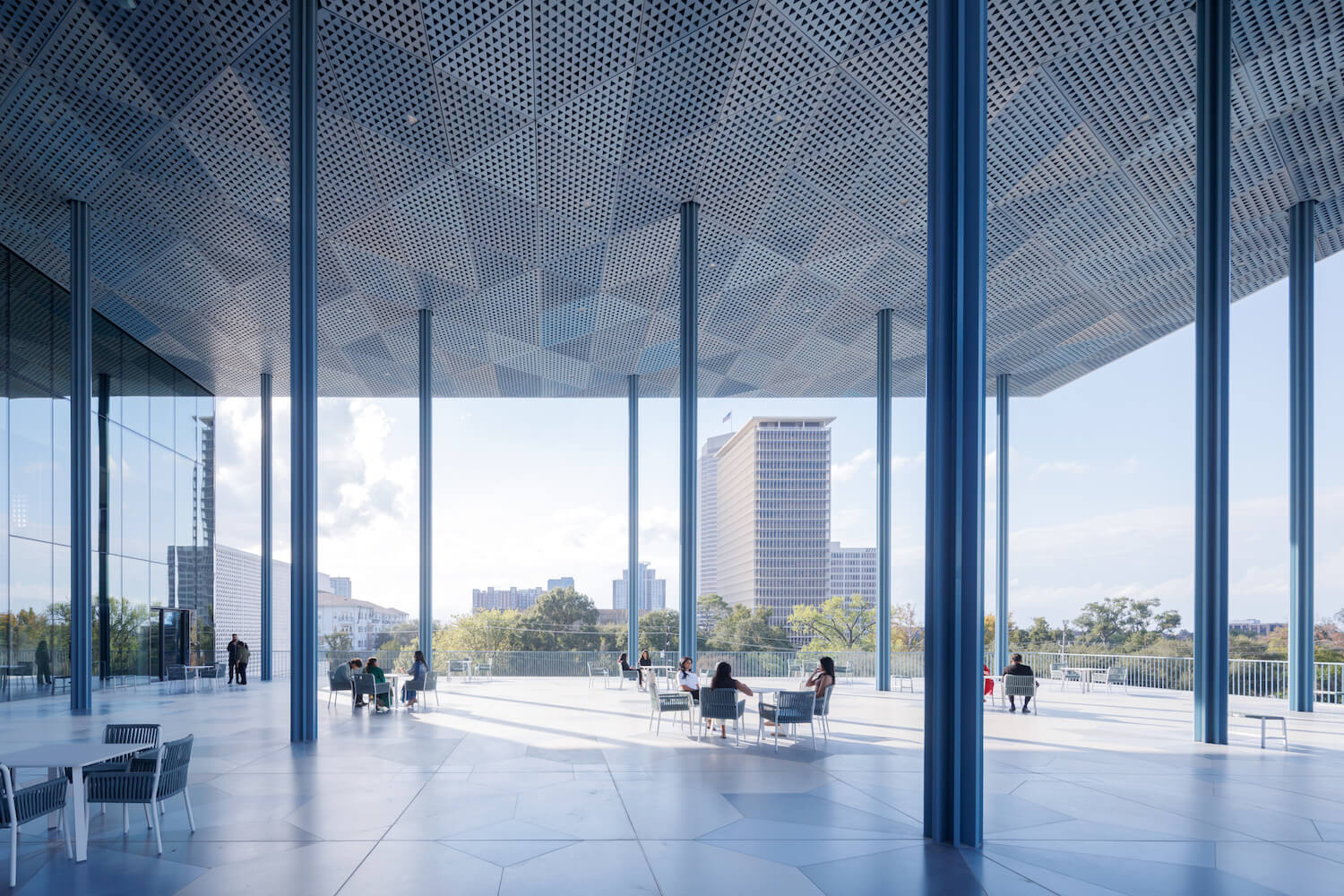
While the building reads as a rectilinear presence from afar, seeing the place up close yields a delightful play of pattern and ornament. Responding to Houston’s swampy climate, a series of open-column eivan verandas are carved out of the rationalist modernist form, creating a series of sheltered, naturally ventilated gathering spaces. Inspired by Persian architecture, the upper-story eivans nod to Ismaili heritage while creating an architectural language rooted in local context. Meeting the public realm, a broad porch translates the same spirit into a Texan vernacular.
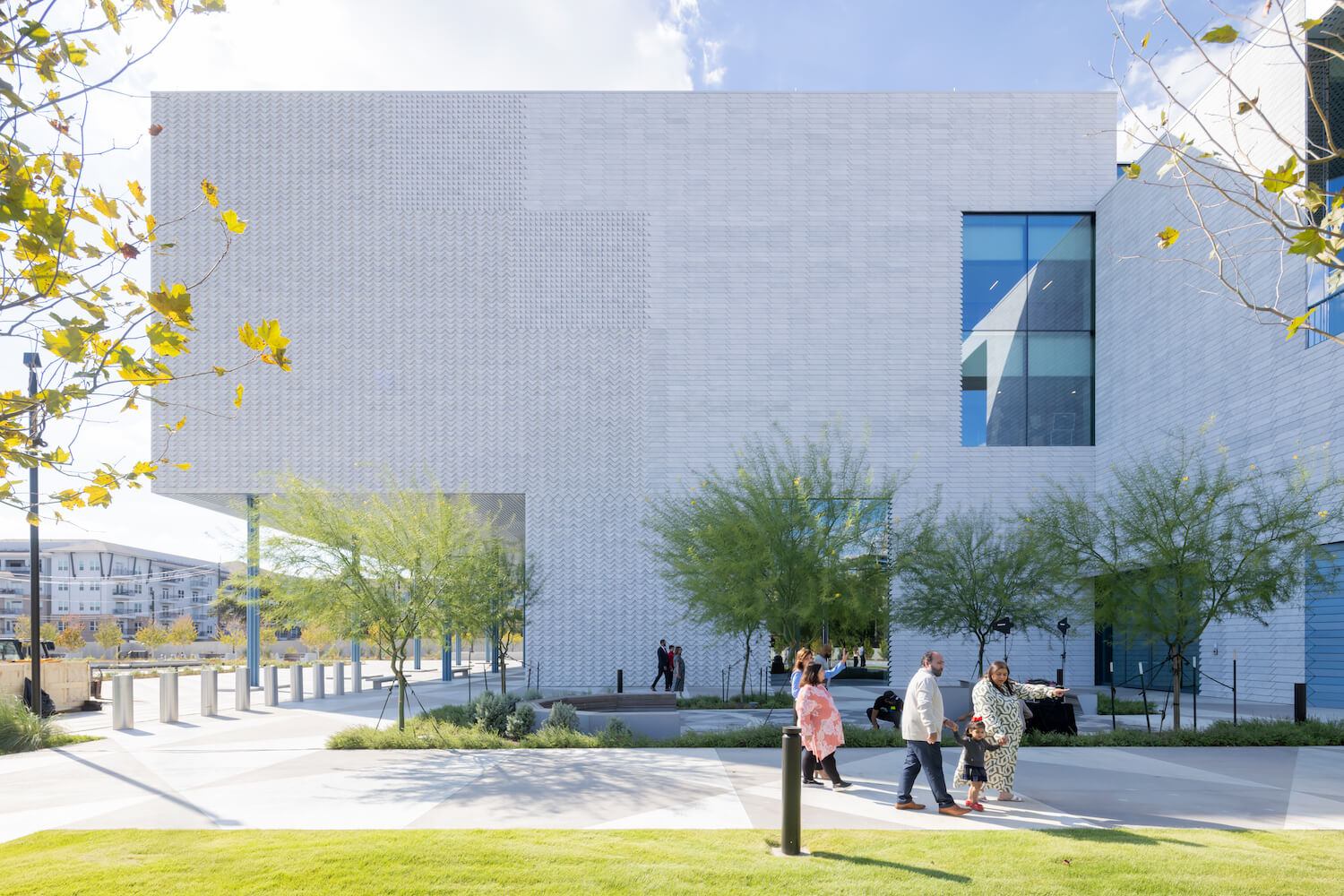
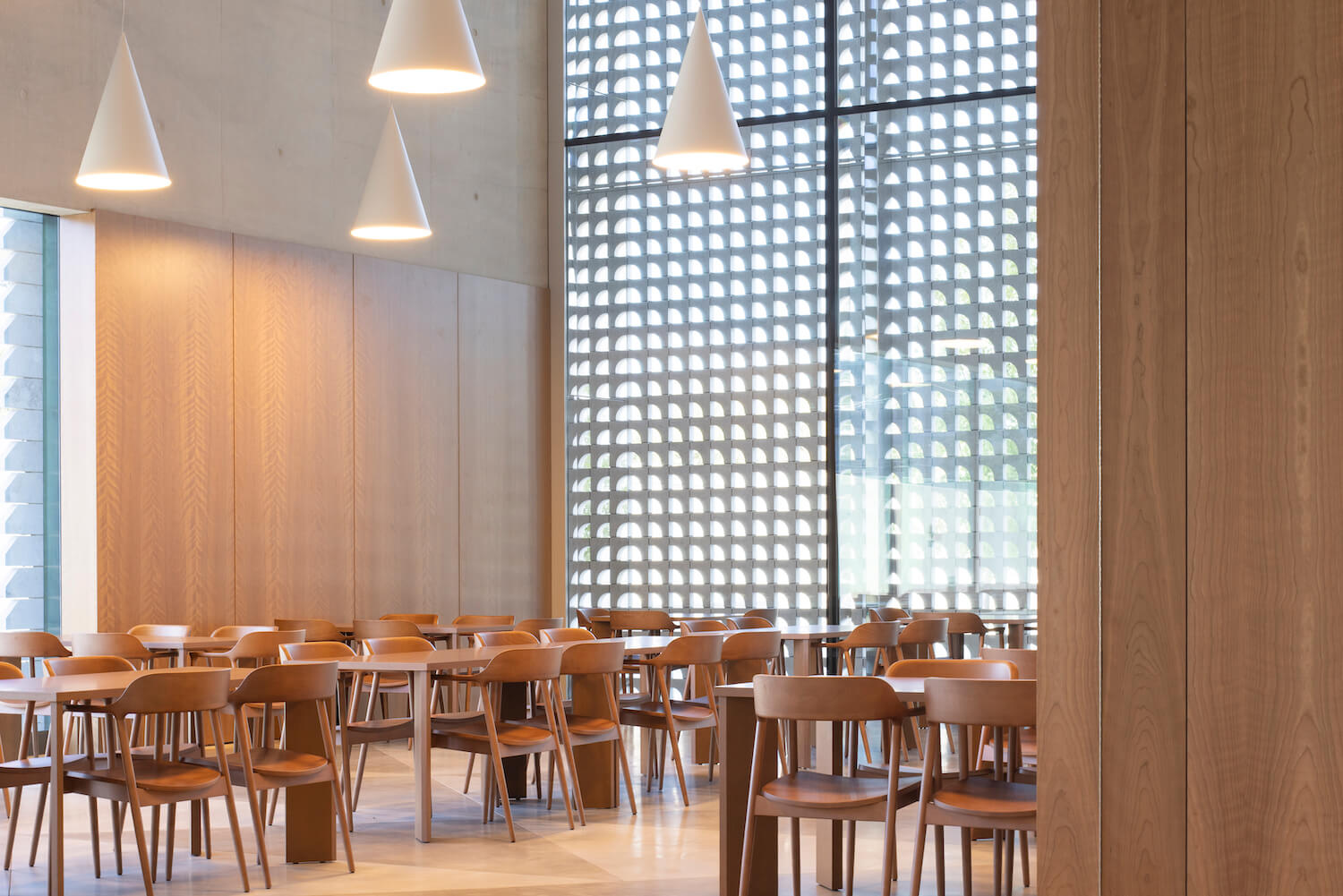
These civic spaces, indoors and out, also bring visitors into dialogue with the exquisite detail and ornament that shapes the rectilinear stone and concrete walls. An eclectic yet rigorously proportioned series of forms are carved into the walls, creating translucent, lantern-like rainscreen facades outside and elegantly filigreed screens in the interiors. Evoking traditional Islamic mashrabiya screens, the quiet variations of mostly triangular patterns gently delineate the building’s substantial body into a more human scale. From the rigid, unyielding stuff of concrete stone, Moussavi conveys the soft, intricately textured essence of rugs and tapestries, bringing a hint of home to an institutional setting.

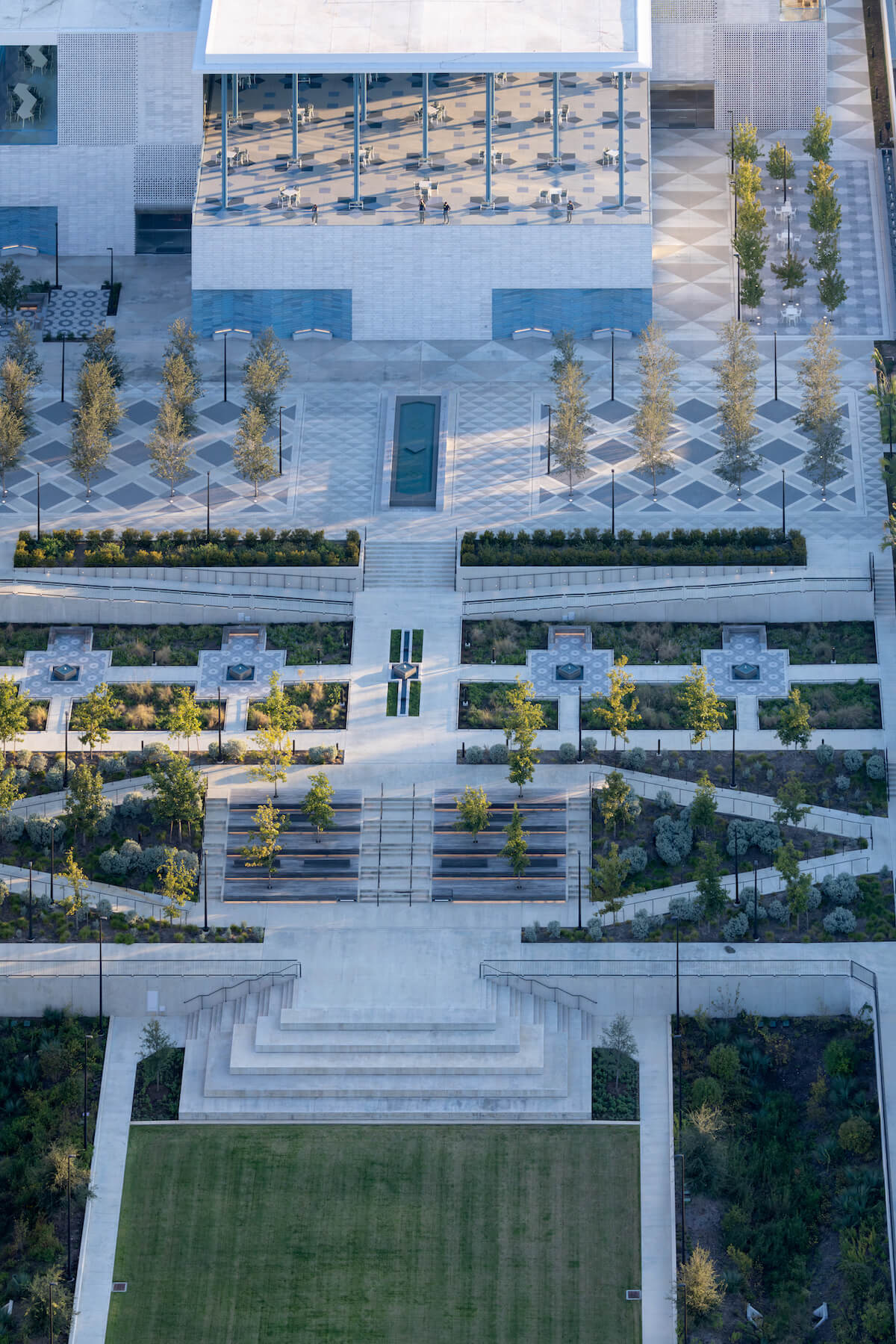
Framing it all, a sprawling (yet carefully proportioned) nine-acre landscape introduces tree-lined promenades, public gardens and a reflecting pool, with a design led by Nelson Byrd Woltz’s Thomas Woltz. A thoughtful emphasis on native plantings and shaded pedestrian walkways ensures a pleasant — and deeply local — sense of place. A massive yet welcoming lawn can accommodate up to 1,000 people for performances, celebrations and community events.
It all makes for a universally welcoming yet distinctly Ismaili hub. Like its counterparts in Toronto, Vancouver, London, Lisbon, Dubai and Dushanbe, Houston’s new Ismaili Center proudly conveys both cultural specificity and cosmopolitanism. From the eclectic community-driven program to the emphasis on comfort and gathering, the place is a beacon that reflects the profoundly multi-cultural character of one of the world’s most diverse cities.
As His Highness Prince Rahim Aga Khan V put it, the civic nature is foundational to the philosophy. “This building may be called an Ismaili Center, but it is not here for Ismailis only. It is for all Houstonians to use; a place open to all who seek knowledge, reflection, and dialogue.” Whether on an eivan or front porch, it feels like the heart of Houston.
Houston’s Ismaili Center Embodies the Beauty of Pluralism
Farshid Moussavi’s soaring achievement celebrates the cultural heritage of Islamic life and Texan multiculturalism in equal measure.