
As I walk through Toronto’s Wychwood Park on a rainy fall day, the tree-lined streets look like something out of a fairy tale. This hidden enclave is one of the city’s best-kept secrets, filled with charming cottage-style homes that could just as easily have been plucked from the English countryside. Despite being steps from major thoroughfares, it’s still and quiet. For a moment, you might forget that you’re in the city at all. In the early 20th century, the picturesque community was founded as an artists’ colony by British-born Canadian landscape painter Marmaduke Matthews, who was no doubt inspired by the lush ravine setting. It’s only fitting, then, that I’m headed to prolific art collector Kenneth Montague’s home.
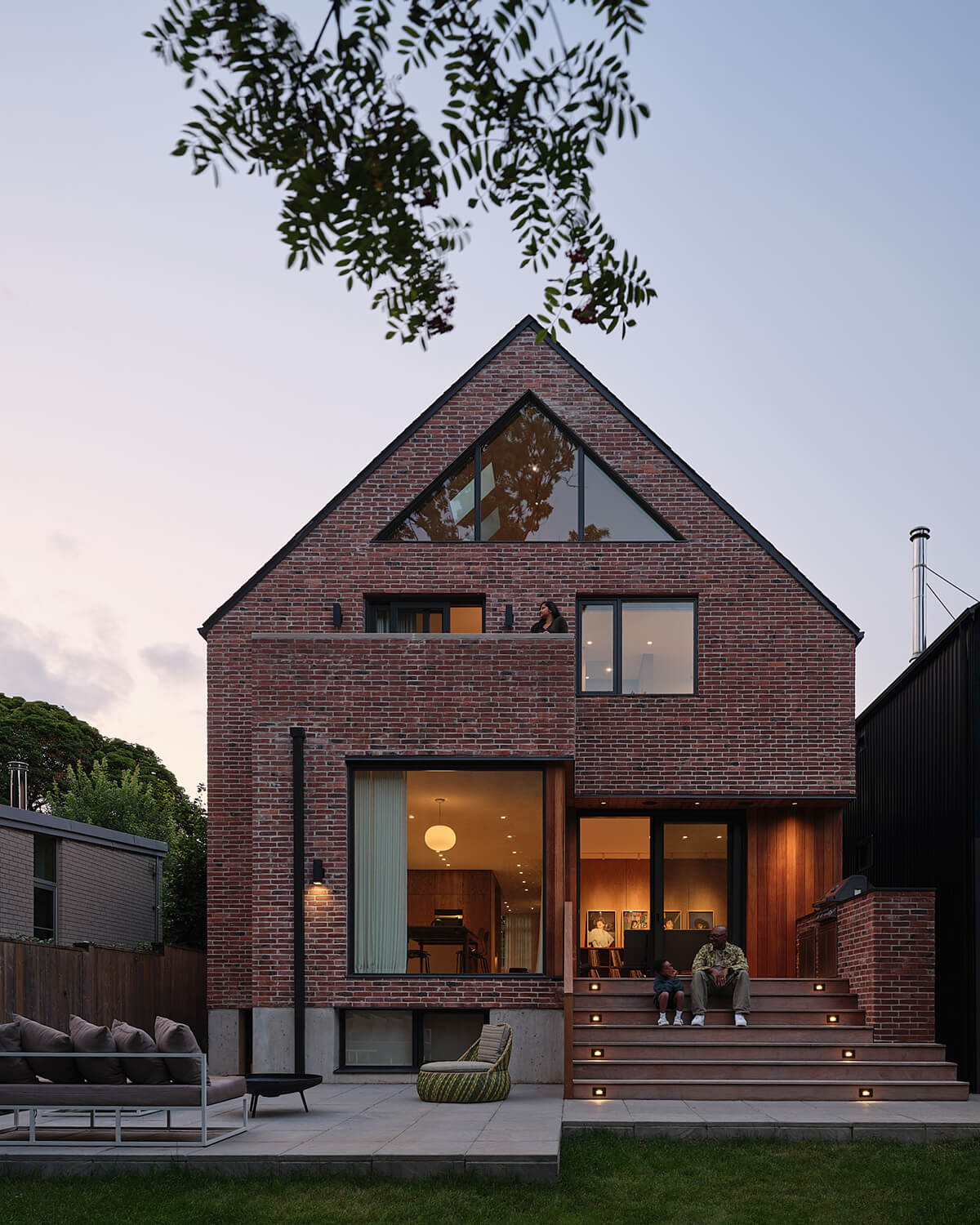
From the exterior, the 483-square-metre, two-storey house, originally designed by Eden Smith in 1919, has many markings of the neighbourhood’s signature arts and crafts style: the gabled roof, the prominent chimney, the facade draped in ivy. I ring the bell, and Montague’s older son greets me at the door — then
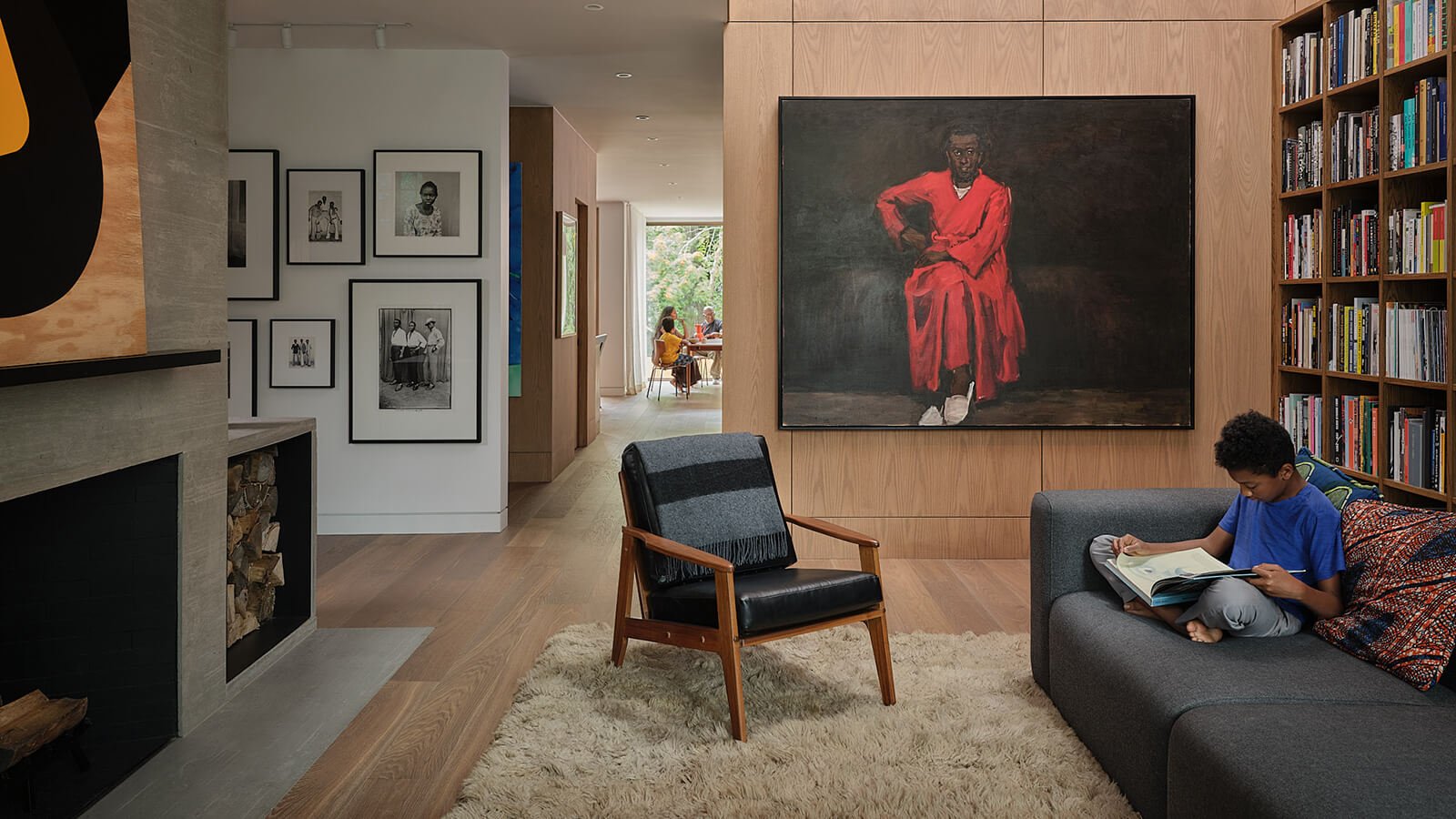
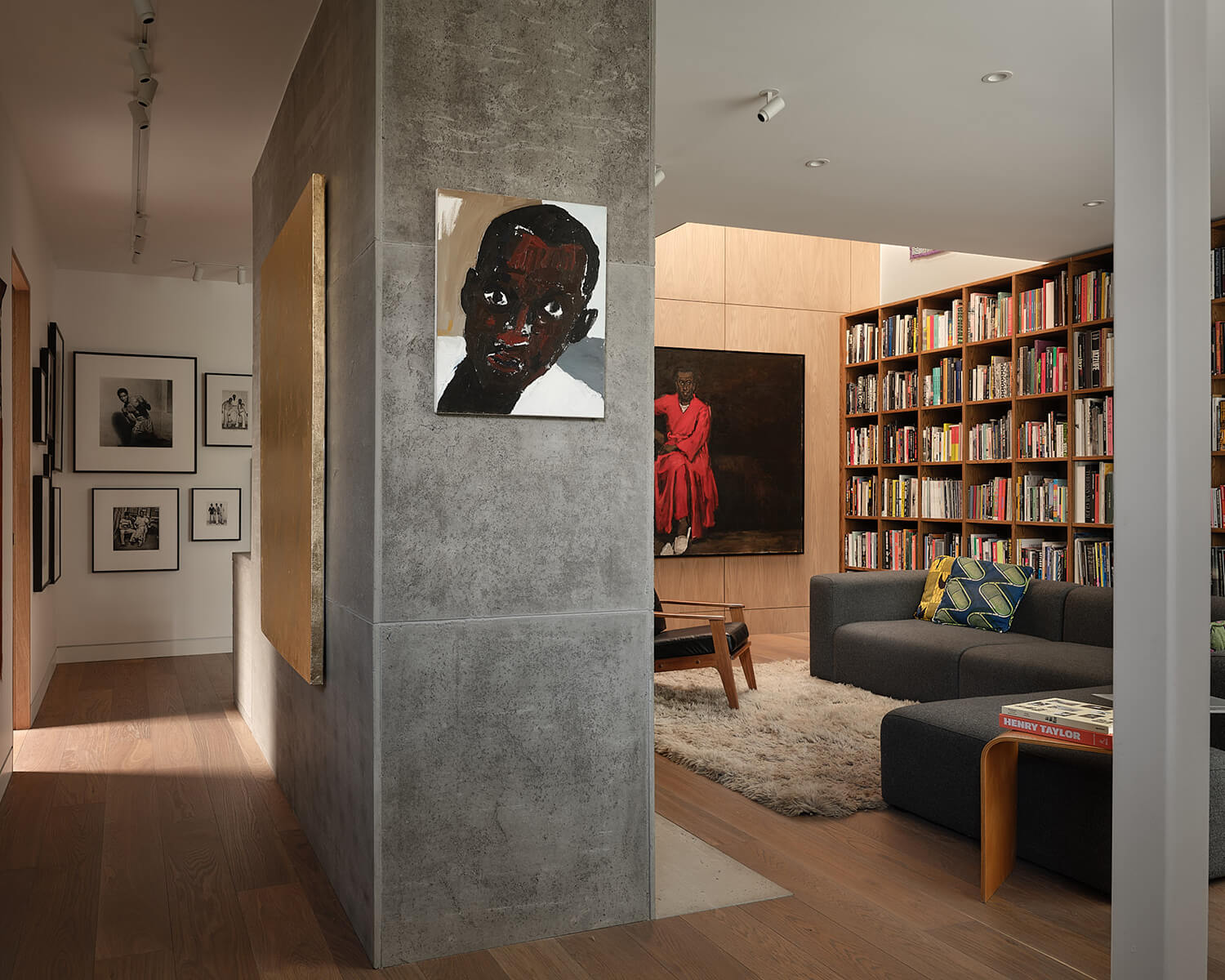
scurries off to find his parents. Standing in the foyer, I can’t help but admire the art. A portrait affixed to the concrete-clad fireplace stares back at me, a gateway to the cozy library beyond. It still smells a little like smoke from the fire they lit earlier that day. But, truthfully, the first thing I notice is the cluster of shoes, large and small, gathered by the bench at the door. This is not a museum, I’m reminded, where you’re afraid to touch anything or to sit down. Real life happens here.
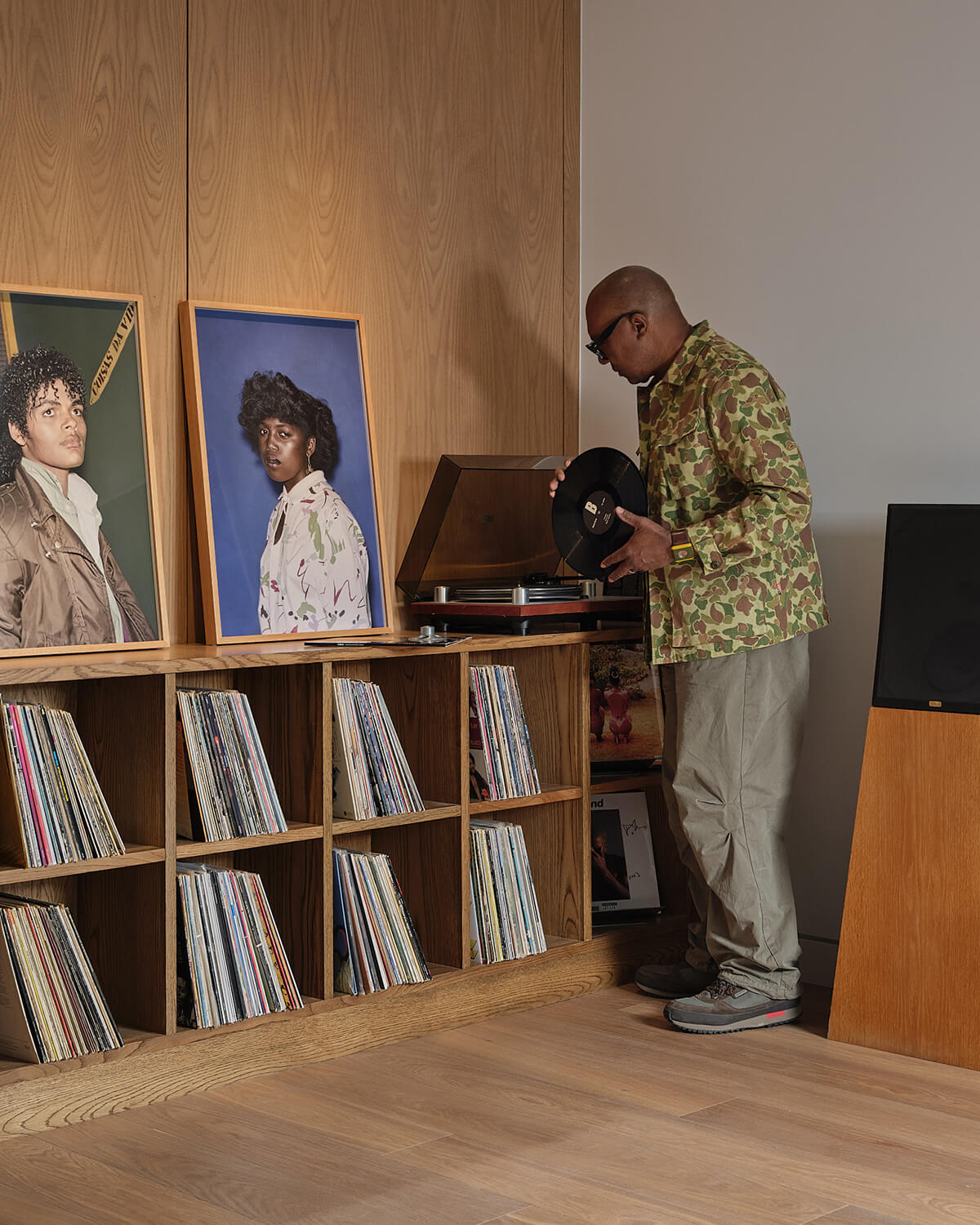
Montague’s wife, visual artist and educator Sarah Aranha, welcomes me back into the open-concept living–dining space — the heart of the home. The kettle is on, and so is the vintage turntable. Montague gestures for me to pull up a chair at the dining table. “We were living in Roncesvalles for the past 13 years,” he says. “Loft living is great, and we thought we’d stay longer. But having the kids, it was important for them to have a backyard — so it came time to move.”
A dentist by trade, Montague met the architect of his new home in an unlikely place: his clinic. Tura Cousins Wilson, one-half of local firm Studio of Contemporary Architecture (SOCA), was a patient of his, and they instantly bonded over a shared love of art and design. It was a match made in heaven.
So began the search for the perfect home to set down roots. The Eden Smith house had beautiful bones but had suffered significant flood damage. Save for the front facade and artist studio, it was a full gut job, with an addition at the back of the home. And while little of the original remains, the interior brims with history in myriad other ways.

Look no further than the three primary-hued prints that hang in the kitchen. They are by none other than Alexander Calder, a friend of Montague’s aunt, who had commissioned them as a fundraiser for her civil rights organization. The pieces, part of a set of 10, were some of the first Montague ever owned. But his affinity for collecting began long before that; at age seven, he started with an eclectic mix of salt and pepper shakers, which are lovingly displayed on open shelving behind the dining table. Elsewhere, in the family room, a low-slung built-in hosts Montague’s extensive record collection and is topped with a series of 1980s-era portraits by Brazilian photographer Afonso Pimenta. “My kids may not become art collectors, they may not be musicians, but they’re going to have an appreciation for the arts,” he says, smiling. Montague’s family heritage also features strongly in the interior. His father, an industrial arts teacher who completed his graduate work in Detroit with some of the masters of mid-century modern design, made much of the furniture throughout the home — his flavour of modernist design is rendered in Caribbean woods like lignum vitae and mahogany.
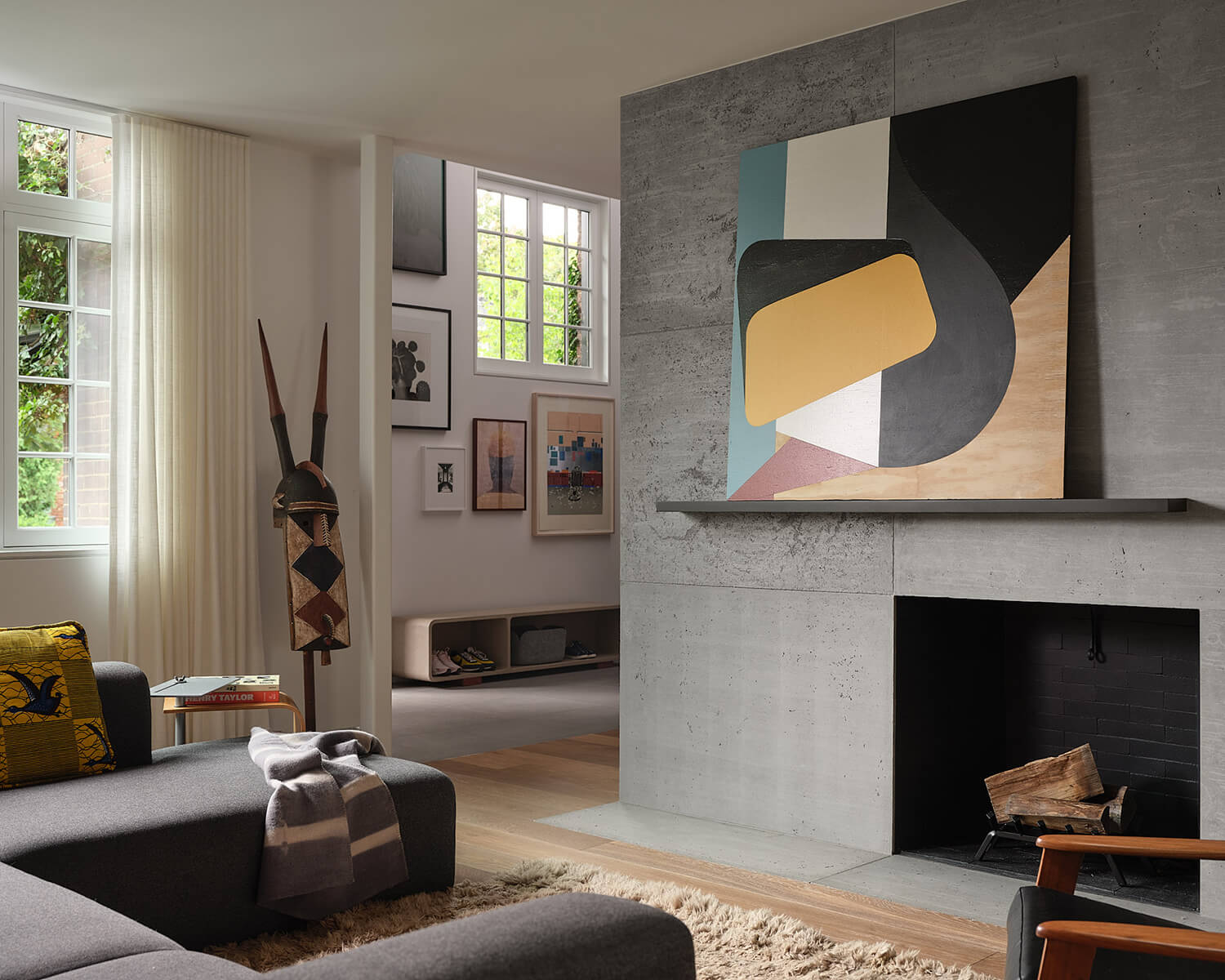
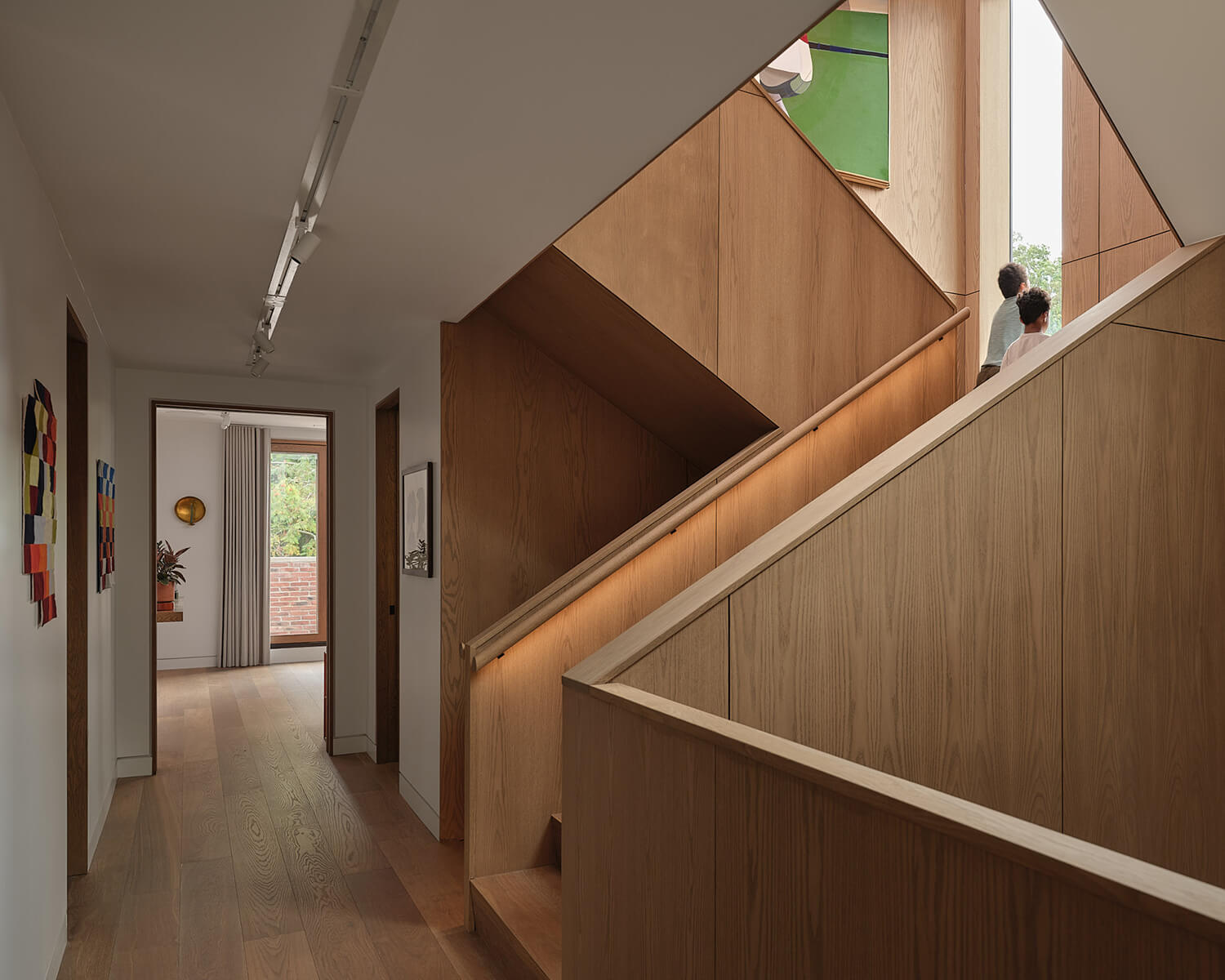
“The architecture was really just a backdrop for all of this,” Cousins Wilson explains. “From the beginning, we talked about it not being over the top,” Montague continues. “The kids, the family, the music — that stuff’s going to bring the colour.” To that end, the home is grounded in a neutral palette: warm wood millwork that references the old oak of the original home balanced against crisp white walls and a concrete fireplace that adds an unexpectedly contemporary vibe to the library, whose back wall is lined with hundreds of art books. At the centre of the home, the wooden staircase is a quiet showpiece.
Flipping the typical order of operations, Cousins Wilson designed the space to truly serve the art. This informed not only the spatial planning but also the logistics of maintaining a rotating collection. The windows have rolling blinds to protect the art from the afternoon sun, and track lighting around the home will allow flexibility to move pieces around as needed.
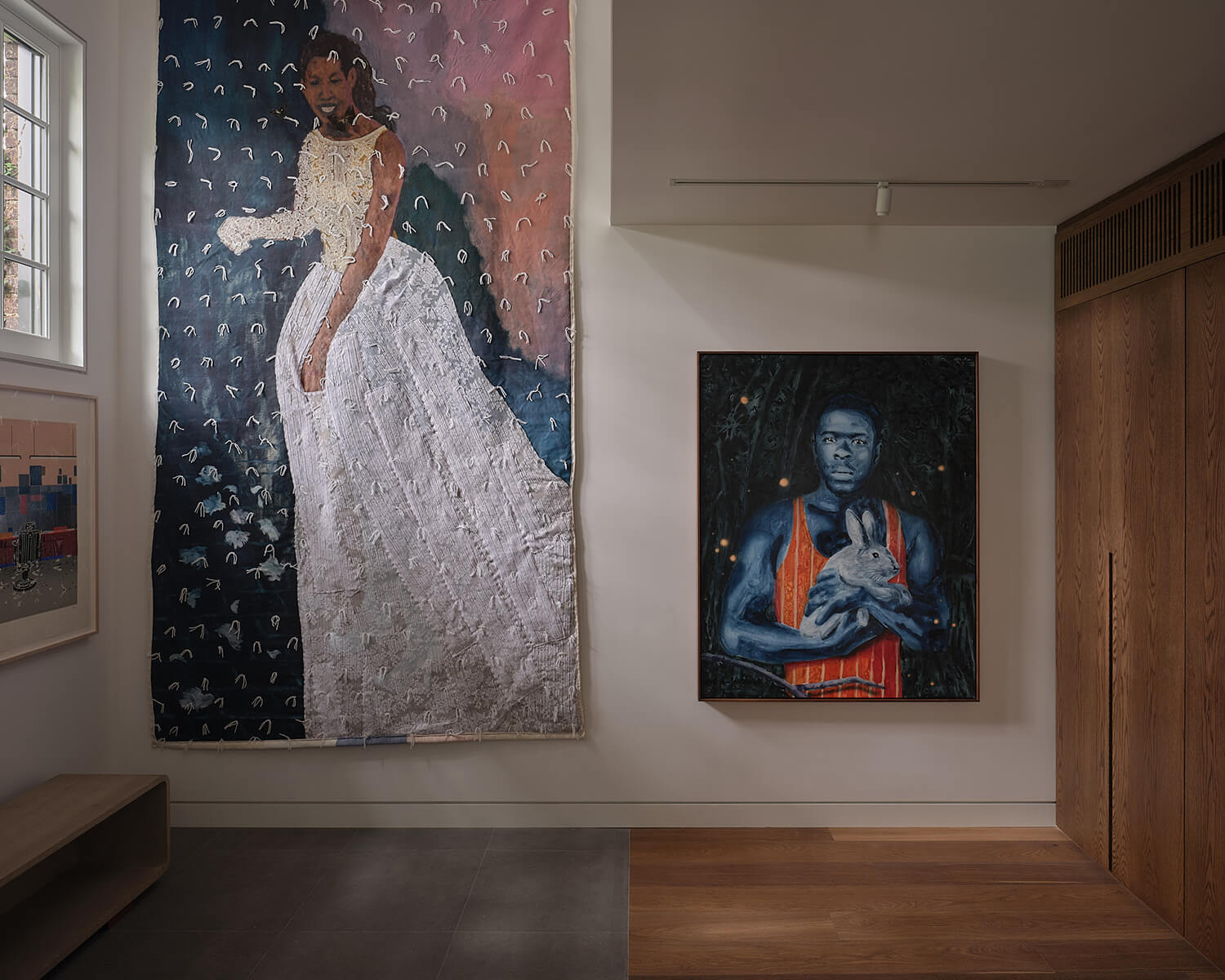
Each room has its own curatorial focus. The mudroom features self-taught Jamaican artists. The foyer, meanwhile, feels like a gallery all its own: A series of hairstyles, all shown from the back, climb up the double-height front elevation as if the figures are facing the street. “The storytelling here is about keeping
a little something for yourself, like the way Miles Davis would play with his back to the crowd,” Montague explains. To the right, a massive textile work by Preston Pavlis commands the room: It depicts a woman dressed in white lace and dotted with epoxied butterflies.
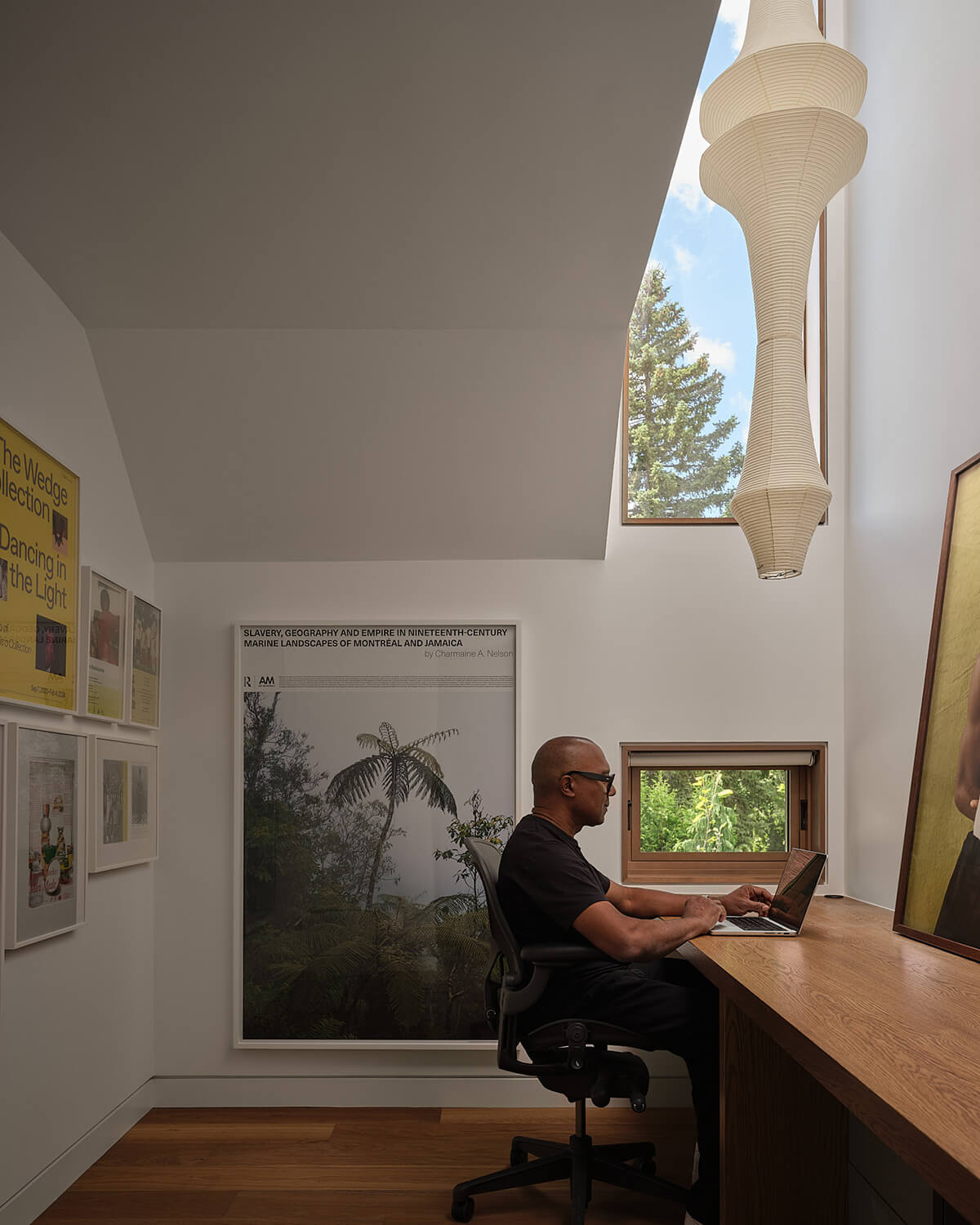
For most clients, having such masterpieces in a home with children running around would be out of the question — but not the Montague Aranhas. “My younger son did all of this,” Aranha says, pointing to the wall of his upstairs bedroom, covered in drawings. “He chose a couple of artworks that he wanted, and Ken did the rest. We wanted a house where you can appreciate art, but we’re not precious about any of the stuff in it.” Their older son’s bedroom, meanwhile, boasts an internal window facing the foyer, letting in natural light while giving him a view of the artworks on display. Aranha’s art studio, once used by the home’s previous owner, painter Philippa Hunter, overlooks a landscape straight out of the Group of Seven, droopy pines and all. And above this space, the attic’s expansive triangular window frames the perfect backdrop for fitness and meditation sessions. From another internal window in the attic, we see Montague taking a call from his office. These moments are less about architectural gymnastics and more about creating new and unexpected perspectives.
There is a generosity to the Montague House, not just in terms of scale or the fact that it’s designed to open up to the city’s larger art community, but in the way it makes space for family and the things that are meaningful to them. “A project is a success when the clients are happy,” says Cousins Wilson. “But I would live here, and that’s my benchmark of a successful project to some degree.”
The Art of Living: Inside Kenneth Montague’s Family Home and Gallery
The art collector’s Toronto home may serve as a gallery for the Wedge Collection — one of Canada’s largest collections of emerging Black artists — but it’s a space for family first and foremost.