
The beachside town of Cadaqués, in Costa Brava of Girona, Spain has inspired locals and tourists for generations. Salvador Dalì made his home in a transformed fisherman’s hut nearby and the town inspired his surrealist works, which are now on display in his house-workshop that today welcomes visitors in its new guise as an art museum. Its hidden bays, replete with fishing boats – manned by the historic Confraria de Pescadors de Cadaqués – and whitewashed buildings are the stuff of dreams.
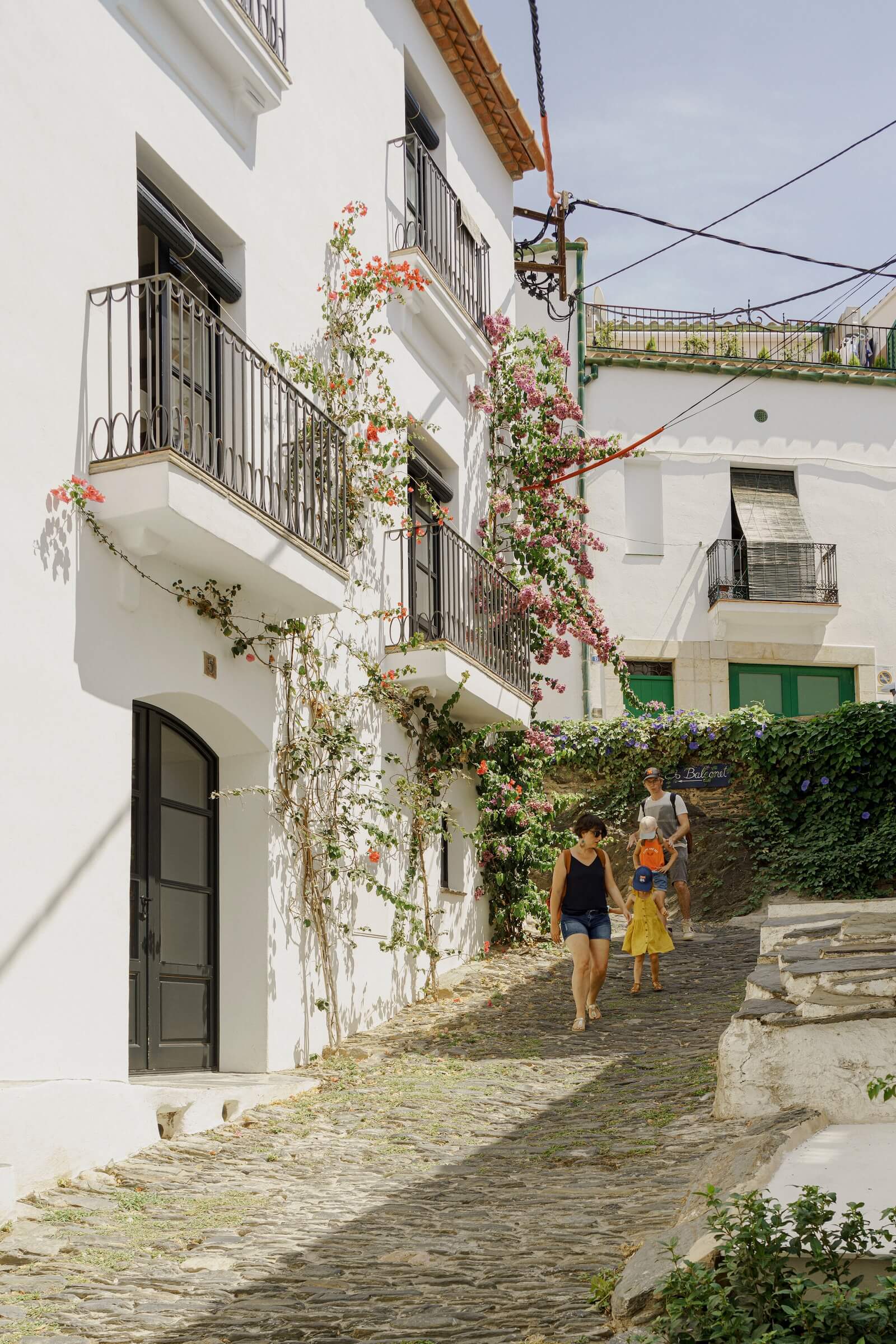
One of those whitewashed buildings was the setting for a recent project by Barcelona-based architects Bea Portabella and Jordi Pagès Ramon. They were called upon by the owner of a former fisherman’s home (whose past lives also include a guesthouse and Civil Guard outpost) to renovate and modernize the property. “The challenge was not only to restore its structure but also — as requested by the owner — to preserve the unique atmosphere that defined it, updating it without losing its soul,” the architects explain in their press release.
The home’s facade and original structure, built with 50-centimetre-thick load-bearing stone walls, were obvious foci for preservation. The architects ensured that from the outside, the building seemed untouched, just as much a part of the everyday fabric of the street as it always has been.
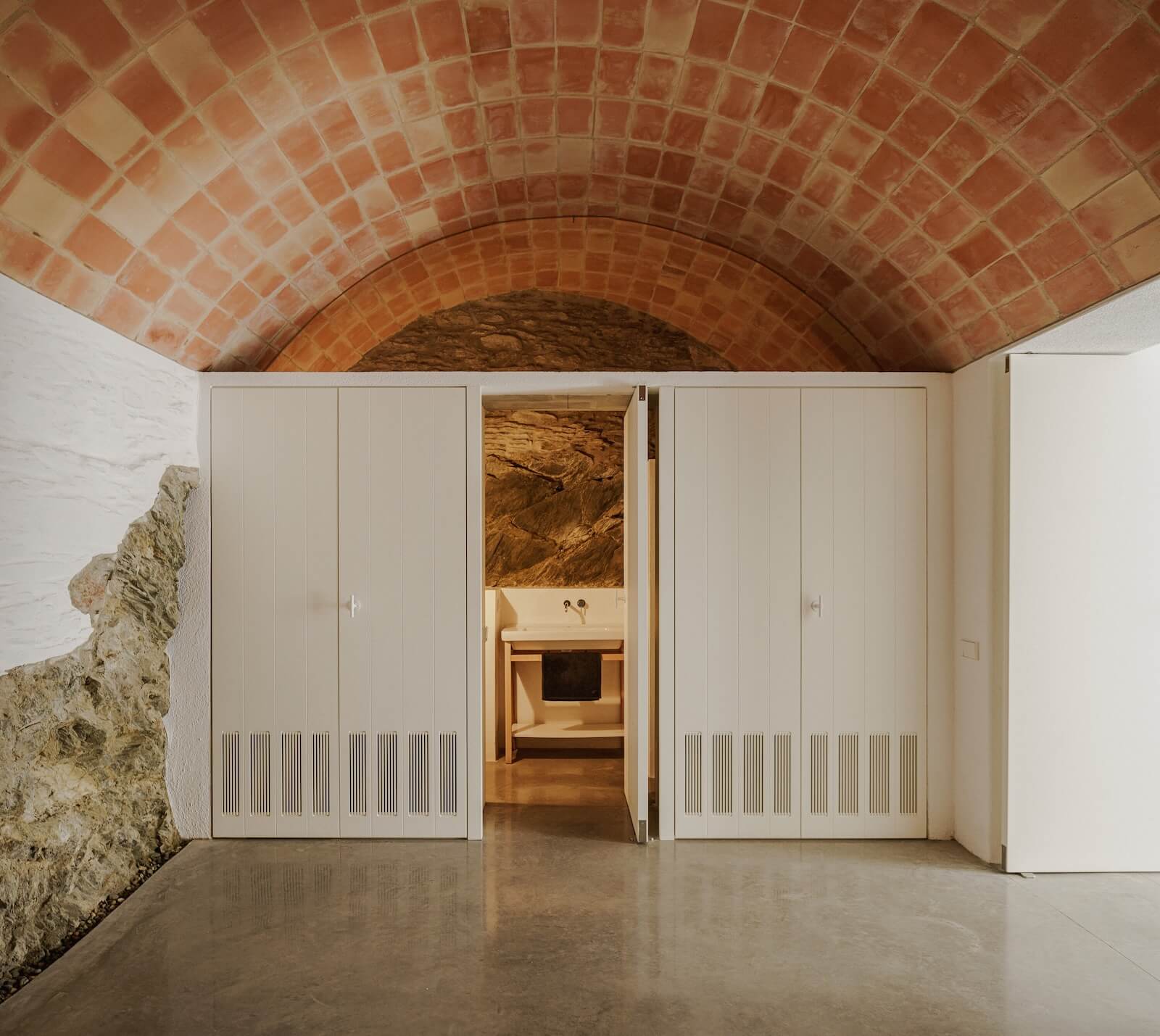
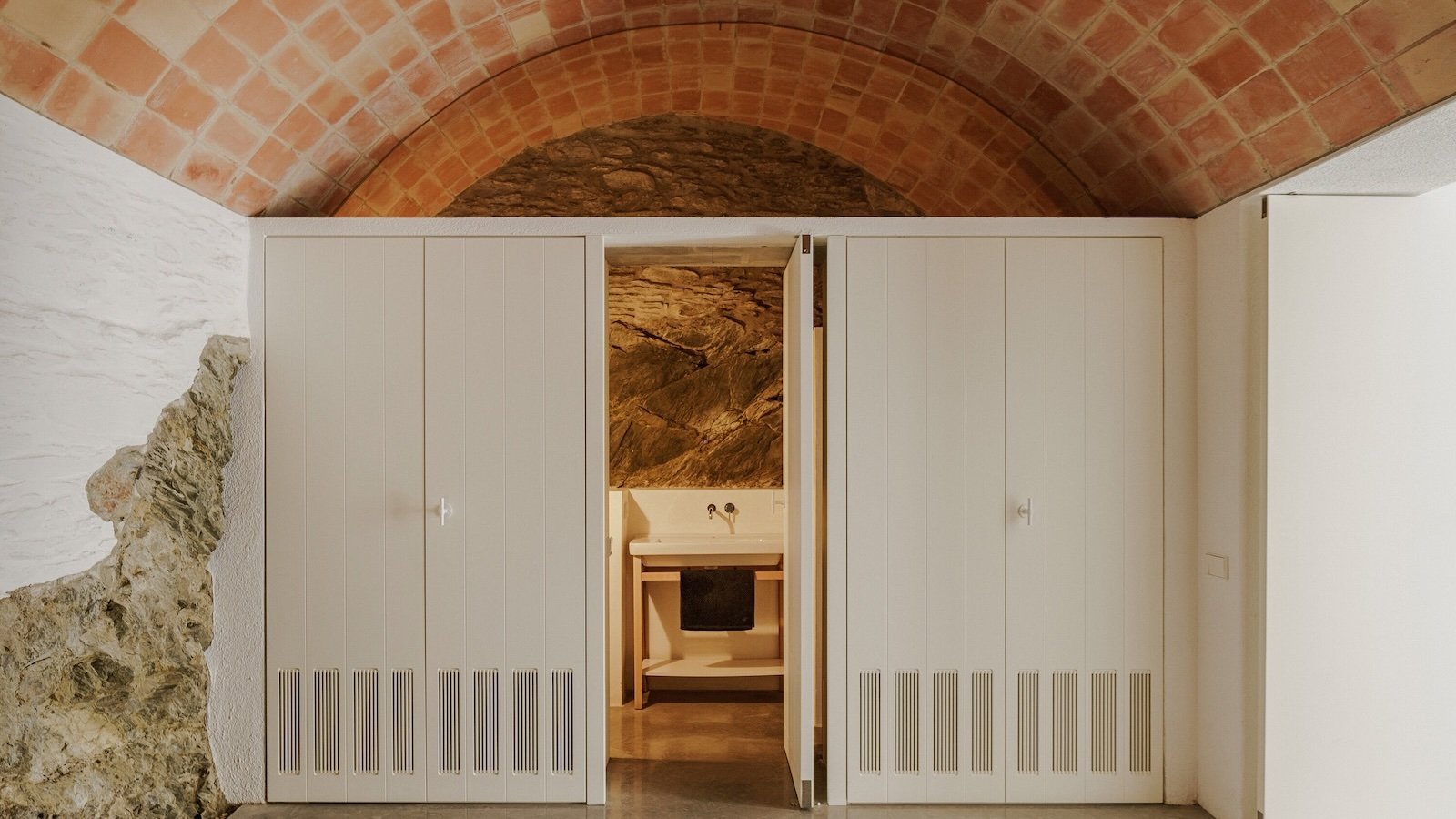
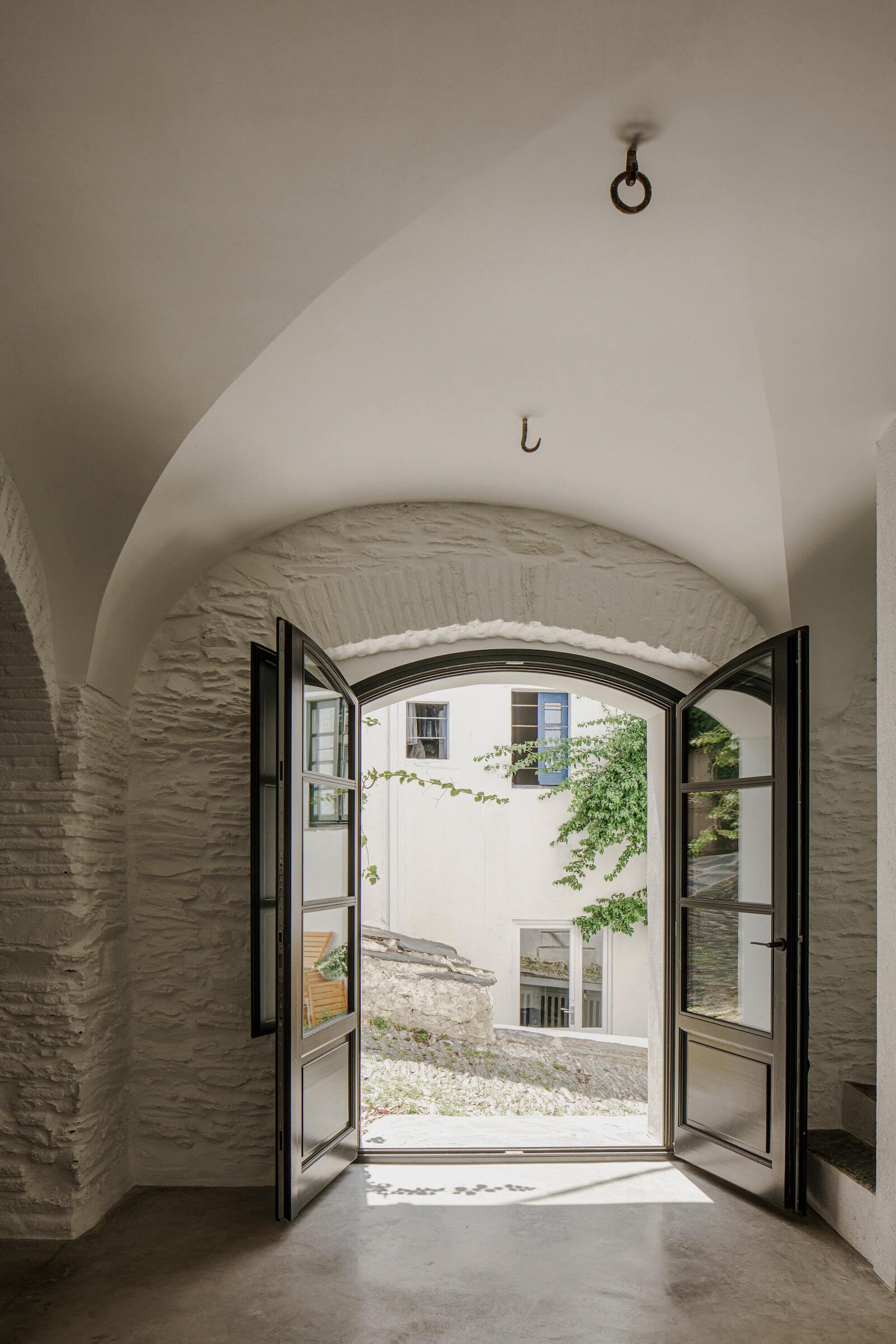
Inside, the building’s bones, including a Catalan vaulted ceiling on the ground floor and timber-beam ceilings elsewhere, were also respected. The architects emphasized the home’s robust structure, exposing the rough textures of the load-bearing walls in glimpses through their intervention. Against this historic backdrop, the architects introduced a modern language that glories in the juxtaposition between old and new across all four levels of the home.
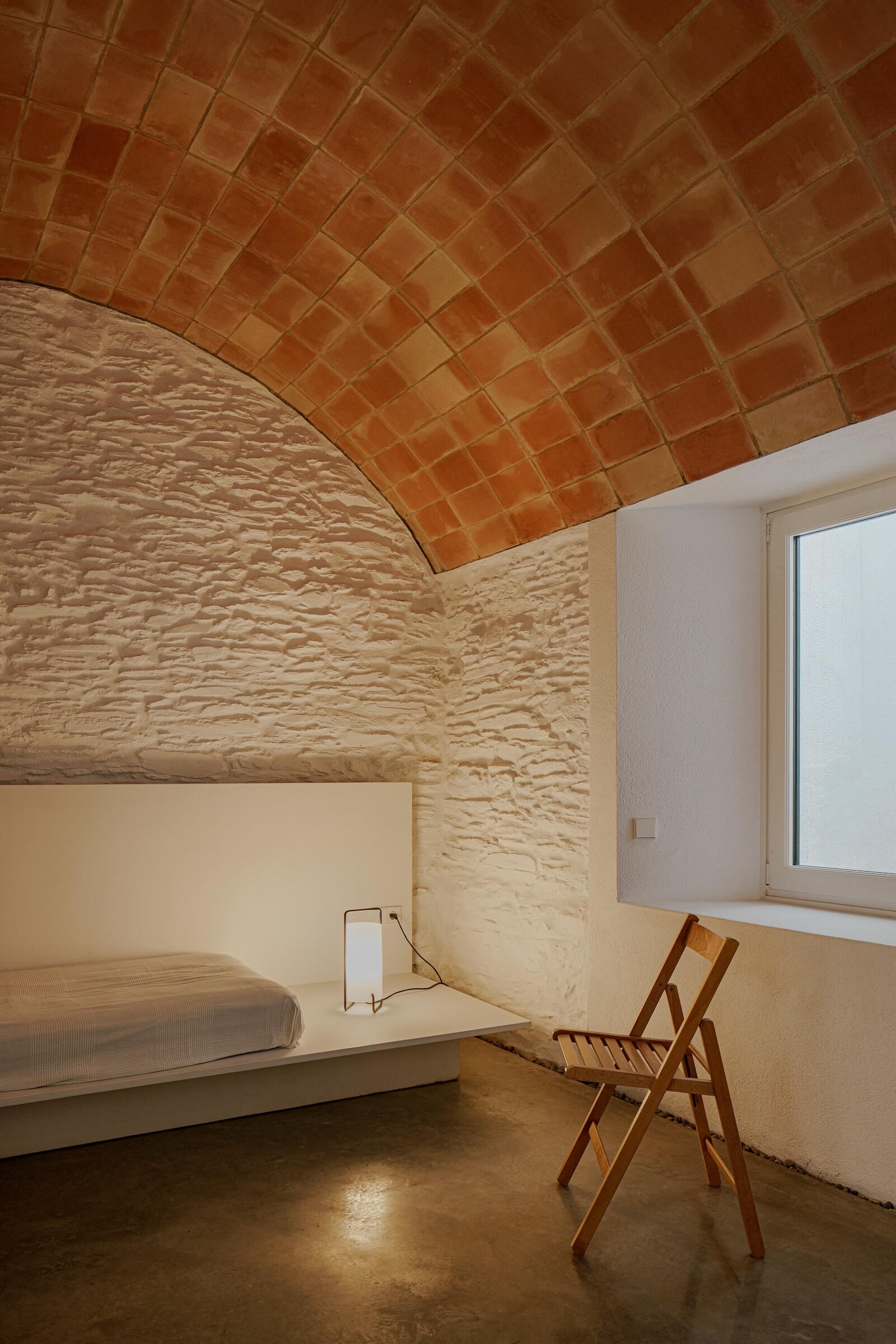
The vaulted ceilinged ground floor was conceived as a flexible space: “It can serve as a play area for children or as storage for nautical equipment,” the architects explain. They added a small patio just off this area that brings in natural light and ventilation.
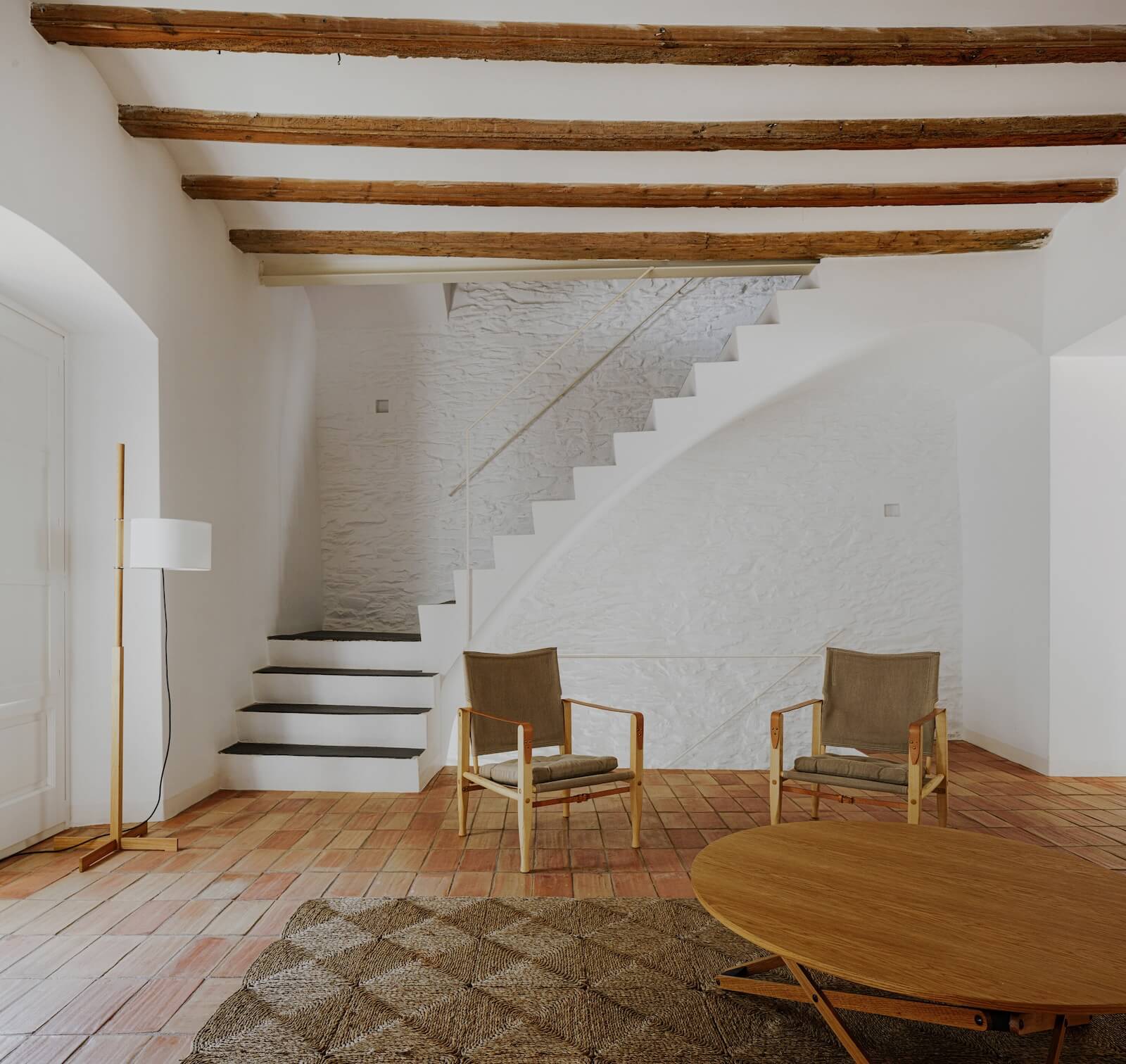
On the “first floor” (what we’d consider the second level), the design team introduced the social areas of kitchen, dining room, and living room. And the second floor houses the bedrooms and bathrooms, while the third tier is a terrace that crowns the home with views of the sea.
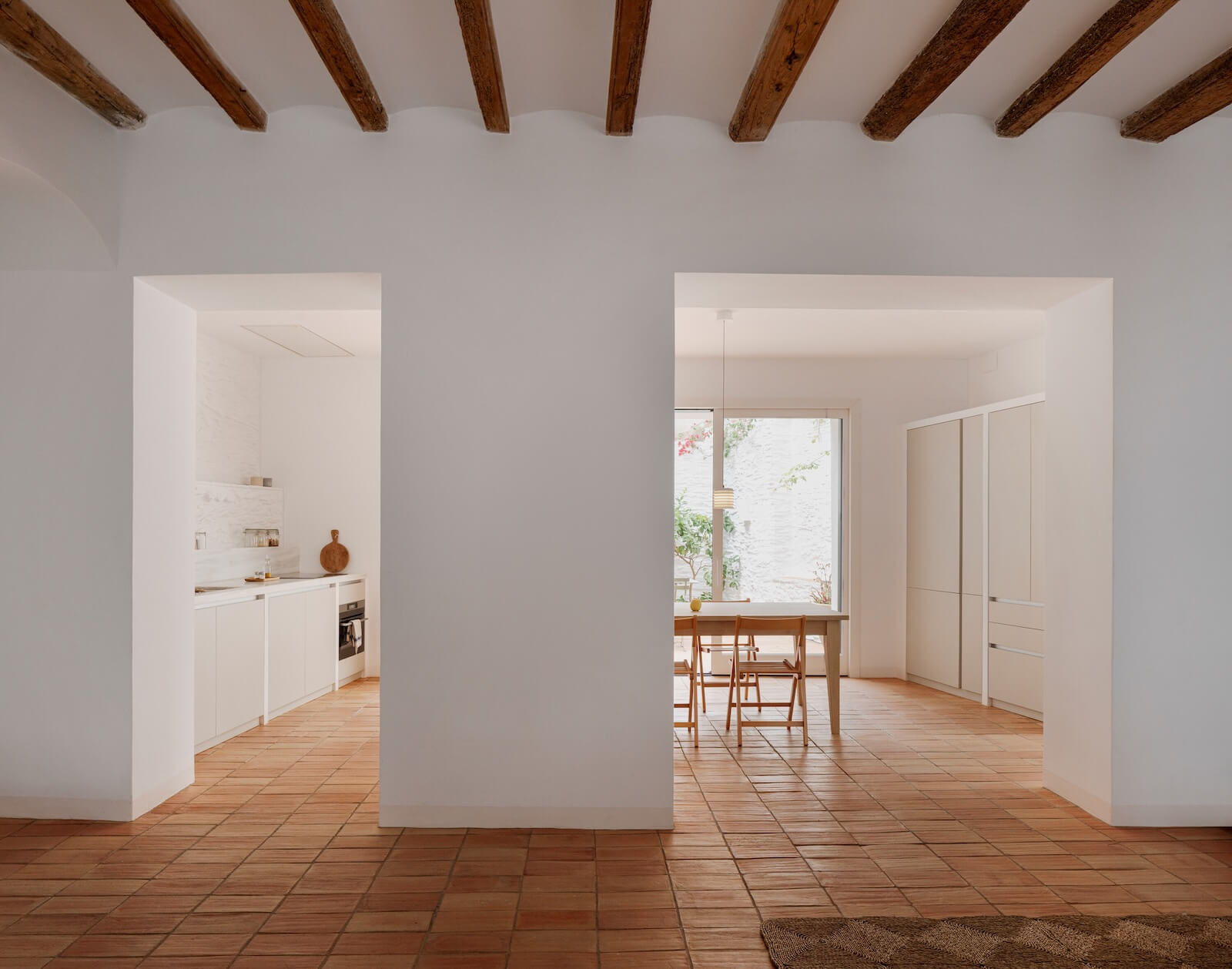
Throughout, the architects carves new openings into the load-bearing walls, “establishing visual connections between rooms and allowing natural light to flow freely.” They combined traditional materials and contemporary lines.
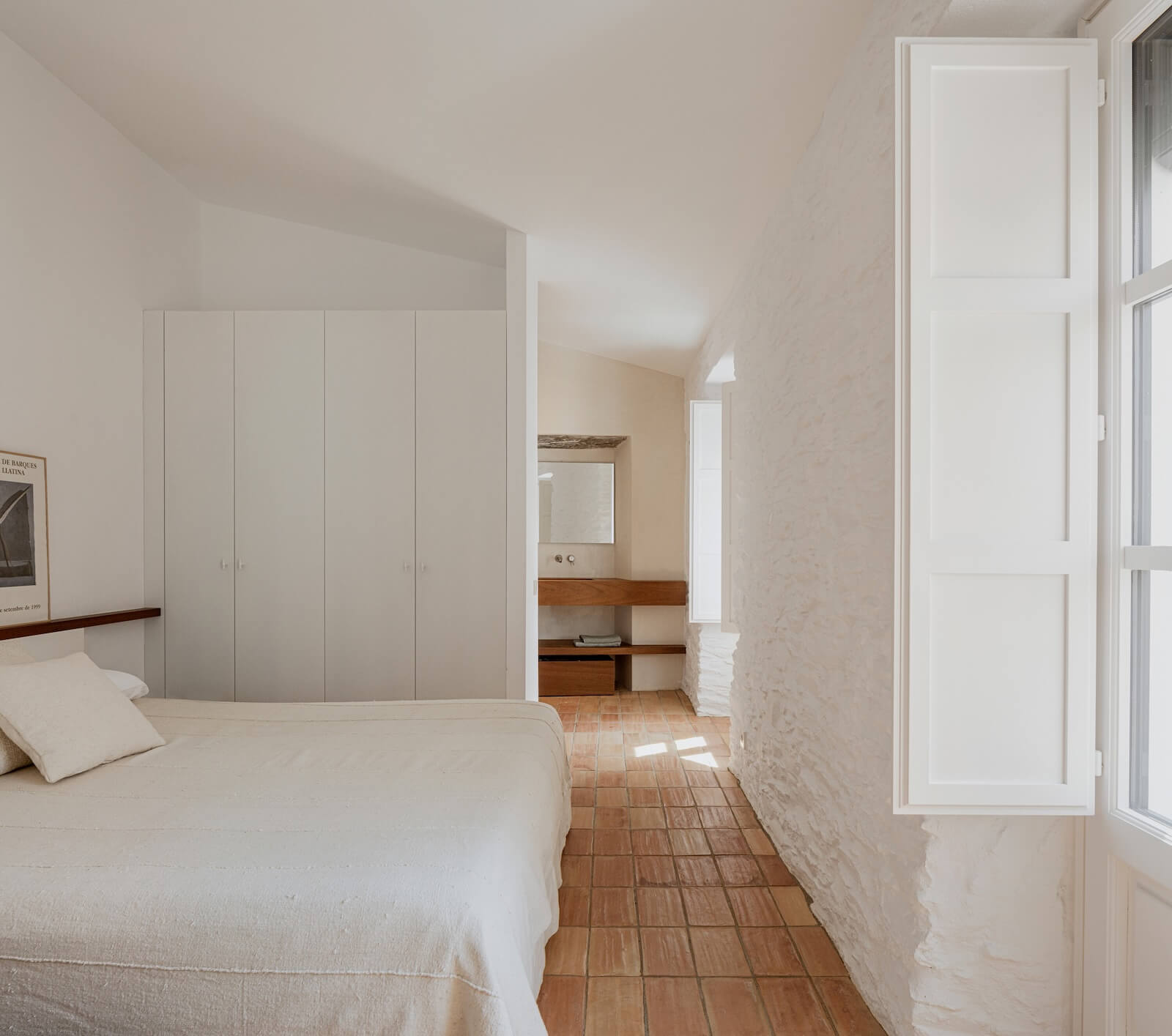
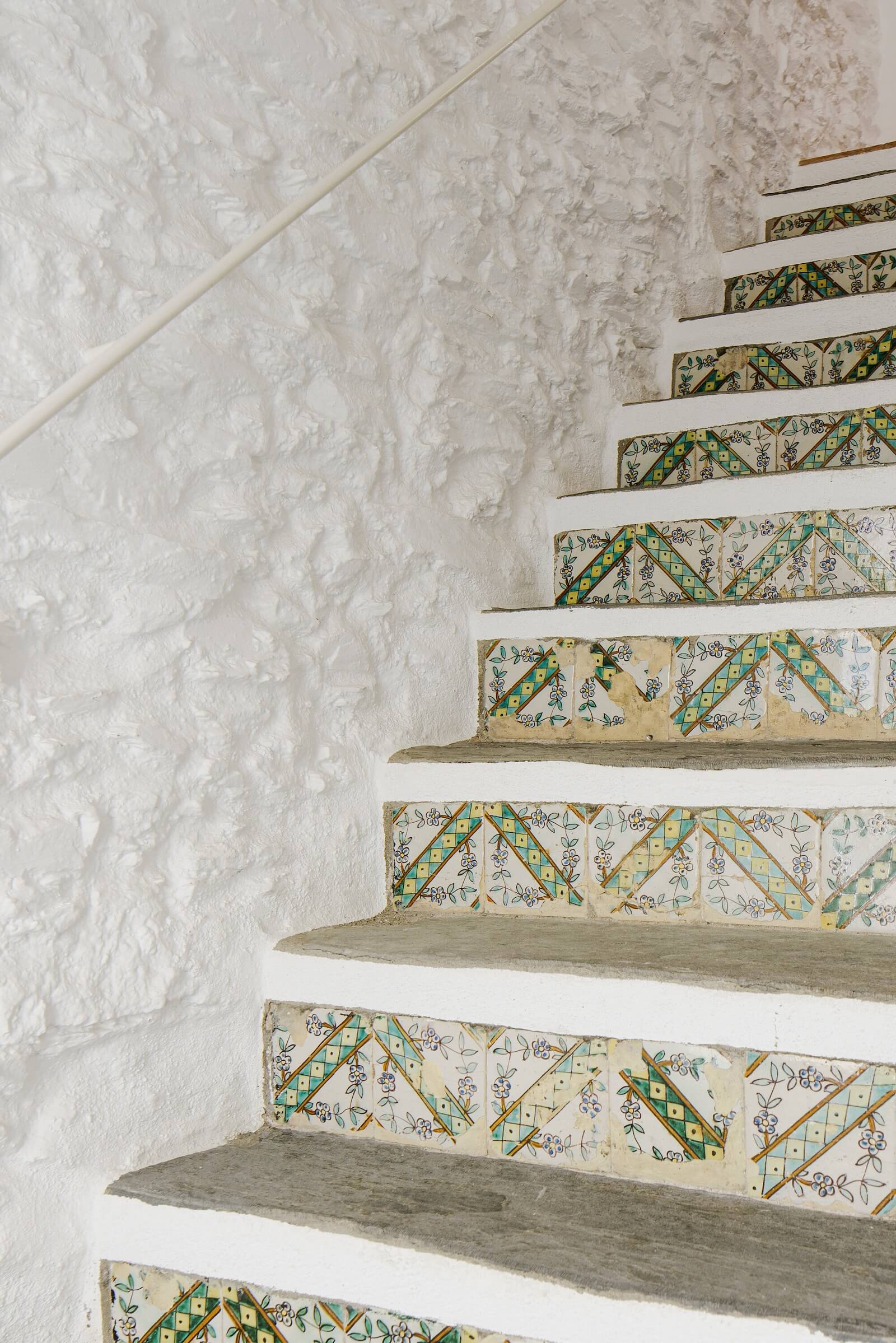
The palette includes time-honoured finishes – ceramic tiles line the vaults, white lime plaster further textures the jagged stone walls, majolica-style terracotta glazes the crisp white staircase – as well as modern ones, like iroko wood for the custom joinery and furniture. Finally, they furnished the home with clean-lined pieces, including a solid oak farmer table, Carl Hansen & Søn seating and light fixtures by Vitra and Santa & Cole.
Old Meets New in a Former Fisherman’s House in Spain
Architects Bea Portabella and Jordi Pagès add modern functionality to a home steeped in local vernacular.