
Most adaptive re-use buildings experience a significant time gap between their first and second lives. On the other hand, architecture designed for the Olympic and Paralympic Games must execute a flawless 180-degree jump spin almost immediately, starting off as a facility for the world’s biggest sporting event yet ultimately landing as something that can serve its community long after the podiums are packed up. “It’s an interesting design problem to have, where there’s a dual use and one use lasts for a few weeks but the other lasts for decades,” says Skidmore, Owings & Merrill’s Colin Koop, the project lead on this year’s Winter Olympics athletes’ village in Porta Romana, Milan. By September, his buildings will be converted to student housing.
As the Olympic Games have evolved to prioritize the legacy of their construction projects, architects must develop ambitious strategies for post-Olympics conversion — all while designing at record-breaking speed. Mind you, the first task is to prove that a new building even warrants construction. “Each Olympic Games now adapts to the local context and not the other way around,” says Olympic Games executive director Christophe Dubi. “We work with organizing committees and local officials to identify and prioritize what already exists.” Milano Cortina 2026, like Paris 2024, introduces just two new venues; the L.A. 2028 Summer Olympics will make use entirely of pre-existing infrastructure. Here, we speak to the teams behind two 2026 Winter Olympics projects to hear how their designs will continue to flex some muscle in the years ahead.
THE VENUE: Arena Milano
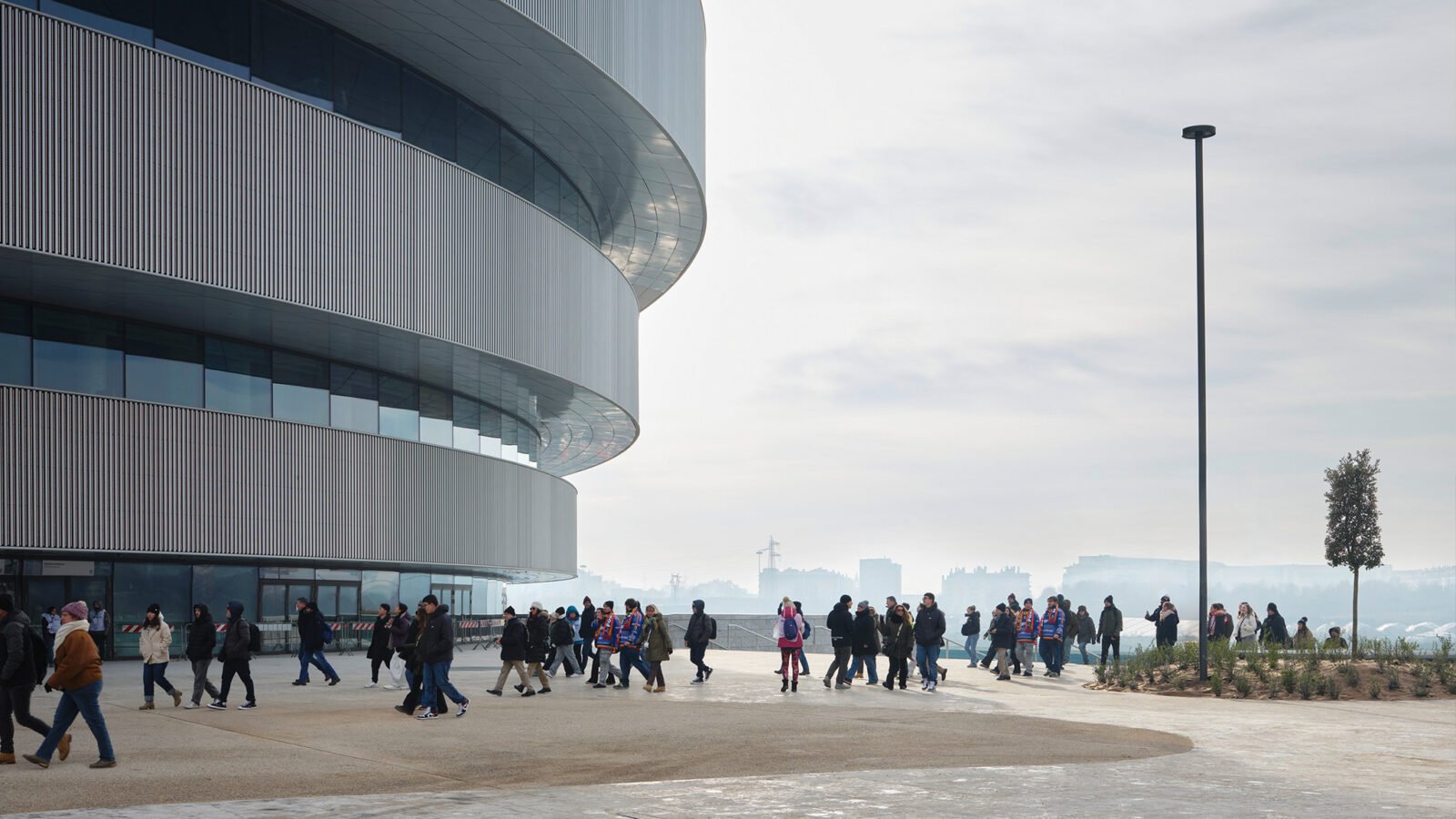
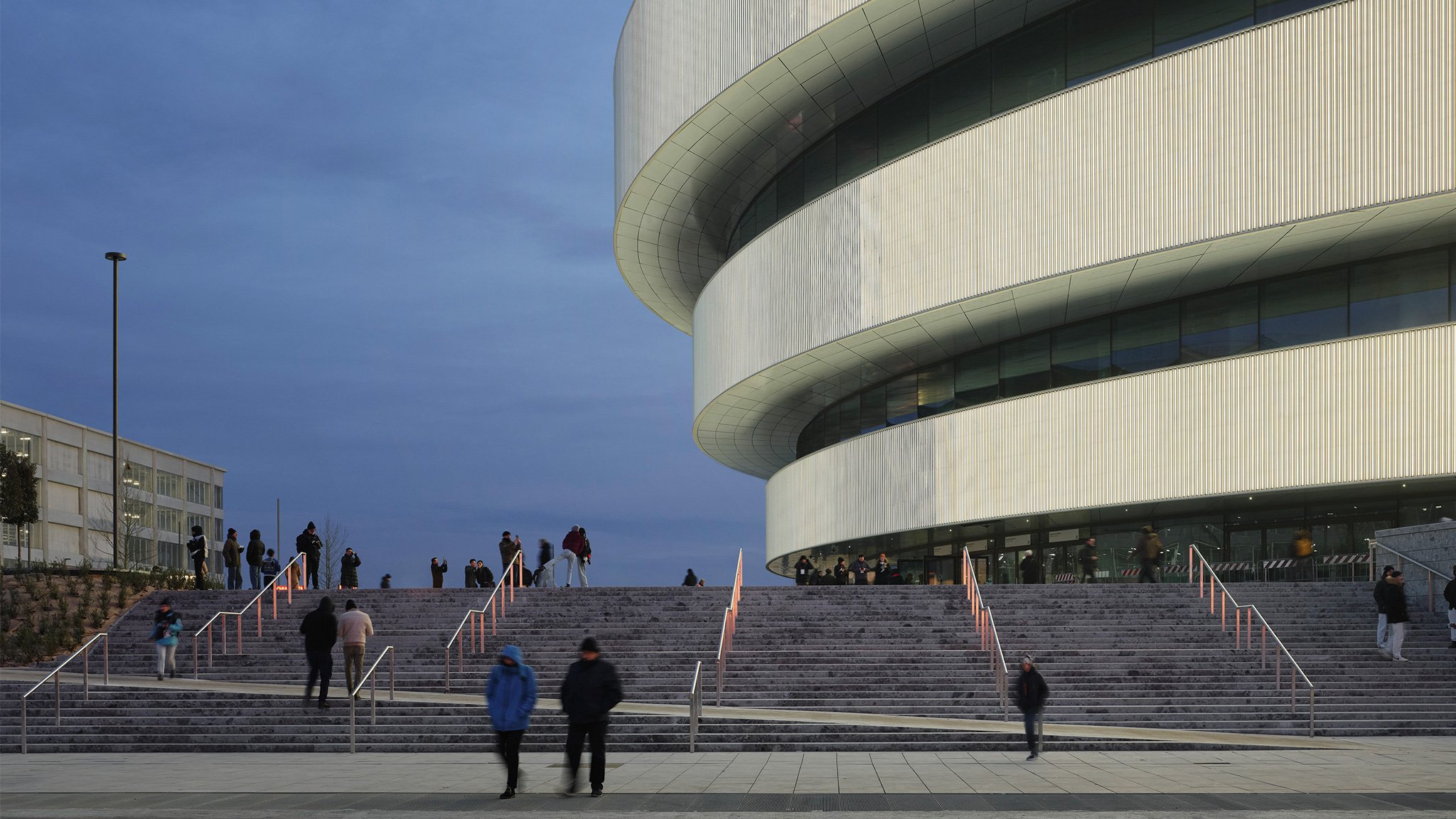
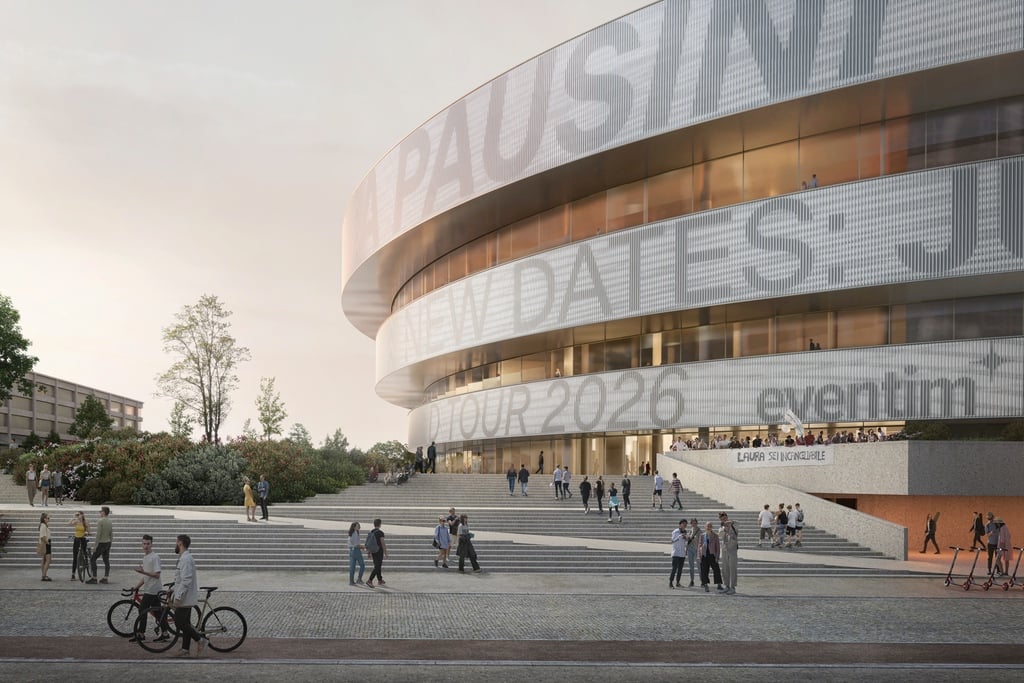
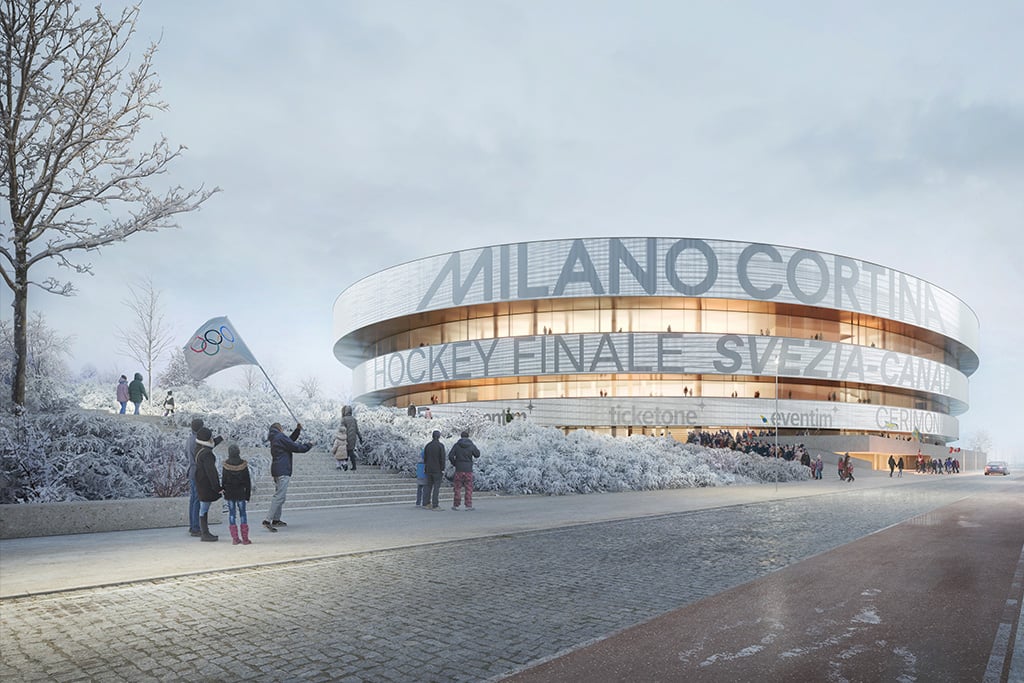
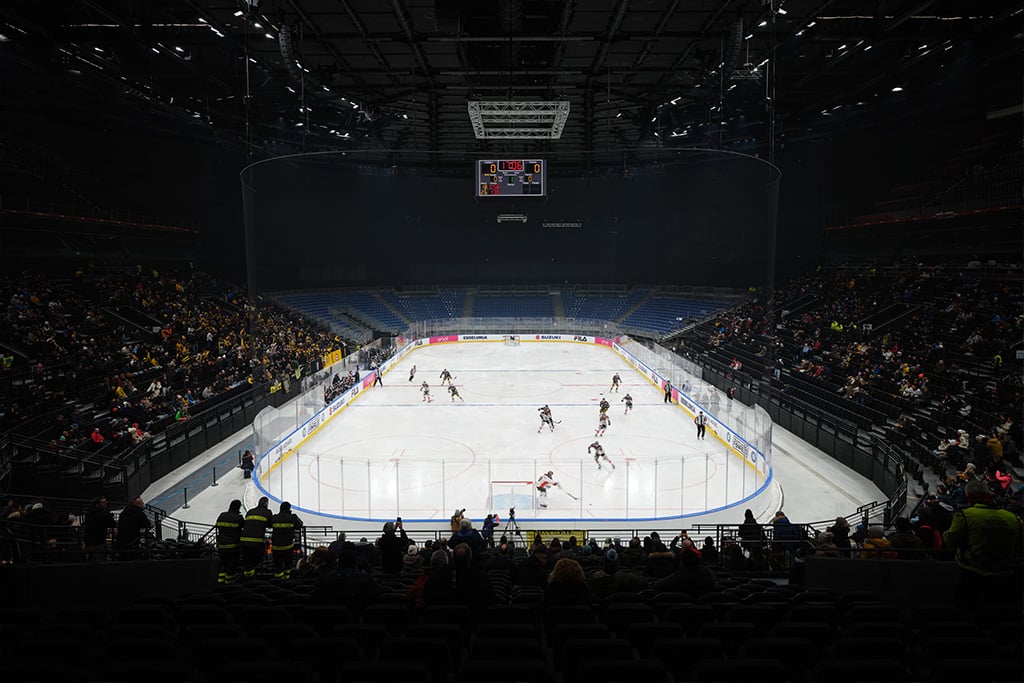
Equal parts ancient Roman Colosseum and 21st-century tech spectacle, the elliptical building is wrapped in a series of rings that alternate between glowing digital displays and glass bands that reveal the movement of people inside. The arena will later be joined by a one-hectare community piazza and a parkade.
Operating as the Milano Santagiulia Ice Hockey Arena during the Olympics, the venue is currently making a race to the finish line. Despite construction delays that pushed back initial tests from December to January and concerns about ice conditions and incomplete amenity areas during early inspections, recent reports say the building is showing “major improvements.” It will host its first game on February 5, a women’s face-off between Italy and France.
Designers: David Chipperfield Architects and Arup
Location: Santa Giulia, a built-from-scratch neighbourhood master planned by Foster + Partners in a former industrial zone of Milan’s southeast sector.
During the Olympics: A 16,000-capacity covered arena that will host ice hockey games.
After the Olympics: A venue for concerts, sports and other events operated by live entertainment company CTS Eventim.
–
Q&A
How did you set out to establish a landmark that can add to the excitement of a big event?
Leander Bulst, project lead at David Chipperfield Architects:
- LB:
“This building, like many arenas, was really conceived from the inside out, starting with the seating bowl. Practically, an oval-shaped amphitheatre is one of those typologies that survives because of its functional success. But there’s a clarity to that. At the beginning of the project, David [Chipperfield] said, ‘It’s good to have a building that looks the same from all sides and that is quite easily recognizable as an arena.’ You might be driving around getting lost on your way to a 9 p.m. concert, and it helps to spot the building from two kilometres away and realize ‘Oh, that’s the arena.’ ”
How did you settle on the facade’s balance of transparency and digital broadcasting?
- LB:
“The media facade is made from these aluminum tubes with integrated LED strips. Each LED can be controlled like a pixel, so basically, it can show anything you want. The Sphere in Las Vegas was a definite reference point during our discussions with the client. But the Sphere is very seldom turned off — and when it is, it’s a big black football. For us, it was important to think of our facade as more than just a big TV set, and as a facade with a strength and expression of its own. Typically, an arena is very introverted — people outside can’t see in, and the people inside don’t really look out. The glass allows for maximal extroversion, and anyone attending an event gains this incredible view to the Milan city skyline. I have tickets for one of the first Olympic hockey games — Italy versus Sweden — and I’m very excited.”
What were some of the ways that you worked to build quickly — and flexibly?
Giammichele Melis, Europe property business leader at Arup:
- GM:
“Just by changing all concrete from cast in situ to prefabricated, we saved about two and a half to three months of time. On this tight of a time frame, moves like that are quite significant. Then, in terms of flexibility, when it comes to the design of the seating bowl, its permanent configuration is asymmetrical, but there are retractable and removable stands that can create a range of different symmetrical configurations suited to everything from concerts to sports.”
THE ATHLETE’S VILLAGE in Porta Romana
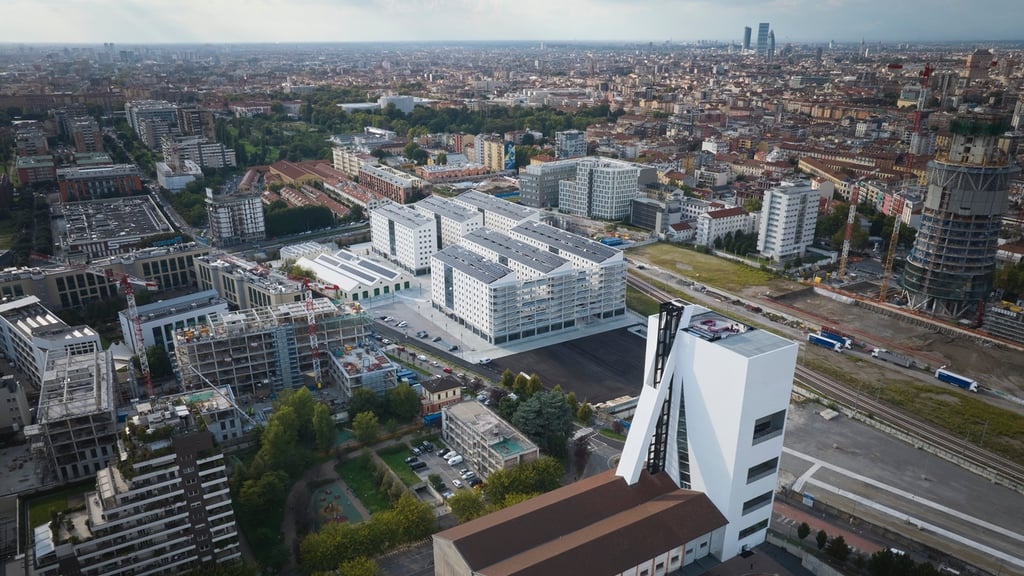
Six new eight-storey residential buildings neighbour two adapted historic structures (both one-storey industrial buildings with sawtooth rooflines) on a 4.7-hectare site. Terrace structures installed perpendicular to the residential clusters introduce landscaped walkways that connect each trio of buildings.

Designers: Skidmore, Owings & Merrill (SOM)
Location: A former rail yard in an industrial area beyond the city’s historic wall that was originally home to many factories. Today, the Fondazione Prada museum is a short walk away.
During the Olympics: One of several athletes’ villages, hosting some 1,500 competitors and their
delegations. (Additional villages are located in Cortina d’Ampezzo and Livigno.)
After the Olympics: Italy’s largest affordable student housing development, with beds for
1,700 students, available in time for the 2026–2027 academic year.
–

Q&A
What’s different about serving athletes and students?
Colin Koop, project lead at SOM:
- CK:
“Our vision for the student housing was a very porous site, but for security reasons, there absolutely cannot be strangers walking into the Olympic Village, so there will be a temporary protective wall built to seal it off. The athletes’ village also demands a lot of hardscaping so buses can drive in to pick people up, which means a lot of the landscaping won’t be coming until later. On the other hand, all the student furniture is already installed, whereas in the past, when an Olympic Village was being converted to market rate condominiums, they would be using temporary cardboard furniture. Turning the project into student housing makes the conversion a lot simpler.”

How did you reference the site’s industrial history?
- CK:
“The residences were influenced by the area in and around the rail yards, where there are these long, linear bar buildings that you could drive a train up next to and unload right into. Our parcel of land also had two very pragmatic old rail yard buildings in various states of decay, and we committed to giving them a new life. They connect the project with its context and bring in some additional character. There’s a concept to develop one of them into a brewery, and the other possibly into a co working space — things that draw people to the site from the surrounding area.”

Which modular construction strategies did you use here?
- CK:
“This is the most prefabricated thing I have ever worked on. First, we framed the building by craning in these three-storey-tall columns. For each floor, we then installed prefab concrete planks, followed by a concrete topping slab that was poured in situ. Next, all the bathrooms were craned in, already fully formed as these little prefab boxes. Finally, for the facade, we started with prefab mass timber insulated panels before then following up with scaffolding and a plaster facade applied on top. Each of these steps allowed us to meet both a very low price point and a very aggressive schedule — all while holding sustainability and safety as equal priorities.”

What does greenery add to the building’s identity?
- CK:
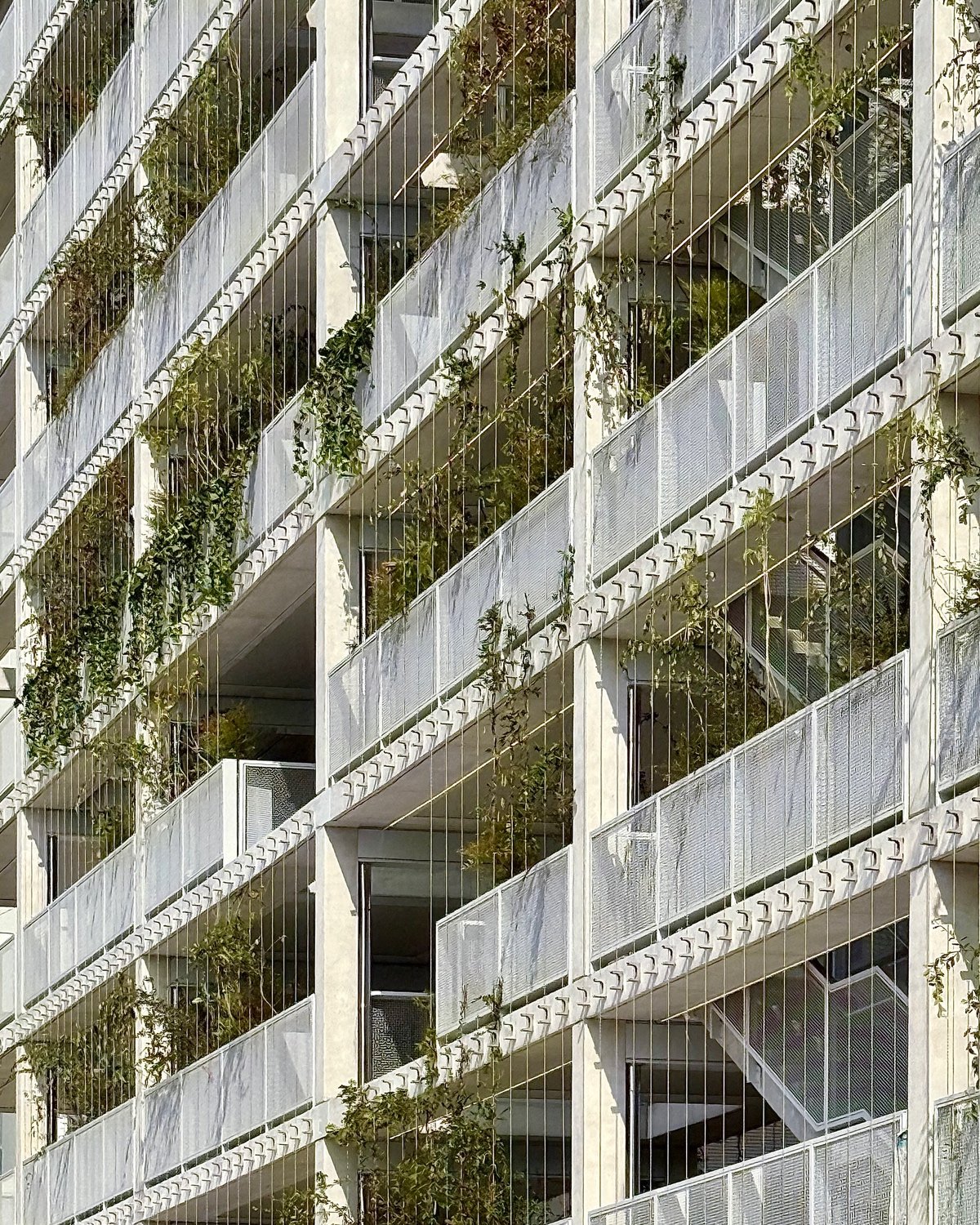
“There’s a long, rich tradition of communal balconies in Milan, and especially for students who might be coming to the city for the first time, it was important for us to ground the project in that history. We worked with the landscape architect Michel Desvigne to develop a system of irrigated planters and cables that allow these native species to climb up the facade. Over time, they’regoing to be completely covered in head-to-toe green, which will really soften these otherwise very simple, pragmatic structures.”
Two Olympics Architecture Projects Playing the Long Game
For the designers behind Milano Cortina 2026, the Olympic Games are just half the assignment.