


When Janet Rosenberg & Studio, Patkau Architects and ERA entered a 2017 international competition to revitalize Ottawa’s Nepean Point, they didn’t imagine the project’s agenda would transform as much as the site would. Their joint scheme aimed to provoke discovery of the park and the region’s history. But what history exactly?
Since 1915, a statue of Samuel de Champlain had enjoyed a commanding view of the river from his elevated perch at this promontory park; from 1918 onward, a bronze of an Indigenous guide kneeled at his feet. But in 1999 — following protests led by Ovide Mercredi — that figure was moved to his own space in nearby Major’s Hill Park. The competition brief had called for Champlain to remain atop his tall plinth; no mention was even made of the scout. But that was to change. In the years following the competition award, the designers, the National Capital Commission, and the Algonquin Anishinabeg communities of Pikwakanagan and Kitigan Zibi took part in a long conversation about the rightful place of this Indigenous figure in the new ensemble. Their resolution was to entirely rethink the original statue.
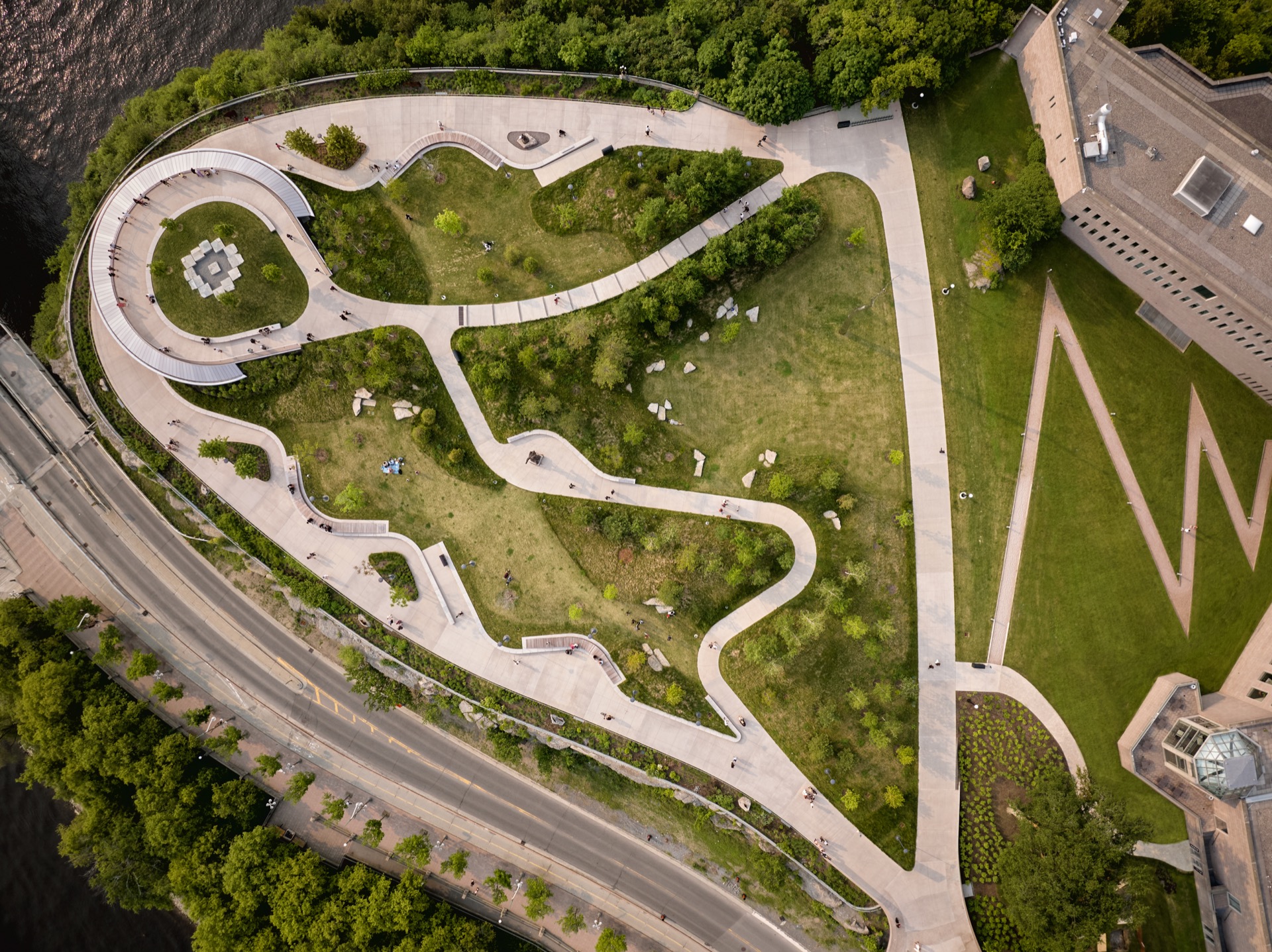


That reconfigured monument now forms one component of a design reconnecting the park to the city, physically and sensorially. The sinuous Pìdàban Bridge restores a historical link to Ottawa (via Major’s Hill Park), creating accessible pathways that join the new bridge and the National Gallery of Canada to converge on Whispering Point, a river lookout sheltered by a roof of aluminum panels undergirded by cedar ribs. Greg Boothroyd, principal at Patkau Architects, says he wanted to create “the experience of being simultaneously in a very intimate space — with the wood coming over you — and connecting you to the vast surroundings.” A similar sensitivity is evident in vegetation deployed by acoustic signature: Each plant species was selected for the sound it would contribute to the site, from the flutter of aspen leaves to the rustling of little bluestem grass. The plantings also form part of an ingenious device from 18th century gardens — the “ha-ha,” or sudden step down in the landscape — to ensure unimpeded views to the river.
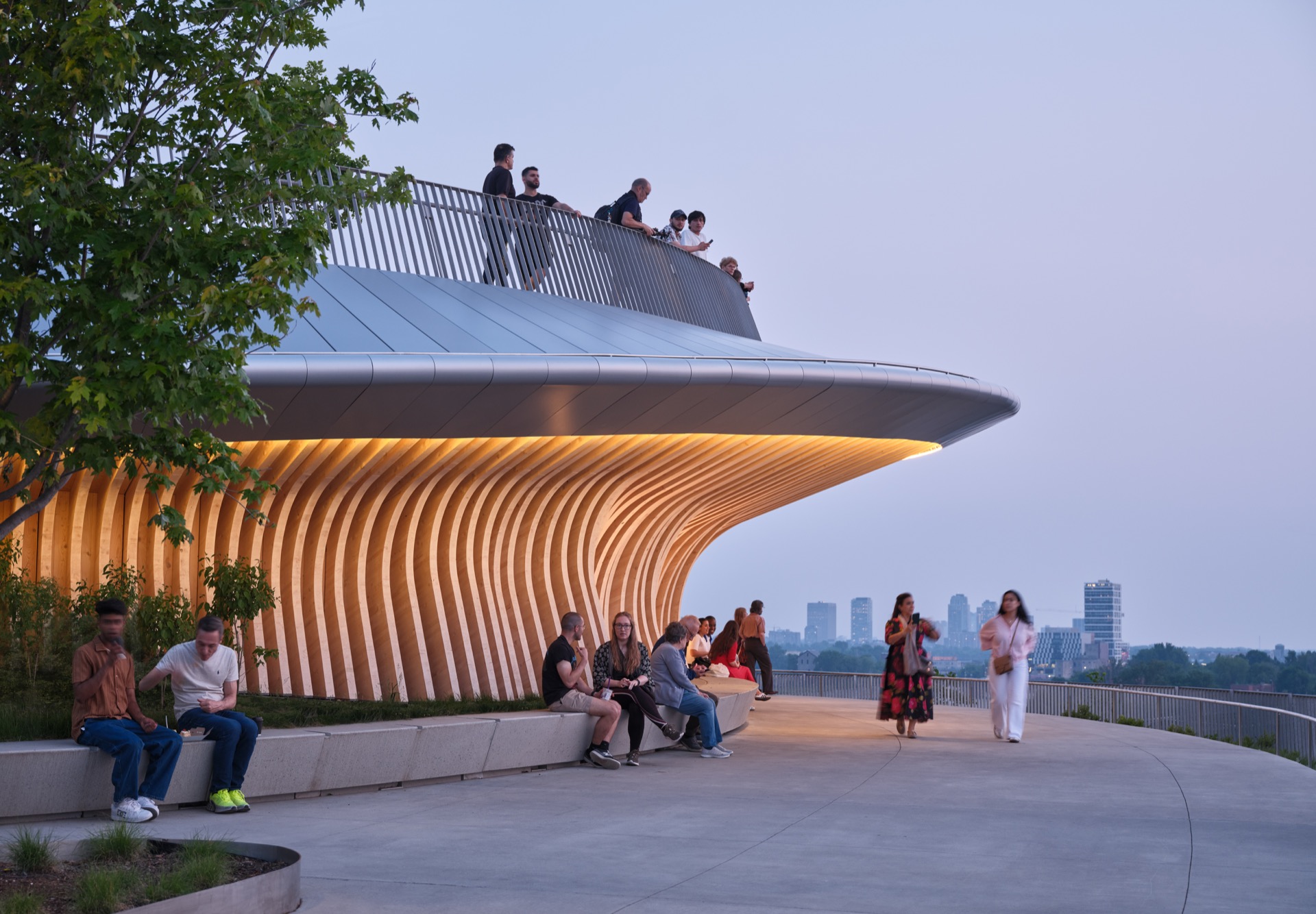
The overhang above Whispering Point doubles as a viewing platform of its own, dubbed the Outlook. It is here that you’ll find Champlain’s original plinth, now deconstructed. Today, the explorer and his guide face in opposite directions on different sides of the park, yet they are somehow still in relationship. As Wayne Swanton, partner at JRS, puts it, “It was very important that the monuments remain in dialogue. How do you recontextualize them in a contemporary way without denying history? How do you carry their stories and references further while creating a renewed connection to the river?”
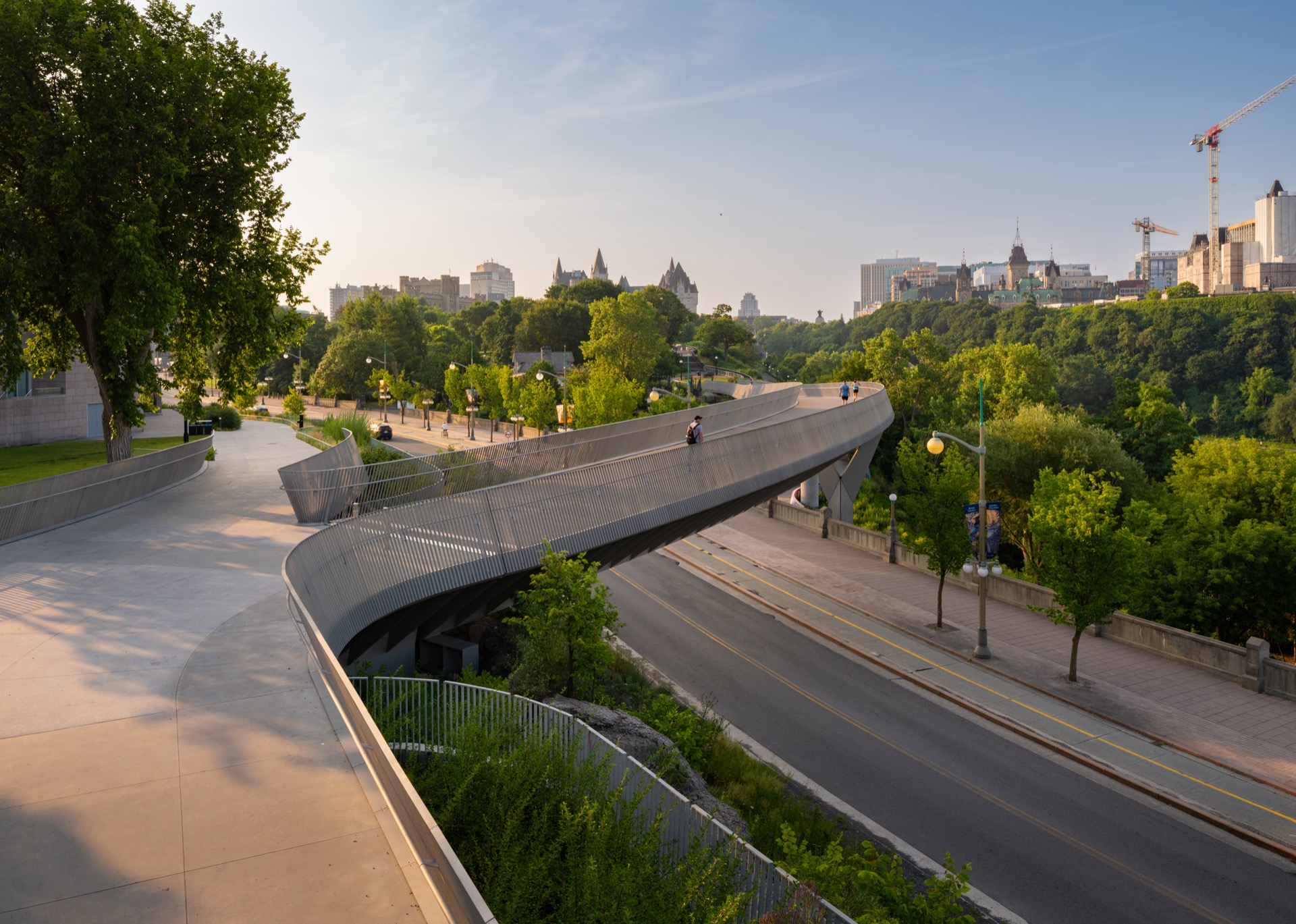
In a testament to eight years of tight collaboration, the project achieves exactly that. Opening up an isolated promontory, it reframes fraught relationships. The explorer and Indigenous figures are distinct and equal. Both train their gaze on a river that has for too long been out of sight. That reconciliation will continue: Jean-François Bélisle, director and CEO of the National Gallery of Canada, foresees further connecting museum to park and water, and involving the gallery’s architect Moshe Safdie in that process. Ottawa is again turning toward its river. No longer known as Nepean Point, the green space has been renamed Kìwekì Point, embracing a word that means “returning to one’s homeland” in Anishinaabemowin. As the project shows, a return can also be a rediscovery.
Ottawa’s Kìwekì Point Is a Project for the History Books
Ottawa’s riverside park charts a new course by rethinking the placement of two monuments.