
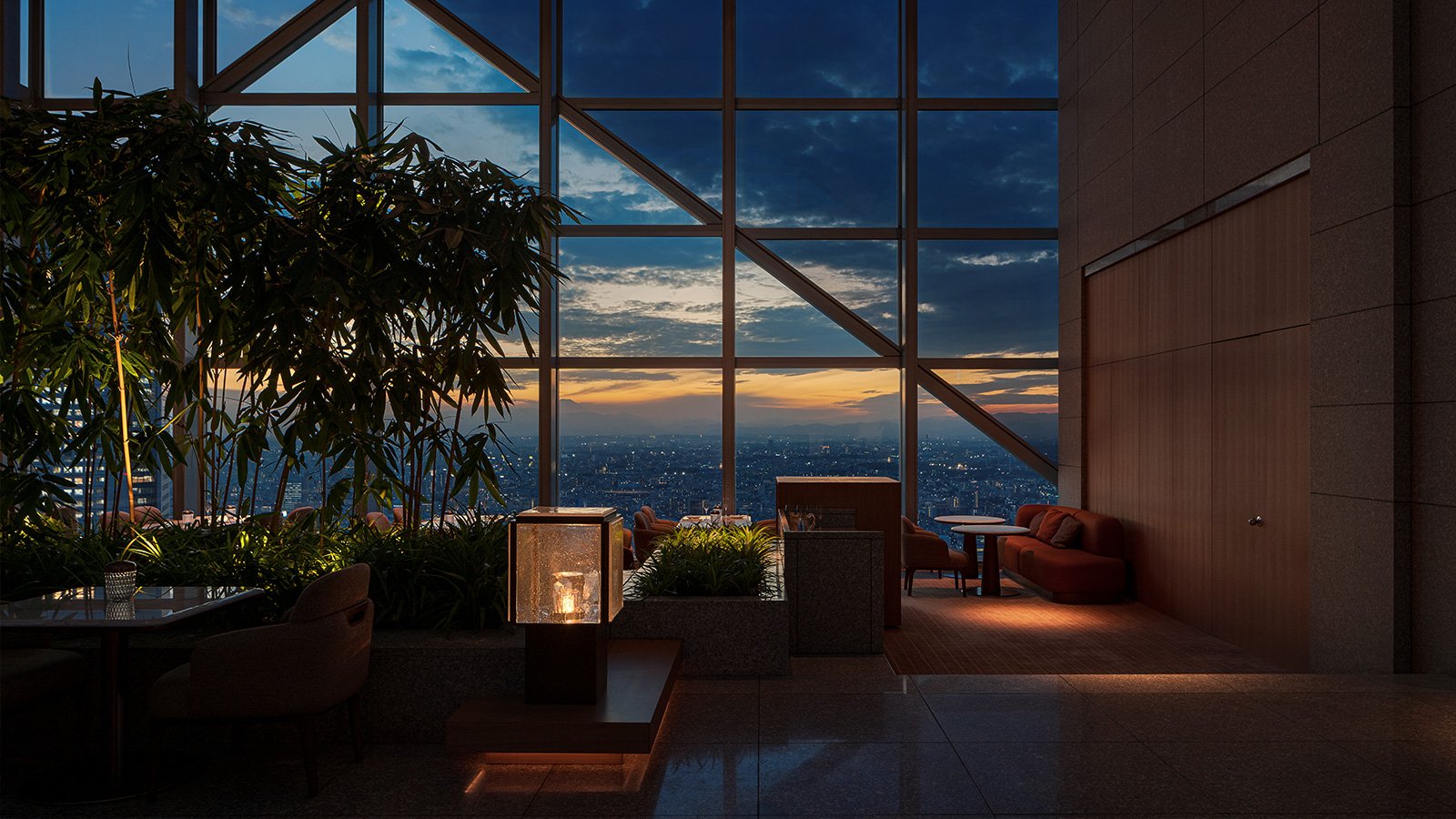
While some renovation announcements inspire eager anticipation, others are met with cautious trepidation. When a setting has special history, even small interventions run the risk of ruining the magic. Interestingly, in the case of the Park Hyatt Tokyo, most of the people who were holding their breath during the hotel’s 19-month refurbishment had never actually stayed in the property — they just felt like they had. That’s because the urban getaway (located at the peak of Kenzo Tange’s Shinjuku Park Tower) played a starring role in Lost in Translation, in which Scarlett Johansson and Bill Murray portray rich, bored hotel guests who bond in the upstairs jazz bar, the New York Grill. Mind you, Lost in Translation came out in 2003 — and the Park Hyatt Tokyo had looked more or less the same ever since. Now, all of a sudden, it’s undergone a thorough refresh.
Thankfully, it turns out people had nothing to worry about. The renovation — initiated to mark the 177-room hotel’s thirtieth anniversary, and unveiled in December — was placed in the very capable hands of Jouin Manku, the Parisian studio led by French designer Patrick Jouin and Canadian architect Sanjit Manku. The duo brought a soft touch, preserving signature elements of the original interior design led by John Morford while still making their own mark. As Jouin Manku say in their project description, “There are places that do not ask you to transform them, but to listen.”
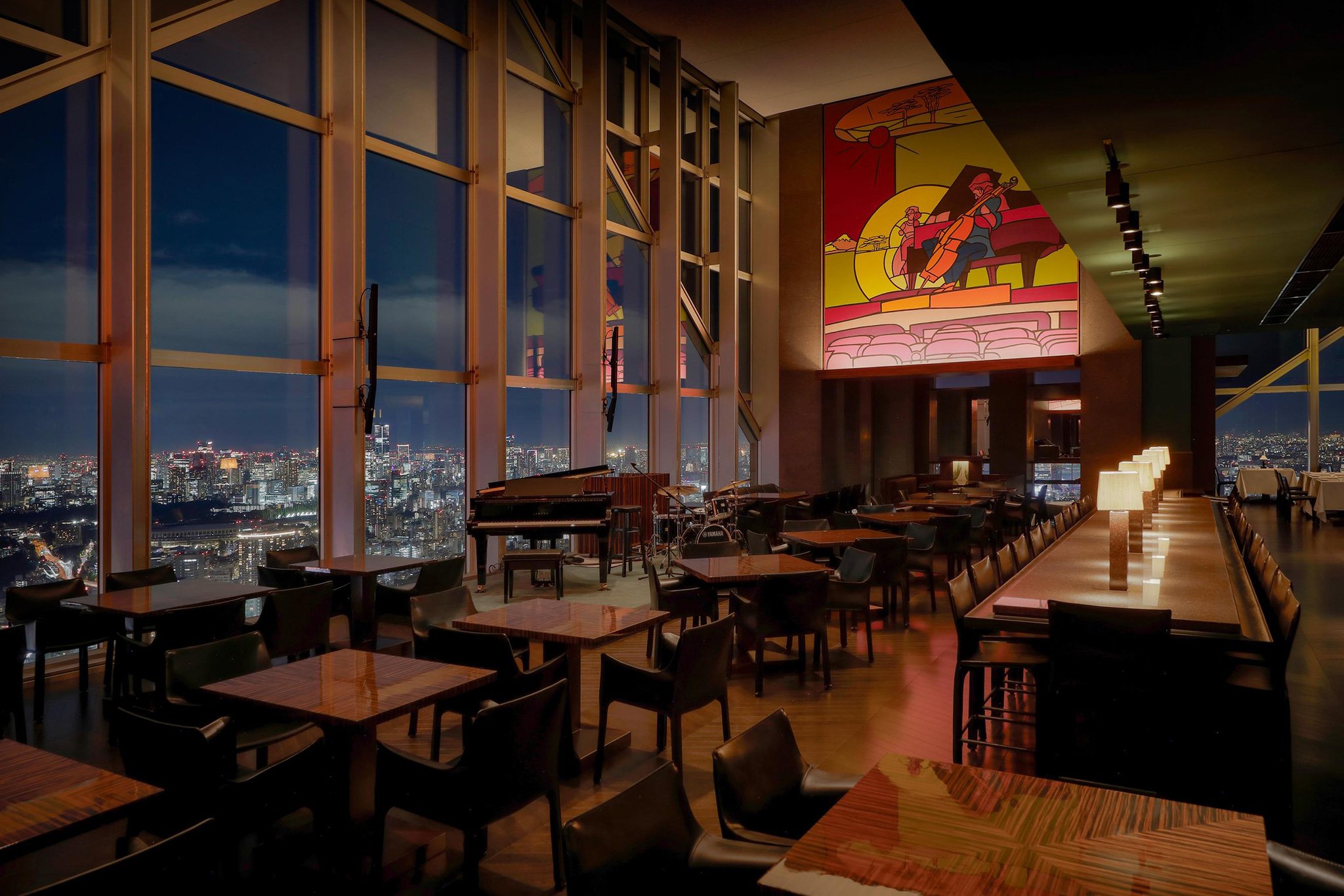
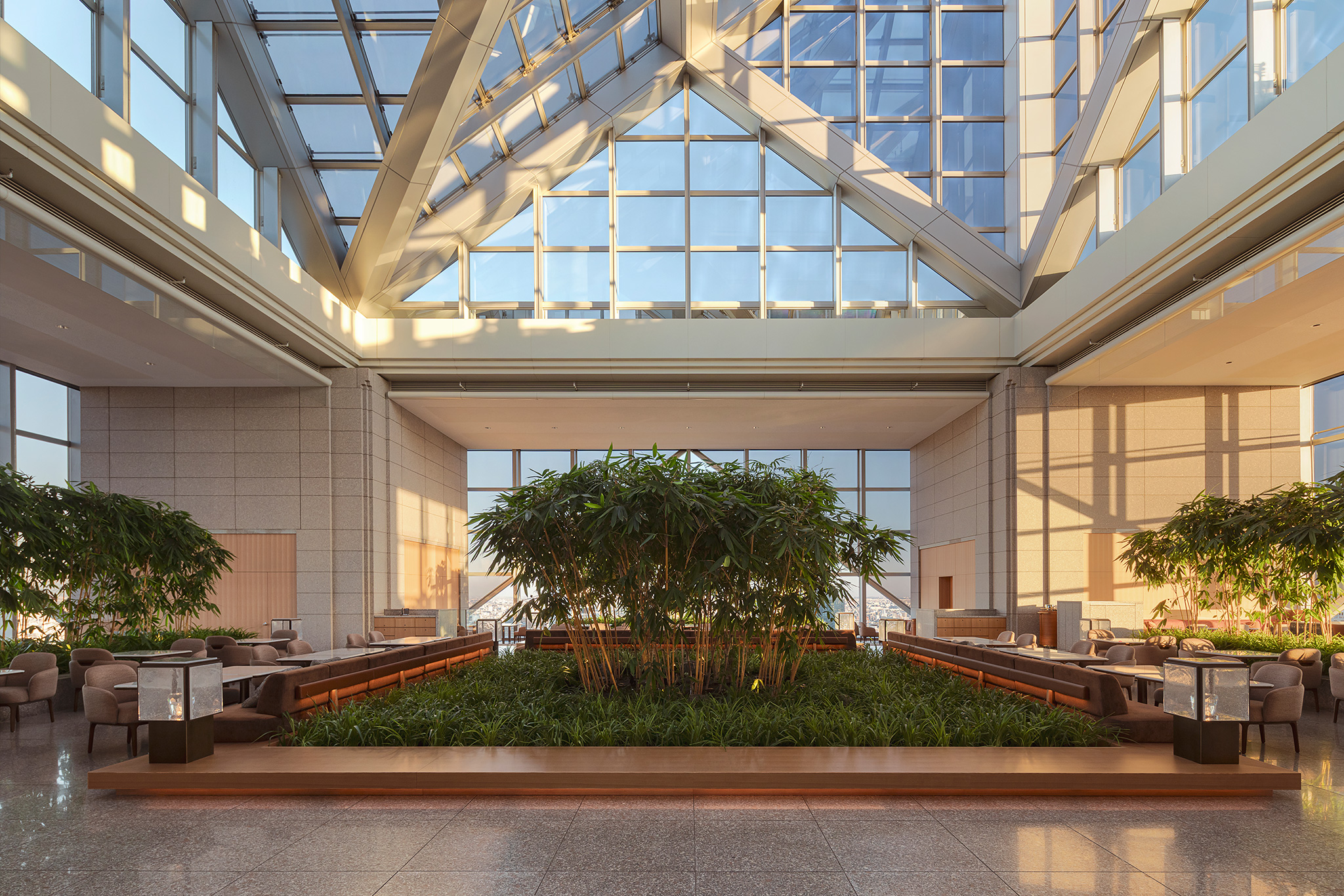
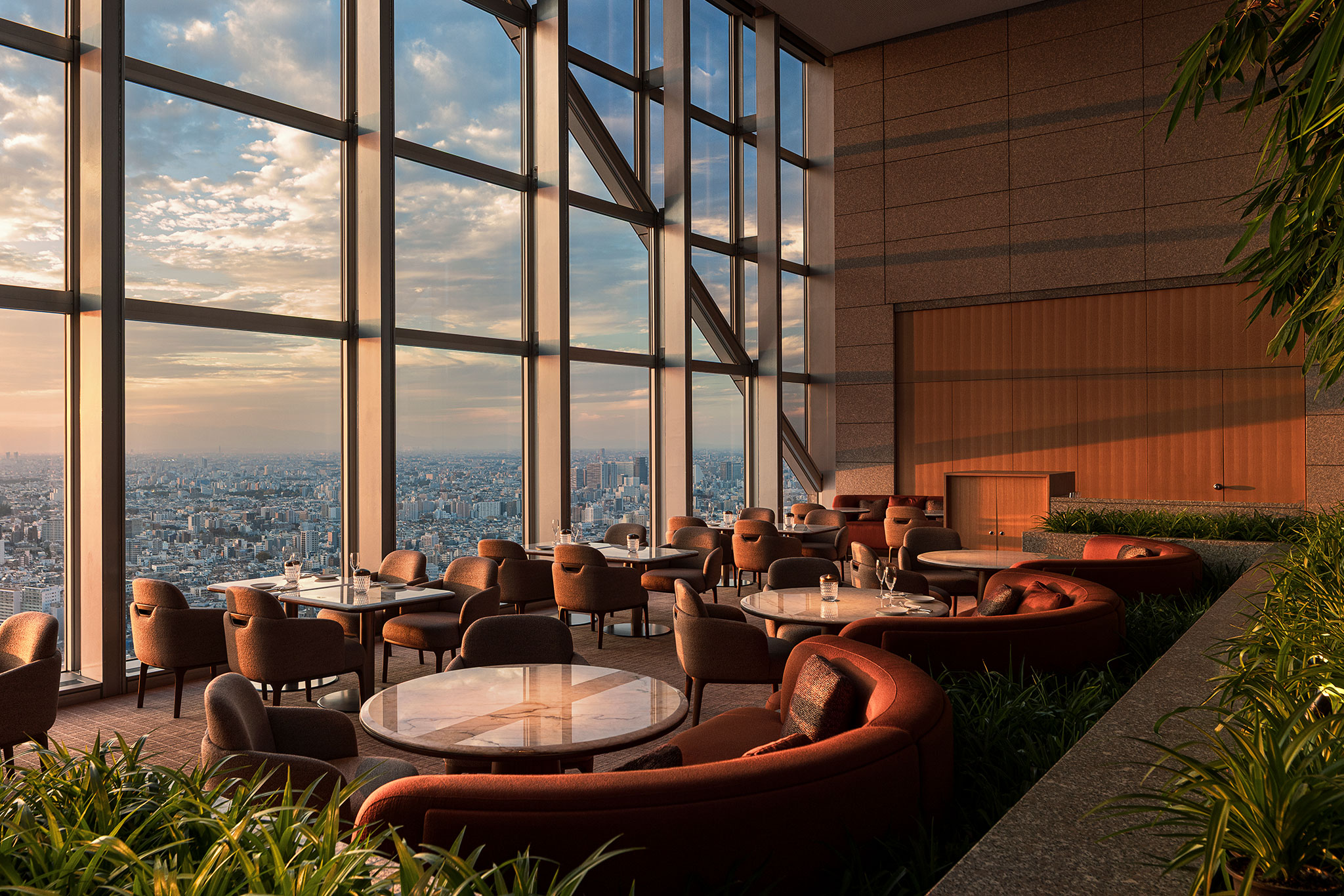
With that in mind, their respectful makeover preserves all of the original design elements beloved by regulars, including the hotel’s grand library and the lush bamboo garden at the heart of the Peak Lounge and Bar. Most importantly, it also maintains the atmosphere (and the Valerio Adami murals depicting NYC landmarks like Carnegie Hall) of the New York Grill, which set the tone for Lost in Translation‘s melancholic mood and still serves a cocktail named after the movie. But throughout each of these areas, there is also a subtle new sense of warmth. As Jouin Manku says, it’s “as if the hotel had decided that solitude can be beautiful without being cold.” Think of it as Lost in Translation on Lexapro.
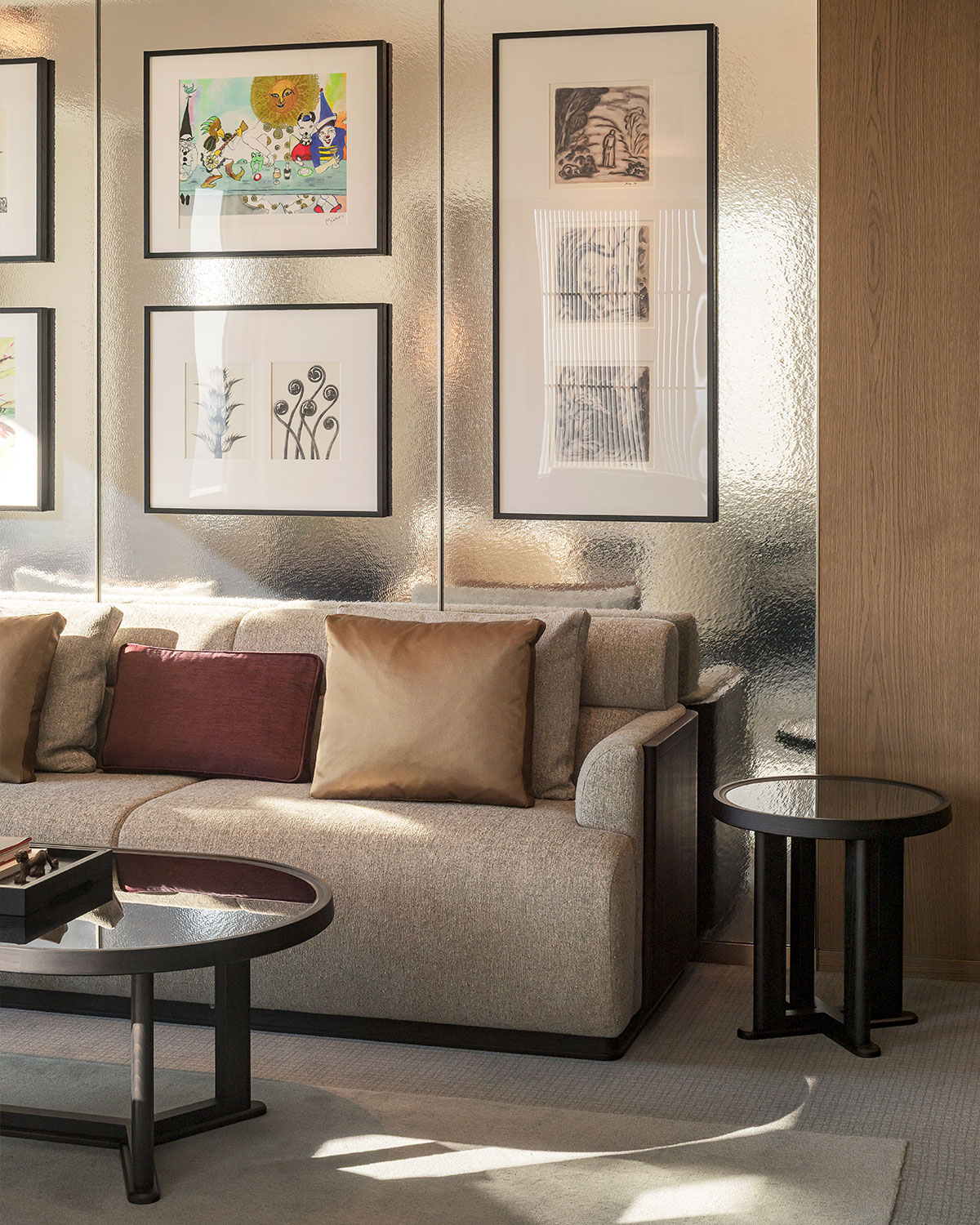
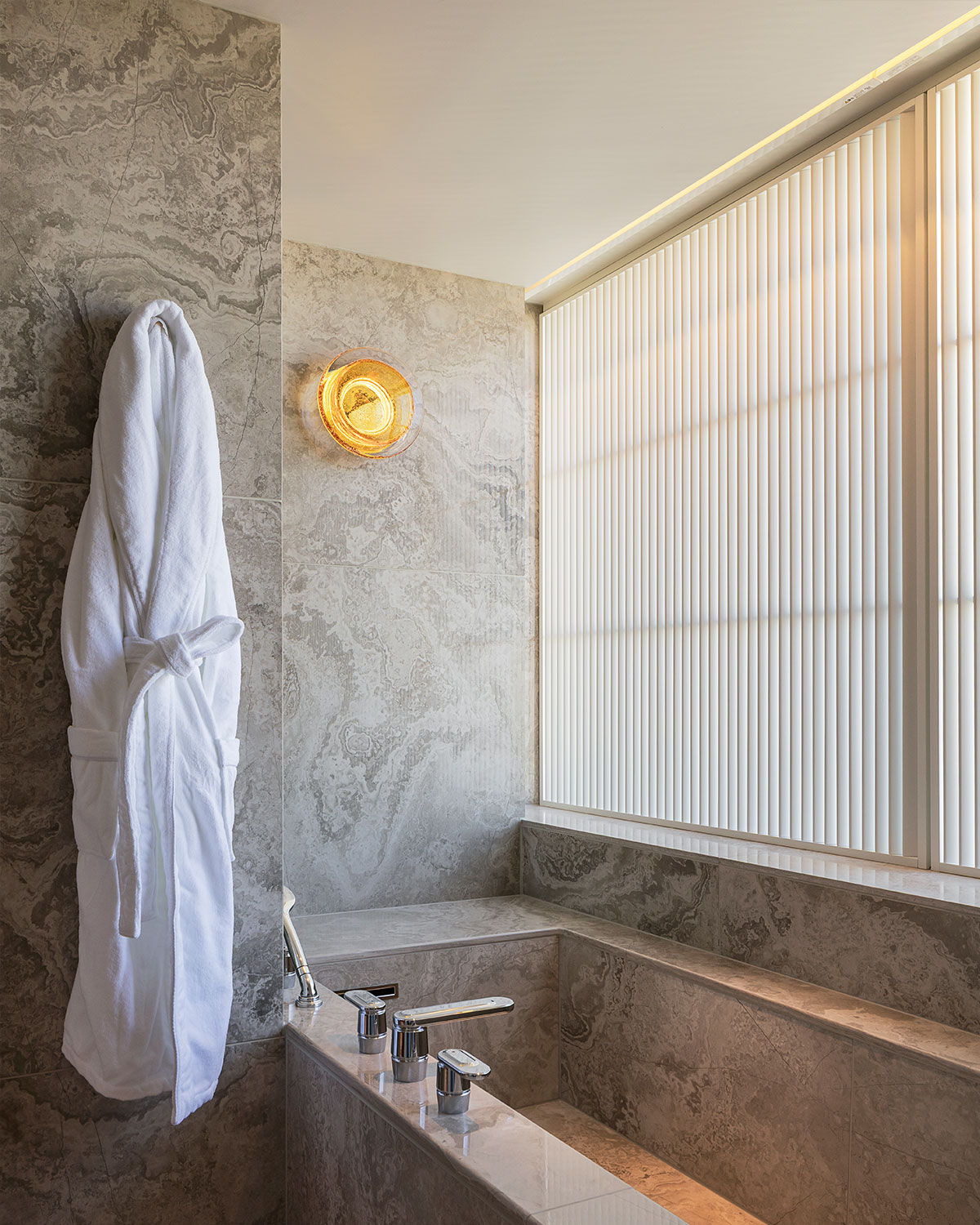
This warmer spirit is especially apparent in the guest rooms, which reflect the hospitality world’s gravitation towards a softer, less rigid definition of modernity. The bed’s headboard now curves around in an enveloping embrace, while tables and chairs skew similarly rounded. A black wooden cabinet sheltering the TV and mini bar features subtle horizontal and vertical grooves that really reveal themselves once the sun is out. Again, Jouin Manku summarizes all of this with poetic panache, saying that “the room no longer invites a melancholy drift. It invites a quiet inwardness, a luminous introspection.” The bathroom has evolved with the times, too, now grouping the bathtub and shower together into a shared wet zone that doubles as an homage to the Japanese onsen.
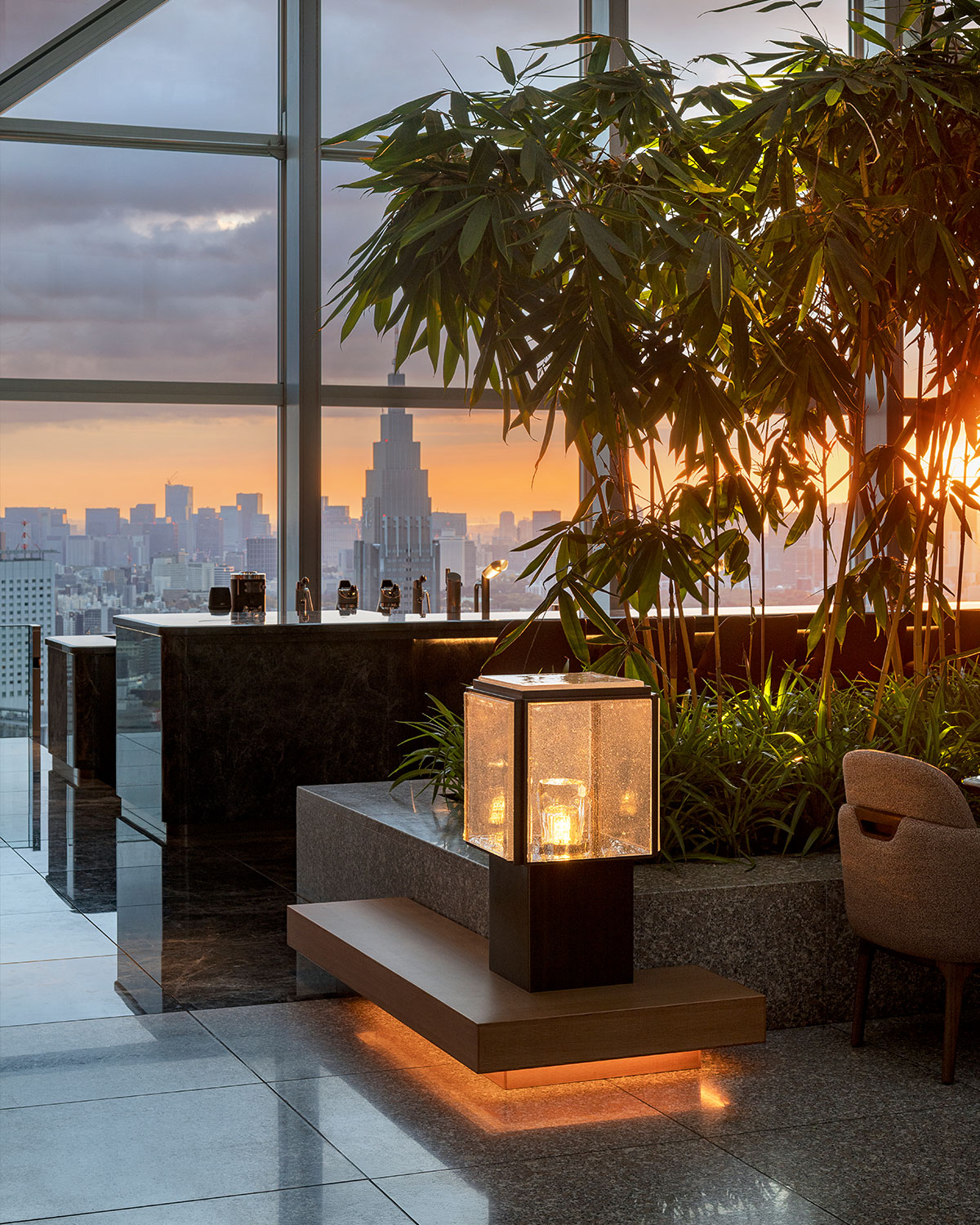
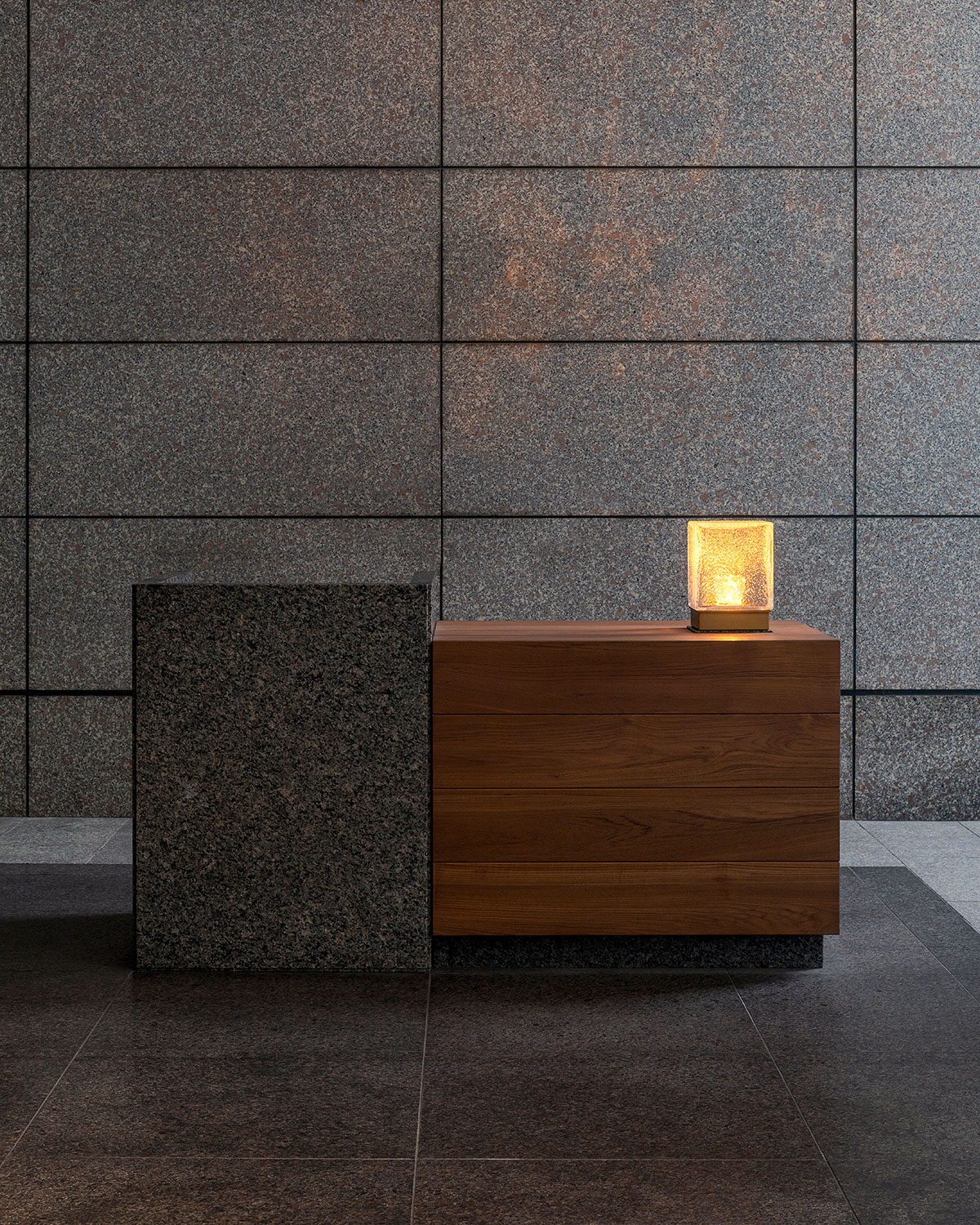
Adding to the warmer ambience, custom lighting plays a prominent role throughout the project. In the Peak Lounge (where hard-lined linear seating was again swapped out for softer, curved banquettes), eight glass and metal lanterns feature an “austere and almost monastic” silhouette that mirrors the rigidity of the surrounding architecture but is otherwise contradicted by the warm glow that emanates from within — a great summary of the project as a whole. These join a series of similarly transfixing ice cube-like lamps installed in the lobby and moon-like blown glass sconces in the bathrooms.
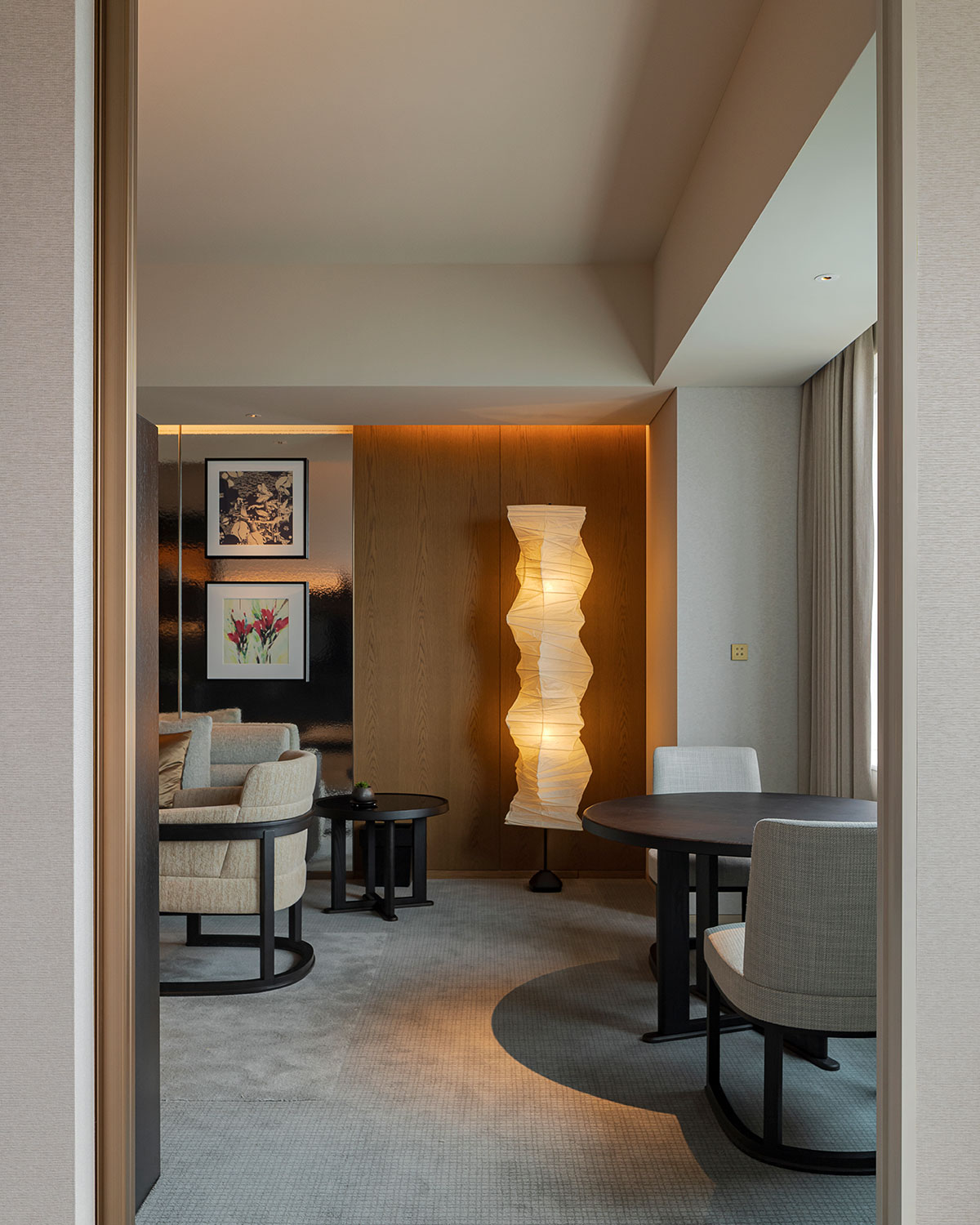
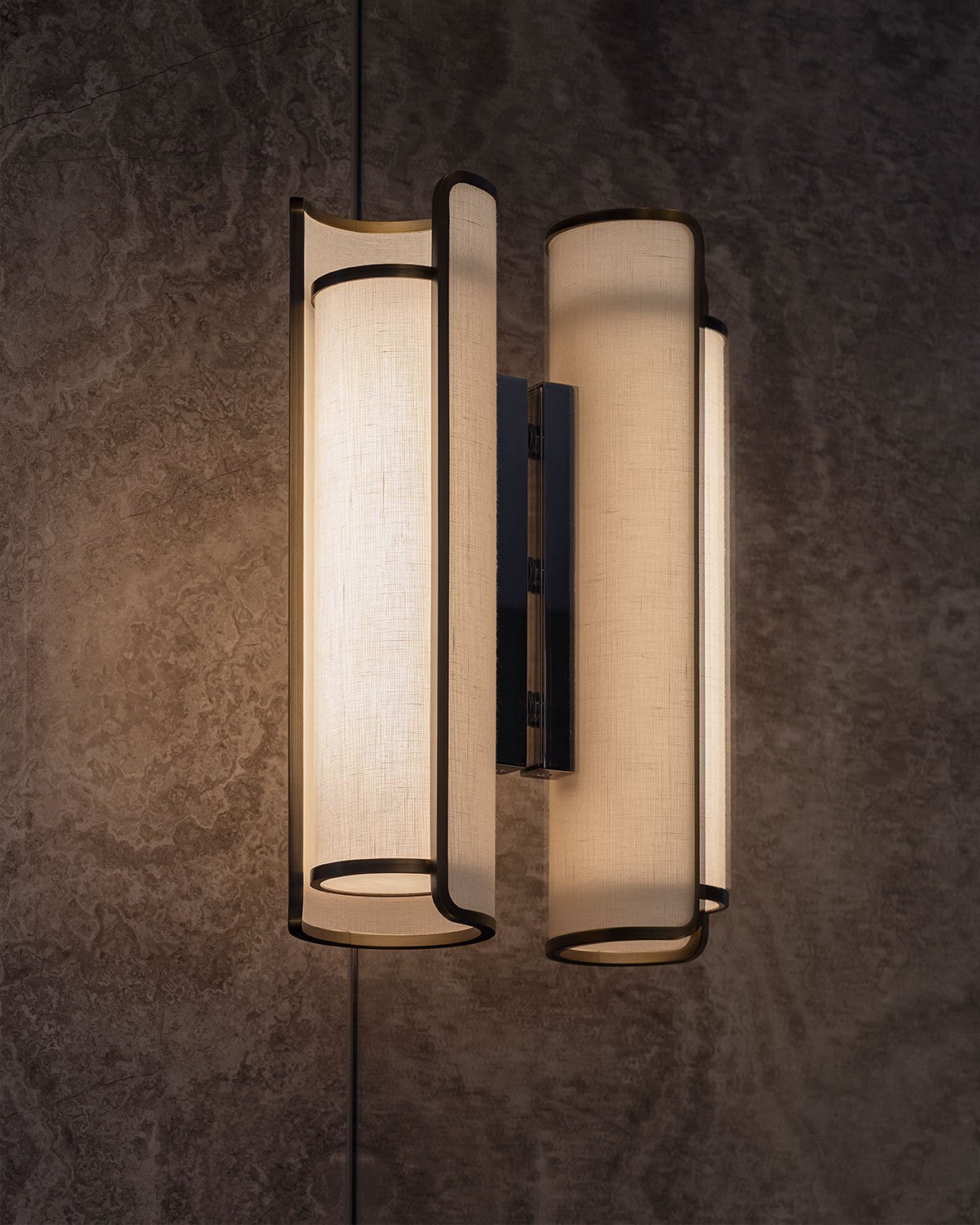
Guest room fixtures, for their part, are even softer, with Noguchi floor lamps joining dignified, fabric-wrapped sconces.
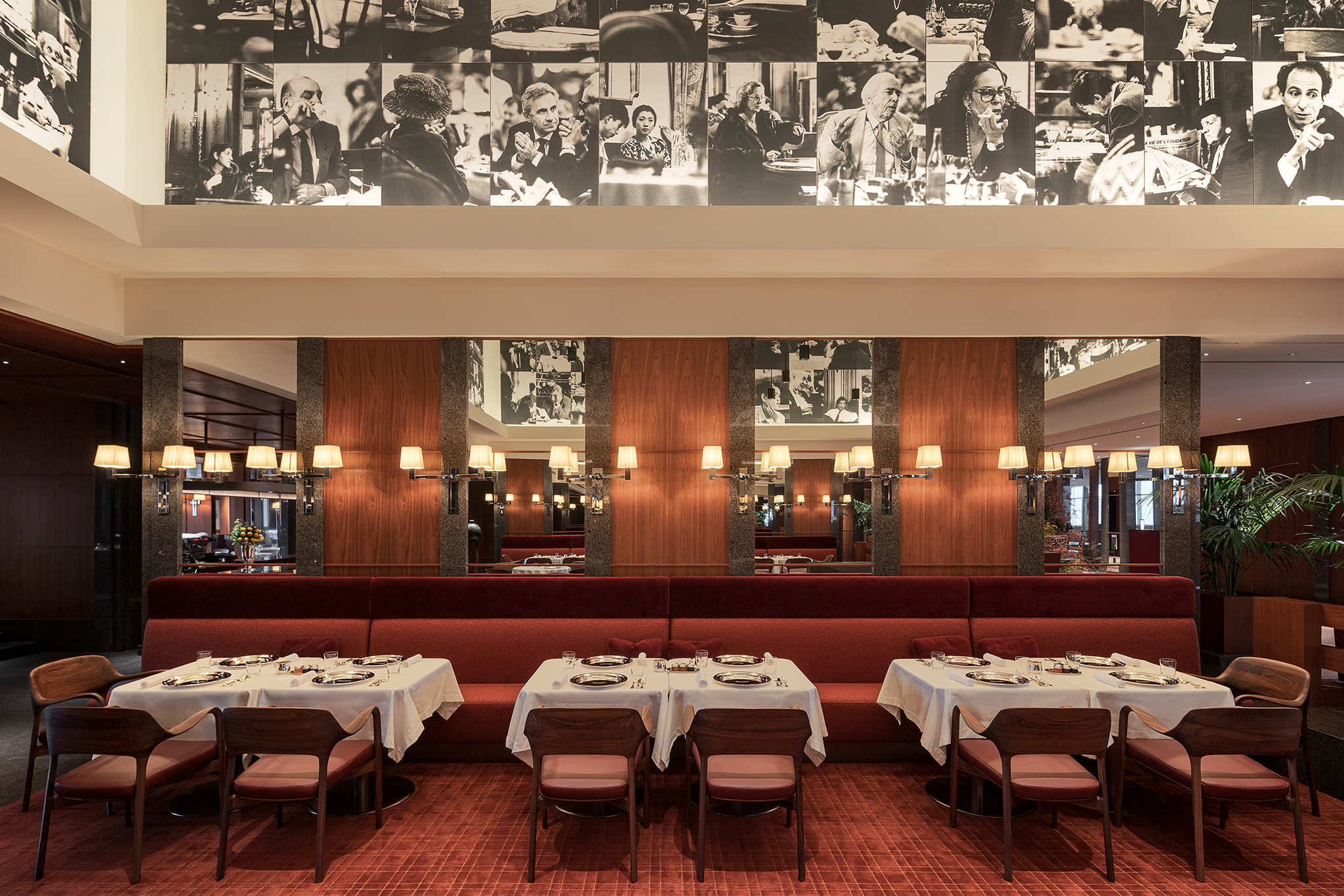
Otherwise, the most dramatic makeover plays out in Girandole, the hotel’s French restaurant. Chef Alain Ducasse — a frequent collaborator of Jouin Manku — has taken over, and the updated design adopts deep burgundy tones to hew closer to the spirit of a true brasserie. Again, the space’s original mural (this time featuring black and white photos captured by Vera Mercer in a selection of Parisian restaurants) has been carefully preserved.
At a time when the multiplex has no shortage of disappointing reboots, we’d never encourage Sofia Coppola to consider Lost in Translation 2. But if her original film’s central duo, Bob and Charlotte, were somehow to find themselves back at the Park Hyatt Tokyo some 20-odd years later, they’d surely have a lot to catch up on. Still, after a drink or two, they might be relieved to discover that not much has changed.
Jouin Manku Reconsiders a Tokyo Hotel Known as a Melancholic Haven
The Parisian studio honours the Park Hyatt Tokyo — made famous in “Lost in Translation” — with subtly uplifting updates.