
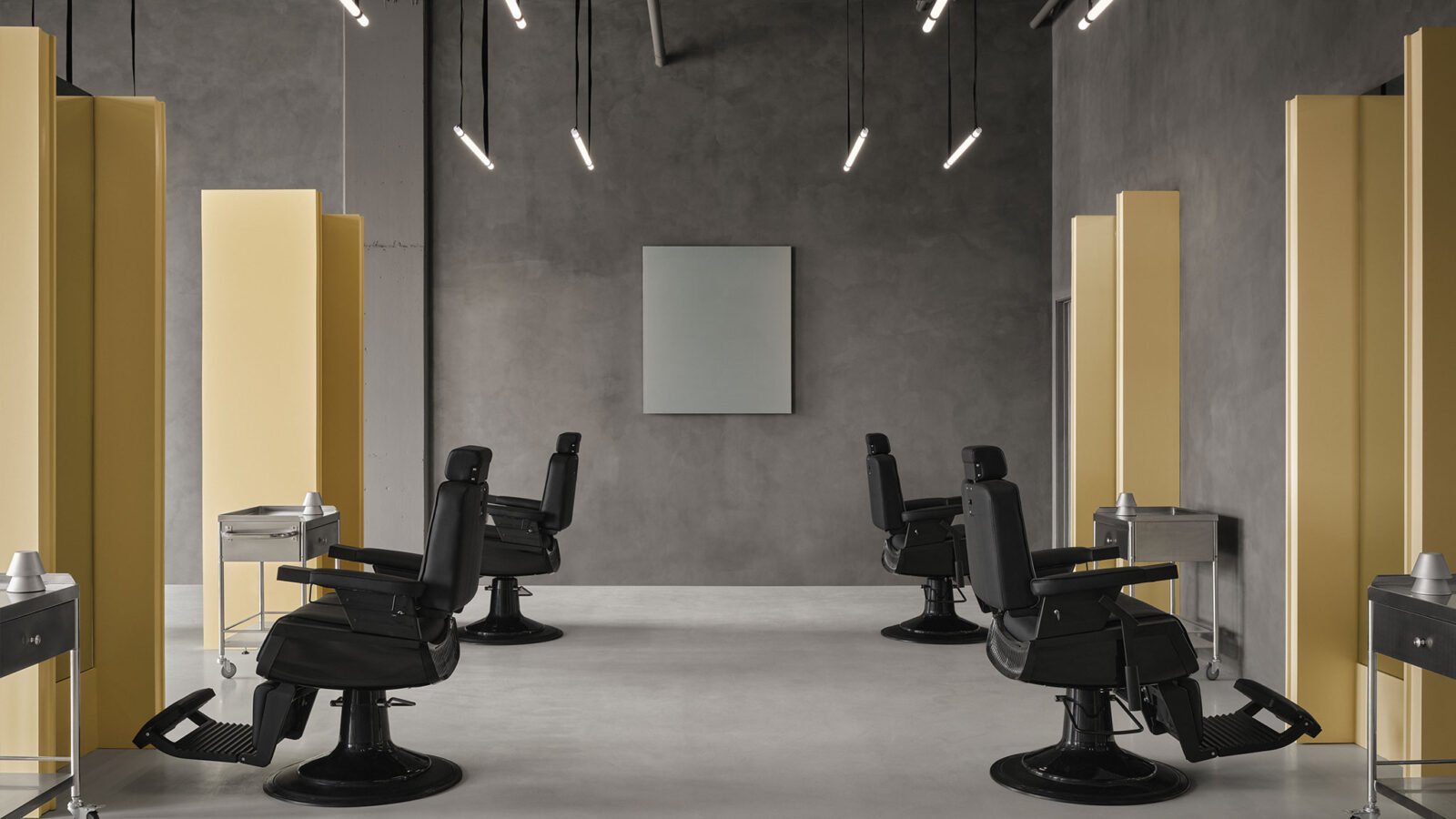
Traditionally, barbershops identified themselves with a signpost featuring rotating red, white and blue stripes. This popular visual signifier was a holdover from early medieval barbers, who also performed bloodletting – draining customers’ blood to prevent disease (or so they thought at the time). The red and white colours represented blood and bandages, respectively, while the shape harkened back to a pole that patients were given to grip during surgeries. As barbers grew to focus exclusively on hair and doctors took up the task of treating illness, blue was added to the signage to distinguish grooming and medical practices. And barbershops continue to evolve. In Laval, Quebec, for instance, Salon Volta embraces conversation-starting, lounge-centric design elements that capture the 21st-century salon’s role as a creative and social hub.
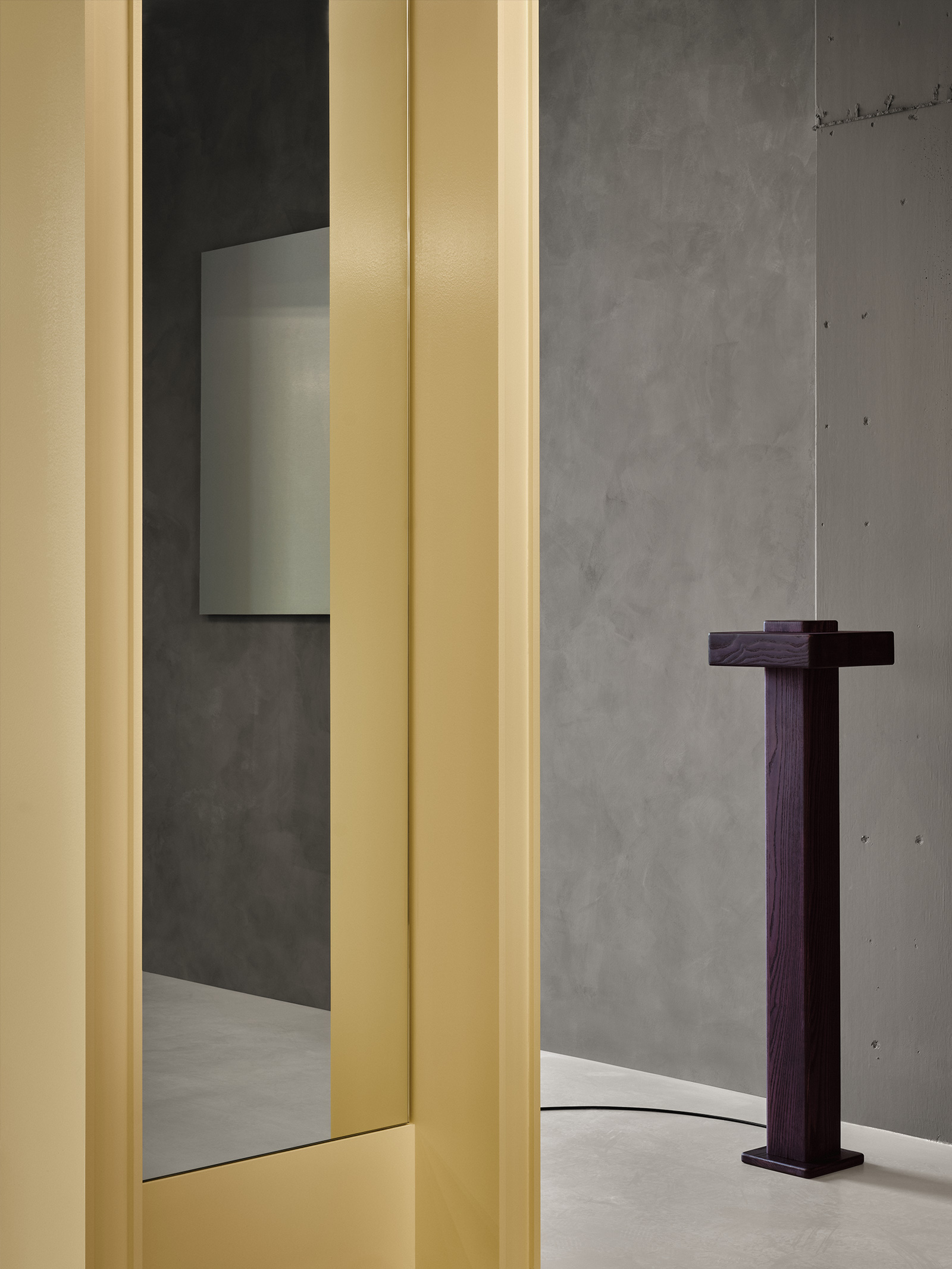
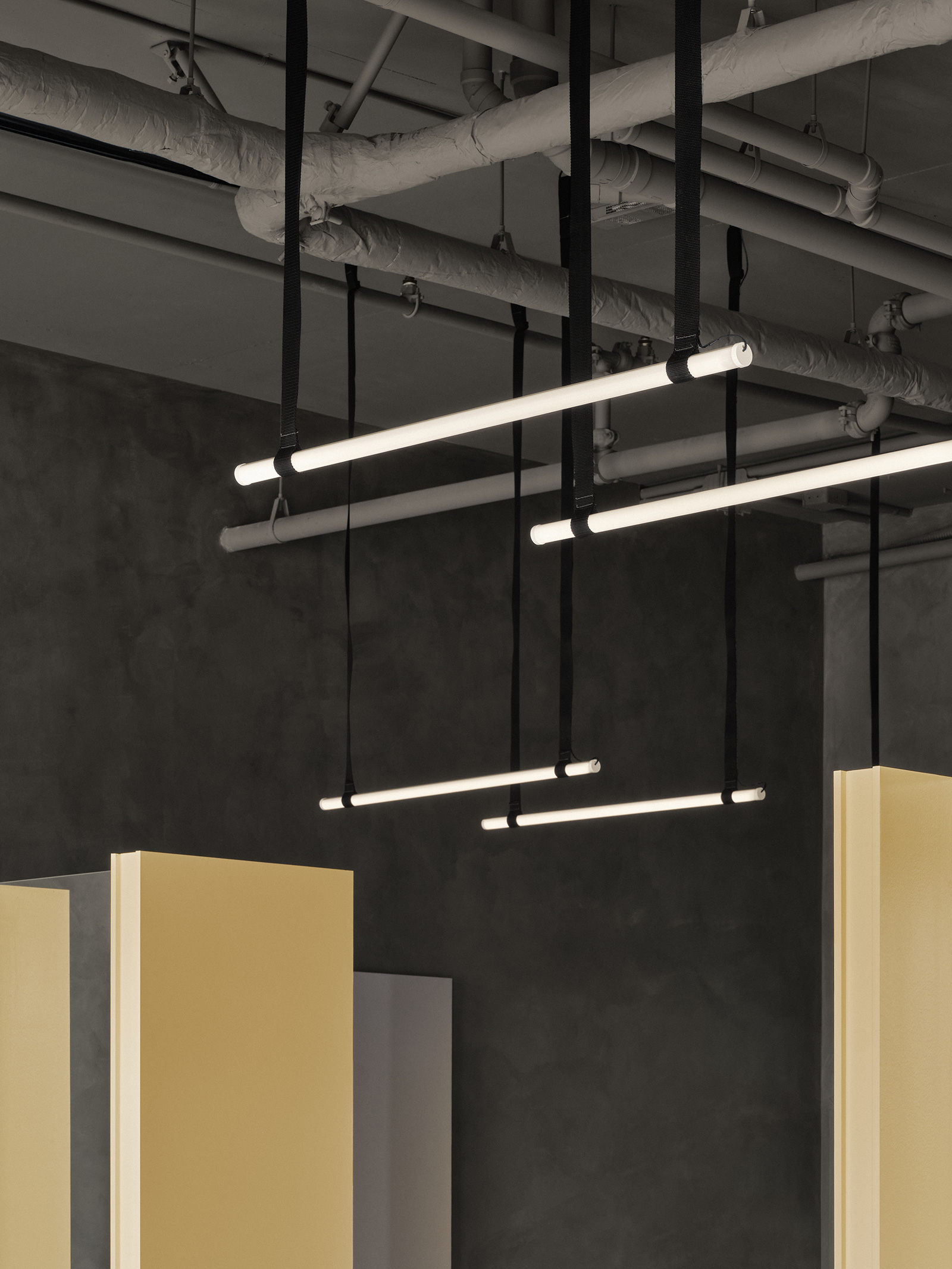
To build this identity, Montreal design studio By Lemoignan started by abandoning the classic red, white and blue barbershop palette entirely. Other touchstones of the grooming salon typology — namely, checkerboard floors, wood cabinetry and cluttered wall decor — have also been trimmed away. In their place are pared-back, slate grey lime-wash walls and matte epoxy flooring that contributes to a primordial, cave-like environment. From there, contrasting elements introduce pops of butter yellow and deep black, while a strong focus on clean lines and exacting forms echoes the precise handiwork of the professionals on site. Deftly reflecting the barber’s transformation from a pseudo-surgeon into an artist, the overall outcome is an avant-garde setting that could easily pass for a contemporary gallery.
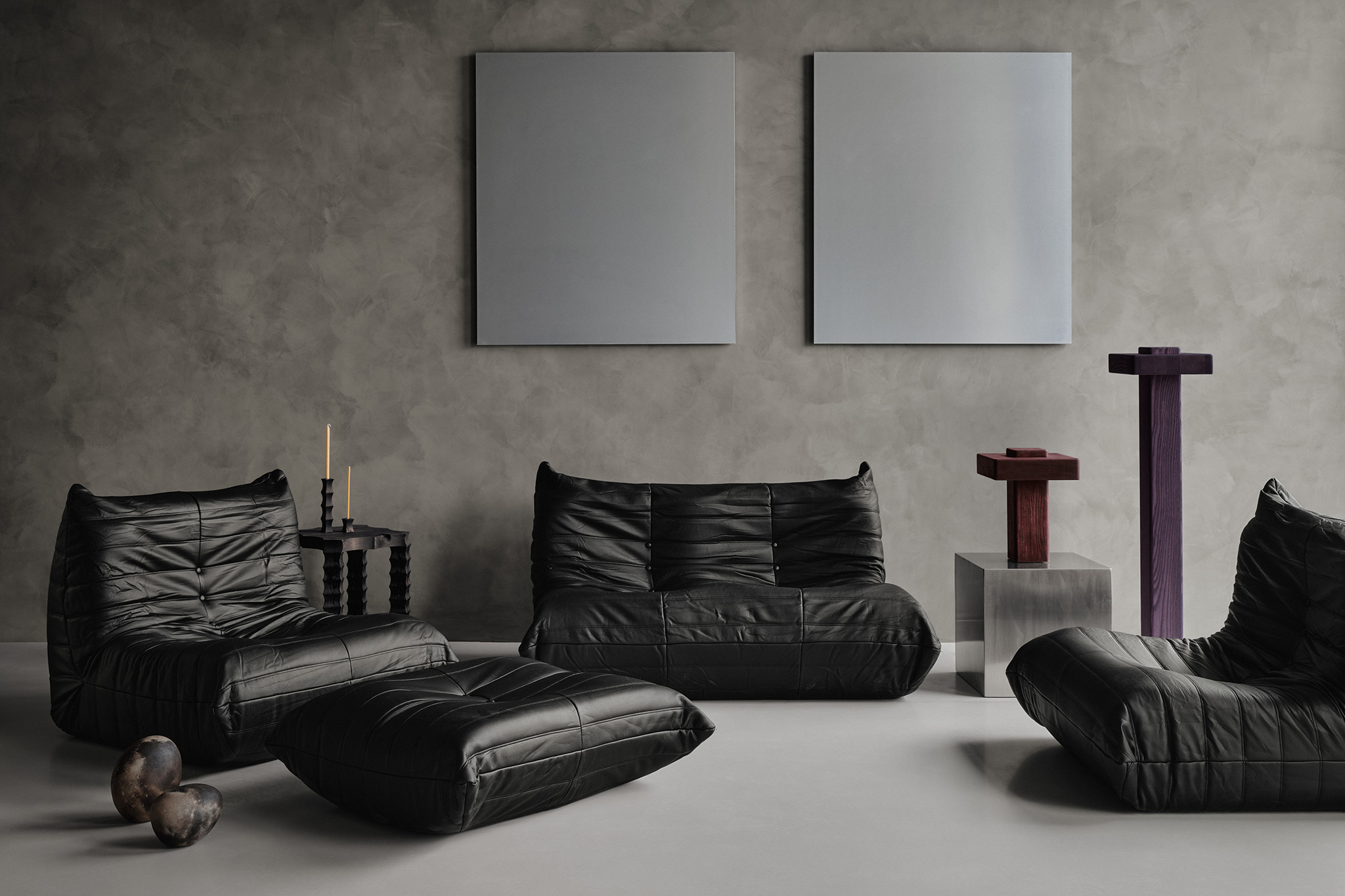
This emphasis on creative expression continues with the project’s sophisticated furnishing selections. In the lounge zone, a trio of black leather Ligne Roset Togos join statement-making contributions sourced from Montreal’s thriving creative scene. Alongside a charred pine side table with serrated legs from Igor Zigor’s Spiky series, the area showcases totemic lighting from Pillar, a collaboration between Studio Super Sunday and By Lemoignan itself. (Both Pillar and Spiky were also standouts at Ensemble, a recent exhibition held during Toronto’s 2026 DesignTO festival this January.) Together, this vignette lays the foundation for a relaxed communal waiting area where clients feel encouraged to strike up conversation with one another — perhaps by discussing the many sculptural designs they’re surrounded by.
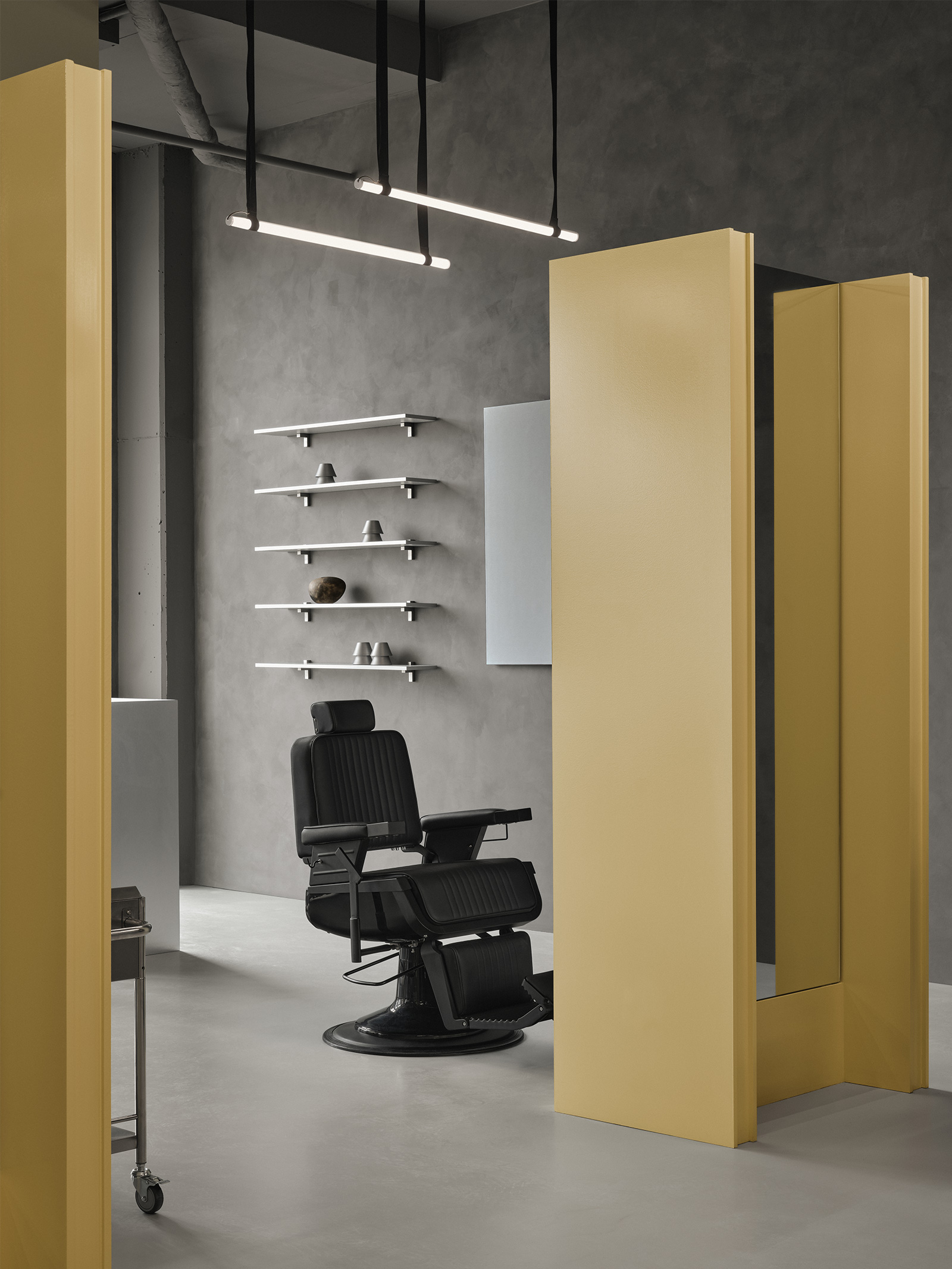
Over at the barber stations, By Lemoignan opted to install some chairs in the centre of the room as opposed to clustering them all along the walls. This layout ensures fluid movement throughout the space, further adding to the dynamic, social atmosphere. Custom-fabricated by a local woodworker, monumental frames around the mirrors that anchor each station help to structure appropriate flow.
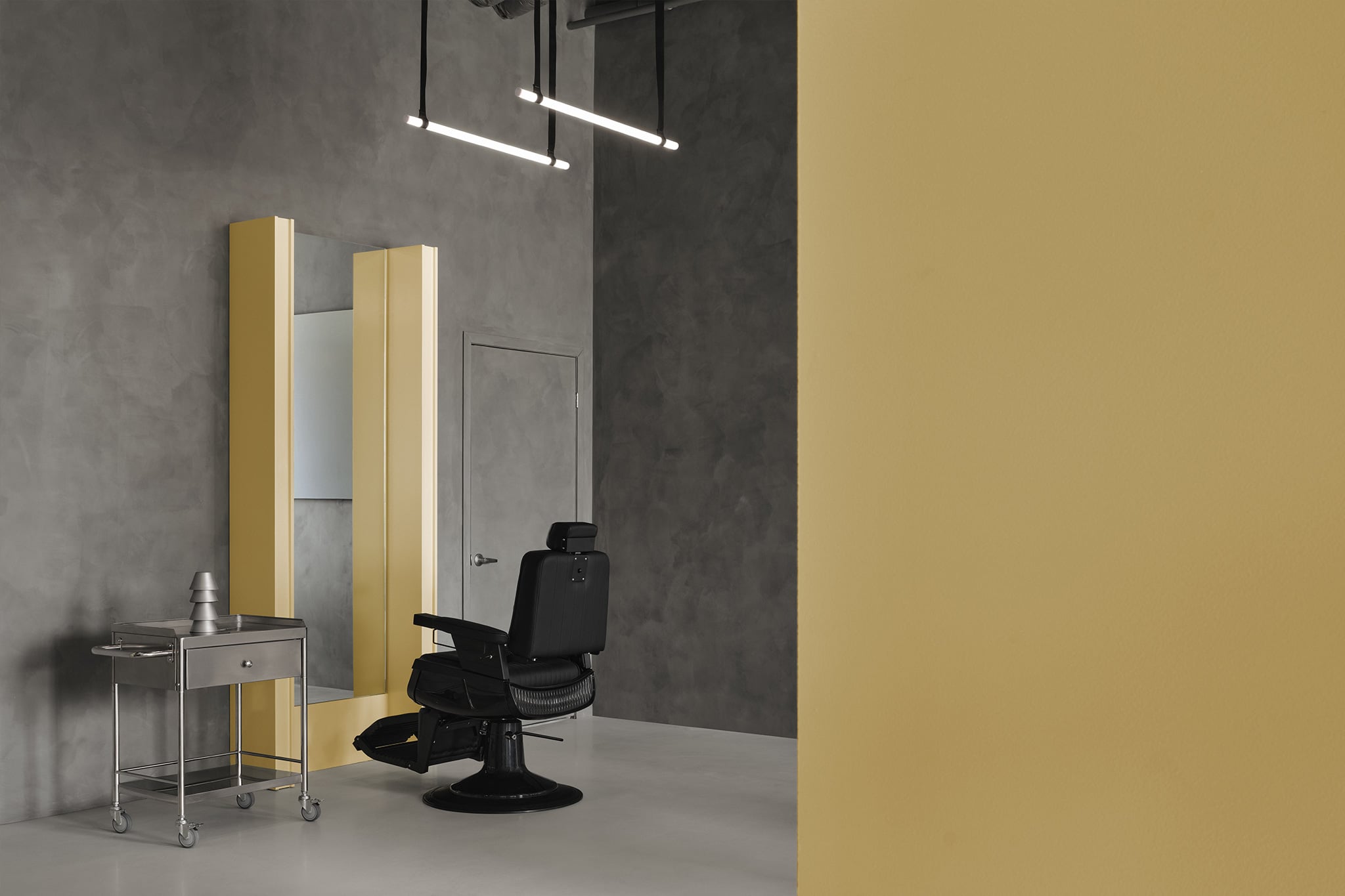
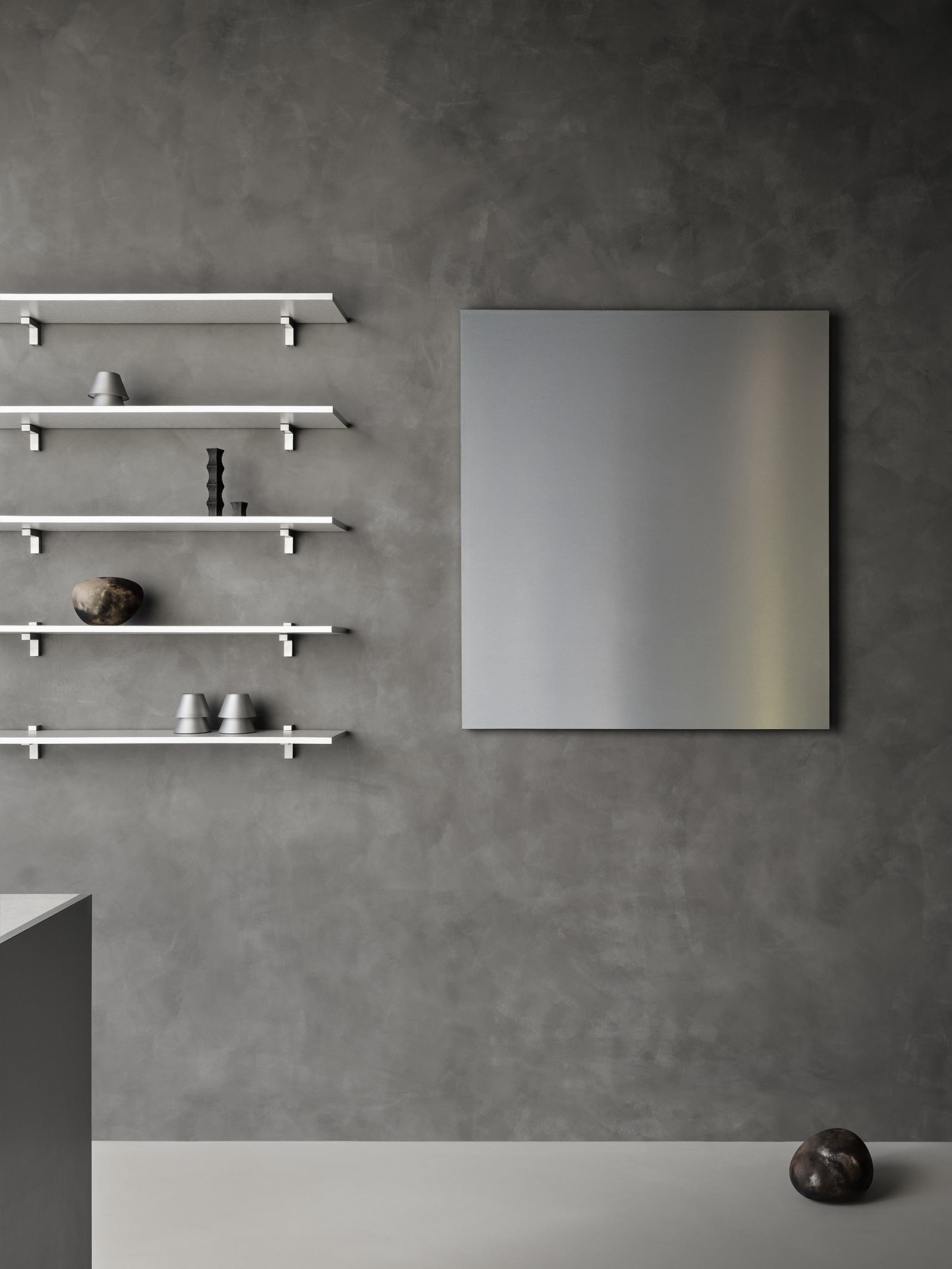
Throughout both areas, stainless steel elements (including a series of hard-edged wall-mounted shelves) evoke razor blades and scissors — two key tools of the barbershop trade. And there is still one nod to the profession’s origin story, too: Each station includes a steel cart that resembles an old medical trolley, accented by a small aluminum table lamp designed by Sauvé Morissette. Of course, there won’t be any bloodletting here — instead, Salon Volta promises to improve one’s mental health with good conversation and a confidence-boosting haircut.
Salon Volta Is a Barbershop Where the Design is as Crisp as the Fades
Montreal studio By Lemoignan conveys the sharp precision that barbers bring to a fresh trim.