
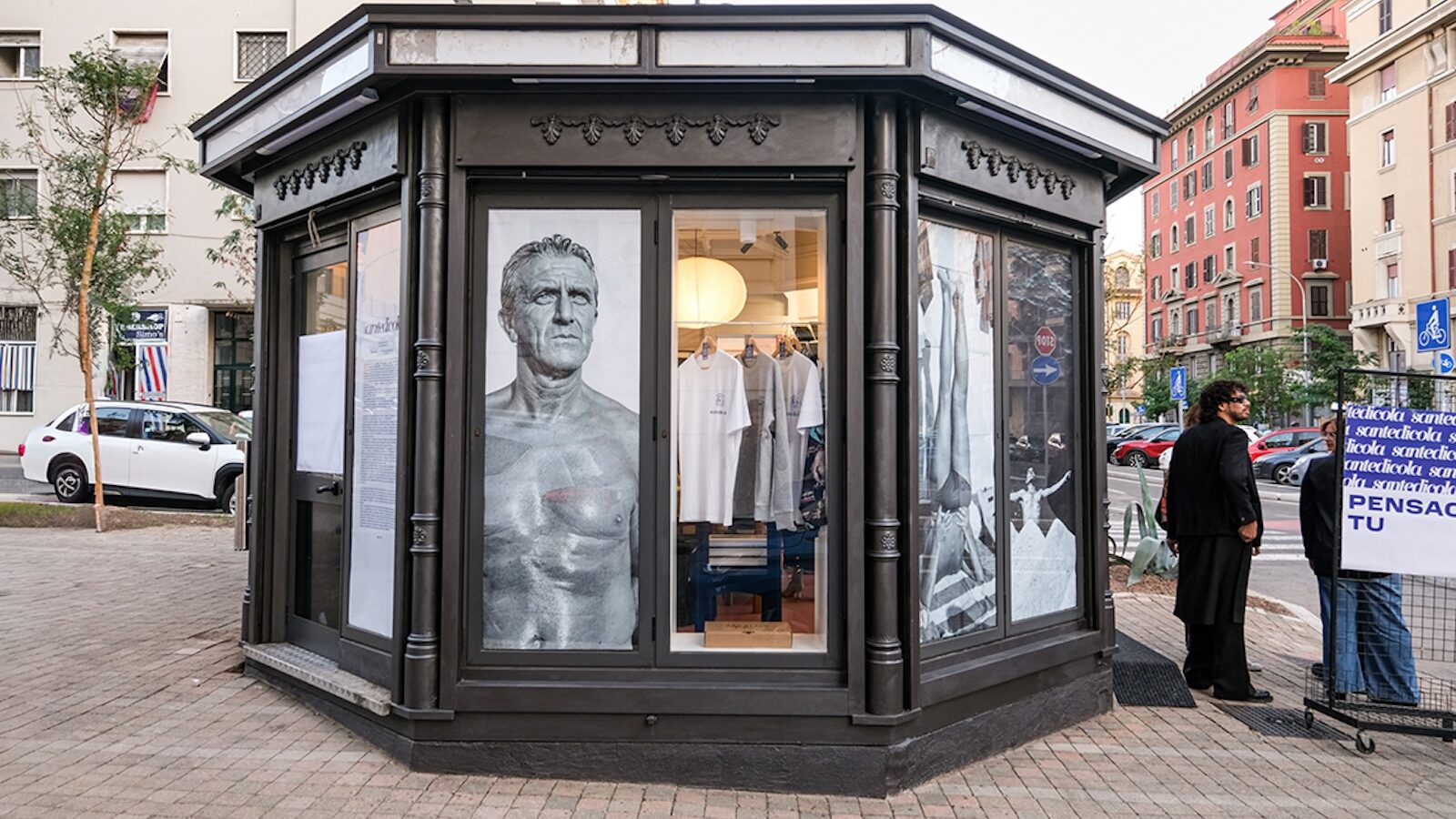
Among Italy’s most quintessential urban archetypes are the edicole, or newsstands, that have been an enduring feature of Italian streets since the 19th century. These kiosks, selling magazines, newspapers, bus tickets, postcards and more, each hold special meaning and activate a quotidian ritual for their individual users. On trips my family took to Italy, my mother, a tailor, always made sure to pick up a few issues of Burda, Italy’s version of Butterick, for its dress patterns. On more recent forays of my own, often during Milan Design Week, I’m keen to get my hands on a variety of large-format design glossies. The edicola is often the first stop on the way to work for many Italian residents, to pick up that day’s La Repubblica and have a chat with the ever-genial shop-keeper – as ingrained in the culture as the morning espresso.

Sadly, edicole are going the way of all things analogue. From the 40,000 in operation in the early 2000s, their numbers have dwindled to 12,000 across Italy. More and more, their fate is mirroring the oft-foretold demise of the print merchandise they sell.
And yet, despite their uncertain future, or perhaps because of it, the iconic newsstand is garnering newfound attention and appreciation. It is evolving into new uses. Predictably, that means many a fashion pop-up: Louis Vuitton, l’Oréal and Miu Miu have all tapped into the typology’s nostalgic cachet with branded installations. At the same time, however, artist collectives and curators are also transforming many into galleries and social spaces with a hyper-local flavour. And there are plans to refurbish some of Milan’s edicole as first aid centres, kitted out with defibrillators and other emergency gear, in time for the winter Olympics.
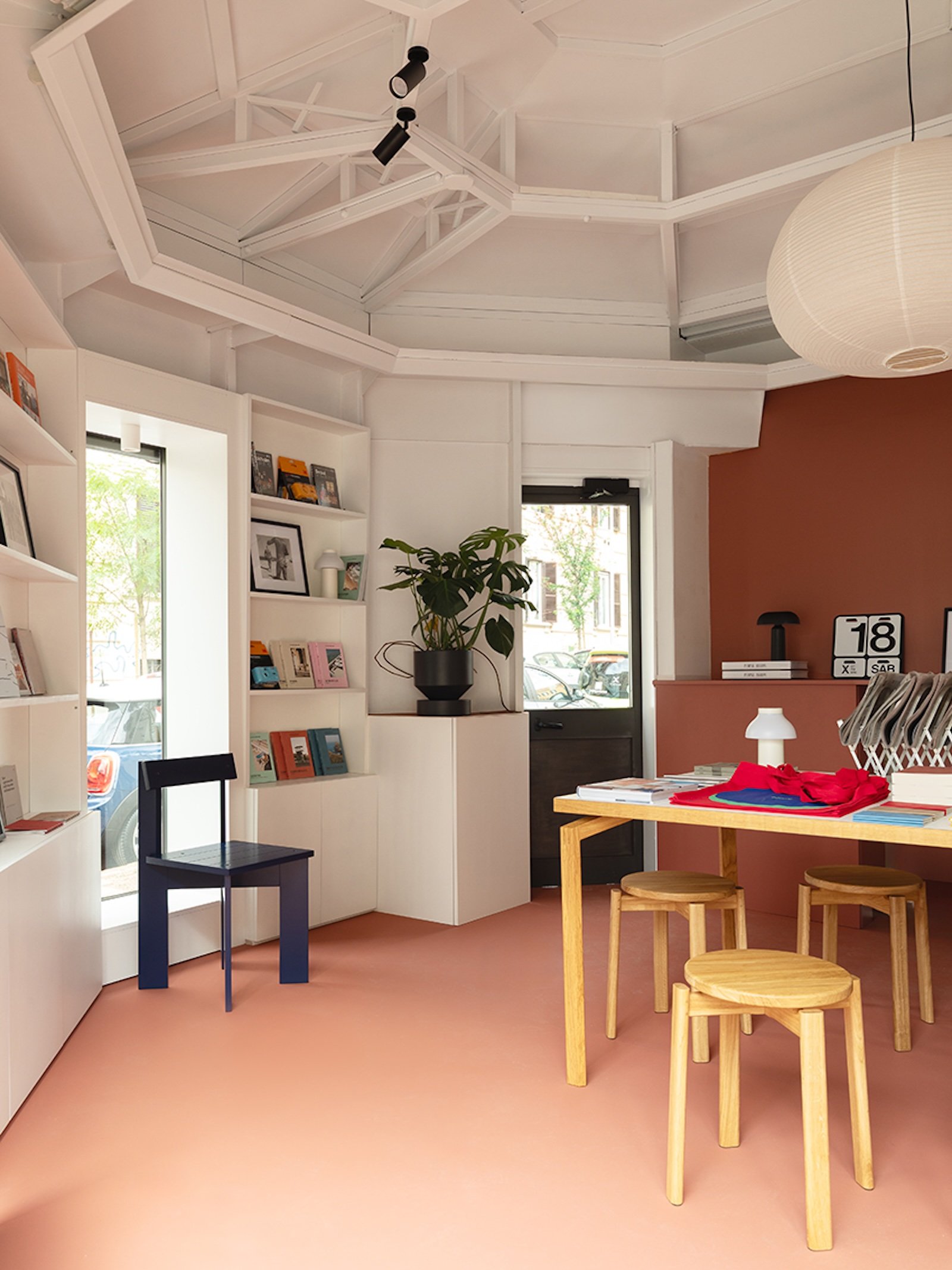
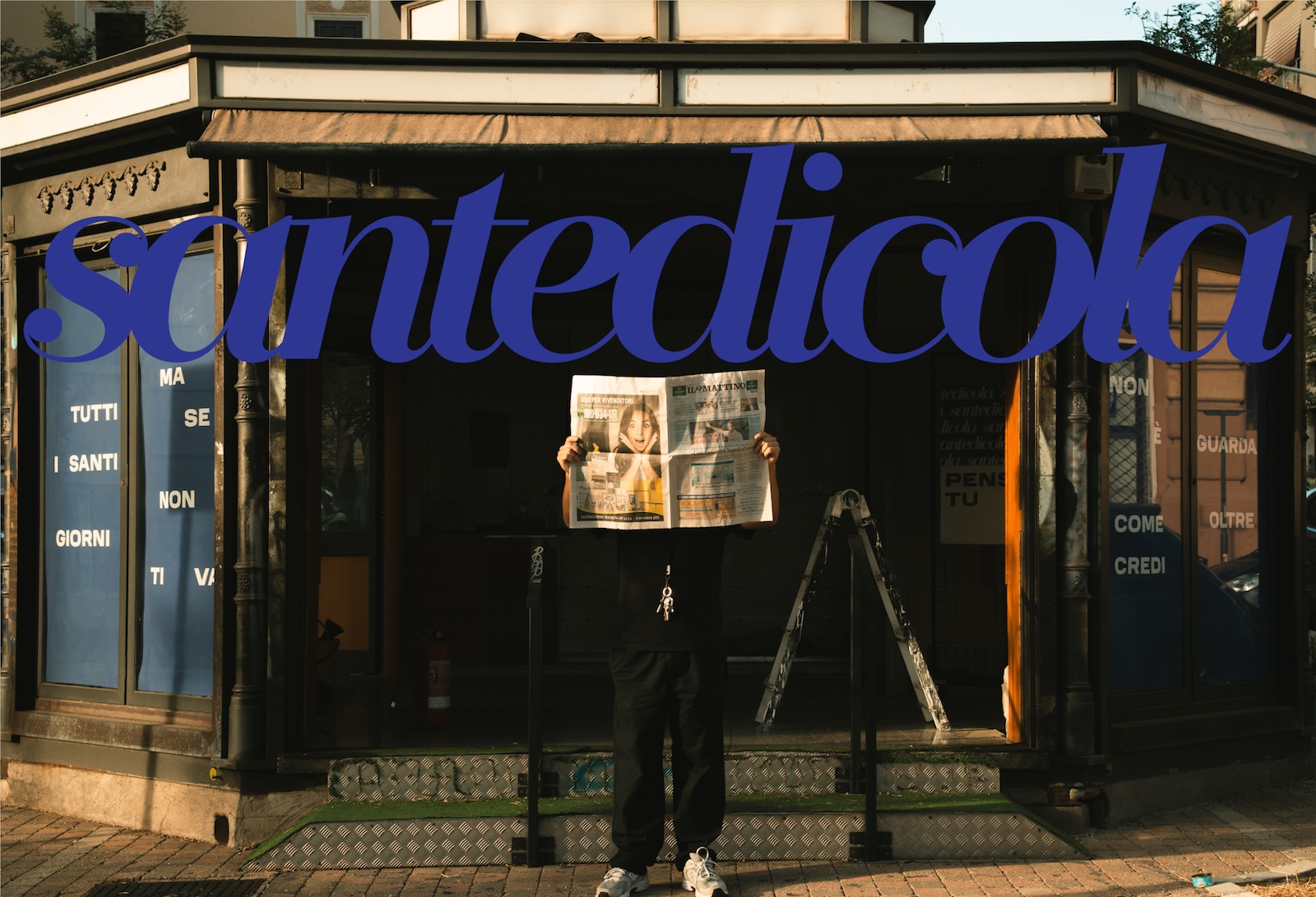
Into this evolutionary fold arrives Santedicola. Such is the name of a renewed kiosk in Rome’s San Giovanni district by 30-year-old Naples native Gaetano Orefice, who took over a derelict octagonal edicola in Piazza Imola to bring it to life. Speaking to RomaToday, he explained, “I live nearby. When I drove by, I always saw it closed; it was a shame. Last August, it was put up for sale, and I said to myself, ‘Something has to be done. It needs to be taken over, reopened, but above all, redeveloped.’” To this end, he has given it a new identity in the spirit of its former glory.
Imagined by Orefice as “a cultural outpost, a revitalized urban landmark and a gathering place,” Santedicola was styled in collaboration with the Roman design studios Dispensabile and Cantiere Galli Design. Together, they’ve remodeled the kiosk with a refreshingly open interior (edicole come in many forms and sizes, some only big enough for a shop-keeper, others capacious enough for patrons to step into). White-lacquered wood shelving, terracotta-toned Forbo vinyl flooring and elegant design pieces – including a Magnus Olesen table, Hay’s Chisel lounge chair, stools and chairs by Audo Copenhagen and Ferm Living and lighting by Hay and Artemide – render it an impeccably appointed living room.
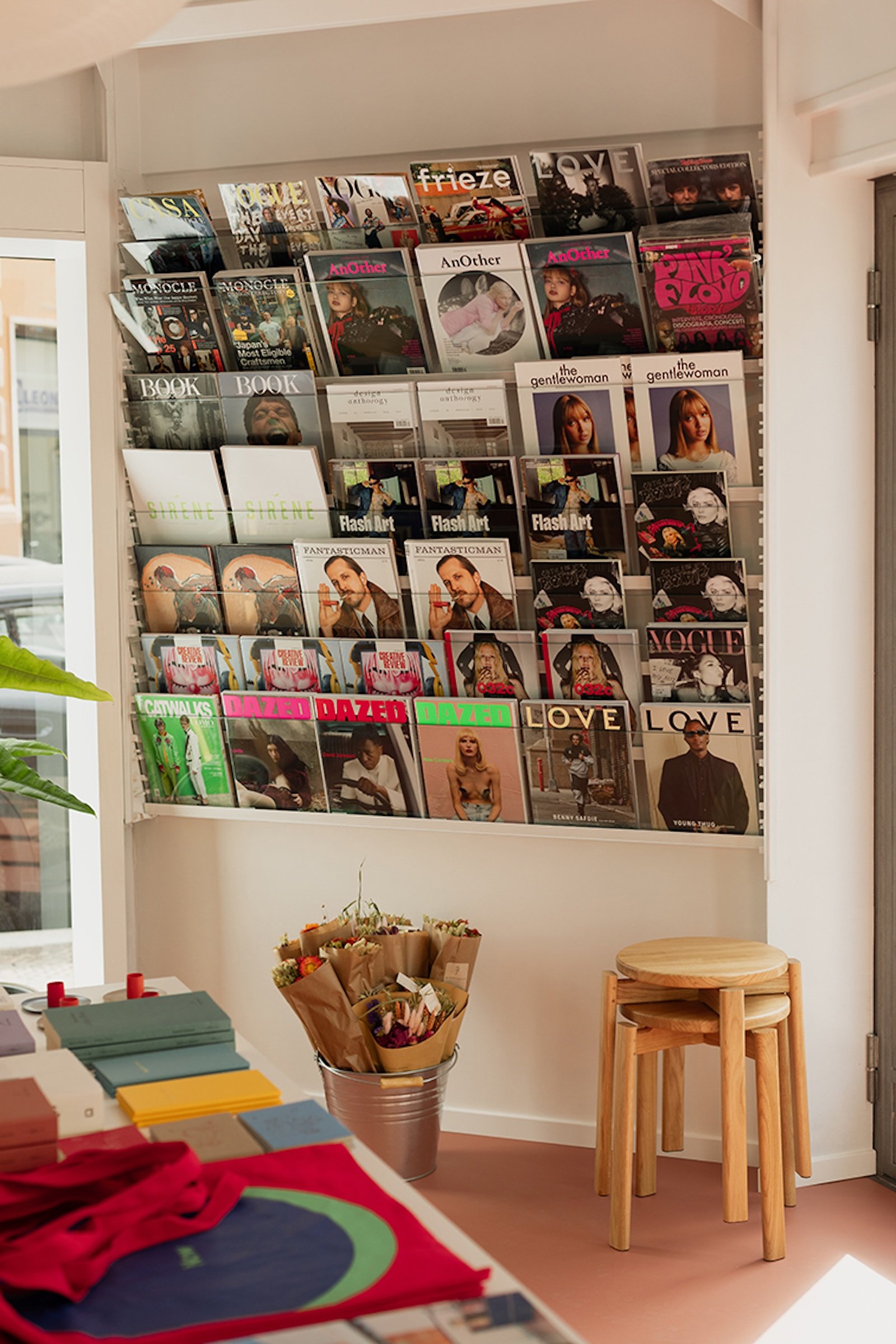
But it’s the merch and programming that really makes the space, which will host “pop-up exhibitions, creative workshops, editorial presentations, and intimate events.” Besides the uber-curated selection of books and magazines (unlikely to include the likes of Burda), it sells a few other sundries besides, including reusable Kodak cameras, Palomar CityMaps, canned cocktails by CIN CIN, artisanal ceramics and exclusive Santedicola merchandise.
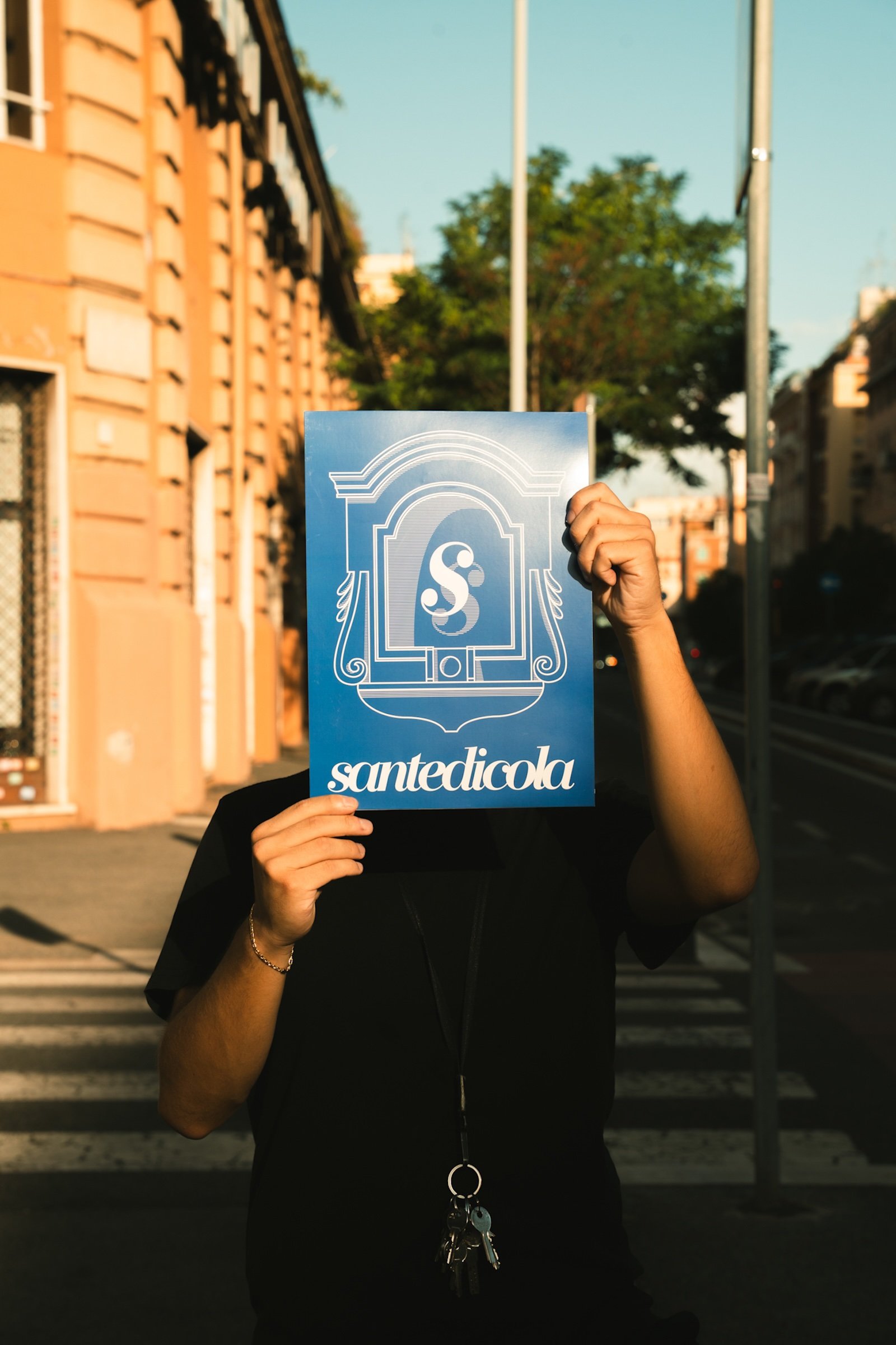
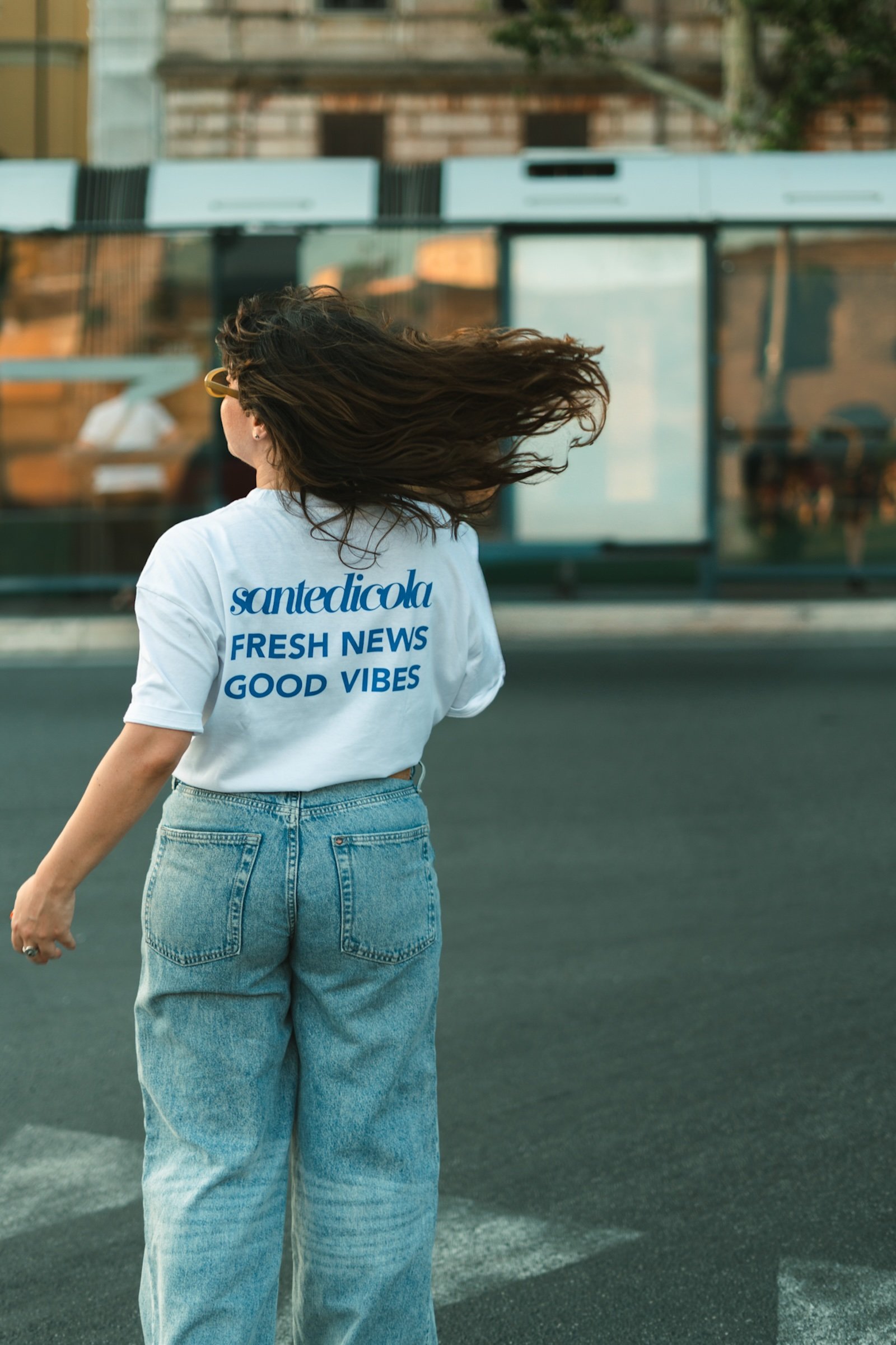
So, rather than an overstuffed and somewhat random offering – part of the appeal of the old-school edicole – this is a decidedly refined experience, more highbrow urbane than gritty urban. And it has its own charms. Tying the endeavour together is branding created by American Italian designer Jonathon Dominic Spada, who was inspired by another Italian urban phenomenon: the votive shrines integrated into building exteriors as tiny outdoor altars. Also, like the octagon, a symbol of rebirth, these holy niches share a common Christian iconography. This once-destitute Roman edicola, then, is elevated to the sacred.
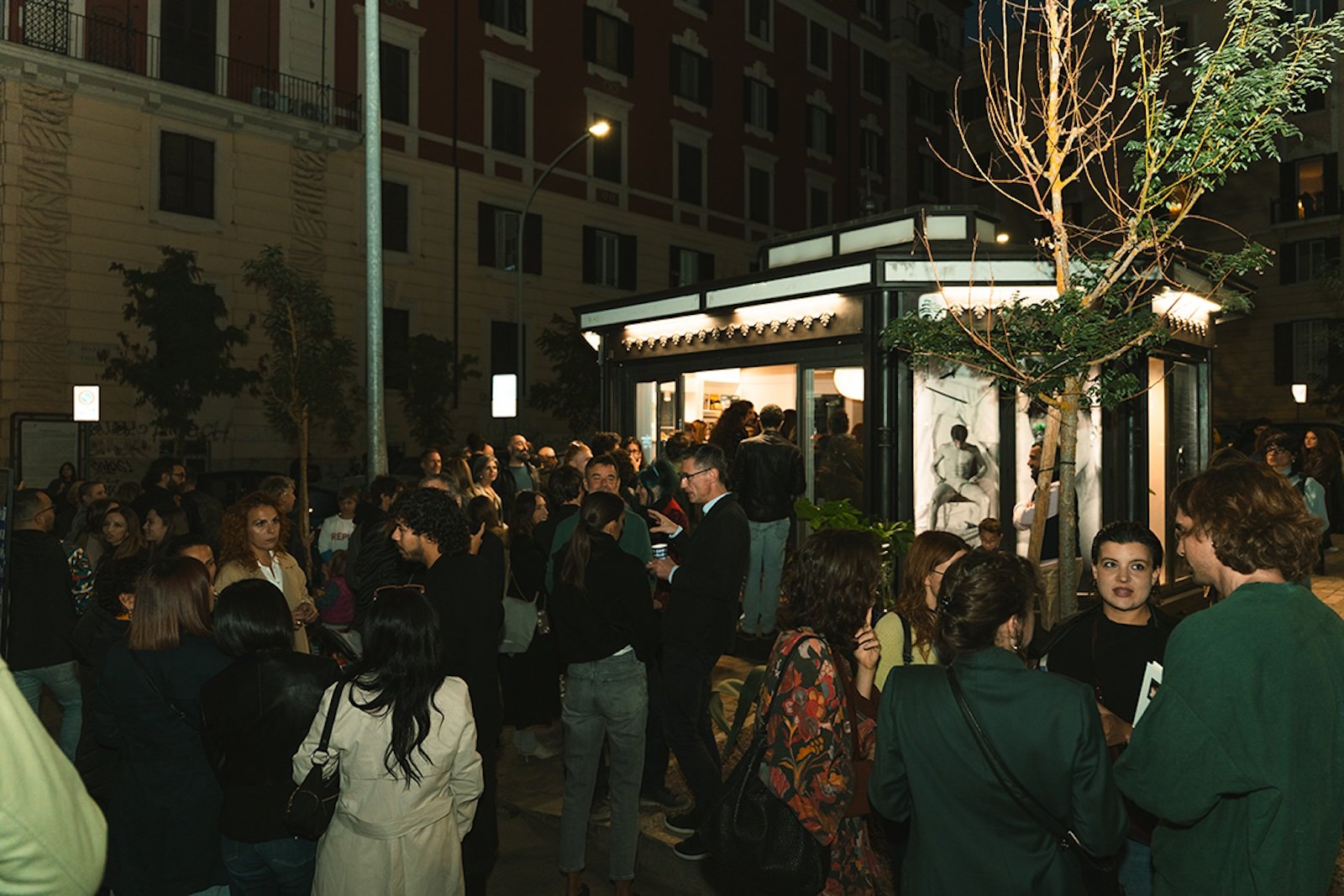
At its opening last month, Santedicola inaugurated its first exhibition, Lanterna Beach: I volti del Braccio (The Faces of the Braccio) by Mariano Doronzo. The project’s black and white photography portraying the daily life of the “lanterniani” — a group of male bathers that soak up the sun on the disused (and military-restricted) Braccio pier in Barletta, Puglia – covers most of the eight sides of the exterior. This non-stereotypical representation of Southern Italian men who have, in the words of Doronzo, adapted “this brutal unusable concrete infrastructure [into] an idyllic spot for relaxing and recreational activities,” is a fitting debut. It shows how urban structures, big and small, have many lives, meanings and permutations.
Santedicola Revives a Roman News Kiosk in Sacred Style
Young creative Gaetano Orefice bought an old edicola in an even older piazza and transformed it into a bookshop and cultural hub.