


September marks the return of the design calendar in earnest. After the summer slowdown, major fairs and festivals from Paris to Bologna to London bring a fresh round of product launches and installations. School is back in session, too, with universities relaunching their public programming through lectures, exhibitions and other events that open up academic conversations to a wider audience. Together, they make September one of the busiest months for seeing what’s new in design and architecture. Read on for our curated guide to the events worth knowing about now.
1
Detroit Month of Design 2026
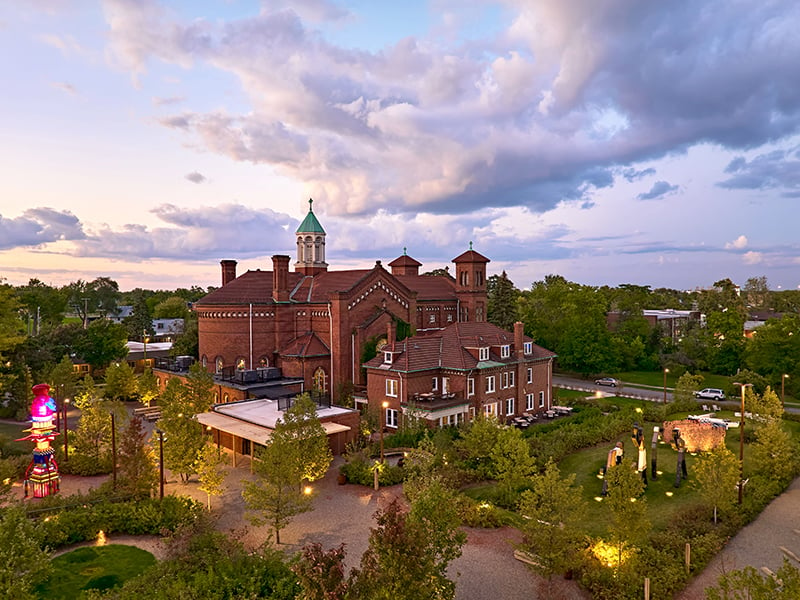
As the only UNESCO City of Design in the United States, Detroit makes a fitting setting for a month-long celebration of the ways architecture and design shape how we understand a place. This September, Detroit Month of Design returns with events across the city, ranging from major museum exhibitions to public installations and conversations that dig into the forces behind its creative culture. At the Detroit Institute of Arts, Georgia O’Keeffe: Architecture offers a less familiar perspective on the modernist icon through some 35 paintings of the built environment, from Manhattan skyscrapers to the adobe architecture of New Mexico. Another exhibition, Where We Belong: The Architecture of Home, is staged inside a space modelled after the first floor of a family house. Its library, gallery, alcove and hearth become settings for exploring the idea of home as architecture, memory, inheritance and policy — with visitors invited to contribute their own stories of domestic life.

Beyond these more explicitly architectural explorations, the festival also turns to art and installation as ways of engaging with Detroit’s histories, spaces and communities. Craft artist Olivia Eshe Holt’s debut solo exhibition, Making Our Way To Midnight, uses hand-built ceramic tiles to trace Black life in Detroit through the Great Migration, familial history and cultural landmarks, while outdoors, Yazmin Dababneh’s YayaLand Takeover IV transforms a stretch of the Southwest Greenway between Michigan Central and the new Riverwalk extension into an immersive light installation, using colour to alter the atmosphere of the everyday passage.

The program also makes room for conversations around identity, migration and representation in design, bringing Detroit-based practitioners into dialogue with voices from further afield — including a notable contingent from Toronto that includes architect Farida Abu-Bakare, designer Quan Thai (who now teaches architecture at Michigan’s Lawrence Technical University), and writer and editor Stefan Novakovic. Their panel discussion, Global Diasporas, Local Design Culture, also featuring Nigerian-born Detroit artist Romeo Okwara, will unpack how designers negotiate multiple cultural identities while remaining rooted in local communities.
2
London Design Festival 2026

Across London, this year’s festival — running September 12 to 20 — offers plenty of opportunities to consider how design responds to changing social, environmental and material conditions. SOM looks at that question at the scale of architecture with Change: 40 Years of SOM London, pairing four decades of built work with research into regenerative buildings, low-carbon materials and even habitats for life beyond Earth. That forward-looking material focus carries over to Material Matters, where waste-derived bricks and panels, compostable foams and regenerative biomaterials offer a snapshot of promising alternatives to conventional manufacturing and construction. Materials take on more cultural significance in Studio Saar and Atelier One’s The Pangolin Shield: a bamboo gridshell clad in traditional Indian police shields and farmers’ rain shields that transforms symbols of protection into a public canopy for reflecting on colonialism, migration and ecological exploitation.

Elsewhere, Sense of Place builds on the multisensory showcases we’ve seen cropping up at other design fairs, challenging the discipline’s longstanding visual bias with rooms devoted to touch, sound, scent, taste and sight — down to ceramics made from waste, paired with cocktails that extend the experience into flavour.

There are notable product debuts to look forward to as well: Faye Toogood launches Johnny — playfully named for the British slang for condom — a family of sculptural lights with scrunchable paper skins that visitors are encouraged to touch and reshape, while MADE translates the Barbican’s architecture and interiors into a 23-piece collection of furniture, lighting, textiles and accessories, presented alongside an immersive archival installation at the institution itself. At the V&A, Awakenings rounds out the program with interventions exploring how design, craft and technology can reveal connections that usually go unseen.
3
Harvard Graduate School of Design Lecture Series — Cambridge, USA

Back-to-school season offers an excuse to return to the lecture hall — even if you’ve long since graduated. Harvard GSD’s fall public program brings leading architects and landscape architects to Cambridge for a series of talks that examine questions of infrastructure, landscape and climate resilience. The season opens with Infrastructure in a Time of Flux: Methods, Conditions, and Situations, an exhibition exploring how architecture and urbanism might move beyond assumptions of permanence to respond more productively to environmental, political and technological change. Its September 10 opening program, Actions in Public, includes a curator-led walkthrough and a screening of Christo and Jeanne-Claude’s Running Fence, extending those questions into a broader discussion of the artists’ legacy.

Later in the month, Reed Hilderbrand founder Gary Hilderbrand reflects on 25 years of landscape practice, in particular focusing on the narrative aspect of design; Neri&Hu’s Lyndon Neri and Rossana Hu speak to the idea of cultural translation, using projects from their Shanghai-based studio as case studies to explore architecture’s capacity to operate between histories, identities and geographies; and in Meditations in Entropy, Dhaka architect Kashef Chowdhury turns to one of the world’s most climate-vulnerable regions, sharing projects shaped by Bangladesh’s ecological conditions and arguing for architecture grounded in climate, materials and context. For anyone too far from Cambridge to play student for the night, the GSD will also livestream several of its fall lectures online.
4
Park(ing) Day 2026 — Toronto, Canada

What could Toronto do with the space currently reserved for a single parked car? Taking place from September 18 to 20, Park(ing) Day offers plenty of answers (albeit temporary), inviting designers, artists, community groups and residents to transform parking spaces across Toronto and the GTA into miniature parks, installations and gathering places. The annual event, coordinated locally by Dubbeldam Architecture + Design since 2022, uses these small-scale interventions to provoke a much larger conversation about who urban public space is designed to serve; for 2026, organizers are aiming for their largest edition yet. While information about this year’s activations is still to come, past editions suggest how inventive the format can be: in 2025 alone, visitors encountered a tiny house squeezed into a street-parking footprint, a curbside pollinator habitat and a Church-Wellesley Village site transformed into an outdoor library and community storytelling hub.
5
Cersaie 2026 — Bologna, Italy
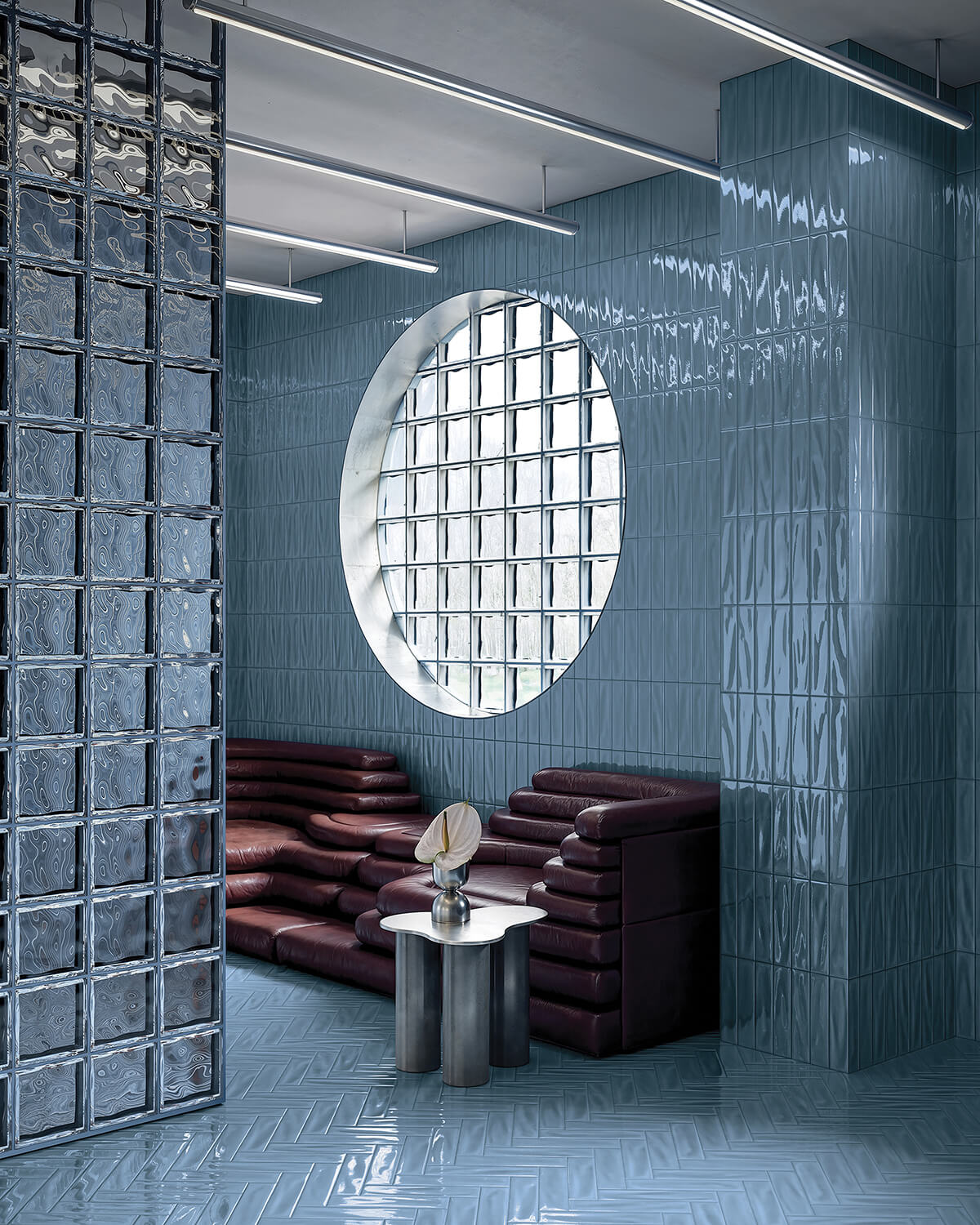
Cersaie offers a focused look at where ceramic and bathroom design is headed, with more than 600 manufacturers using the Bologna fair as a launchpad for new collections, formats and applications. This year’s collections forecast an increasingly expressive palette — metallic finishes, nature-inspired surfaces, mural-like graphics and three-dimensional reliefs — alongside the continued rise of “tile drenching,” which extends a single material across multiple surfaces to create more immersive interiors. Ceramics are also showing up in less expected places, from cabinetry and cooktops to integrated bathroom furnishings. But beyond spotting the next surfacing trends, there’s plenty of other reasons to attend. Cersaie’s Building, Dwelling, Thinking lecture series attracts heavy hitters (2016 Pritzker Prize winner Alejandro Aravena and architect Annabelle Selldorf are among this year’s speakers) who aim to situate ceramics within the broader architectural discourse.
6
OFFF Montreal 2026

Founded in Barcelona in 2001, OFFF is an international festival centred on graphic design, visual communication and digital culture, with talks and workshops that foreground the creative process behind the work. Its Montréal edition returns to the Société des arts technologiques for the second time this September, with a lineup that spans established commercial practice and more experimental approaches to typography, animation and digital design. Branding specialist Alex Center, known for his award-winning work with Coca-Cola, will appear alongside motion designer Kiel Danger Mutschelknaus, animation studio Pencil TV and Montréal’s own Principal Studio, offering different perspectives on how visual identities and experiences can influence culture. The program also gets hands-on with a workshop led by Krea creative lead Tiyé Aalem, who will demonstrate how references and moodboards can guide AI image generation toward more intentional results. And for those looking to extend the conversation, OFFF is followed on September 4 by FORUM, Caserne’s annual Montréal gathering for graphic designers and visual thinkers.
7
Paris Design Week 2026
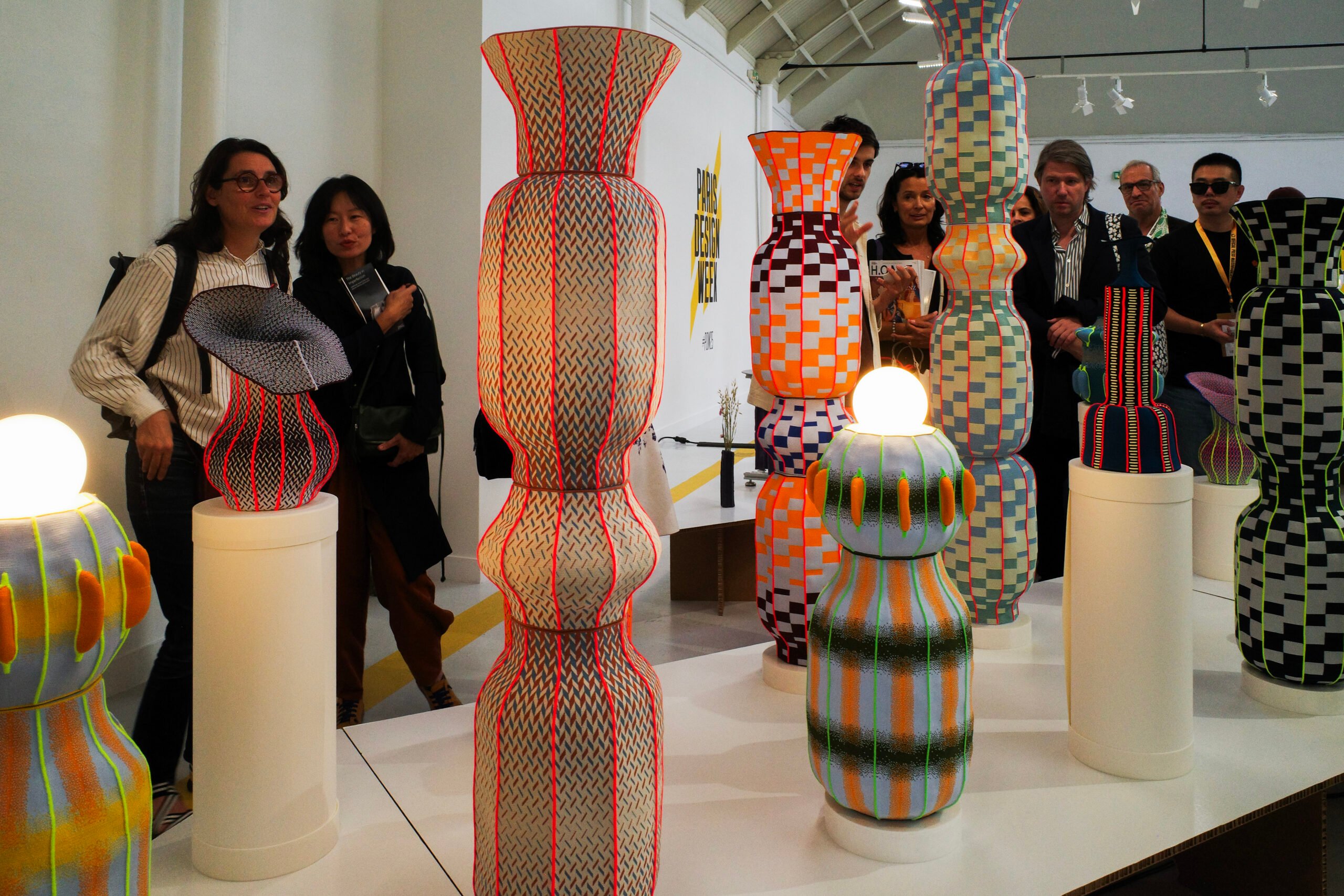
Paris Design Week rewards wandering. From September 10 to 19, exhibitions, showroom events and installations will send visitors on a whirlwind trip through the city’s neighbourhoods and landmarks (Jeremy Pradier-Jeauneau’s The Tempest installation at the Arc de Triomphe offers a particularly exciting detour). Across the city, Paris Design Factory will showcase 150 emerging designers from France and abroad at several different venues, making the citywide program as much about discovering new talent as rediscovering Paris itself.

Maison&Objet anchors the week with a more concentrated opportunity to scout new launches spanning furniture, surfaces, tableware and accessories. The fair’s Design District will spotlight three innovation-driven brands through Future on Stage and seven South African studios through the Rising Talent Awards. Bridging the fair and the city, ambassadors Masquespacio will unveil two installations interpreting this year’s Pulse in Motion theme — one at the Villepinte Exhibition Centre and another out in the city.
8
Tycos Drive Trade Day 2026 — Toronto, Canada
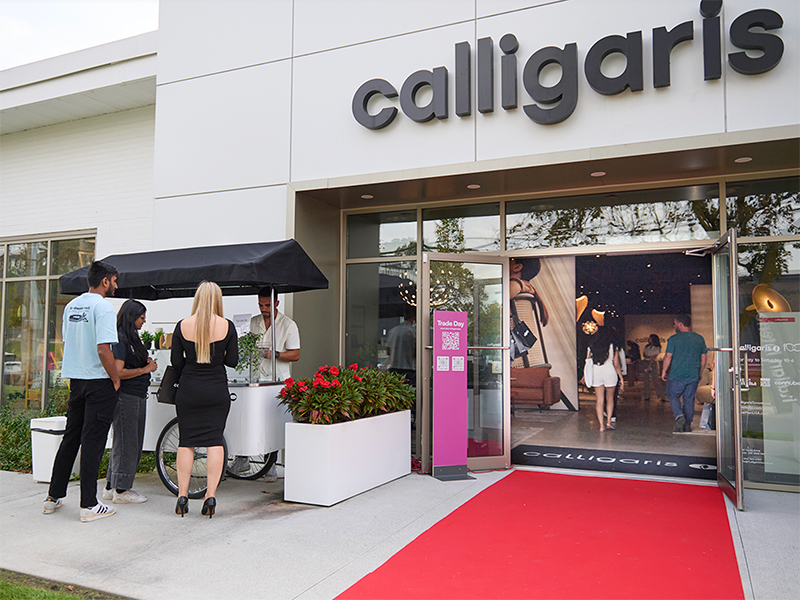
For Toronto’s design trade, Tycos Drive Trade Day offers an efficient way to take stock of what’s new for fall. Now in its third edition, the one-day event opens the doors to 25 furniture, surfacing, kitchen and bathroom showrooms across the district, with product presentations on view throughout the day. Visitors can move freely between participating spaces, while the Voices of Design series adds a conversational component with speakers including interior designer Dvira Ovadia, and a dedicated Networking Hub rounds out the afternoon with refreshments and a late-day gathering, alongside smaller social events hosted by individual showrooms.
9
IDS Vancouver 2026

A bar, a garden and an office offer three very different points of entry into this year’s IDS Vancouver, which will return this year from September 24 to 27. At the centre of the show, Synthesis Design’s Central Bar turns B.C. wood into a sequence of interlocking arches, while also giving visitors an early look at Western Forest Products’ new thermally-modified Hem-Fir. Nearby, landscape architect Andrew van Egmond will present Nature Adopted, an installation that eschews rigid planting schemes in favour of more naturalistic plant communities, complemented by upcycled and locally available hardscaping materials. The result is intended as a tranquil counterpoint to the activity of the show floor — and a demonstration of how circularity and climate adaptability can inform landscape design. Finally, the evolving workplace will be spotlighted once again in the sophomore edition of How We Work. Rather than prescribing a single vision of the office, teams including Kasian, Holland Design and Loop will creative immersive environments that consider how the increasingly blurred boundaries between home, hospitality and work are reshaping interiors.

IDS Vancouver’s keynote program offers a chance to hear practitioners discuss their work in greater depth, from Henning Larsen’s Michael Sørensen on taking the Danish firm’s approach beyond its home context to Squamish artist James Nexw’Kalus-Xwalacktun Harry on reclaiming design through Indigenous knowledge and developing a new language of form.
Visit our Events section to keep up with what’s happening in the global design community.
Design Calendar: Art, Architecture and Design Events Not to Miss This September
The design show circuit is back in full swing — plus back-to-school season heralds in a fresh batch of lectures and exhibitions.