
In the latter half of the nineties, I worked at the least-cool Canadian record store chain in the “new” wing of Devonshire Mall in Windsor, Ontario. Opened in 1985, it created a buzz, as it had Windsor’s first big food court, a new trend at the time, bringing with it “exotic” offerings like Mrs. Vanelli’s pizza, New York Fries, Orange Julius and the Made in Japan Teriyaki Experience. My store was on the edge of it and, when not ringing up copies of …Baby One More Time or Dance Mixes ’95 through ’99, I had a great view of it all.
Before the shops opened, mall walkers did their tours in HVAC comfort. Later, packs of teens would take more languorous laps. Older groups would populate the food court tables, where they’d sit and talk while nursing coffees. One of them was my dad, who would meet a small group of Maltese people on Saturdays. He’d come in and say hi to me, then return to his friends, as if it were a town square. In reality, it was just that. Windsor was typical of car-oriented cities where people shifted their shopping patterns from traditional downtowns over time as new shopping centres opened. This was still the golden era of the postwar North American mall experience, beloved by pop culture in films like Mallrats or nostalgia-twinged TV series like Stranger Things.
Today — after so many proclamations of the mall’s death, and as retailing itself changes — many shopping hubs are again leaning heavily into their role as a de facto town square, and bringing more of the city to it. But they still need to compete with modern enticements. “The biggest change is that the mall isn’t the only place to go for the things most desired by teens, like fashion, music, movies, companionship and games, because most of those things are available, in comparable or worse forms, from the comfort of their own homes,” says Alexandra Lange, author of the 2022 book Meet Me by the Fountain: An Inside History of the Mall. She thinks kids today don’t know what they’re missing and that real-life experiences are often better. That’s something mall operators, eager to have shoppers of all ages walk into their bricks-and-mortar buildings, also want people to think, so they’re augmenting and enhancing the experience of being there in person.
“It’s not just a day at the mall anymore; they have to evolve to provide something else,” says Susan Carter. Carter is a Calgary-based designer with Dialog who is pursuing a doctorate in design focused on the neuroscience behind what attracts us to malls and mixed-use developments. She has worked on retail revamps across Canada, including the master plan for Toronto’s Bayview Village. “Originally, malls were designed so you couldn’t really see the changing weather outside, you didn’t really know what time it was, you couldn’t see anything. That doesn’t fly with people anymore.” Beyond a view to the sunshine and clouds of the natural world and its circadian rhythms, malls need to foster the human connection anew. To this end, they have been adding different experiences over time. One example might be the RH (formerly Restoration Hardware) in Toronto’s Yorkdale Mall, a furniture and housewares store with a fancy in-house restaurant. “Society is looking for a place they can go to connect with other people, see other people,” Carter notes. “Even teens go and see other teens, to scope out how they dress and act, but it has to contribute positively to their busy lives.”
In some ways, malls are turning to an older urban form more reminiscent of traditional downtowns or even European-style piazzas than of suburban big-box stores. The Bayview Village master plan, by Dialog and Hariri Pontarini Architects, includes both an expansion of the indoor mall as well as new, open-air retail corridors with residential towers growing above, harkening back to Bayview’s origins as an outdoor shopping destination. Jane Finch Mall in North York is also embarking on a masterplanned neighbourhood with indoor–outdoor mixed-use developments. So was the site of Cloverdale Mall in Etobicoke, originally al fresco when it opened in 1956; the first phase of the project, which would have seen the mall demolished, was cancelled in October 2025 due to tepid condo sales, part of a broader trend and one that could be a harbinger for mall redevelopments, too.
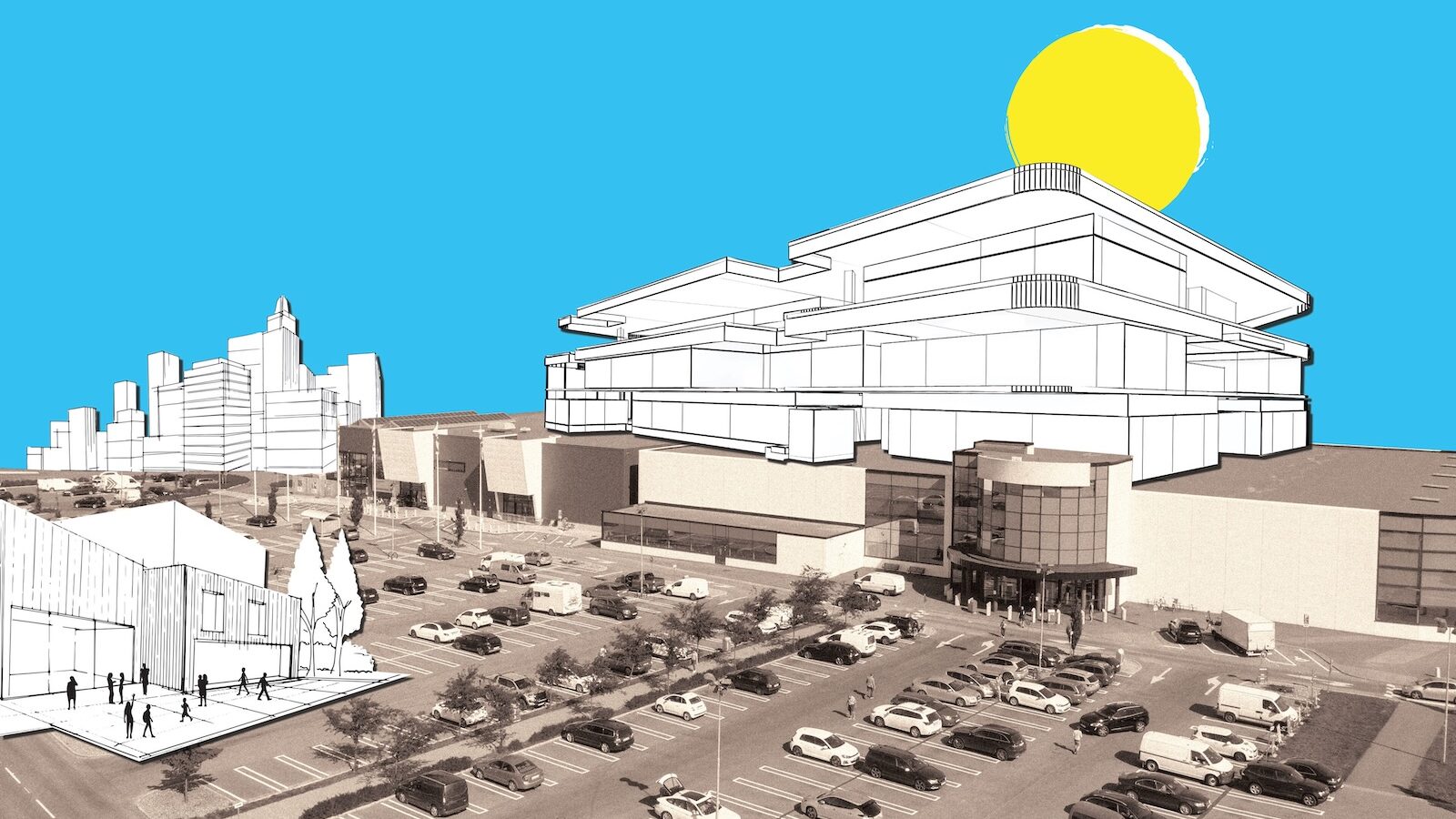
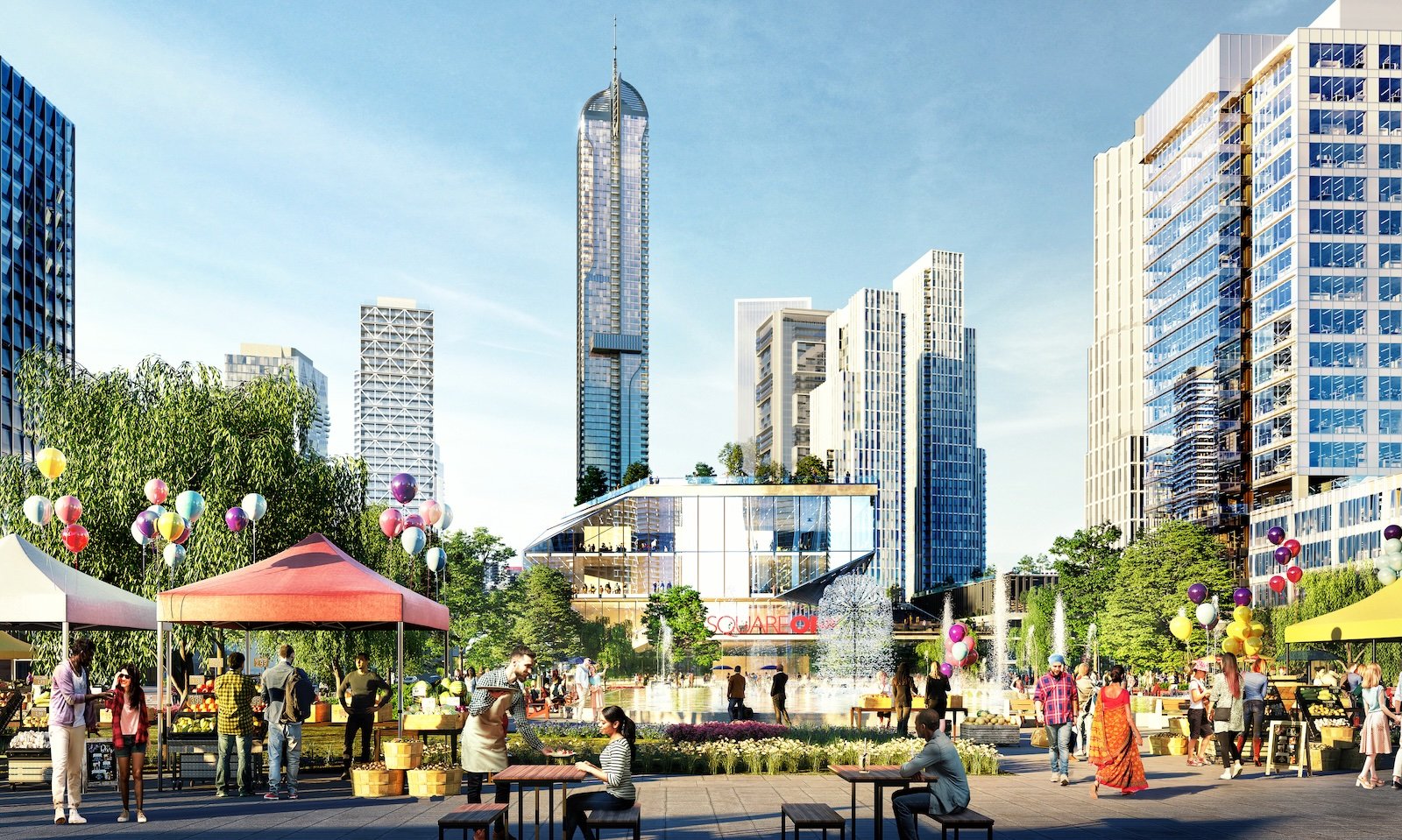
In the meantime, Oxford Properties, the multinational real estate company owned by the Ontario Municipal Employees Retirement System, has ambitious plans for two flagship properties: Yorkdale and Square One Mall. The former, an ever-expanding and ever-glamifying centre near the high-traffic node of Toronto’s Highway 401 and Allen Road, boasts a 20-year master plan with mixed-use towers and thousands of residential units projected around a private street network where today there are parking lots. In Mississauga, Square One is being rebranded as the urban-sounding “Square One District.” Surrounded by the high rises of Mississauga City Centre, Square One’s vast underdeveloped footprint, with much land given over to at-grade parking, epitomizes both the past failures and future possibilities of the suburban mall typology. Oxford plans to fill the parking lots and adjacent big-box properties — both increasingly anachronistic — with some 18,000 residences and more office and retail space on a grid of streets, served by such new transportation infrastructure as light rail and bus rapid transit, encircling the existing mall.
“With Square One, you can see the evolution that has taken place,” says Veronica Maggisano, VP of Development at Oxford Properties, echoing Carter’s sentiments about the positive experience shoppers desire today. “We’re building a main street and we’ve already brought in a beautiful rotunda with natural light. This is what customers want too: to feel good when they’re in the mall, walking, enjoying their shopping experience.” Maggisano also points to Square One’s new “Food District,” which has attracted vendors that aren’t the usual corporate chains, as another example of how the mall experience is changing, as well as to its partnership with the City of Mississauga to host the IDEA entrepreneur hub for innovation start-ups and scale-ups. There goes the old model of a concrete box impervious to weather and sunlight in a parking lot. “Somebody who lives at Square One District will be able to walk to work through a park and grab a coffee on their way in,” says Maggisano. “Then, they could walk home and go to their favourite restaurants, meet friends nearby, or get their family and enjoy any of the area amenities. It’s about having a rich life all within a short distance.”
It’s the notion of the traditional street and downtown, but also the original vision of the mall finally coming to fruition. “In Victor Gruen’s plans for Southdale [Minnesota], the first indoor mall in the U.S., he planned mid-rise and low-rise housing, plus offices, for the adjacent blocks,” says Lange, who is generally supportive of building housing in parking lots if they can keep the cars to the periphery, get the proportion of street to buildings right, and select good materials and a variety of architects. “None of this was built, because it was easier to just sell off the additional land to housing developers who put in single-family cul-de-sacs. But Gruen was right to want his town square equivalent to be adjacent to an actual town.”
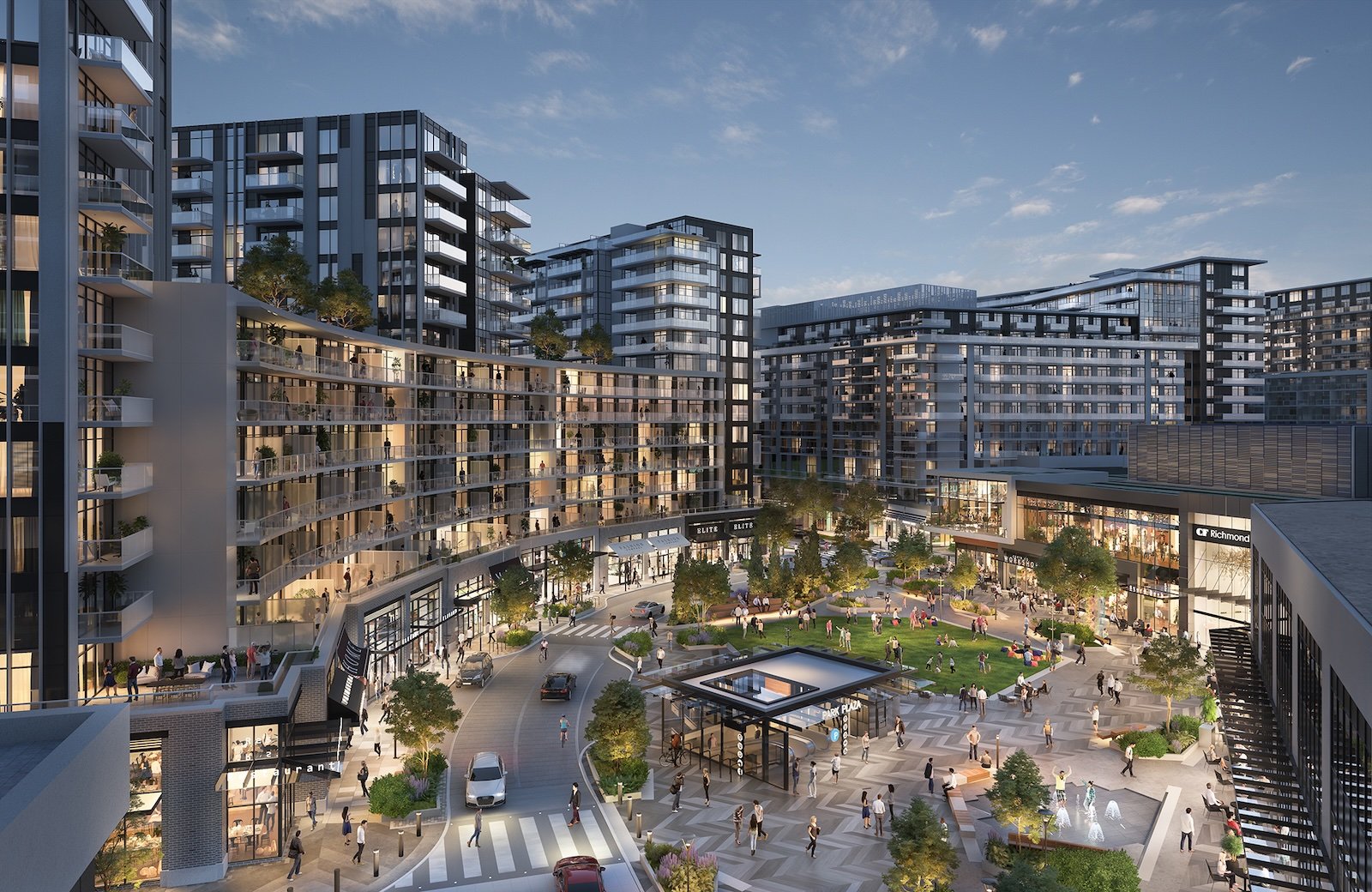
Here comes the tricky part. The downtown feel around traditional town squares usually developed organically over time, whereas masterplanned town centres are often criticized for their sterility. “We use a word for that: grit,” says Carter. “How do you design grit? It’s really hard. I think some of the most successful developments are where some elements of the old neighbourhood remain.” While there was no neighbourhood to begin with at Square One (just the mall itself), Carter points to Cadillac Fairview’s Richmond Centre in British Columbia as an example where mall redevelopment has created — or maintained — the grit. “They’re keeping some of the enclosed mall because it’s successful. It’s doing lots of good things, even providing a place where elderly people can go socialize, walk around the mall when they need to get exercise and meet with their friends,” she says.
Ironically, the people who aren’t necessarily always there to shop — the seniors hanging out — can make a place feel lived-in and attract more people. “It’s sort of the same way we used to think about teenagers,” says Carter. “We used to design shopping centres to make sure they wouldn’t linger, but now teenagers drag bags of money behind them. Do seniors bring bags of money? Not always, but they add value and help attract a mix of age groups and people.”
It’s not always easy to accommodate seniors in malls. In 2017, I attended a discussion of neighbourhood needs at the Rexdale Community Hub in northwest Toronto. The community centre’s director mentioned that the manager of nearby Albion Mall had been in touch because their food court was being overwhelmed with seniors, and asked if there were programs for them at the Hub. That’s the tension in private property behaving as public space: A community centre is for all kinds of people, but a mall is ultimately for shoppers, and its owners will revamp the ambience in order to court moneyed patrons — and possibly alienate lower-income groups (or those considered “loiterers”). When the Shops at Don Mills were created in suburban Toronto a decade and half ago, some community members lamented that seniors and others who hung out at the older mall the Shops replaced would not feel welcome in the new, upscale development. Mall makeovers can have the same effects as urban gentrification — another, if unintended, parallel with traditional downtowns.
And yet many of these new developments are providing space for activities and amenities not directly related to retail, which might seem counterintuitive at first. Maggisano points out that Oxford is also bringing the Mississauga YMCA into Square One. At Toronto’s East York Town Centre in Thorncliffe Park, a lower-income community of mostly new immigrants, a former Target store has been partly turned into a neighbourhood health hub with a variety of services. There are so many other ways the role of the mall can be further enhanced: Some house library branches and other municipal and civic services. Malls continue to evolve, as they always have. And as all those parking lots are filled up with buildings and people, it might get harder to tell where the city ends and the mall begins.
The City Comes to the Mall
It still rhymes with sprawl, but the mall of the future is becoming more urban as densification redevelopments signal both our enduring love for these retail meccas and the growing need to capitalize on their vast footprints.