
In “Snow on the Beach,” Taylor Swift’s ethereal 2022 duet with Lana del Rey, the two singers describe the combination of sand and winter precipitation as “weird but beautiful.” (If you’re listening to the explicit version, there’s a four-letter expletive slipped in there, too.) For anyone who thinks of the beach exclusively as a summertime destination, there can, perhaps, be something uncanny about seeing one during the icy off-season. But in Toronto, the plage remains a popular attraction all year round — even when it is blanketed in white. That is partially thanks to Winter Stations, an annual exhibition (now in its 12th year) that lines the lakeside with fun architectural follies. Launched earlier this month and on display along Woodbine Beach through March 30, 2026, this year’s edition includes five installations — all of them appropriately weird but beautiful in their own right.
Together, the pavilions explore the exhibition’s 2026 theme of “mirage,” prompting reflection on topics like desire, distortion, illusion and reality. The group of designs emerged through an international competition that, this year, attracted some 300 proposals and was adjudicated by notable locals like Toronto chief planner Jason Thorne and Harbourfront Centre manager of craft and design Janna Hiemstra. The jury’s chosen roster of winners spotlights plenty of emerging Canadian talent, but also makes room for contributors from as far away as Berlin.
In keeping with tradition, each Winter Station sits in close proximity to one of the beach’s pre-existing lifeguard towers. A couple designs build directly on top of these structures, while others are installed in strategic relationship to them. For the most part, projects are constructed from lumber, although polycarbonate panels and steel are also used in a couple of instances.
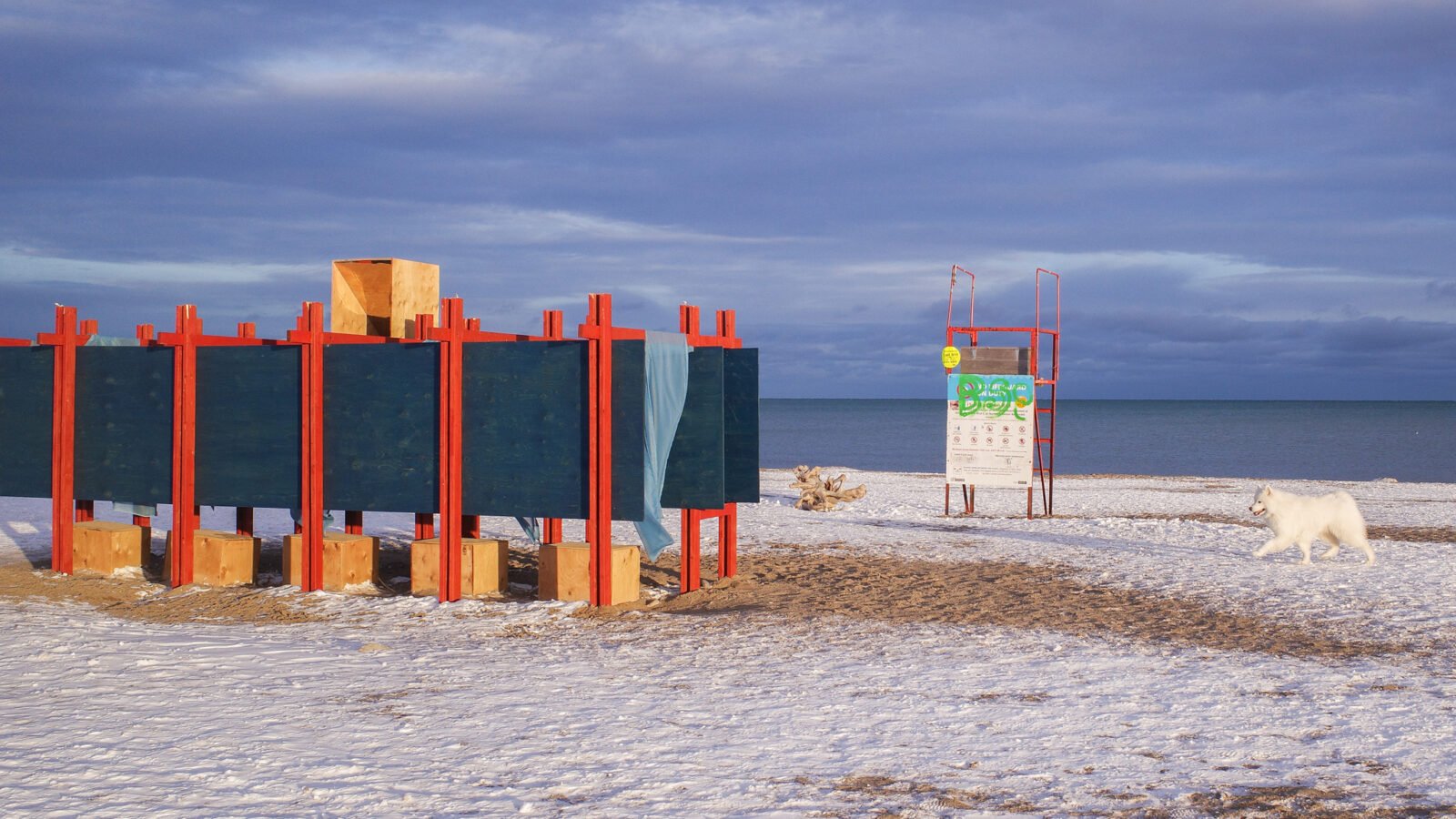
By encouraging people to take a beach walk in snow boots rather than sandals, the spectacles help to broaden the shoreline’s sub-zero appeal. Of course, for as many bundled-up admirers as the Winter Stations may attract, there is another reason that Woodbine Beach proves to be a key winter hotspot: From November through March, dogs are allowed to roam off-leash. As a result, part of the joy of touring Winter Stations is also seeing how enthusiastic canines investigate these intriguing structures. (It turns out the ultimate cure for the February blues may have been watching a golden retriever hop up on a wooden crate to admire its reflection inside designer Andrew Clark’s house of mirrors.)
Here’s a rundown of the five installations on display at Winter Stations through March 30, 2026.
1
Embrace
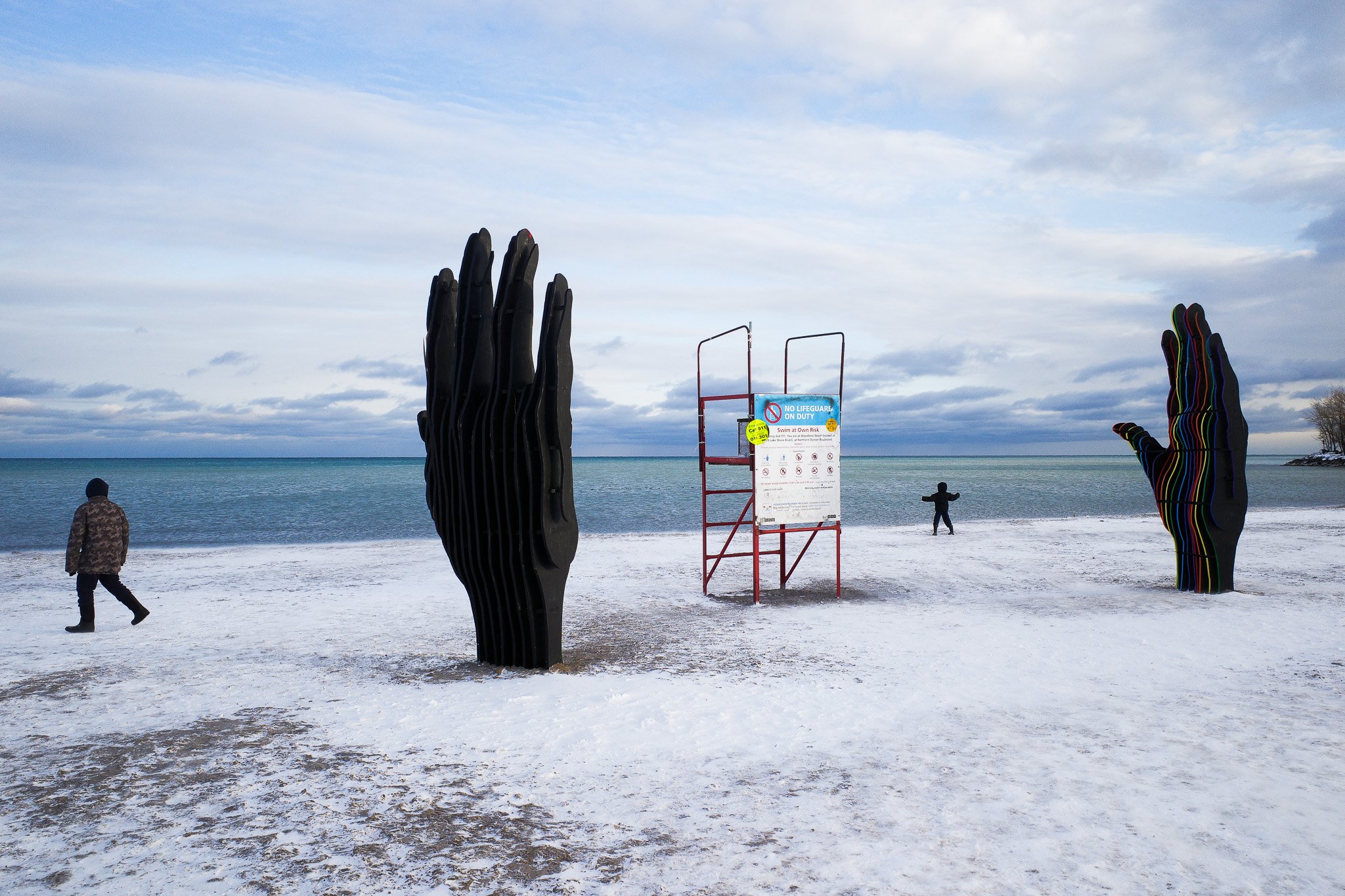
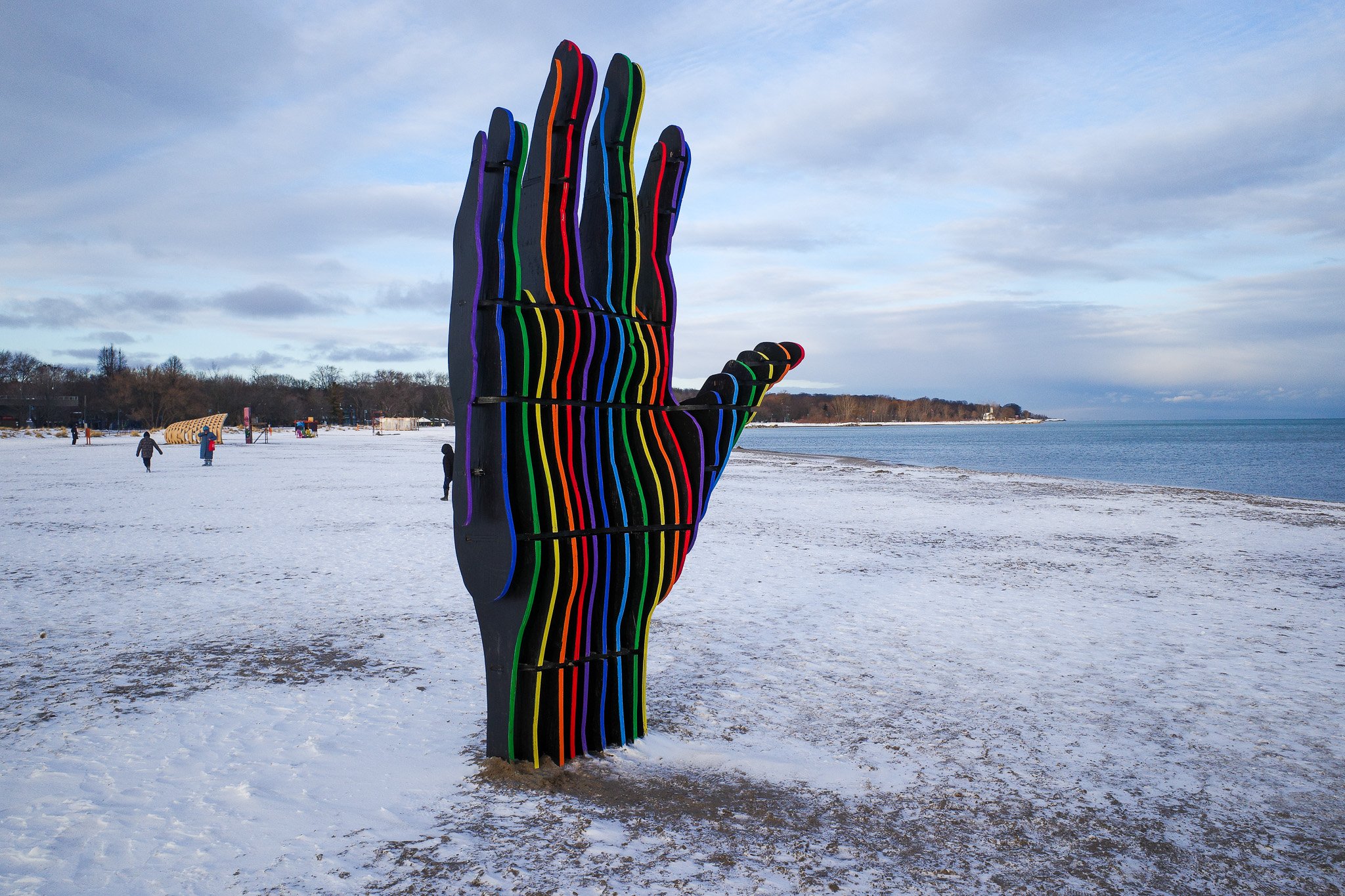
Designed by Saskatoon-based artist Will Cuthbert (who is currently the art director of Wealthsimple), this installation positions a pair of hands on either side of the beach’s westernmost lifeguard stand. These colossal wooden palms appear monochromatic from certain angles, but become rainbow-hued from others. Cuthbert describes the overall arrangement as a representation of what it’s like “to hold the horizon,” with the design’s vibrant colour palette a “prismatic reflection of the warmth and light of the day.”
2
Crest
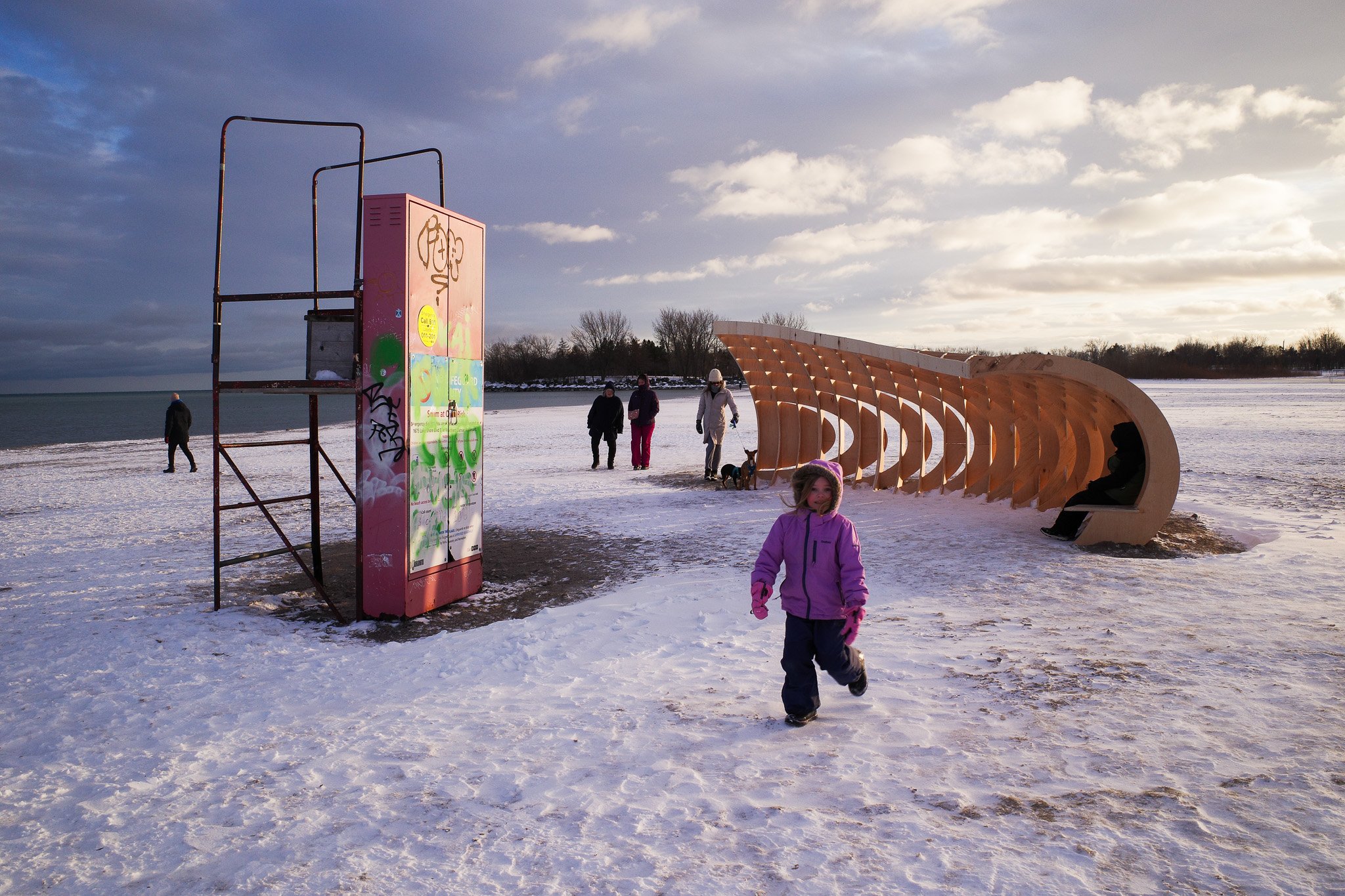
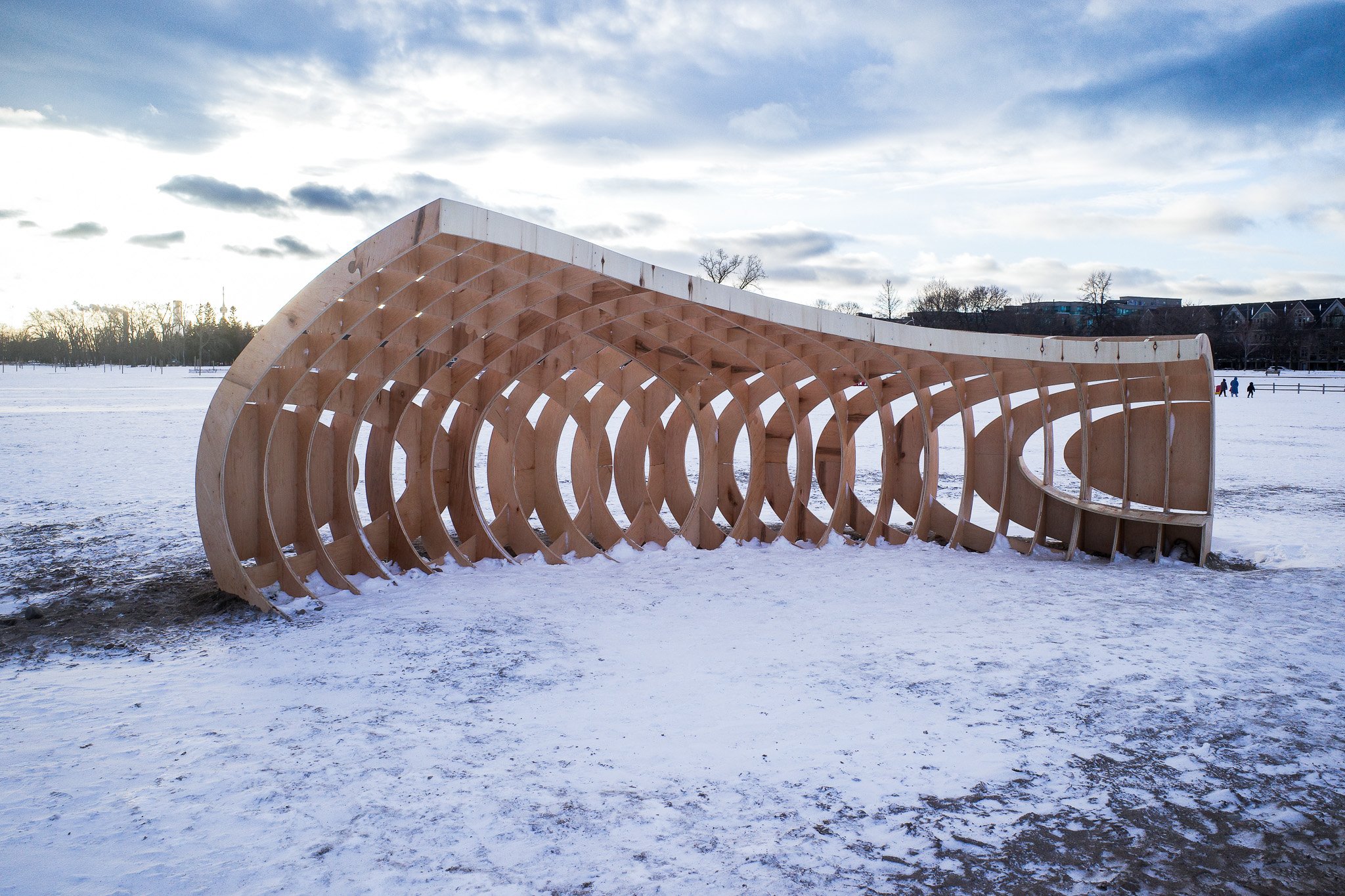
Developed by a group of University of Waterloo students, this sculpture resembles a piece of driftwood from afar — yet up close, it reveals itself to actually be a geometric rendition of a wave ready to sweep over the adjacent lifeguard stand. An integrated bench means it doubles as a comfortable spot for seeking shelter from the wind.
3
Specularia
*AZURE’S PICK!*
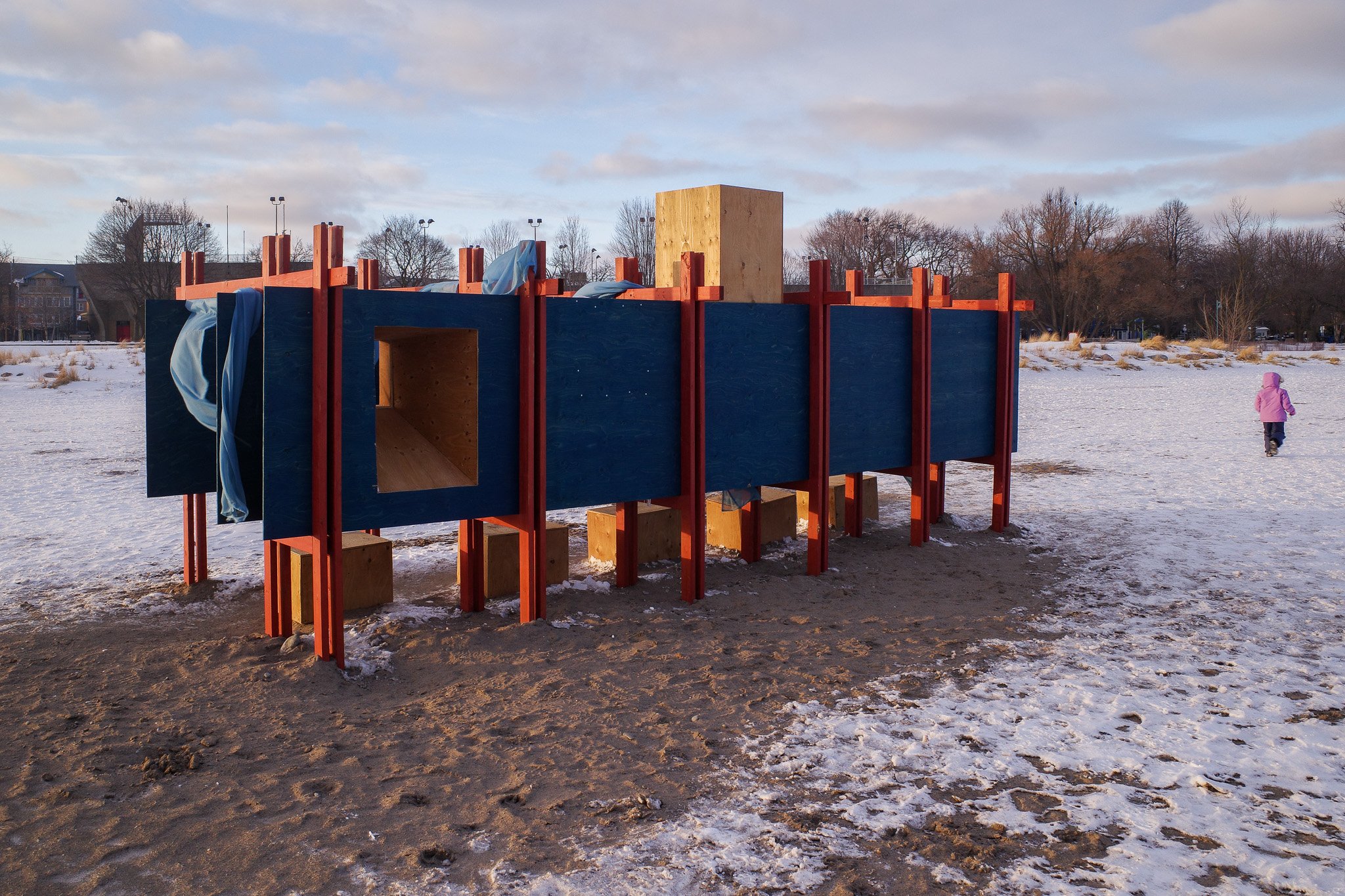
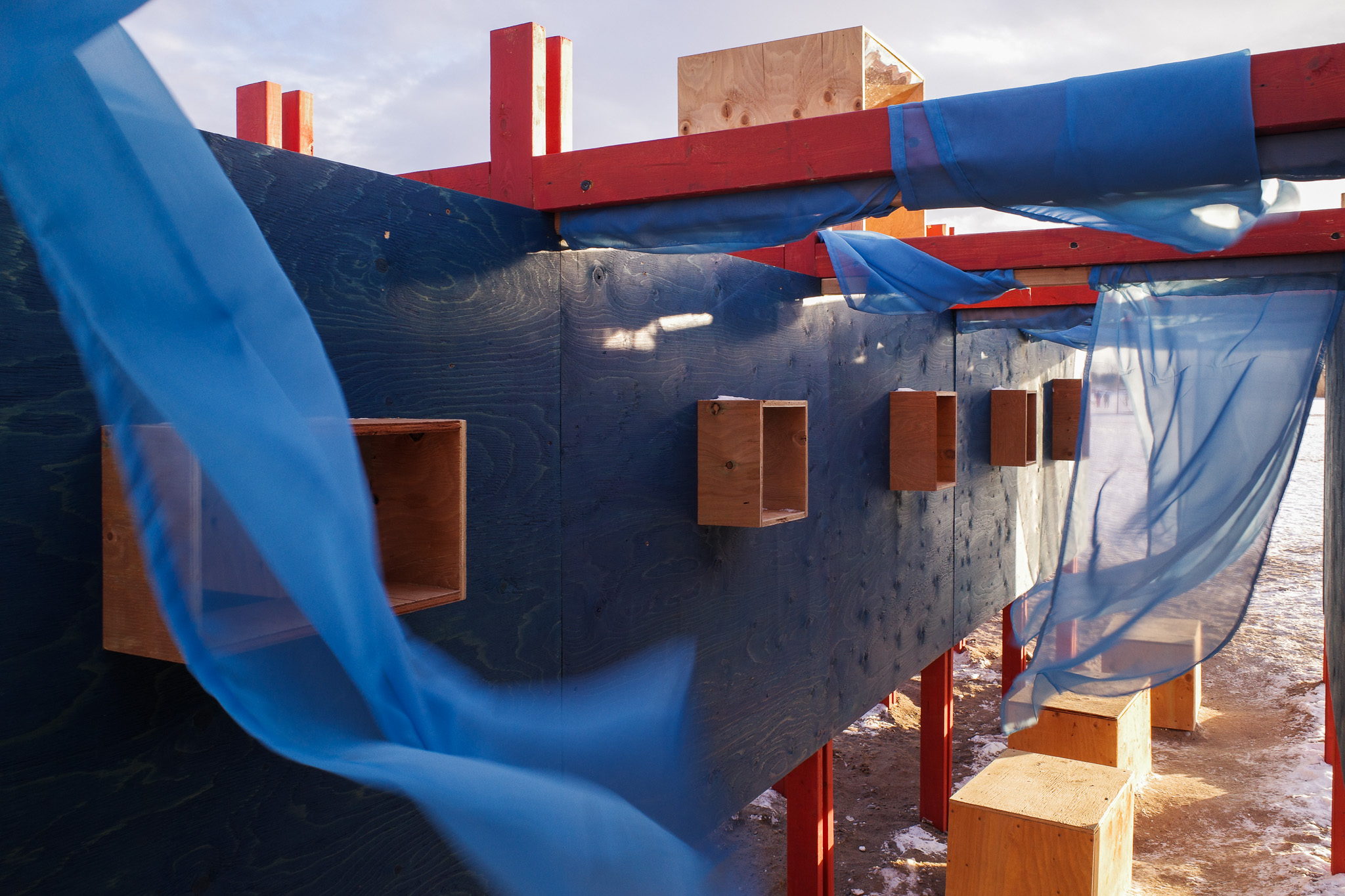
Inside this modernist take on a carnival fun house, five apertures offer up different vantage points on your surroundings. The first three are configured like periscopes, looking onto angled mirrors that direct attention upwards, downwards and backwards. The fourth station presents viewers with their own reflection, while the final window offers a perfectly framed vantage point of the neighbouring lifeguard stand (which also informs the red hue of the pavilion’s wood-frame construction). As Portland Maine-based designer Andrew Clark (who operates under the moniker Tornado Soup) explains, “One of the openings reveals the truth, while the others show mirages, pieces of the surroundings, stripped of context, confusing distance and direction.” Transparent blue textiles that blow in the wind add another, Christo and Jeanne-Claude-esque layer to the experience, while a row of wooden crates offer younger viewers (or dogs) a welcome boost.
4
Chimera
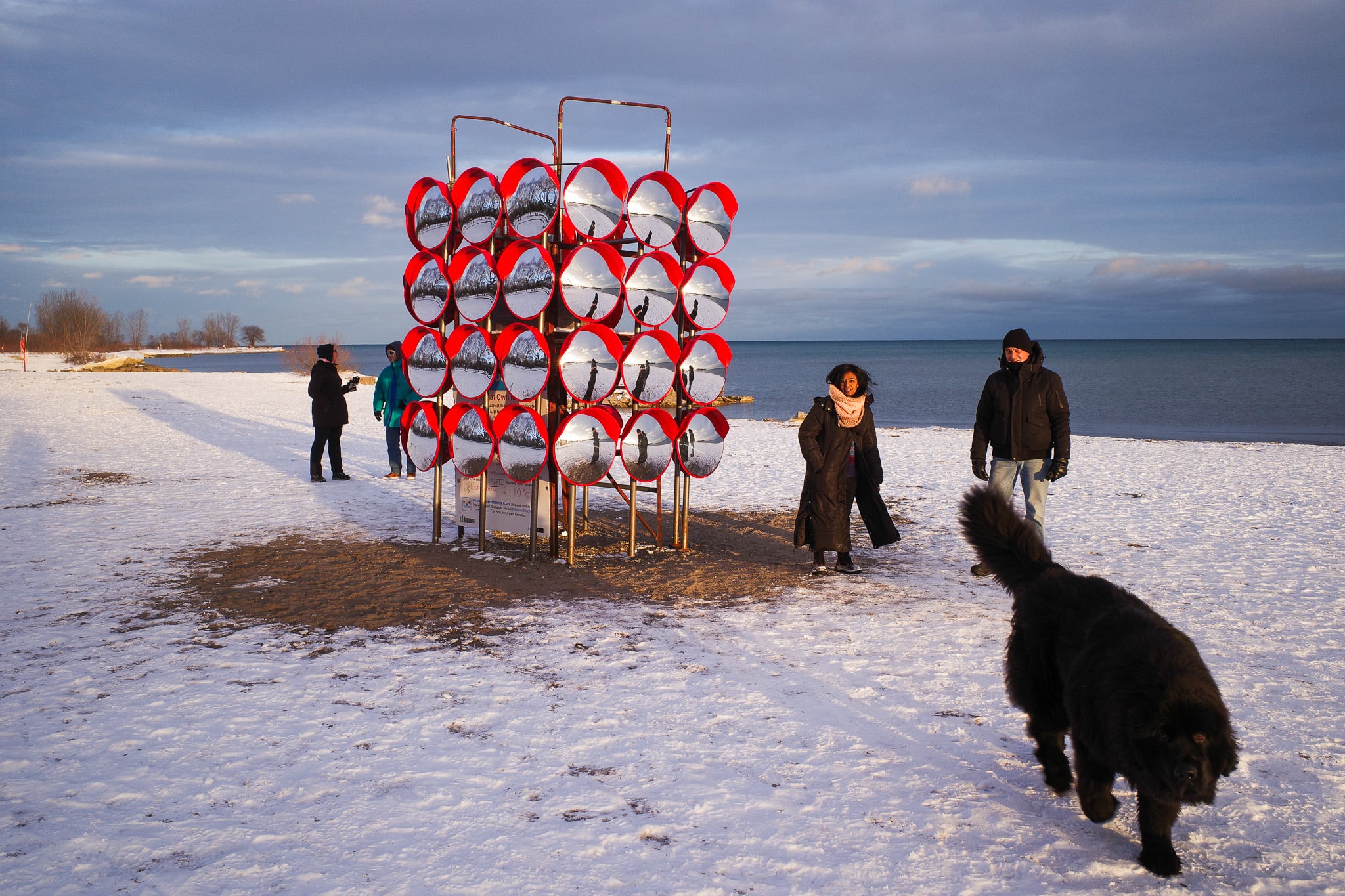
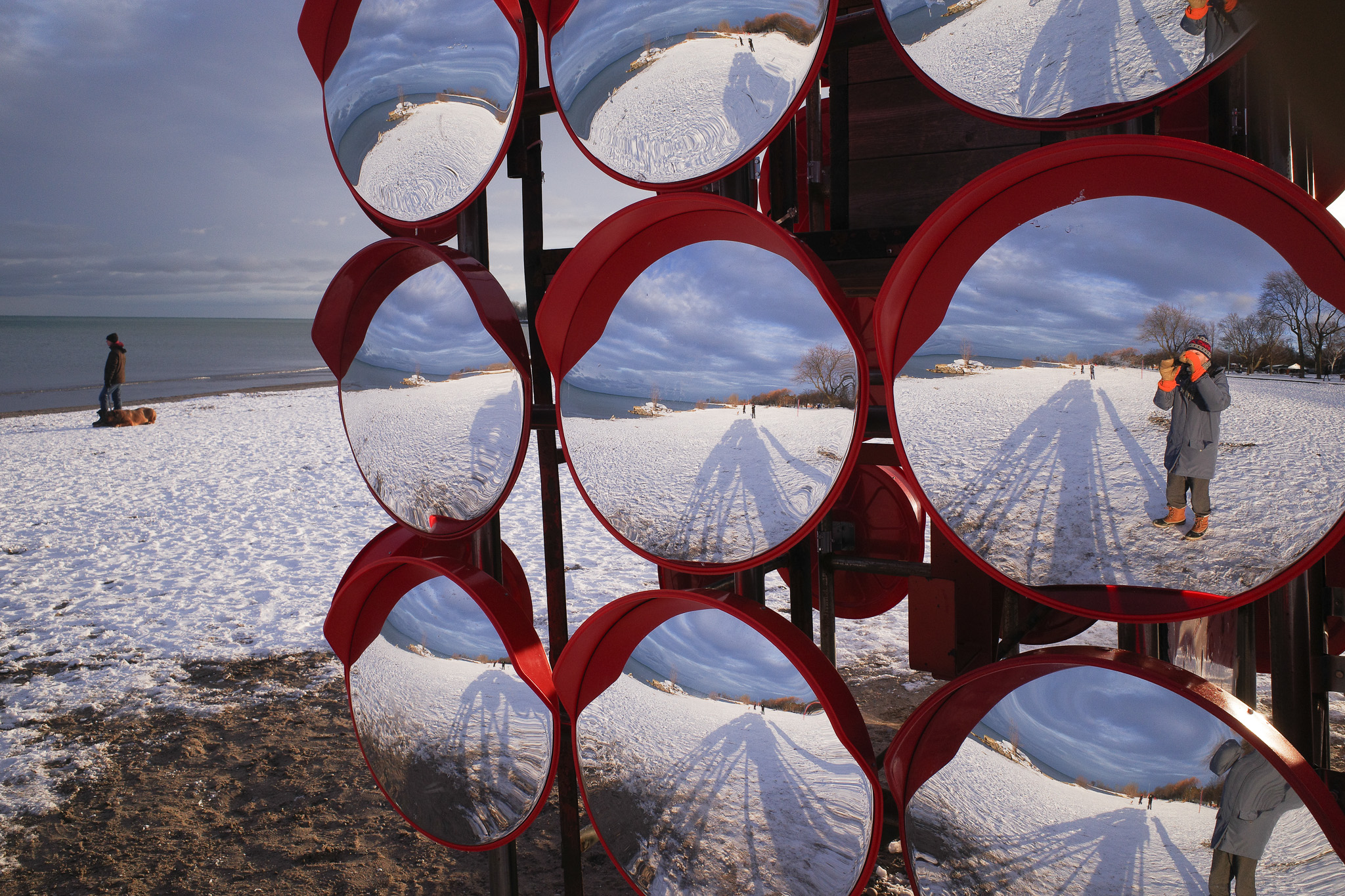
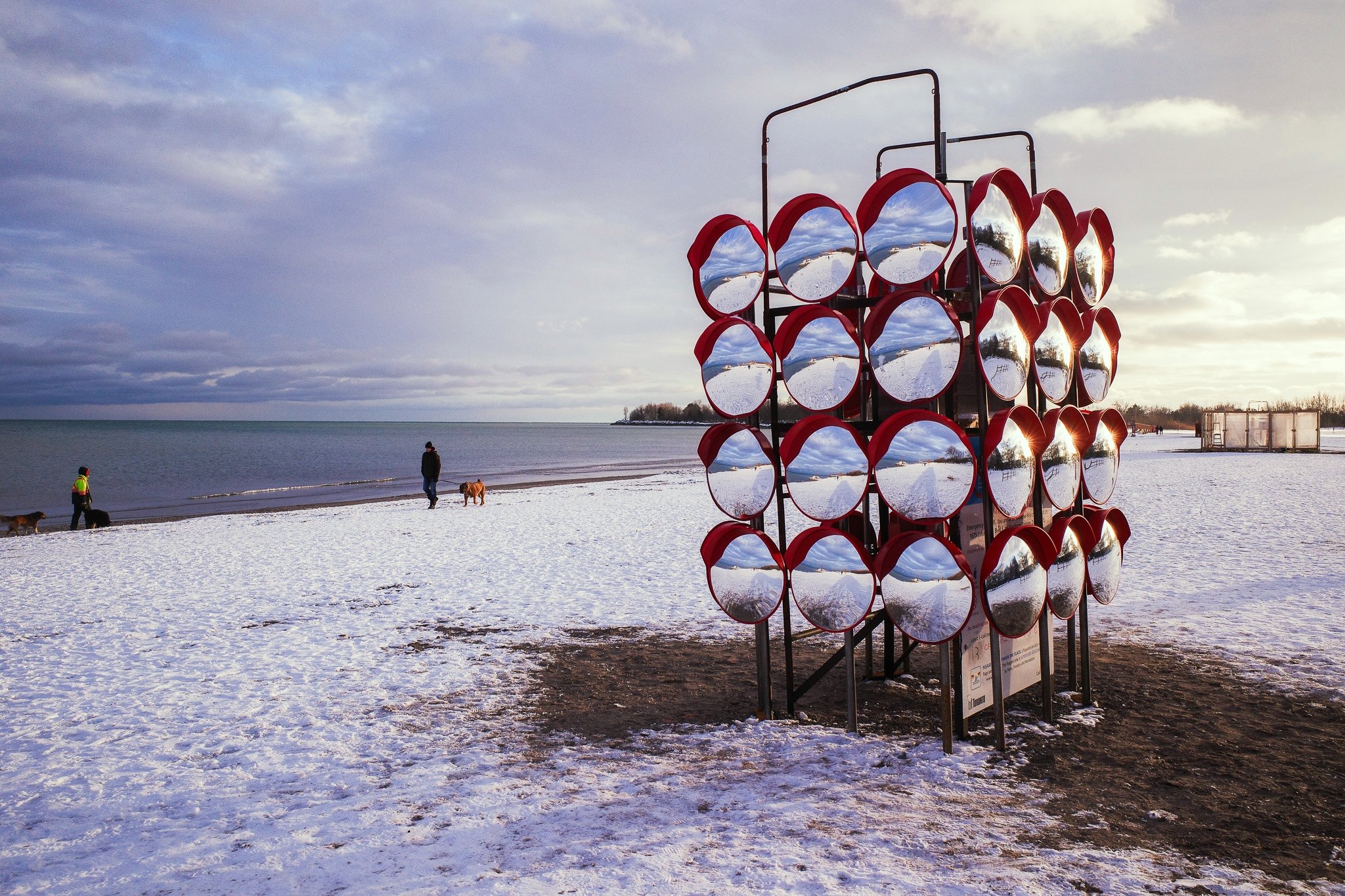
It’s tempting to view this collection of circular concave mirrors as a perfect opportunity to document your stylish new toque from every angle for social media — but that instinct sets up the work’s underlying commentary. Berlin-based collaborators Denys Horodnyak (who is Ukrainian) and Enzo Zak Lux (German) describe the “shifting constellation of selves” that their design presents as a “reflection of the fragmentation of physical and digital realities.” Indeed, the red frames around each of the lifeguard stand enclosure’s hub cap-like reflectors recall the sun and rain shield hoods that often encase surveillance cameras. In this case, Chimera doesn’t actually incorporate any recording devices — instead, it’s the many cameras being pointed in its direction that are watching us. Credit to Georgetown, Ontario pipe welder Courtney Chard for the station’s polished fabrication.
5
Glaciate
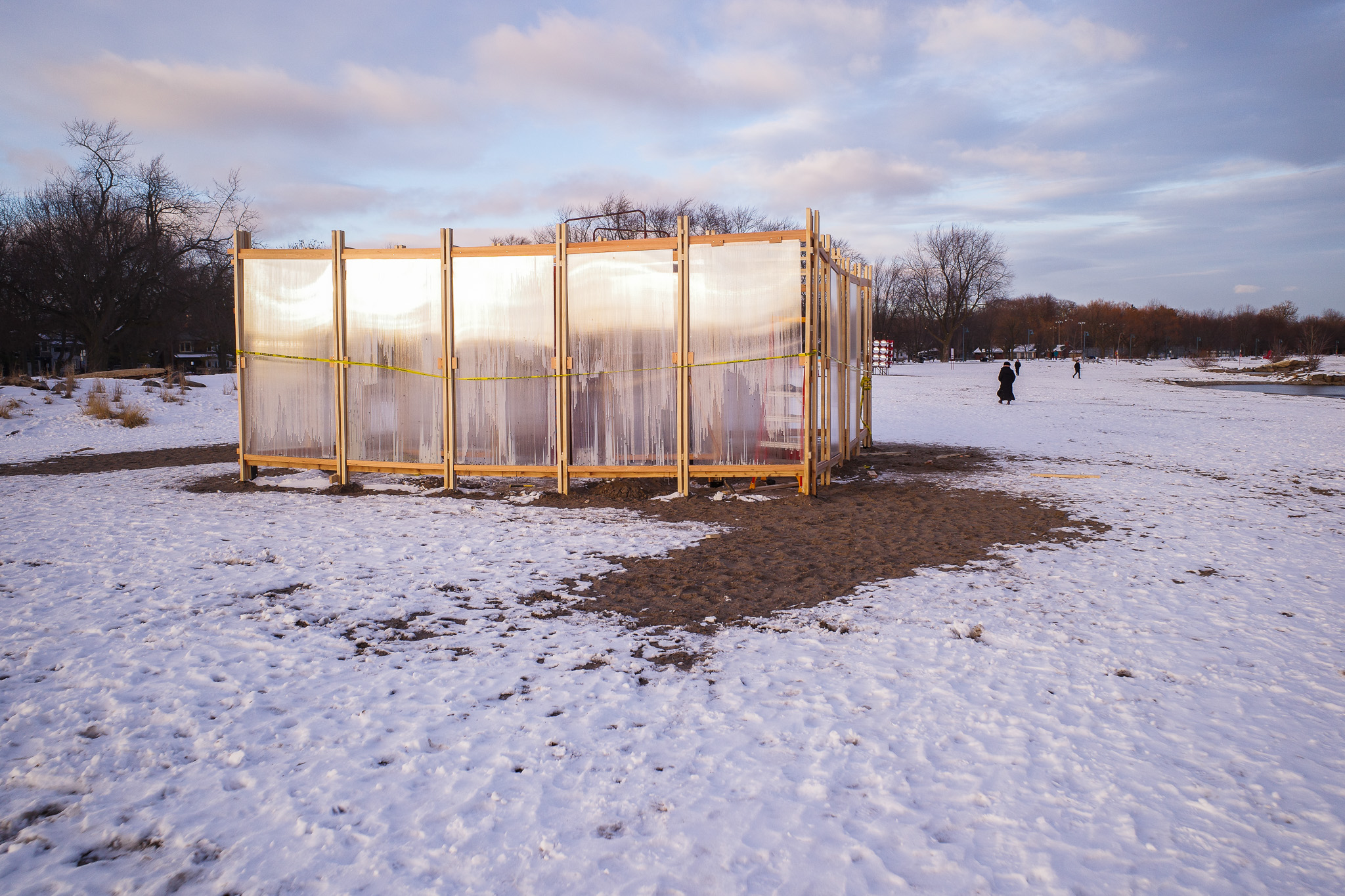
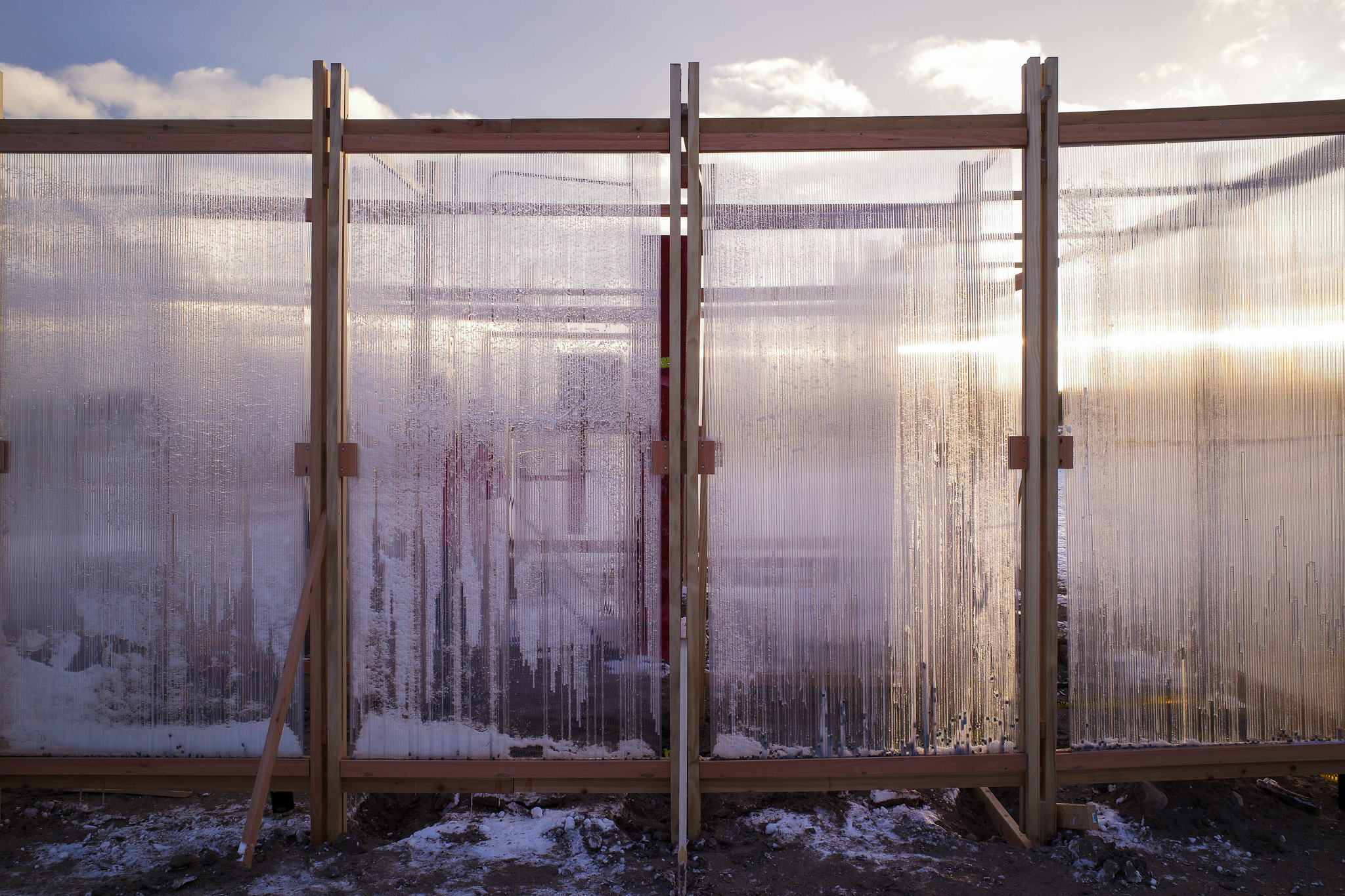
Students from Toronto Metropolitan University partnered with a group from Taiwan’s Ming Chuan University to create this labyrinthian pavilion. For the structure’s frame, the team took inspiration from the natural optical distortions already on view at their site. Specifically, the transparency of water in its various states led the designers to develop a series of “ice lenses” — polycarbonate panels filled with genuine Lake Ontario aqua. In the weeks ahead, changing temperatures will lead this water through various freeze-thaw cycles, introducing different degrees of translucency and opacity along the way. As a result, Glaciate teases but never fully reveals the red lifeguard stand on view inside, as well as the silhouettes of fellow explorers moving throughout the inner passages. On the flip side, as the designers note, “from within, the surrounding beach appears a mirage.”
Unfortunately, nature also decided to play another, unexpected role in Glacier. Strong winds shortly after opening damaged the structure, meaning it is currently taped off to prevent visitors from entering. Repairs and reinforcements are underway, with plans to reopen the maze in the coming days.
Toronto’s Winter Stations Bring Artistic Forts to a Snowy Beach
Five charming follies designed by artists, architects and students respond to the 2026 theme of “mirage.”