
Marechiaro
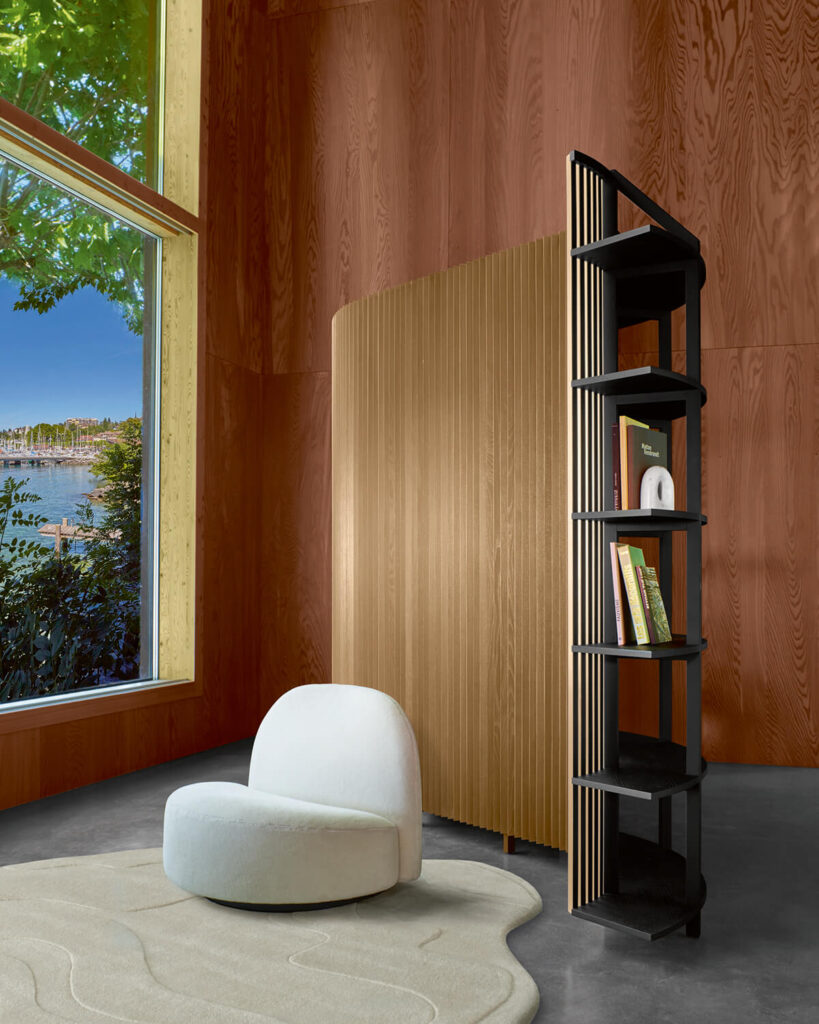
Equal parts storage system, dividing screen and architectural element, Marechiaro by French designer Philippe Nigro offers an original interpretation of the traditional bookcase. Introduced by Ligne Roset as a modular shelving concept, the Marechiaro project has since evolved into a broader collection that includes low tables, a side table and an entryway storage unit. Together, these pieces extend the system’s architectural language into a complete interior landscape.
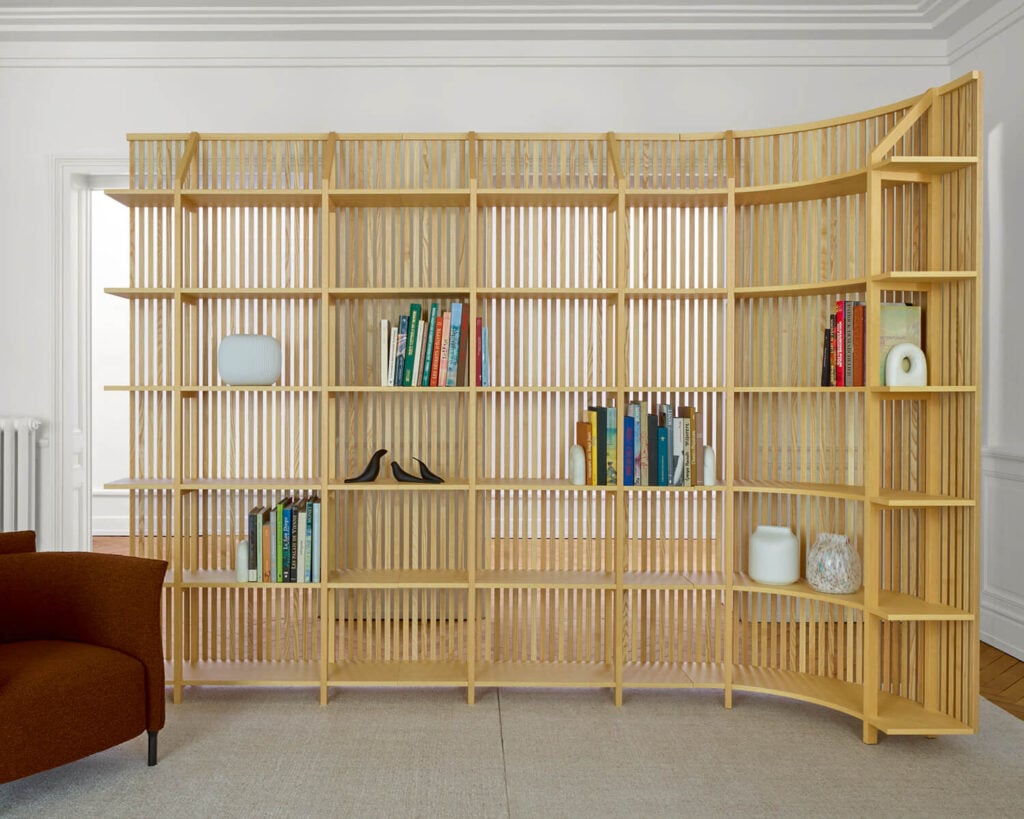
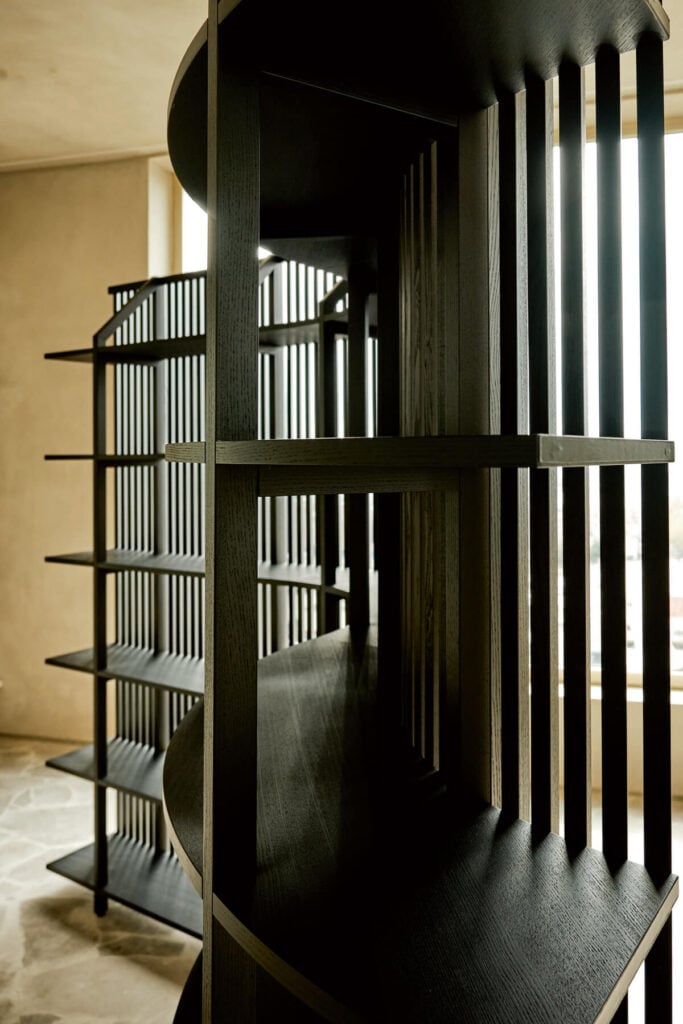
At the heart of the collection is the Marechiaro shelving unit, conceived as a dual sided “screen cabinet” that rethinks the relationship between storage and space. One side is dedicated to displaying books and personal objects on open shelve; the reverse is composed of evenly spaced wooden slats arranged in an openwork pattern that creates transparency while functioning as a spatial divider. The result is a piece that simultaneously stores, screens and structures a room while maintaining visual lightness.
The system is built from three modules: straight, concave and convex. These elements can be combined in numerous configurations, allowing the creation of alcoves, curved partitions and linear arrangements that adapt to the architecture of a space. In residential interiors, Marechiaro can subtly define zones within an open plan environment — separating a living room from a dining area, a workspace from a lounge, or a dressing area from a bedroom — without fully closing the space.
Crafted entirely from machined solid ash, the shelving unit highlights the expressive quality of natural wood. Finishes include a natural ash frame with matching shelves, paired with either natural or black stained slats, or a black-stained ash frame with bronze patina accents and black-stained slats. The two-tone construction adds rhythm and movement to the vertical slats, allowing the piece to appear differently depending on the viewer’s perspective and the way light passes through it.
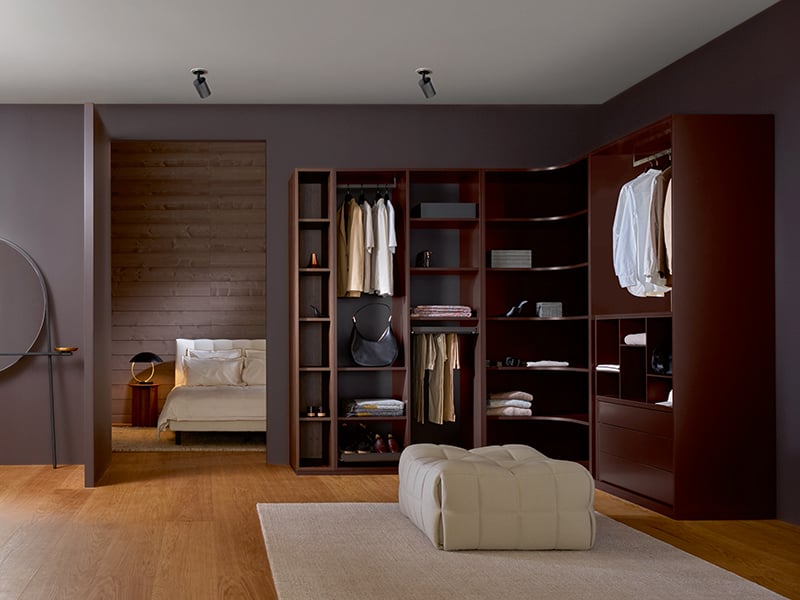
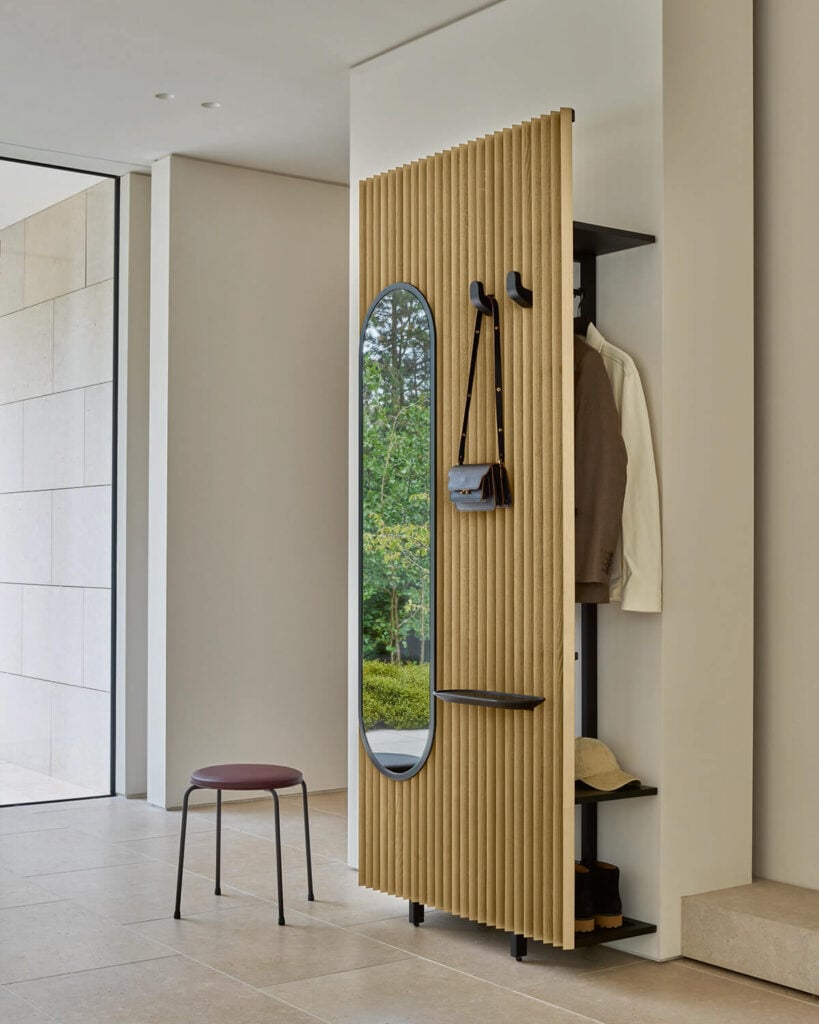
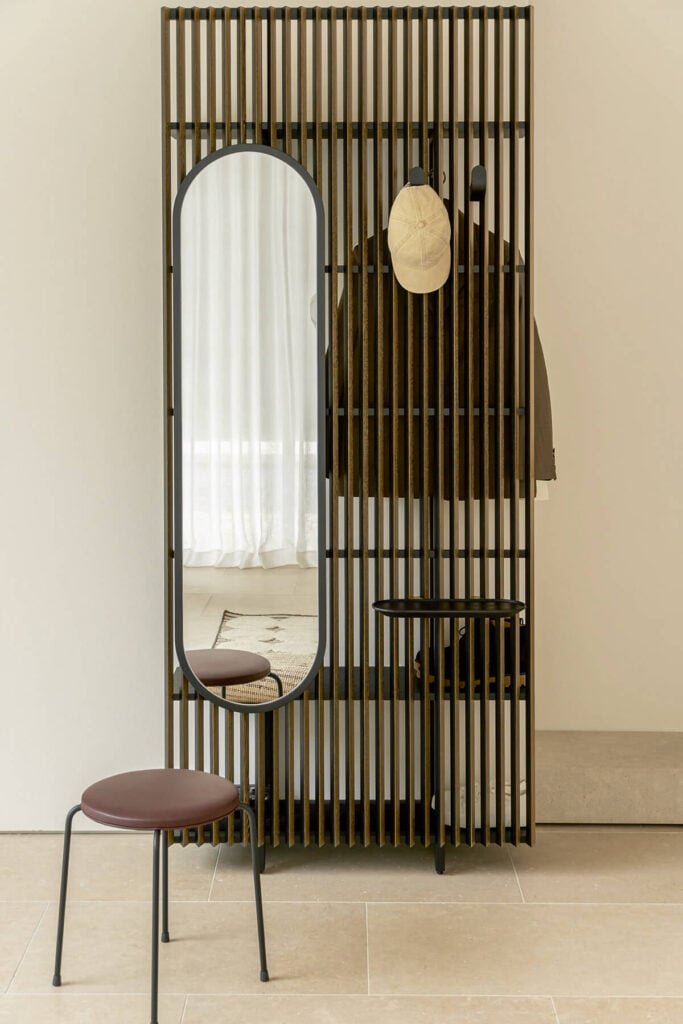
Building on this architectural vocabulary, the Marechiaro clothes storage unit applies the same openwork language to wardrobe storage. It functions as both practical organization and a spatial element, reinforcing the idea of a domestic structure that shapes the room around it.
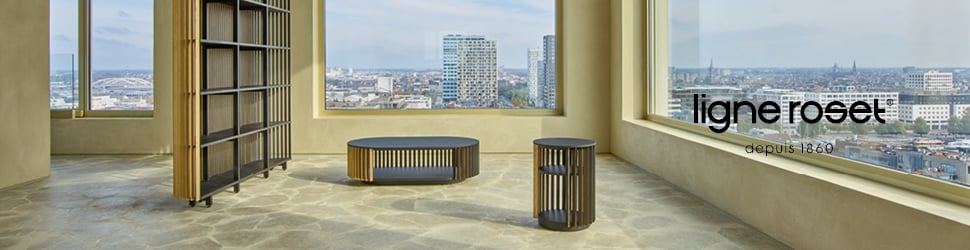
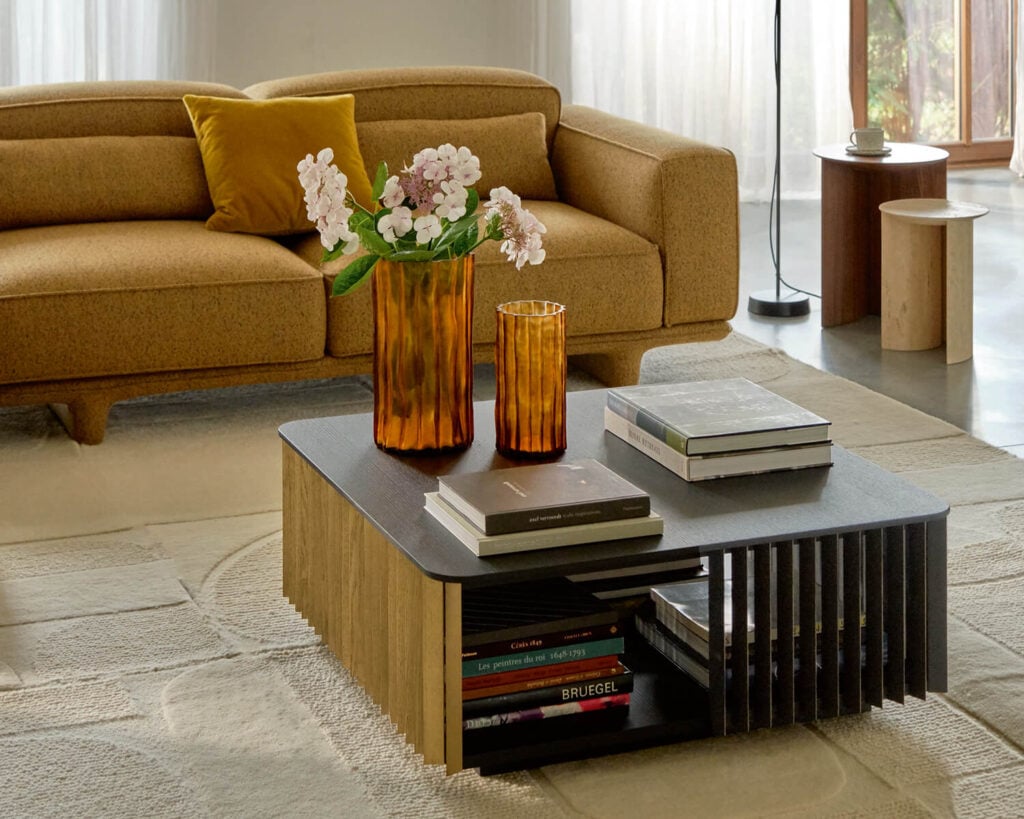
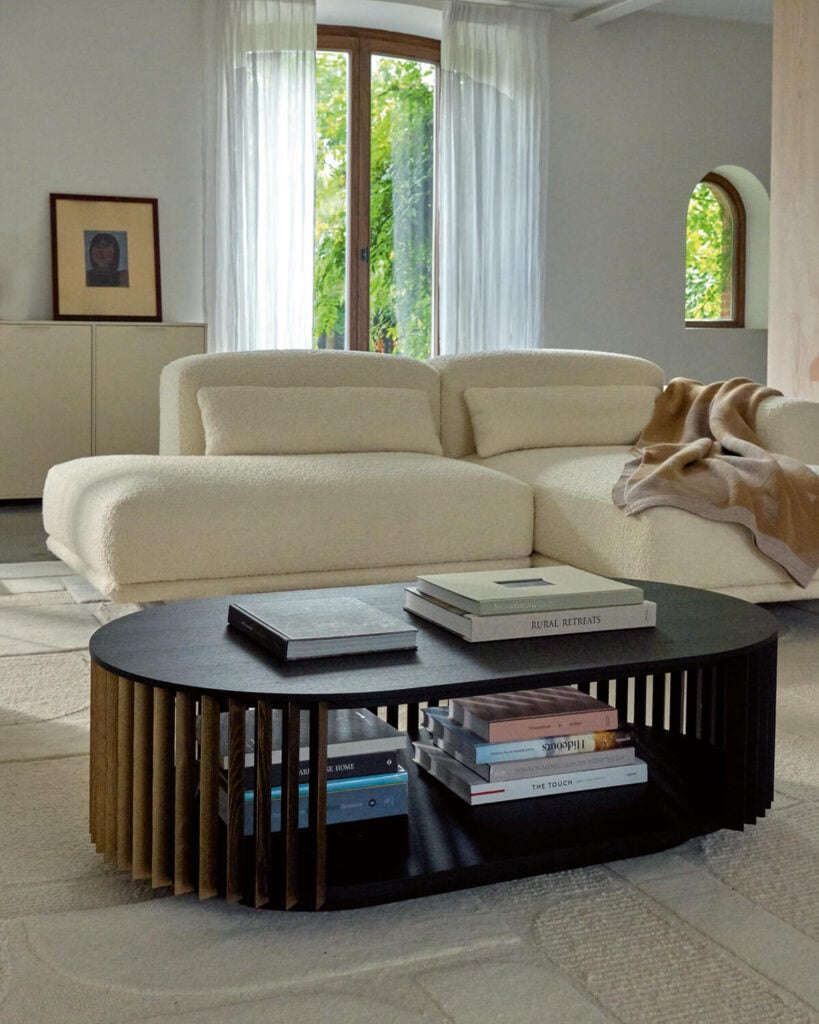
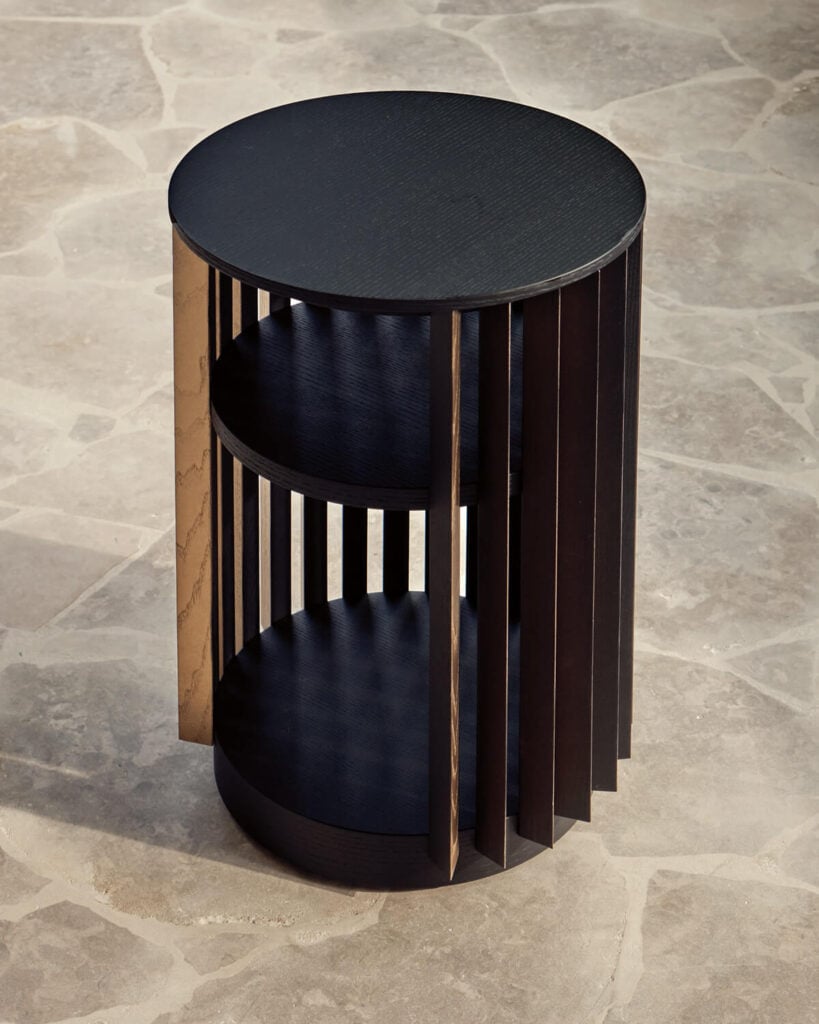
The Marechiaro low tables and side table extend the concept further by translating the slatted screen motif into a new typology within the collection. Tabletops are supported and partially enveloped by the same openwork solid wood structure, which frees space beneath for integrated storage. The slatted surfaces create a subtle play of shadow and light, echoing the visual permeability found in the shelving system.
Across the entire range, Marechiaro transforms storage into architecture. Through its modularity, material richness, and interplay of transparency and solidity, the collection creates interiors defined not by walls but by layered, inhabitable forms.