

“The West Loop is the best loop,” the Uber driver announced as he dropped us off at Fulton Market District, echoing a popular mantra about this flourishing Chicago hub. During the city’s growing design week, its upscale restaurants and bars — many in red brick former warehouses and meat-packing facilities — were just part of the attraction. Fulton Market DesignDays 2026 saw the neighbourhood bursting with more creative energy than usual, as brands including Steelcase, Teknion, Mohawk Group and Designtex invited wristband-wearing visitors into their spaces for tours of their latest collections, followed by happy hour. Outdoors, the Less Than a Truckload activation centred emerging design with an attention-grabbing array of talents. All around, despite the sticky weather, it made for a delightful design hop from big brands to small.
Here are some of our favourite designs and moments from Fulton Market DesignDays 2026:
Ikon Revives the Lost Archives
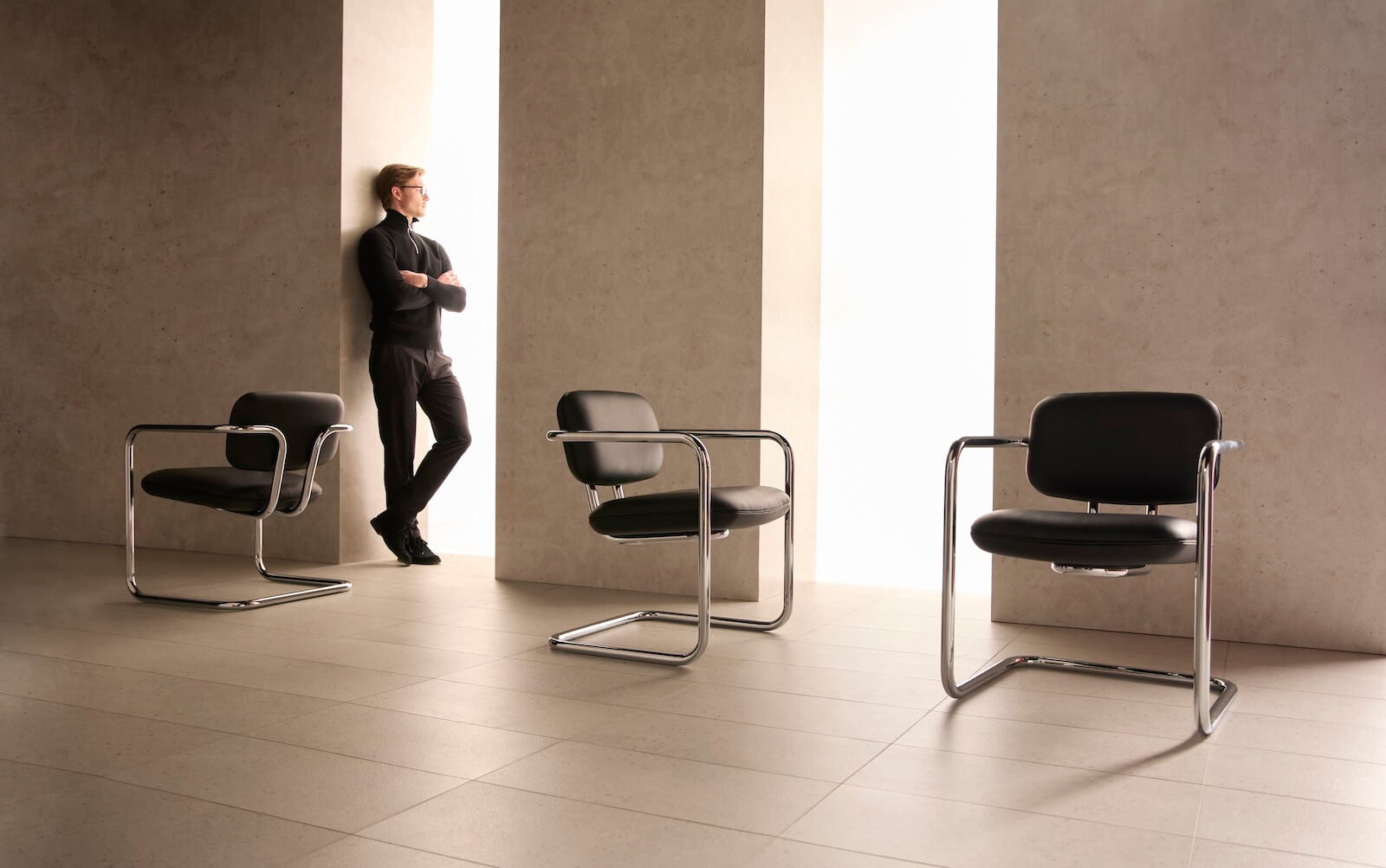
The mid-century marvels at Ikonstudio, a brand by Teknion founder David Feldberg, highlighted two architecture legends: SOM and Louis Kahn. In fact, this collection marks the first time that Kahn’s pieces have been made available through contemporary production. And both series highlight furnishings that are extensions of notable architecture projects.
Skidmore, Owings & Merrill’s Charles Pfister designed the SOM79 chair in 1979 for Halston’s New York atelier, situated on 21st floor of the Olympic Tower, also designed by SOM. The chair is fittingly bold: Its cantilevered steel frame and curved seat pan achieve a harmonious form. The table that completes the set is also reproduced by Ikon — both are available in a sustainable polished chrome finish; the seat is upholstered with a curated palette of LUUM leather and fabrics and the table features a clear, smoked or bronze glass top.
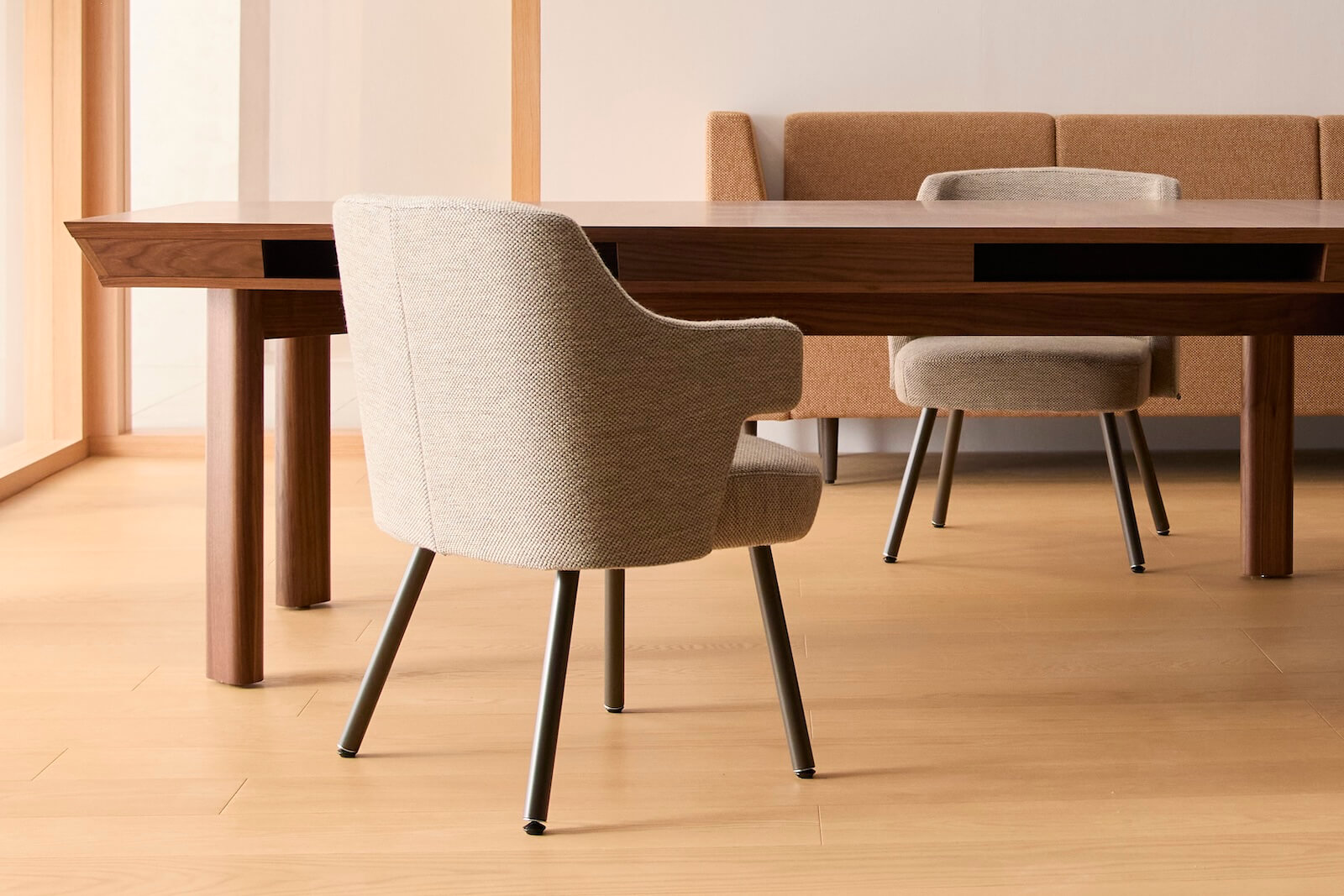
Reviving the Radbill Chair and Table — which Louis Kahn designed for the Radbill Oil Company in the mid-1940s — Ikonstudio reproduces a collection that feels timeless. The pieces were created for an office setting, yet have the tailored appearance and sense of lived-in comfort of a residence. The master of brutalism was ahead of this time, even with his furniture.
Mohawk’s Vibrant Approach to Floor Coverings
Mohawk Group’s Hero Rubber Made with Nike Grind received an AZ Award of Merit and People’s Choice distinction in 2026 for its truly colourful take on recycled rubber flooring. And the brand’s showroom in the Fulton Market Design District, which welcomes visitors with a reception display animated by that very product, continues in that same spirit with other vibrant, unexpected patterns.
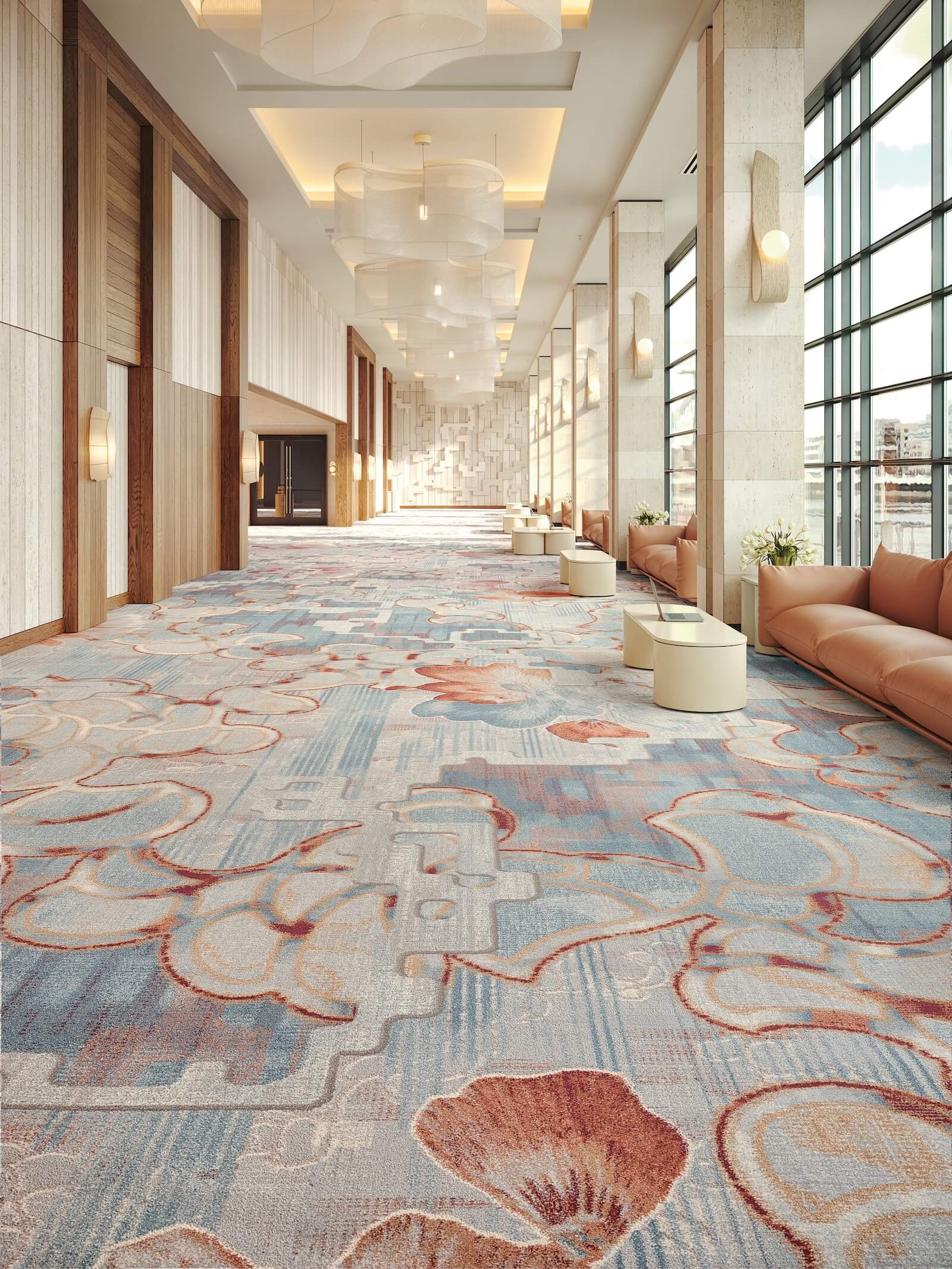
One of those is Soft Logic, a decidedly romantic broadloom for hospitality interiors “that explores the intersection of hand-made artistry and digital precision,” according to the brand. “By transforming intuitive, handmade gestures into quietly dimensional patterns, the collection translates touch, rhythm and movement into a sophisticated language of calibrated layering and soft gradients.”
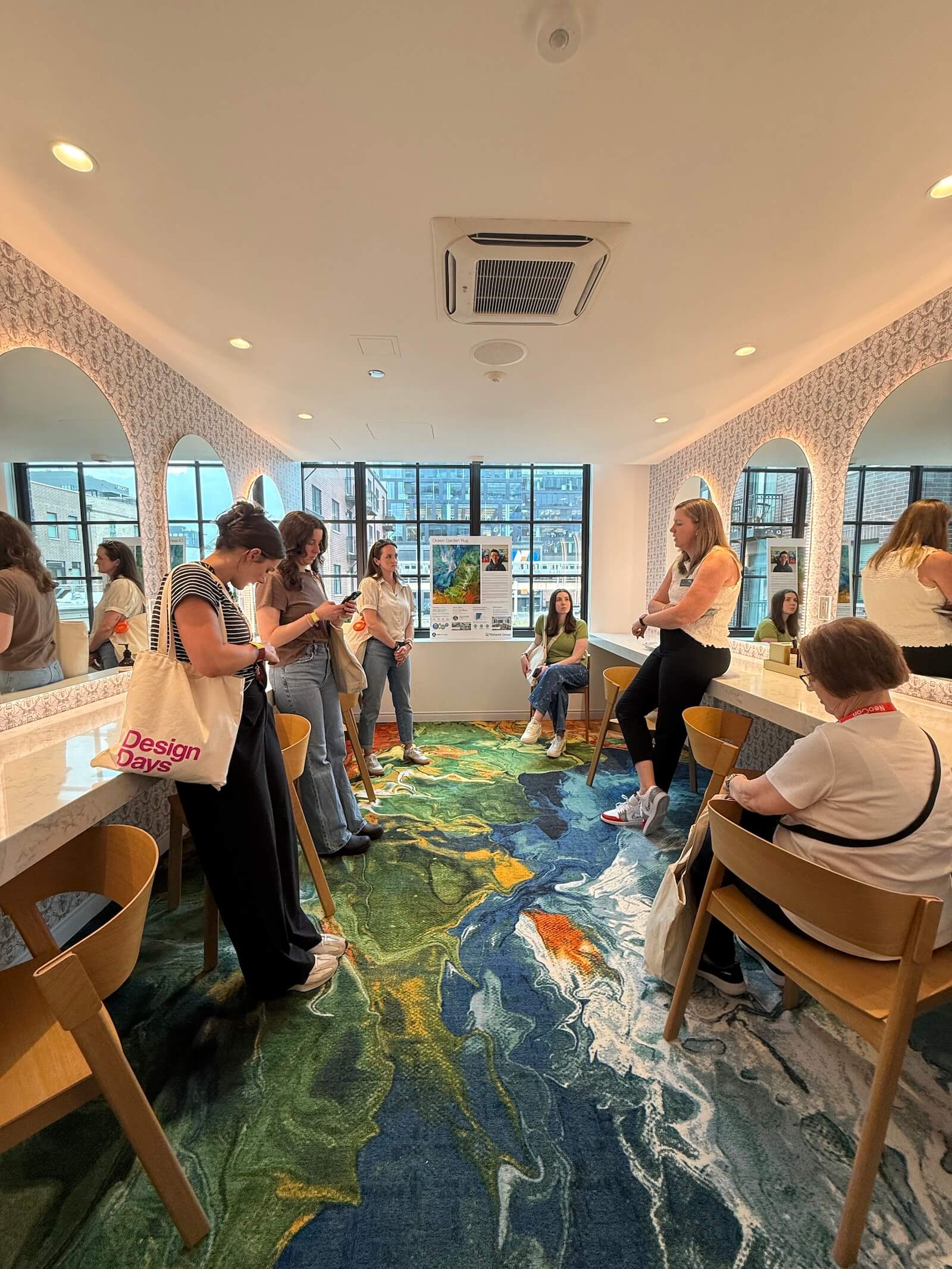
Another standout introduction featured the artwork of U.K.-born, Toronto-based Eddie Li. Mohawk Group translated his fluid art — where paints are poured on the canvas and flow and blend together with the use of various techniques — into the Ocean Garden carpet, made by Durkan, Mohawk Group’s hospitality brand, and developed in partnership with ArtLifting. The floor covering, which was featured in the showroom’s powder room (below), exemplifies how Li, who is autistic, “embraces the power of abstract expressionist art to vividly communicate his unique ideas and emotions,” the brand explains.
Don’t Sleep on Studio TK (Or Do!)
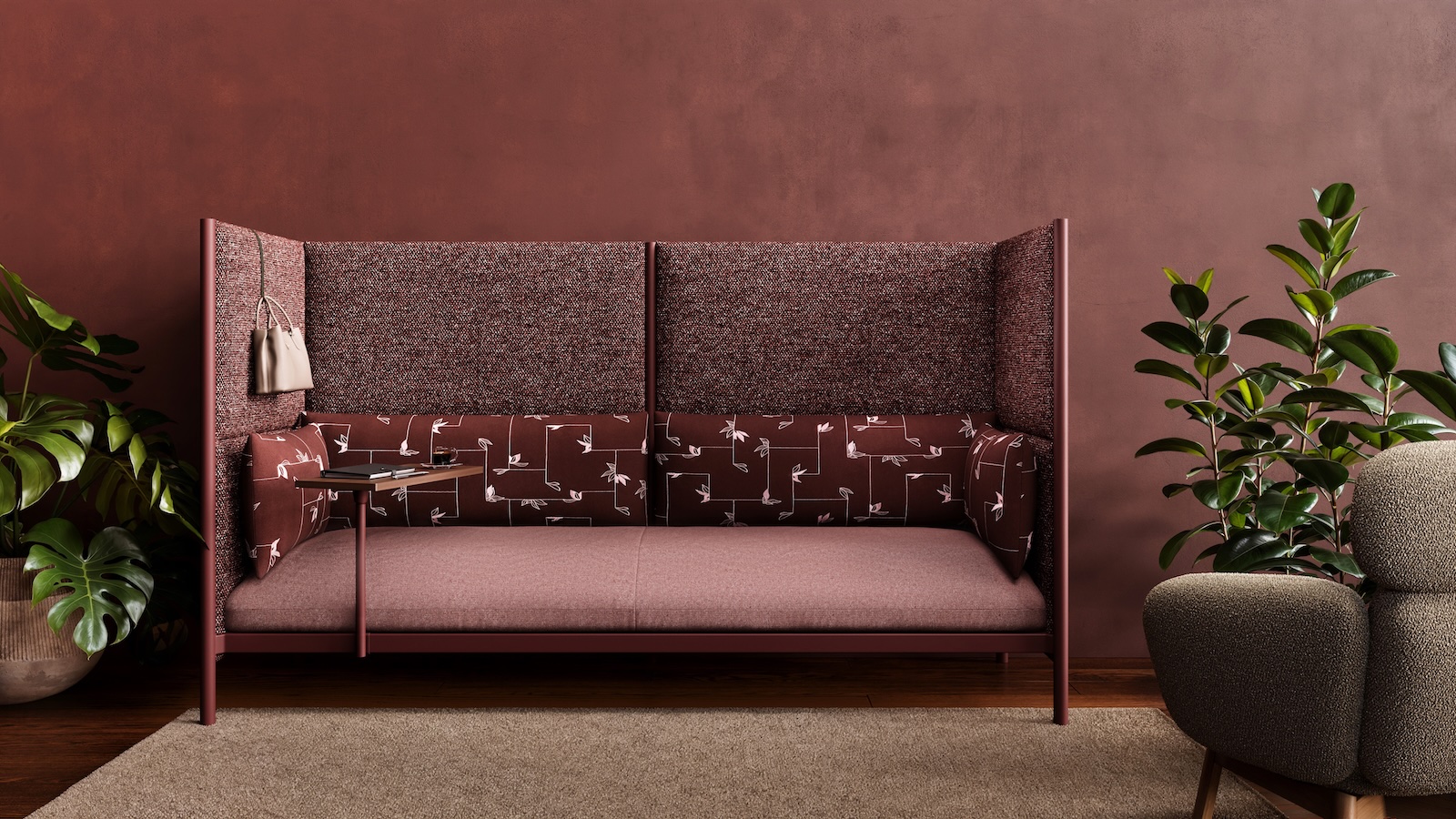
At Studio TK, another Teknion-adjacent brand, the main attraction was Abri, a privacy lounge collection designed by Thom Fougere. It comes in a range of one- and two-seat lounges and benches in mid- and high-back configurations — accommodating everything from working to resting. (Fougere, who toured us through the collection, noted that he’s a big fan of mid-day naps, and that Abri’s two-seater variation invites a bit of afternoon snooze time.) Besides offering much-needed privacy in open-layout settings, the office series also includes add-ons that boost its functionality, from optional integrated tables to bag and coat hooks.
Less Than A Truckload Was Plenty Inspiring
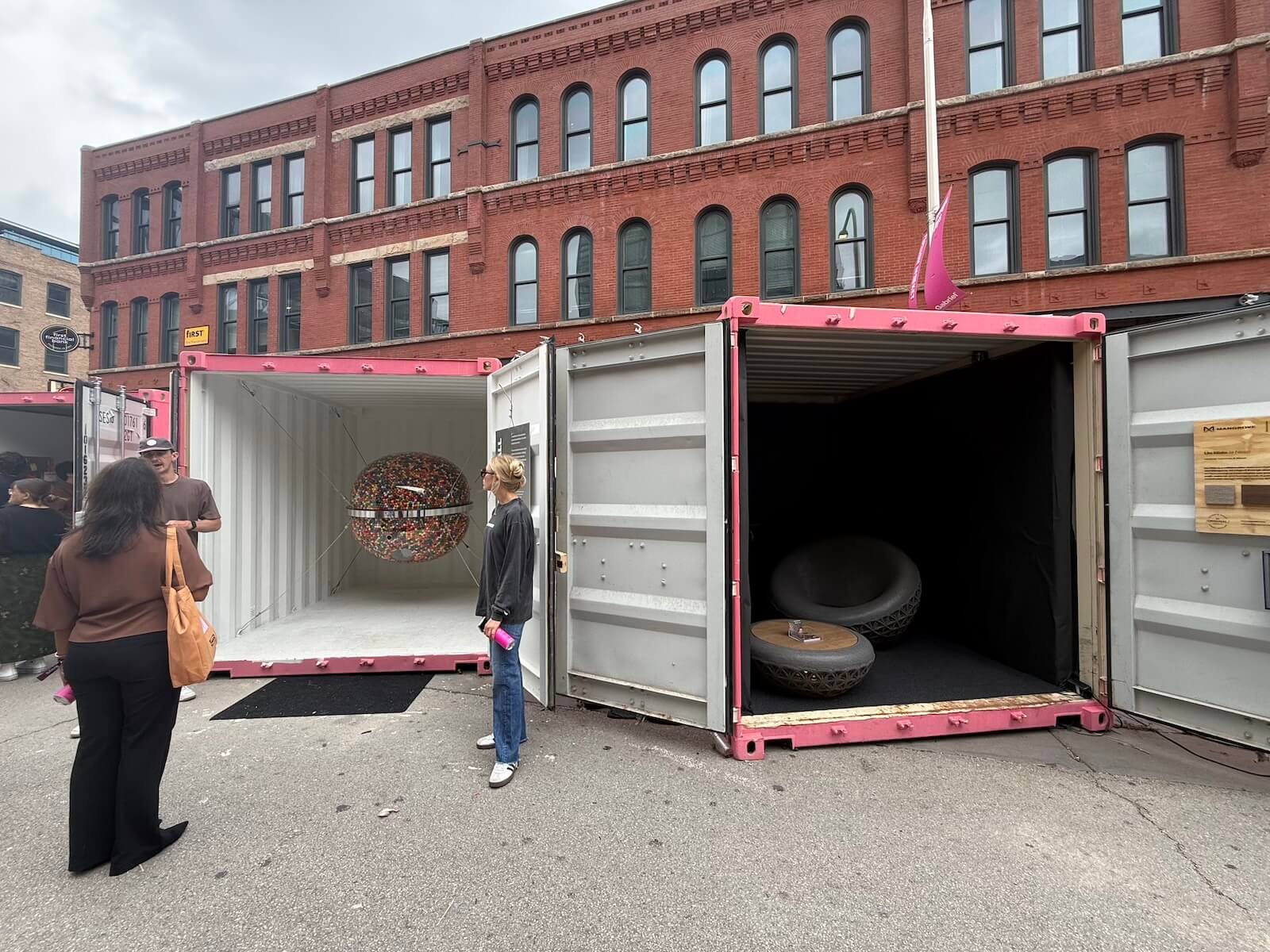
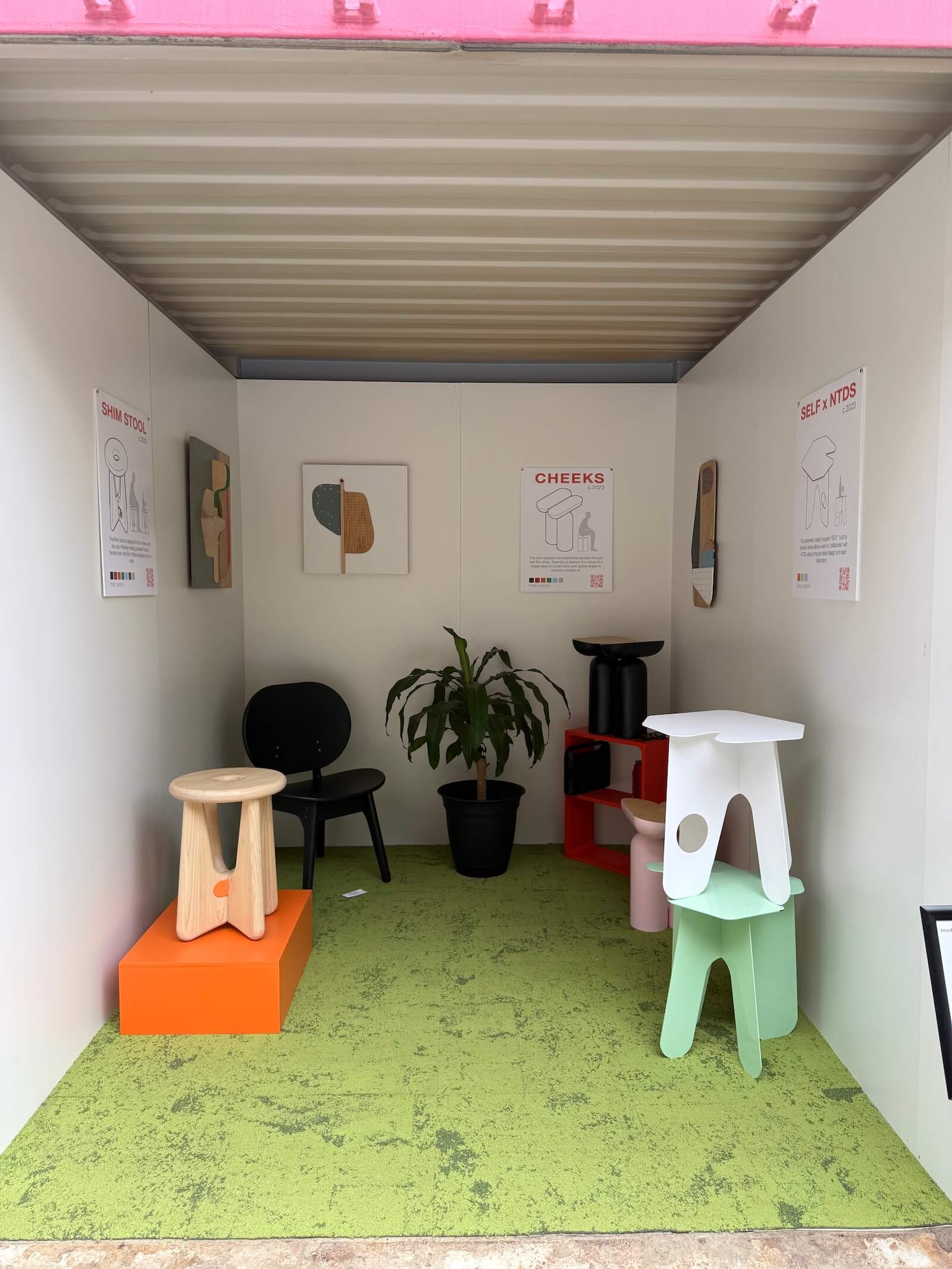
The hot pink—painted containers of Less Than a Truckload (presented by AZURE and Interface) were like urban-scale cabinets of curiosity. Inside, you found a chill lounge filled with recycled-plastic and metal-plate furniture, including a turntable and incense stand, by The Mula Studio; a giant gum ball machine by Hardgoods; a sculptural 3D-printed lounge and table by Common Object Studio and Mangrove; an eclectic seating collection and artworks made from its offcuts by Norman Teague Design; and more. The ensemble captured the emerging Chicago creative scene and delivered a dose of indie spirit during a week devoted to office design.
Allsteel Shifts from User-Centric to Human-Centric Design
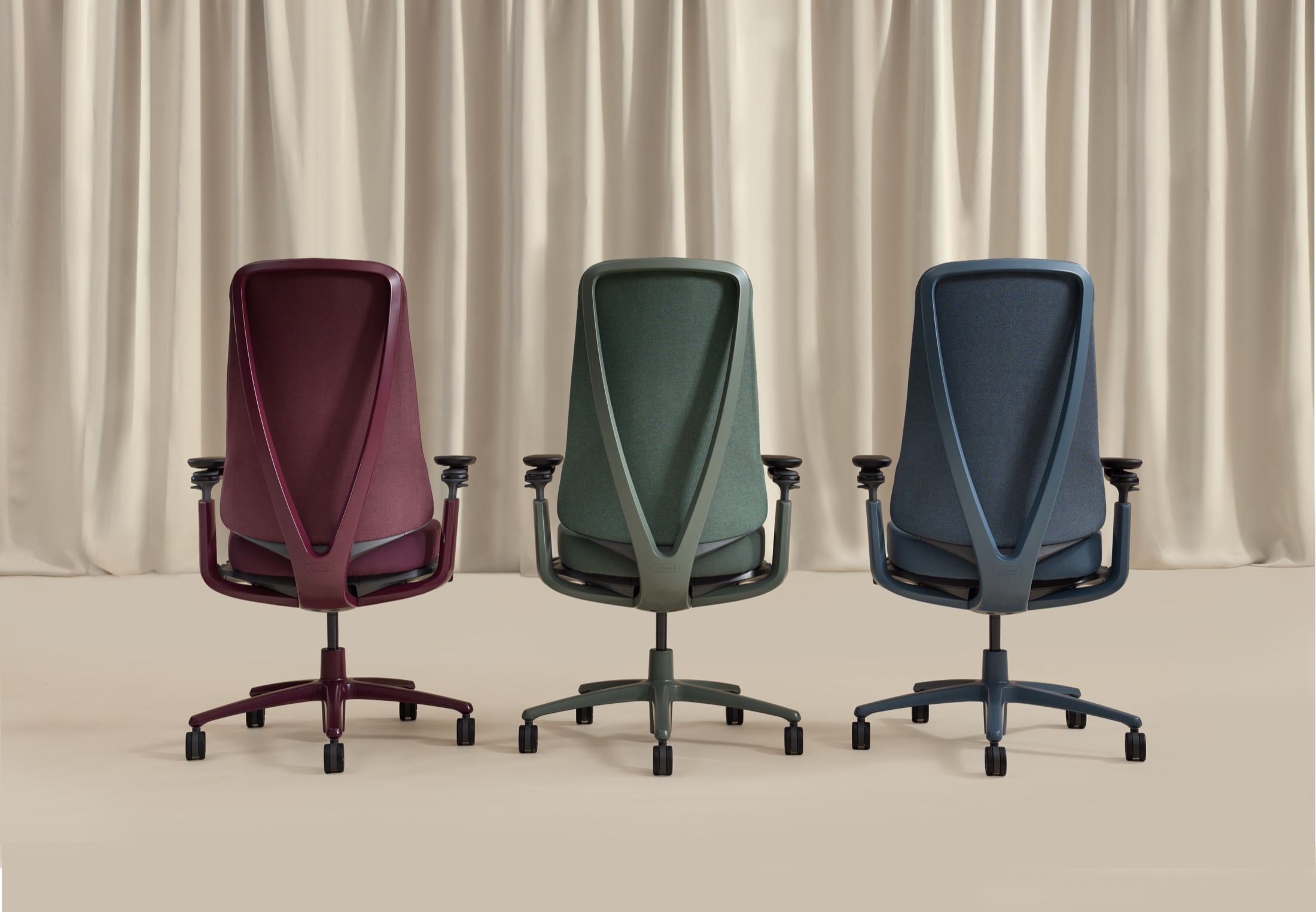
The honour of the most comfortable task chair that we sat in during Fulton Market DesignDays goes to Levra — Allsteel’s self-assured new seat developed by Germany- and Switzerland-based ITO Design. To hear ITO industrial designers Christopher Schmidt and Cyrille Charier describe it, the secret to achieving this level of comfort was to depart from the usual “user-centric” focus of office chair design to instead develop something “human-centric.” What’s the difference? For one thing, Levra’s various adjustment dials are all designed to be intuitive and inviting — an oversized dial here, an easy-to-access toggle switch there, both of them accessible yet unobtrusive. Even the shape of the chair’s arms subtly conveys that they can rotate 180 degrees — encouraging people to interact with the chair and test out its full capabilities, without feeling intimidated or nervous breaking something.
When it comes to comfort, a Y-shaped lumbar support system delivers consistent support no matter what your posture, with no harsh pressure points. Each back is made from 100 per cent recycled materials, including up to four per cent marine yarn. To extend the life of the chair, key parts — including casters, seat pads and arm pads — are easily replaceable. Sander told us all of this while we were seated in the chair — and it’s a testament to just how at ease and focused we felt while sitting in it that we can still remember.
Teknion Introduces a New Office MVP
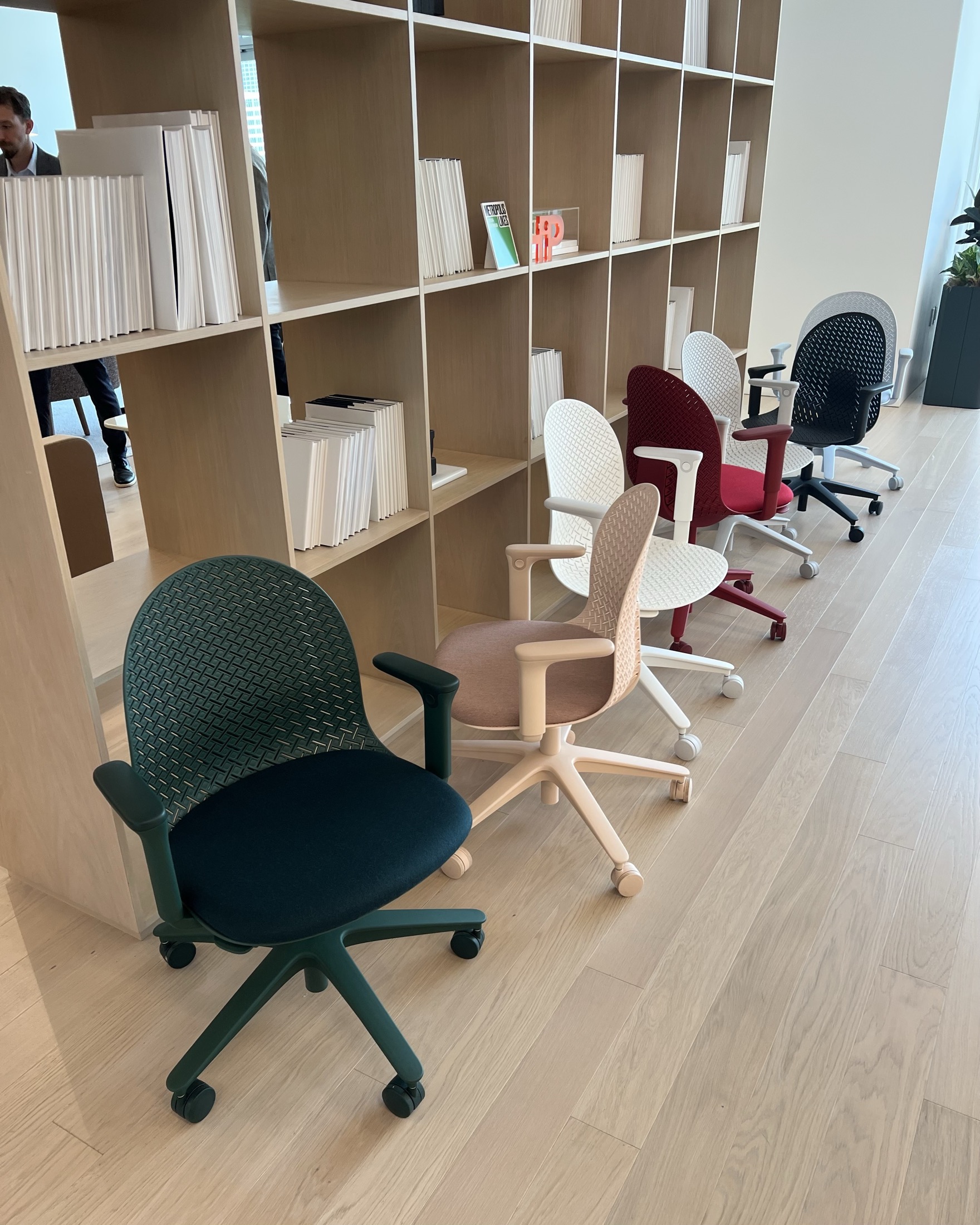
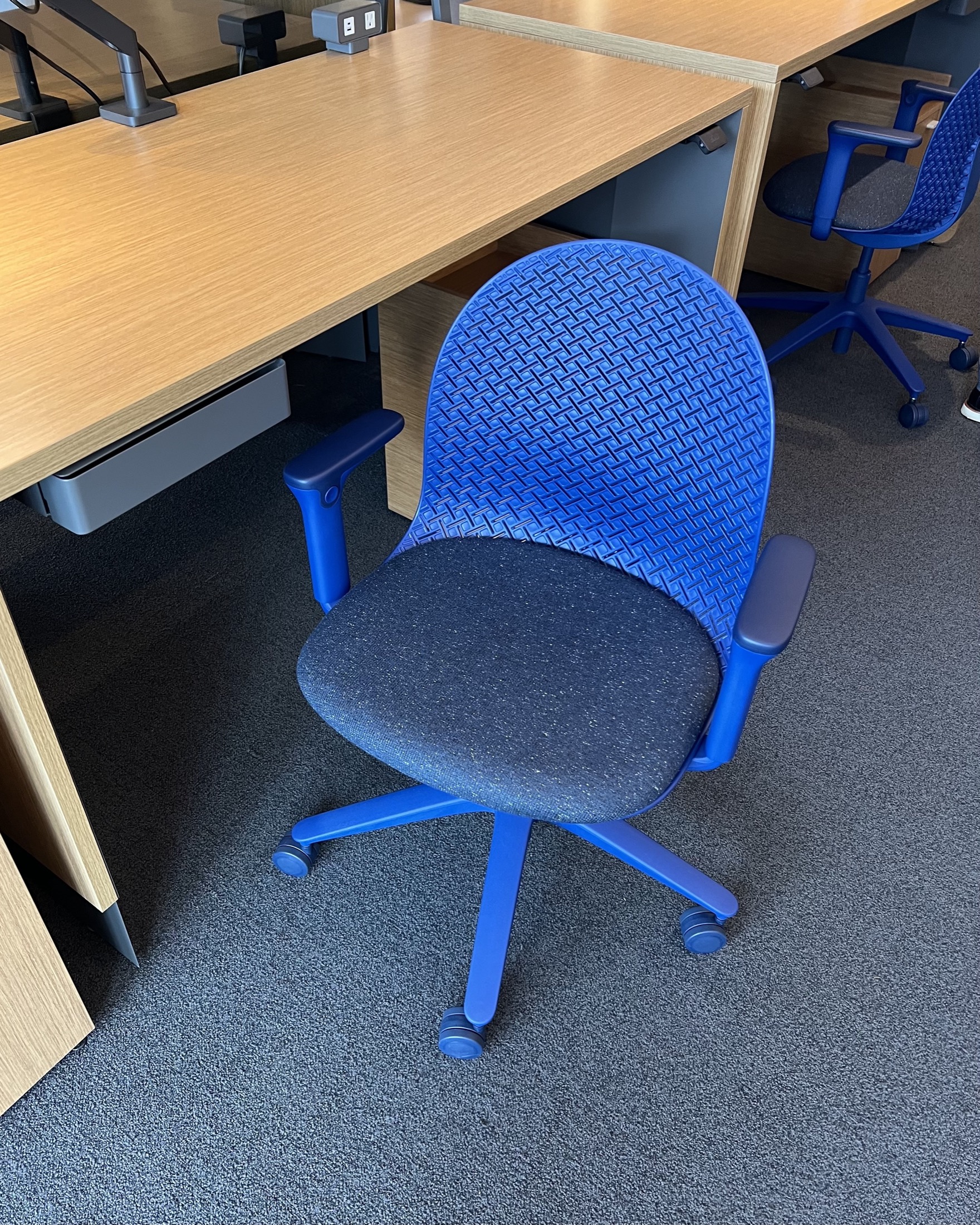
Every office needs a good multitasker — someone who can quickly shift gears to accomplish whatever task you throw at them. Enter Blink, which Teknion and New Zealand studio Formway have designed to work just as effectively at a desk as it does in a meeting room, without needing multiple adjustment mechanisms to calibrate it for different people or postures. In other words, it’s the perfect solution for a workplace that sees people move from space to space.
Despite all the ergonomic research and engineering to make this possible, Blink looks deceptively simple. From the back, the detail you notice most is its thick spine — a.k.a. the Keel mechanism. This component enables smooth forward and backwards tilt, all while counterbalancing your body weight to offer the right support. Meanwhile, the shell seat (moulded in a single piece) features over a thousand perforations that dynamically flex as you move. Add to that a fun colour palette that includes cobalt blue and mossy green, and we’d hire this chair to join our workforce in a heartbeat.
A Trio of Textural Textiles
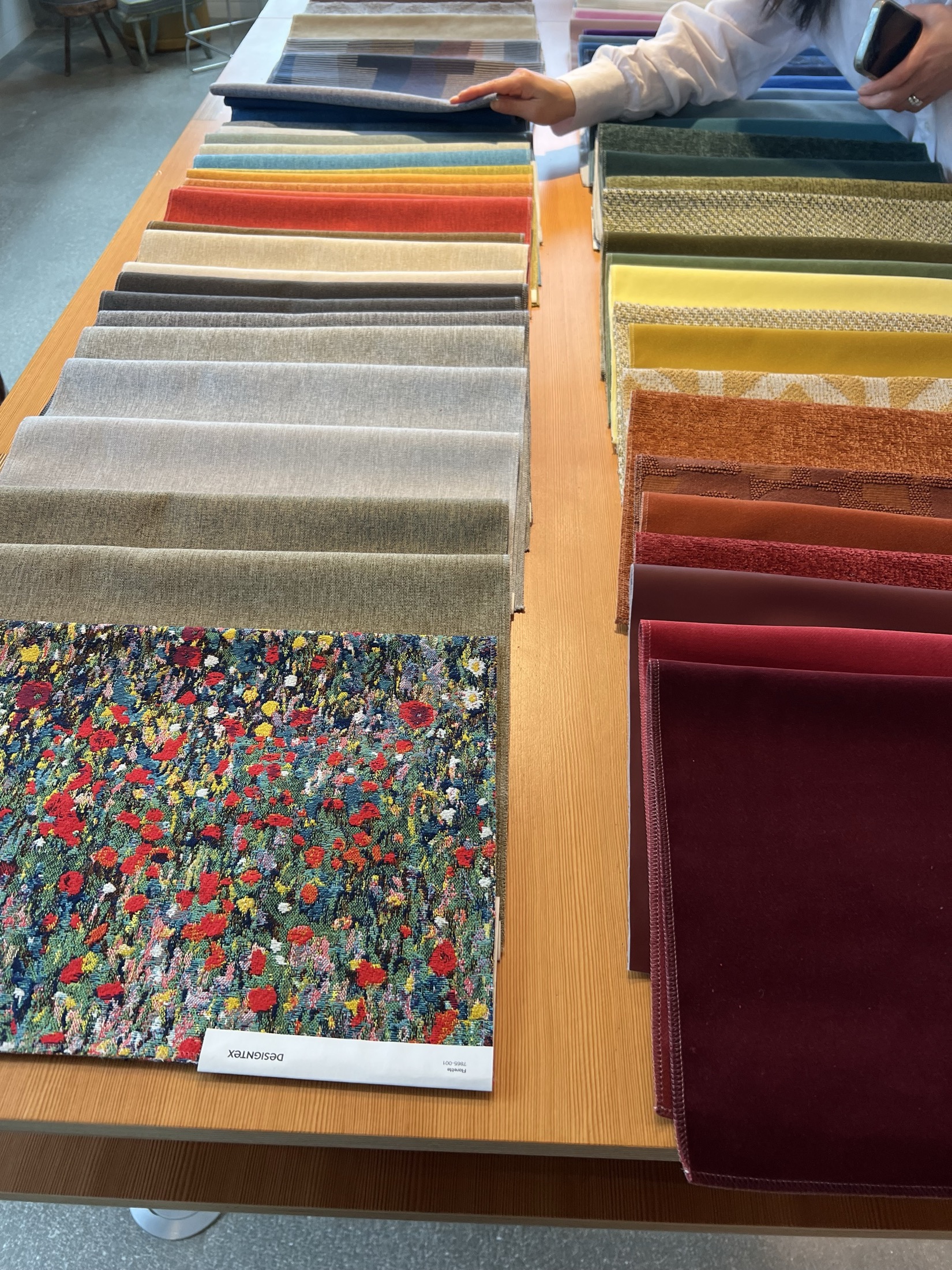
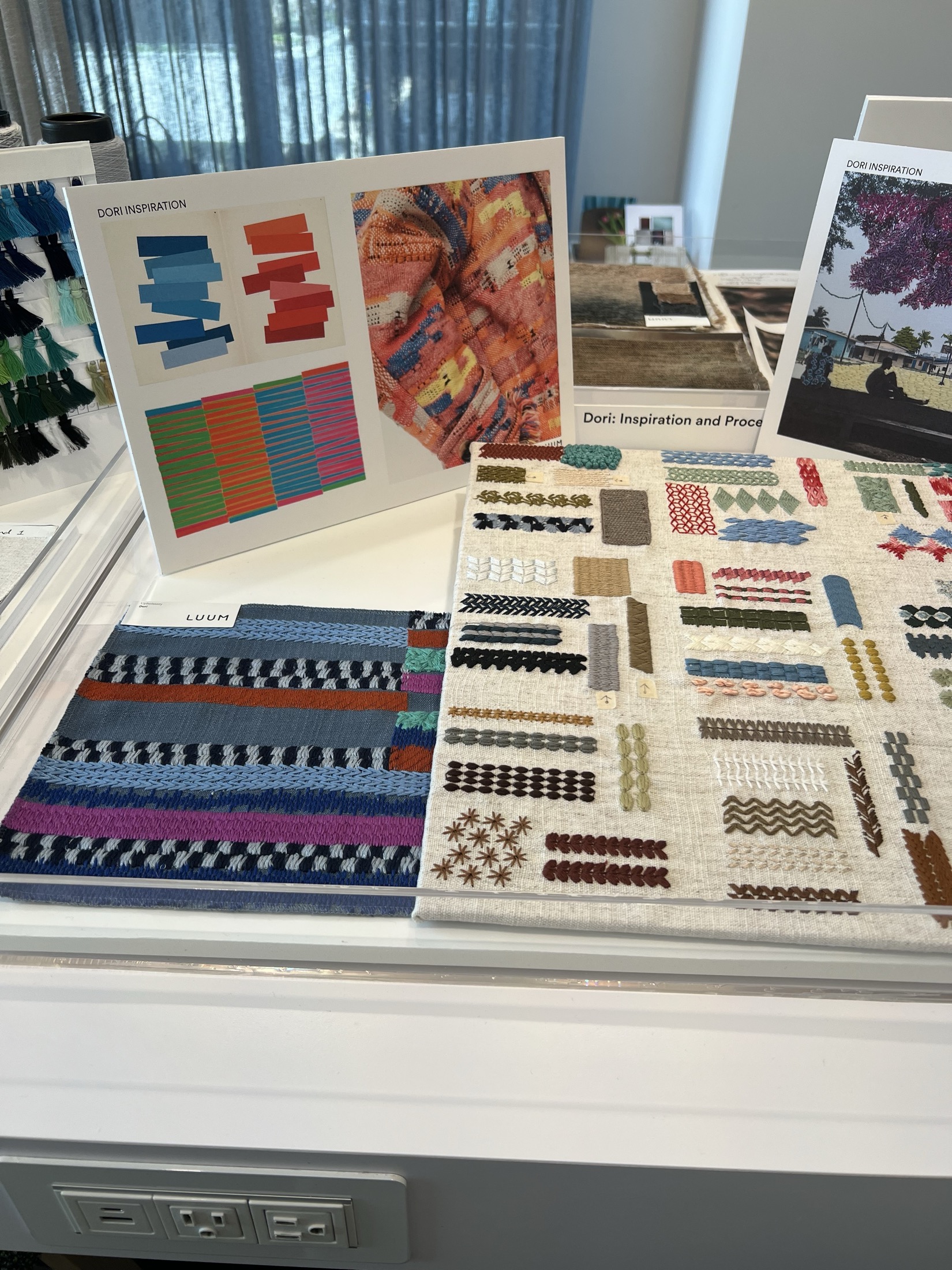
Upholstery brands were operating at the top of their game this season. First up, things were in full bloom at Designtex, where Florette (an indoor-outdoor textile launching in July) mimicked the look of an impressionist garden painting. In keeping with that spirit, it is woven at a Belgian mill that’s been operating since the 1850s. Next up, Luum’s recently instated creative director, Dorothy Cosonas, hit the ground running with a new collection, Craft Work, that takes inspiration from both art and fashion. Dori, a series of ultra-colourful, terrifically textured (and partially handcrafted) striped patterns, was one of several standouts.
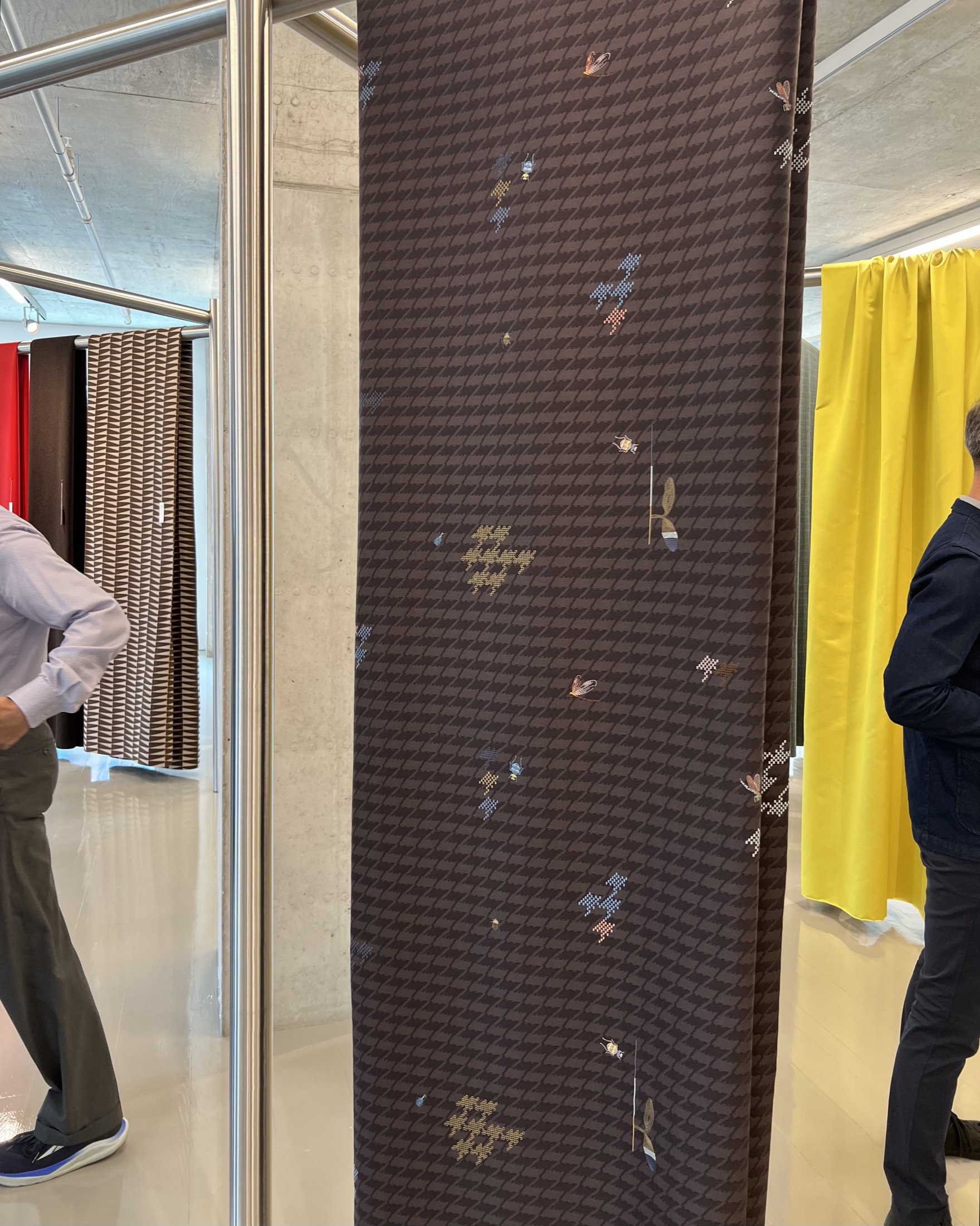
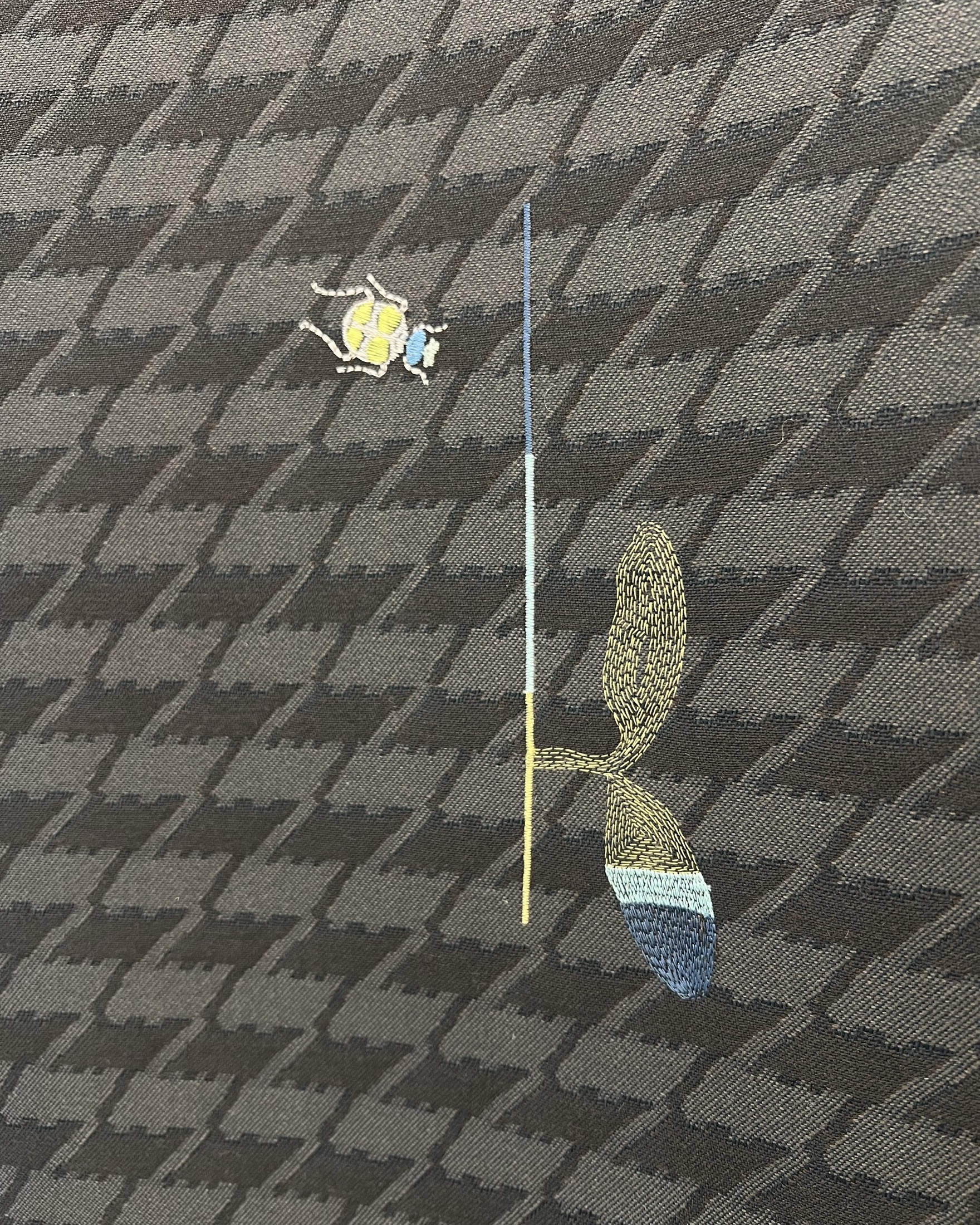
From there, we moved to Maharam, which was showcasing the latest addition to its series of collaborations with Dutch designer Hella Jongerius. Dubbed Jubilee, the pattern continues her tradition of marrying industrial production with craft techniques, applying embroidered insects and greenery to a supersized houndstooth pattern.
Sustainability Reigns at Arper
For its third-year partaking in Fulton Market DesignDays, Arper presented (RE)CONNECTING, an immersive display that invited guests to explore and experience the connections that shape how we live, work and gather. Decked out in all the Italian brand’s finest, the showroom was buzzing as visitors discovered the newest collections alongside ongoing evolutions and perennial favourites.
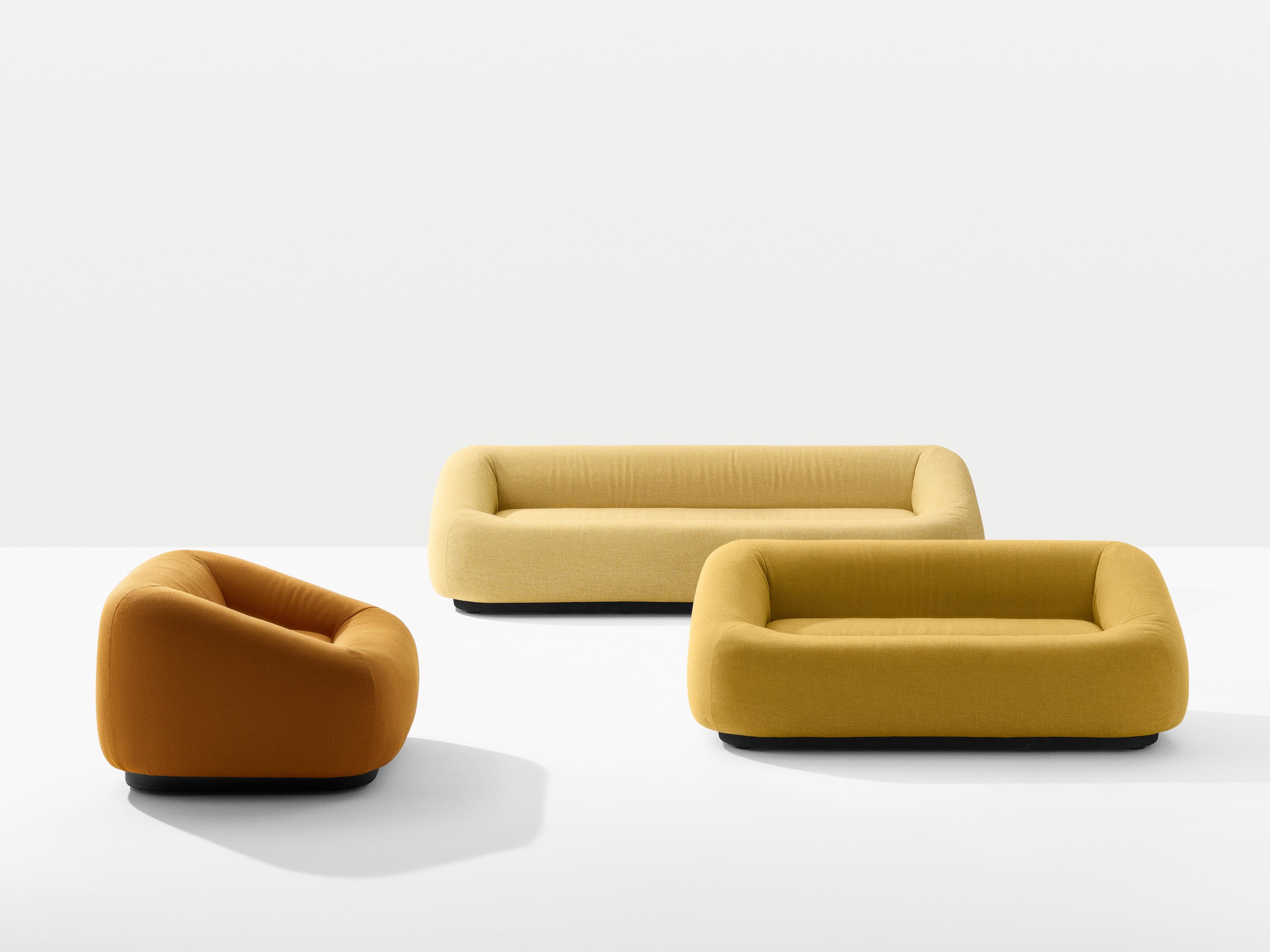
Of particular interest to many was the new Aom soft seating collection designed by Jean-Marie Massaud. Officially launched during Milan Design Week in April, the shapely armchair and sofas (in two- and three-seater versions) were developed through a two-fold “principle of subtraction” — a removal of all superfluous details and elements to focus solely on quality and a material profile that minimizes its environmental footprint. The streamlined yet welcoming design is engineered with only two interlocking components — a lightweight expanded polypropylene structure and Breathair padding — to eliminate the use of polyurethane foam and any glues or staples. Made from a recyclable polyester elastomer, Breathair is elastic, breathable and water-resistant and, combined with clever drain holes in the internal structure, allows the seating to move easily between indoors and outdoors.
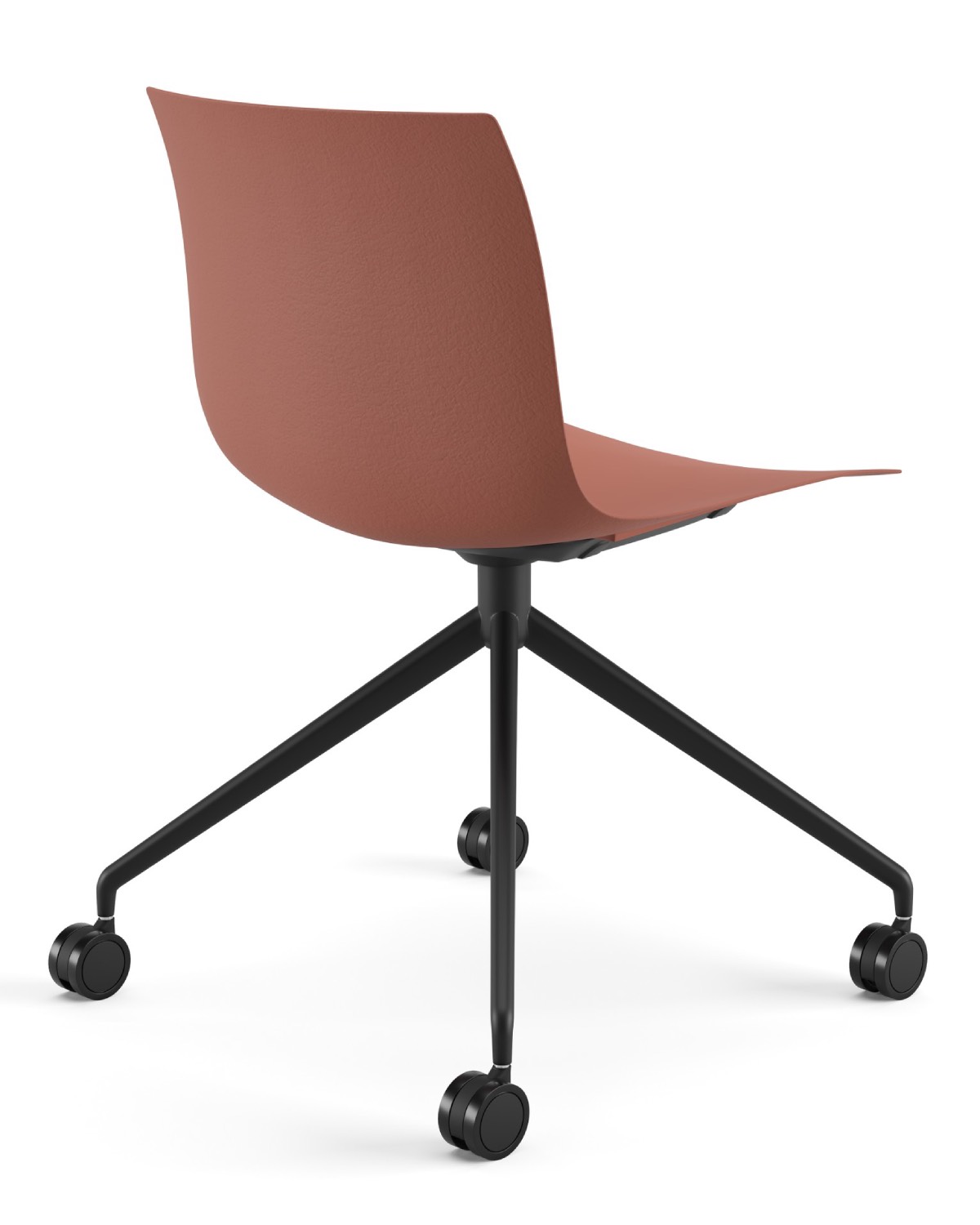
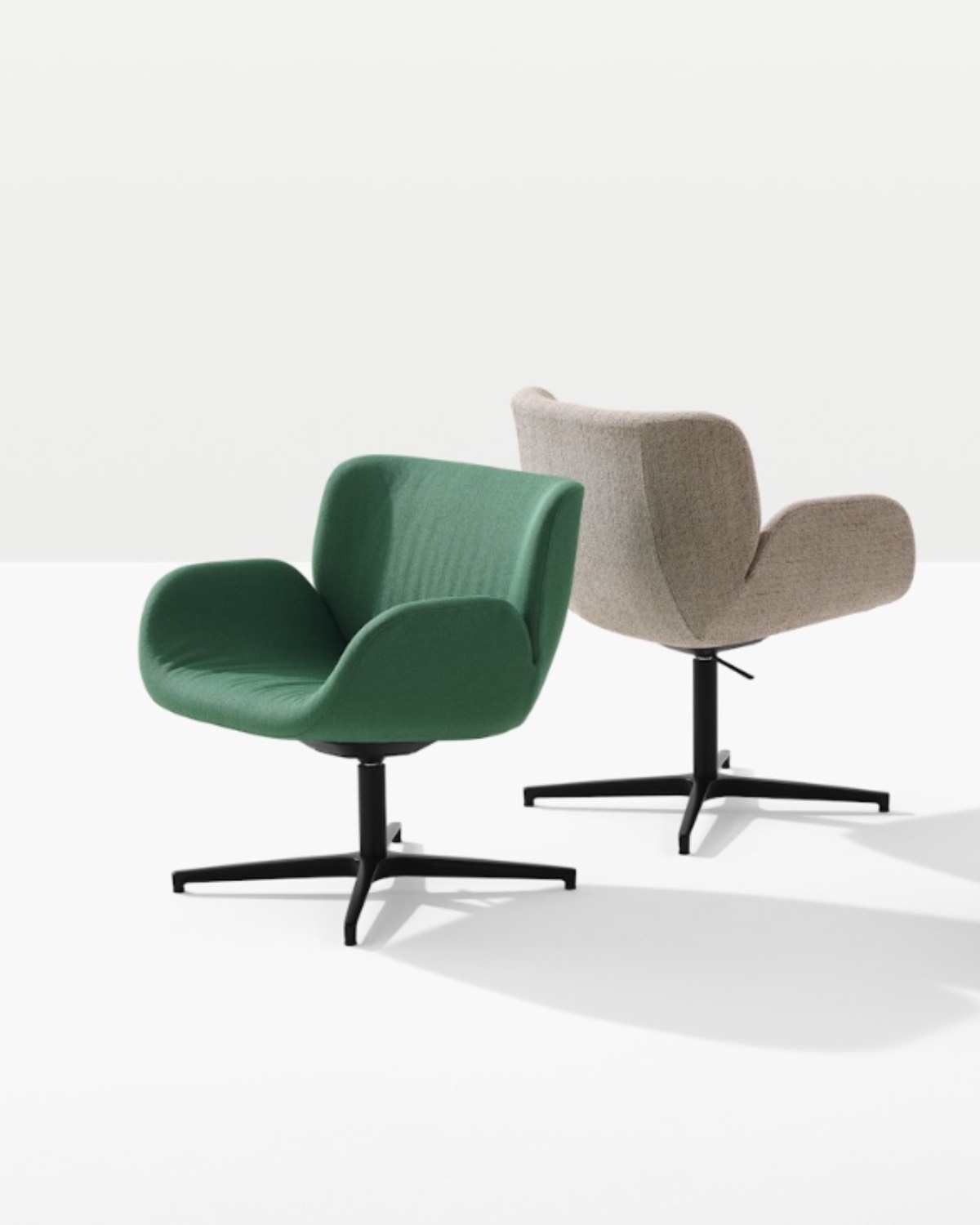
Also on view was the latest iteration of Lievore Altherr Molina’s Catifa collection, Catifa (RE) 46, which features an incredibly thin yet durable shell made from 100 per cent recycled polypropylene (sourced from post-consumer and post-industrial materials); and Cari, a luxuriously soft lounge chair by Doshi Levien that works just as well at home as it does in a boardroom.
Humanscale’s Instantly Iconic Diffrient Lounge

Long-known for its thoughtful and ergonomic designs that support wellbeing in the workspace, Humanscale presented its concept of “Body. Planet. Materials.” through a series of human-centred settings and the museum-style Next Generation Materials exhibition that showcased the “interconnected relationship between human wellbeing, sustainable innovation and the future of materiality in design.”

Taking pride of place in the showroom was the Diffrient Lounge, one of iconic designer Niels Diffrient’s final concepts. An expert merging of residential comfort and advanced ergonomic engineering, the enveloping lounge chair (which was in development for nearly 15 years) features motorized adjustments, integrated power and an adaptable worksurface that, together, create a seat that responds to the body in an intuitive way. Whether working, relaxing or engaging in conversation, the refined minimalism of the chair’s design makes a supportive and highly attractive companion in a multitude of settings.
This content was published by Azure on behalf of Fulton Market DesignDays.
Fulton Market DesignDays 2026: Our Favourite Moments
From showroom debuts to outdoor installations, Fulton Market DesignDays 2026 captured the growing creative pull of Chicago’s West Loop.