

This year marks Montreal’s 20th anniversary as a UNESCO City of Design — and it’s not hard to understand why. From Moshe Safdie’s legendary Habitat 67 to newer marvels, like the Saint Joseph’s Oratory, the city is replete with architectural icons. Chief among them is the Biodome, which transformed Roger Tallibert’s 1976 Olympic Velodrome — distinguished by its monumental concrete curves — into a natural science museum, most recently reimagined by local firm KANVA in 2021. Home to five natural habitats that span the Antarctic Islands to the Tropical Rainforests, the Biodome is a highly controlled environment, with each space maintained at precise levels for temperature, humidity and lighting in keeping with the native regions of the animals and plants that live there.

It is only apt that this setting formed the backdrop for the launch of Gaggenau’s latest suite of cooling appliances, demonstrating the power of temperature in more ways than one. The leading appliance manufacturer collaborated with culinary experience experts Menu Extra — whose elaborate dinner series has activated iconic design destinations across Montreal and beyond — on the event, which gathered architects, designers, industry professionals and culinary experts on September 21.

The new Vario cooling Expressive series features flexible refrigeration solutions that can be installed individually or side by side to suit a range of spaces and lifestyles. The entire collection is designed to integrate seamlessly into the most thoughtfully designed homes, with handleless doors and flush surfaces, and refined details that ensure the pieces feel more like fine furniture than appliances. “Our goal was to create an experience that feels immediate and unobtrusive,” says user experience designer Adriane Wassmandorf Mattos. “From the way the lighting responds to your presence to the structure of the interface, everything was designed to support use without calling attention to itself.”

The interior details are equally considered. A restrained palette of dark brushed stainless steel, anthracite aluminum and glass lends the appliances a modern appeal, while glare-free, warm white LED lighting elevates the user experience with clear visibility. Of course, aesthetics are just one part of the equation. The sleek design is complemented by top-of-the-line performance and the most up-to-date technology, including Gaggenau Home Connect compatibility for remote access and visibility, and intuitive interfaces to support both everyday use and routine maintenance.
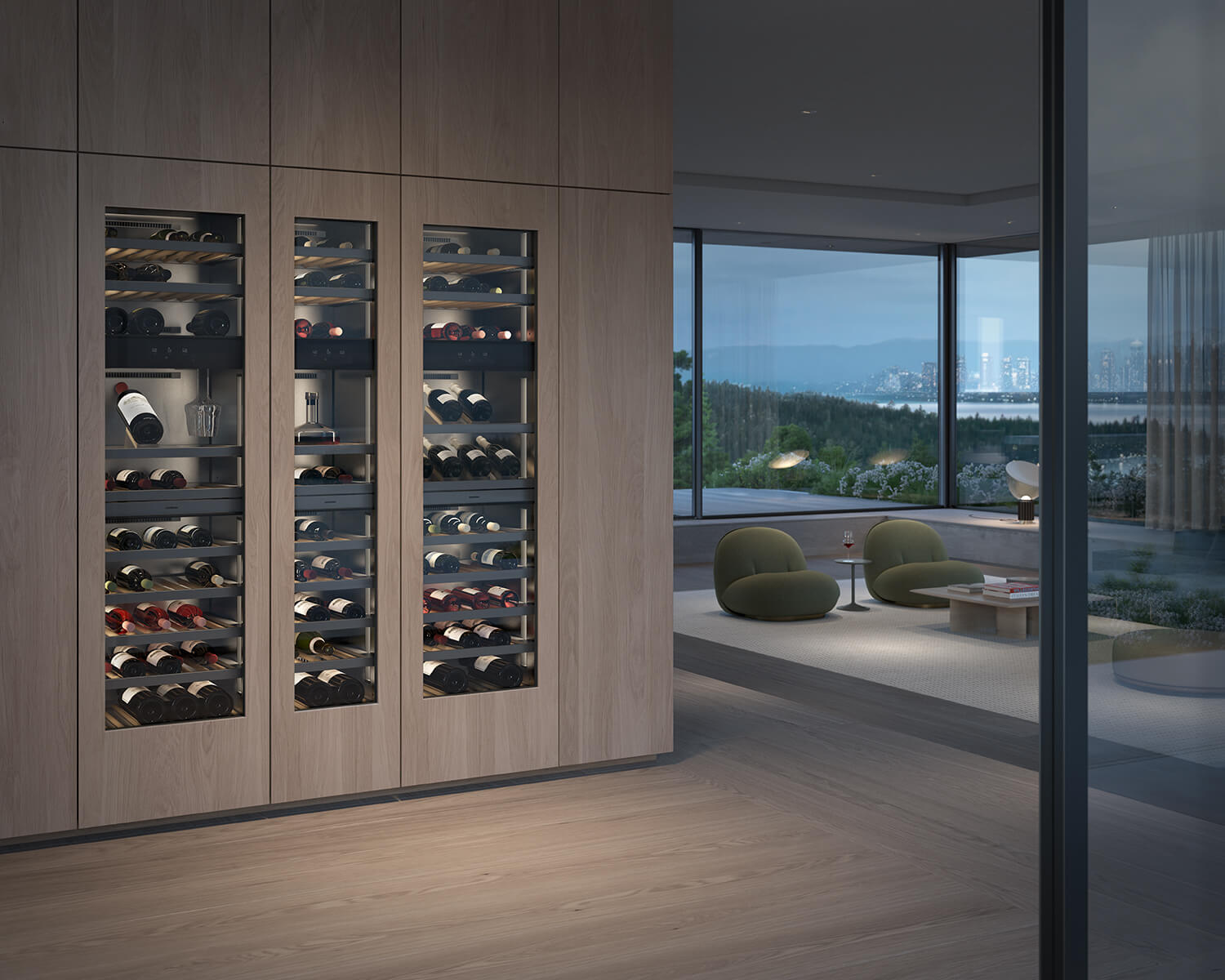
The cornerstone of the launch, however, was Gaggenau’s first-of-its-kind wine climate cabinet with automatic tempering — an innovation that promises to revolutionize wine serving and storage in residential settings. Available in 18” and 24” versions, the collection transforms wine serving into a precise and intuitive experience for both connoisseurs and enthusiasts alike. The system regulates temperature, humidity, light and storage conditions, using dedicated infrared sensors to bring each bottle to its ideal serving temperature. Once this ideal temperature is reached, the user is notified by the cabinet’s lighting and the Gaggenau Home Connect app. Drawing on the brand’s longstanding relationship with professional kitchens, the collection makes the precision and performance of professional cellars accessible at home.

“We didn’t just create a wine climate cabinet. We developed a system that honours the ritual of wine — from storage to serving — with the same care as a winemaker would,” says Sven Baacke, Head of Design at Gaggenau.

While the venue is often the starting point for Menu Extra’s branded dinners, according to creative director Samuel de la Courtemanche, the wine is a close second — and Gaggenau’s event was no exception, featuring a robust program developed by sommelier Alexandre Perron alongside Menu Extra co-founder and Beverage Director Alexis Demers.


Described by the brand as “a ceremony celebrating the ritual of collecting, serving and sharing wine,” the dinner unfolded course by course as a living demonstration of how subtle temperature variations can impact the aroma, texture and perception of a given bottle. Each pairing, stored and served according to its unique characteristics, built on the next, moving from the freshness of Champagne, served at a crisp 6°C, to the delicate pinot noir, which was served closer to cellar temperature at 14°C. In turn, the service of wine became part of the choreography of the evening, meeting hospitality with a sense of spectacle.

This content was published by Azure on behalf of Gaggenau.
Gaggenau’s Latest Launch Spotlights the Art of Temperature
The Vario cooling Expressive series made its Canadian debut at a theatrical dinner hosted in collaboration with Menu Extra at Montreal’s Biodome.