303
Current Issue

Mar/Apr 2024

#303
Mar/Apr 2024

Simply put, this issue argues that we need more options, in everything from housing to healthcare to education. Can we create more options for how we house ourselves? For how we approach the housing and care needs of our aging populations who are especially fragile? For how we teach architecture to begin with?

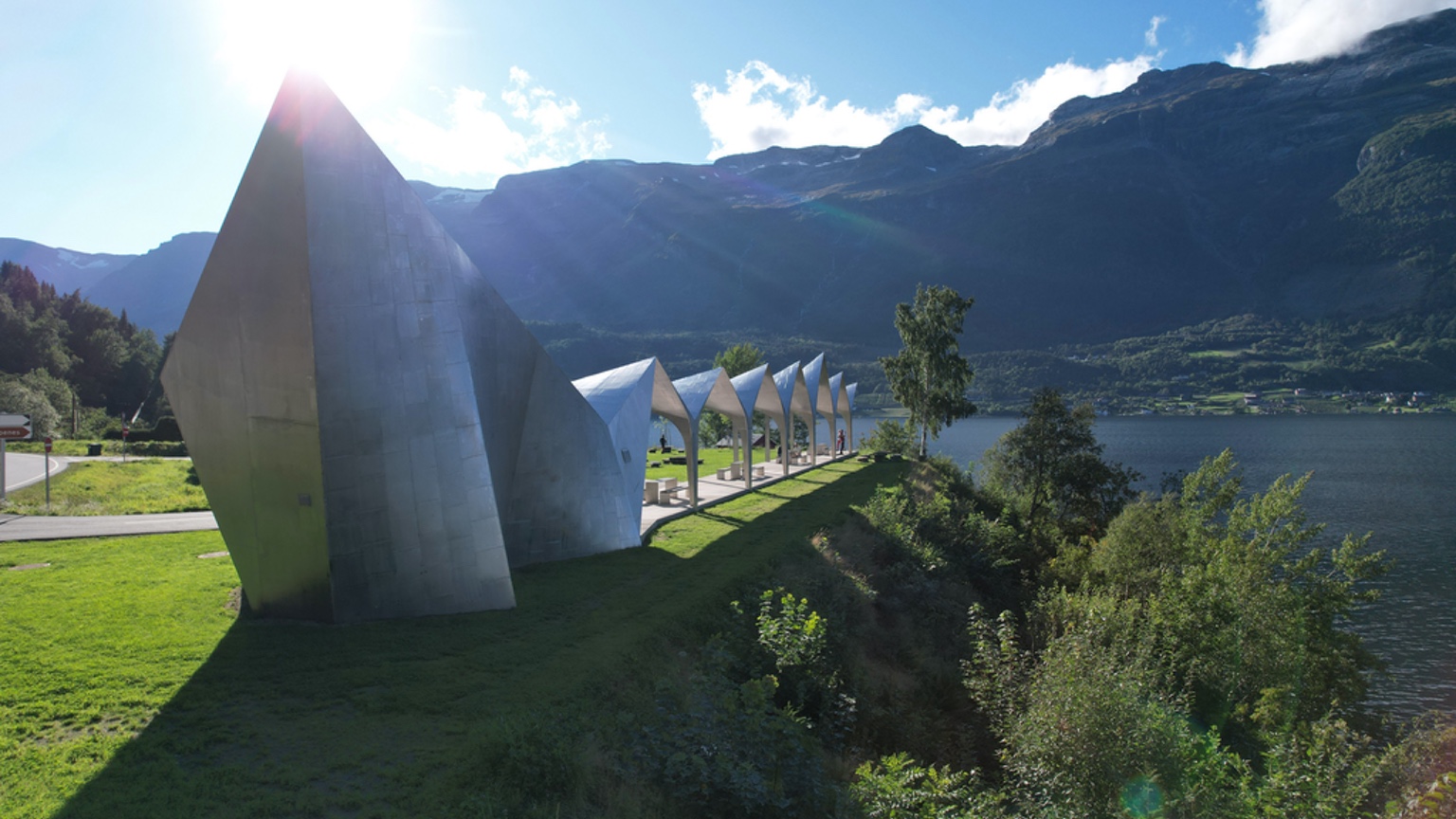
The Hardangerfjord — one of the longest fjords in the world — may be the main attraction along Norway’s Highway 13, but the new rest stop that looks out to this captivating inlet is a wonder in its own right.

A view of the Hardangerfjord in Norway looking through the steel arches of a roadside stop structure by Code Arkitektur.
Photos by Fovea Studio
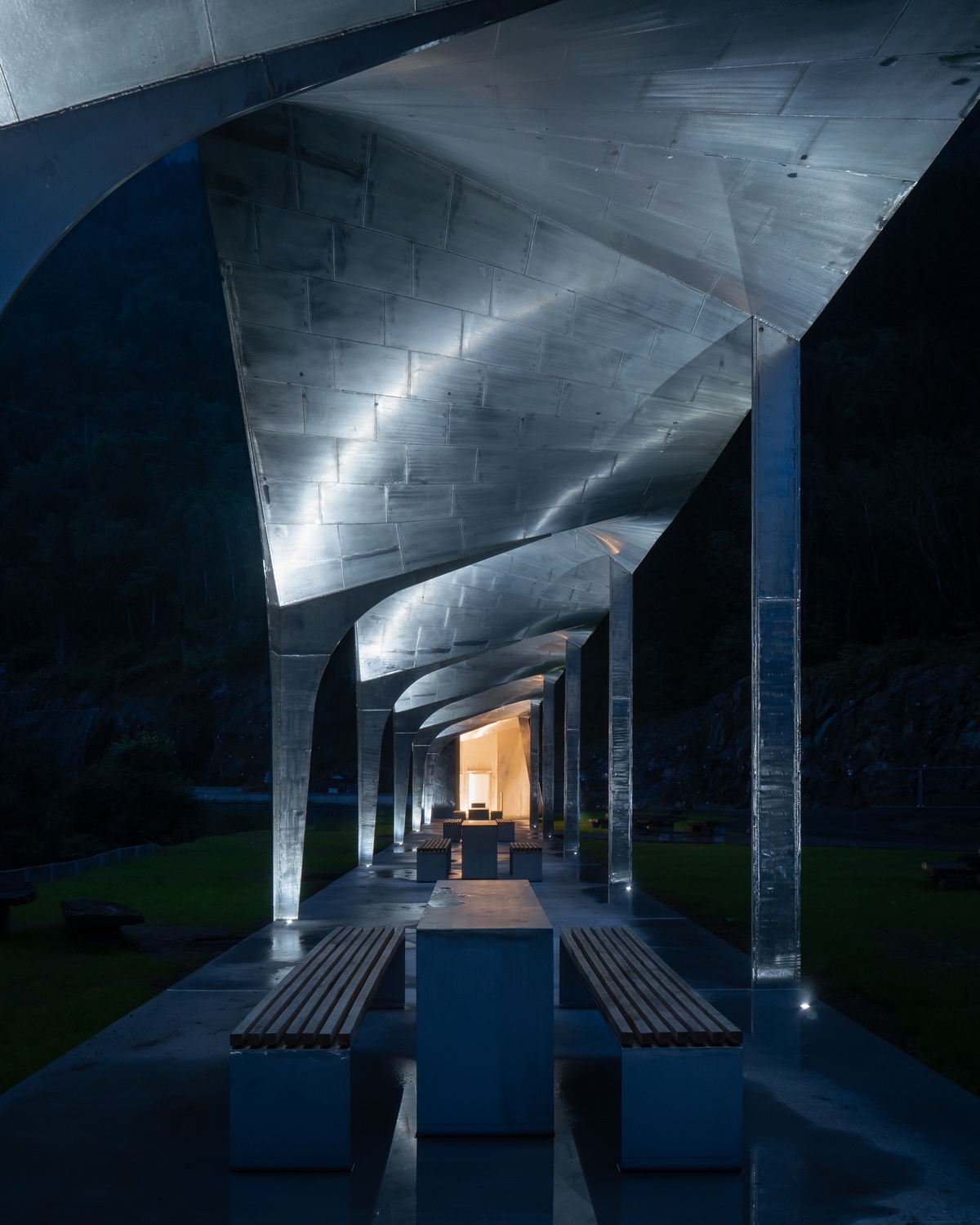
Looking towards the glowing washroom facility at the end of a roadside stop structure by Code Arkitektur that's illuminated at night. A picnic table sits in the foreground underneath the arched roof that shelters the walkway.

Designed by Oslo firm Code Arkitektur, it’s part of the Norwegian Scenic Routes, an initiative that commissions cultural pavilions that knit together the country’s most picturesque landscapes. Complementing rather than competing with its surrounding view, the metal-clad concrete structure establishes its own mountain range in miniature with a 50-metre-long roofline defined by a series of sharp peaks.
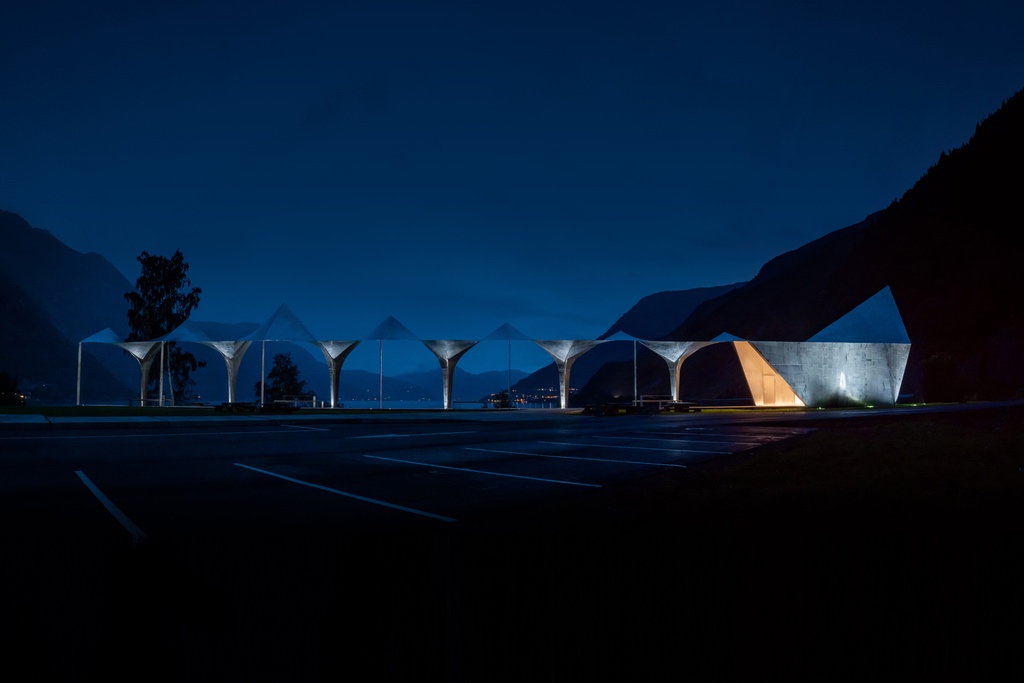
A night view of a roadside stop in Norway by Code Arkitektur. A rippling metal ceiling covers a narrow walkway that terminates in a glowing. metal washroom structure. The Hardangerfjord sits in the background.
Photo by Fovea Studio

A wide walkway, complete with benches and picnic tables, passes below this angular canopy en route to a cavelike washroom facility. The project’s reflective casing proves especially enchanting come nighttime, when a lighting scheme by the illumination experts at Light Bureau mimics the gentle magic of moonglow. ​

A Roadside Stop Adds to the Magic of Norway’s Landscape

Fjord your consideration: a new attraction by Code Arkitektur and Light Bureau.

leaderboard-3

#303
Mar/Apr 2024

Simply put, this issue argues that we need more options, in everything from housing to healthcare to education. Can we create more options for how we house ourselves? For how we approach the housing and care needs of our aging populations who are especially fragile? For how we teach architecture to begin with?