The Illinois Bell, located in Chicago’s West Loop, carries a sense of confidence, its composed cantilevered form, glass curtain wall, street-facing columns, and rigorously symmetrical grid of windows an ode to a time when corporate buildings were not only efficient but ceremonial. Completed in 1966 by Holabird & Root, the 31-storey tower remains a rare example of New Formalism in a commercial setting.
But how can a building defined by order and permanence respond to today’s workplace, shaped by flexibility and choice, collaboration and activation? That was the question Ste Marie posed with its transformation of The Bell’s 9,300-square-metre programme. Rather than uproot the building’s architectural framework, the studio introduced a new layer of use: a sequence of richly layered, hospitality-driven spaces that reposition the tower as a place to move through rather than just work within.
“When we were brought on, the building itself was in good condition structurally, with strong fundamentals like large, open floor plates and generous ceiling heights,” says Craig Stanghetta, Ste Marie’s creative director. What it lacked, however, was a contemporary understanding of how people use office buildings today.
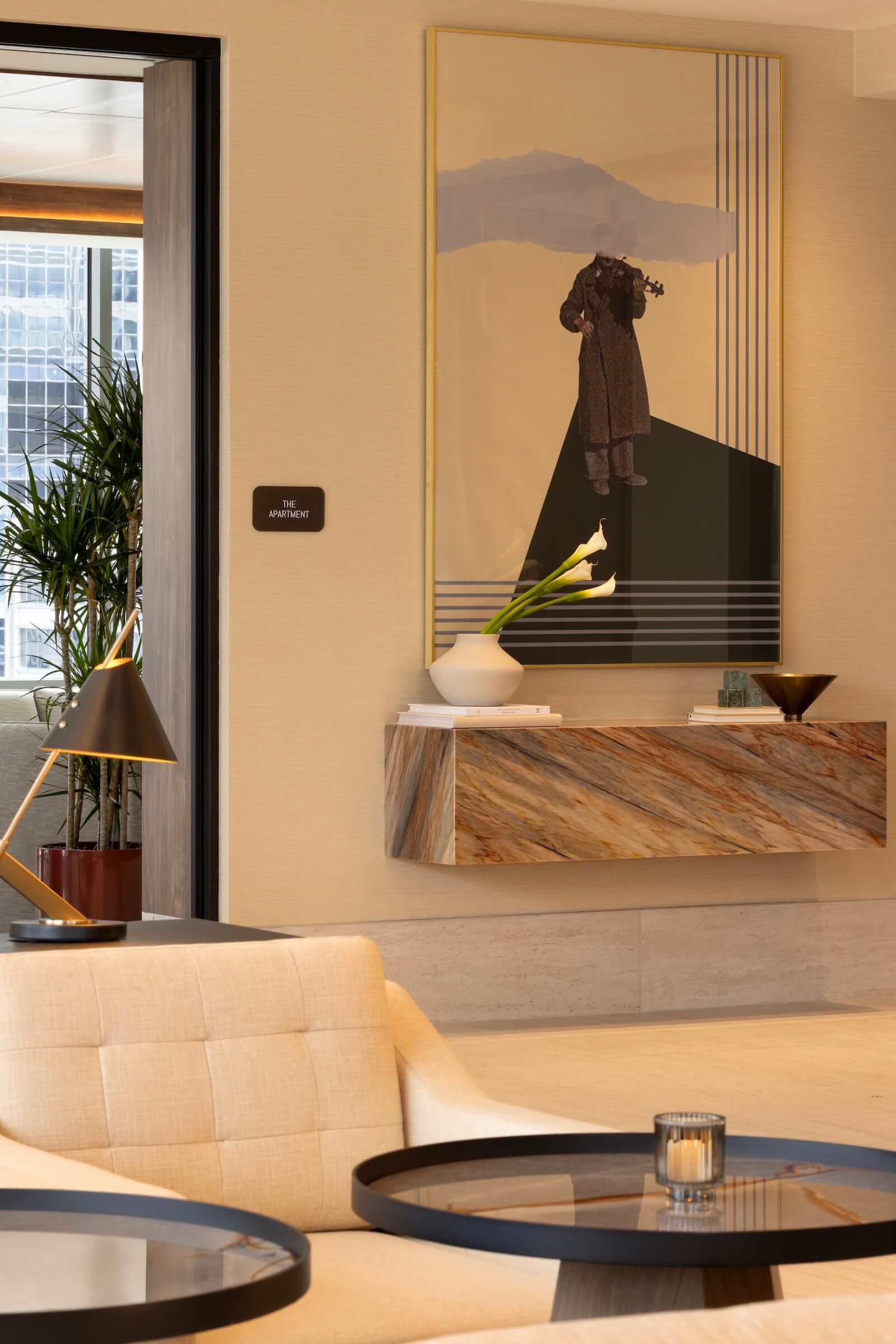
The shift is not in form, but in performance. Spaces are varied and distributed, allowing tenants to navigate the floors throughout the day based on need — whether it’s for focus, collaboration, or rest — imparting a sense of rhythm and ritual into daily use.
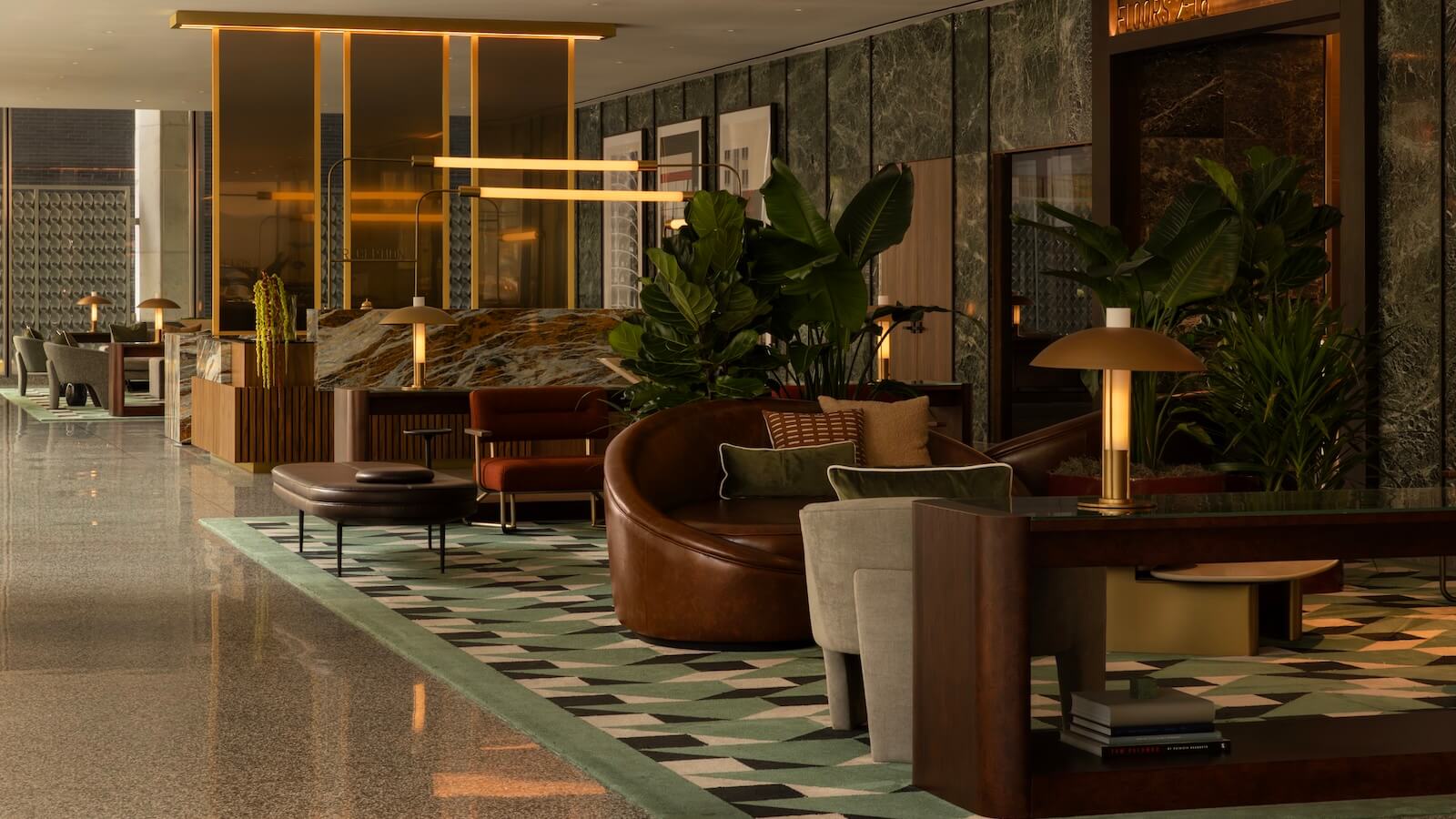
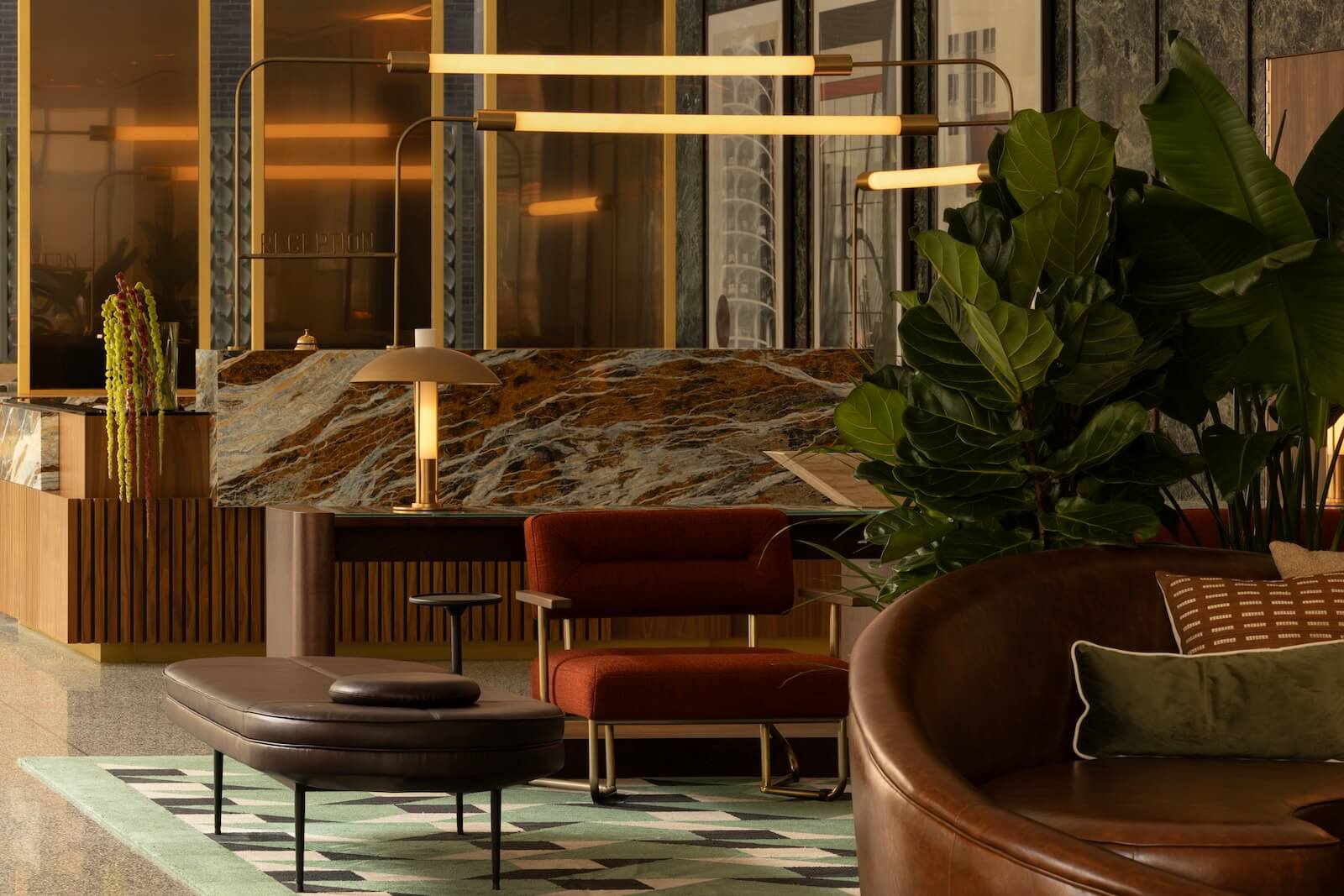
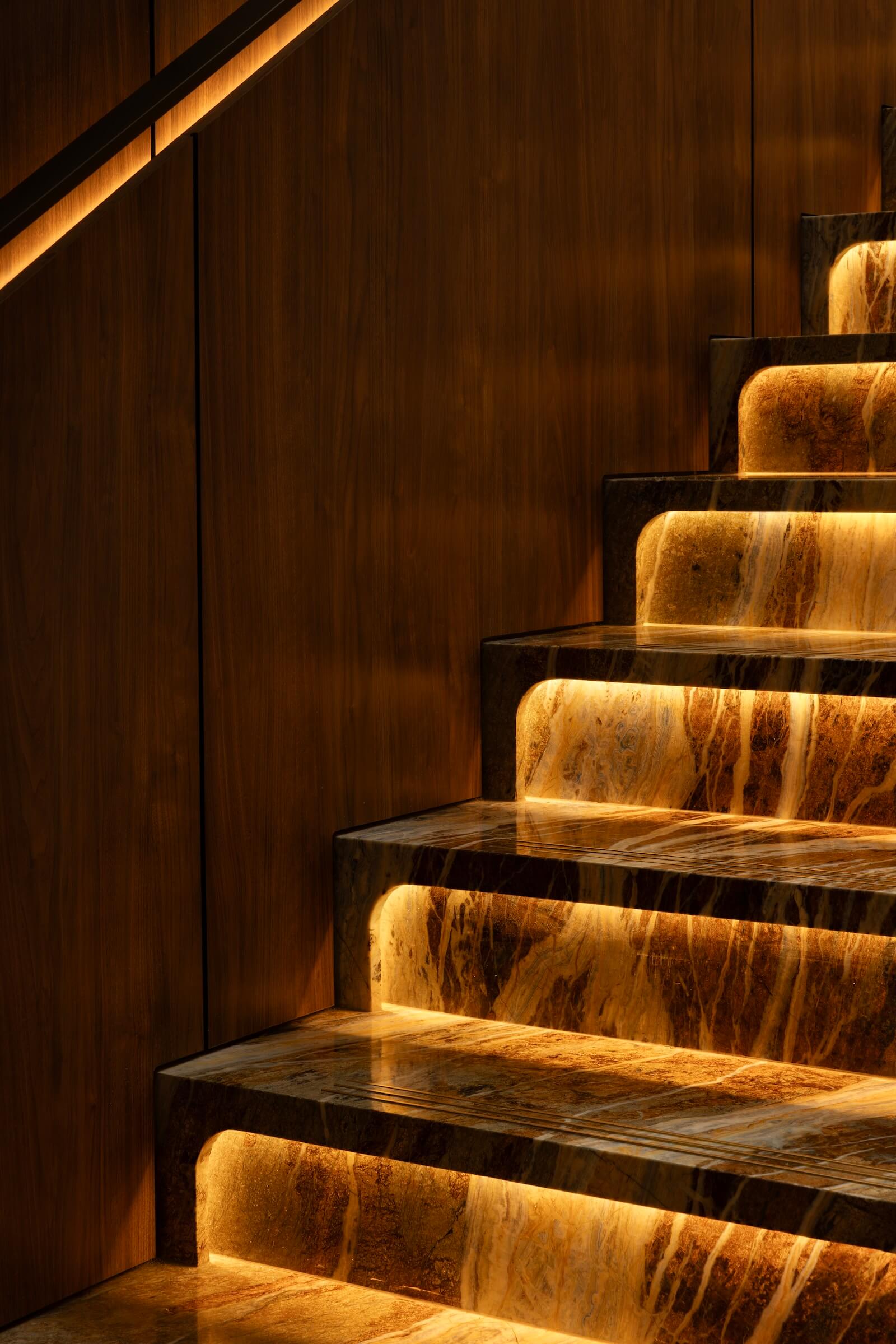
That experience begins in the lobby, which unfolds less like a buttoned-up office entry and more like a hotel or members’ club, with Solette, a 200-seat restaurant featuring curved, tactile seating and a palette of Verde Alpi marble, terrazzo, walnut and brass. The material choices, stemming from the building’s original expression, are refined and extended throughout the amenity spaces above, creating continuity in celebration of the 1960s, as well as the proportions, permanence and symmetry of New Formalism.
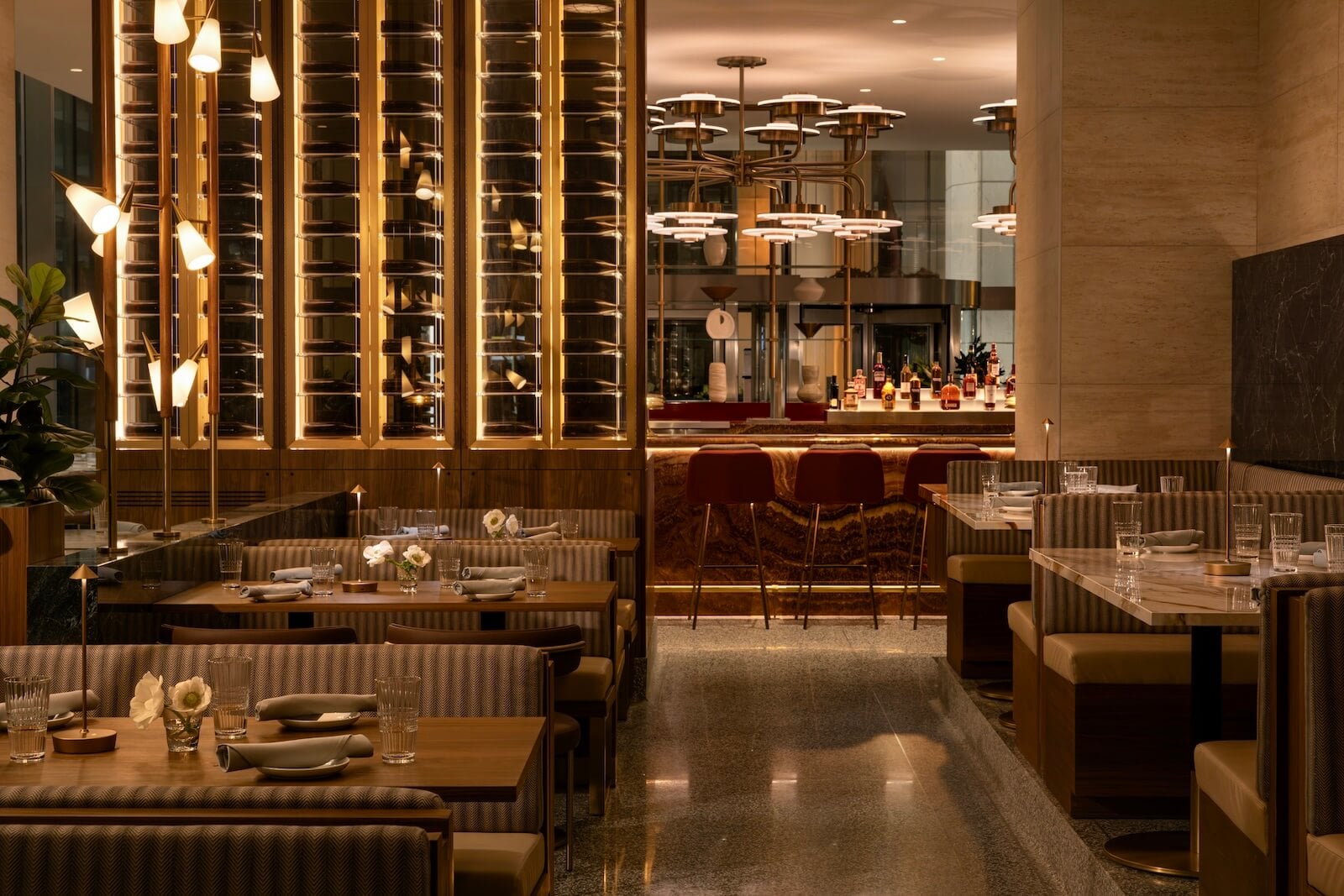
“The idea was to extend that language in a way that felt consistent and current,” Stanghetta says. That meant working with warm tones, layering, and imparting details that carry across different spaces. A restrained use of colour acts as an organizational tool, while quiet references to mid-century phenoms like Gio Ponti and Ettore Sottsass emerge through pattern, artwork, and furniture. Lighting, varying in depth and intensity, further delineates each environment.
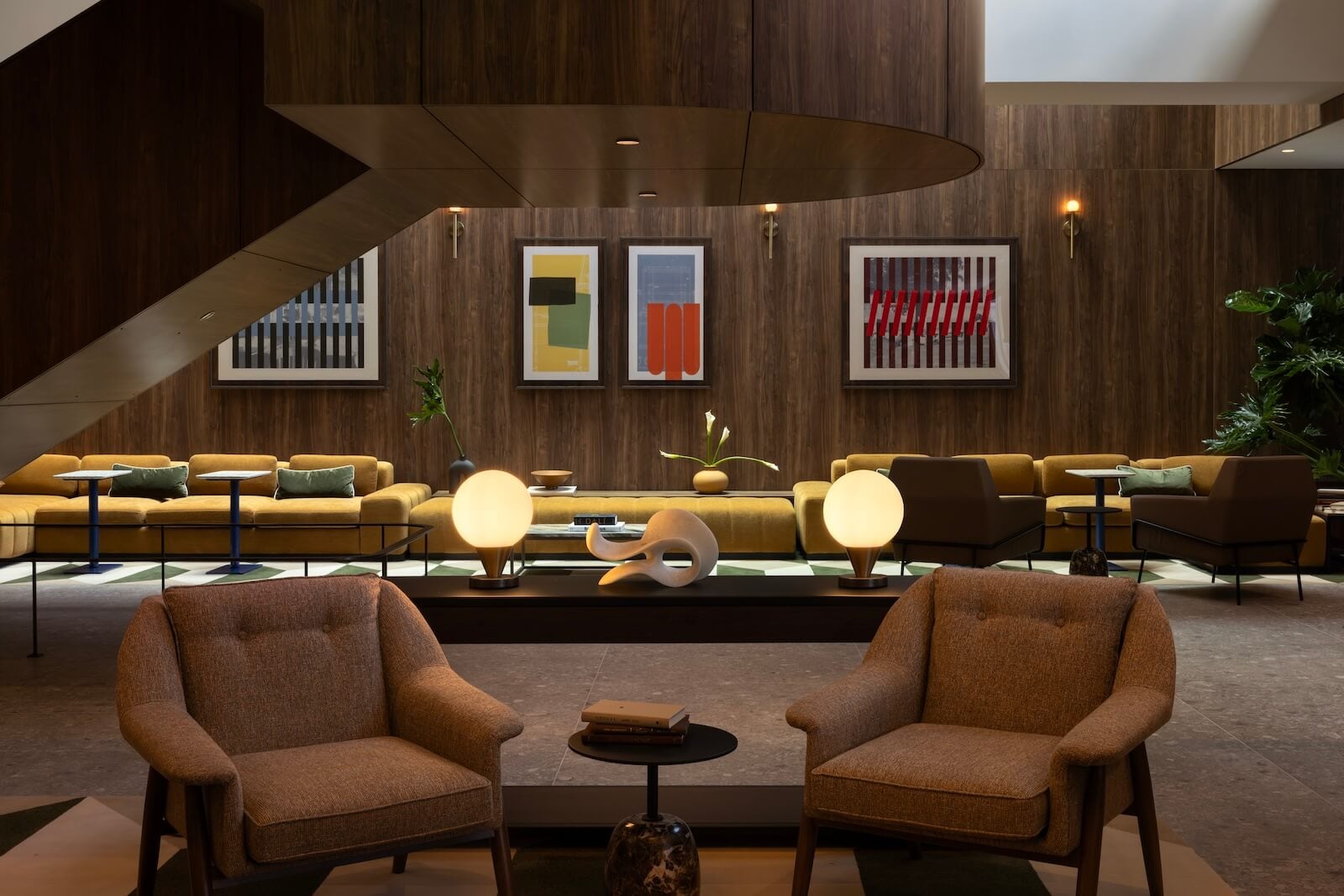
There’s also a graphic note, with “geometric compositions and high-contrast patterning creating moments of identity within the broader context of the building,” Stanghetta says.
As the programme rises through the shared amenity floors, co-working spaces emerge alongside areas for informal gathering. There’s a fitness centre with cold and hot plunges, plus 1,400 square metres of tenant lounges, with pickleball courts, a library bar, private phone booths, and F1 simulators.
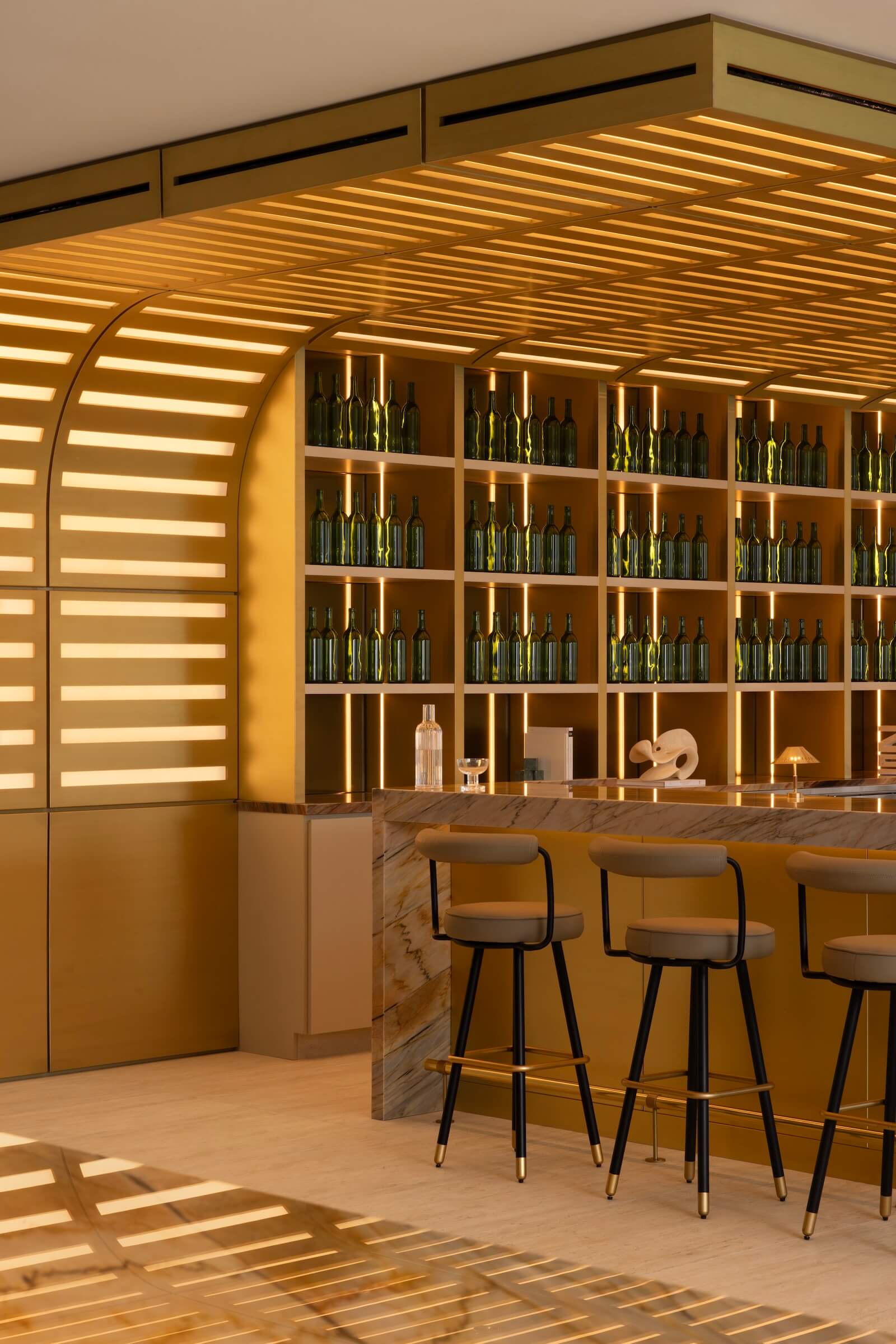
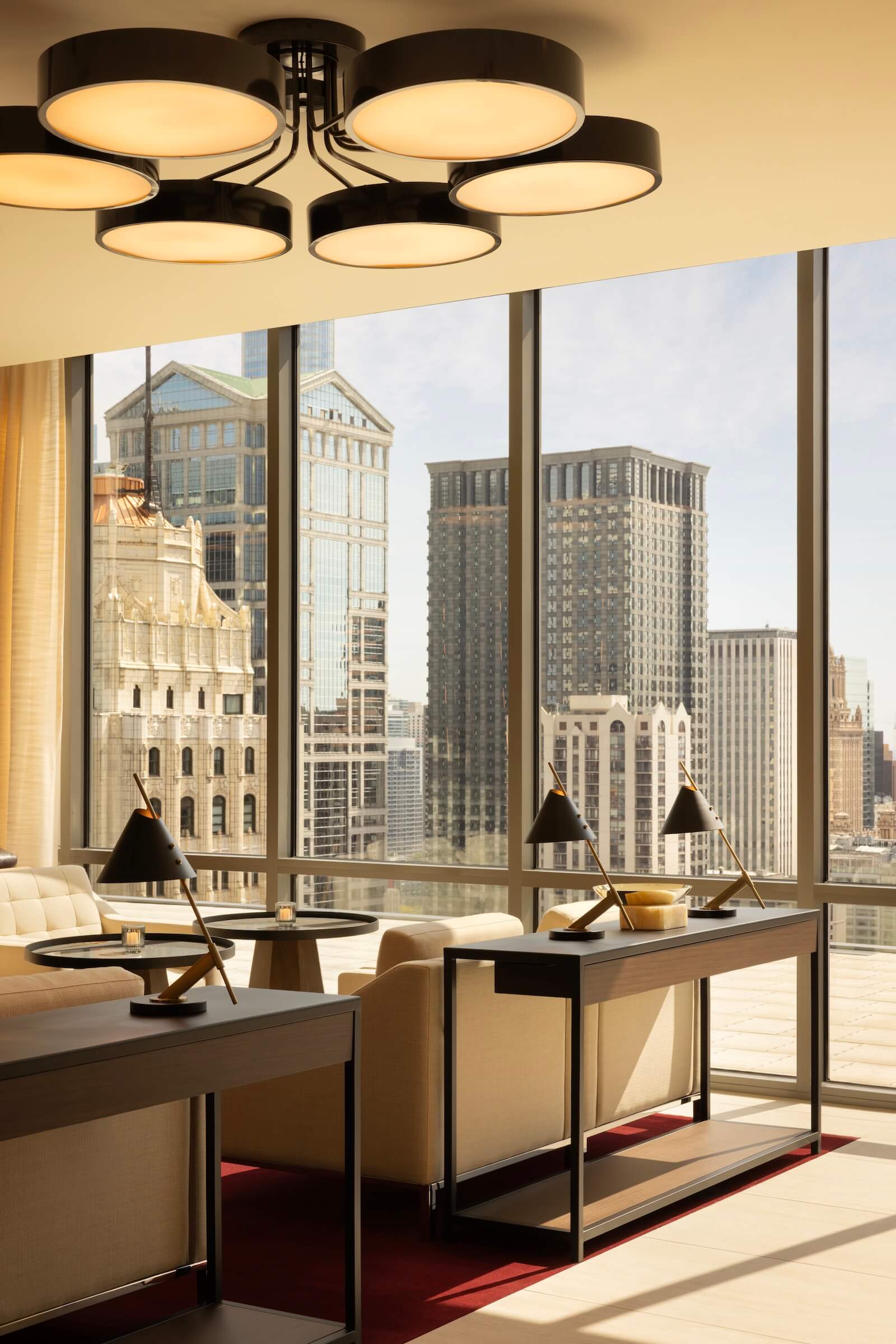
At the top of the tower lies a hosting-oriented hub. The Clubhouse is an open social environment with lounges, bar settings, and terraces overlooking the city, while in contrast, The Apartment is more contained and residential in terms of scale, layout, and atmosphere, and is geared toward smaller groups and private use. Together, these spaces operate as destinations rather than purely transitional zones.
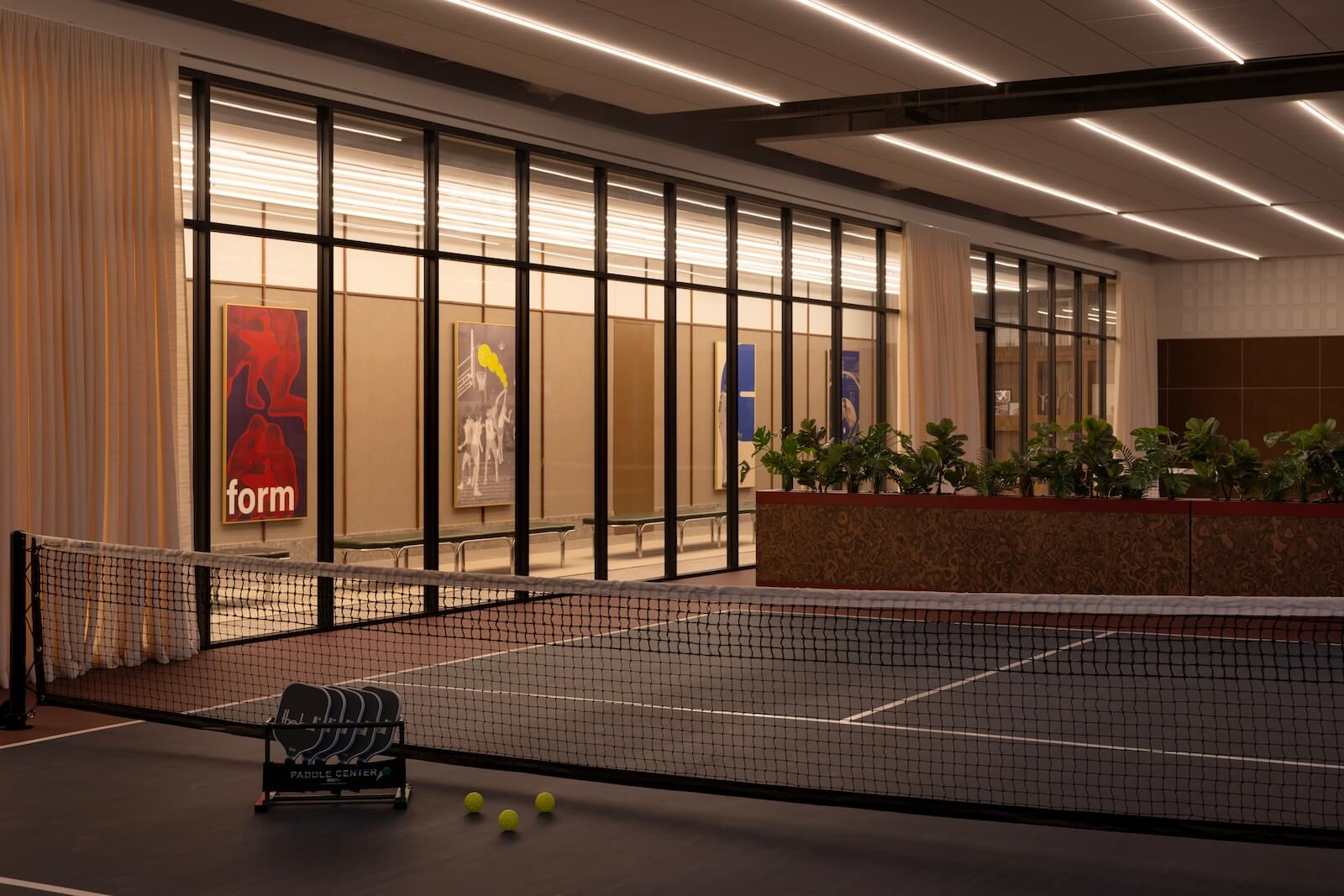
Rather than erase The Bell’s storied identity, Ste Marie Studio’s intervention reframes it in the rediscovery of spatial clarity, enduring materiality, and sense of occasion that once defined it.
Ste Marie Reworks The Bell in Chicago For the Modern Worker
The amenity-driven workspace builds on the Illinois Bell HQ’s New Formalist legacy through a flexible, hospitality-led approach.