
We all have certain pre-established notions about how any given building will look based on its function — which makes it all the more refreshing when we’re wrong. This year’s best institutional architecture dared to challenge our expectations and radically rethink well-established typologies. What if, instead of feeling bland and corporate, a conference centre was modelled after a tree fort — and had the environmental performance to match its arboreal identity? What if, instead of asking art lovers to navigate another sequence of white boxes, a museum presented art on a series of giant, elevator-like platforms? The answers to these questions (and more) defined the past twelve months in architecture — and the surprising results were nothing short of delightful. No matter how many conference centres or galleries or markets have been built over the years, clearly, there is still room for fresh perspective.
Our top 10 favourite institutional architecture from 2025 include:
- Fondation Cartier, Paris, France, by Ateliers Jean Nouvel
- David Rubenstein Treehouse at Harvard University, Boston, USA, by Studio Gang
- Hortus Office Complex, Allschwil, Switzerland, by Herzog & De Meuron
- Fenix Migration Museum, Rotterdam, Amsterdam, by MAD Architects
- Basilica di Massenzio Stage and Exhibition Pathway, Rome, Italy, by Alvisi Kirimoto + Partners
- The Sydney Fish Market, Sydney, Australia, by 3XN
- Thomas Sankara Mausoleum, Burkina Faso, West Africa, by Kéré Architecture
- Koffler Scientific Reserve, Toronto, Ontario, by Montgomery Sisam Architects
- Grand Ring Osaka, Osaka, Japan, by Sou Fujimoto
- Anthony Timberlands Center, Fayetteville, Arkansas, by Grafton Architects and Modus Studio
Be sure to check out our favourite products and interiors of the year, too.
.
1
Fondation Cartier, Paris, France, by Ateliers Jean Nouvel
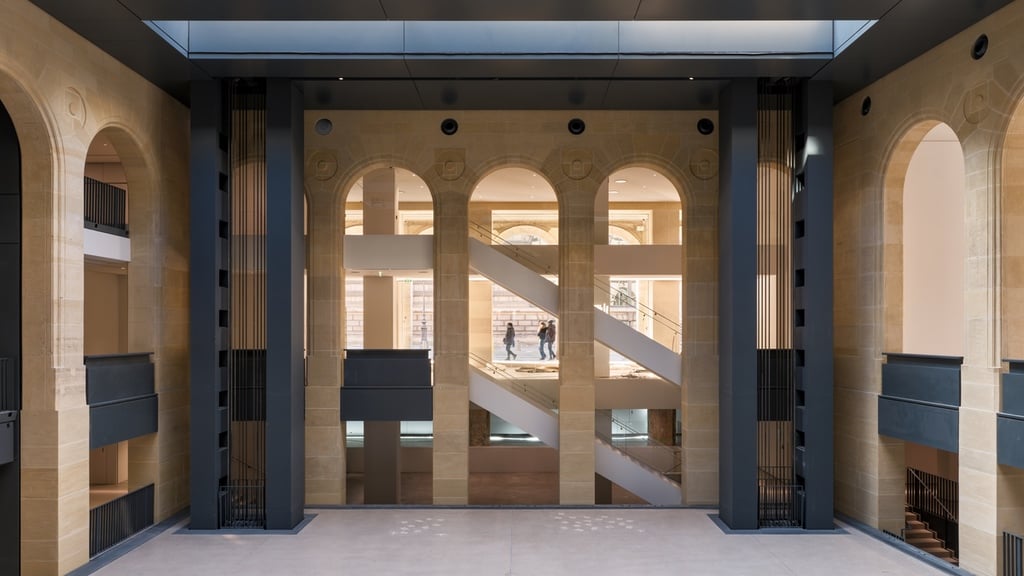
The contemporary art industry thrives on its unpredictability, but this quality can pose a big challenge for museum architects, who must envision spaces that can accommodate works with a full range of dimensions and formats. While designing the new home of the Fondation Cartier, Jean Nouvel tackled this assignment in stride, devising a radical system of five moving platforms that can be stacked to create a single, soaring 11-metre-high space when necessary, or staggered at a variety of heights in any number of other configurations. As Katia Kulawick-Assante writes in her feature on the project in our January/February 2026 issue, the result is “fluid, transformable architecture designed to adapt to every exhibition like a custom-made suit,” delivering a maximum of 6,500 square metres of exhibition space.
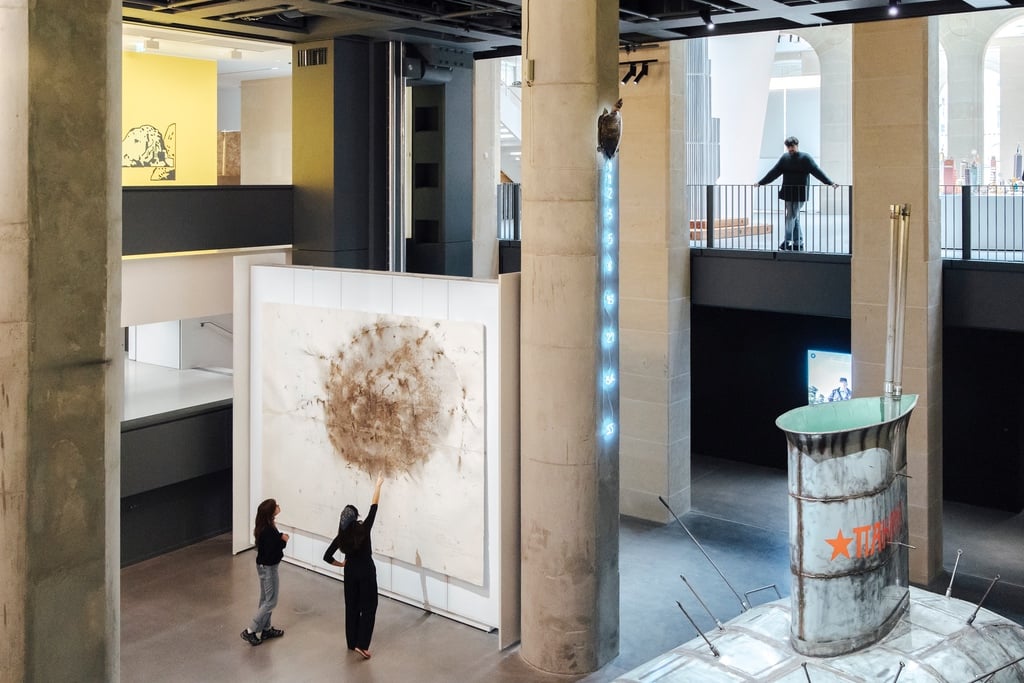
To add to the clever concept’s beauty, it is also a loving homage to architectural history. The foundation’s new home at 2 Place du Palais-Royal (directly across from the Louvre) is actually an old building – an 1855 structure originally built as a hotel for guests in town for the Exposition Universelle. Back in the 19th century, the project was one of France’s first to feature an elevator. In turn, Nouvel places the cable-and-pulley mechanisms that power his dynamic new intervention front and centre. Meanwhile, the original limestone arches that once framed the site’s Hausmannian courtyards remain in place, and skylights with retractable shutters introduced overhead maintain the feeling of being in a courtyard-like space. Other key elements of the renovation include an all-red 110-seat auditorium that would make David Lynch swoon, plus a restaurant and bar set to open next year. Still to be determined is what will happen to 261 Boulevard Raspail, the Fondation Cartier’s previous home, also designed by Jean Nouvel in the 14th arrondissement.
.
2
David Rubenstein Treehouse at Harvard University, Boston, USA, by Studio Gang
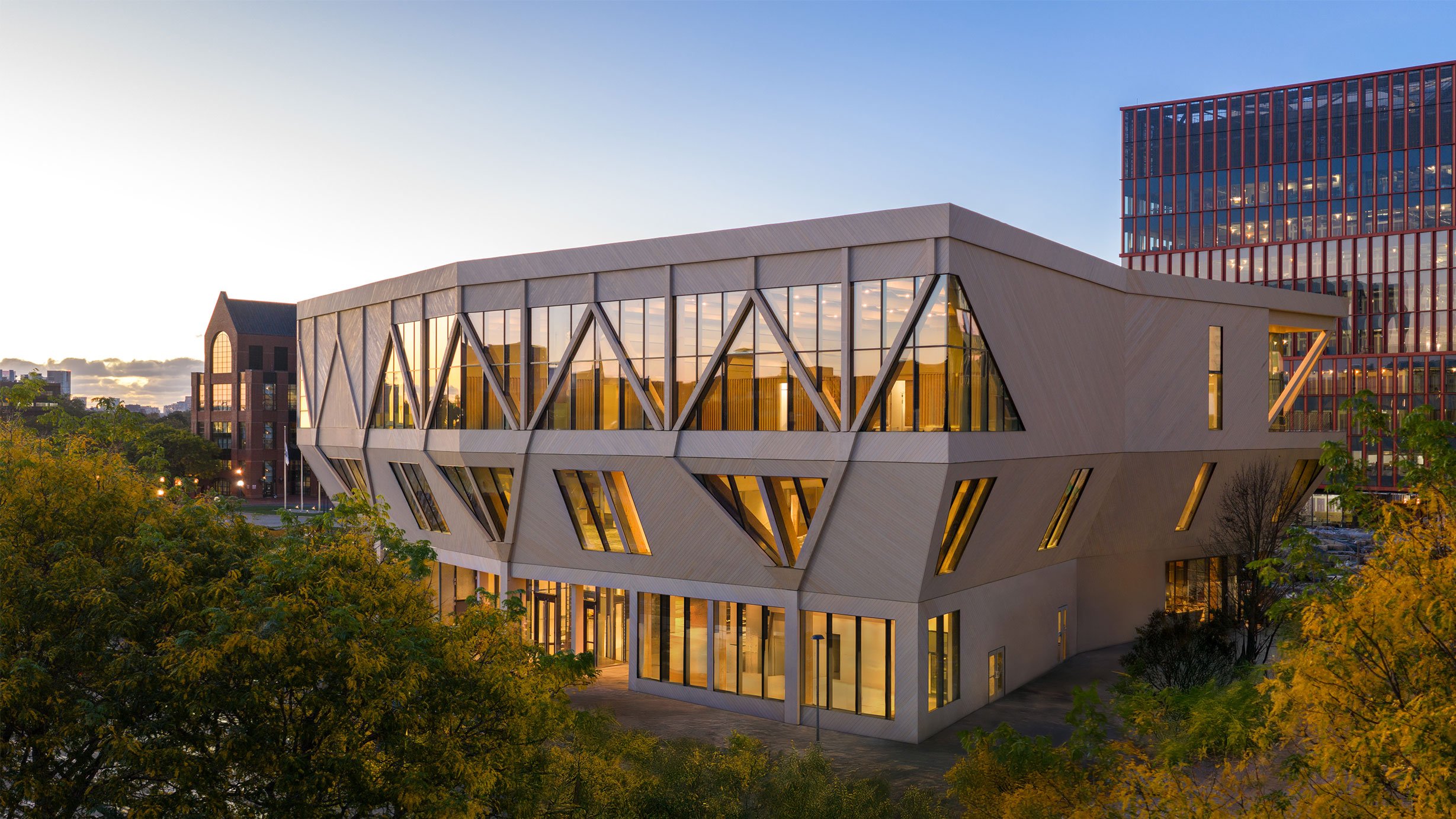
Even for CEOs at the top of their industry, there are always new heights to scale. When was the last time, for instance, that a high-powered executive climbed a tree? At Harvard University’s Allston campus (located across the Charles River from the main Cambridge campus, and dedicated to innovation and collaboration with local and global business leaders), a 5,110-square-metre events centre designed by Studio Gang offers a welcome antidote to the seriousness of most business conferences with an exposed mass-timber structure that recreates the experience of hoisting oneself to the top of the forest. A central stair and a second-floor suspension bridge wrap around two elevator cores, extending outwards like branches from a tree trunk. While these cores are made of concrete, they still have some natural qualities of their own. For one thing, their board-formed finish gives them a warm, woodsy texture. For another, they’re made from low-carbon concrete, created using ground glass pozzolan (made from recycled post-consumer glass) rather than traditional cement.

Apart from modeling itself after nature, the building also fosters strong connections to its surrounding environment. The double-height atrium spills out onto two covered porches that lead to the site’s lush landscaping (by Scape), while an open-air terrace on the third floor places visitors right at canopy level. (Sure enough, the main, third-floor conference space is dubbed the Canopy Hall. Additional, smaller meeting rooms are distributed throughout the first and second floors.) Meanwhile, timber continues on the angular, wood-clad façade, which prominently highlights the tree-like columns supporting the cantilevered top floor. Up above, rooftop photovoltaics capture power for the all-electric building, while a rainwater system harvests precipitation for reuse and skylights carry in ample natural light. Filtering down through the various architectural boughs, limbs and arms branching throughout the interior, this sunlight gains the same magical dappled effect that you’d enjoy on a walk in the woods.
.
3
Hortus Office Complex, Allschwil, Switzerland, by Herzog & De Meuron
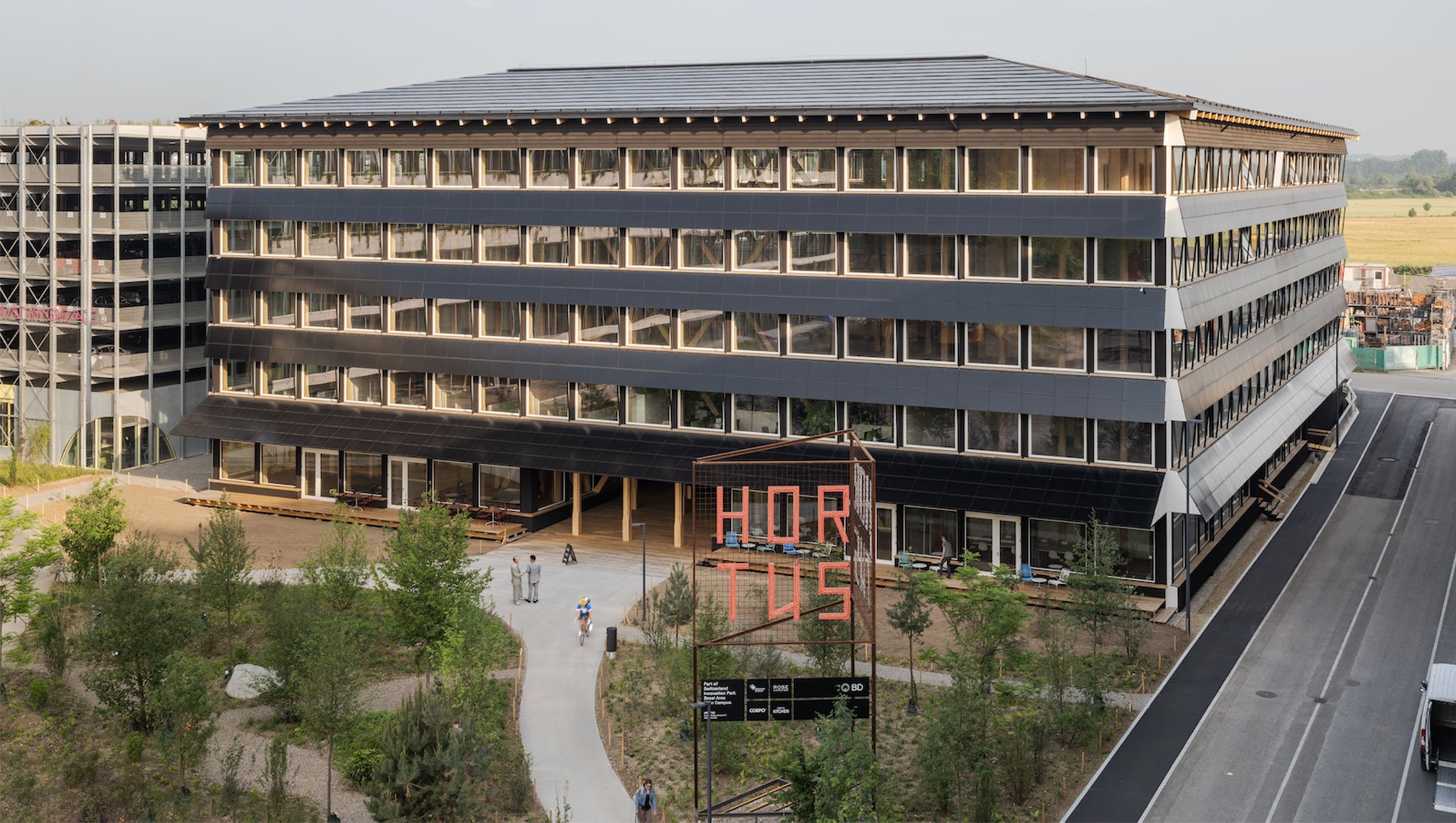
The House of Research, Technology, Utopia and Sustainability, the latest building in real estate developer Senn’s “Switzerland innovation park” in Allschwil, is an understated timber structure with powerful impact – both as a standalone project and as an inflection point for the Basel architecture firm Herzog & de Meuron. The four-storey quadrangle wraps around an open atrium to house 10,000 square metres of open-plan interiors for 600 workplaces; on its ground floor, there is a restaurant, a gym (with a café bar) and public seating areas. Elegant and more than self-sufficient – it produces enough energy through its barely perceptible integrated photovoltaics for both itself and neighbouring buildings – HORTUS also demonstrates Herzog & de Meuron’s move towards a sustainable design paradigm.
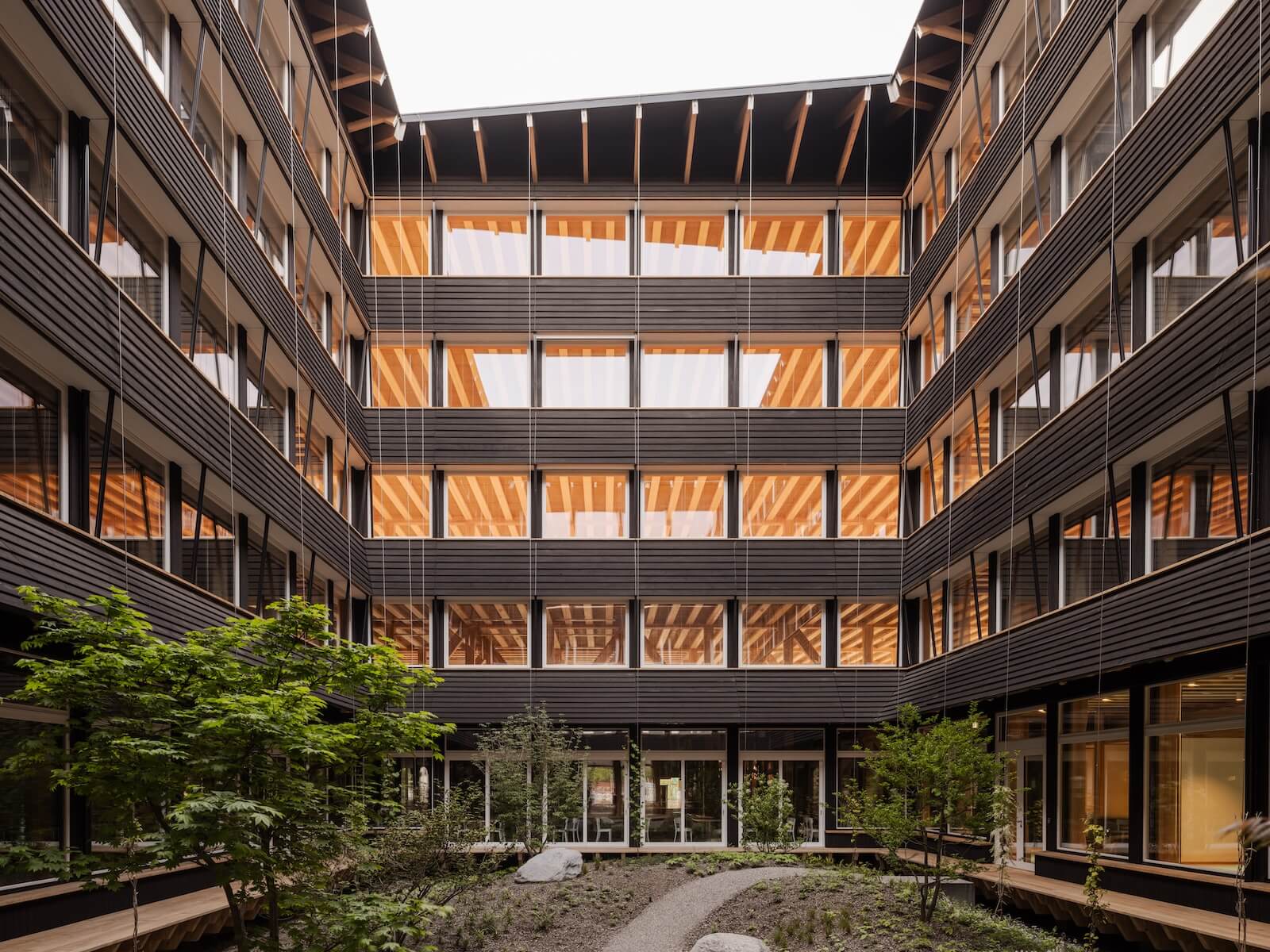
At the core of the project is a focus on local materials with low embodied carbon: “We wanted to use biological materials – or what I call regrowing material,” Alexander Franz, the associate at Herzog & de Meuron in charge of the project, told Azure. To this end, the firm worked with engineers to create a floor-ceiling slab insulated with rammed earth: The wooden floor frames (made with locally sourced wood) and the vaulted ceilings are tamped down with clay excavated for the building’s construction to provide the building with thermal mass and fire protection – as well as beauty.
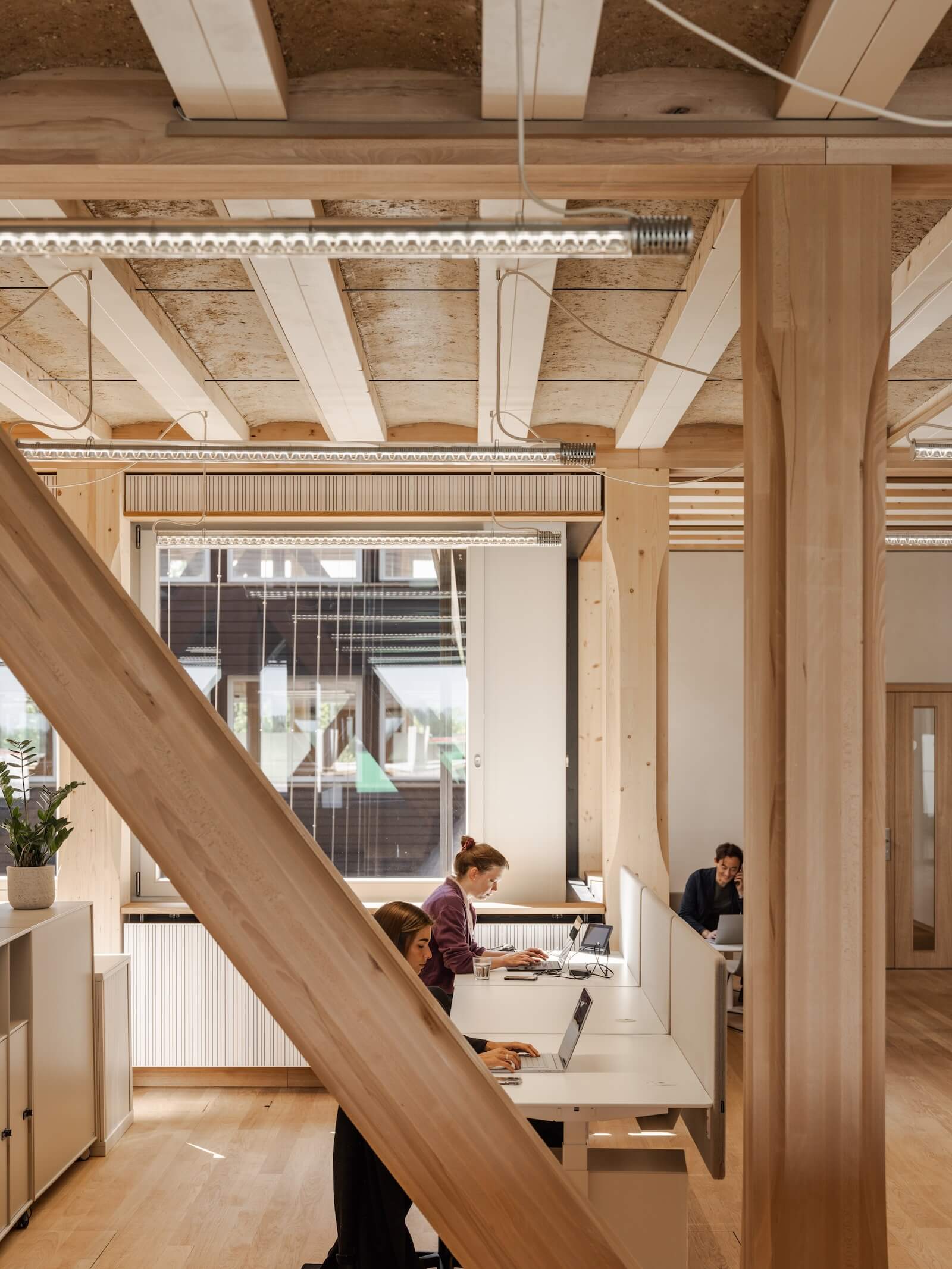
Herzog & de Meuron is known for pushing the formal language of each of its architecture projects, and at HORTUS the aesthetic might be quieter, but the details are divine. This is especially true of the interior columns – they feature expressively carved chamfered edges that lends the building a hand-crafted sensibility. This highly effective aesthetic choice proves that the burgeoning mass timber typology can be a creative, as well as a sustainable, frontier.
.
4
Fenix Migration Museum, Rotterdam, Amsterdam, by MAD Architects
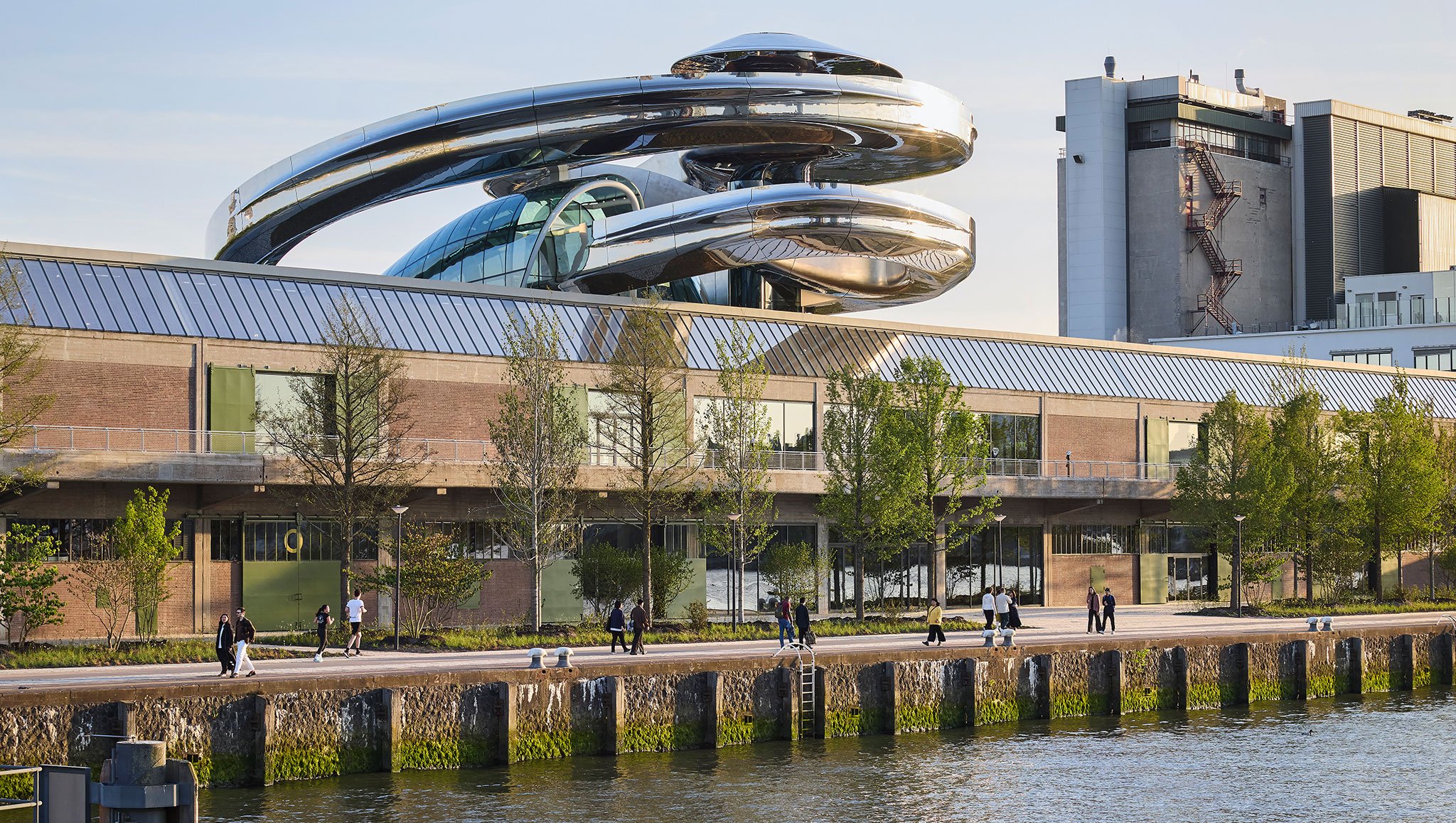
As Jane Jacobs famously said, “New ideas need old buildings.” And the Fenix Migration Museum in Rotterdam epitomizes this sentiment. The project adapts a century-old warehouse (refurbished by Bureau Polderman) into an institution that honours the migrant experience. While this, in and of itself, is not a new idea – there are many migrant museums in Europe – the Fenix brings together art works both contemporary and historical in vibrant juxtaposition to illustrate the many variations of the migrant experience throughout history. The main message is one of hope and discovery – which the buoyant architecture also conveys.
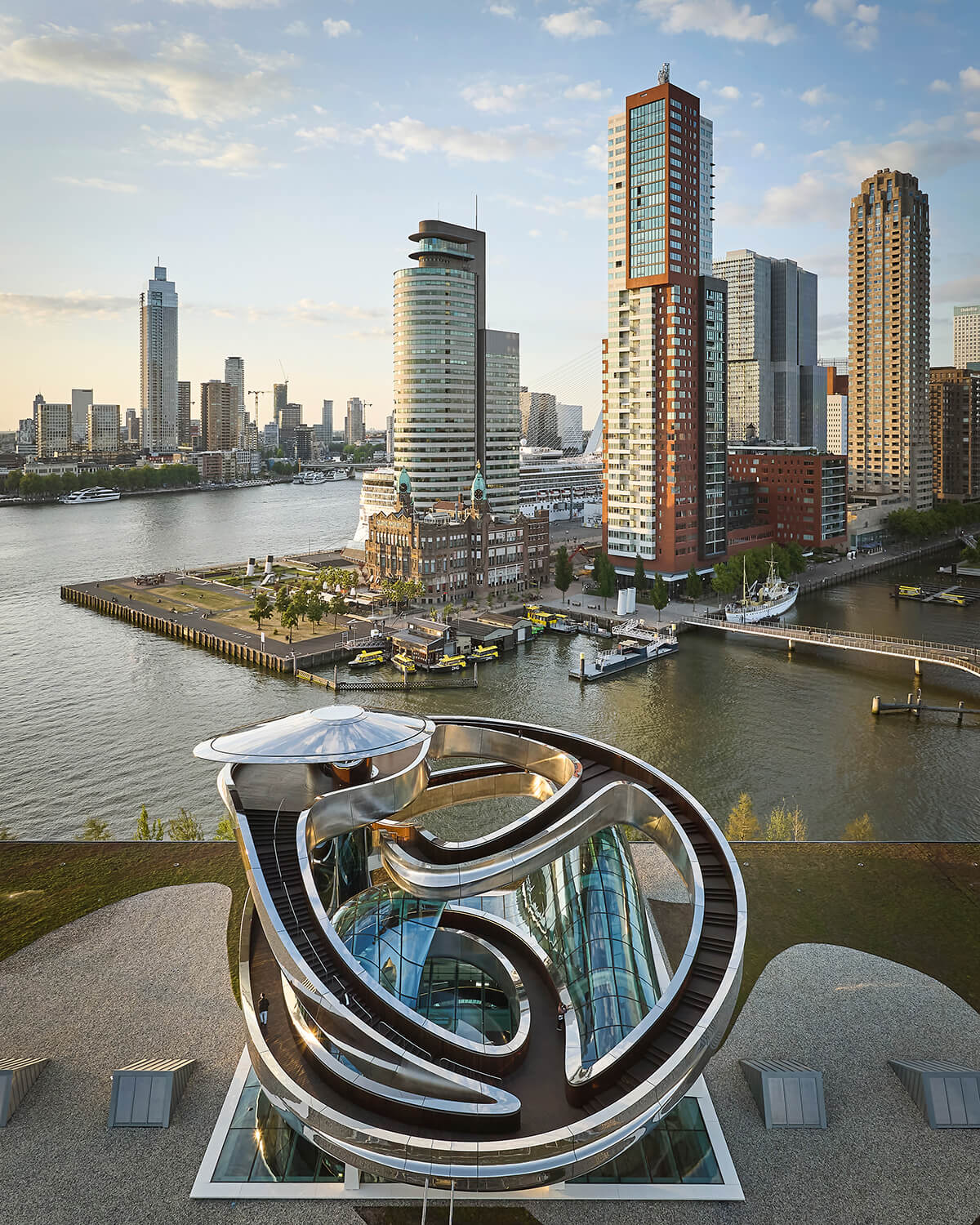
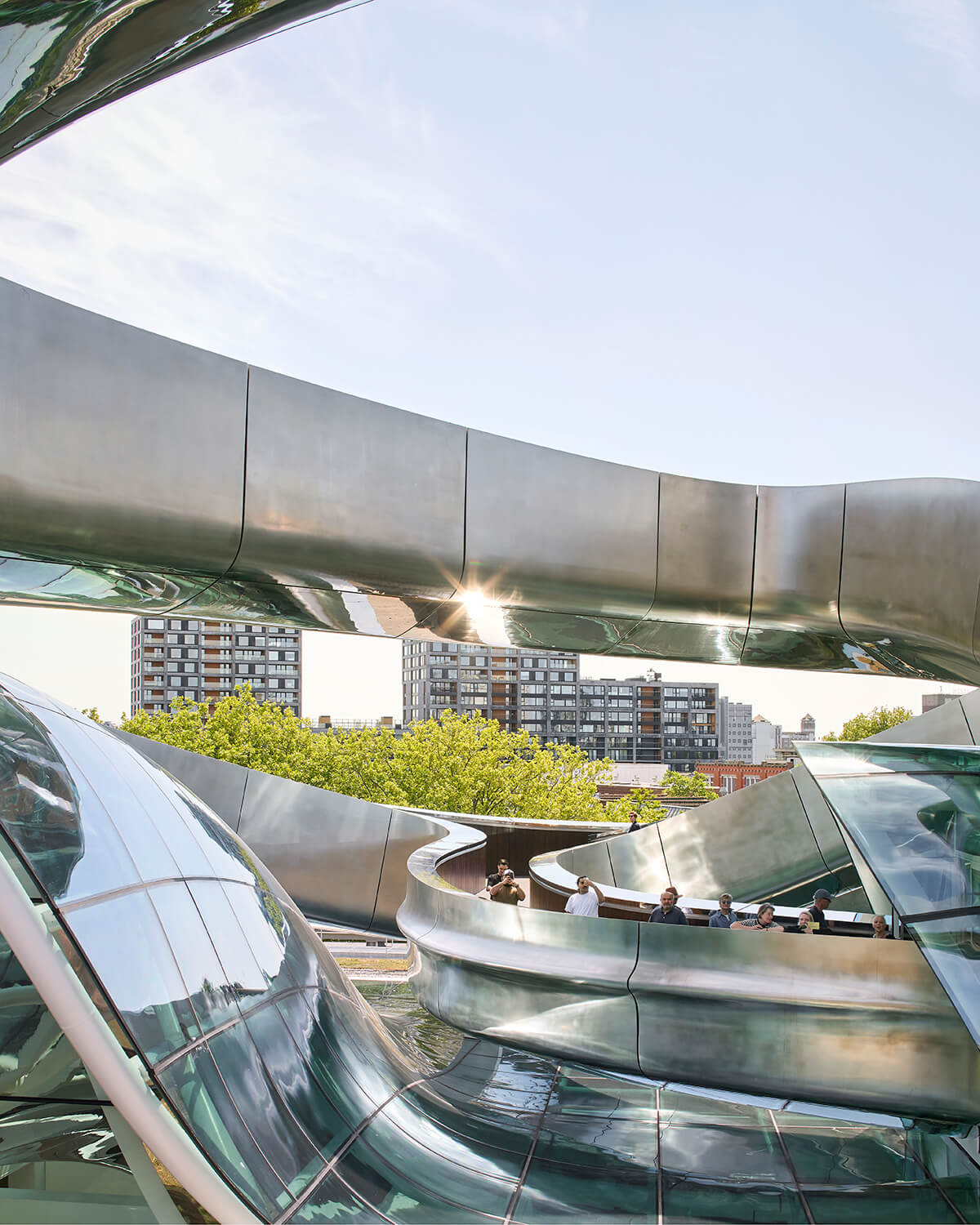
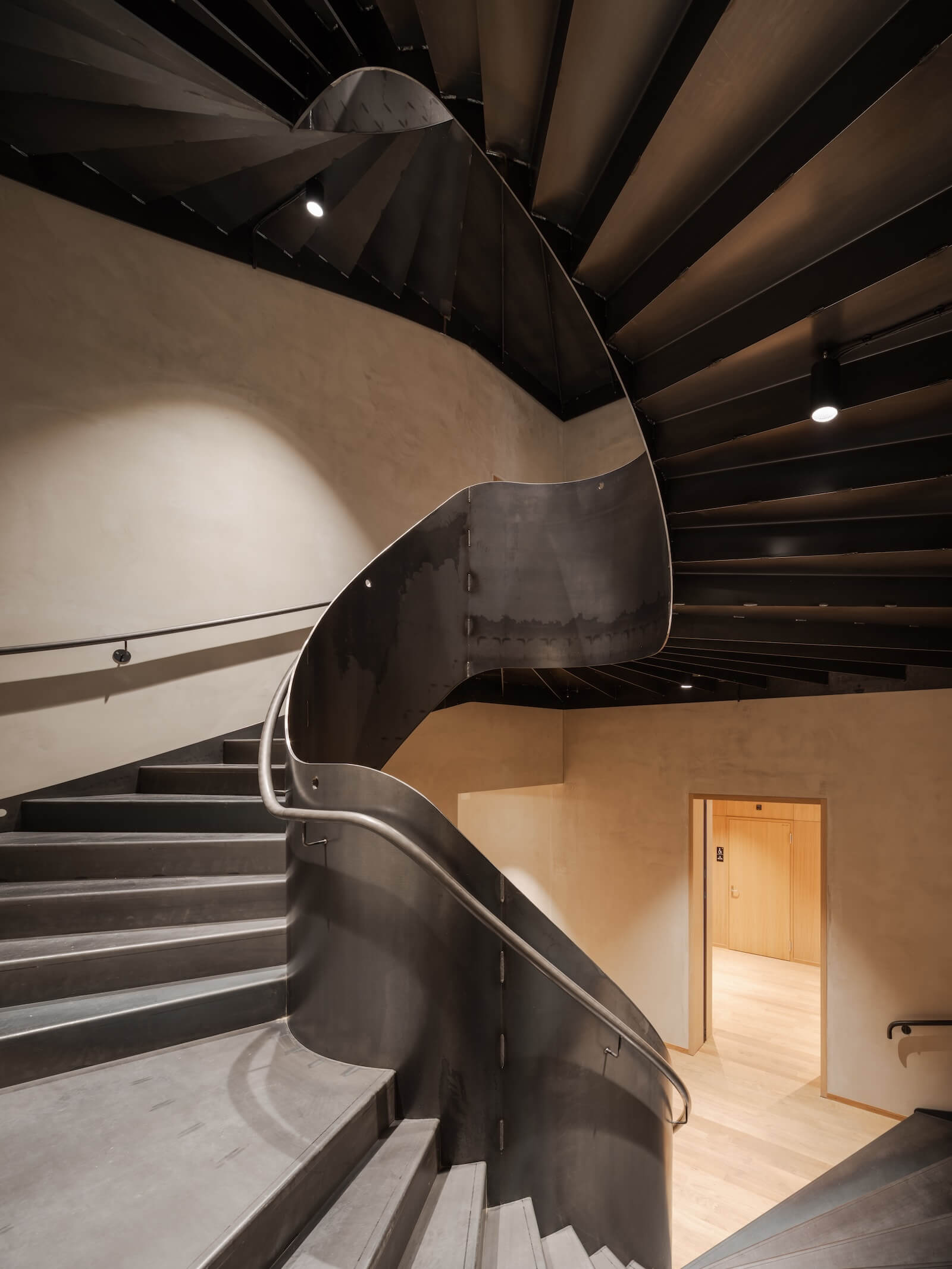
Crowning the building is the Tornado, a stainless steel spiral stair designed by MAD Architects that corkscrews through the centre of the warehouse to deliver visitors high above it, with a view to the port where millions of newcomers alighted in the Dutch city. Stretching 550 metres long and 30 metres high – with a 17-metre cantilever at its longest point – the Tornado leads visitors on a vortex-like journey that unfolds like an analogy for migration, with its many twists and turns, moments of compression and expansion.
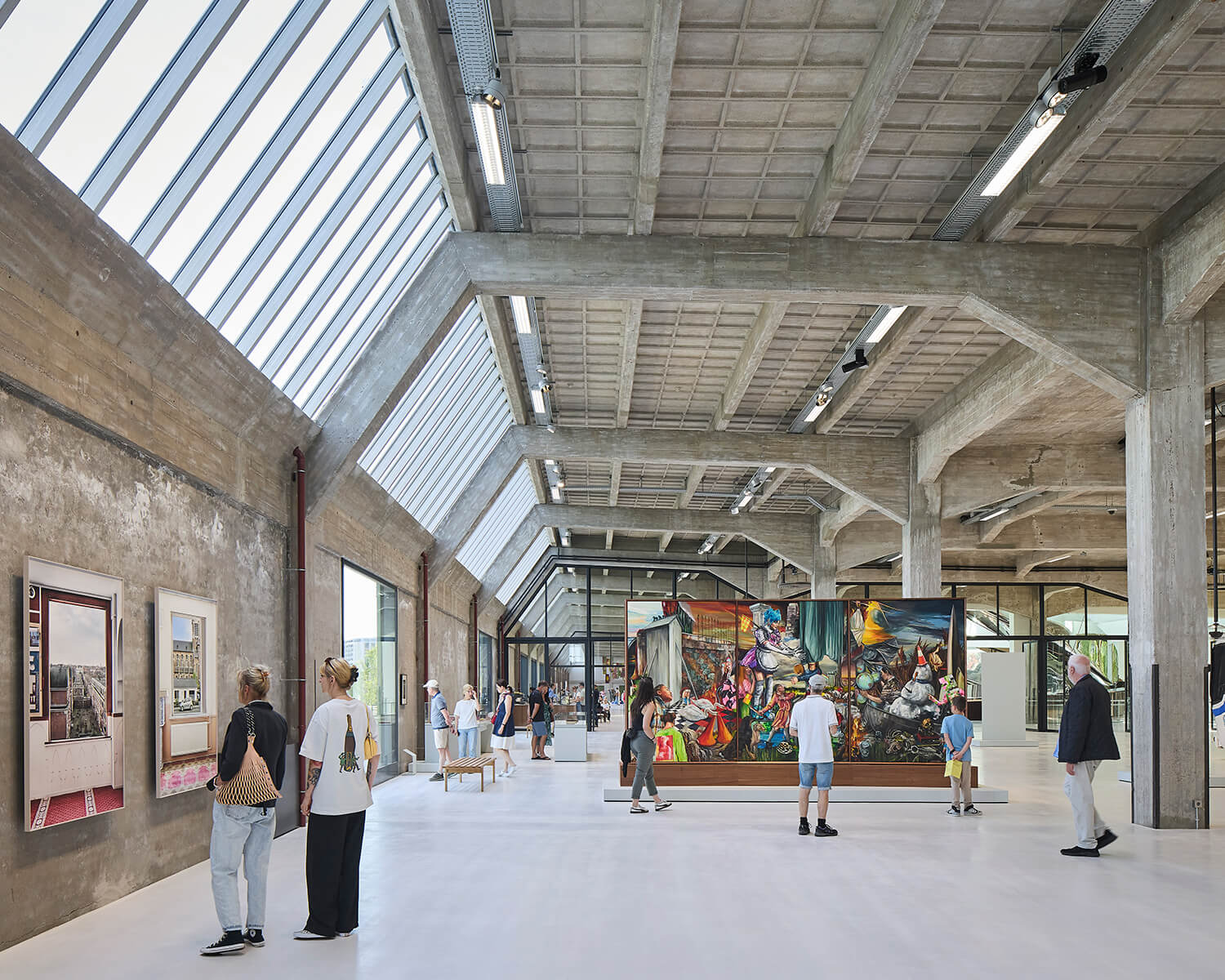
Inside, the exposed concrete shell of the original structure is complemented by a stunning clerestory that wraps the perimeter. Museum-goers will encounter such pieces as a boat seized from Lampedusa, where thousands of African migrants have sought entry to Europe; Hana Sagini’s Big Blue Slippers, a metaphor for the comforts of home; and Yinka Shonibare’s Refugee Astronaut IX. Anne Kremers, the museum’s director, traveled the world herself, speaking with experts and commissioning artists, to deliver a thought-provoking, multi-perspective panorama of the migrant experience that immerses museum-goers in a global reality that includes them. Migration, after all, is part of our collective, universal identity. The vast majority of us are either immigrants or the descendants of immigrants. The stories Fenix seeks to tell are not solely centred on strife. There is joy, here, too – and a celebration of the courage it takes to risk one’s life for a shot at a better future.
.
5
Basilica di Massenzio Stage and Exhibition Pathway, Rome, Italy, by Alvisi Kirimoto + Partners
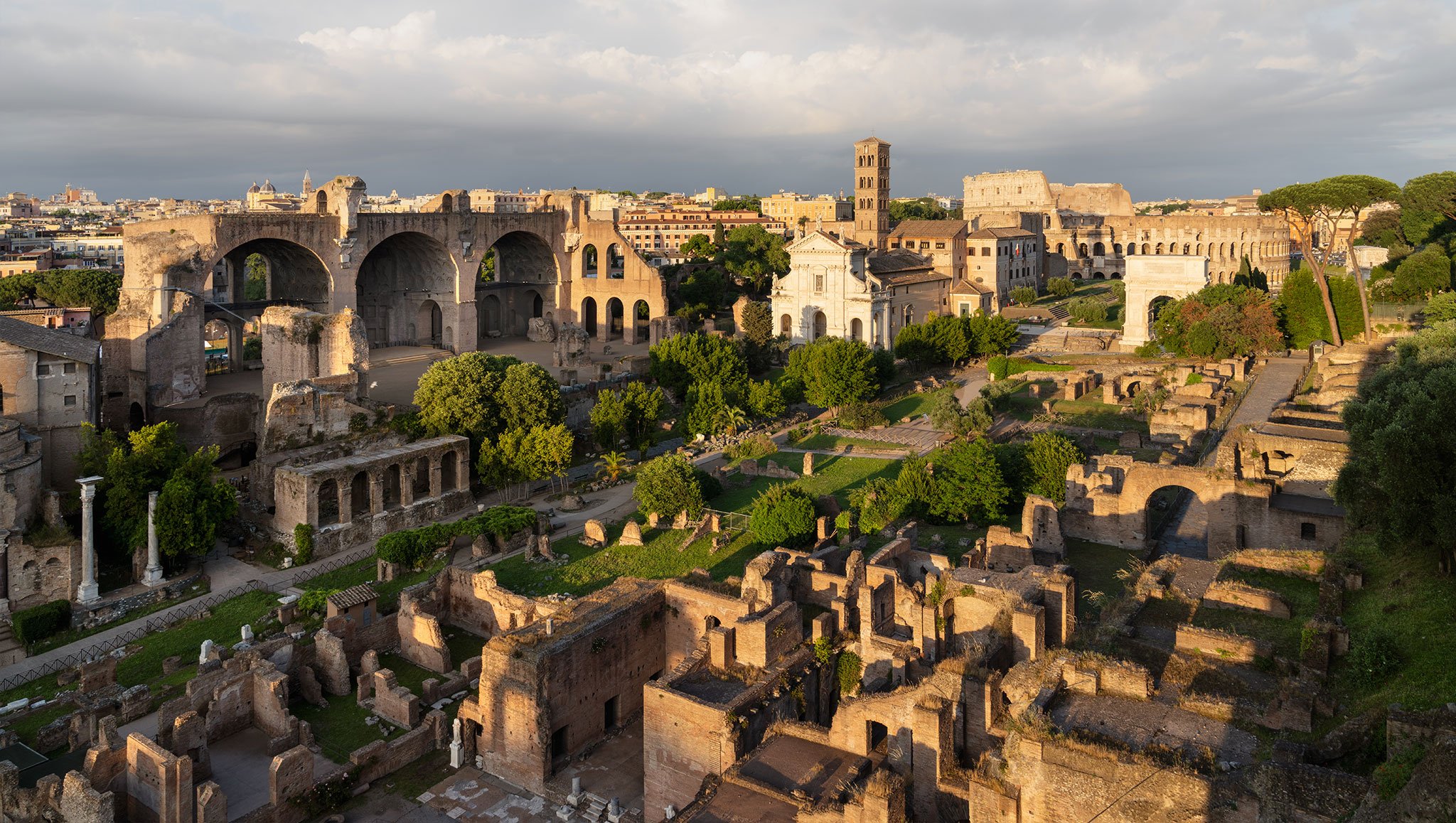
Renowned for its spectacular cross vault ceilings and innovative concrete construction, the Basilica di Massenzio still stands proud in the heart of Rome, Italy. Built nearly 2,000 years ago, the impressive structure heavily influenced Renaissance architecture and revolutionized concrete engineering. While it once served as a courthouse, a council chamber and a public meeting venue, much of the ancient building has been lost to time (and a massive 19th-century earthquake). But a recently completed intervention by Italian architecture firm Alvisi Kirimoto + Partners has reinvigorated and re-established the remaining ruins as a spectacular public-access gathering spot that stitches together past and present in a truly magnificent way.

To create a thoughtful dialogue between the ancient architecture and the modern invervention, Alvisi Kirimoto + Partners restored the central nave to its former glory and introduced a new modular stage to host performances, conferences and other events. Set in front of the open-air concrete nave, the unassuming yet sophisticated stage is made from steel and birch plywood panels, and features stepped seating and ramps for accessibility. Its comparatively diminutive scale lets the centuries-old stonework hold court and builds a compelling tension between what once was and what is to come. The architects also restored and refinished the flooring of the basilica’s forecourt with earth and lime and added metal information totems equipped with audiovisual systems, integrated lighting and steel railings to further support and enhance the visitor experience. Subtle yet impactful, the new exhibition stage and pathway bring renowned purpose to an already beloved piece of architecture.
.
6
The Sydney Fish Market, Sydney, Australia, by 3XN and BVN
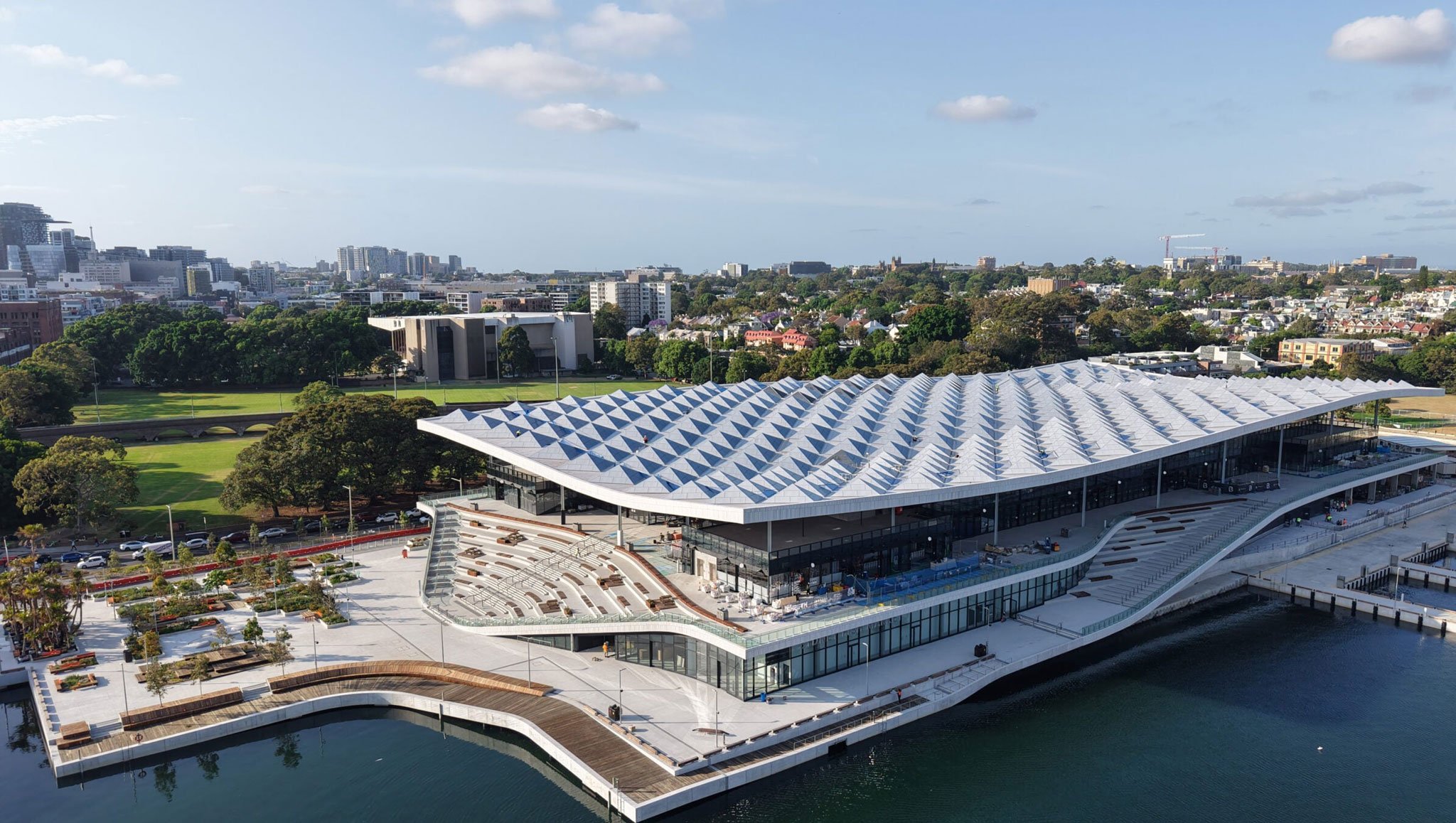
We received an early preview of Sydney’s new seafood hub from 3XN/GXN’s Susan Carruth at our first Human/Nature conference last fall, and we’ve been eagerly anticipating it ever since. So yes, we’re jumping the gun a bit with this one — the project is not slated to open until January 19, 2026. But construction is complete, and all signs point to it being a total triumph. For one thing, the 12,635-square-metre building (designed by 3XN with BVN as the project’s executive architect) quickly establishes itself as a new local landmark with its striking, wave-like mass-timber roof. The canopy is as much a functional marvel as it is an aesthetic one, integrating PV panels, angling skylights to deliver the right combination of natural lighting and shade, funneling hot air out through strategic openings, and harvesting water for reuse.

This same level of strategic consideration has been carried through to the building’s operations, too. The ground level is designed to integrate with existing harbour infrastructure, allowing seafood to be easily transported in by the tonne from boats for the market’s fish auctions, where vendors bid on fresh catches each morning. By keeping this auction hall visible to the retail and dining spaces above, 3XN and BVN place the authentic theatricality of the fish market experience front and centre. Outside, a grand amphitheater staircase leads visitors upwards to the public market level, creating a sense of procession but also plenty of space for outdoor seating. An outdoor promenade and series of plazas bolster the building’s connection to both the water and the surrounding community, cementing its role as an anchor for the ongoing revitalization of Blackwattle Bay.
Like the Sydney Opera House, the previous fish market (located on an adjacent wharf in Pyrmont) served as one of the city’s key tourist attractions. Its follow-up seems destined to build on that legacy, drawing foodies from near and far. In the meantime, Sydneysiders have one last Christmas to buy their food from the current Pyrmont site; some 100,000 customers are expected to visit the building during December 23 and 24, a period that the market dubs its “36-Hour Seafood Marathon.”
.

7
Thomas Sankara Mausoleum, Burkina Faso, West Africa, by Kéré Architecture
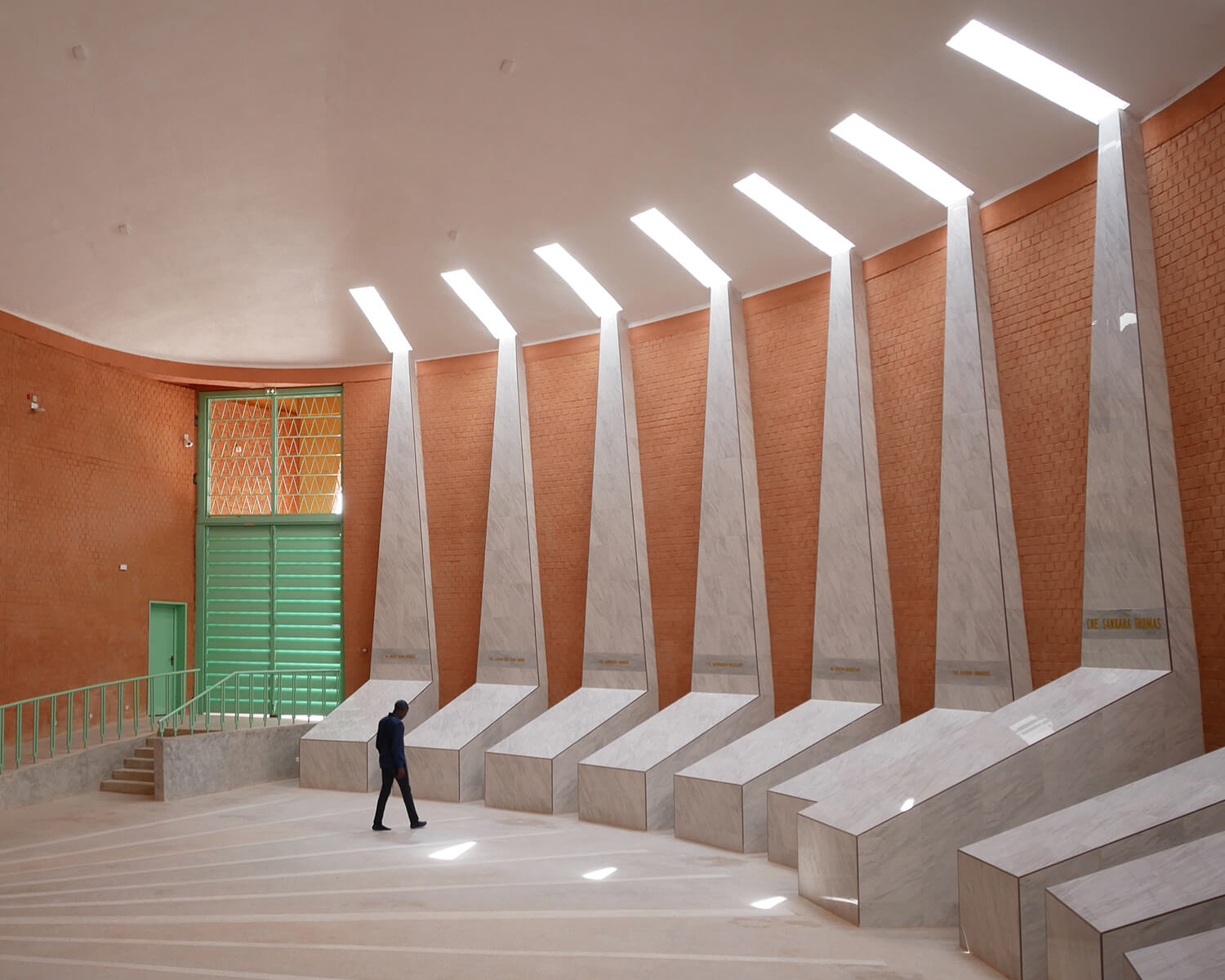
With this strikingly simple mausoleum, Francis Kéré has transformed “a place of fear” into “a space of encounter and recreation, that fosters remembrance, respect, and hope.” Its graphic architectural language is rooted in powerful symbolism: The thirteen triangular cutouts in the laterite and clay brick façade represent Burkina Faso’s former president, Thomas Sankara, and 12 of his aides who were killed during a coup on October 15, 1987. That logic continues inside, where the 13 tombs are arranged around the perimeter of the 34-metre-wide structure. Each one is illuminated by its own skylight at different hours of the day, based on the sun’s position — a poignant reminder that grief is neither fixed nor evenly felt.
But while the building feels appropriately solemn, Kéré introduces moments of warmth, starting at the winding entrance pavilion with its vibrant yellow gates and multi-coloured roof. These gestures position the complex less as an extravagant monument than as a reflection of the leader’s values. That ethos will soon extend beyond the mausoleum itself: Construction is now underway on the broader memorial park, which will include vital public amenities including green space, amphitheatre, restaurants, shops, offices, and educational and conference facilities — anchored by a 100-metre-tall observation tower at its centre.
.
8
Koffler Scientific Reserve, Toronto, Ontario, by Montgomery Sisam Architects
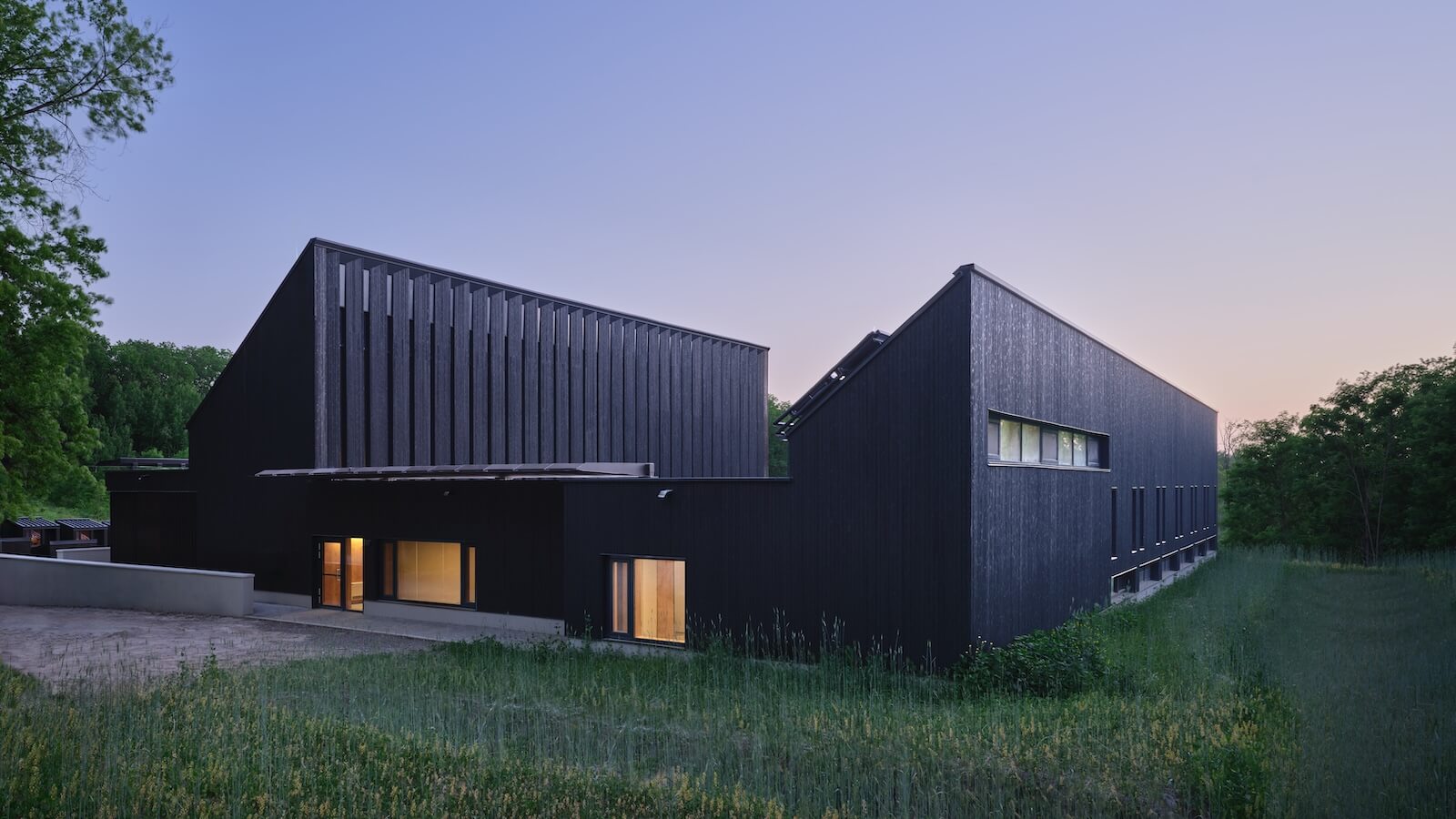
Set deep within the Oak Ridges Moraine’s rolling woodlands, Montgomery Sisam’s Koffler Scienfic Reserve replaces a cluster of aging barns and makeshift facilities with a refined mass timber complex that responds to the site’s ecological research mission and rugged agrarian context. The buildings’ dual pitched volumes, clad in shou-sugi-ban wood, recall the region’s vernacular barns while their orientation to the cardinal directions maximizes passive performance — from rooftop solar panels to ground-source heat exchange embedded below grade. Beyond performance, the architecture fosters a strong sense of community, using material restraint and carefully sequenced spaces to ease the transition from landscape to interior.
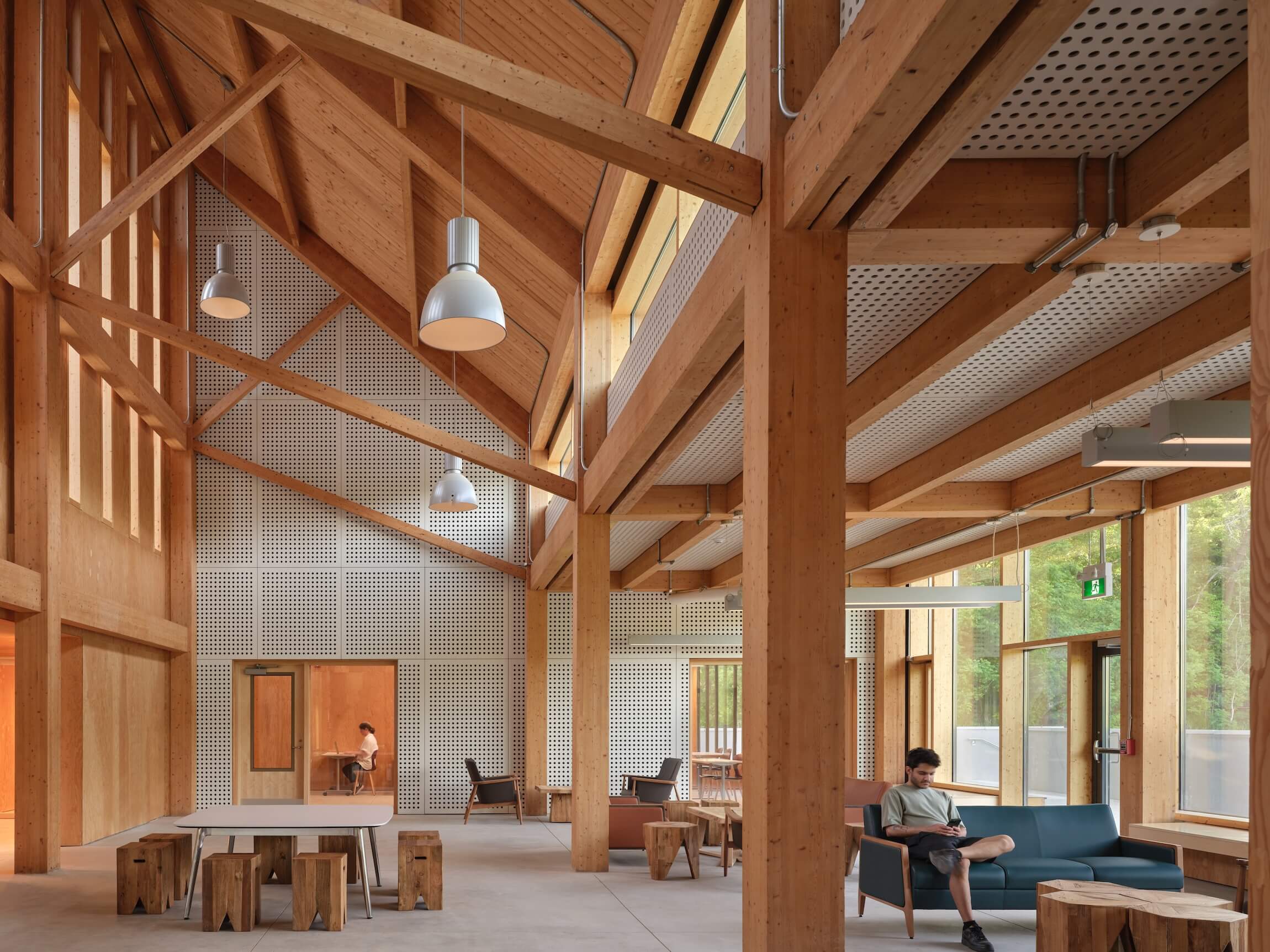
Inside, generous social, dining and circulation areas are organized to encourage informal exchange and support a flexible, seasonal population. It is here that Montgomery Sisam’s soulful approach is most apparent: The open dining hall and refectory reads as a cathedral of mass timber, its tall, slanted ceiling defined by an exposed structure of wooden beams. The result is a shared setting that supports conversation, curiosity and learning beyond the classroom.
.

9
Grand Ring Osaka, Osaka, Japan, by Sou Fujimoto
Writer Yuki Sumner opened her review of Osaka’s Expo 2025 for Azure this April by asking, “What is the point of an expo in an age of environmental crisis?” Fair question. Yet she was surprisingly encouraged by what Japan presented this year, saying that the event demonstrated that “sustainability can be poetic, progress doesn’t require pomp, and the future needn’t be a landfill.” These takeaways were especially well demonstrated by the expo’s master planner, Sou Fujimoto, in his personal contribution to the fair: a 61,035-square-metre raised walking platform that the Guinness Book of World Records certified as the largest wooden architecture on earth.

While this type of grandstanding project typically results in no shortage of unnecessary waste, in this case, the project took a smarter approach to ephemeral construction. By combining modular construction with traditional Nuki wood joinery, Fujimoto designed the ring so that its materials could be reused after the event. And that was the initial plan, with the timber (70 per cent of which was wood from local Japanese cypress trees) originally slated to be reused for future projects including public housing. But in an interview with Dezeen earlier this week, Fujimoto said that he believes “70 per cent, at least as far as I’ve heard, they will just demolish and then make it chips for the fuel.” As he says, this is “the worst thing to do.” (There are plans to rebuild and preserve a portion of the ring as a permanent pavilion.) If the pavilion does, in fact, end up in the incinerator, it will live on as a symbol of sustainable ambition — and the ways it can be all too tragically thwarted by a client that doesn’t share the same priorities.
.
10
Anthony Timberlands Center, Fayetteville, Arkansas, by Grafton Architects and Modus Studio
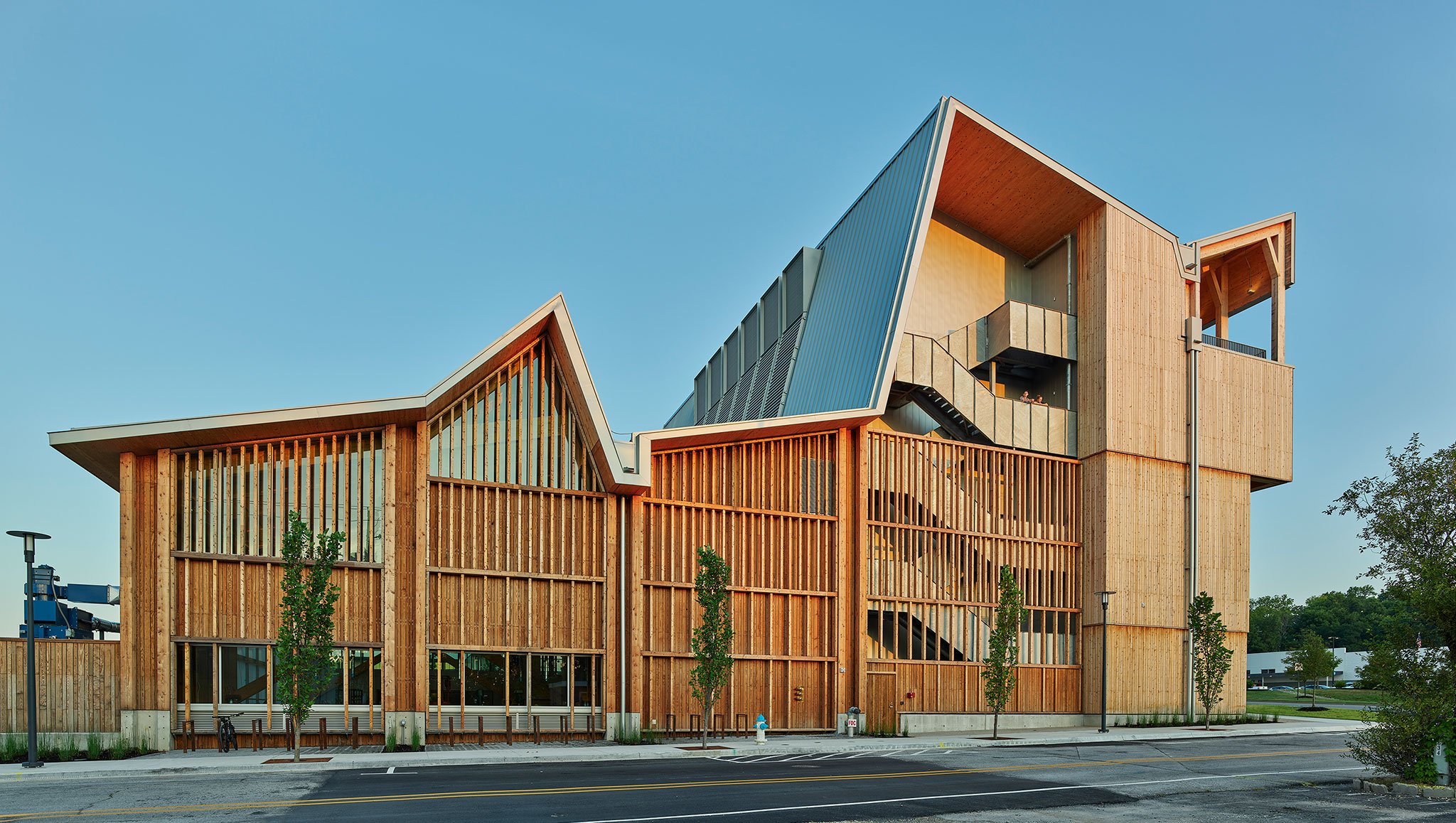
“They wanted something hewn, carved, jointed, woven, assembled, layered, laminated – showing all the possibilities of building with timber,” Yvonne Farrell, co-founder of Dublin architecture firm Grafton, told the Guardian upon the completion of the Anthony Timberlands Center for Design and Materials Innovation. Indeed, the new building at the University of Arkansas (designed by Grafton Architects alongside Modus Studio) is a case study on wood’s malleability. Rising four-storeys, with an elegant glass front facing the street, the building cascades down in a series of jubilantly folded rooflines. Described by turns as “heroic” and “humpbacked,” the centre calls attention to its boisterousness, its total embrace of wood’s structural and aesthetic capabilities.
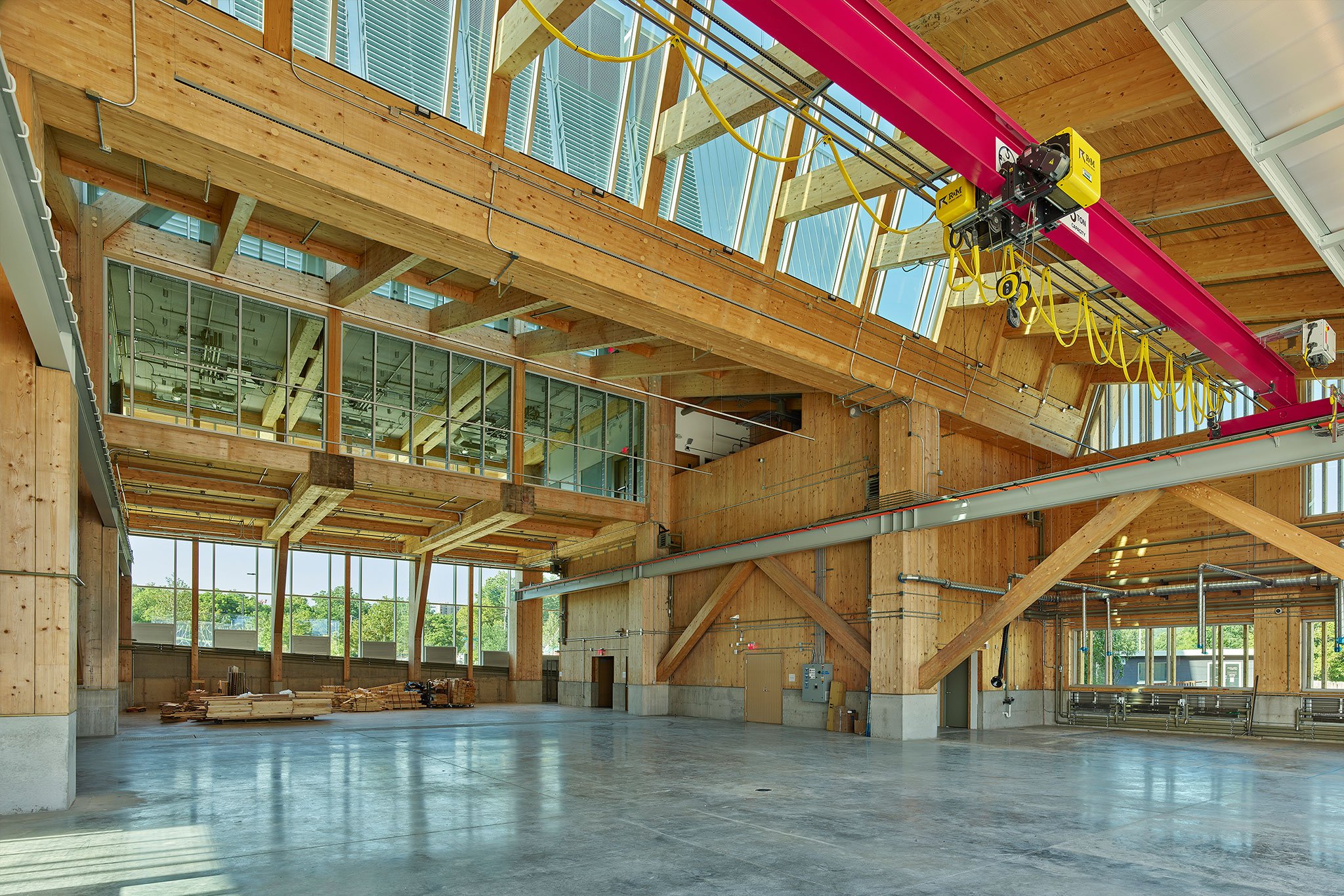
Stretching out 1,100 square metres along the ground level is a shed-like fabrication workshop with soaring ceilings that leads to an outdoor fabrication shed. This, the heart of the project, features a five-tonne gantry crane that hoists and hauls full-scale prototypes for enrolled students’ design-build projects. On the street-facing side, the sprawling workshop is topped by three levels, which house an auditorium and flexible studio space. The building is mainly constructed with CLT panels, metre-wide glulam columns and chunky beams – all culminating in a multifaceted roof that makes even gutter channels a design delight.
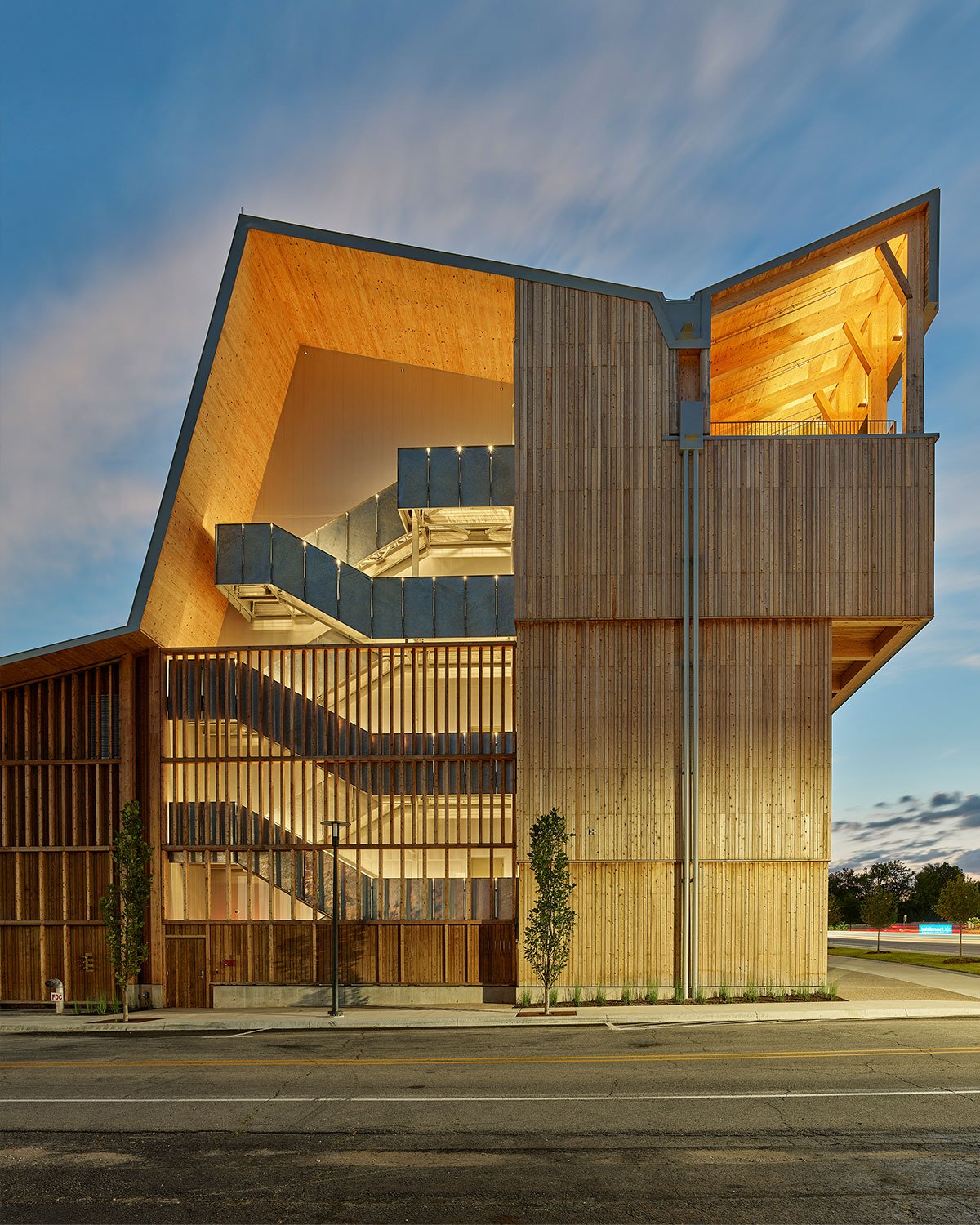
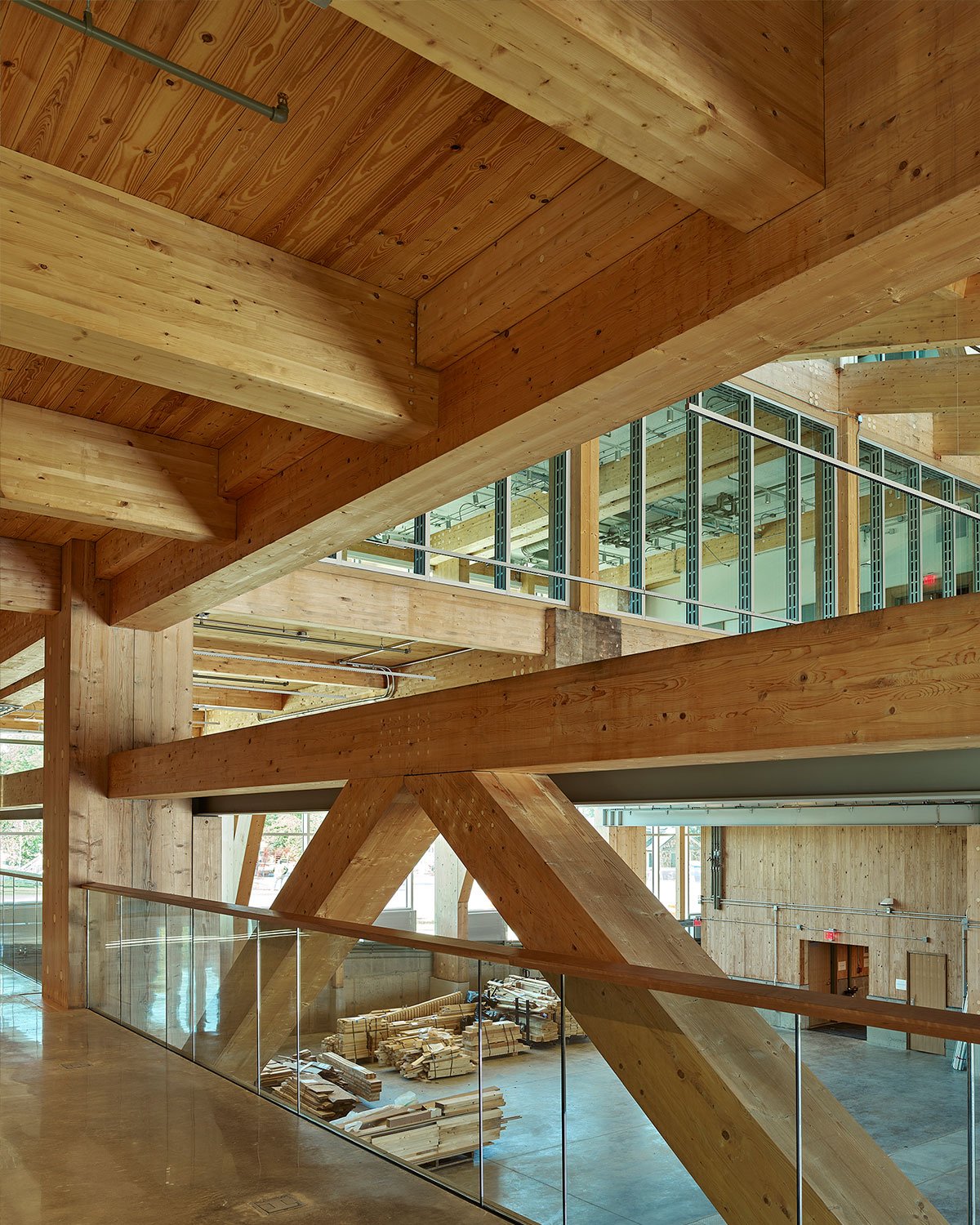
Everything about the Anthony Timberlands Center expresses the possibilities of timber in an emphatic formal language that makes the building an architectural lesson in its right. The envelope alone – a quilt of Arkansas species including Southern Yellow Pine, white oak and red cedar, together with metal and glass – is a marvel. Epitomized by an external stair volume that zig-zags along a capacious light well, the energy is of Anthony Timberlands Center is palpitating.
Top 10 of 2025: Our Favourite Institutional Architecture
From a museum in motion to a reimagining of 2,000-year-old ruins, this year’s best institutional architecture brought exciting, radical ideas to the built form.