


Textiles are one of the most under-used and underappreciated tools in
the designer’s tool kit. They soften the hard edges of modern materials and interiors to add comfort, intimacy, acoustic buffering and pure sensual pleasure. And every January, Frankfurt’s giant Heimtextil exposition asserts itself as one of the world’s most important bazaars for this most tactile of design elements. Along its hundreds of fabric-lined corridors, the seduction is relentless and palpable. In one section, you feel like you’re strolling through some ethereal Moroccan souk, and then, in the next hall, a jungle of shimmering curtains, and then a labyrinth of puffy duvets.
But the textile industry also grapples with the same issues — economics, sustainability and technology — as the rest of the design field. Many companies are offering new ways to harness technology for colour dyes, pattern generation and bioengineering. The biggest new way, according to the buzz in the corridors and seminars: artificial intelligence. As with other creative industries, A.I. is about to change everything in the textile business. It’s fascinating, and a little terrifying.

Hosted in the Trend Space, ground zero for the exhibitors focused on innovation, Heimtextil’s opening panel discussion struck an optimistic note. Alexandra Bohn, style content director of F.A.Z. Quarterly magazine, declared A.I. to be “a real game-changer, all over the world, not just the textile industry.” From what I heard and overheard throughout my four days at the fair, that is no hyperbole. The next speaker, A.I. consultant Danny Richman, walked us through the marvels of FabricGenie, an A.I.-powered fabric design app he developed for The Millshop Online. The app is undeniably compelling: Customers specify the qualities they’re seeking and are then offered variations right on the spot. Or feed the app some images of the most popular existing designs and A.I. will generate new ones based on the look and core qualities of last year’s bestsellers.

My two-part question to Richman: Does this mean that most fabric designers will soon be out of work? And once a human is not involved, how can future designs be creative on an aesthetic level? Richman concedes that, yes, A.I. will annihilate a lot of design jobs, but explains (as a matter of course) that most of them will be the tediously repetitive and non-creative work of replication and fine-tuning. (How the textile industry will nurture the hypothetical top designer of the future is not clear, since most start their careers in, well, tediously repetitive and non-creative roles.) But the very best designers, argues Richman, will still be highly valued — maybe even more so — because they will be rare. For brand new motifs, as opposed to variations on the past, a top talent can come up with that intangibly brilliant creativity that an A.I. app cannot offer. At least, not yet.

We can only hope that new technology and our voracious market economy will be compatible with the eco-fabrics and recyclable textiles that sheathed the future-oriented Trend Space. These included Pond Cycle by Pond Global, which promises yarn woven from bioplastics sourced from plants rather than fossil fuels; the corn-based Noosa fibre, one among many nature-derived textiles that also included those featuring grass, sugarcane and cactus; and CiCLO, a biodegradable nature-based material that is added to polyester and nylon. Harm reduction, one might say.

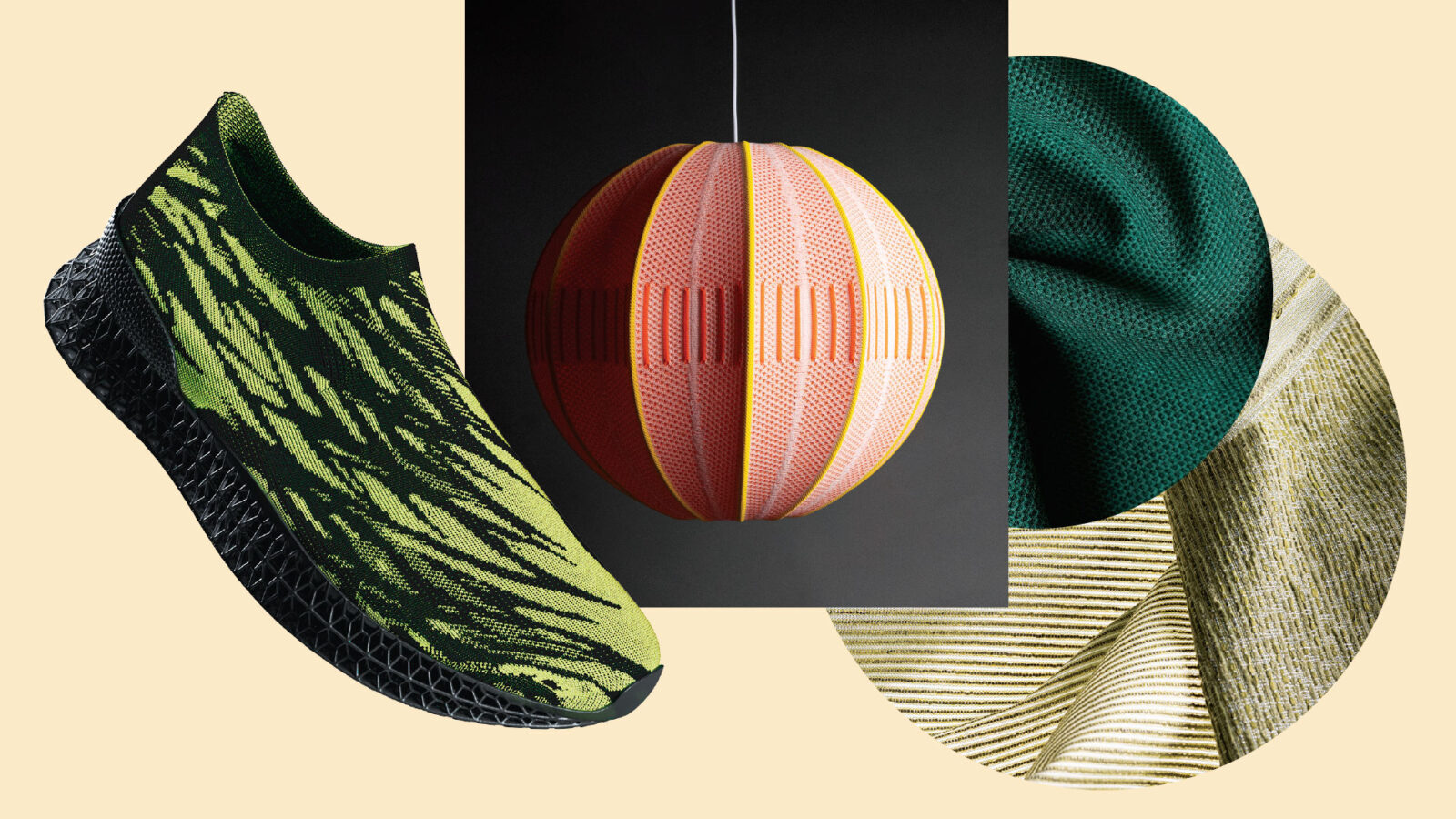
Paradoxically, all this engineering requires a huge amount of computational power. Whatever apprehensions one might have about A.I. and its threat to the employment options of designers, it might be the only way our industries can efficiently manage these new and complex enviro-tech tools. It can help us save not just time and money but energy and waste. Such is the case with Variant3D, one of the leaders of tech-driven textile solutions. Based in Malibu, California, Variant3D describes its product as a “hyperlocal, zero-waste and customizable 3D knitting technology.” Its LOOP software allows high-speed spot customization: “knit-to-shape” programs. As you edit the pattern on a two-dimensional computer screen, its three-dimensional correlative is generated instantly, from the shape of a sneaker to the curvilinear form of an upholstered chair. A process that once took years can now take a few days.

All the technology in the world, though, will not save the environment if used only for speed and profit. There are still cost and convenience barriers to recycling; few companies are required to assume those costs, and some textiles are just not conducive to recycling. Austria’s Baumann Dekor, for example, specializes in textiles for upholstery, cushions and furnishings. Such multi-material blends cannot be reprocessed, says Baumann Dekor design director Veenu Kanwar.

The overall solution must include a reduction in consumption, argued Thomas Gries, director of the RWTH Aachen Institute of Textile Technology, during a panel talk on the coming digitalization of the textile industry. And that doesn’t have to mean scrimping on clothes and blankets; even finding a way to cap the massive amount of waste in the fabric industry would make a huge difference. In a post-panel conversation, Gries asked me to guess how many times the average person wears a new article of clothing before disposing of it. Twenty is my guess, but Gries bluntly corrects me: two to four times, according to a landmark study in Germany a few years ago. Then, like so much of our stuff, our barely worn clothing heads off to the thrift store — or the landfill.

Evidently, we need a giant 3D spreadsheet to crunch the num- bers and calculate the myriad environmental costs and benefits, balancing water use with embodied energy with the carbon emissions from factory–retailer–consumer transportation. And then: struggle to make it all work in a fiercely competitive global market that automatically chases the largest profits.

Given these shifting and sometimes conflicting variables, how can we negotiate this enormous matrix of costs and benefits? Another recent study, conducted by the German Economic Institute in 2022 and cited at the digitalization panel talk, indicated that only 31 per cent of companies use data efficiently. The digitalization of the world will save neither our wallets nor the environment if manufacturers and marketers cannot or will not take proper advantage of it. But even if true sustainability is proving hard to attain, let’s signal the ambition of net-zero carbon emissions by raising awareness in incremental steps — schritt für schritt, as they say in Germany.

The obvious tool to attempt this is our new entrepreneurial overseer: A.I. We can only hope that its conclusions will be objective, and gentle on us all. More efficiently than humans, A.I. could potentially calibrate the entire manufacturing and delivery process, from the harvesting of raw materials to their transport to the manufacturer to their marketing and delivery to customers and end users. It should also account, of course, for the heavy carbon emissions incurred as a result of such energy-intensive, server farm–enabled computing.

In the textile industry as elsewhere, we can program A.I.’s robotic mind to maximize speed and profits at the cost of everything else that matters — or we can leverage the technology to position the logistics of reducing, reusing and recycling at its core. We could use the help.
Heimtextil 2024 Forecasts the Future of the Textile Industry
Cutting-edge tech — from bioengineered fibres to 3D-knitted fabrics — went hand in hand with environmentalism at this year’s edition of the annual textile expo.