


Depending on your point of view, Toronto is growing too quickly — or too slowly. While complaining about construction is practically a local pastime, the housing shortage has never been so acutely felt. And although the pace of change can seem relentless, even modestly sized projects require extensive planning and permitting, all before shovels hit the ground. In some cases, the period between site clearing and the start of construction can stretch on for months or even years. For local non-profit Two Steps Home (2SH), however, these liminal conditions offer an opportunity to address another side of the housing crisis: homelessness.
Developed in partnership with architecture firm SvN and net-zero bunkie manufacturer CABN, the Housing the Unhoused initiative evolved out of carpenter Khaleel Seivwright’s grassroots campaign to build informal “tiny homes” for Toronto encampment residents at the height of the COVID-19 pandemic. The 2SH team of architects, engineers and former civil servants (of which Seivwright is a director) now sees the many lots slated for upcoming urban developments as a way to provide a safer, more regulated alternative to tent communities.
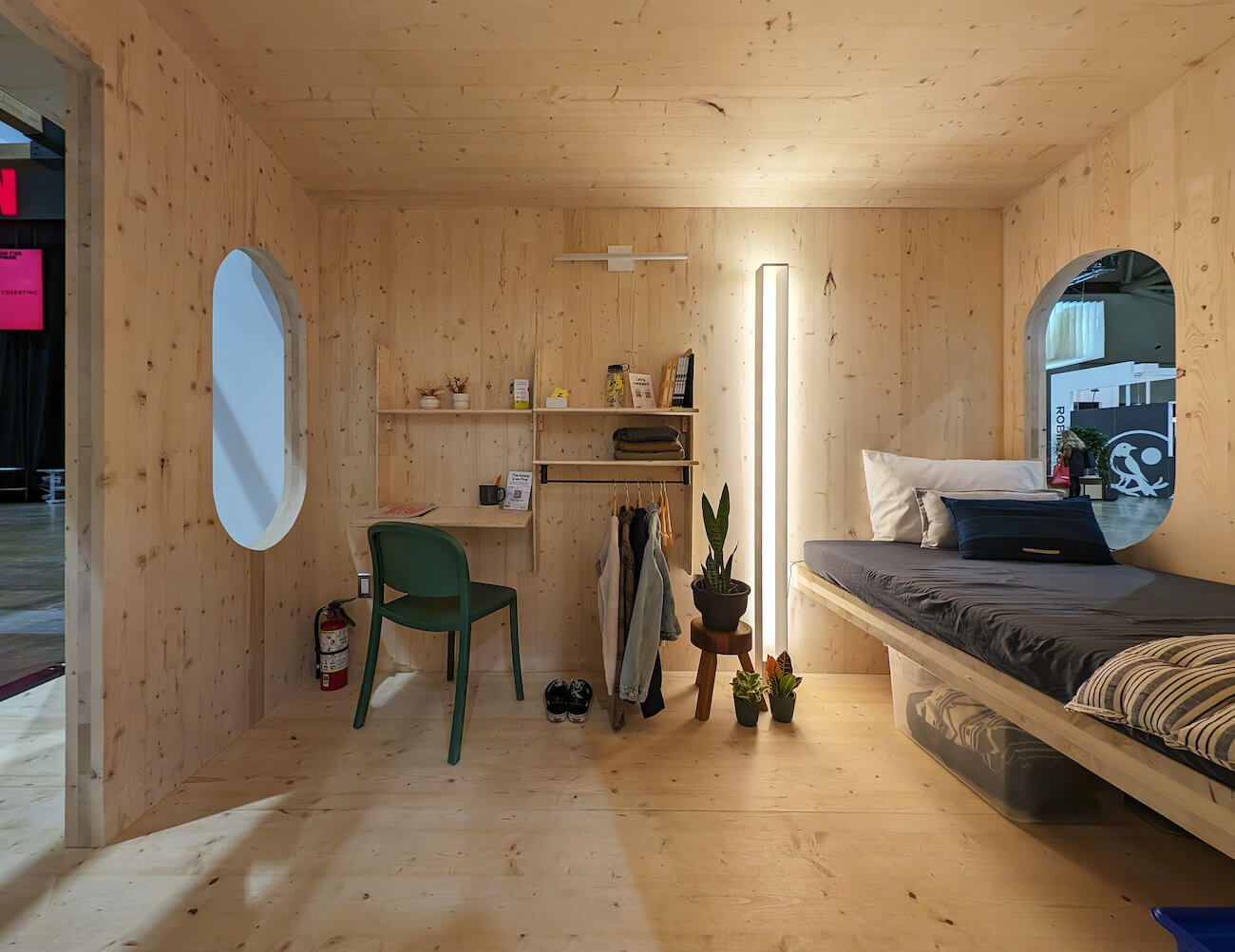
The group’s latest project utilizes CABN’s prefabricated technology to create durable and well-insulated micro-units that can be continuously relocated between the various vacant properties throughout the city. When construction on one site finally kicks off, the shelters installed there can be moved to the grounds of another building-in-waiting. Of course, frequent displacement of individuals isn’t the end goal — the project is envisioned as a transitional step that would include support services to help unhoused people find permanent homes.
In the meantime, SvN principal Aaron Budd says the hope is to integrate shelter with community. “The idea is to have about 50 of these cabins on a single site, paired with communal facilities like showers and amenities, and shared spaces where meals are served and support services are provided,” says Budd. “Since individual cabins are quite small, the areas around them can also support shared spaces like movable community gardens.”

At January’s Interior Design Show (IDS Toronto), a shelter prototype was displayed as part of the “Future Neighbourhood’’ showcase curated by fair director Will Sorrell. The handsome and fire-resistant cross-laminated timber (CLT) structure complemented a physical mock-up of a living space — complete with a bed, shelving, windows and a front porch — with a small exhibit about the initiative. The next steps? A refined prototype, and then a cluster of cabins. It’s far from a solution to the housing crisis, but it’s a meaningful move in the right direction.
s
Two Steps Home Reimagines Construction Sites as Temporary Housing
Toronto’s Two Steps Home initiative reimagines tomorrow’s construction sites as today’s temporary shelters.