

Canada Day falling mid-week this year makes it especially tempting to stretch the holiday into a proper getaway. But before looking beyond the border, consider the case for staying closer to home. For design lovers, there’s plenty to build a trip around: a great public building, a restaurant with a strong point of view, or a hotel that’s a destination in and of itself. That’s the pleasure of a Canadian road trip — the country’s varied design sensibilities reveal themselves region by region, shifting the experience completely from one stop to the next. With that in mind, our east-to-west itinerary brings together the obvious favourites and other design-minded detours along the way. Consider it your excuse to take the scenic route.
- Halifax
- Montreal
- Prince Edward County
- Toronto
- Grey County
- Niagara Region
- Thunder Bay
- Winnipeg
- Edmonton
- Victoria
#
Halifax

Maybe it’s because I lived there as a student, but Halifax stands out in my mind as an especially great place to grab a drink. (Omar Gandhi recently attested to this — and the city’s numerous other charms — in his guide to Nova Scotia for HTSI.) Good old-fashioned Maritime spirit remains alive and well in the city’s beloved pubs, many of them decked in classic wood paneling and soundtracked by folksy live music. (The Narrows Public House in the city’s North End makes a great first stop). Meanwhile, date night destinations like Bar Kismet (also in the North End) and Mystic (located along the waterfront, and featuring an interior by DesignAgency) are ready to suggest the perfect cocktail or wine pairing to match their menus filled with freshly caught — and elegantly prepared — seafood. (If you’re at the Queen’s Marque harbourfront district envisioned by MacKay-Lyons Sweeatapple Architects, don’t miss a chance to dip your toes in the ocean, too. Since 2019, a set of wide granite stairs added as part of the public realm design by Fathom Studio has allowed visitors to walk right into the water.)

But to really make the most of the fresh Atlantic air, opt for a seat at one of the city’s lively beer gardens. My favourite of the bunch, from a long-overdue return trip last summer, is located kitty corner to the lush Public Gardens (which are worth a stroll to admire both the blooms and the ornate iron gates, decorated with the Halifax coat of arms and the city’s motto, “E Mari Merces” — “From the Sea, Wealth”). Opened in 2016 in an empty lot sandwiched between two Spring Garden Road storefronts, Stillwell Beergarden is an infill project designed by Stotts Architecture that’s easy to spot thanks to the red shipping container at the back, where bartenders pull pints under a white awning painted with big graphic “BEER GARDEN” lettering. Otherwise, the space features little more than long wooden patio tables and some tidy landscaping by local studio Outside. It is well-designed but not overly so — with a rugged industrial identity that matches its city’s broader aesthetic sensibility. With the textured walls of the lot’s neighbouring buildings on either side and strings of lights floating overhead, it feels both cozy and urban — a perfect reflection of Halifax’s small-city-meets-big-city energy. Oh, and the IPA was great, too. — Eric Mutrie
#
Montreal

There has never been a bad reason to visit Montreal, which in 2026 celebrates 20 years as a UNESCO City of Design. Even in the harshest Quebec winter, the sauna-loving destination has you covered. If Sid Lee’s Bota Bota, which opened in 2011, started the trend, Recess Thermal is the latest, design-minded evolution of the spa. Offering the city’s first social hot-cold circuit experience, it was curated down to the last coal by Future Simple Studio with an eye towards crafting the most sublime chill-out zone.

Spa culture has inspired an almost-religious fervour over the past decade, with adherents proselytizing about its spiritual highs. But if you prefer your salvation the old-fashioned way — or simply appreciate ecclesiastical architecture — Saint Joseph’s Oratory of Mount Royal is a mecca worth visiting. Lemay has made the pilgrimage to this Renaissance Revival church more accessible to a greater number of visitors: By introducing a welcome pavilion and carving an elegant circulation route through the hill that leads up to the oratory, the firm also took the opportunity to plant the bell tower at the foot of the site. While the original was located far off to one side of the church, the new tower is centred — its refurbished carillon in exalted position — and celebrated as the beacon of a coherent whole that integrates old and new.

Montreal’s urban fabric is singular in Canada for place-making interventions like this and other inspiring public projects, and Lemay has been one of the go-to firms realizing its most ambitious outdoor spaces. The firm’s Place des Montréalaises, designed together with Angela Silver and AtkinsRealis, is another vibrant addition to the urban realm — one that explicitly honours women. Another must-see new landmark, by just-as-prominent firm Provencher Roy and landscape experts NIP Paysage, the Port of Montreal Tower provides unparalleled views across the waterfront.

Want a scrappier corner to delight in? Gorilla Park, designed by Civiliti, restores a grassroots-led outdoor space, with the aim of making it permanent, in Mile Ex. That neighbourhood, which nurtured Montreal’s early-aughts warehouse pop scene (Grimes being among its breakout stars), is one of the city’s latest food destinations, with Little Italy—adjacent spots like Manitoba and Impasto serving up novel spins on nonna‘s old standbys. It’s also close enough to Mile End and then to the Plateau for you to walk or Bixi bike to other hotspots. One of those is Le Violon, Danny Smiles’ seafood joint designed by Zébulon Pérron in collaboration with co-owner and creative director Dan Climan. With a palette inspired by the muted tones of Giorgio Morandi’s still-life canvases, it features two paintings by Climan — one of a regal Dalmatian — that provide sharp-focus moments of panache. — Elizabeth Pagliacolo
#
Prince Edward County

When the pandemic pushed urbanites to seek more space and a slower pace, Prince Edward County offered an easy answer — but its pull proved deeper than escape, as its landscape, food and wine culture and creative energy quickly turned the region into one of Ontario’s most compelling design destinations. Mind you, the transformation was already underway as early as 2012, when ERA Architects and +tongtong were tapped to renovate the century-old Devonshire Inn into the Drake Devonshire, bringing a taste of Toronto’s thriving hospitality scene out to the country. The inn is still a mainstay in the town of Wellington, with a handful of eclectic rooms teeming with Canadian art and a picturesque lakeside patio serving up casual fare.

In Bloomfield, the next town over, Wander the Resort makes the perfect home base (also make sure to check out the farmer’s market across the street at The Eddie). Self-described as “Nordic design meets County comfort,” the property features a handful of cabin rentals and a Scandinavian spa offering contrast therapy for the Othership crowd. If Picton is more your speed, The Royal, artfully restored by Giannone Petricone, is worth the splurge (an entry-level room will run you about $500 a night). But even if you’re not staying over, it’s worth popping into the lobby bar for a drink or a meal in the dining room. Better yet, make the most of the summer weather on the covered terrace, landscaped by Janet Rosenberg & Studio.

Once you’ve landed on where to stay, filling in the rest of the itinerary is the easy part. For one, the region’s most ambitious — and locally contested — adaptive-reuse project, Base31, has reimagined a WWII air-training base into a massive 70-hectare cultural district, with renovated hangars and barracks playing host to art galleries, live music and more. Back in Bloomfield, Oeno Gallery extends the County’s art scene into the landscape with a sculpture garden — and it also happens to be right next door to Huff Estates winery, where you can sample local glasses and wood-fired pizza. The thriving wine scene will warrant a return visit — Giannone Petricone is at work on yet another PEC design destination, with the sculptural and striking Volta Estate Winery set to open in 2028. — Sydney Shilling
#
Toronto

Forever synonymous with the city skyline, the CN Tower is celebrating its 50th birthday this year — and aptly, it’s received tonnes of pop-culture love of late. Drake, who featured it on the album cover for Views a decade ago, recently “froze” it for his launch of Iceman; and the indie hit Nirvana the Band the Show the Movie (a must-watch, if you haven’t already) cast it as a main character in a cinematic romp that is thoroughly and unabashedly Toronto. With a revamped lower observation deck — the first major renovation of this level since the building opened in 1976 — there’s reason to discover the icon anew. Working with Boszko & Verity, Superkül was called on to replace the original vertical glazing and the glass floor — an intervention that “saw [them] hoist up a new four-storey permanent maintenance gantry and attach it to the exterior of the Tower’s uppermost observation level.” They also introduced an arboreal canopy composed of oak-laminated phenolic fins; it evokes a warm ambience in the raw, 365-metre-high space while also concealing mechanical systems.

While you’re in the mood for concrete visions, check out the brutalist behemoth at the University of Toronto’s Scarborough Campus by the CN Tower’s original architect, John Andrews. The Science and Humanities Wing is nothing short of awesome, as impressive today — from its hulking mass down to its timeless built-in details — as it was when it opened in 1966. (It’s another icon celebrated by Drake, who, despite his Bridle Path mansion, exhibits impeccable taste in Toronto architecture). And then go see Superkül’s fine-tuning of yet another masterful work of Toronto brutalism, this time at the University of Toronto’s St. George campus: Robarts Library now features a fourth-floor reading room that exudes newfound warmth while exalting the original features — like the coffered ceiling, with its triangular modules echoed in newly integrated latticework screens. Let’s just say it’s the better of the contemporary alterations to this concrete peacock of a building.

In the Port Lands, meanwhile, Biidaasige Park continues to surprise and delight since it opened last year. Adjacent to Ookwemin Minising, where an entirely new neighbourhood designed by GHD, Indigenous consultants Trophic Design, SLA and Allies and Morrison Architects is being built from the ground up, MVVA’s transformation of once-industrial terrain is all the more magnificent for re-naturalizing the Don River, a decades-long, activist-driven feat brought to fruition by Waterfront Toronto.

Woven into the park, the Lassonde Art Trail is updated with new works this summer: Cuban artist Alexandre Arachea’s Orange Functional is a boisterous multiplicity of basketball nets, and superstar Tracey Emin’s Roman Standard (borrowed from the National Gallery of Canada) is a subtle beauty: a small bronze songbird perched atop a pole. These and other pieces make the journey through the landscape one of unending discovery. — E.P.
#
Grey County

Roughly two hours north of Toronto, Grey County is renowned for its natural landscape, with spectacular hiking trails, woodlands and wetlands, ski slopes, sandy beaches and more beckoning outdoor enthusiasts all year long. But the area (which is composed of nine municipalities) also has a thriving design and architecture scene worth exploring. Opening later this month, Leeward House (shown above) in the historic town of Thornbury will make an ideal home base for those touring the region. Devised by Toronto- and Hamilton-based studio Westgrove, the charming nine-room boutique hotel is at once of a piece with its rural surroundings and a contemporary design experience — clad in board-and-batten and cedar shake siding with a generous wrap-around porch, the hotel is spread across two buildings and includes a lobby bar, lounge area and heated outdoor pool. Inside, rooms are handsomely appointed with vaulted ceilings, shiplap and thoughtfully considered details that enhance the refined coastal palette.

Fans of innovative adaptive re-use architecture will want to venture to nearby Meaford and wander through the town’s public library. Formerly a shuttered grocery store, the unassuming building was restored and transformed by Toronto’s LGA Architectural Partners into a light-filled and modern community amenity complete with an exterior parkette, terraced apple orchard and outdoor seating.

And while technically just east of Grey County (in Clearview), the small town of Creemore boasts a lovingly restored public square. A collaboration between ERA Architects, landscape architecture and urban planning firm PFS Studio and the local community, Creemore Village Green is a vibrant 2,787-square-metre four-season green space and cultural landmark with open lawns, pollinator gardens, a bandshell and industrial-inspired features that nod to the town’s history as an old railway stop. — Kendra Jackson
#
Niagara Region

Home to the iconic Niagara Falls, hundreds of wineries and the charming 19th-century town of Niagara-on-the-Lake (host of the annual Shaw Festival), the Niagara region in southern Ontario is a must-see on any Canadian tour. A new stop for anyone cruising around the area should be the Niagara Falls Exchange (NFX), a market hall and cultural hub designed by architect Megan Torza and her team at Toronto firm DTAH. Situated in the historic Main and Ferry district, the 929-square-metre indoor-outdoor venue features two warehouse-like buildings with striking sawtooth roofs that are home to artisan and woodworking studios, an art gallery, a café and more; positioned in an L-shaped configuration, the buildings create an open-air plaza for outdoor programming like farmer’s markets, concerts and other events.

If dinner is in the plans, the Michelin-recommended Fat Rabbit in St. Catharines is sure to please not only the palate. Helmed by chef Zach Smith, the restaurant (and whole-animal butchery) recently completed the expansion of its dining room. Designed by Brett Paulin, the new interior’s wood panelling with dramatic graining, exposed piping and concrete flooring has a sophisticated ruggedness, while the custom wood furniture and lighting lend a pleasing hand-crafted quality. — K.J.
#
Thunder Bay

When Brook McIlroy sadly declared bankruptcy this spring, it left behind a legacy of notable contributions to Canada’s public realm. One of these is Prince Arthur’s Landing, a park that transformed a key stretch of the waterfront in Thunder Bay (where Brook McIlroy had operated a small office) into an all-season community hub. Throughout the summer, the Marina (as locals know it) plays host to everything from concerts to ribfests — but thanks to a skate park, splash pad, sailboat docks and walking trails, you’ll find no shortage of activity there every day. A tour of the site makes for a recap of all the things that Brook McIlroy did best — from community-oriented design to sustainability strategies and thoughtful Indigenous placemaking. Two of the project’s structures — the Water Garden Pavilion and the Baggage Building Arts Centre, which join a historic 1906 C.N. railway station — became Thunder Bay’s first-ever LEED-certified buildings back in 2013, thanks to passive heating and cooling features and recycled materials. Moving closer to the water’s edge, the Spirit Garden — framed by large timber structures — marked Brook McIlroy’s first partnership with architect Ryan Gorrie, who would later go on to lead the firm’s Winnipeg office and its Indigenous Design Studio.


Unfortunately, Brook McIlroy is not the only one who has had to square off against hard financial realities. The next stage of Thunder Bay’s waterfront redevelopment, which would expand the park into an adjacent, formerly industrial area, is set to be anchored by the Thunder Bay Art Gallery’s new building — but that project halted construction in June due to rising costs that now see it about $20 million short of what it needs to see the project through. Designed by Patkau with Brook McIlroy, the building is currently said to be 60 per cent complete. Its dramatic form takes inspiration from an Ojibway story about the creation of Turtle Island, which describes how a turtle carried the Earth on its back after a massive flood. Compared to the current facility, this bigger, 3,484-square-metre architectural landmark would provide dedicated space for the gallery’s permanent collection, which focuses on Northern Ontario and Indigenous art. If anyone is feeling generous, the project is back in fundraising mode.


In the meantime, there is still plenty to enjoy at Thunder Bay’s waterfront and just beyond. A short walk away, Tomlin is an elevated tavern with a rotating, ever-exciting menu. Its casual sister establishment, Tomlin Subdivision, is located nearby inside Lakehead Beer Company, which did a spectacular job of restoring a downtown brick building. (Don’t miss the beautiful mural outside, where artists Shelby Gagnon, Ricky Kruger, Lak William, Ryan Pooman, Johnny Longfeather and Luke Goerzen teamed up to weave together landscape and animal imagery.)
Speaking of heritage restoration, a few years back, Goods & Co. Market impressively reimagined the city’s former Eaton’s department store as a multi-vendor shopping and dining hall. From Wednesday to Sunday, it is home to Scandinavian restaurant the Hoito — a local institution that lost its original building a few years ago in a fire but thankfully lives on. (If you’re really having the full Thunder Bay experience, you need to feast on both Finnish pancakes and persians — a pseudo-donut with raspberry icing that can be acquired at many spots throughout town, but most famously from the Persian Man.)


More local history waits about an hour’s drive from town at the Silver Islet General Store, a circa-1871 shop that was lovingly restored and reopened just in time for its 150th anniversary in 2021 after sitting empty for much of the previous decade. Nearby, the best view in northern Ontario waits at the top of the Sleeping Giant, a rock formation also known as Nanabijou that can be seen from all across town — including, hopefully one day, from the Thunder Bay Art Gallery. — E.M.
#
Winnipeg

What most defines Canadian architecture today — and sets it apart — is its embrace of Indigeneity. With a purposeful mandate to formalize the inclusion of Indigenous architects and principles in public projects, the country has made strides in realizing architecture with an ethos of reconciliation. Winnipeg is home to 102,080 city dwellers who identify as Indigenous — the largest number of any major Canadian city – and also to a number of attractions that honour the histories, traditions and artistry of First Nations, Inuit and Métis Peoples.
A bold new Passive House–designed building that doubles as a gateway to Winnipeg’s FortWhyte Alive nature preserve, the Buffalo Crossing Paul Albrechtsen Visitor Centre is one of them. Designed by Stantec, it was shaped through participatory design. Locals, environmental advocates and Indigenous advisers worked together with the preserve’s leadership to inform the building’s “spatial programming and cultural expression” and ensure the building reflected the priorities of “accessibility, reconciliation, environmental literacy, and intergenerational gathering,” according to the firm. The mass timber building integrates an Elder’s Room, amongst other amenities, and features signage in Indigenous languages; a Star Blanket pattern by Cheryl Wirch is one of its foremost artworks, integrated directly into the polished concrete floor.

Another remarkable project that celebrates Indigenous ingenuity is the Inuit Art Centre, a renovation and expansion by Michael Maltzan with exhibition design and graphic system by two Inuk designers: Winnipeg-based Nicole Luke and Toronto-based Mark Bennett. As we’ve written previously, the building’s striking form captures “the vastness, scale, light and life in the Far North,” and its vast range of Inuit art — including over 4,500 sculptures by artists from across the North featured in the glass vault at the heart of the building — is breathtaking.

Another most worthy stop on the map: The Leaf, which resides in the 450-hectare Assiniboine Park. KPMB’s Fibonacci sequence—inspired greenhouse unites four botanical biomes home to hundreds of diverse plant species under one spectacular spiralling roof. It’s the ideal place to sit back, take a deep breath, and enjoy nature’s majesty within a superb architectural frame. — E.P.
#
Edmonton

Unlike many Canadian cities, Edmonton doesn’t just reserve good design for the big landmarks. By investing in the libraries, parks and community buildings residents use every day, showstopping architecture has become the norm here. Credit for this forward-thinking strategy goes to City Architect Carol Bélanger, who has revolutionized Edmonton’s procurement system to explicitly reward design quality over fees and basic qualifications, setting a new standard for civic projects — and turning the city into the ultimate client for ambitious architects.

If there’s a space that catches your eye, there’s a good chance it was designed by gh3*, the Toronto firm that has built its reputation around approaching normally banal public infrastructure with the same rigour and consideration as a cultural or institutional building. And their latest project is one you can’t miss. In the heart of the downtown core, O-day’min Park, co-designed with CCxA, has transformed a vacant parking lot into a vibrant park, its centrepiece a joyful, strawberry-hued pavilion. Its colour is derived from the park’s name, which means strawberry, or “heart” berry in Anishinaabe. The dramatic vaulted roof turns the structure into a kind of folly, yet also creates a functional canopy to allow for comfortable year-round use.

Borden Park is another green space heavily shaped by the hand of gh3*. Hell, even the public washrooms are beautiful here, set within a mirrored pavilion that evokes the carousels that once populated the former amusement park on the site. For those looking to beat the heat, a trip to the Borden Natural Swimming Pool is in order. While the spa-like setting is likely enough to tempt you — the low-lying gabion-walled structure, made of dark limestone and steel, was inspired by two mid-century buildings on the site — it is the pool’s natural filtration system, the first of its kind in Canada, that is most impressive. In lieu of chemicals, the water is cleansed by a carefully crafted wetland ecosystem of plants, micro-organisms, sand and gravel. The pool deck slopes right into the water, furthering the illusion that this stunning place is natural rather than man-made.

Exploring the city is bound to work up an appetite. Luckily, there are plenty of places to stop for some fuel. A trio of Italian joints designed by Vancouver studio Ste Marie — the casual Va! Caffè bakery, fine dining venue Olia, and Mimi, a swanky lounge — should do just the trick, whether you’re looking for a light breakfast or an evening nightcap. — S.S.
#
Victoria
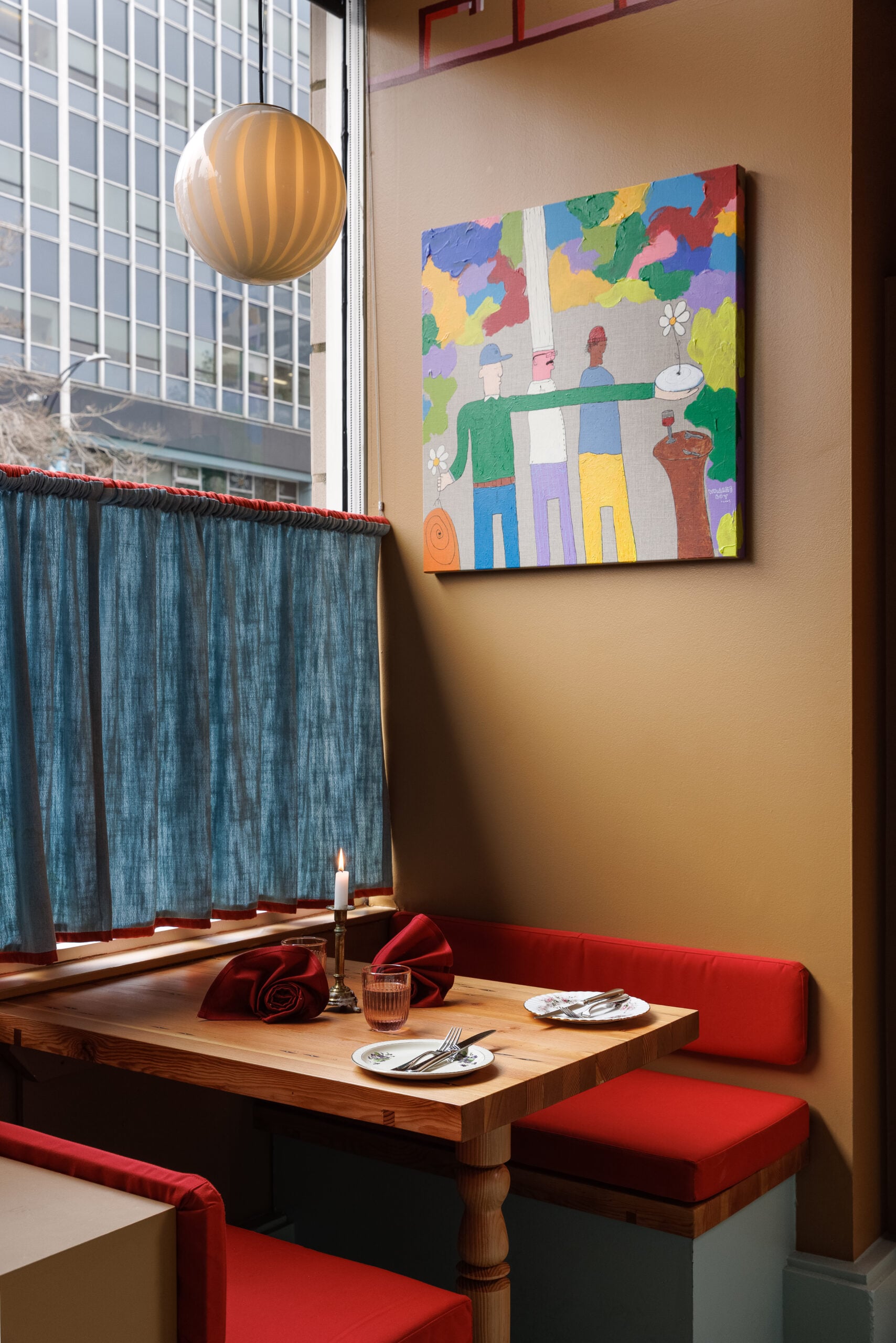
Victoria is often defined by its historic hotels, gardens and harbourfront, but look beyond the postcard view and it becomes clear that the city’s most meaningful design work is rooted in a deeper relationship to place — one shaped by Indigenous knowledge, land, material and community. On the University of Victoria’s idyllic forested campus, contemporary Indigenous architecture offers a more grounded way of understanding the region. In the First Peoples House, for instance, a social, cultural and academic centre for Indigenous students designed by Formline, Coast Salish longhouse traditions inform the ceremonial hall and handmade cedar carvings by Indigenous artists animate the interior. A new law wing, led by Two Row Architect with Teeple and Low Hammond Rowe, expands the original Fraser Law Building with a wood-forward design that connects the faculty to the surrounding forest. Both buildings are rich with symbolism, but never reduced to it, translating Indigenous values into architecture that feels distinctly of the present.

In the city itself, that attention to place, community and material expression takes on a smaller, scrappier form, showing up in hospitality spaces that feel deliberate, personal and full of character. At Hide + Seek Coffee’s Esquimault location, small-space experts Arrietty Home have shaped a custom build-out that maximizes every inch. Emerging designer Claire Saksun also knows her way around a compact footprint, as the mastermind behind two of the city’s must-try food and beverage destinations: Softer Drink, a non-alcoholic bottle shop with a “juicy” chartreuse interior, and Lumache, a tiny pasta joint packed with personality and organized around an open kitchen. As for where the designers are hanging out? You’ll have to check out Tourist Wine Bar — co-founded by Guy Ferguson, formerly of local furniture brand Part and Whole — beloved for its natural wines and moody, minimal interior.
From a tourism standpoint, Victoria’s main challenge is its shortage of accommodations, fuelled by restrictions on short-term rentals and a lack of viable sites for development. Hopefully, in a few years’ time, you can book a room at the BC Power Commission Building, an Art Deco landmark proposed for redevelopment as a hotel by Reliance Properties and OMB Architects. In the meantime, the building is still worth a visit in its current life as a temporary home for artists and arts organizations, offering a glimpse of Victoria’s creative community. — S.S.
AZURE’s Great Canadian Design Road Trip!
Just in time for Canada Day, we map the coast-to-coast design destinations worth pulling over for.