
Olympic venues, cultural meccas, residential towers, mass-timber commercial, and imaginative mixed-use – the most intriguing projects set to open in 2026 span numerous typologies. Our eyes are peeled for these works not just because they happen to be designed by some of the profession’s most recognizable names – Peter Zumthor, Herzog & de Meuron, BIG and MAD, to name a few – but also in light of the major impacts they are destined to make on their cities. As we begin this new year, the power of design is more important than ever.
Here’s to AZURE’s top 10 most anticipated projects of 2026:
- Shanghai Opera House by Snøhetta with ECADI
- House of Delft by Koschuch Architects
- Milano Cortina 2026 Olympic Games venues, by various firms
- CubeHouse by SO-IL, in Amsterdam
- Samuel H. Scripps Theater Center at Hudson Valley Shakespeare by Studio Gang, in Garrison, New York
- Memphis Art Museum by Herzog & de Meuron
- Lucas Museum of Narrative Art by MAD Architects and Studio-MLA, in Los Angeles
- Los Angeles County Museum of Art, California by Peter Zumthor & Partners and SOM
- KING Toronto by BIG
- MalDent Project, by John McAslan + Partners, in Blantyre, Malawi
.
1
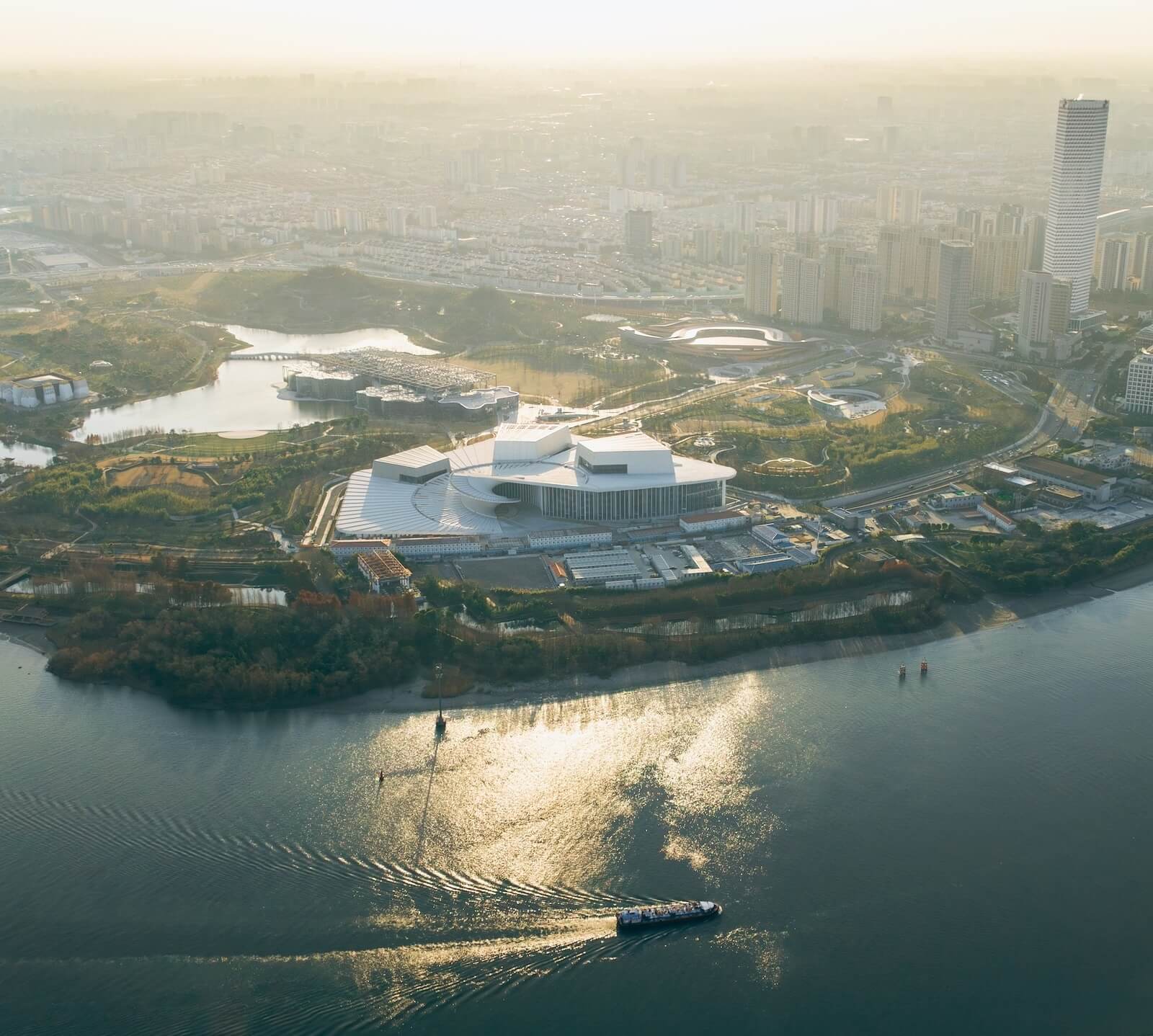
Shanghai Opera House by Snøhetta, with ECADI, in Shanghai, China
Going by recent construction photographs of the Shanghai Opera House, the Snøhetta-designed building will be as outstanding as the firm’s most recognizable work. Like the Oslo Opera House, completed in 2008, the Shanghai institution strives for global stardom: The centrepiece of a new urban master plan, it “aims to place the city at the forefront of the globe, economically, scientifically, and culturally.” Its helical roof – a fantastic unfurled fan accessed by a heroic spiral stair – makes the building climbable year round, much like the Oslo attraction. In fact, the terraced roof, with its three slab-like protrusions offering views inside, doubles as an “accessible stage and a meeting landscape,” in the firm’s words, “engendering a sense of public ownership.”
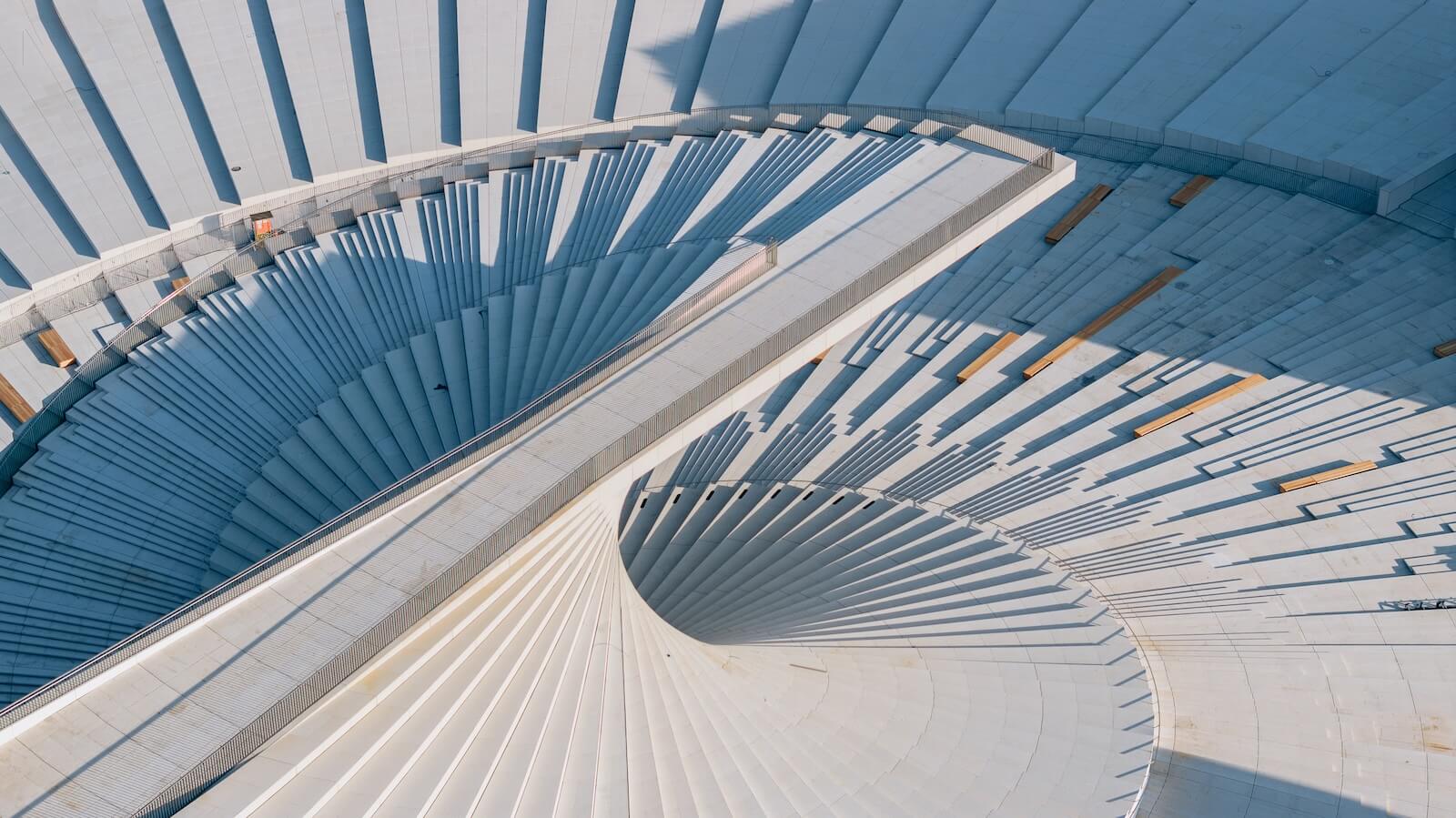
The roof’s sense of movement carries on in the pleated curtain wall that wraps the building and the red-painted circulation ribbon that weaves through the main hall. The landscape, too, fans out with fingers that extend the existing ecological gardens of World EXPO Cultural Park along the Huangpo River.
At the heart of building, the 2,000-seat main auditorium takes up that vibrant red hue again in a stunning setting devised with Theatre Projects and Nagata Acoustics. Another concert hall accommodates 1,200 patrons of smaller productions; and a 1,000-seat venue provides space for more experimental performances. Restaurants, galleries, museums and libraries round out the programming of this ambitious building, once opera-goers have gotten over the majesty of that stair – and all its selfie possibilities.
.

2
House of Delft by Koschuch Architects, in the Netherlands
If a single building can be said to epitomize a city’s essence, House of Delft, by Koschuch Architects, might be it. On one end, the building meets the street with a 20-metre-tall facade that evokes a supersized trio of typical Delft houses; on its canal-facing side, seven smaller house-shaped extrusions form entry points for a new innovation hub. These building shapes refer to ones that once belonged to local heroes – some medical pioneers and arts patrons (notably Johannes Vermeer), others revered national and maritime figures (affiliated with the colonial Dutch East India Company, sadly) – as well as cultural institutions like a monastery built around the time of Delft’s founding in the 1200s.
The main-level innovation hub will be home to various tech and crafts outfits. House of Delft’s location next to Delft Central station and close to the historic city centre positions it for optimum visibility, which will no doubt attract many visitors to the mixed-use building, which also includes residential units in the form of apartments and maisonettes.
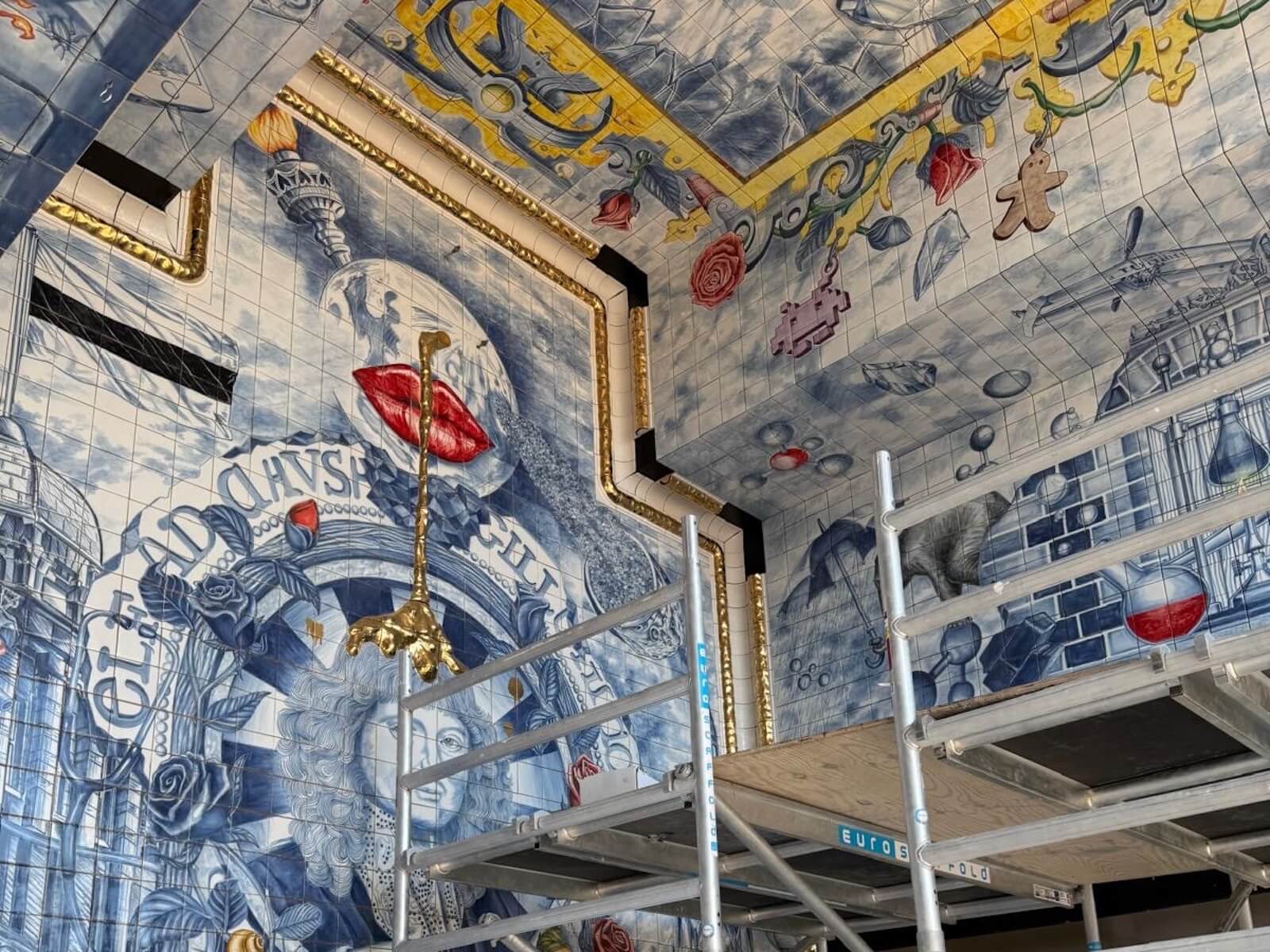
An outstanding custom artwork by Studio Job promises to be another attraction: Known for his tongue-in-cheek art-design pieces that reference robber barons and religious symbolism, provocateur Job Smeets is creating a ceramic mural consisting of 120,000 hand-painted Delft-blue tiles made by Royal Tichelaar Makkum replete with portraits of famous Delftians like William of Orange (the 16th century leader of the Dutch revolt against the Spanish Habsburgs) alongside references to historic tragedies, notably the Dutch slave trade that powered the city’s affluence. It’s the rare commercial development that recognizes both the good and the bad in a city’s history, and presents them unabashedly for the public’s consideration.
.
3
Milano Cortina 2026 Olympic Games venues, by various firms, in Milan, Italy
As we approach this year’s Olympic Games, all eyes are on the hockey rink. For one thing, Heated Rivalry has earned ice sports a passionate new following. (That said, fans of Shane and Ilya’s star-crossed romance shouldn’t hold their breath for a gold medal showdown between Canada and Russia; the latter remains banned from the Olympics over the War in Ukraine. Russian athletes, however, will compete in some events as neutral individuals.) Mind you, when it comes to the first puck drop, many people are just as curious to see the venue as they are to watch the actual face-off.
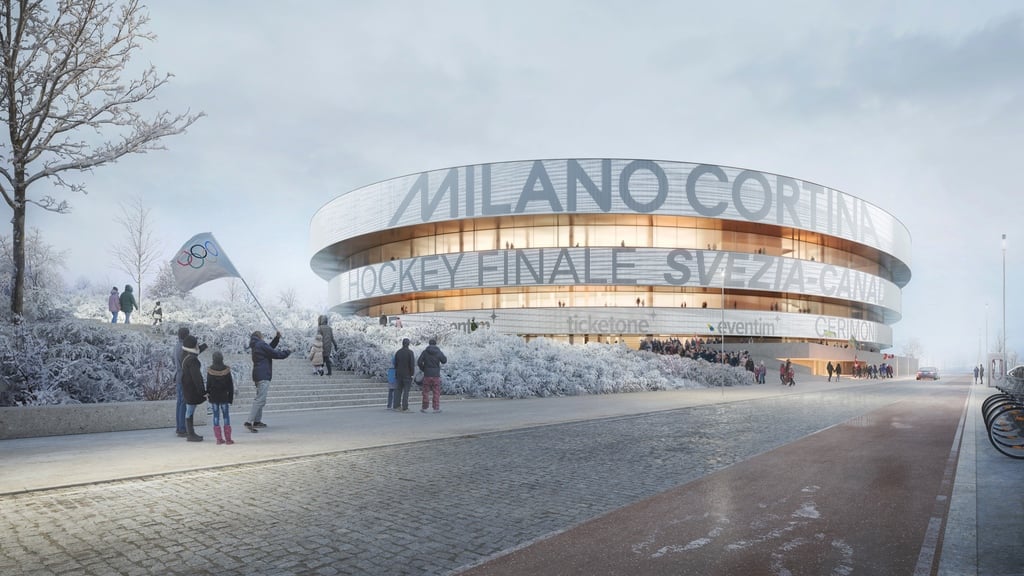
As it stands today, the Milano Santagiulia Ice Hockey Arena is still, alarmingly, incomplete – with just a month to go until the first game. (Many hockey enthusiasts are also upset that the venue will feature a rink that’s smaller than NHL-regulation size – despite early assurances that it would meet the league’s standards.) When Azure spoke to the design team behind the venue (which includes David Chipperfield Architects and Arup) this past fall, they discussed the challenges involved in delivering something of this scale so quickly, although at that point it still seemed like the arena would be completed in time for scheduled test runs in December. When it is (finally) finished, visitors can look forward to a façade that alternates between glowing digital displays and transparent glass bands.

Of course, the hockey arena is just one of many venues that will grace TV screens throughout February. Most of the other locales involve temporary expansions, modernizations or adaptations of existing buildings in and around Milan. For instance, the Unipol Forum in Assago, usually a basketball and concert stadium, has been reinvented as the Milano Ice Skating Arena for the duration of the Olympics. Adaptation continues to be the name of the Games when it comes to new construction: The main athlete’s village (designed by SOM) will transform into student housing after Milano Cortina 2026 winds down, while the aforementioned Santagiulia arena will later play host to concerts. But first, let’s hope it’s finished in time for some hockey.
.
4
CubeHouse by SO-IL, in Amsterdam
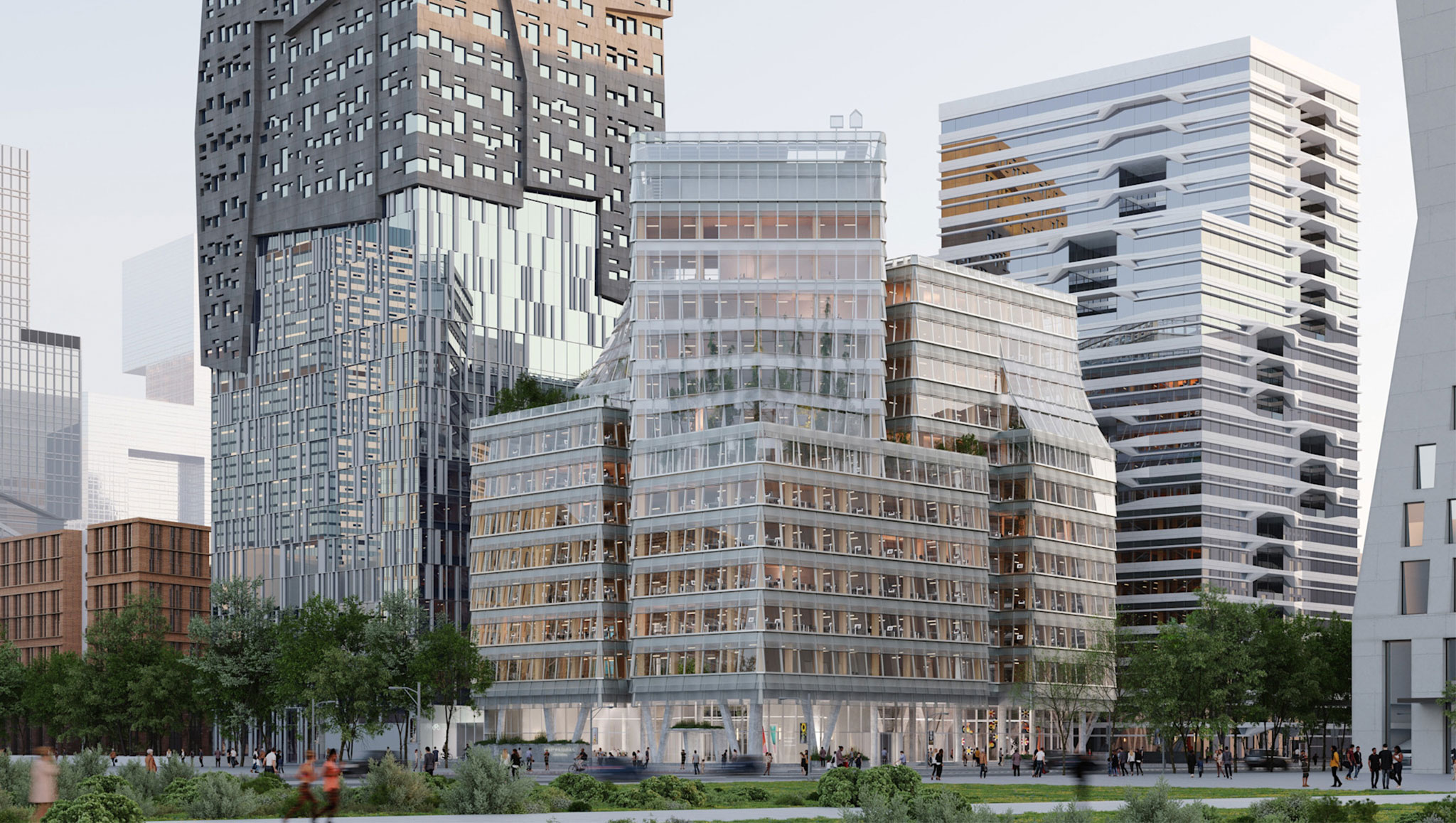
In a world filled with paint-by-numbers design, the work of Brooklyn firm SO-IL can often feel like a breath of fresh air. Its latest project, a 13-storey hybrid-timber office building in Amsterdam, carries that idea to the extreme, adopting a double-skin façade that incorporates three “Breathe Spaces” where the building’s glass outer layer slopes outwards to form lush, light-soaked areas that offer a buffer between indoors and out. Adding to its natural bona fides, the project generates 80 per cent of its energy from rooftop photovoltaics, incorporates 75 per cent bio-based materials (mostly timber) and features rainwater harvesting and greywater reuse.
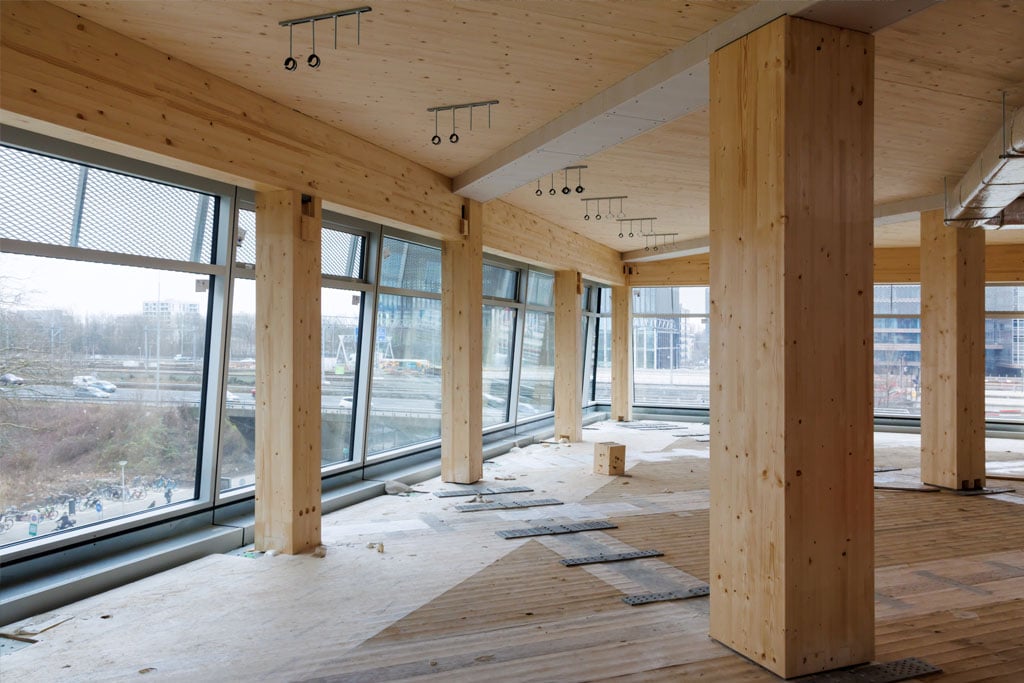
Banking group BNP Parabis and design firm Arcadis (which, along with INBO, served as CubeHouse’s Executive Architect) are set to be two of the building’s main tenants. But it isn’t just office workers who will benefit from the new landmark: Both the roof garden and the first floor (a collaborative events hub dubbed “The Cube”) are publicly accessible. Meanwhile, slanted support columns line the double-height lobby at the base of the building to animate the streetscape and confidently command a key corner of the city’s Zuidas district.
.
5
Samuel H. Scripps Theater Center at Hudson Valley Shakespeare by Studio Gang, in Garrison, New York
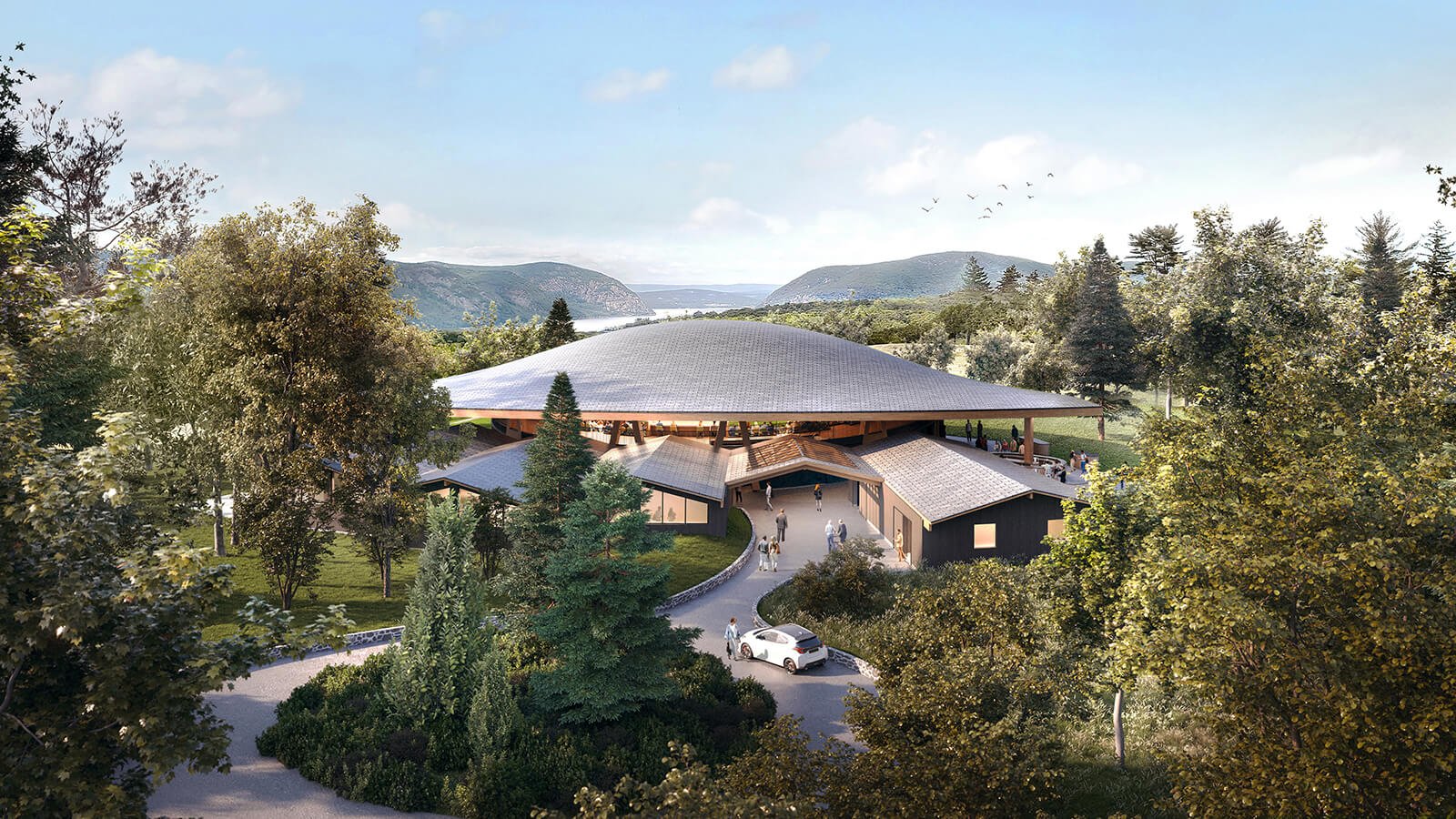
From the original Globe Theatre, built in London in 1599, to Hariri Pontarini’s Tom Patterson Theatre in Stratford, architecture has long played a central role in translating Shakespeare’s works from page to stage. With the Samuel H. Scripps Theatre Center, a new cultural destination just 90 minutes outside New York City, Studio Gang is poised to build on that legacy. True to the Globe’s open-air layout, the Hudson Valley Shakespeare company used to stage its productions in a seasonal tent overlooking the Hudson River. The new timber-framed design – which will be the first purpose-built, open-air theatre in the U.S. to achieve LEED Platinum, thanks to sustainable strategies that include PV panels, rainwater harvesting and natural ventilation – retains this al-fresco ethos, providing much-needed shade for the audience and actors while improving year-round functionality.
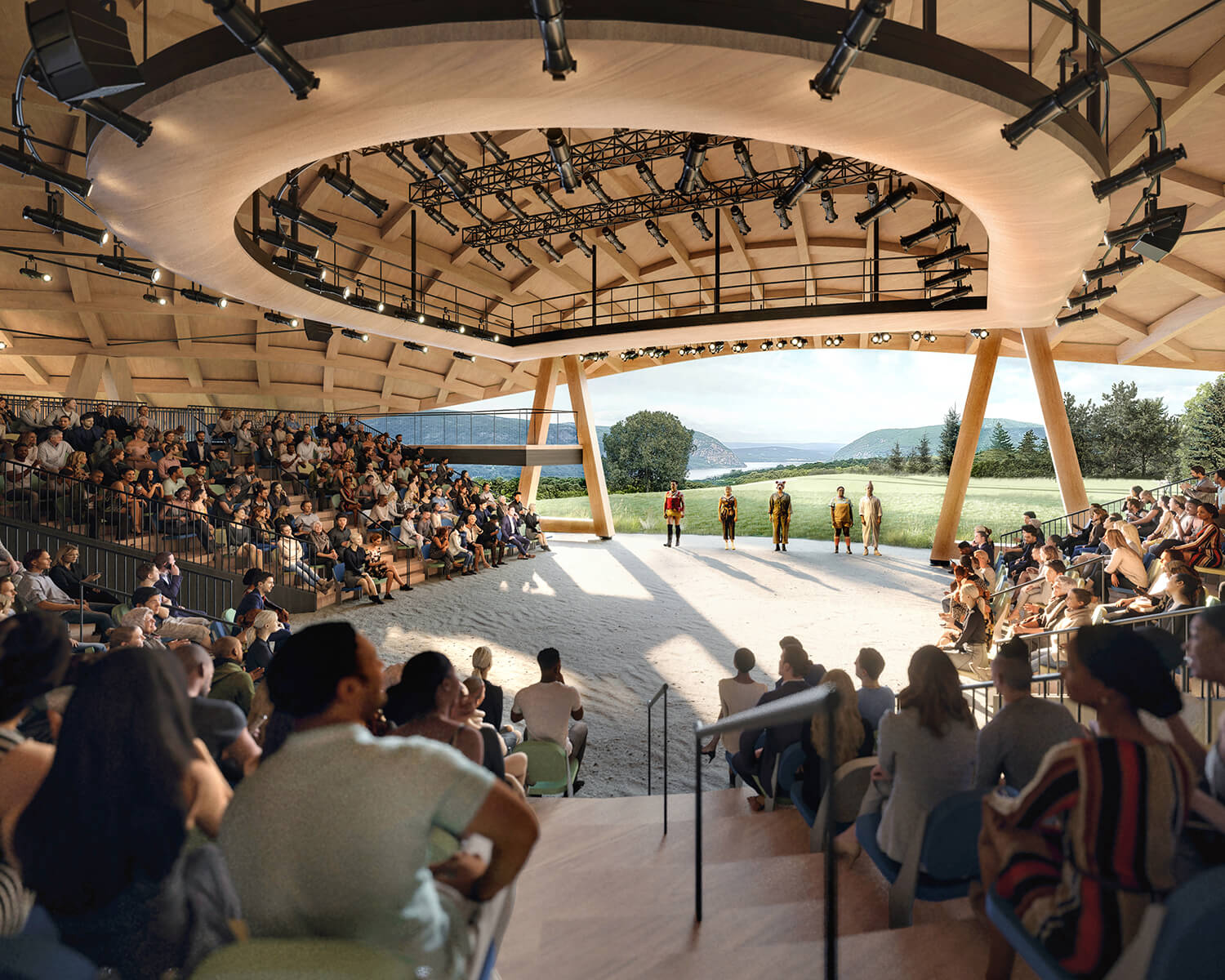
The experience will start at the entrance, where a series of accessible paths wind through the rolling highlands of native grasses, building a sense of drama as they guide patrons to the theatre. The structure is defined by its gently curved timber-framed grid shell roof, which evokes a tortoise’s shell (or, as Gang sees it, a wing of a bird). It meets the ground with A-frame columns that emphatically mark the entrance. The proscenium arch is carefully oriented to frame the ridge lines of the Hudson Valley and the river below. In this way, the landscape itself becomes a natural backdrop. All the world’s a stage, indeed.
.
6
Memphis Art Museum by Herzog & de Meuron, in Tennessee
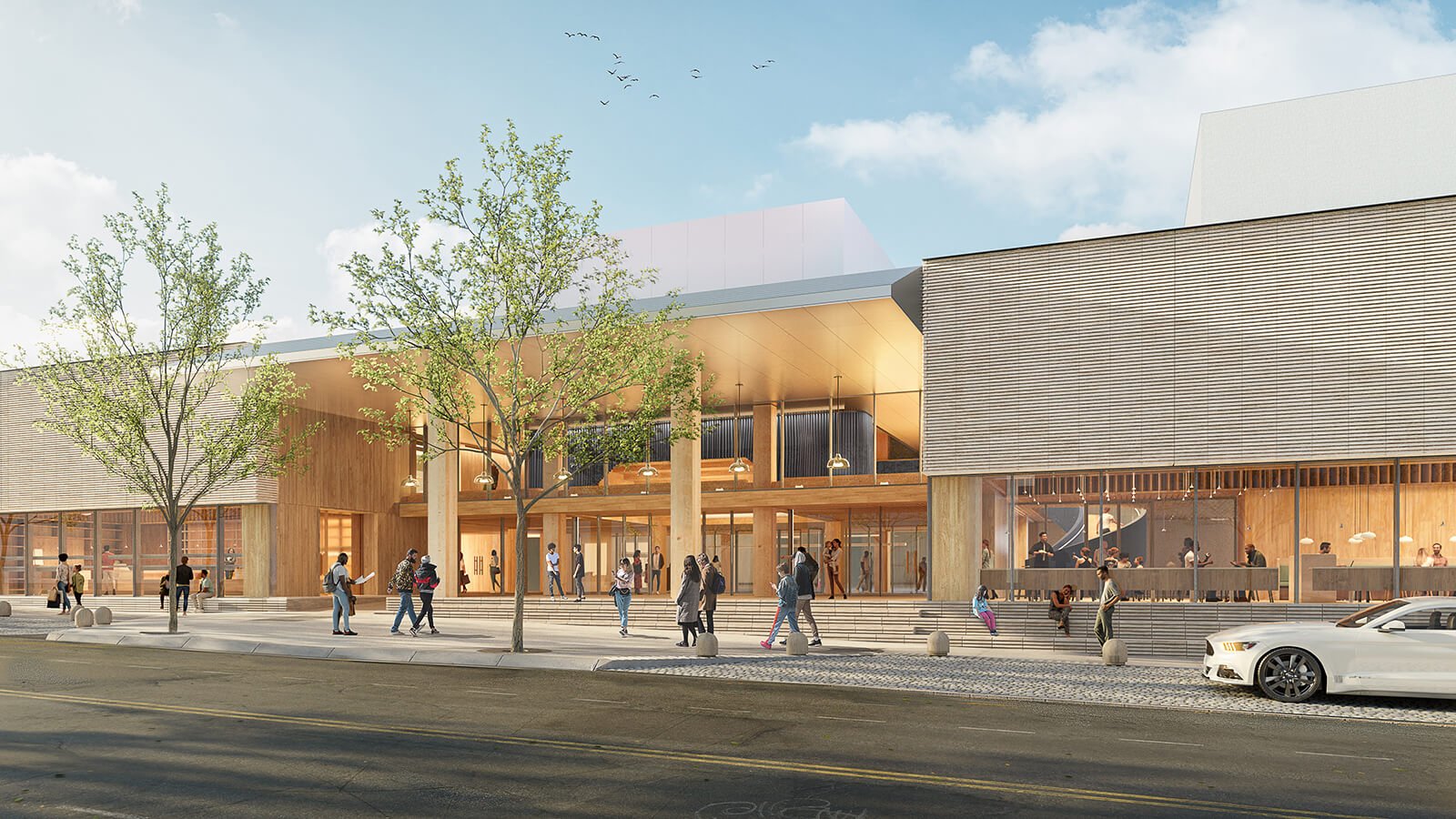
Herzog & de Meuron know how to make a statement. But the Memphis Art Museum, slated to open in December 2026, is proof that the Pritzker Prize-winning firm can also do understated. Rendered in natural tones inspired by the clay banks of the nearby river, the waterfront façade boasts a solemn, civic character; a long, horizontal “window” frames views of the Mississippi, a subtle invitation to come inside and explore. The street-facing elevation, meanwhile, is mostly glazed, blurring the boundary between the ground floor galleries and the sidewalk. It’s a fitting choice, given that accessibility is central to the museum’s mandate.
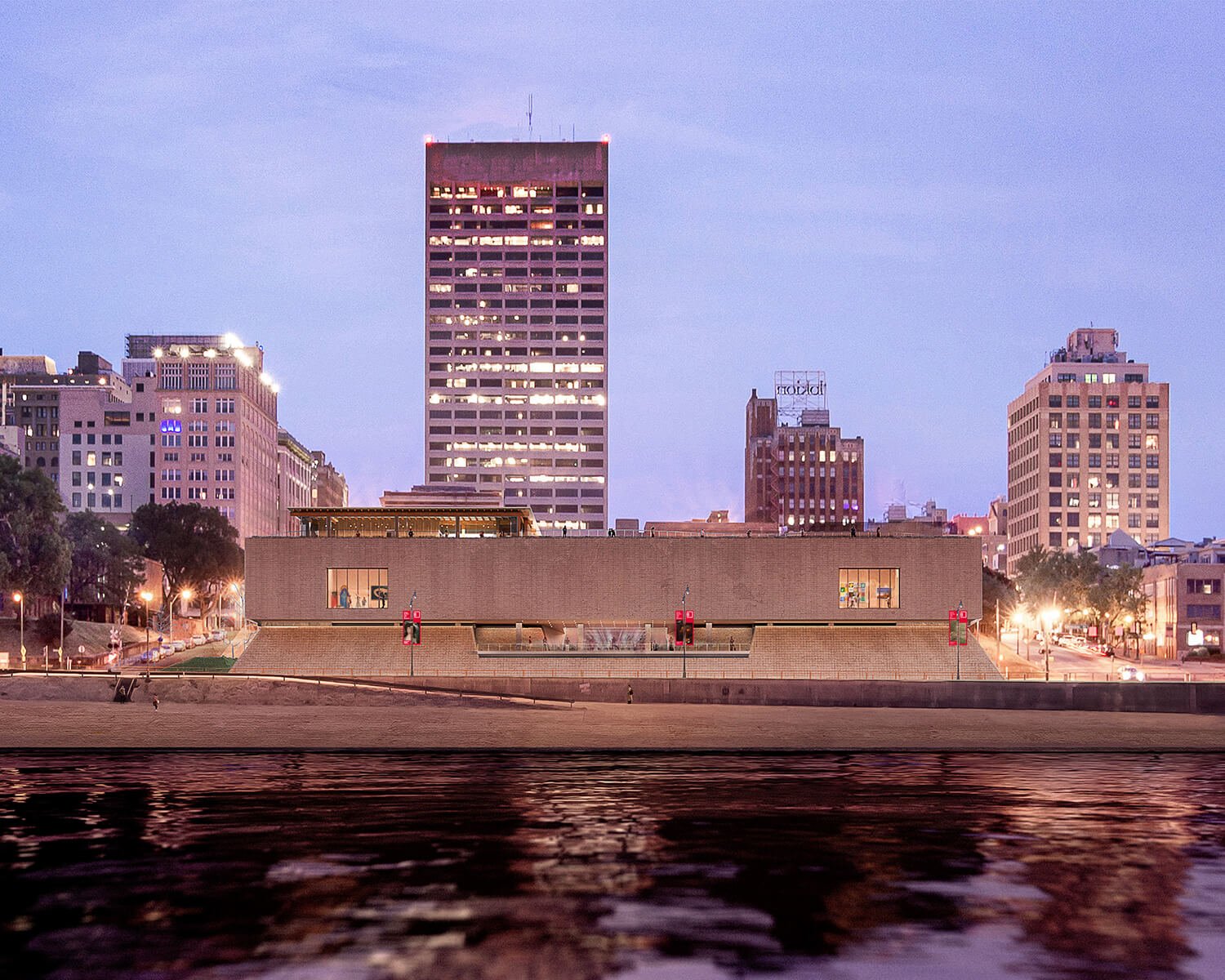
While the building’s architecture may be simple, its ambitions are lofty. Spanning an entire city block, the 11,300-square-metre cultural campus expands the original gallery space by 50 per cent, while providing 600 per cent more art-filled public space. The amenities extend to classrooms that host everyone from school groups to adult artists, a theatre, café and event spaces, allowing the museum to accommodate more than 400 cultural, creative, and community-based initiatives. Community will be the heart of this museum: the spacious, flexible galleries are organized around a shaded central courtyard where the public can gather, while a rooftop garden will combine a landscape of native plants (designed by OLIN) with an event pavilion, sculptures and, of course, sweeping vistas of Downtown Memphis — a gateway to the city beyond.
.
7
Lucas Museum of Narrative Art, by MAD Architects and Studio-MLA, in Los Angeles
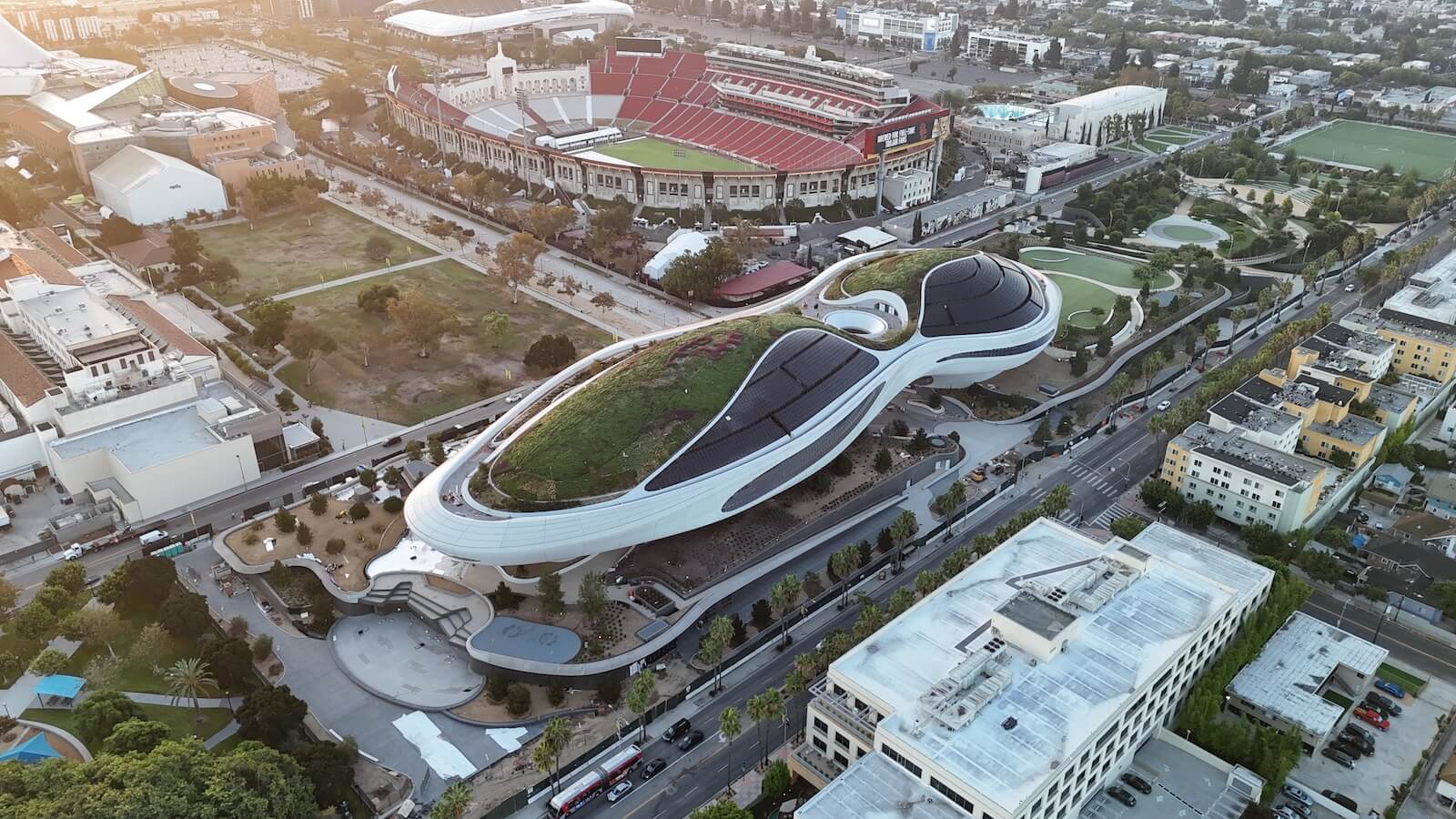
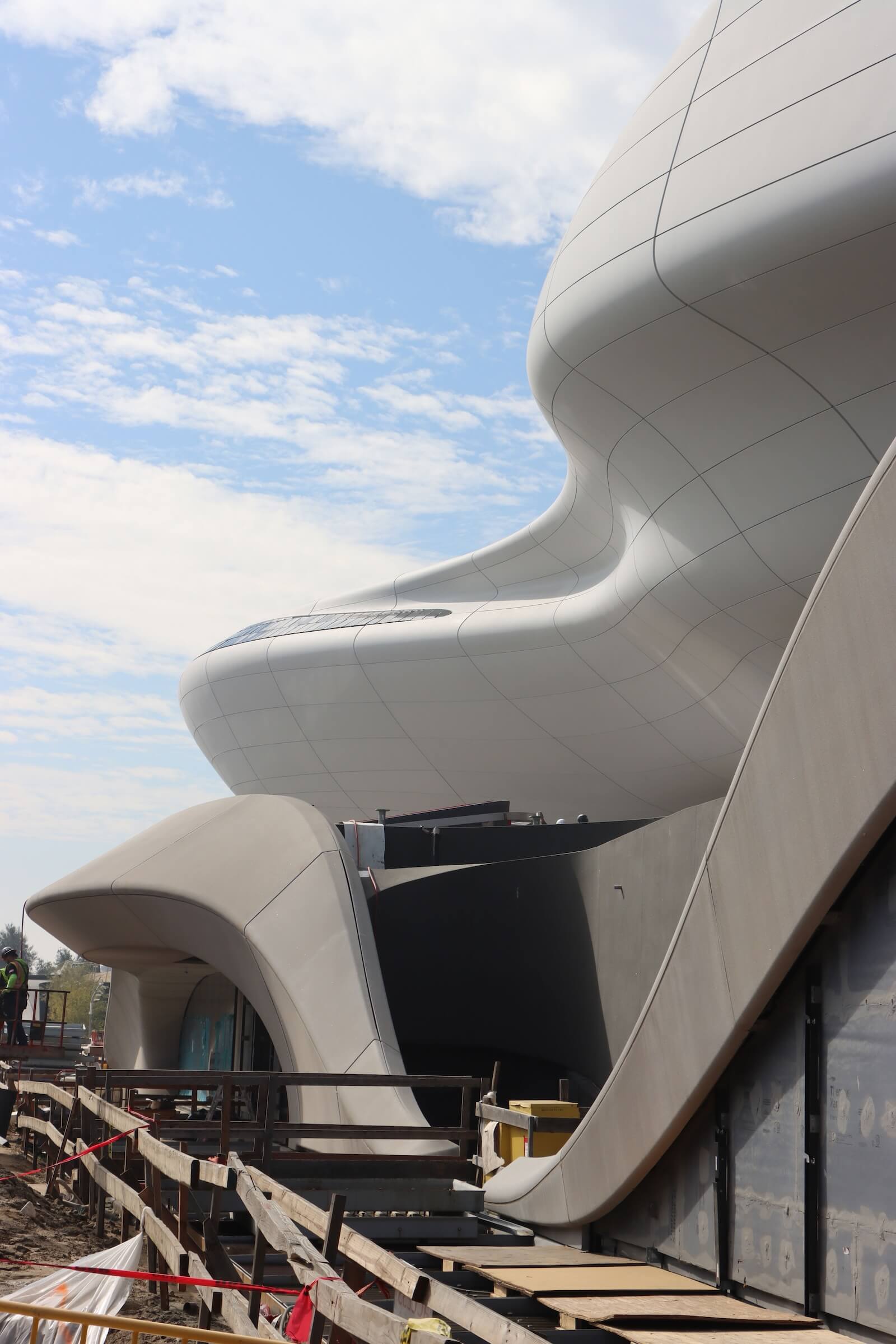
Darth Vader has traded in his glossy black helmet for a pair of sunnies. The Lucas Museum of Narrative Art, scheduled to open on September 22, features a biomorphic canopy that resembles futuristic goggles. Clad in more than 1,500 fibreglass-reinforced polymer panels, and partially planted, it floats above the entrance plinth–plaza to provide shade for those gathered below; a central oculus opens a view from the plaza up to the sky. The ground level, meanwhile, is integrated into the marvellous landscape by Los Angeles firm Studio-MLA.
What kind of day at the museum can visitors expect inside? The Star Wars director offers 35 galleries spanning 9,000 square metres with congenial themes like “love,” “family,” “community,” and “play.” They gather together 40,000 works “representing one of the most significant collections of narrative art” in the form of murals, comic art, sci-fi illustrations and fantastic visions “captured in 20th-century culture;” featured artists range from Norman Rockwell and N.C. Wyeth to Frida Kahlo, R. Crumb, Alison Bechdel and Dorothea Lange. But the main draw will likely be Lucas’s collection of models, props, concept art and costumes from his own movies – and a state-of-the-art movie experience to go with them.
Mia Lehrer and Studio MLA have designed an “ever-changing” environment that includes the park surrounding the building, as well as the roofscape. The variegated setting includes a hanging garden, an amphitheater, a meadow, and a fountain “conceived as a broad, dramatic waterfall.” With a landscape that is its own treasure to be discovered, the Lucas Museum is a blockbuster as futuristic, fantastic and crowd-pleasing as its namesake’s movies.
.
8
Los Angeles County Museum of Art, California, by Peter Zumthor & Partners and SOM
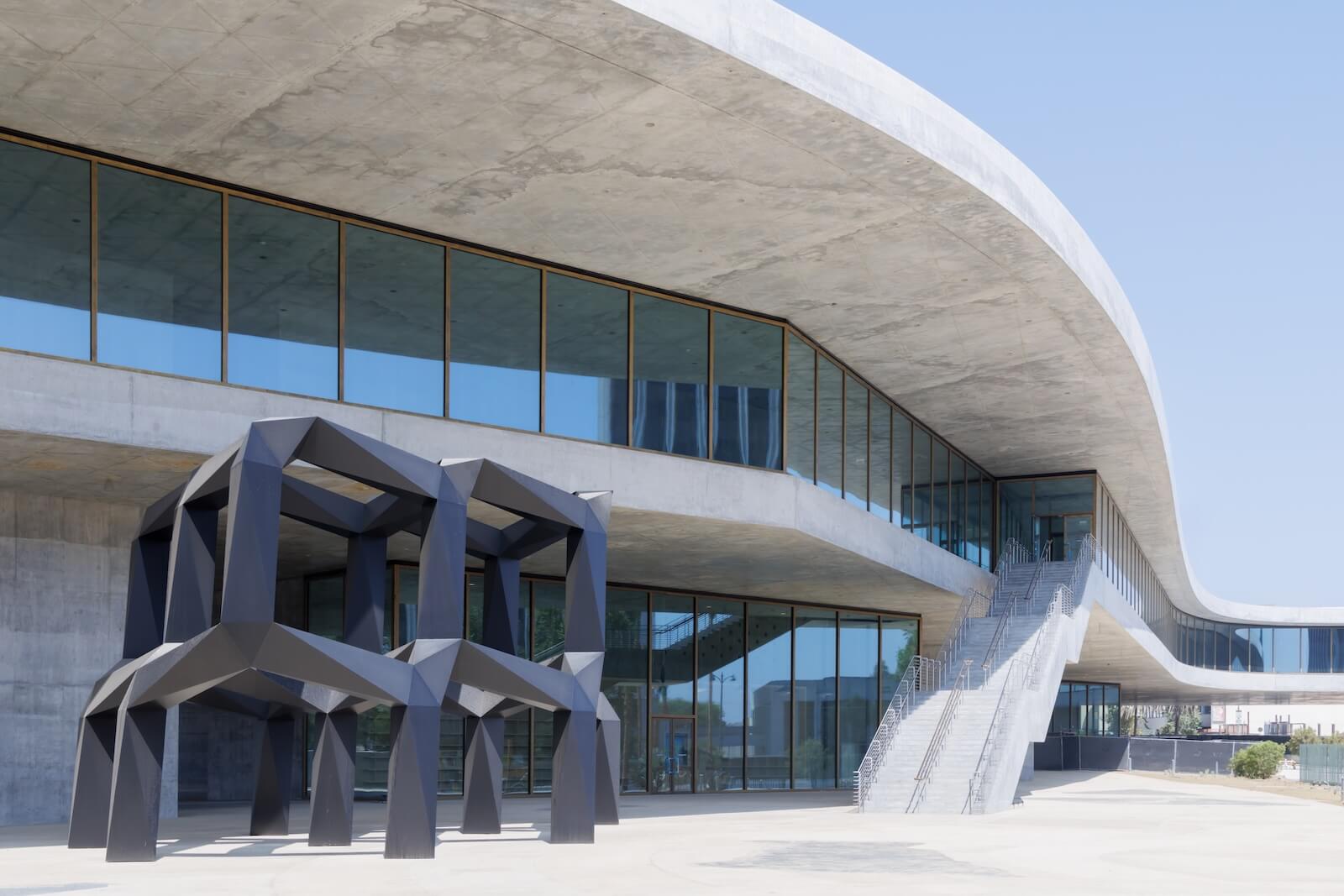
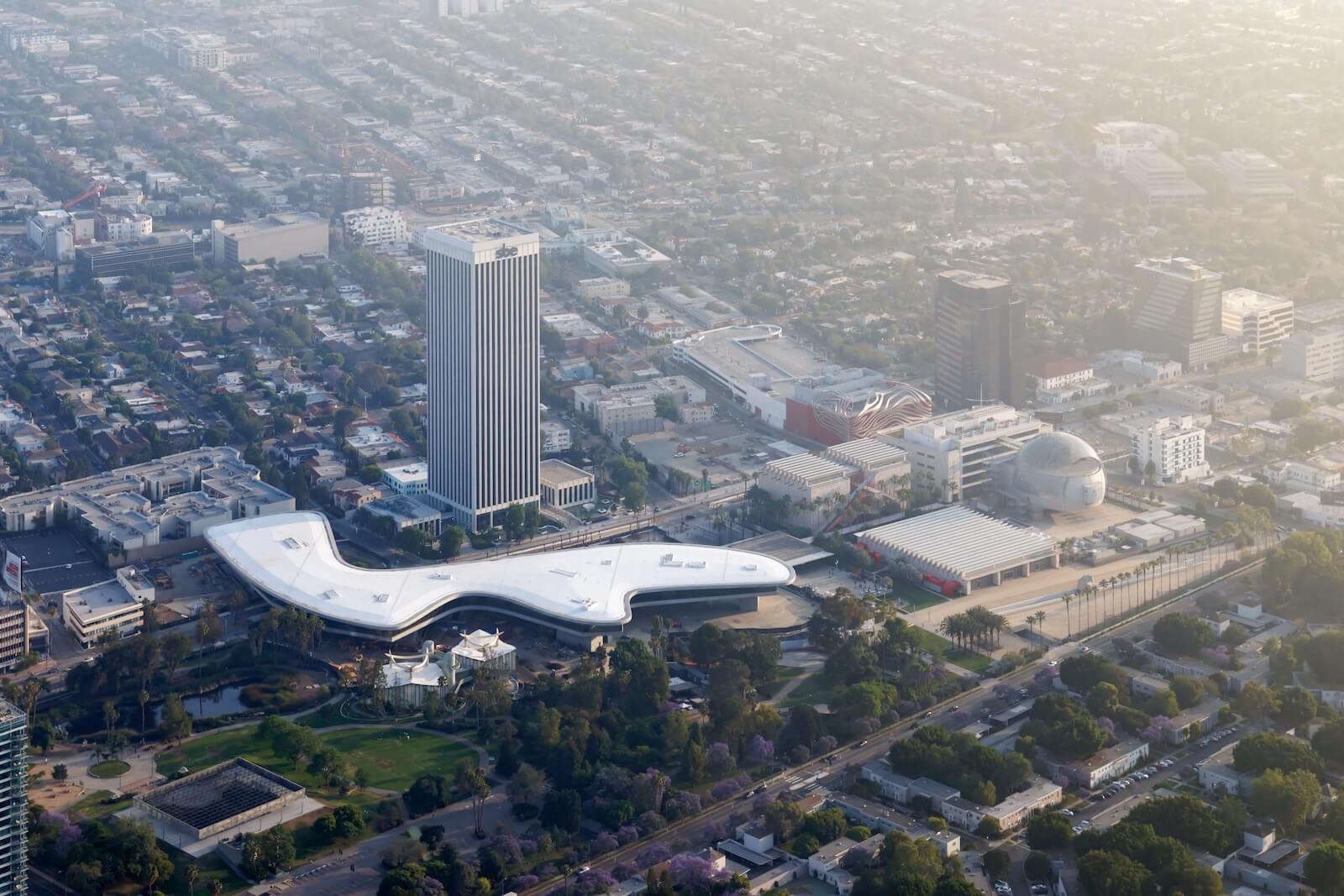
After nearly 20 years in the making, the new home for the Los Angeles County Museum of Art’s permanent collection will open its doors to the public in April. Designed by Swiss Pritzker-winning architect Peter Zumthor (with SOM as architect of record and structural engineer), the new building replaces four aging predecessors and represents a fresh approach to traditional curation and exhibition. At a time when the role of museums in urban landscapes – and life – is undergoing significant shifts, the David Geffen Galleries is an impressive reminder of the need for bricks and mortar cultural institutions.
Anchored at ground level by seven glazed pavilions (which contain guest services as well as educational spaces, retail and a theatre), the elevated exhibition gallery sits 9.1-metres above the street and presents itself as a singular slab of concrete. In reality, the engineering team deftly orchestrated more than 100 sequential in-situ material pours to achieve a consistent finish. (They also integrated a series of post-tensioned cables, ribs and walls to strengthen the spans and overhangs; 40 seismic base isolators along with dampers in the facade system further bolster structural integrity.) Wrapped in a full-height glass facade, the sinuous 274-metre-long structure features interior galleries that are intimate and refined and allow for a fully immersive experience.
Inside, custom stainless steel door assemblies and birch acoustic panelling and millwork complement the mono-material construction, providing warmth and texture while letting the artwork take the foreground. Specially designed concrete-encased galleries will display light-sensitive works, with a series of rectangular-shaped rooms dispersed along the horizontal plane to house other pieces from the collections. Contoured and cantilevered, the design of the new museum creates an unimpeded connection between the artefacts on display – which span a range of time periods, disciplines and geographical origin – and the visitors, inviting exploration, discovery and appreciation.
.
9
KING Toronto by BIG
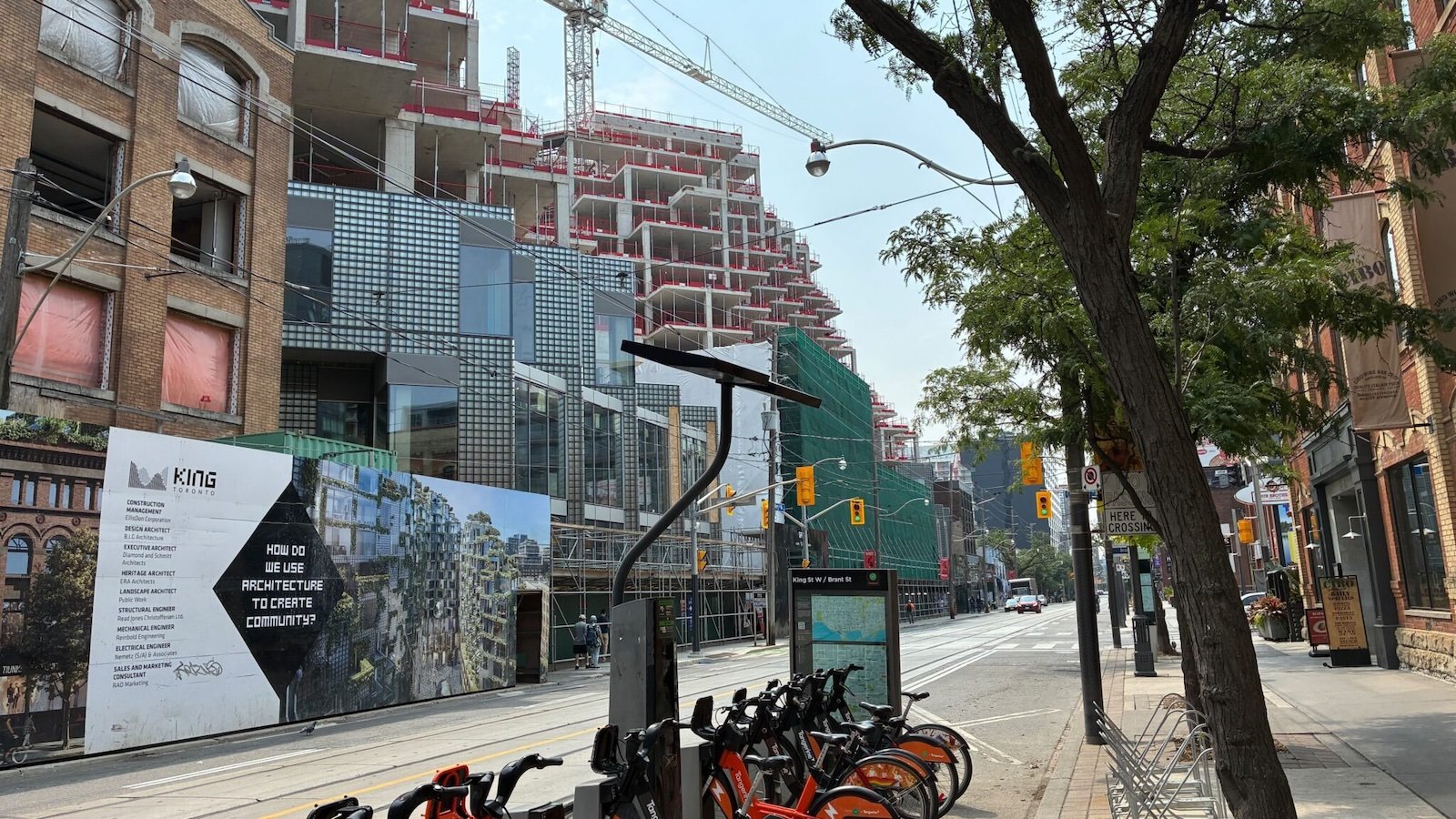
Much has been said and written about KING Toronto by BIG (including, obviously, in Azure). Over the past few years, the cuboid mountain has risen on one of the city’s most active downtown streets, inserting itself emphatically in a milieu of heritage buildings that today host trendy restaurants, boutiques and night-life locales. As the massing is completed and the curtainwall’s primary material – glass block – is beginning to wrap each unit, BIG’s ode to Moshe Safdie’s Habitat 67 looks as faithful to the original renderings as one could expect. Here’s hoping that the hanging plants also make their way across the peaks of the 500 residential units.
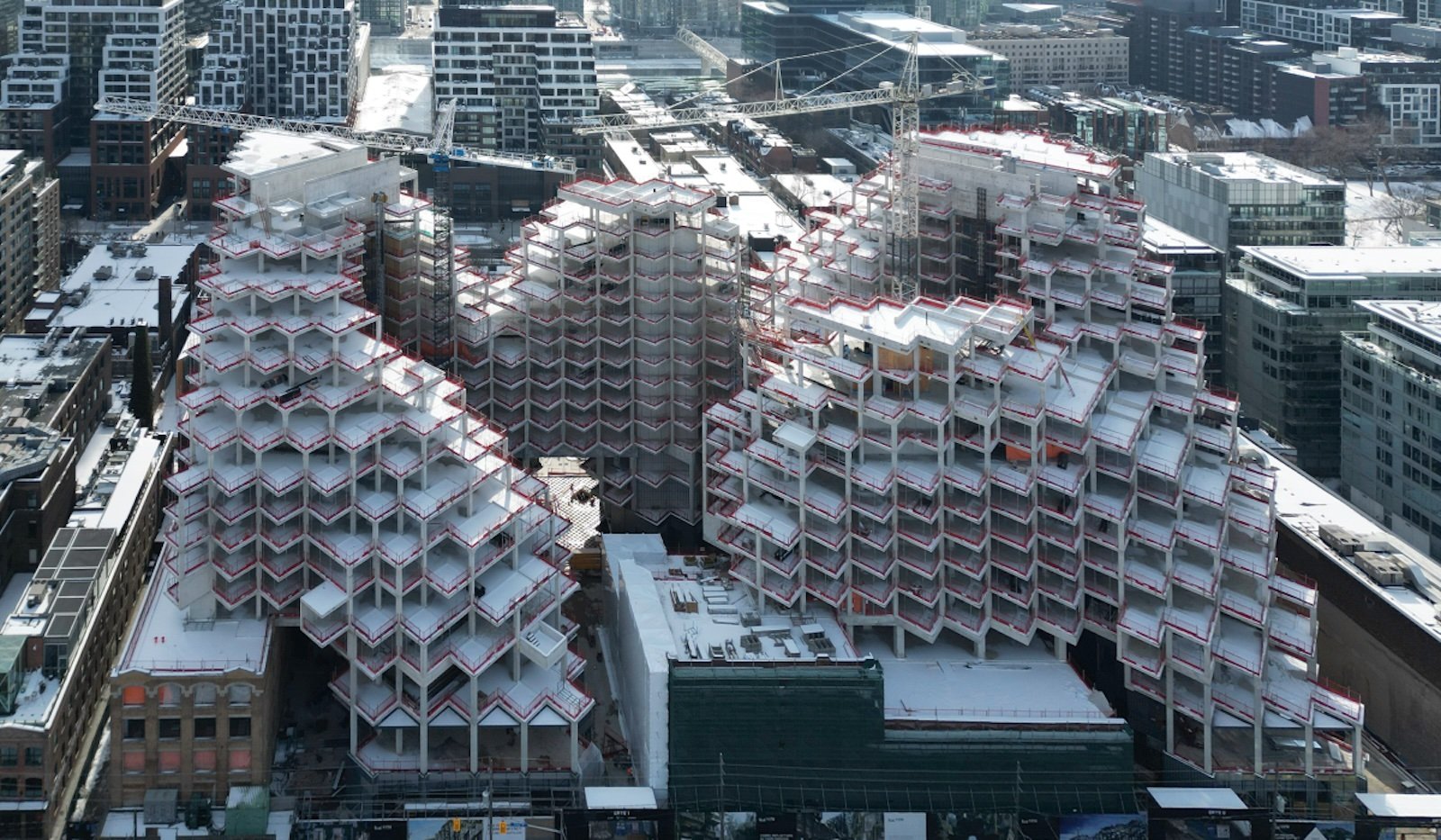
One of several marquee condos designed over the past decade-plus by high-profile international firms – Gehry’s Forma and Jeanne Gang’s One Delisle have also begun to be clad – BIG’s building stands apart as a mid-rise multi-unit that sprawls across its site rather than soaring from the street. It has more in common with Canadian firm Henriquez Partners’s Mirvish Village, also initiated by Vancouver-based developer Westbank, which is inching towards the completion of its first phase.
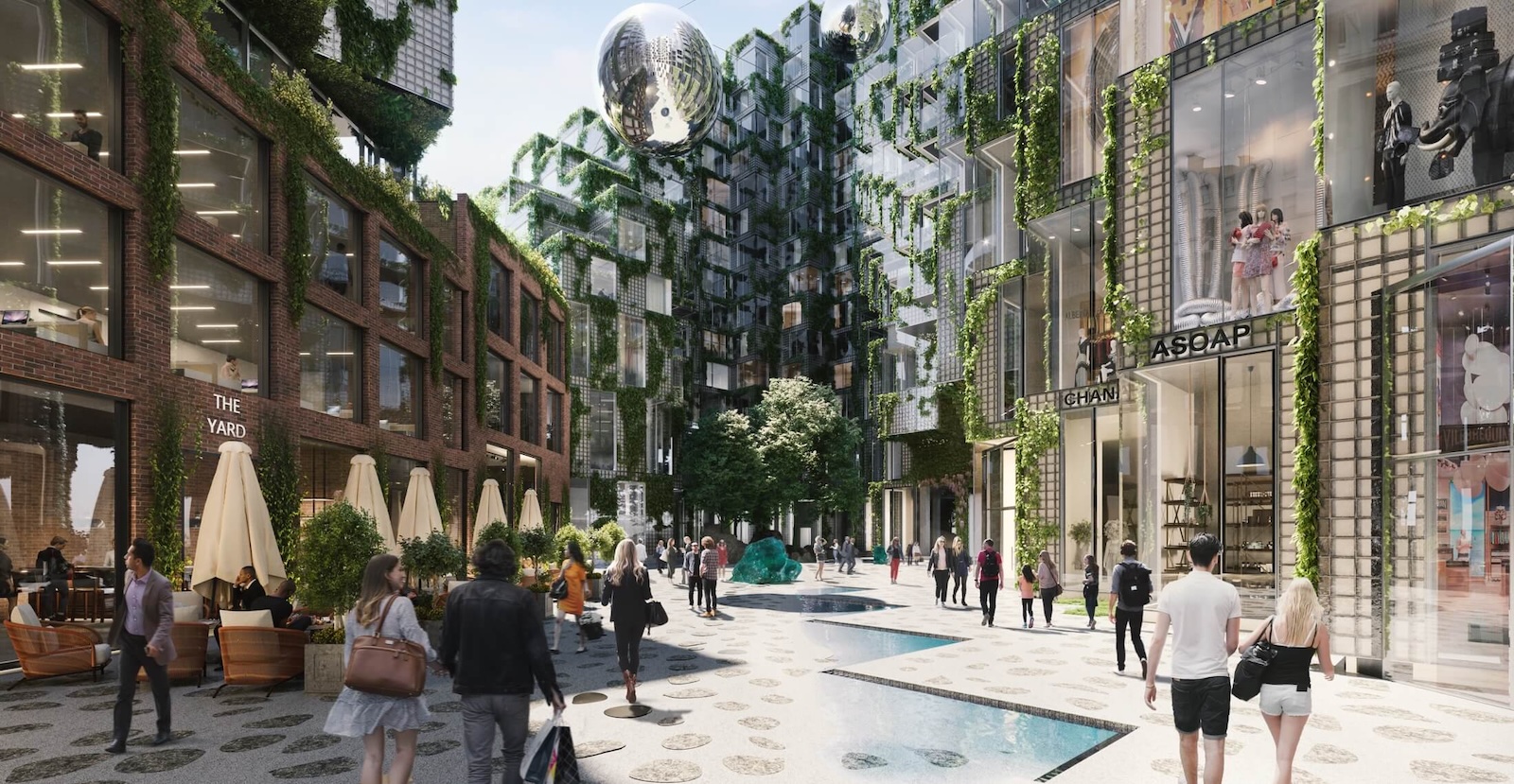
Like that similarly anticipated project, there’s a civic spirit at the core of KING Toronto (though one with a decidedly more upscale sheen, as one would expect from a property that already boasts Elton John as a future tenant). The development promises a 2,000-square-metre courtyard open to all, full of “seasonal markets, art installations, and public gatherings.” And its recently announced anchor tenant, Whole Foods, practically ensures the podium will be much more animated with shoppers than the typical Toronto development.
.

10
The MalDent Project, by John McAslan + Partners, in Blantyre, Malawi
A new landmark building is taking shape on the campus of the Kamuzu University of Health Sciences in Blantyre, Malawi. Designed by Edinburgh firm John McAslan + Partners, in collaboration with the Scottish Government and the university (as well as local craftspeople), the building will serve as the country’s first dedicated dental school and integrated teaching facility and is set to “transform the future of dental education and healthcare provision for the people of Malawi.” It’s a tall order, to be sure. But McAslan and team have proven up to the challenge.
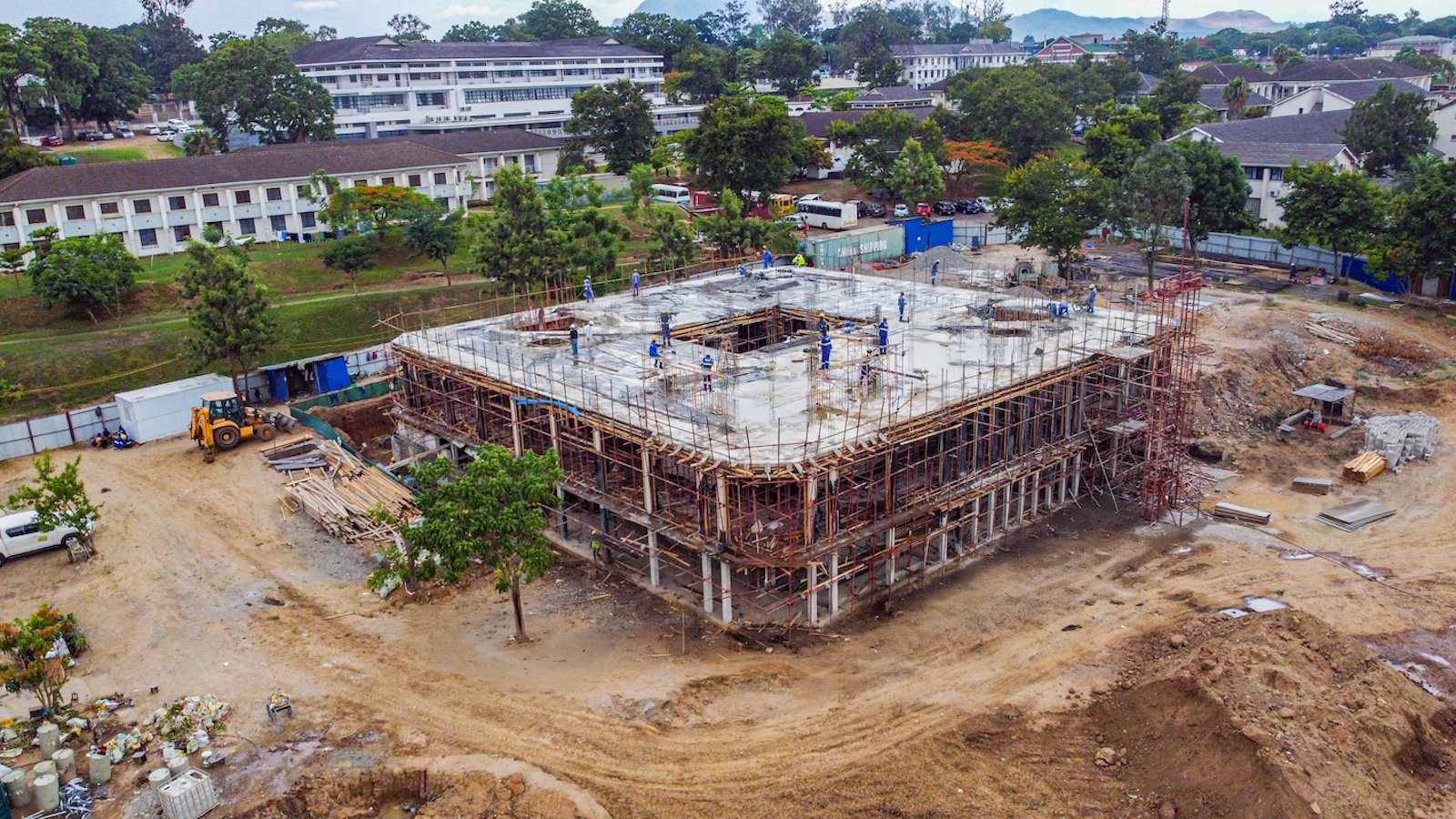
Clad in handmade, locally sourced red-clay bricks, the 3,350-square-metre building is at once unassuming and completely rooted in context. Expressing a tangible solidity and sense of permanence, the ruddy-toned facade of the nine-bay, four-storey structure will feature a series of 11-metre-tall brick fins that scale the elevations and lend dimension. Windows will be set back to provide passive sun-shading while also creating a dynamic interplay between sunlight and shadow. Inside, a central 115-square-metre atrium will provide students with a light-filled space to gather and interact; stepped seating made from local rubber wood introduces warmth to the informal assembly point. Learning resources and general teaching spaces sprout off from the agora, including a 100-seat lecture hall that can accommodate faculty-wide events.

A main component to the overall build is sustainability, with the facility incorporating passive design principles like natural ventilation to cool teaching and administrative spaces (air conditioning will be used only in clinical areas where hygiene and comfort are necessities), a solar chimney in the atrium, rainwater harvesting, super-efficient systems and locally sourced materials. John McAslan + Partners are also devising the surrounding landscape to properly respond to the 8-metre slope of the site: circulation pathways around the building will be complemented by native plantings to pleasantly enhance the campus setting. Scheduled for completion in the second half of 2026, the project will weave together environmental responsibility with Malawian identity and craftsmanship.
AZURE’s 10 Most Anticipated Projects of 2026
What’s on the horizon for the architecture industry in 2026? New museums, more mass timber and (hopefully) an Olympics hockey arena.