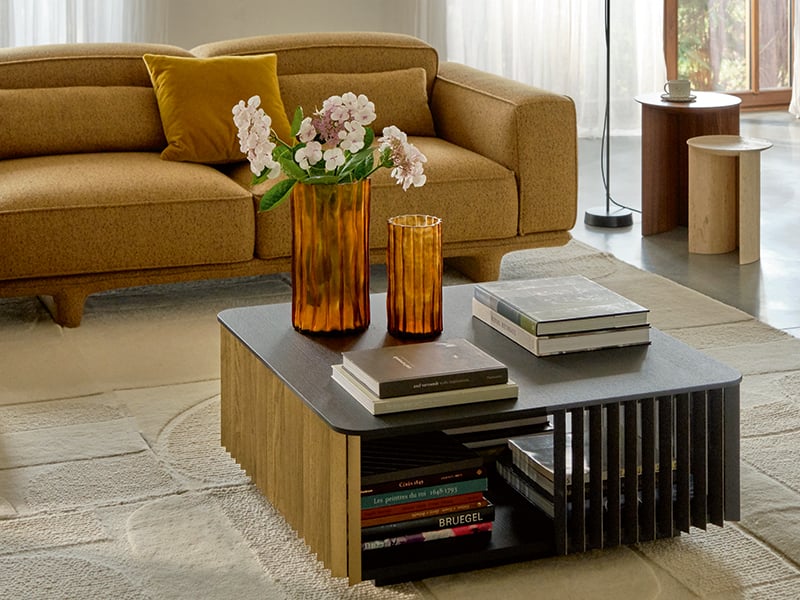
Prado and Prado 2
Designed by Christian Werner for Ligne Roset in 2014, Prado emerged from a simple yet powerful idea: furniture should adapt to the way people naturally live, rather than requiring people to adapt to furniture. Inspired by Henry Ford’s observation, “I don’t stand if I can sit. I don’t sit if I can lie down,” and Theodor Fontane’s belief that some people create their dreams when they cannot find them, Werner conceived Prado as an exploration of freedom, comfort and personal wellbeing within the home.
Unlike the traditional design process, where the development of a new sofa is often driven primarily by aesthetics, Prado began with the study of lifestyles and human behaviour. The collection reflects a desire to create a seating system that responds intuitively to everyday life, accommodating the many ways people gather, relax, work and unwind. In this respect, Prado shares the same human-centred ambition that informed Werner’s earlier Smala collection, placing comfort and adaptability at the forefront of the design.
At the heart of Prado is a generously proportioned upholstered platform that serves as both sofa and living space. The expansive seat can be used independently or combined with additional elements to create larger configurations tailored to the needs of a room. Rather than relying on a fixed structure, Prado is defined by its movable back cushions, which can be positioned freely across the surface according to individual preference.
These cushions are weighted and fitted with an innovative anti-slip system, allowing them to remain securely in place without attachment to a frame or backrest. This technical solution gives users complete freedom to arrange the sofa as they wish, whether sitting upright, reclining comfortably or stretching out fully. The cushions themselves can even be removed and placed directly on the floor, creating an informal lounge setting around a low table while maintaining the flexibility that defines the collection.
Prado’s versatility extends beyond conventional seating. By simply turning over the seat cushion, the sofa can transform into a twin size bed, revealing a reverse side upholstered in traditional mattress ticking. This thoughtful detail reinforces the collection’s nomadic spirit, allowing a single piece to accommodate multiple functions without sacrificing comfort or elegance.
Introduced in 2025, Prado 2 represents the latest evolution of this concept. While maintaining the collection’s emphasis on comfort and freedom, the design introduces a single-piece, ultra-soft quilted seat that offers an even more inviting seating experience. The elimination of stacked seat cushions creates a cleaner, more streamlined profile, shifting the focus away from the original bed-settee functionality and toward a refined contemporary aesthetic.
The quilted surface brings a sense of visual softness and cohesion to the design, while its generous padding provides exceptional comfort. Prado 2 can even be used without back cushions altogether, allowing the purity of the upholstered form to take center stage. In this configuration, the sofa becomes a simple architectural volume defined by elegant proportions, subtle quilting and understated sophistication.
Throughout its evolution, Prado has remained rooted in the idea that furniture should support freedom of movement and freedom of choice. By combining innovative comfort, remarkable flexibility and a design language centred on human behaviour, Prado and Prado 2 transform the traditional sofa into a platform for contemporary living — one that adapts naturally to the rhythms, habits and aspirations of everyday life.