

A house is often a testing ground for an architect’s more esoteric ideas. In a private residential project, provided it comes with a daring client, a practitioner can translate their philosophy to form and hone their praxis. For Hevia Poblete, the Chilean firm run by Guillermo Hevia and Catalina Poblete, the central parti is the “single section repeated.” In past projects, they’ve been able to stretch the limits of this minimal industrial language — literally: A recent commission, Casa Curva, snakes across its sea-facing terrain to capture views for every interior along its length.
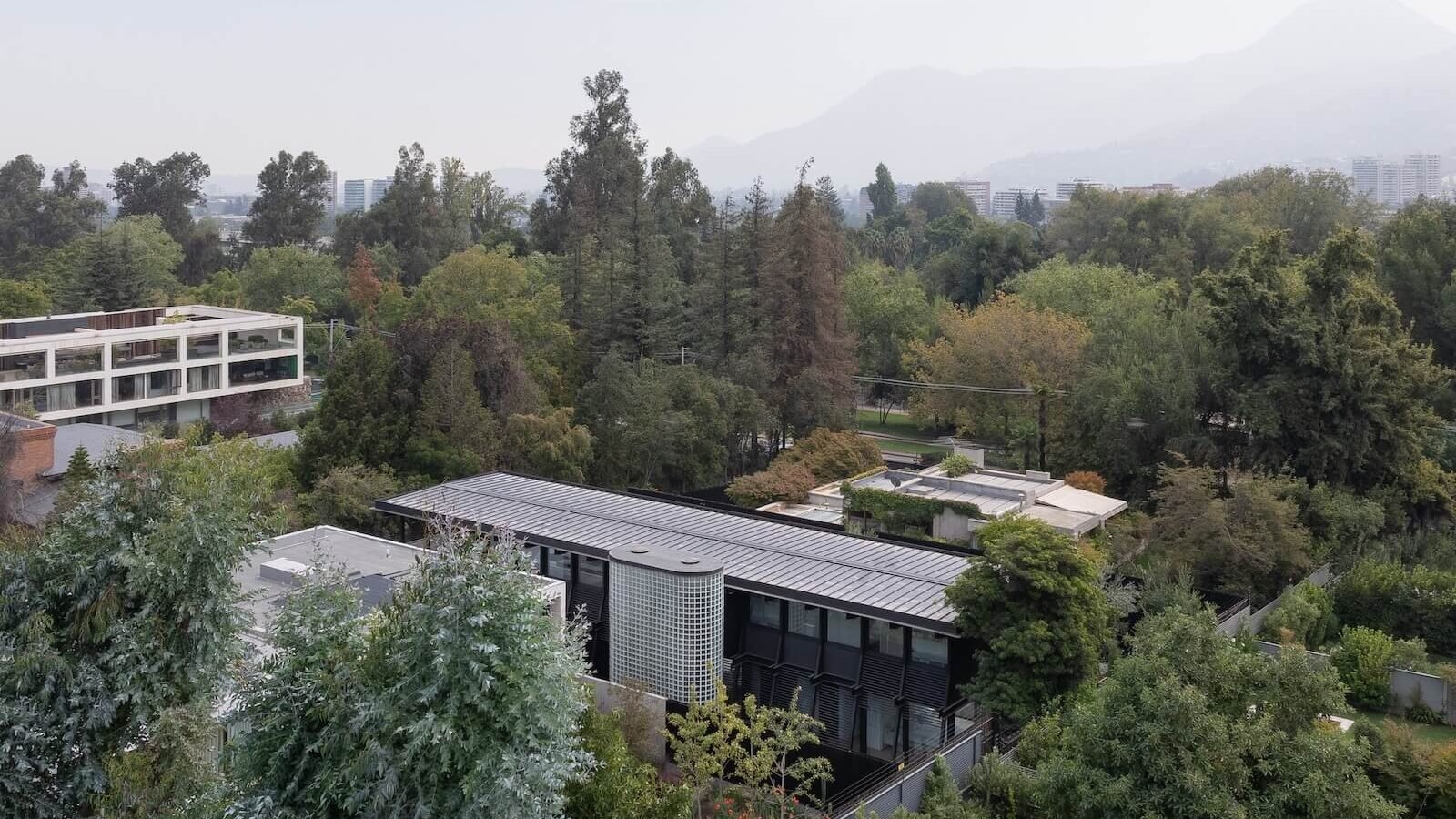
But that wasn’t the case when it came to the Centipede House, which, despite its name, is comparatively compact. That’s because it’s in the city of Santiago, Chile, on a still-capacious 700-square-metre plot nestled between two neighbouring houses. “We needed a different way, a different program,” Hevia says.
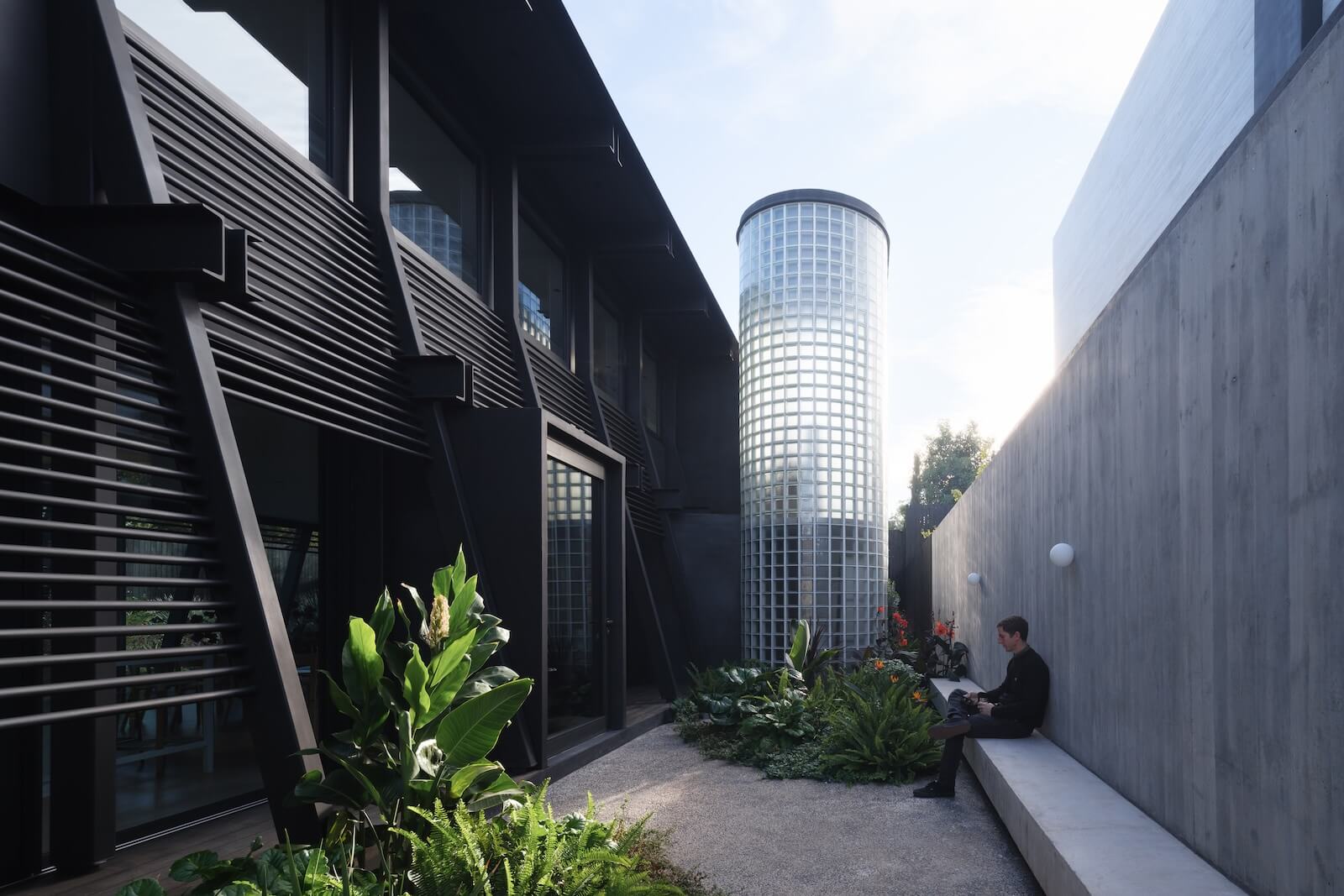
The obvious solution was to build up. Hevia Poblete was used to low-slung landscape-huggers as its typical residential commission. To envision a two-storey building on a decidedly more urban site, it adapted its design–build approach. The single-section repeated is, in its most basic form, a prefabricated system of a beam and column bolstered by a diagonal pillar. The upright and strut combine to create a scissor-like composition multiplied into a many-limbed body. The massing appears as a techno-organic exoskeleton, an evolution in the machine for living.

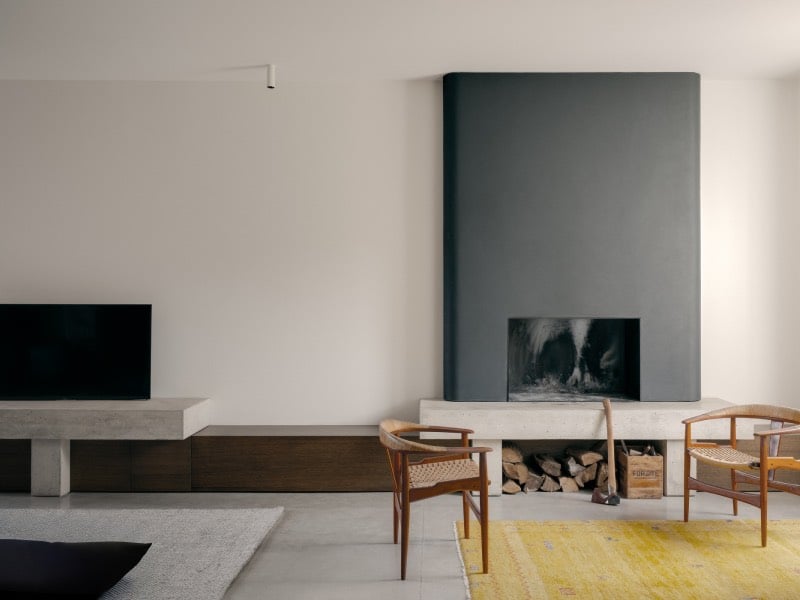
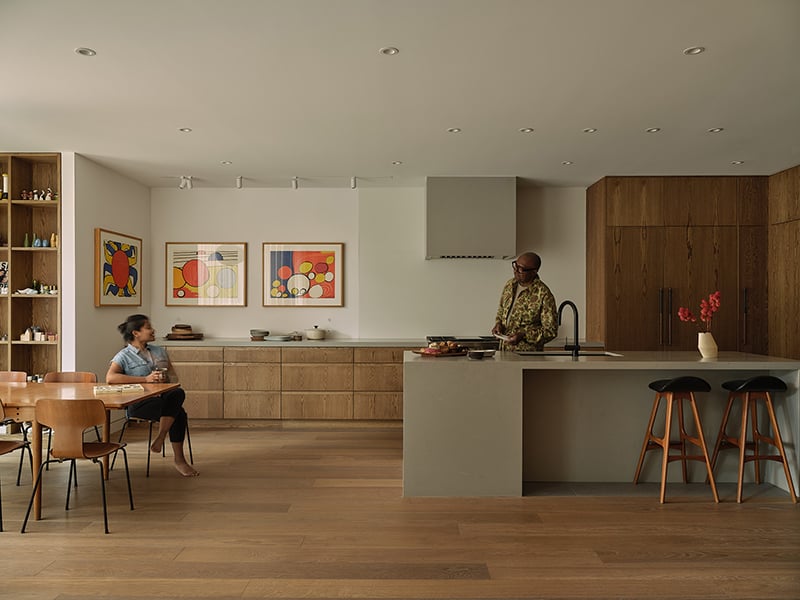
In the steel Centipede House, that linear repetition gains height. The ground floor contains the kitchen and dining area, the living room, a washroom and the primary bedroom; the last, accessible on all sides, lies behind an enormous walk-in closet (one of the clients is in fashion). The upper level contains the kids’ bedrooms and play area as well as an office and an outdoor terrace. All of the spaces are finished in white-painted knotless pine, which introduces a beachy vibe into this city abode. In fact, the house was conceived “with the logic of a vacation home” to encourage “more relaxed and ambiguous relationships” among its spaces.

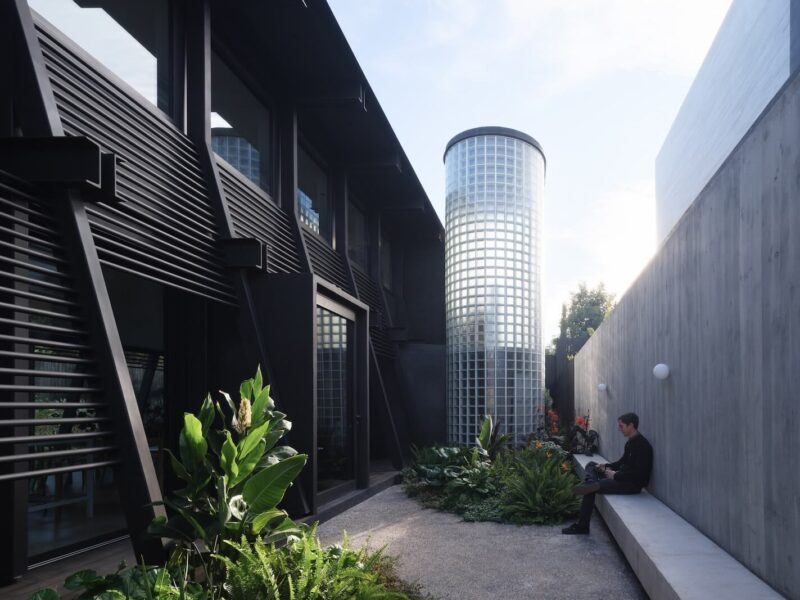
Connecting the two floors presented an opportunity to introduce yet another relationship to the mix. “We had to make a decision: whether to allocate the staircase indoors or to figure out another way,” says Hevia. “We decided to create a glass-block tower, which is very sculptural.”
In plan, the tower also delineates the division between the ground floor’s public zone — the living–dining area — from the private realm on the opposite end. Aesthetically (and happily), it adds a po-mo flourish to an otherwise rational residence.

Because the architects sited the 380-square-metre house lengthwise on the lot, they were able to create patios and gardens all around it. The ground floor, with its floor-to-ceiling sliding windows, opens onto landscape moments everywhere the home meets the outdoors: at the entrance, at the pool, and in the dedicated yoga spot. A botanical garden with olive and quillaja trees sweeps one entire side of the home. In the centre of these tropical plantings, the house also reads as a pavilion.

Hevia often describes elements like this, which soften a home’s character, as “exceptions” — a word that denotes a custom touch added to a prefabricated project. When he and Poblete were attending Universidad Catolica de Chile in the early 2000s, much of Chile’s architecture was characterized by “exceptions.” But what he refers to as “this very artisanal way of building” didn’t hold as much appeal to him as the type of architecture his father practised, mainly in commissions for large industrial buildings. “It became a familiar language to me: A lot of architecture works on the idea of hiding the structure completely. We embrace the idea of expressing it.”
Yet it’s the integration of bespoke variations that make Centipede House much warmer than it first appears — especially from the front, where it looks like a black metal box. But this aspect, too, can be seen as something of a folly: The roof floats above the second storey’s glazing (hidden from one’s ground-level view) to resemble a gift box. The glass tower, lozenge-shaped in section and housing a powder room, is also a custom creation that balances the whole. So are the louvred awnings that crown the glazing and provide both shade and privacy, and the decking in kiln-dried pine, tucked between the two pillars, that forms a friendly perimeter.

One of the home’s most delightful spatial programming solutions also bears out the home’s considerate character: Each of the kids’ bedrooms corresponds to a study space inserted along the second-floor corridor, a generous and thoughtful placement with a full view of the outdoors.
Centipede House is a variation on a theme — a sequel that thoughtfully builds on the original.


Hevia Poblete’s Centipede House in Santiago Makes Virtue of Repetition
The Chilean firm expands its portfolio of projects based on the single section repeated – with an urban house surrounded by gardens.