314
Current Issue

Jan/Feb 2026

#314
Jan/Feb 2026

The AZURE Houses issue returns in 2026 with stunning, innovative residential projects from Canada and around the world. Plus, we take a look at that seeming relic of the past: the mall.

Spotlight: Kitchen

Our Spotlight is all about great kitchen design, from projects to systems that we saw at EuroCucina.
Deborah Wang Kitchen
DesignTO’s Deborah Wang Revamps Her Friends’ Condo Kitchen
1/7
Brutalist kitchen by StudioTamat
In Rome, a Kitchen Reno Champions Modern Brutalism
2/7
Colourful office kitchen
These Office Kitchens Are a Case Study in Colour
3/7
HEAD Geneve exhibition at Alcova 2024
Two Alcova Exhibitions Pay Homage to Mealtime Traditions
4/7
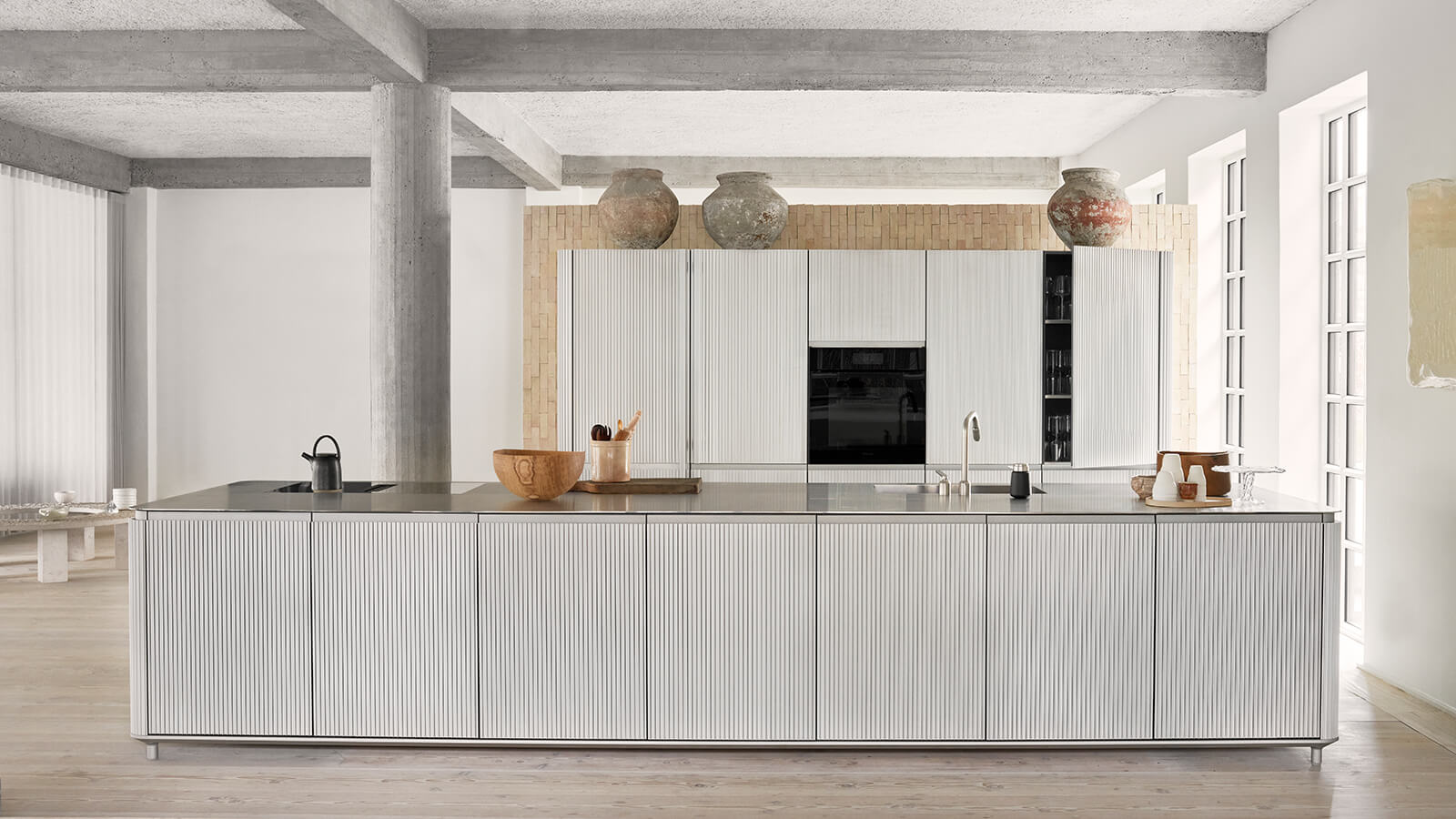
Vertical Groove kitchen system by Modulnova
4 Standout Kitchen Systems We Saw at Eurocucina 2024
5/7
Vipp V3 kitchen island launched at Eurocucina 2024
Eurocucina 2024 Trend Report: 4 Sculptural Kitchen Islands
6/7
Mantle by Signature Kitchen Suite appliances
4 Stunning Kitchen Appliances for Cooking and Cooling
7/7
Spotlight: Kitchen
Deborah Wang Kitchen

There’s an emotional connection to the kitchen table that’s quite unlike the one to any other piece of furniture. From intimate family meals to boisterous dinner parties with friends, it’s a setting for connection and comfort, a spot to share thoughts, creativity and celebration. It’s also where Toronto architect Deborah Wang and her long-time friends Andrew Sardone and Philip Sparks began chatting about the latter couple’s kitchen renovation. After living in their 84-square-metre, one-bedroom condo in a converted Victorian-era church in the city’s Junction neighbourhood since 2014, Sardone and Sparks had outgrown their kitchen in function and aesthetic. “It was a standard condo kitchen designed for a future unknown inhabitant,” Wang says of the formerly dated space with heavy granite countertops, dark brown cabinets and prominent appliances. “It was not a personal reflection of who Andrew and Philip are.”

Deborah Wang Kitchen

But she came to the project knowing very well who the couple are: Wang (who is also curator and artistic director of DesignTO) and Sardone met as teenage counsellors at the Royal Ontario Museum’s art and science camp, and they have remained close. Sardone, the editorial director of the Globe and Mail’s Style Advisor magazine, and Sparks, a menswear designer, tailor and professor at Seneca Polytechnic’s School of Fashion, have cultivated a taste for vintage design mixed with modern and contemporary selections. Knowing this, Wang set out to fine-tune the space to match the duo’s true identity and reflect how they use the kitchen.

Deborah Wang Kitchen

Working closely with the two on the overall design, she first removed the “big, old island that was docked against the wall.” Then, to rectify the lack of storage and take advantage of the nearly three-metre ceiling height (something the previous kitchen had not done), she called in millworker Terry Moore of Black Bear Woodworking to construct a custom floor-to-ceiling white oak cabinet (measuring 2.5 metres long by 0.6 metres deep) with an integrated and concealed fridge, pantry space and a supply closet. Moore also built a vintage-inspired hutch for display-worthy pieces and a fully stocked bar (with discreet access to the kitty litter on one end). White ceramic Delft tiles run from pantry to window and cover the range hood, adding a subtle sheen and texture, while the soapstone countertop and dark lower cabinetry serve as a grounding element.

Cabinetry

Other considered touches — like curated lighting fixtures and a floating shelf for the couple’s copper pot collection and other cherished vases, vessels and woven baskets — contribute to the harmonious blending of new and old in the reworked room, which now feels perfectly tailored to its owners. 

Brutalist kitchen by StudioTamat

The city of Rome is as vast and sprawling as it is ancient. And while the centre may feel like a living archaeological museum, once you move outward, the urban fabric shifts into a patchwork of modern housing blocks, Fascist Era monuments and lesser-known deposits of crumbling Roman ruins. Equidistant from the historic centre and the Lazio coastline is the small suburb of Tor de’ Cenci, a green lung on the metropolis’s southern periphery. It’s here, far from the hectic heart of the Italian capital, that a Sicily-born couple who work as a criminal lawyer and a financial consultant chose to set down roots in a 1980s apartment building.

StudioTamat

After discovering the Rome-based firm StudioTamat — made up of Tommaso Amato, Matteo Soddu and Valentina Paiola — on social media, the pair tasked them with reviving the 120-square-metre space, once defined by lifeless white tile floors and bulky built-in wardrobes. “The transformation of the apartment balances angular geometries and curved shapes within large open spaces,” says Amato, who demolished the home’s tired finishes to reveal its rough concrete bones. “We could call it modern brutalism, given the presence of raw reinforced concrete pillars and natural, textured materials such as terracotta, marble, iron and wood.”

StudioTamat

According to Amato, incorporating natural materials such as these was high on the client’s priority list. In the kitchen, they turned up in the form of a multi-functional 2.5-by-2.6-by-2.0-metre pale birch storage system that hides a pantry, wardrobe and TV unit. The hulking cuboid volume acts as a foil to the room’s oval central island. “The island was designed with a curved shape to contrast with the angular architecture of the building,” he says. “It was made of masonry, then covered with rough terracotta tiles, while the horizontal surface is made of Patagonia marble with a contrasting glossy finish.” The same dramatically patterned stone was used as a backsplash along the rear wall, where it is framed by flat-fronted white cabinetry for a crisp look.

StudioTamat

The kitchen’s custom furniture was also envisioned as a play of shapes. “The dining table was designed as the architectural synthesis of the entire apartment project,” explains Amato. “The angular form of the cross-shaped iron leg is reminiscent of the concrete pillars and beams, while the glossy cylindrical ceramic leg recalls the sinuous kitchen island.” StudioTamat then topped the table with a shou sugi ban burnt oak wood plank, which, they say, increased the wood’s resistance and, similar to the apartment’s stripped-back aesthetic, “accentuated its natural veins and imperfections.” 

Colourful office kitchen

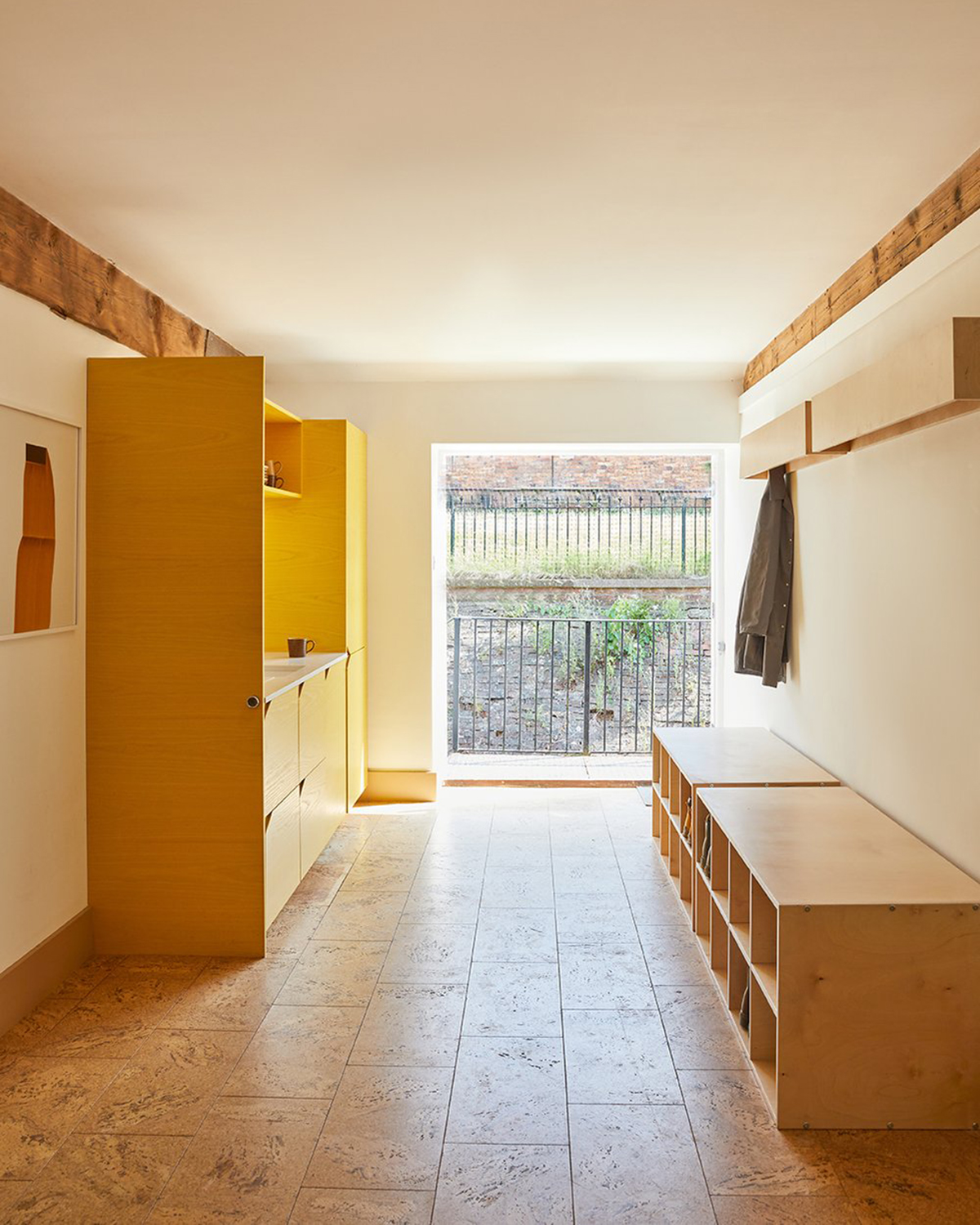
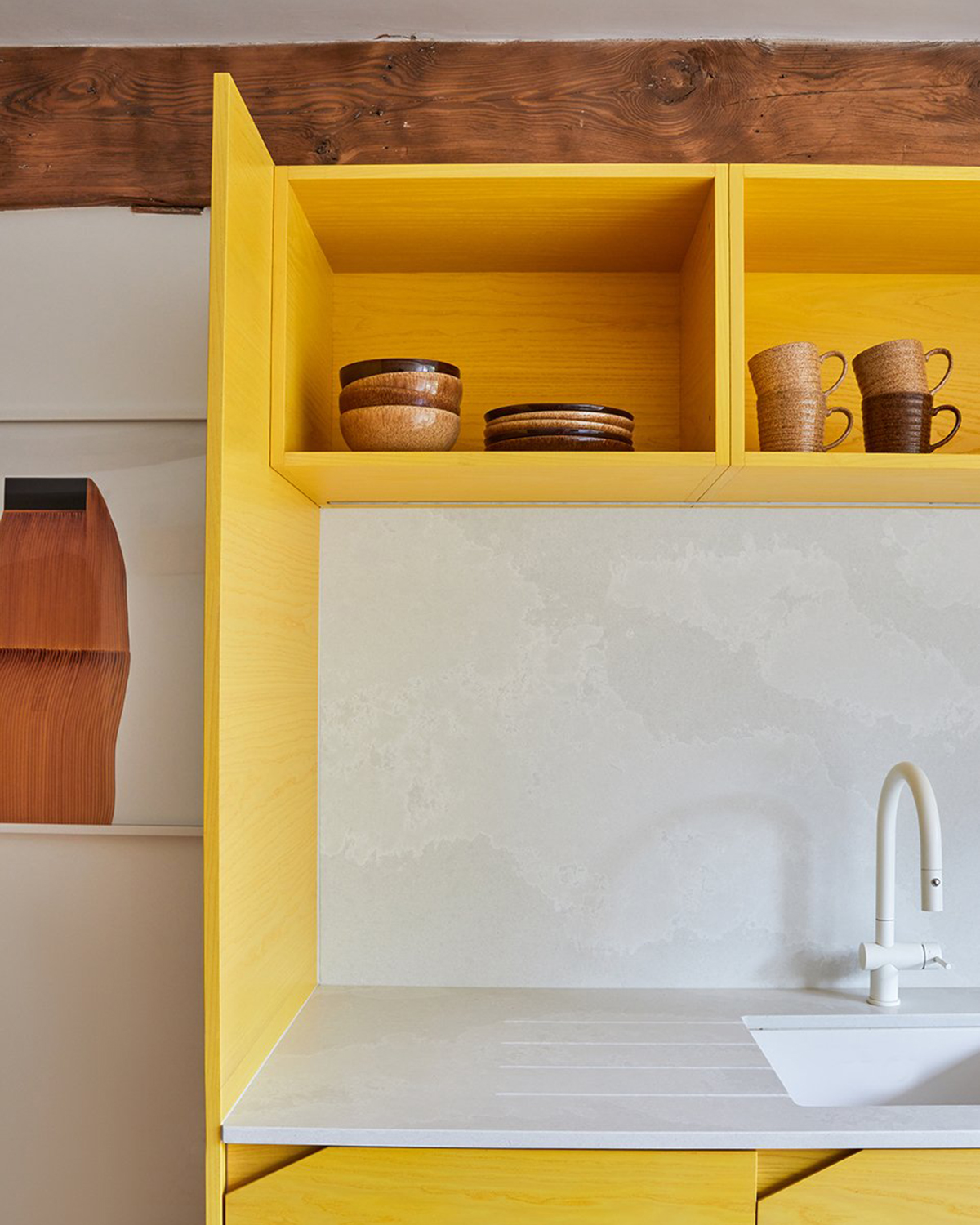
It’s rare that the kitchens in an office refurb are given the same attention as the rest of the project. Yet Studio Rhonda’s transformation of a listed early 19th-century malt-house in Banbury, England, into the HQ for design-centric pet accessory brand Omlet resolutely bucks that trend by turning them into warm and inspiring focal points. With their use of tonal pigmented colours and cohesive yet unique personalities, the project’s four kitchen areas “act like signposts,” explains Rhonda Drakeford, founder and creative director of the London-based studio, “so staff can say ‘Meet me at the yellow kitchen for coffee!’ ”

Studio Rhonda
Studio Rhonda

Drakeford referenced the rich palette of the existing vaulted space — its exposed rust-hued brick, raw timber trusses and generous natural light — when curating the project’s materials. The studio chose a rustic cork for the floors, more cork with hand-painted Indian ink murals for some of the walls, and English ash for the desks, doors, wall panelling, built-in seating, stairs and those four kitchens. “Ash has an almost luminescent colouring,” says Drakeford. “It’s pale but warmer and more characterful than birch.”

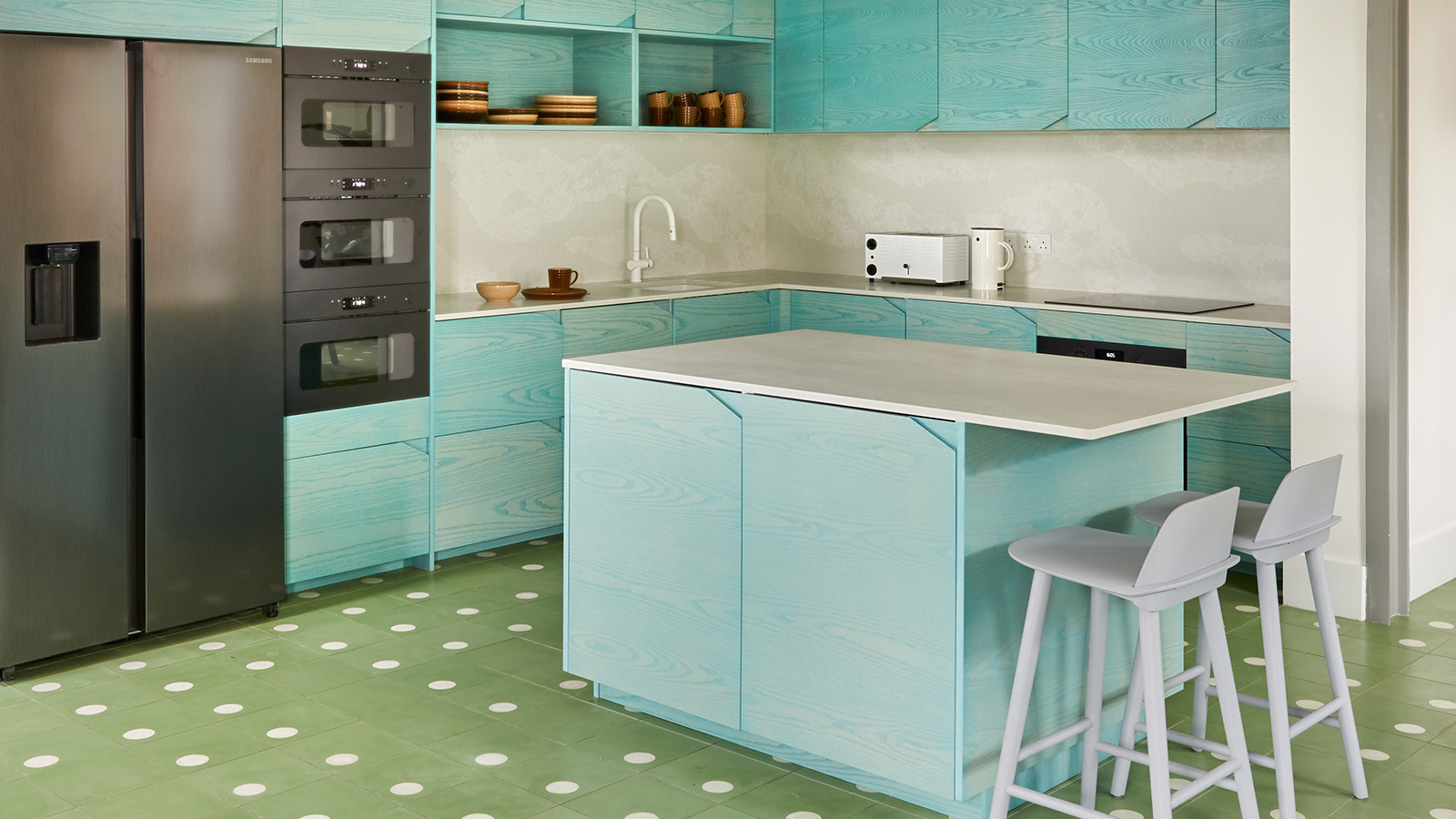
To create the kitchens’ distinctive look, Studio Rhonda worked with London-based kitchen designer Hølte Studio. A fan of its bold use of colour and structure, as well as its ability to adapt to different budgets, Drakeford was after “something homey, but with a twist.” For this project, Hølte used its signature Wood-E cabinet fronts with Ikea carcasses, incorporating bespoke elements such as open shelving and custom wood stains. “Each panel was individually veneered and the visible wood grains meticulously matched and aligned to ensure continuity across the space,” explains Fiona Ginnett, creative director and co-founder of Hølte. Matching the colour and keeping it consistent over “large flat areas” was particularly challenging, she adds, “but the outcome was rewarding in the end.”

Studio Rhonda

The hues for the kitchens — yellow, green, aqua and blue — were selected to work with the colour-coding concept and harmonious journey the practice had created for the overall space. The largest of the kitchens is located in the canteen, where Hølte also fabricated chunky green ash tops for the tables and benches designed by Studio Rhonda.

Studio Rhonda

To make the kitchens even more special, Drakeford was after a bespoke integrated handle. She had used circular motifs around the office spaces but wanted something more angular for the kitchens, as “circular handles would have been too repetitive at this scale.” Together, the studios came up with a concept that adapts some of Hølte’s classic cabinet pulls but is inspired by the geometric design language of Studio Rhonda’s well-known Split Shift tiles. Machined from solid ash and integrated into a veneer door panel, it’s functional but striking — and a great example of the kitchen designer’s ingenuity and innovation. Combined with Studio Rhonda’s intentional emphasis on grain visibility and immersive colour saturation, these kitchens provide real moments of joy, calm and surprise.

Colourful office kitchen by Studio Rhonda
HEAD Geneve exhibition at Alcova 2024

Place Setting

Decorative spoons on metal shelf
PHOTO: Pier Giorgio

Leave the shiny silver spoons to stiff upper-crust functions — any dinner party served with Natalia Criado’s plated brass cutlery seems like it would be far more fun to attend. In the kitchen of Villa Borsani (the more intimate of Alcova’s two Milan Design Week group exhibition venues, both former residences in the city’s Varedo area), visitors swooned over a selection of the Colombia-born, Italy-based designer’s geometric cutlery and serving utensils, which walk the line between functional tableware and elegant jewellery. While the designs reintroduce a certain sense of ceremony to mealtimes, their unexpected play of proportions feels more fanciful than formal. Rather than high-society tea, the collection is rooted in global craft traditions: Inspired by forms found in pre-Columbian civilizations, the made-in-Italy tableware engages the time-honoured skills of today’s artisans. With dainty, threaded handles that culminate in large quartz capstones, the pieces become delightful treasures — hence the collection’s name: Gems at Home.

Dinner at the End of the World

HEAD Geneve exhibition at Alcova 2024
PHOTO: Piergiorgio Sorgetti

While doomsday preppers are busy stocking underground bunkers, the subterranean backup plan doesn’t really work in
Venice. So, where to move once the city is submerged? Take the show on the road. That was the solution explored — semiseriously, at least — by interior architecture masters students at HEAD Genève (the Geneva University of Art and Design), who staged a spectacular post-Anthropocene vignette as part of Alcova’s exhibition at Villa Bagatti Valsecchi. Equal parts design exercise and theatrical performance, the showing imagined a world ravaged by the elements and a nomadic society in stiff competition for safe, habitable land — all kicked off by the 2084 sinking of Venice.

HEAD Geneve exhibition at Alcova 2024
PHOTO: Piergiorgio Sorgetti

As alarming as that sounds, the camp of surviving nomads (played by real people dressed in brightly coloured athleticwear) still seemed relatively well-adjusted. Inside one of their tents (draped in a wide circus stripe fabric), two of them faced off in a chess match. As for food? An accordion-like aluminum cart mounted on bicycle wheels unfolded to create a group table set with plates and several oranges. (Apparently those trees withstood the floods.) On the other hand, a second aluminum sheet–wrapped structure — a capsule-like cabinet stocked with a full dish set — was noted to be a trap planted by an enemy group. A cautionary tale of impending climate doom,
the installation was also a tribute to the perseverance of the human spirit. No matter how bad things had turned, people still managed to find a dining table to gather around.

Vertical Groove kitchen system by Modulnova

1
Vertical Groove by Modulnova

Vertical Groove kitchen system by Modulnova

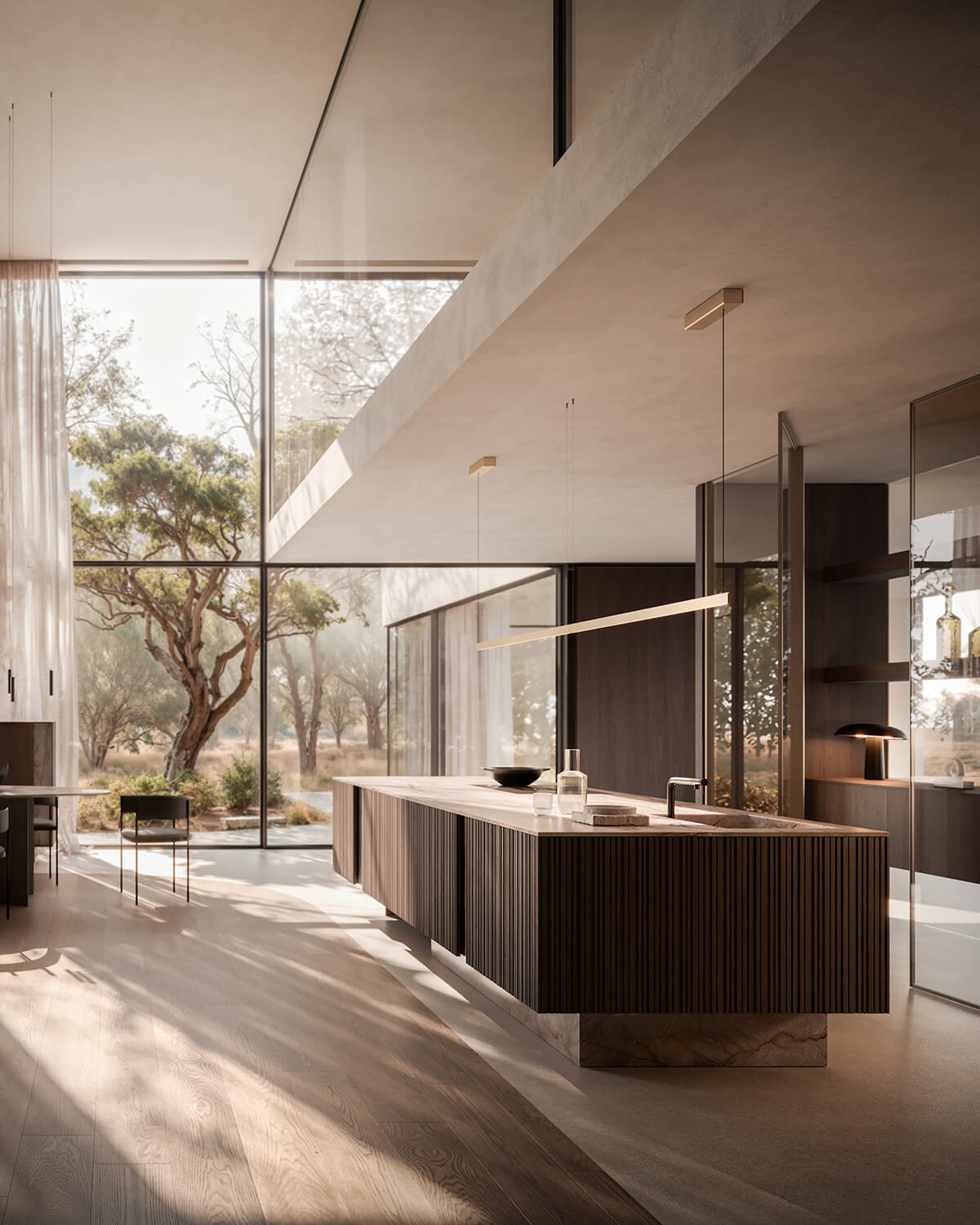
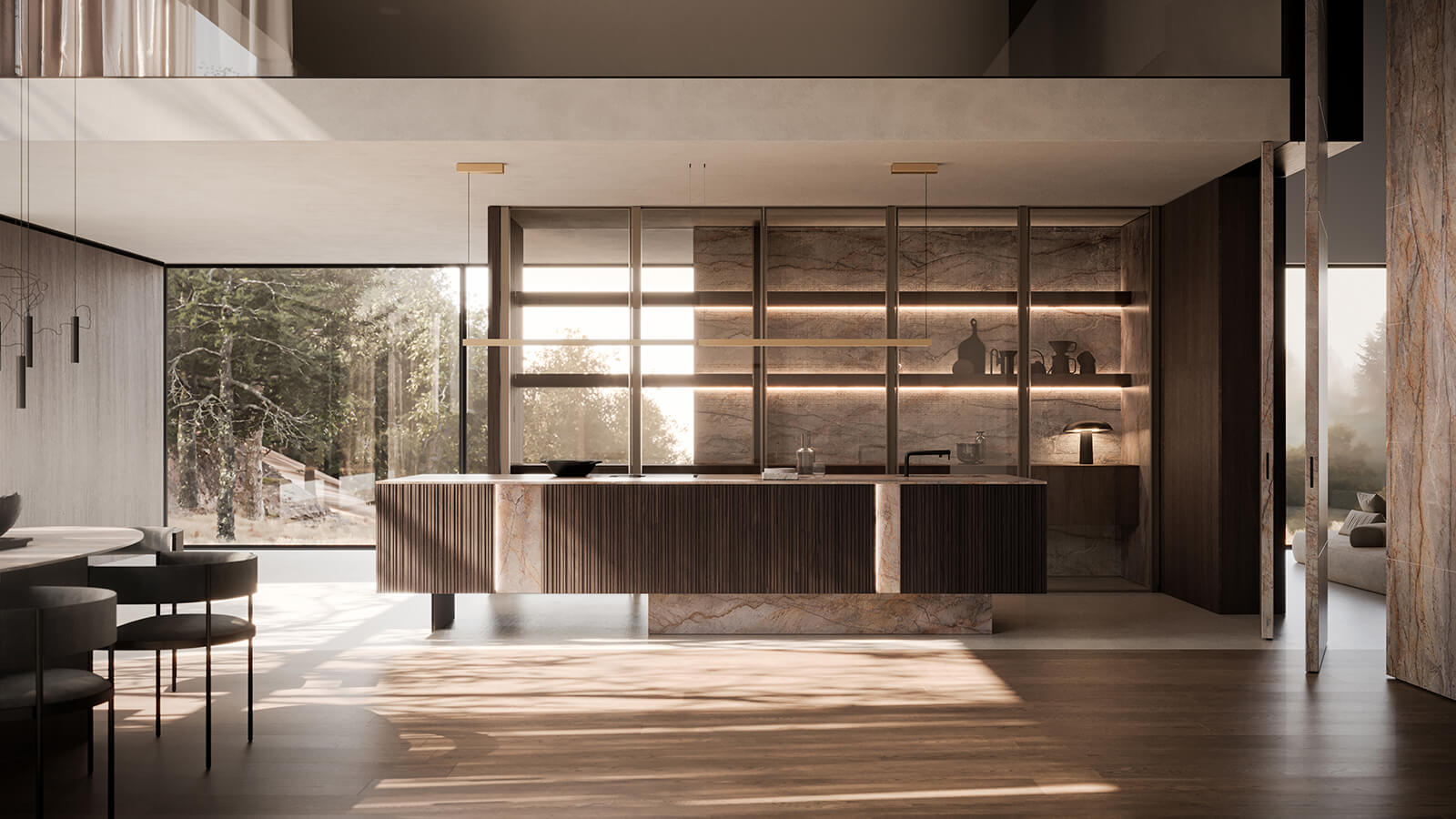
Combining walnut in a warm chocolatey Moka finish and an alluring Silver Roots marble countertop, the Vertical Groove floating island by Modulnova illustrates the appeal of natural materials. The textured wood panelling includes an innovative handle-free door opening system that maintains a sleek and clean-lined aesthetic, while the thickly streaked marble shows up again as a chunky plinth that lifts the island off the ground (with the help of a thinner double metal blade at the opposite end).

2
Poetica by Scavolini

Poetica by Scavolini

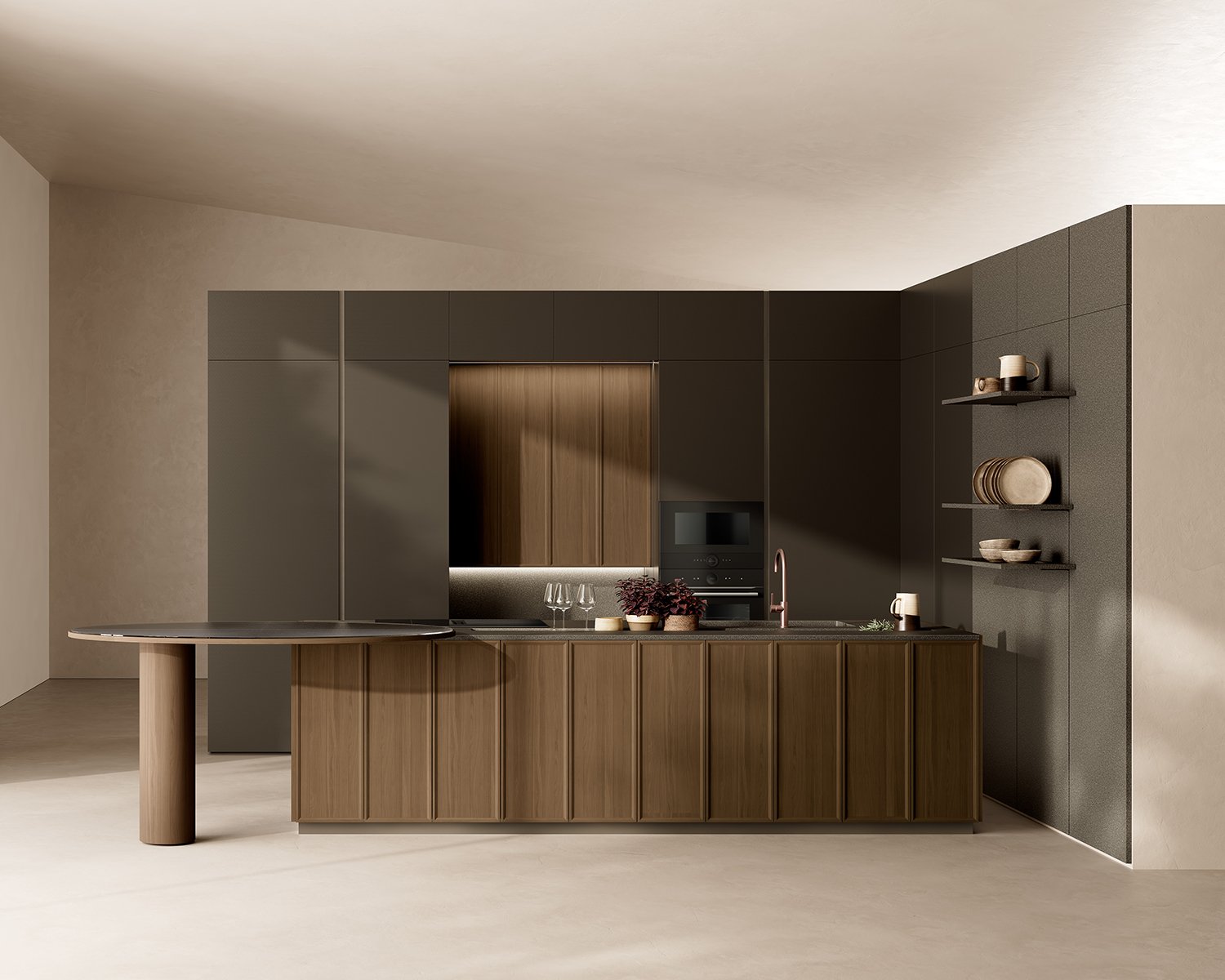
With modern-day proportions and retro-inspired framing on its ash panel doors, Poetica by Vuesse for Scavolini brilliantly harmonizes the past with the present. A round recessed-grip profile on both the base units and full-height cabinets (shown here with Space Black Microdecor PET doors) adds further architectural appeal, while the Vertical System of wall panelling provides an opportunity for open display.

3
Artex Pro by Poliform

Artex Pro kitchen system by Poliform

Finely balanced between classic and contemporary, the Artex Pro kitchen from Poliform has been augmented with an elegantly tapered countertop whose chamfered edge extends beyond its base to provide an intimate table. Solid fossilized elm wood has also been added to the materials portfolio; shown here on the full-height cabinet fronts, the precious antique wood features obvious graining that lends a natural sophistication.

4
Levitas Glass by Euromobil

Levitas Glass by Euromobil

A transparent counterpoint to the all-wood kitchen, Levitas Glass (with base, wall and freestanding tall units), designed by Italian architect and Euromobil art director Roberto Gobbo with the brand’s R&D team, was inspired by the lightness and fluidity of air — with an emphasis on sustainability. From the lightweight aluminum frame (in lacquered aged brass) and ultra-clear glass panels to the natural white oak details and chunky creamy-grey Taj Mahal quartzite worktop, all elements have a handsome bespoke quality.

Vipp V3 kitchen island launched at Eurocucina 2024

1
Nami by Eggersmann

Nami kitchen island by Eggersmann, launched at Eurocucina 2024

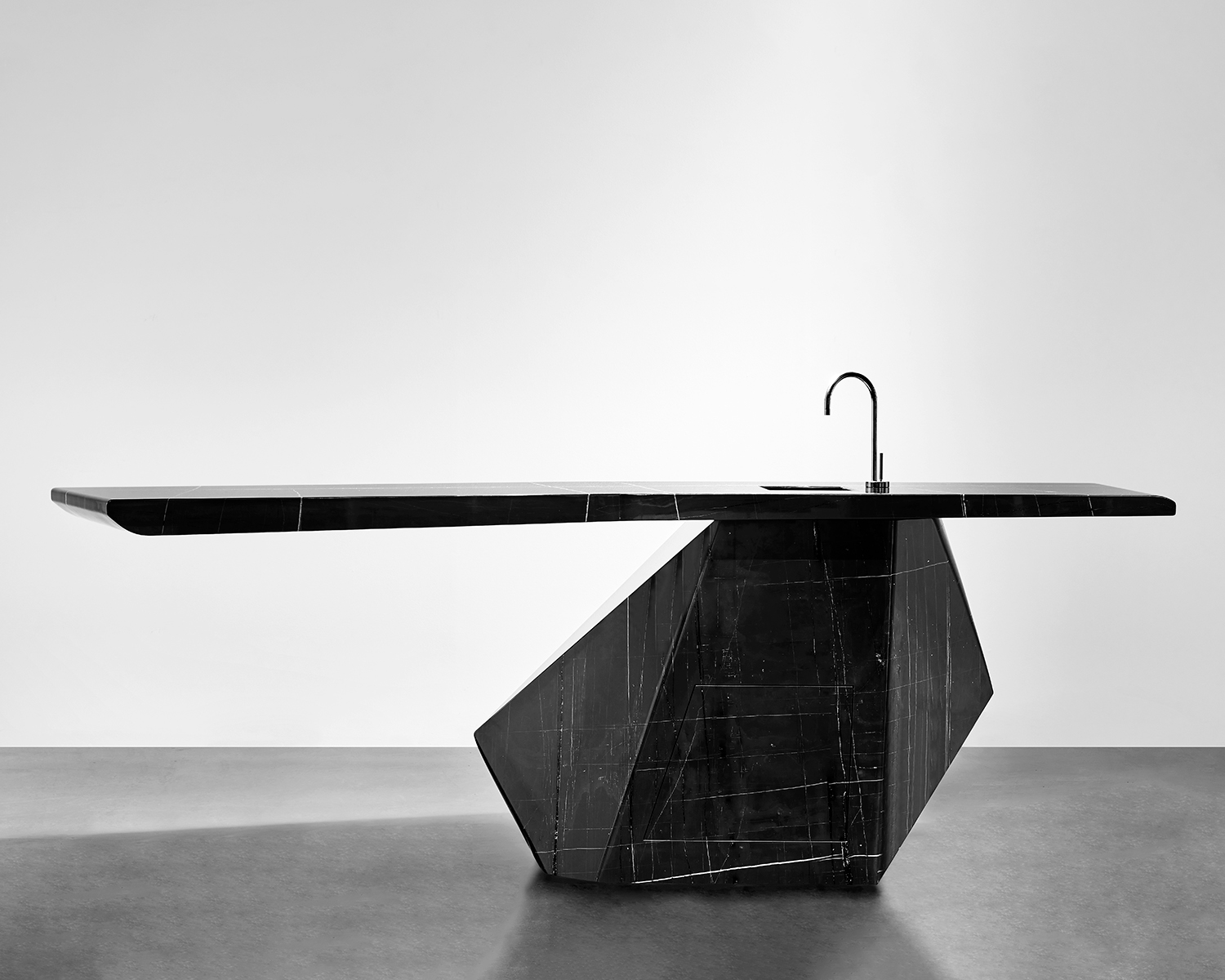
Recalling the impressive force of a wave, Nami, by Yabu Pushelberg for Eggersmann, expertly blends Japanese styling with German engineering. Stepping away from convention, the dramatically cantilevered island reimagines the function of a space without dictating composition. Made from natural stone, the sculptural object was designed in conjunction with the Murphy-style depot pocket door (not shown), a “theatrical” system that can conceal or reveal the working side of the kitchen while letting the island take centre stage.

2
Tangram — Nuance by Cesar

Tangram — Nuance by Cesar

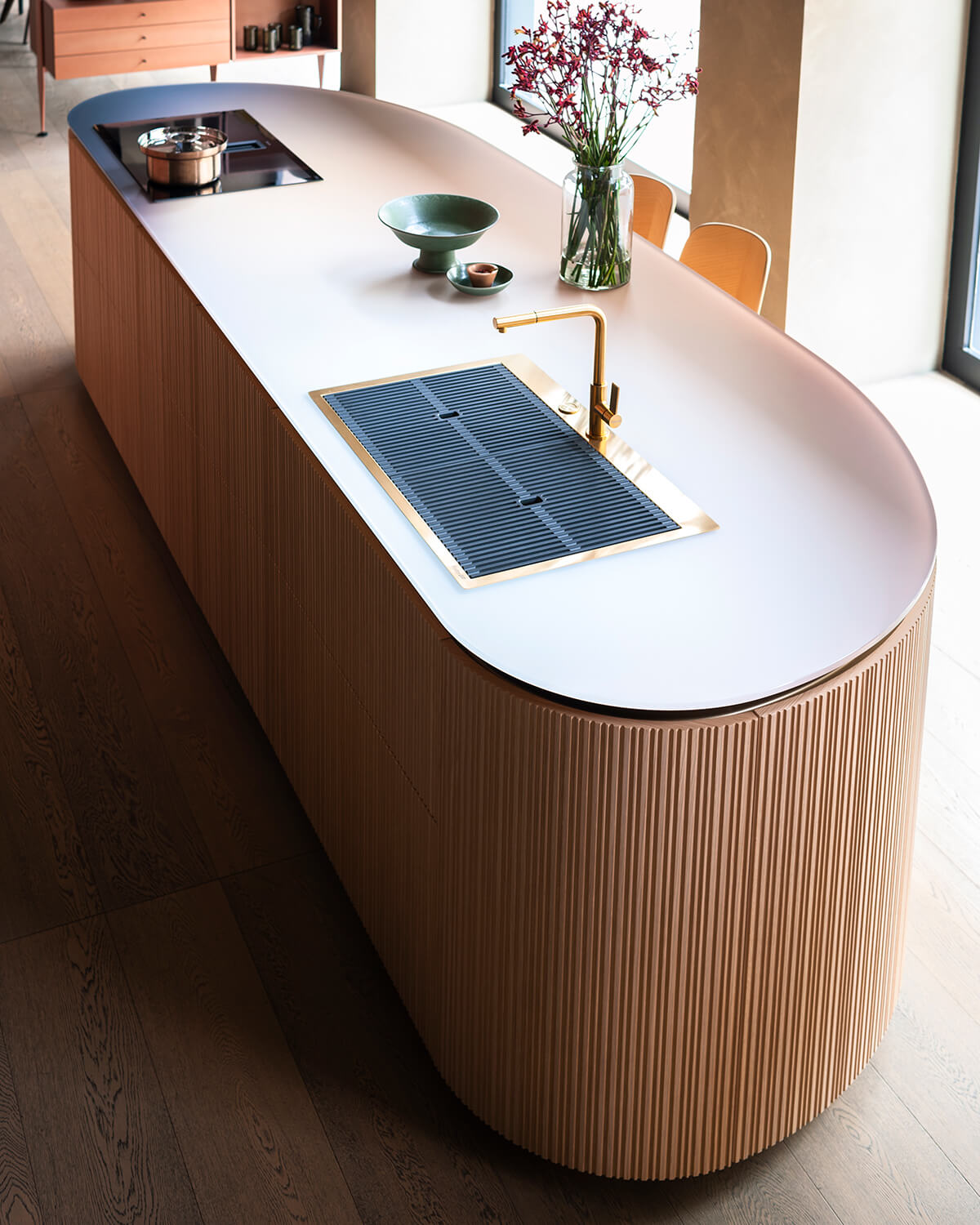
Originally designed in 2022 by Italian–Spanish studio García Cumini for Cesar, the Tangram kitchen system — which comprises five curved elements and linear connecting elements — has been updated with the new finish option Nuance, achieved through unique glasswork techniques that allow for polished or frosted colour variations across the horizontal surface. Also, the three-dimensional vertical relief Groove doors, which play with negative and positive space to create a chiaroscuro effect and conceal the joints between modules, are now offered in oak.

3
V3 by Vipp

Vipp V3 kitchen island launched at Eurocucina 2024

Paying homage to Vipp’s metalworking history, the brand’s V3 kitchen wraps the freestanding modules (island, wall and tall) in natural anodized aluminum. Vertically extruded profiles and rounded edges lend the industrial material elegance, while a four-millimetre-thick stainless-steel countertop seems to float in place. Cabinets have integrated handles for a clean look; the counter unit can be equipped with either gas hobs or an induction cooktop.

4
MDi by Valcucine

MDi by Valcucine

Made from select fine minerals (and 40 to 50 per cent recycled materials) that have been fused at high temperatures, Inalco’s MDi (for “minerals, design, innovation”) is a sustainable alternative to natural stone. Now offered for a range of Valcucine kitchen models, the material has an extraordinary texture and achieves visual continuity between the slab’s surface and core through a specialized H2O Full Digital technology, which uses water-based inks while also reducing water consumption by up to 70 per cent.

Mantle by Signature Kitchen Suite appliances

1
Mantle by Signature Kitchen Suite

Mantle by Signature Kitchen Suite

Designed by Patricia Urquiola to house Signature Kitchen Suite’s under-counter convertible refrigerator, Mantle is meant to be seen. Conceived for open spaces where the divide between living room and kitchen is hazy (as well as bedrooms, hotels and offices), the freestanding cabinet comes in Basic, Vertical (shown) and Horizontal versions, and is clad in wood (natural or colour-stained) or Cimento tiles, a cement made from natural components. In Vanilla, Blue, Burgundy, Green and Sand, the handcrafted tiles lend the unit a sculptural look.

2
“New Generation of Cooling” by Gaggenau

"New Generation of Cooling" by Gaggenau Appliances

The “new generation of cooling” from Gaggenau is a sophisticated fridge–freezer that can be seamlessly integrated (with or without handles) for a furniture-like appearance. The dark brushed stainless-steel interior with aluminum-framed drawers is meticulously built for durability, and five distinct climate zones keep all foods fresh for longer; an advanced lighting system adapts to frequent actions, and the Home Connect app can check for contents via cameras and adjust settings.

3
Series 11 48″ Induction Professional Range by Fisher & Paykel

Series 11 48" Induction Professional Range by Fisher & Paykel Appliances

With an intuitive (and tiltable) cooking guide touchscreen, two oven cavities (a large one with 15 functions and a secondary one with 11) and six induction cooktop zones that can combine to create two large ones, the Series 11 48″ Induction Professional Range from Fisher & Paykel is a powerhouse for the kitchen. From a design perspective, its finely crafted stainless-steel and glass construction with halo illuminated dials makes for a commanding presence in any modern space.

4
Pearlbeige by Miele

Pearlbeige by Miele Appliances

New to the ArtLine series of handle-free built-in appliances from Miele is a unique colour option: Pearlbeige, an earthy and nuanced mix of grey and beige. The neutral tone has a lovely glossy finish and effortlessly complements a range of styles, from modern and understated to traditional and eclectic. Soft and warm, the hue can be used on a number of ArtLine models (including wall and steam ovens, automated coffee makers, warming and vacuum drawers and more) to create a fully cohesive and personalized kitchen.