

For design journalists, covering trade fairs often amounts to an endless search for novelty. Furniture manufacturers have responded accordingly, pumping out launches all year round in hopes of riding (or starting) the wave of trends. Year after year, the cycle repeats. But a different trend has been brewing in Copenhagen. At 3daysofdesign 2025, many furniture brands tapped into the rich local design heritage by bringing back archival pieces, while others reissued iconic products by international designers. This practice has, at times, been met with skepticism from the industry. Are these designs still relevant outside of their original cultural context? Is it just a marketing ploy? Has the relentless trade show circuit lulled brands into complacency? Yet there is nothing lazy about reviving these forgotten gems; it requires extensive research and development to adapt them to modern production methods and sustainability standards. In fact, it is perhaps the most sustainable thing a brand can do: With a focus on heirloom quality and craftsmanship, these timeless pieces are a testament to the longevity of good design.
1965
F300 Lounge Chair by Gubi

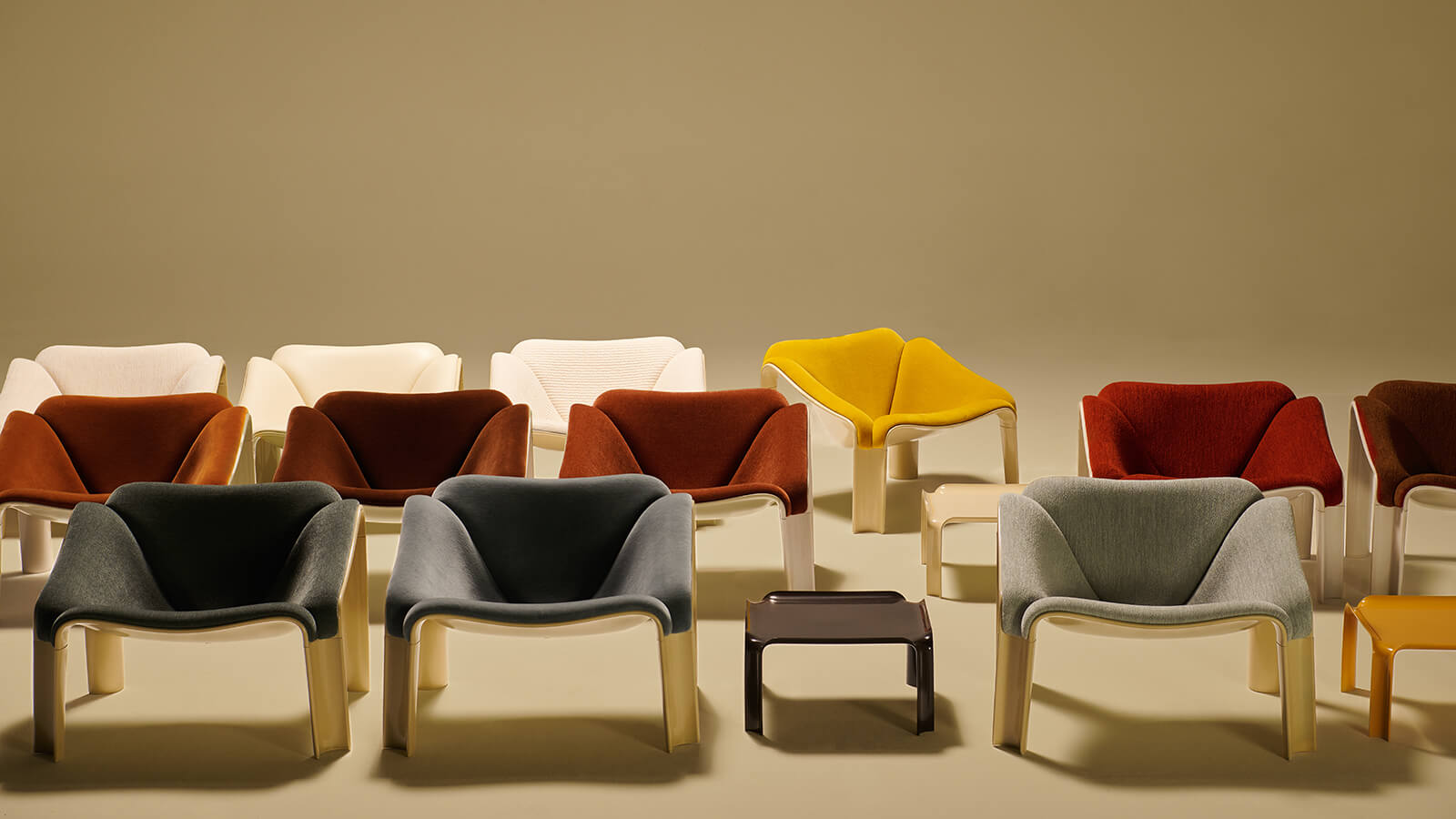
Pierre Paulin’s F300 lounge chair earned its place in MoMA’s permanent collection for good reason. With its angular geometry built for ergonomic comfort, the seat was perfectly suited to the casual and comfort-forward aesthetics of its time, welcoming users to sit in all manner of positions. “The F300 perfectly embodies my father’s approach to design and the balance between sculpture, elegance and comfort he sought in his work,” says Benjamin Paulin, who guided the revival of his dad’s chair. “It is rooted in research and a practical understanding of how people sit. It is almost impossible not to relax when you sit in it.”

Produced in HiREK, an engineered polymer made from industrial plastic waste, today’s iteration is just as durable but more eco-conscious than the original fibreglass version. That’s not to mention that the material boasts an inherent high-gloss surface without additional finishing processes, minimizing production waste. Though its contoured form and novel material palette felt futuristic when it first debuted, the chair remains singular in its design language even six decades later. “We don’t bring anything back because of nostalgia,” explains Gubi’s CEO, Marie Kristine Schmidt. “We bring it back because we feel that it is relevant now.”
1966
Amanta Sofa by HAY

When Mario Bellini designed Amanta, a low-slung modular sofa on casters, it was ahead of its time. Drawing from the structural logic of Ludwig Mies van der Rohe’s Barcelona chair, the design balances a tailored silhouette with a relaxed sit perfect for contemporary interiors. “After the great achievements of the 1950s and ’60s, Danish and Scandinavian design entered a time of uncertainty,” says Rolf Hay, co-founder of HAY. “In that period, Italian design stepped forward, offering new ideas, new energy and a fresh understanding of modern life.” In reviving this Italian icon, HAY is solidifying itself as an international brand.

While the reissue’s core elements remain largely the same, its materials have been given a sustainable swap: The seamless shell, previously constructed from fibreglass, is now made from 99 per cent post-consumer recycled ABS plastic. The tufted cushions, meanwhile, are now made from 94 per cent bio-balanced foam. Most importantly, the entire sofa can be disassembled for easy upkeep, giving it the longevity to be passed down for generations. Available in North America through DWR, the collection launches with new shell colours and a variety of upholstery options, and is offered as a single module and in two-, three- and four-seat configurations.
1969
Paradigm Sofa by Montana

Paradigm is a fitting name for this collection, which not only bridges decades of design history but also marks Montana’s first foray into soft seating. When CEO Joakim Lassen spotted the design, originally conceived by architect Erik Rasmussen for Paustian, he knew it belonged in the company’s collection; its combination of clean lines and rounded forms closely resembled those of Montana’s eponymous shelving system. Thanks to its components, which simply click together with brackets, Lassen dubbed the sofa the “mother of all modularity.”
Before putting Paradigm into production, the company selected a firmer foam to emphasize the design’s crisp edges without sacrificing comfort. Like Montana’s other Ecolabel-certified products, the sofa’s material components needed to be easily separable (in other words, no glue allowed). To that end, the upholstered cover attaches to the frame with Velcro.

The launch was a success story in more ways than one: “When I contacted Paustian to see if we could buy the design from them, they didn’t have a contract with the designer, so he hadn’t actually received any royalties,” Lassen recalls. “When the late designer’s wife got her first royalty cheque, she hosted dinner for her whole retirement home to celebrate.”
1989
Bench for Two by Fredericia
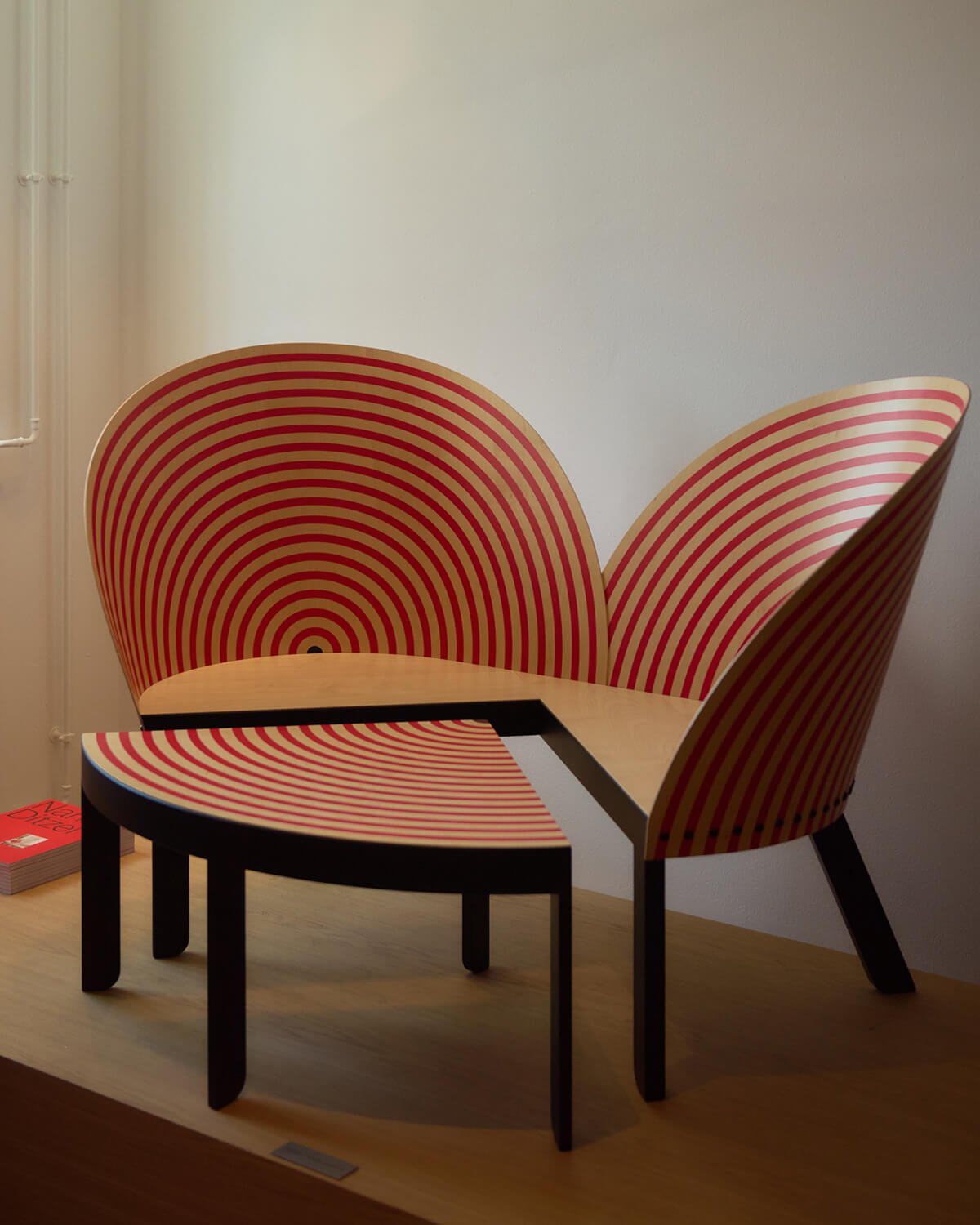
Designed by Nanna Ditzel for a small exhibition in Copenhagen, the Bench for Two was an instant hit, garnering media buzz at the Cologne trade fair and clinching the gold at the International Furniture Design Competition in Asahikawa, Japan. “We’d never been featured on so many front pages before. No one had ever seen anything like it,” recalls Fredericia’s second-generation owner, Thomas Graversen.
Inspired in part by butterfly wings, the bench’s curved veneer back is printed with a graphic pattern of concentric circles, which Ditzel spontaneously sketched in marker on the original prototype. Its pill-shaped seat features a central cutout that positions sitters opposite each other, setting the stage for intimate conversation. When not in use, a triangular table can be tucked in to fill the gap, transforming the piece from functional furniture into sculpture.

“We brought this back into production because it was a paradigm shift for our company,” explains Graversen. “At the time, we were very synonymous with a heavy, masculine style. Then I met Nanna Ditzel, and she had this totally different approach to furniture.” Honouring her rule-breaking legacy, the brand relaunched the collection in red, yellow and pink, plus the original black colourway that started it all.
4 Archival Furniture Designs That Made a Comeback at 3daysofdesign 2025
In Copenhagen, brands returned to the archives to revive designs from decades past.