

This spring’s liquidation and closure of 355-year-old Canadian retailer Hudson’s Bay was the latest sign that, perhaps, North American department stores have gone out of style. On the other hand, The Bay in its final years was far from operating at the top of its game, and there is a growing wave of nostalgia for the glory days of its peers. Case in point: The creative team behind Gossip Girl and The O.C. is currently planning a TV show set in former Manhattan institution Barneys New York. The challenge, for the businesses that remain, is recapturing that bygone magic.
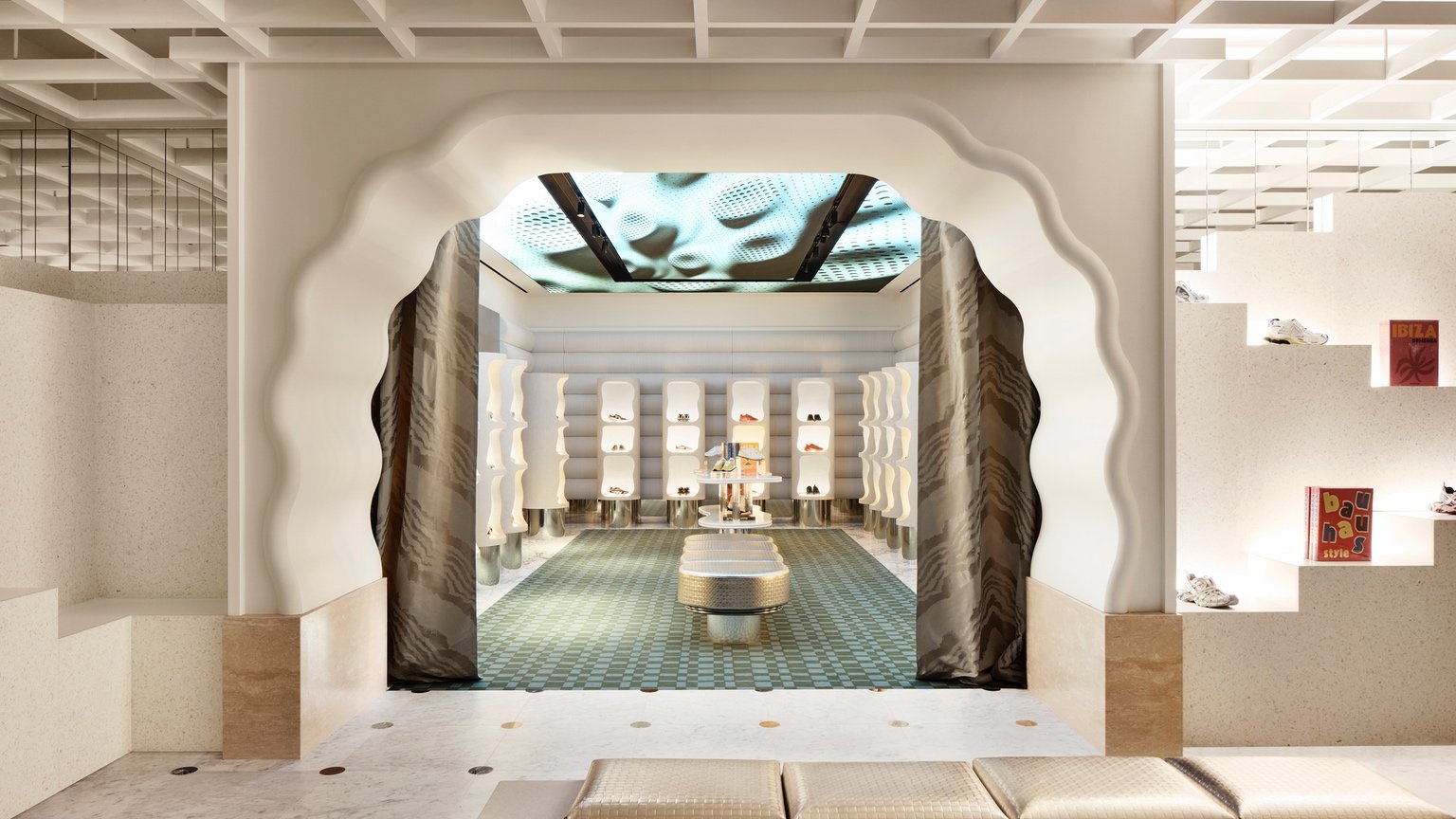
To really restore your faith in the future of large-scale urban retail, head to the NYC location of Printemps, the 5,110-square-metre fashion wonderland designed by French architect Laura Gonzalez that opened in March. Even though the store is located in the city’s Financial District, it has generated long weekend lineups just to get in. “It’s a sensorial journey that gently contrasts with the rigidity of the surrounding skyline,” says Gonzalez. Here, she tours us through the “atmosphere of elegance, curiosity and poetry” that defines every shopaholic’s new dream come true.
1
Invest in world-building

Want to get people spending? Create a space so transportive that shoppers feel compelled to buy a souvenir just to prove their visit wasn’t all a dream. To imbue Printemps NYC with such a strong sense of place, Gonzalez dug deep into the retailer’s past, looking all the way back to the 1865 opening of its original store in Paris on March 21 — the first day of spring. The eclectic history of its new NYC location, operating in the base of a Wall Street office tower that was recently converted to condos, provided another reference point.
“The identity of the space is built on this creative duality. We drew from Printemps’ decorative heritage and merged it with New York’s freedom of expression,” says Gonzalez. Art nouveau elements like Versailles-patterned parquet wood flooring and sculptural floral lamps introduce moments of primp and polish, but ultimately prioritize bold personality over luxury for luxury’s sake. This same spirit informed the design’s material palette, too: Rather than opulent marble, Gonzalez embraced recycled plastic and plant-based resin.
2
Encourage Close Inspection

Discerning shoppers understand that it’s details like stitching that set an investment piece apart from fast fashion. In that same spirit, Printemps goes all in on elaborate handcrafted decoration. The first example you encounter is a historic masterpiece: a 1931 art deco mural by artist Hildreth Meière (shown above). Originally designed for the lobby of 1 Wall Street’s former tenant, Irving Trust, it now anchors the store’s shoe department.
Comprising some 2.5 million red and gold tiles, the artwork sets a high bar, but the rest of Printemps more than holds its own. A new, complementary mosaic by Pierre Mesguich echoes one he made 50 years ago in Paris at Printemps Haussmann, while hand-painted, fairy tale–like frescoes by David Roma await upstairs. “These pieces are not mere decoration — they bring soul and intimacy to the space,” says Gonzalez. “Each artisan was chosen for their ability to tell a visual story.”
3
Lead Past the Comfort Zone

So much of 21st-century shopping is shaped by algorithms that serve up more of the same. Printemps takes a different approach, encouraging shoppers to broaden their horizons by rewarding exploration with delightfully unexpected discoveries. The ultimate reflection of this may be the store’s garçonnière menswear department, where frilly Murano glass chandeliers hang from the ceiling in a surprising hue: pink. “The goal was to break the clichés,” explains Gonzalez. “Why should a men’s space always be dark, metallic and rigid? We wanted to propose a more sensitive and poetic vision of masculinity.” This prioritization of enchanting novelties extends beyond the store’s fixtures to its merchandise as well; about a quarter of the brands on display are North American exclusives. Chances are likely there’s a pink suit or two in the mix.
4
Raise a Glass

Of course, Printemps is not just a visual feast — it is also packed with places to eat and drink. On the casual end of the spectrum are a downstairs café and bar and a second-floor bistro, but the real highlight is Maison Passerelle, an 85-seat fine-dining restaurant that is further elevated by spectacular stained glass (by artist Pierre Marie) and an intricate ivy floor mosaic. “Hospitality is not a break from the retail experience — it’s an essential part of it,” says Gonzalez. “Every food space is conceived as a natural continuation of the visitor’s journey.”

Taking a cue from bridal boutiques, Printemps also includes a dedicated champagne bar (clad in craggy ceramic tiles by Brooklyn artist William Coggin, shown here) that serves bubbly to go — meaning you can stroll through the store, glass in hand, browsing everything from skin care to sunglasses. “For me, the most amazing part is the vintage selection,” Gonzalez gushes. “I die for it.”
Printemps Gives Department Stores an Elegant Makeover
In the wake of Hudson’s Bay’s closure, we tour an NYC department store where the prognosis seems more promising.