


1
The Education of a Design Writer

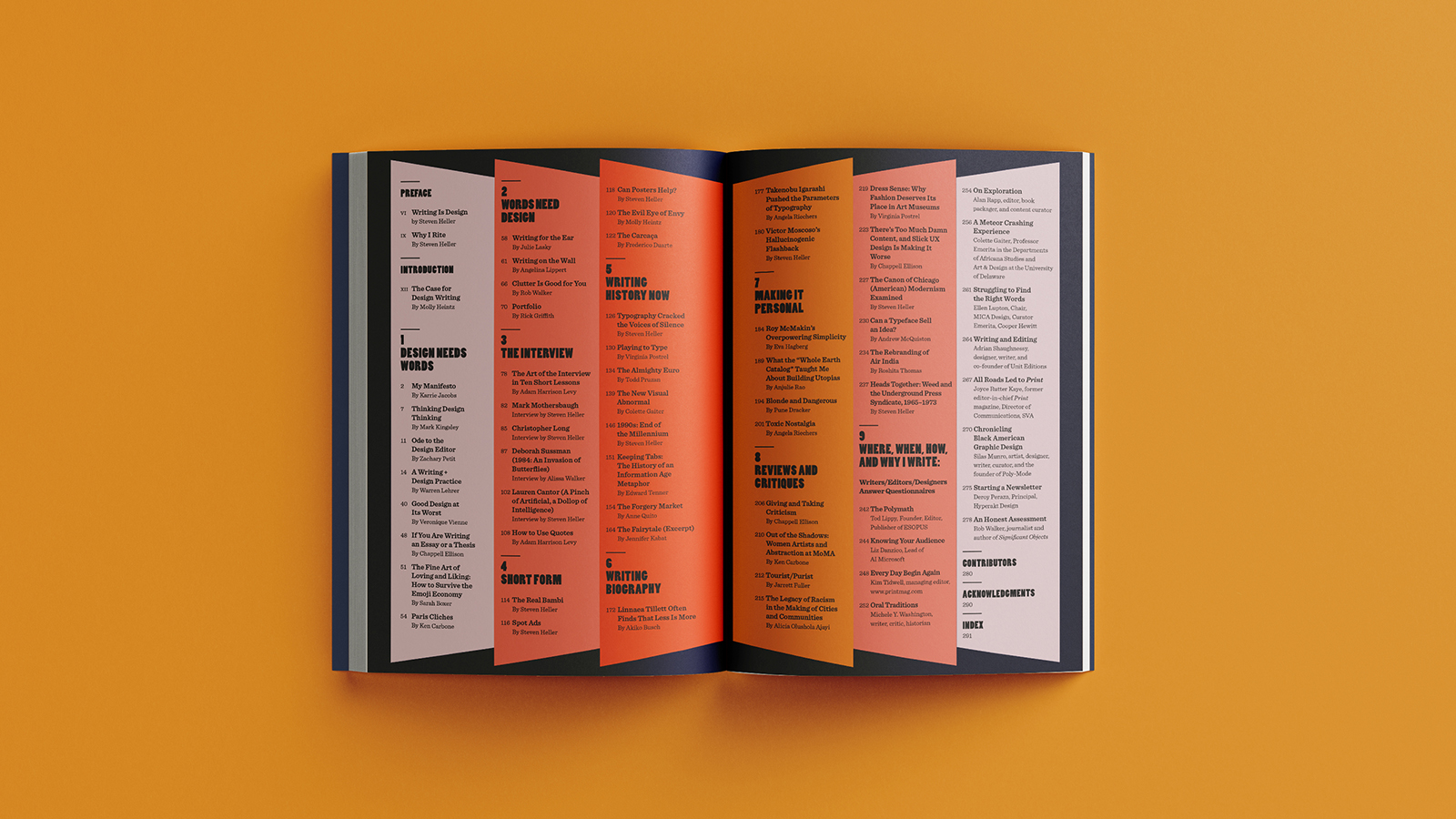
Good design doesn’t always speak for itself. That’s where this book comes in. The first step to becoming an expert storyteller, according to Steven Heller, is to consider writing its own design exercise. As Molly Heintz adds, tapping into the human element of design — and, ultimately, addressing the question “So what?” — is the secret sauce of a top-notch narrative. Essays and case studies by the likes of Eva Hagberg and Anjulie Rao boast tips on conducting productive interviews and leveraging quotes, plus more nuanced lessons, like where to insert the self into one’s writing. Readers will also gain greater perspective on how to interpret criticism. As Chappell Ellison explains in her chapter, “The number one goal of a critic should be to make things better.”
2
Design Discord

There’s no manual for launching a blockbuster design business — but this podcast is the next best thing. Hosted by designer Fernando Mastrangelo, Design Discord doesn’t gatekeep what it really takes to make it. While Mastrangelo draws from his own success story, he also brings on expert guests. Recent episodes include a master class with PR maven Rebecca Goldberg, who breaks down the cost and ROI of media relations and how the rules are being rewritten (hint: a hosted dinner is the new press release), and curator and journalist Julia Haney Montañez on the design fairs worth showing at. Along with salient career advice, each episode offers words of encouragement for designers in the grind of early growth.
3
The Architect’s Edge

An entrepreneurial mindset is integral to architectural practice, whether you own your firm or not. As professor Ian Ritchie explains in his introduction, “[Clients] are, rightly, as concerned with economy, efficiency and value for money as they are with aesthetics.” Luckily, this book offers a crash course in business, applying foundational skills to real-world practice — from example budget allocations to which meeting types work best at each project phase. While many chapters focus on day-to-day practicalities, others are more abstract: Take Chapter 4, which focuses on finding one’s architectural identity or market differentiator, or Chapter 6, which covers the art of persuasion. Most critically, author Gareth Stapleton acknowledges that building a successful practice is a group effort, emphasizing the need for interdisciplinary collaboration and the importance of sharing credit.
Three Resources That Cover (Almost) Everything They Didn’t Teach You in Design School
Two books and a podcast offer a crash course in running a successful studio.