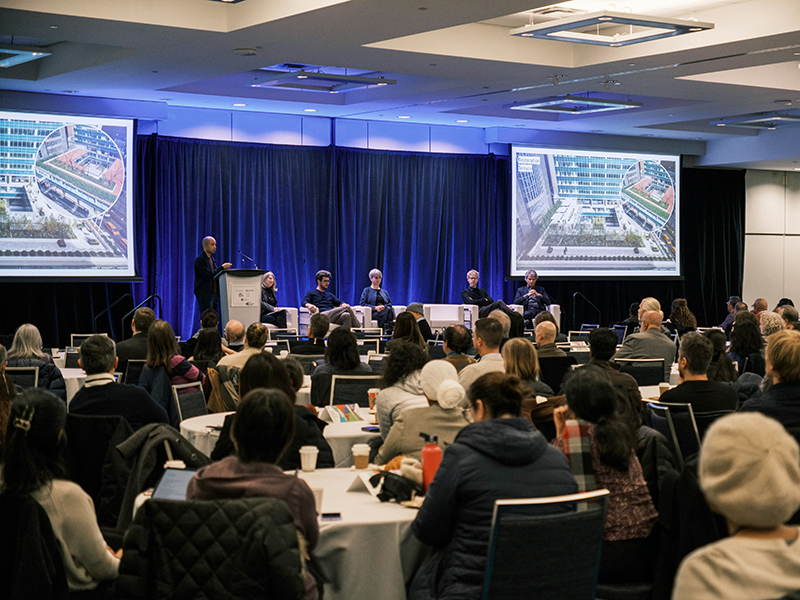
For the month of February, the RAIC is pleased to present a weekly webinar series entitled: Low Carbon Education Training Workshop. Registration is free and welcomes architects, interns, technologists, students and others in the architectural community.
Modules:
Module 1 – Climate Change Literacy Foundations
- The core concepts of climate change and how Canada’s climate is changing from Western climate science and Indigenous knowledge perspectives.
- How the biodiversity and climate crisis are interconnected.
- Climate justice from local and global perspectives.
- Where to find key resources available to understand projected climate change in regions and municipalities across Canada.
Module 2 – Climate-Responsive Design Foundations
- How the built environment contributes to climate change and the scale of the opportunity within the built environment.
- Whole-life-carbon, why balancing embodied carbon with operational carbon is necessary, and the resources available to address whole-life-carbon in projects.
- Resilience and adaptation, the different domains and scales of resilience-thinking in design, and resources available to support resilience-thinking.
- Where to find key resources to support climate-resilient design foundations.
Module 3 – Making the Case for Change
- The climate transition changes including the physical risks, and change drivers such as regulations, technology and societal expectations.
- The case for change from an Indigenous perspective.
- The case for change from a social justice perspective.
- The case for change from a business and climate risk perspective.
Module 4 – Integrative Design Thinking and Regenerative Design
- The core concepts of integrative design and their relevance to climate-responsive design.
- Regenerative thinking and design from an Indigenous perspective.
- Regenerative thinking and design from a non-Indigenous perspectives.
- How diverse perspectives support more equitable and effective project outcomes.
- Where to find key resources for regenerative thinking and integrative design thinking.
This training program has been developed in collaboration with an advisory committee and key subject-matter experts and is part of a broader project to train and upskill the building design and construction workforce in low-carbon skills.
Each module is 90 minutes in duration and will be eligible for 6 hours of Continuing Education and certificates of participation will be provided.